Best Sleeping Bag Rating for Sierra Fall Nights
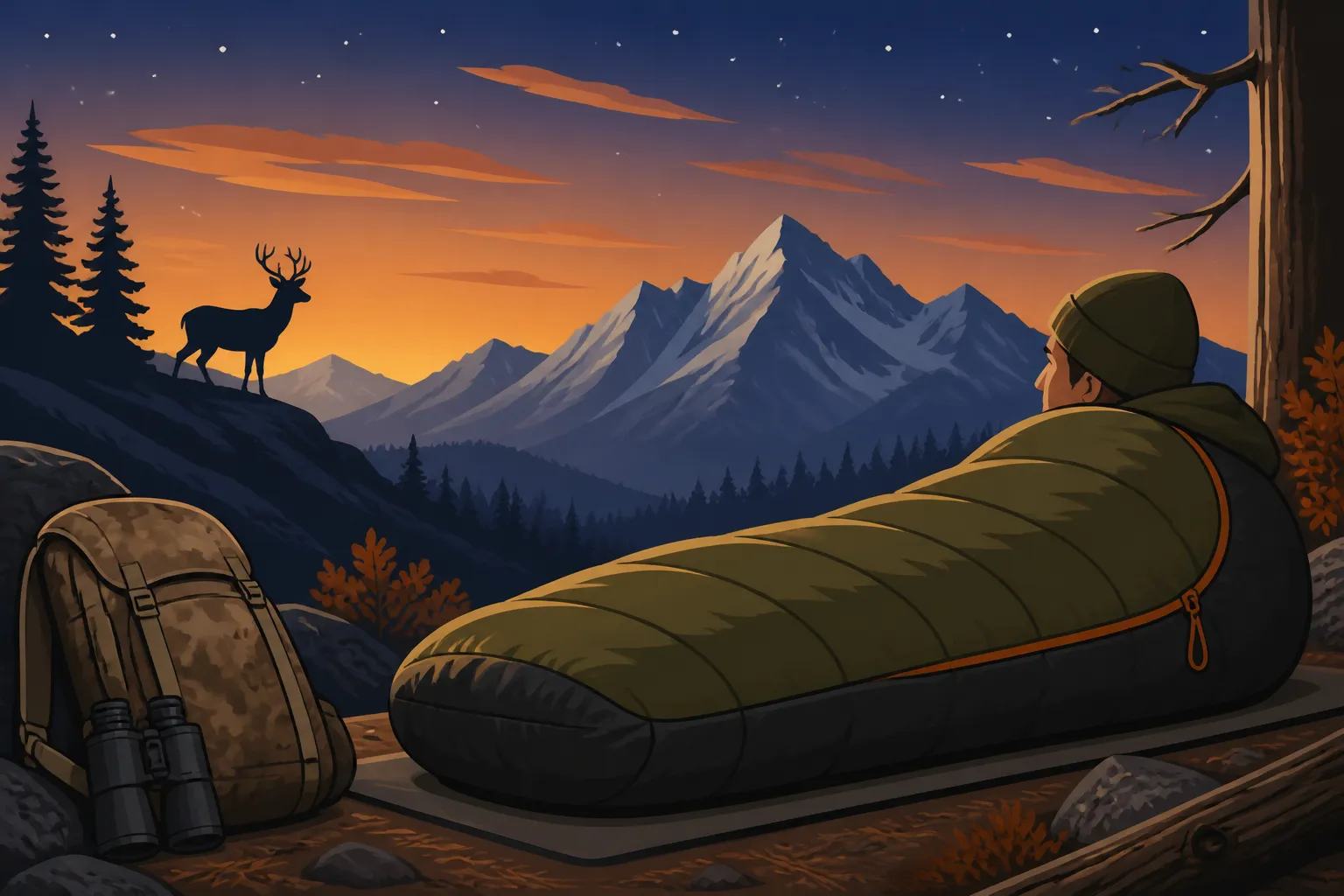
There's nothing quite like a crisp fall night in the Sierra Nevada, especially when you're tucked into a warm sleeping bag after a long day of scouting or hunting. But let's be honest, picking the right sleeping bag rating for those unpredictable mountain temperatures can feel like a shot in the dark, leading to uncomfortable shivers or unnecessary bulk in your pack. This guide will meticulously break down how to choose the ideal sleeping bag rating, ensuring your nights in California's high country are restorative, not miserable.
Understanding Sleeping Bag Ratings
Before we even think about specific temperatures, it's crucial to understand what those numbers on a sleeping bag actually mean. It's not always as straightforward as "a 20-degree bag is good for 20 degrees," and misunderstanding can lead to a very cold night.
EN/ISO Ratings Explained
For years, sleeping bag manufacturers had their own ways of rating warmth, which led to a lot of confusion and often, overly optimistic claims. Thankfully, a few years back, standardized testing came into play with the European Norm (EN) and now the International Organization for Standardization (ISO) ratings. These tests are conducted in a controlled lab environment using a thermal mannequin, providing a more reliable and comparable measure of a bag's performance. When you see an EN or ISO rating, it means the bag has undergone a specific test to determine its warmth. It's not just a marketing number. This standardization helps hunters and backpackers compare apples to apples, making an informed decision easier when you're looking at different brands.
The key takeaway here is to always look for bags with an EN or ISO rating. While not every bag will have one, especially less expensive models, these ratings offer the most accurate baseline for comparison. It means the manufacturer has invested in a standardized test, rather than just guessing or making an educated estimation. If you're comparing two bags, and one has an EN/ISO rating and the other doesn't, lean towards the rated bag for a more dependable warmth assessment.
Comfort vs. Limit vs. Extreme Ratings
Once you find a bag with an EN/ISO rating, you'll likely see a few different temperatures listed: "Comfort," "Limit," and sometimes "Extreme." This is where things get really important for your personal comfort. The Comfort Rating is the temperature at which an average woman (who generally sleeps colder) can expect to sleep comfortably in a relaxed position. This is often the most practical number for most campers and hunters to consider for a truly comfortable night. The Limit Rating is the lowest temperature at which an average man (who generally sleeps warmer) can sleep for eight hours in a curled-up position without feeling overly cold. This is usually the number most manufacturers market as the "bag's rating."
The Extreme Rating is exactly what it sounds like – the absolute lowest temperature at which the bag is designed to prevent hypothermia for a period of six hours, but not necessarily for a comfortable or even full night's sleep. Think of it as a survival rating, not a comfort rating. For Sierra fall nights, especially when temperatures can dip unexpectedly, you really want to focus on that "Comfort" rating. If you're a cold sleeper, always choose a bag with a Comfort rating at or below the lowest temperature you expect to encounter. If you typically sleep warm, the "Limit" rating might be acceptable for you, but err on the side of caution.
Why Temperature Ratings are Just a Guide
Despite the science behind EN/ISO ratings, it’s vital to remember that these numbers are just a guide. There are so many variables that influence how warm you feel inside a sleeping bag, and none of them can be fully accounted for in a lab. Your metabolism, body fat, hydration, caloric intake during the day, how tired you are, and even your emotional state can all affect how warm you feel. A hunter who’s been exerting themselves all day hiking steep terrain and hasn't eaten enough might feel colder than someone who had a leisurely day around camp. This is why personal experience and knowing your own body are so important.
Furthermore, external factors like humidity, wind chill, and the quality of your sleeping pad (which we'll discuss later) play a huge role. A 20-degree bag might feel fine on a still, dry 20-degree night, but add some wind and dampness, and you'll be shivering. Always factor in your own physiology and the specific conditions you anticipate. It’s better to be a little too warm and be able to vent, than to be dangerously cold with no way to warm up. When you're planning a trip to a new area or a higher elevation, doing some research on sites like GoHunt can give you a better idea of typical conditions and help you plan your gear accordingly.
Factors Influencing Sierra Night Temperatures
The Sierra Nevada is a vast and diverse mountain range, and "fall nights" can mean vastly different things depending on where and when you are in the season. Understanding these factors is key to choosing the right sleeping bag.
Elevation and Its Impact
One of the most significant factors determining night temperatures in the Sierra is elevation. For every 1,000 feet you climb, the air temperature generally drops by about 3.5 to 5.5 degrees Fahrenheit. This means if it's a comfortable 50 degrees Fahrenheit at a 5,000-foot trailhead, you could be looking at temperatures in the low 30s or even upper 20s if you set up camp at 10,000 feet. This difference can easily turn a mildly cool night into a dangerously cold one. I’ve made the mistake of underestimating this many times in my younger days, and learned quickly that a lightweight summer bag doesn't cut it once you push above the tree line in late September.
When planning your hunt, pinpoint your exact anticipated camping elevation. Are you Hunting California's Sierra Nevada Backcountry at 8,000 feet, or staying closer to the foothills around 4,000 feet? The difference in gear needed is substantial. Always check topographic maps and consider your highest sleeping elevation, not just your starting point. Many hunters focus on daytime temperatures for comfort, but it's the night that demands the most respect from your sleeping system.
Time of Fall Season
"Fall" in the Sierra can stretch from early September into late November, and the temperature swings within that window are dramatic. Early fall, say the first few weeks of September, can still bring fairly mild nights, perhaps dipping into the 40s or low 30s at higher elevations. This is often when archery seasons are in full swing in zones like A or C. As you move into October, particularly after the first major cold front, those night temperatures will consistently drop into the 30s and 20s, even at moderate elevations. By late October and November, especially if you're Hunting a Late-Opening High-Country Zone or Hunting into a Late-November Zone Close, you can easily expect single-digit temperatures, and even below zero in exposed areas.
Think about your hunt dates carefully. An archery hunt in early September in a coastal zone might be fine with a 30-degree comfort rated bag. But that same bag in late October in the Eastern Sierra? You'll be absolutely freezing. Always check the historical weather averages for your specific hunt dates and location, then add a buffer for colder-than-average conditions. A good resource for this is a detailed weather almanac, or checking specific hunting forecast apps that account for elevation changes.
Weather Variability and Microclimates
The Sierra is notorious for its rapidly changing weather. One day can be sunny and warm, and the next can bring an unexpected snowstorm, even in early fall. Beyond the broad seasonal changes, local microclimates can also significantly impact night temperatures. A camp situated in a sheltered ravine or dense timber might be several degrees warmer than a camp on an exposed ridge. Conversely, a canyon bottom can become a cold air sink, trapping frigid air. High winds, even if temperatures aren't extremely low, can strip warmth from your body and your bag, making a 30-degree night feel like 20 degrees. Understanding Wind and Thermals in Steep Sierra Country is crucial not just for hunting but for campsite selection.
Always be prepared for the unexpected. A good rule of thumb is to assume temperatures could be 10-15 degrees colder than the forecast suggests for your sleeping bag selection. If the forecast calls for a low of 30 degrees, consider a bag with a comfort rating of 20 or even 15 degrees. This buffer can save you from a truly miserable experience. Look for campsite locations that offer natural shelter from prevailing winds, such as dense stands of trees or large rock outcroppings. Avoiding open, exposed ridges or deep, narrow canyon bottoms can also help mitigate the impact of unpredictable weather and cold air pooling.
Choosing the Right Bag for Your Sierra Fall Hunt
Now that you understand the factors at play, let's talk about how to translate that into selecting a specific sleeping bag for your Sierra fall adventures.
Considering Your Personal Comfort Level
This is perhaps the most overlooked aspect of choosing a sleeping bag. We all sleep differently. Are you someone who's always cold, even when others are comfortable? Or do you tend to "sleep hot" and kick off the covers? Your personal metabolism and comfort preferences should heavily influence your bag choice. For example, if you know you’re a naturally cold sleeper, you might want to choose a bag with a comfort rating 5-10 degrees lower than what the expected low temperature suggests. Conversely, a warm sleeper might get by with a slightly lighter bag.
Consider your entire system: what are you wearing to bed? Are you layering with warm base layers, or just sleeping in minimal clothing? Your "sleep system" is more than just the bag; it's the combination of your pad, bag, and sleepwear. If you're planning on Camping Rules on California National Forest Land for multiple days, you'll want to ensure you're getting quality rest each night to stay sharp for the hunt. Don't let pride or a desire for a lighter pack override the need for adequate warmth. A good night's sleep directly translates to better performance and enjoyment the next day.
Synthetic vs. Down Insulation
The choice between synthetic and down insulation is a classic debate among outdoor enthusiasts, and for good reason. Each has distinct pros and cons that are particularly relevant to hunting in the Sierra.
| Feature | Down Insulation | Synthetic Insulation |
|---|---|---|
| Warmth-to-Weight | Excellent – very warm for its weight and bulk | Good – heavier and bulkier for the same warmth |
| Compressibility | Excellent – packs down very small | Fair – doesn't compress as well as down |
| Wet Performance | Poor – loses loft and warmth when wet | Good – retains insulating properties even when damp |
| Drying Time | Long | Faster |
| Cost | Generally higher | Generally lower |
| Durability | Can last many years with proper care | Can degrade faster with repeated compression |
| Allergies | Potential for allergies | Less allergenic |
Down bags are prized for their incredible warmth-to-weight ratio and compressibility. If you're backpacking deep into the backcountry, where every ounce and cubic inch counts, a down bag is often the preferred choice. High-quality down (measured in "fill power") traps a lot of air, providing excellent insulation. The major downside to down, however, is its vulnerability to moisture. If a down bag gets wet, it loses its loft and, consequently, its ability to insulate. This can be a serious concern in the Sierra, where unexpected rain or even heavy condensation can occur.
Synthetic bags are a fantastic alternative, especially for hunters who prioritize performance in damp conditions and a lower price point. While synthetic insulation is generally heavier and bulkier than down for the same warmth, it has a crucial advantage: it retains its insulating properties even when wet. If you anticipate hunting in consistently damp conditions or are prone to condensation in your tent, a synthetic bag offers a great deal of peace of mind. They also tend to dry faster and are generally less expensive. For truck camping or shorter treks where weight isn't as critical, a synthetic bag might be a perfect fit.
The decision often boils down to your specific hunt and priorities. For a long, dry, high-elevation September hunt, a lightweight down bag is hard to beat. For a shoulder-season hunt in the lower, wetter coastal ranges, or if you're new to backcountry camping, the resilience of synthetic might be a better choice.
Bag Shape and Features
Beyond insulation type and rating, the shape and features of your sleeping bag also impact its warmth and usability.
Mummy bags are the most common choice for cold-weather hunting and backpacking. Their tapered shape closely conforms to your body, minimizing dead air space that your body has to heat, thus maximizing thermal efficiency. They often include a hood that cinches around your head, which is critical for retaining body heat, as a significant amount can be lost through an uncovered head. This design, while efficient, can feel restrictive to some sleepers. If you tend to toss and turn a lot, or feel claustrophobic, it might take some getting used to.
Semi-rectangular bags offer a bit more room than mummy bags, providing a compromise between warmth efficiency and comfort. They're a good option for those who want a bit more wiggle room without sacrificing too much warmth. Rectangular bags offer the most space and are generally reserved for car camping or warmer conditions, as their larger internal volume means more air to heat, making them less efficient in cold Sierra nights. For fall hunting in the mountains, a mummy or semi-rectangular bag is almost always the way to go.
Look for bags with a good draft collar around the neck to prevent warm air from escaping and cold air from seeping in. A full-length, snag-free zipper is also crucial for ventilation and easy entry/exit. Some bags offer a small pocket for valuables, which can be surprisingly handy for keeping a headlamp or phone warm enough to function. Consider if you want a bag with a left or right-hand zipper, especially if you plan to zip two bags together.
Maximizing Your Sleeping Bag's Performance
Even the best sleeping bag won't perform optimally if not used correctly or paired with the right accessories. Getting a good night's sleep in the Sierra is a system, not just a single piece of gear.
Sleeping Pad Importance
This cannot be stressed enough: your sleeping pad is just as, if not more, important than your sleeping bag for cold-weather comfort. When you lie in your sleeping bag, your body weight compresses the insulation beneath you, rendering it nearly useless. All that trapped air that makes your bag warm is squeezed out. Your sleeping pad provides the critical barrier between your body and the cold ground. The ground is a massive heat sink, and without adequate insulation underneath you, heat will rapidly wick away from your body.
Sleeping pads are rated by their R-value, which measures their thermal resistance. The higher the R-value, the better the insulation. For Sierra fall nights, especially at higher elevations or later in the season, you'll want a pad with an R-value of at least 3.0, and often 4.0 or higher for truly cold conditions. If you're considering a hunt where temperatures might dip into the 20s or teens, an R-value of 5.0 or above is a smart choice. You might even consider layering two pads: a closed-cell foam pad (like a Therm-a-Rest Z-Lite) underneath an inflatable insulated pad for maximum warmth and puncture protection. Don't skimp on your pad; it's a small investment that pays huge dividends in comfort and warmth.
Shelter and Layering Inside the Bag
The type of shelter you use also impacts your sleeping bag's performance. A well-designed tent, especially a four-season model, will offer significantly more protection from wind and moisture than a minimalist tarp or bivy. The tent creates a microclimate, trapping a layer of warmer air and reducing wind chill. Even a simple tent can add a few degrees of perceived warmth. For solo hunters, a compact, lightweight tent is a great investment for Hunting California's High-Country X-Zones.
As for layering inside your bag, think strategically. Avoid sleeping directly in the clothes you wore all day, especially if they are damp with sweat. Always pack a dedicated set of dry base layers (wool or synthetic are best) specifically for sleeping. Wearing a warm hat is also essential, as a significant amount of heat can escape from your head. Avoid over-layering to the point of sweating, as moisture inside your bag will reduce its insulating properties. If you start to feel too warm, vent your bag by unzipping it slightly. Having a Best Base Layer for a Steep Sierra Hike can double as your sleep layer in a pinch, but having a clean, dry set is always preferred.
Care and Storage for Longevity
Proper care and storage will ensure your sleeping bag lasts for many seasons and continues to perform at its best. After each trip, especially if your bag is down, air it out thoroughly. This removes any moisture from your body that might have accumulated. Never store a sleeping bag compressed in its stuff sack for extended periods. This can damage the insulation, reducing its loft and warmth over time.
Instead, store it loosely in a large mesh storage sack or hung in a closet. If it gets dirty, spot clean it if possible. For a full wash, always follow the manufacturer's instructions. Down bags require special care and often specific down wash detergents to maintain their loft. Synthetic bags are a bit more forgiving but still benefit from gentle washing. Regularly checking your bag for small tears or zipper issues and making repairs promptly will extend its lifespan. A quality sleeping bag is an investment, and treating it well ensures it's ready for every future hunt. You can often find great gear care tips through resources like GoHunt, which helps hunters get the most out of their equipment.
Disclaimer
This article is for general informational purposes only and does not constitute professional advice. Laws, prices and regulations vary by location and change over time. Consult a qualified professional for guidance on your specific situation.