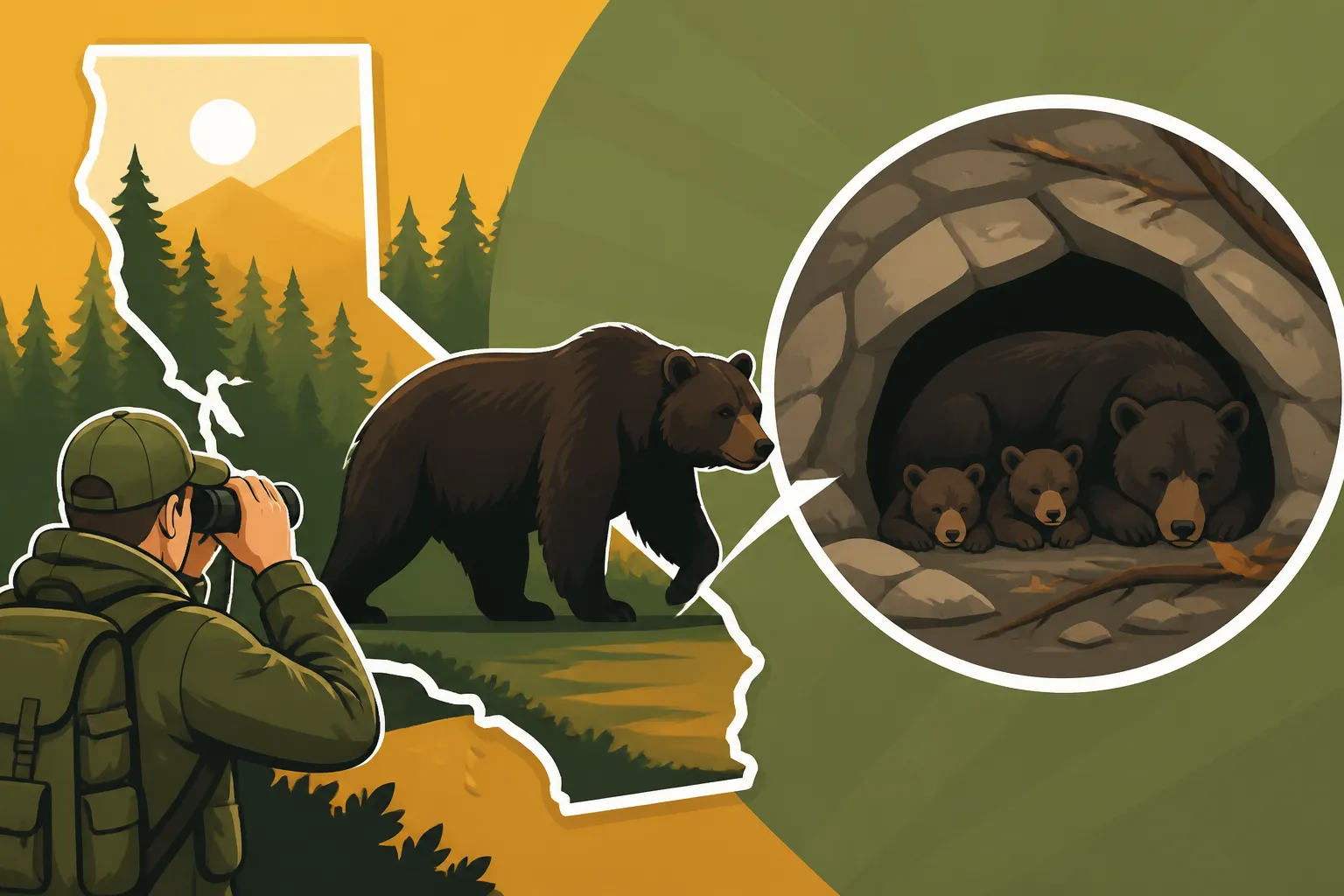
California Bear Den Study Findings
For many of us who spend time in California's wild places, there's a deep curiosity about the private lives of its largest carnivores, especially when they disappear for the colder months. Understanding where, how, and why black bears choose their winter homes can feel like piecing together a complex puzzle, and it’s a vital part of appreciating their role in our ecosystem. This guide aims to pull back the curtain on the intriguing findings from various bear den studies across California, shedding light on these secretive periods and offering a richer perspective on the state’s black bear population.
The Mystery of Bear Dens and Why They Matter
Black bears in California, like their counterparts in other regions, enter a state of dormancy known as torpor during the colder parts of the year. This isn't a true hibernation in the deepest sense, as their body temperature doesn't drop as dramatically as some other hibernating animals, but it's a critical period for their survival and for the continuation of their species. The dens they choose are much more than just a place to sleep; they are safe havens for pregnant sows to give birth and nurse their cubs, and for all bears to conserve energy when food sources are scarce.
The scientific community, including researchers working with the California Department of Fish and Wildlife (CDFW), invests significant effort into studying these denning behaviors. These studies are crucial because they provide invaluable data on bear health, reproductive success, survival rates, and overall population dynamics. Without understanding where and how bears den, it would be much harder to accurately estimate their numbers or predict how they might respond to environmental changes, habitat loss, or even fire activity. This research directly informs how the state manages its bear resource, helping to ensure healthy populations for future generations.
Understanding the Annual Cycle and Denning Triggers
California's black bears don't just arbitrarily decide to den. Their annual cycle is intricately tied to food availability, weather patterns, and their physiological state. As fall progresses, bears enter a phase called hyperphagia, where they eat voraciously to build up fat reserves, sometimes consuming over 20,000 calories a day. This incredible drive to gain weight is fueled by acorns, berries, carrion, and anything else they can find. Once sufficient fat reserves are accumulated, and as cold weather sets in, signaling a decline in natural food, bears begin to seek out den sites.
The timing of denning can vary widely across California. Bears in the higher elevations of the Sierra Nevada, where snow comes early and stays late, might den earlier and emerge later than those in the milder coastal ranges or southern foothills. A sow with cubs will also often den earlier and emerge later, prioritizing the safety and warmth of her young. Environmental factors like drought or a poor acorn crop can also influence denning behavior, potentially leading to shorter denning periods or bears seeking alternative food sources for longer. This adaptability is key to their survival but also makes them vulnerable to human encounters if natural resources are insufficient.
Implications for Population Management and Research
The findings from bear den studies are directly woven into California's wildlife management strategies. When researchers track pregnant sows to their dens, they can safely tag or examine newborn cubs, gathering data on litter size, cub survival, and overall reproductive success. This information is vital for determining the overall health of the bear population and for managing hunting seasons. For example, if cub survival rates were to consistently decline, it might trigger a re-evaluation of harvest quotas or habitat protection measures.
Data collected from den studies also contributes to the broader understanding of California Black Bear Population Estimate, helping biologists refine their models for how many bears the state can sustainably support. These studies help track how bears utilize different types of habitat for denning, which is critical for land managers trying to protect essential bear habitat from development or other disturbances. This scientific foundation is what allows wildlife agencies to make informed decisions, balancing the needs of the bear population with the interests of the public and hunters.
Diverse Den Sites Across California's Landscape
California is a state of incredible ecological diversity, and its black bears are master adapters, choosing den sites that vary dramatically from the high peaks of the Sierra to the dense coastal chaparral. Bear den studies have shown that there isn't a "one-size-fits-all" den, but rather a spectrum of choices reflecting local availability and the specific needs of the individual bear.
Researchers have cataloged a wide array of den types, each offering its own advantages. Natural caves and rock crevices are popular, providing sturdy protection from weather and predators. Hollow logs, especially those of large, fallen trees, are another common choice, particularly in forested areas. Some bears will dig into the base of large trees or under root wads, creating a snug chamber. Occasionally, bears will even den in more unconventional spots, like abandoned culverts or thick brush piles, especially in areas with limited traditional denning habitat. The key is usually seclusion, insulation, and protection.
The Preferred Denning Habits of Sows with Cubs
For pregnant sows, the choice of a den site takes on even greater significance. These dens must provide maximum security and warmth, as newborn cubs are tiny, blind, and entirely dependent on their mother. Den studies frequently highlight that sows prioritize well-insulated, protected sites, often deep within a hollow log or a carefully excavated cavity under a tree. These dens offer consistent temperatures, shielding the vulnerable cubs from extreme cold.
The seclusion of these maternity dens is paramount. A sow needs to feel safe from disturbances, whether from predators, other bears, or humans. She'll spend several months in this den, nursing her cubs until they are strong enough to emerge in the spring. This is why researchers take great care when approaching known den sites, often waiting until the sow has already emerged with her cubs before conducting examinations. This focus on protecting maternal dens is a critical aspect of ensuring the long-term health and growth of the California bear population.
Geographic Variations in Den Type and Location
The specific geography of a bear's range heavily influences its denning choices. In the rugged, rocky terrain of the Sierra Nevada, bears might frequently utilize rock caves, boulder fields, or excavated dens in steep, north-facing slopes that offer deep snow cover for insulation. Further south, in areas like the Los Padres National Forest, where large, old-growth timber might be less common, bears might rely more on dense chaparral thickets or ground dens dug into hillsides. These are often less elaborate but still provide essential cover and protection.
Coastal bears might also use dense brush or the hollows of older, larger trees in their preferred woodlands. These regional variations are important for wildlife managers to understand because protecting specific types of habitat is crucial for maintaining healthy bear populations. Knowing that bears in one area prefer rock dens while those in another favor hollow trees allows for targeted conservation efforts. This nuanced understanding is something keen observers and researchers using tools like GoHunt often utilize to better understand animal distribution.
Research Techniques for Studying Bear Dens
Unraveling the secrets of bear denning is no easy feat. It requires dedicated fieldwork, advanced tracking technology, and a deep respect for the animals being studied. Researchers employ a combination of techniques to locate dens, monitor their occupants, and gather vital data without causing undue stress to the bears.
One of the primary methods involves fitting bears with GPS collars. These collars transmit location data, allowing researchers to track a bear's movements throughout the year. When a bear's movement patterns indicate it has settled into a confined area for an extended period during the denning season, it's a strong indicator that a den site has been located. Once a potential den is identified, researchers then approach with extreme caution, often waiting until the bear has naturally emerged in the spring, or carefully sedating the animal if an examination is deemed necessary for data collection or health checks.
Remote Monitoring and Data Collection
Technological advancements have made remote monitoring an increasingly valuable tool in den studies. Trail cameras, strategically placed near den entrances, can provide visual confirmation of a bear's presence and activity without direct human disturbance. While rules apply to Trail Camera Rules on California Public Land, for researchers, these cameras can capture emergence dates, the number of cubs, and even provide insights into the bear's health status as it enters or leaves the den.
Acoustic monitoring devices can also be deployed to detect sounds within the den, helping researchers understand activity levels, particularly important for monitoring sows with cubs. These remote methods reduce the need for physical presence, minimizing stress on the bears and allowing for continuous data collection. This is especially useful in remote areas or where dens are in precarious locations that are difficult to access regularly.
Field Observations and Den Site Analysis
Once a den has been vacated, researchers will often conduct a thorough analysis of the site. This involves measuring the den's dimensions, noting the surrounding habitat type, and looking for signs of the bear's recent presence. Samples like hair or scat can be collected for genetic analysis, providing further insights into individual bears and the broader population. The condition of the den itself, whether it's a natural feature or an excavated structure, offers clues about the bear's adaptations to its environment.
This detailed site analysis helps to build a comprehensive picture of preferred denning habitats and characteristics. For example, comparing den types across different zones, such as those used by bears in Hunting Northern California's Coast Range versus those in Hunting California's Sierra Nevada Backcountry, can reveal fascinating adaptations. These observations contribute to a robust dataset that informs conservation strategies and helps maintain healthy bear populations, which in turn influences future hunting opportunities, such as during Black Bear Hunting California's Spot-and-Stalk Season.
How Den Study Findings Inform Hunting Regulations
The extensive data gathered from bear den studies plays a pivotal role in shaping California's bear hunting regulations. Wildlife managers rely on this information to ensure that hunting seasons are structured sustainably, taking into account the health and reproductive success of the overall bear population. Understanding denning patterns, particularly regarding sows and cubs, is paramount to ethical and responsible hunting practices.
One of the most significant implications of den studies is its influence on season timing. Hunting seasons are deliberately set to avoid the denning period, especially when sows are giving birth or nursing young cubs. This ensures that vulnerable animals are not targeted and that the reproductive potential of the population remains strong. The data helps define when it's appropriate to allow hunting, such as during the Hunting the August Archery Bear Window or the general season, while safeguarding the crucial denning phase.
Safeguarding Reproductive Success
The success of a bear population hinges on its ability to reproduce and raise healthy young. Den studies provide critical data on litter sizes, cub survival rates, and the frequency of reproduction for individual sows. If studies indicate a decline in these metrics, it serves as an early warning sign that the population might be under stress. This could lead to adjustments in hunting quotas, like the statewide California's 1,700-Bear Statewide Quota, or even changes in season length or location to protect breeding females.
Furthermore, hunters are legally required to be able to distinguish between a sow and her cubs and an adult bear, and it's illegal to take a sow with cubs. While direct observation of a den is not part of hunting, understanding the denning cycle reinforces the importance of knowing what to look for afield to ensure a responsible harvest. These regulations are designed to minimize the impact on reproductive-age females and ensure the long-term viability of California's bear population.
Predictive Modeling and Habitat Protection
Beyond regulating hunting, den study data is also integrated into predictive models that assess the long-term viability of bear populations under various scenarios. For instance, if a major wildfire impacts a region, researchers can use denning data to predict how the loss of specific denning habitat might affect local bear numbers. This allows agencies to prioritize habitat restoration efforts in crucial areas. Using tools like GoHunt, individuals can often cross-reference these ecological maps with hunting zones.
For hunters, understanding these broader conservation efforts offers a deeper appreciation of the regulations in place. It's not just about managing individual bears, but about fostering a healthy, resilient population capable of thriving amidst natural challenges and human presence. This informed approach, grounded in scientific research, ensures that future generations can continue to enjoy encounters with California's magnificent black bears, whether through observation, photography, or responsible hunting.
| Den Type | Typical Location | Insulation/Protection Level | Common Users | Notes |
|---|---|---|---|---|
| Rock Crevice/Cave | Rocky outcrops, boulder fields, canyon walls | Excellent | All bears, especially sows | Highly secure, natural features, good temperature stability |
| Hollow Log/Tree | Forested areas with fallen timber, standing snags | Good to Excellent | All bears, common for sows | Excellent insulation, often well-hidden |
| Excavated Ground Den | Under root wads, steep banks, dense brush | Good | All bears, adaptable | Self-made, can vary in depth and protection |
| Brush Pile/Thicket | Dense chaparral, downed timber, thick undergrowth | Moderate to Good | Younger bears, males | Less insulated but offers good concealment, common in less forested areas |
| Culvert/Man-made | Near human infrastructure (rare) | Variable | Displaced bears (rare) | Opportunistic, indicates habitat limitations |
Supporting Bear Conservation through Understanding
The findings from California's bear den studies offer a fascinating glimpse into the lives of these elusive animals, particularly during their most vulnerable period. Far from being simple sleep, denning is a complex, vital process directly tied to survival and reproduction. For hunters, this research underscores the importance of the regulations that guide ethical hunting, ensuring that we contribute to the long-term health of the bear population. Learning about California Bear Density by Region and how bears thrive in their natural habitats makes us better stewards of the land.
As enthusiasts of California's wild places, staying informed about these biological insights helps us appreciate the intricate balance of nature. Whether you're planning a trip to a national forest, or simply advocating for wildlife, understanding the science behind bear conservation, informed by detailed studies, enriches the experience.
Disclaimer
This article is for general informational purposes only and does not constitute professional advice. Laws, prices and regulations vary by location and change over time. Consult a qualified professional for guidance on your specific situation.