California Deer Tag Transfer Rules
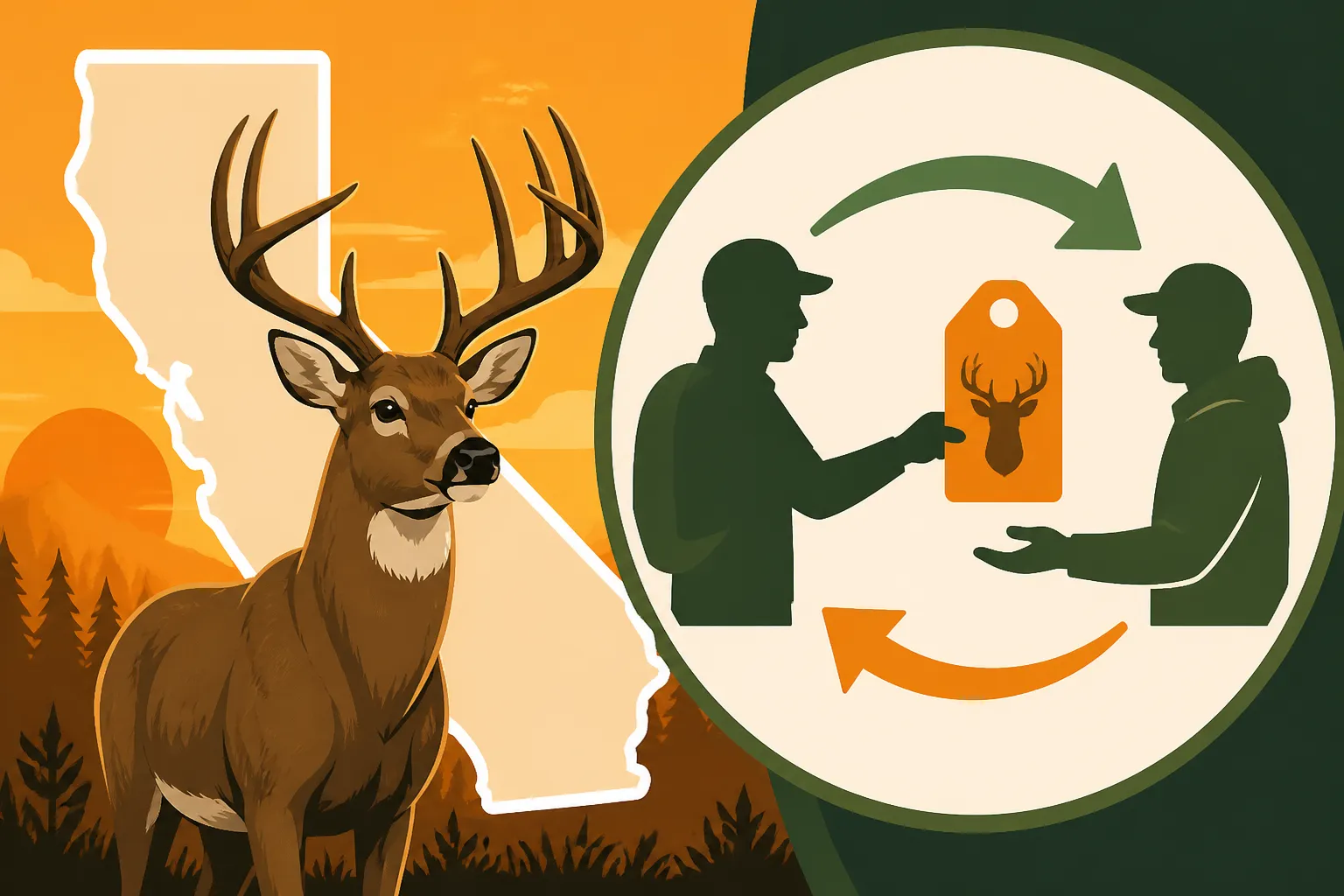
It’s a scenario many California hunters have faced: you’ve spent years building points, or perhaps just got lucky, and finally drew that coveted deer tag. But then, life happens – a sudden work commitment, an unexpected injury, or a family emergency. The first thought often turns to, "Can I just give this tag to my buddy who didn't draw one?" Unfortunately, when it comes to California deer tags, the rules are pretty clear, and the answer to transferring your tag to another hunter is almost always a resounding no. This guide will walk you through the nuances of California's deer tag regulations, explain why transfers aren't allowed, and clarify what options, if any, you might have if you can't use your tag.
Understanding California's Deer Tag System and Why Transfers Are Tricky
California's hunting regulations are designed to manage wildlife populations sustainably, ensure fair chase, and provide equitable access for hunters. This means the system prioritizes individual responsibility and careful allocation, making tag transfers a non-starter.
The Personal Nature of a California Deer Tag
Unlike a concert ticket or a gift card, a California deer tag isn't a commodity that can be bought, sold, or gifted to another person. When you successfully draw or purchase a deer tag, it is issued specifically to you, the individual hunter, and is tied directly to your hunting license and identification. The California Department of Fish and Wildlife (CDFW) issues these tags with the understanding that the person whose name is on the tag is the person who will be attempting to harvest a deer.
Imagine you've been putting in for a premium X-zone tag for a decade, slowly accumulating those valuable preference points. Your buddy, who just started hunting last year, suddenly draws that same tag. It would be incredibly frustrating, and frankly unfair, if he could just hand that tag over to someone else, effectively bypassing the entire draw system and the commitment you’ve made. The rules are in place to prevent such scenarios and maintain the integrity of the process. Every tag number is unique, and it’s assigned to an individual’s customer ID number. This isn't just bureaucratic red tape; it's a fundamental aspect of wildlife management and ensuring fair play.
Draw Odds and the Equity System
California operates on a robust The California Big Game Drawing Explained system, particularly for premium deer and elk zones. This system incorporates a California Bonus Point System Explained that rewards consistent applicants with better odds over time. If tag transfers were allowed, it would completely undermine this equity. Hunters could theoretically "sell" their high-demand tags to the highest bidder, or pass them to friends who haven't earned the necessary points or luck of the draw. This would create a black market for tags and distort the carefully managed harvest quotas for specific zones, making it harder for CDFW to gather accurate data on hunter effort and success.
Furthermore, the cost of a deer tag also varies by residency, with California Resident Deer Tag Cost being significantly lower than the California Nonresident Deer Tag Cost. Allowing transfers would create loopholes where non-residents could potentially obtain resident tags indirectly, again circumventing established rules and revenue streams intended for wildlife conservation. The entire framework of drawing, accumulating points, and securing a tag is designed to be a personal pursuit, reflecting an individual's investment of time and effort into the system.
What Happens if You Can't Use Your Deer Tag?
Life throws curveballs, and sometimes, despite your best intentions and meticulous planning, you simply cannot make it out to hunt during the season for which your tag is valid. This can be incredibly frustrating, especially after the anticipation of a hard-earned tag.
The Reality of Unused Tags
For most California deer tags, if you can't use it, you essentially lose it for that specific hunting season. There's no mechanism to "roll over" an unused tag to the following year, nor can you donate it to another hunter in the traditional sense. The tag is valid only for the specific hunter, zone, and dates printed on it. If you don't validate and attach it to a harvested deer during that period, it simply expires.
This can be a tough pill to swallow. Perhaps you had a hunting trip planned for Hunting a D-Zone That Opens in August, but a last-minute family emergency pulled you away. The deer are out there, the season is open, but your tag will remain in your wallet, eventually becoming a bittersweet memento. The CDFW relies on accurate harvest reporting, and an unused tag, even if reported as such, is a lost opportunity for both the hunter and for management data. It's a "use it or lose it" situation that underscores the importance of planning and flexibility in your hunting schedule.
No Official Transfer Process for Deer Tags
To be absolutely clear: the California Department of Fish and Wildlife does not have an official process for transferring a deer tag from one hunter to another. You cannot legally give your tag to a friend, family member, or any other individual, regardless of their license status or relationship to you. Any attempt to do so would be a serious violation of hunting regulations and could lead to significant California Wildlife Violation Penalties, including fines, license suspension, or even criminal charges.
The rules are designed to prevent situations where tags become a tradable commodity. Imagine the confusion and potential for abuse if tags could be freely exchanged. It would make managing harvest quotas and understanding hunter pressure incredibly difficult. The system is built on each individual earning or acquiring their own specific tag through legal means, whether that's through the draw, over-the-counter purchase, or specific landowner opportunities. Organizations like GoHunt provide excellent resources to help hunters navigate the application process and understand draw odds, but they also emphasize adherence to official regulations. Trying to work around these rules, no matter how well-intentioned, isn't worth the risk.
Legal Alternatives and What Can Be Done
While you can't transfer your deer tag to another person, there are a few legal avenues and considerations that might offer some alternatives or relief if you find yourself unable to hunt.
Junior Hunter Mentorship Programs
This isn't a "transfer" of your tag, but it's a fantastic way to share the hunting experience and introduce new hunters to the field. California offers opportunities for junior hunters, who have their own specific tags and seasons. An adult mentor (who holds a valid hunting license) can accompany and supervise a junior hunter. The junior hunter applies for and receives their own tag, often under special seasons or reduced costs, as outlined in the California Junior Hunting License Rules. For example, the state offers special youth hunt weekends for turkeys, and similar principles apply to deer.
While you cannot give your personal deer tag to a junior, you can take a licensed junior hunter out, and they can use their own valid tag. This allows you to still participate in the spirit of the hunt, provide valuable guidance, and foster the next generation of conservationists. It's a way to ensure the excitement of the season doesn't go entirely to waste if your personal hunt is sidelined, and it's something platforms like GoHunt often highlight as a way to engage new hunters. You might find more details on how to get started with this in resources like California Mentored Youth Hunting Rules.
Landowner Tags: Not a Transfer, But an Alternative
California's Landowner Deer Tag program offers an interesting, albeit limited, alternative. These tags are issued to landowners whose property meets specific acreage and habitat criteria, often to manage deer populations that impact agricultural resources. Landowners can then utilize these tags themselves or sell them to other licensed hunters. These aren't tags that a regular hunter can "transfer"; rather, they are tags that originate from the landowner and can be acquired from them.
If you know a landowner who has been issued these tags, you could potentially purchase one directly from them. This isn't your drawn tag being transferred, but a separate, legally obtained tag. These tags often come with a higher price tag due to their limited availability and private land access, but they provide an opportunity to hunt specific private land and can sometimes offer better success rates due to reduced pressure. Understanding the specifics of California Landowner Deer Tag Rules is crucial if you consider this route, as they have different reporting and usage requirements than standard public draw tags.
Understanding Refund Policies
While you can't transfer your deer tag, the CDFW does have a refund policy for some tags, under specific circumstances. This isn't a transfer, but it at least allows you to recover some of your investment if you absolutely cannot hunt. Generally, to be eligible for a refund, the tag must be returned to the CDFW before the start of the hunting season for which it was issued. There's often an administrative fee, and the window for returning tags is usually quite strict.
For example, if you drew a tag for Zone A and realize in July you won't be able to go, you might be able to return it for a refund before the California Zone A General Season Dates begin. However, if the season has already started, or if you wait too long, you will likely forfeit the tag and the funds. Always check the current CDFW regulations or contact their licensing division directly for the most up-to-date information regarding California Deer License Refund Policy. While it's not ideal, a refund is often the only way to mitigate the financial loss of an unused tag when an unexpected event prevents you from hunting. The same refund principles typically apply to other big game, like the California Elk Tag Refund Policy.
Here's a quick comparison of your options if you can't use your deer tag:
| Option | Description | Legality | Benefits | Drawbacks |
|---|---|---|---|---|
| Transfer to Friend | Giving your personal drawn/purchased tag to another licensed hunter. | Illegal | None (for the hunter) | Serious penalties: fines, license suspension, criminal charges. |
| Let Tag Expire | Keep the tag, but do not hunt or harvest a deer with it. | Legal | No action required. | Lost opportunity, no refund, no conservation benefit from harvest. |
| Mentoring Junior | Take a licensed junior hunter with their own tag on a hunt. (Not a transfer of your tag). | Legal | Shares experience, educates new hunters. | Junior must have their own license/tag; not your hunt. |
| Acquire Landowner Tag | Purchase a separate, legal landowner tag from an authorized property owner. (Not your tag). | Legal | Access to private land, potential for better success. | Often expensive, specific to certain areas, limited availability. |
| Seek Refund | Return your unused tag to CDFW before the season starts, according to their policy. | Legal | Recoup some cost. | Must be done within strict deadlines, administrative fees apply, not always available. |
Why These Rules Are in Place
The stringent rules against deer tag transfers in California aren't arbitrary. They are deeply rooted in the state's comprehensive approach to wildlife management, conservation, and ensuring a fair and ethical hunting environment for everyone.
Maintaining Fair Chase and Conservation Principles
The California Department of Fish and Wildlife's primary mission includes the conservation and management of the state's diverse wildlife resources. Every deer tag issued is part of a larger management plan designed to ensure sustainable populations, prevent overharvesting, and maintain healthy ecosystems. If tags could be freely transferred, it would become incredibly difficult for the CDFW to accurately track hunter effort, harvest success rates, and population impacts, especially when combined with California Deer Reporting Requirements.
Allowing transfers could also open the door to less ethical hunting practices, such as commercial operations buying up tags and guiding clients for a guaranteed harvest, potentially leading to increased pressure on specific herds or areas beyond sustainable levels. The "fair chase" principle is also at play; hunting is meant to be a challenging pursuit between a hunter and animal, not a transaction where the right to harvest can be bought and sold outside of the established regulatory framework. By keeping tags non-transferable, the state reinforces the idea that hunting is a privilege tied to individual responsibility and adherence to conservation ethics.
The Integrity of the California Big Game Drawing
As we've touched upon, California's big game drawing system, particularly for coveted deer tags in areas like the high-country X-zones, is a competitive process that can take many years of applying and accumulating preference points. For instance, successfully drawing a tag for Hunting California's High-Country X-Zones is often a once-in-a-lifetime opportunity for many. The system is designed to provide a fair chance to all eligible hunters, giving increasing odds to those who consistently apply.
If tags were transferable, the entire system would crumble. Those with ample resources could simply buy tags from successful applicants, effectively creating a two-tiered system where wealth, rather than patience and participation in the draw, dictated access to prime hunting opportunities. This would not only be unfair to the vast majority of hunters who faithfully participate in the draw, but it would also devalue the preference point system that many have invested years into building. Resources like GoHunt spend considerable effort helping hunters understand their draw odds and navigate the application process precisely because the system demands individual participation and cannot be circumvented through tag transfers. The non-transferable nature of the tag is a cornerstone of this equitable allocation.
Disclaimer
Please be aware that hunting regulations in California can change. Always consult the most current California Department of Fish and Wildlife (CDFW) regulations booklet or their official website before participating in any hunting activity. This article is intended for informational purposes only and should not be considered legal advice.