California’s Six Rivers National Forest Deer Units
Hunting California's Six Rivers National Forest can feel like staring at a vast, green, tangled map with no clear "X" marking the spot. It's an immense, rugged, and often unforgiving landscape where deer sign can be abundant, but actually putting a tag on a buck feels like finding a needle in a haystack. This guide is here to help you unravel the complexities of Six Rivers' deer units, giving you actionable strategies and a deeper understanding of how to tackle this incredible hunting challenge.
Understanding the Six Rivers National Forest Landscape
The Six Rivers National Forest isn't your average public land; it's a true wilderness experience, offering some of the most challenging yet rewarding deer hunting opportunities in California. Spanning nearly a million acres across Del Norte, Humboldt, Trinity, and Siskiyou counties, it’s a mosaic of habitats, each demanding a unique approach from the diligent hunter. Many hunters find themselves overwhelmed by the sheer scale, the dense timber, and the often-steep, broken terrain. But with understanding comes opportunity.
A Forest of Diversity and Challenge
Imagine ancient redwood groves giving way to dense Douglas fir forests, then opening up into brushy chaparral slopes and high-elevation ridges. That's Six Rivers National Forest in a nutshell. You've got the moist, fog-kissed coastal redwood belt on one end, transitioning inland to drier, steep canyons choked with oak and manzanita, eventually climbing to cooler, more open mixed-conifer forests. This incredible diversity is what makes the forest so rich in wildlife, but it also presents a significant hurdle for hunters. Finding deer in such varied and often impenetrable cover requires a keen eye for subtle changes in topography and vegetation. The weather here is notoriously unpredictable; a sunny morning can quickly turn into a cold, driving rain, especially closer to the coast, leaving many unprepared hunters scrambling for shelter. How Many Acres Six Rivers National Forest Covers
General Topography and Access Points
The terrain in Six Rivers is defined by its many rivers and drainages, including the wild and scenic Klamath, Trinity, Eel, Mad, and Van Duzen Rivers. These river systems carve out incredibly steep canyons and gorges, creating natural travel corridors and bedding areas for deer, but also presenting formidable barriers to hunter access. While there are numerous forest service roads, many are unmaintained, heavily brushed in, or become impassable after winter storms. This means that true access often requires sturdy boots and a willingness to hike, sometimes for miles, off the beaten path. Look at topographical maps carefully; those faint lines might be old logging roads or game trails that offer an advantage if you’re willing to put in the work. Utilizing modern mapping tools, like onX Hunt, becomes indispensable here. You can layer public and private land, topographic lines, and even recent satellite imagery to identify potential access points and understand the flow of the land before you ever set foot on it.
Deciphering Six Rivers' Deer Hunting Zones
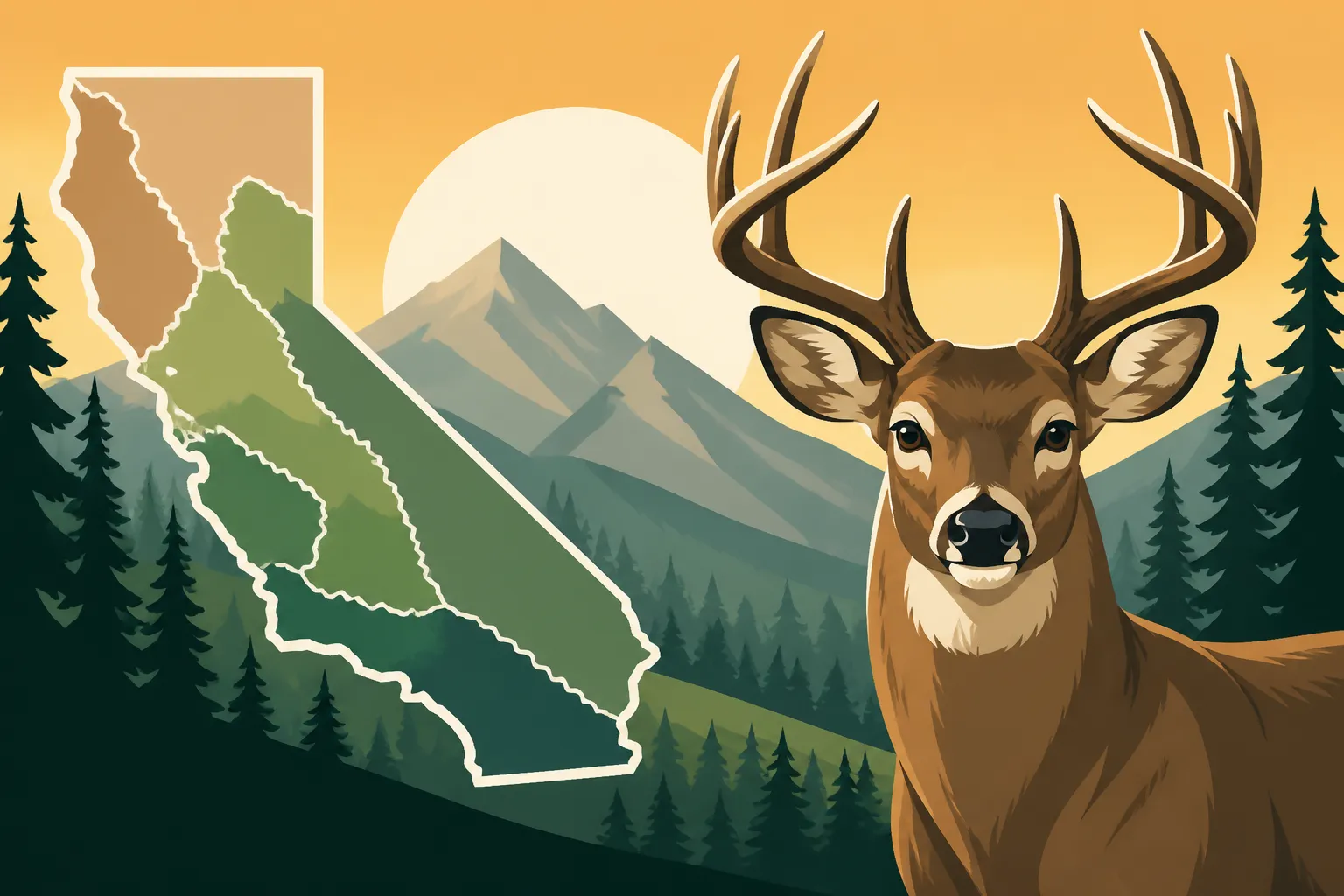
California’s deer hunting system is famously complex, with various zones and sub-zones dictating season dates, tag numbers, and specific regulations. Six Rivers National Forest falls primarily within the vast D-zone complex, making it a general season destination for many hunters. However, understanding which D-zones overlap the forest, and the specific nuances of each, is critical for a successful and legal hunt. It’s not enough to just have a "D-zone" tag; you need to know your specific D1, D2, D3, D6, or D7 unit and its boundaries.
Overview of D-Zones Within Six Rivers
Most of Six Rivers National Forest is encompassed by several D-zones. These general season zones are where the majority of California deer hunters obtain their tags, often without needing to go through the competitive big game drawing that X-zones require. This accessibility is both a blessing and a curse. It means more opportunities for hunters to get afield, but it also generally translates to higher hunter pressure, especially in easily accessible areas. These D-zones generally offer longer seasons compared to the high-demand X-zones, and the tag quotas are often much higher, sometimes unlimited, though this can vary by specific D-zone. For example, a D3 tag might have a different season length or bag limit than a D6 tag, even if both overlap portions of the Six Rivers.
Unique Challenges of Six Rivers D-Zones
Hunting the D-zones within Six Rivers National Forest comes with its own distinct set of challenges. One of the primary frustrations for many hunters is the sheer amount of pressure. Areas with good road access, particularly those near population centers or popular camping spots, can see significant hunter traffic, especially on opening weekend. This pressure pushes deer into thicker, nastier cover, making them more nocturnal and harder to find. The dense timber and brush, characteristic of much of Six Rivers, means that long-range glassing opportunities are often limited, forcing hunters to become more adept at still-hunting and tracking. Hunting Northern California's Coast Range The deer themselves are often smaller-bodied blacktails, incredibly elusive and perfectly adapted to melting into the thick undergrowth. Success often hinges on your willingness to put miles on your boots, venture deep into areas others avoid, and adapt your tactics to the unique coastal and timber environments.
Understanding Deer Unit Boundaries
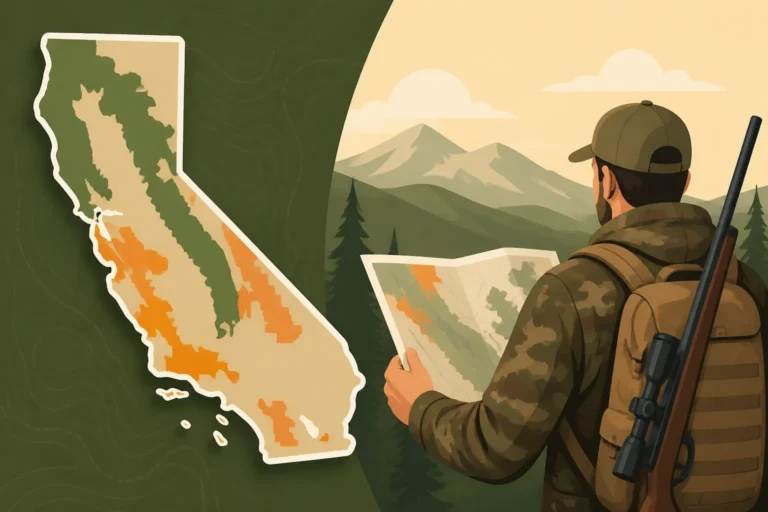
Knowing your exact deer unit boundaries is non-negotiable when hunting in Six Rivers. These boundaries are typically defined by major rivers, prominent ridges, forest roads, or sometimes even county lines. Accidentally crossing into an adjacent deer unit for which you don't hold a valid tag, even by a few yards, constitutes a serious violation. This is where meticulous map reading and GPS use truly shine. Before your hunt, spend time with CDFW's official hunting zone maps, cross-referencing them with detailed topographic maps and satellite imagery. Mark the boundaries clearly on your physical map and load them into your GPS device or mapping app. Modern tools like onX Hunt provide real-time location data on top of detailed land ownership and game unit boundaries, which can be an absolute lifesaver when you're deep in unfamiliar canyons where trails fade and landmarks blur. Always double-check your position before making a move, especially if you're in an area where multiple D-zones converge.
Strategies for Hunting Deer in Six Rivers National Forest
Success in Six Rivers National Forest often comes down to adapting your hunting style to the terrain and the deer's behavior. There's no one-size-fits-all approach here; you'll need a diverse toolkit of tactics to navigate the dense timber, steep canyons, and regenerated clear-cuts. Patience, persistence, and a willingness to learn from every outing are your best assets.
Spot-and-Stalk in Varied Terrain
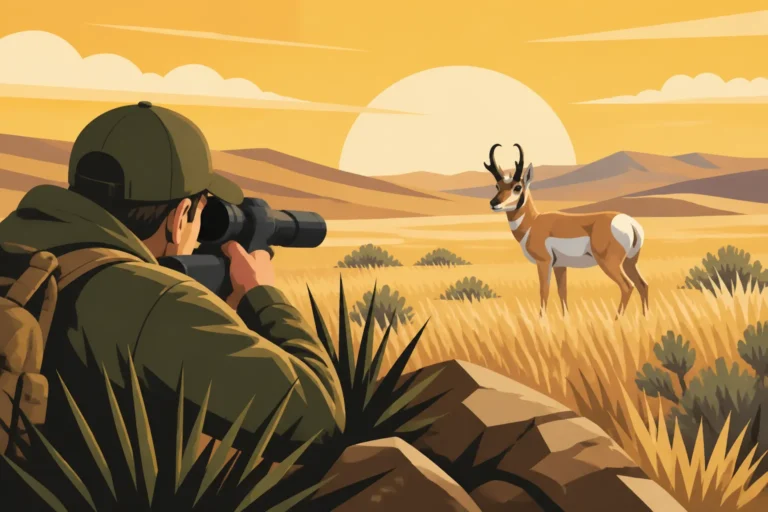
While Six Rivers is known for its thick cover, there are still ample opportunities for spot-and-stalk hunting, especially in more open areas. Think burn scars where new growth attracts deer, rocky slopes above timberline, or recent clear-cuts that offer both food and visibility. The key here is to find a good vantage point, settle in, and meticulously glass every inch of terrain. Use high-quality binoculars and a spotting scope to pick apart distant dark timber edges, brushy pockets, and shadowy ravines. Pay close attention to subtle movements, the flick of an ear, or an unnatural horizontal line in the vertical landscape. When you spot a deer, the real work begins: planning your approach. This means using terrain features for cover, moving slowly and deliberately, and always paying attention to the wind. Spot-and-stalk requires incredible patience; you might spend hours glassing before seeing anything, then another hour or more making a careful move on a buck. Glassing a Canyon for a Bedded Buck
Still-Hunting the Dense Timber
Much of Six Rivers National Forest is a vast expanse of dense timber and brush, which makes classic spot-and-stalk challenging, if not impossible. This is where still-hunting truly shines. Still-hunting involves moving through the woods at an incredibly slow pace, taking one or two steps, then pausing for several minutes to scan, listen, and observe. You're trying to blend into the environment, becoming part of the forest, rather than an intruder. Focus on areas with good deer sign – fresh tracks, rubs, browsed vegetation, and bedding areas. Pay attention to changes in elevation, saddles, and creek bottoms, as these often act as natural travel corridors. When still-hunting, use the wind to your advantage, always moving into it or across it to keep your scent from reaching deer. The sounds of the forest – a rustling leaf, a snapping twig – can betray your presence or reveal a deer's. Move with purpose but without haste, letting your eyes and ears do most of the hunting. This method is incredibly effective for finding those elusive blacktails that rarely venture into the open. Still-Hunting California's Sierra Nevada Timber
Leveraging Burn Scars and Regeneration Areas
Fire is a natural part of the Six Rivers ecosystem, and while devastating, burn scars can transform into incredible deer habitat after a few years. The new growth that sprouts in these areas provides a rich buffet of forage for deer. More importantly for hunters, burn scars often offer improved visibility compared to the dense, unburnt timber. You can glass further and more effectively, spotting deer browsing on new shoots or bedded down in the regenerating cover. When hunting burn scars, look for the edges where the burned area meets unburned timber – these transition zones are prime spots for deer to feed and then retreat into security cover. However, always exercise extreme caution in burn areas. Snags (dead standing trees) can fall without warning, and the ground can be unstable, especially after rain. Access roads might be washed out, and trails obliterated. Research recent fires and consult with the Forest Service about current conditions before venturing into these areas. Despite the hazards, a properly scouted and safely hunted burn scar can be one of the most productive places to find a Six Rivers buck. Hunting a National Forest Burn Scar
Essential Gear and Preparedness for Six Rivers
Hunting Six Rivers National Forest means being prepared for anything. The terrain is rugged, the weather is fickle, and distances can be vast. Your gear choices will directly impact your comfort, safety, and ultimately, your success. Cutting corners here is an invitation for misery, or worse.
Footwear, Clothing, and Navigation
Good quality, waterproof boots are non-negotiable. You'll be traversing steep, often slippery slopes, crossing wet drainages, and pushing through dense, dew-laden brush. Look for boots with excellent ankle support and aggressive tread. For clothing, a reliable layering system is key. You might start a morning hunt in bone-chilling fog, only to have the sun burn through by midday, followed by an afternoon rain shower. Base layers that wick moisture, insulating mid-layers, and a waterproof, breathable outer shell will keep you comfortable in changing conditions. Earth-tone or camo patterns that blend with the local flora are always a good choice.
Navigation is paramount in this vast forest. A quality GPS unit or a robust mapping app like onX Hunt on your phone (with downloaded offline maps!) is essential. Don't forget a compass and a paper map as backup; electronics can fail. For truly remote areas, a satellite communicator is a smart investment, allowing you to send messages or call for help even without cell service. Six Rivers Bottomland Public Access
Optics for Dense and Open Country
Your optics are your eyes in the dense Six Rivers environment. A pair of 10×42 or 12×50 binoculars will be your primary tool for scanning timber, picking apart brush, and evaluating deer at moderate ranges. Look for good low-light performance, as deer are often most active at dawn and dusk. For those longer-range observations, especially in burn scars, clear-cuts, or across canyons, a compact spotting scope (around 15-45x or 20-60x) mounted on a lightweight tripod can be invaluable. It allows you to definitively judge a buck's antlers without having to make a costly stalk on a smaller deer. A rangefinder is also crucial; judging distances in steep, broken country is notoriously difficult, and a precise range will ensure an ethical shot. Invest in the best optics you can afford; they will directly enhance your ability to find and assess deer. Best Spotting Scope for a Blacktail Buck
Weaponry and Non-Lead Ammunition
When it comes to firearms for deer hunting in Six Rivers, most common deer calibers will suffice. Popular choices like .270 Winchester, .30-06 Springfield, or .308 Winchester are excellent for blacktail deer, offering a good balance of power and manageable recoil. Accuracy is far more important than raw power, especially in areas where shots can be steep or require threading a bullet through timber. If you're an archery hunter, ensure your bow is tuned, and your broadheads are razor-sharp and flying true. Rifles and Calibers for California Big Game
A critical consideration for all hunters in California is the statewide non-lead ammunition requirement. This means you must use non-lead bullets for hunting all big game and small game with firearms. This law applies throughout Six Rivers National Forest. Familiarize yourself with approved non-lead projectiles and be sure to zero your rifle with your chosen non-lead load well before season. Copper projectiles are a popular choice and perform exceptionally well on deer-sized game. Choosing Non-Lead Rifle Ammunition in California
Respecting Wildlife and the Environment
Hunting in a place as wild and pristine as Six Rivers National Forest comes with a significant responsibility. It's not just about pursuing game; it's about being a steward of the land and demonstrating respect for the environment and its inhabitants. Our actions in the field reflect on all hunters, so let's ensure they are positive.
Practicing Ethical Hunting
Ethical hunting begins long before you pull the trigger. It involves understanding the animal you're pursuing, its habitat, and its behavior. In the field, it means taking only clean, ethical shots that result in a quick, humane harvest. If you make a shot and the animal doesn't go down immediately, it's your responsibility to follow up diligently, even if it means blood trailing for hours or even until the next morning. Knowing how to properly field dress your animal is essential, especially in warmer conditions common during early season hunts, to preserve the meat. Report your deer harvest as required by the CDFW, which is crucial data for wildlife management. These practices not only honor the animal but also contribute to the positive public perception of hunting. California Deer Reporting Requirements
Leave No Trace Principles
The "Leave No Trace" philosophy is more than just a catchy phrase; it's a set of principles that every hunter should embody. This means packing out everything you pack in, including all trash, spent casings, and any other refuse. Avoid cutting live trees for blinds or campfires. Stay on designated roads and trails where possible to prevent erosion. When crossing streams, do so carefully to minimize disturbance to water quality. Respecting private property boundaries adjacent to the forest is also part of this ethic. Always get explicit permission if there's any chance you might retrieve game from private land. By leaving no trace, we ensure that the next hunter, hiker, or outdoor enthusiast can enjoy the same pristine environment we did.
Safety in Remote Terrain
The remote nature of Six Rivers National Forest means you are often far from immediate help. Personal safety should always be your top priority. Always inform someone of your hunting plans, including your route, where you intend to hunt, and when you expect to return. Ideally, hunt with a partner, especially in such challenging terrain. Carry a well-stocked first-aid kit, and know how to use it for common hunting injuries or emergencies. Be prepared for unexpected nights out; carry emergency shelter, extra layers, a fire-starting kit, and enough water/purification tablets.
Beyond environmental hazards, be aware of the wildlife around you. While rare, encounters with black bears are possible, so know how to react. Mountain lions also inhabit the area, though they are rarely seen. More common are encounters with venomous snakes, particularly rattlesnakes, especially in drier, warmer areas. Be vigilant, know how to identify them, and understand how to avoid them. California Rattlesnake Encounters Afield Being prepared for these eventualities can make the difference between a minor inconvenience and a serious emergency.
| Six Rivers Terrain Type | Typical Deer Behavior | Best Hunting Strategy | Required Gear Considerations |
|---|---|---|---|
| Dense Redwood/Fir Timber | Seek thick cover, nocturnal, use established trails | Still-hunting, focus on creek bottoms, saddles, and edges | Quiet clothing, good navigation, close-range optics |
| Brushy Chaparral Slopes | Bedded in thick brush, feed in openings | Spot-and-stalk (if openings allow), slow still-hunting | Durable pants, good boots, long-range optics, patience |
| Recent Burn Scars | Feed on new growth, retreat to unburnt edges | Glassing from vantage points, ambush along transition zones | Spotting scope, rangefinder, awareness of unstable ground/snags |
| Steep River Canyons | Use as travel corridors, bed on benches | Still-hunting, ambush water sources, utilize thermals | Excellent boots, lightweight pack, satellite communicator, water filter |
| High Elevation Ridges | Travel routes, feeding on mast crops, escape cover | Glassing, still-hunting saddles and ridge lines | Layered clothing, quality binoculars, map/GPS, prepare for variable weather |
Disclaimer
This article is for general informational purposes only and does not constitute professional advice. Laws, prices and regulations vary by location and change over time. Consult a qualified professional for guidance on your specific situation.