Six Rivers Bottomland Public Access
One of the most frustrating aspects of hunting the vast expanse of California's Six Rivers National Forest can be figuring out where the "public" land actually is, especially when you're eyeing those lush, game-rich bottomlands. These low-lying areas, often adjacent to rivers and creeks, look like prime deer and bear habitat, but getting into them legally and effectively can feel like cracking a secret code. This guide aims to demystify public access to the bottomlands within the Six Rivers National Forest, helping you locate, navigate, and successfully hunt these often-overlooked treasures.
Understanding the Unique Nature of Six Rivers Bottomlands
The Six Rivers National Forest, stretching across parts of Del Norte, Humboldt, Siskiyou, and Trinity counties, is a rugged tapestry of dense timber, steep canyons, and, yes, those valuable river and creek bottomlands. These areas are distinct from the high-country ridges or vast clear-cuts you might typically associate with public land hunting. They offer unique challenges and immense rewards.
Defining "Bottomland" in the Six Rivers Context
When we talk about bottomlands in Six Rivers, we're not always referring to flat, marshy plains like in other parts of the country. Here, "bottomland" typically describes the relatively flatter ground found along major river systems like the Trinity, Klamath, and Mad, as well as their many tributaries. These areas are often characterized by alluvial soils, creating a rich environment for a variety of vegetation that thrives with more consistent moisture. Think dense riparian zones, stands of larger conifers mixed with alder and maple, and thick brush choking the understory. These are the lifeblood areas that draw deer, bears, and even wild pigs seeking food, water, and security cover. They might be narrow strips hugging a creek or wider floodplains where a river meanders. The key is their proximity to water and their generally lower elevation compared to the surrounding steep slopes.
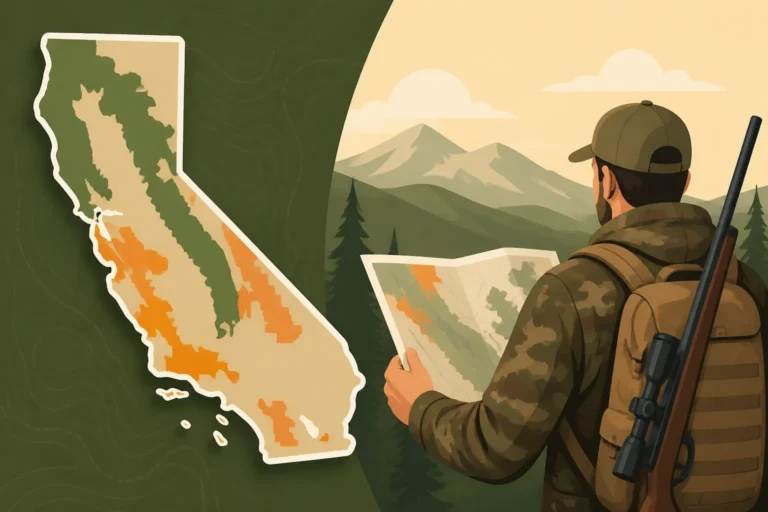
A common misconception is that all bottomland is easily accessible. Often, these areas are bisected by private timber holdings or small parcels of rural residential land that checkerboard the public domain. This makes understanding land ownership absolutely critical. Without a solid mapping tool, you might unknowingly trespass or spend valuable hunting time trying to access a prime spot only to find it's privately owned.
Identifying Key Access Points and Adjacent Terrain
Accessing Six Rivers bottomlands usually means finding specific entry points from forest roads, small gravel logging spurs, or even designated trailheads that drop into river canyons. Unlike sprawling national grasslands, many of these bottomland areas require significant vertical descent to reach. You might start your hike on a high ridgeline, only to spend an hour or more carefully working your way down into a creek drainage. This rugged topography means that "public access" isn't always a simple walk from your truck. It often involves navigating steep, overgrown trails, or forging your own path through dense brush.
The adjacent terrain plays a huge role in how game uses these bottomlands. Deer and bear will often bed on the steep, north-facing slopes directly above the bottomlands, utilizing the thermal currents to detect danger and then dropping into the lush cover to feed, drink, or escape hunting pressure. Ridges that funnel down into these bottomlands are natural travel corridors. Understanding these transitions, from steep timber to riparian edges, is vital for predicting game movement. Tools like onX Hunt become indispensable here, allowing you to visualize elevation changes, topo lines, and pinpoint those crucial public land fingers stretching into river corridors, guiding your approach. You can layer satellite imagery with topo maps to find the best entry routes and identify those hard-to-reach pockets that see less pressure. For broader planning, understanding the Six Rivers National Forest Deer Units can give you an idea of overall deer density in different sectors.
Common Game Species in These Wet Environments
The bottomlands of Six Rivers are veritable magnets for several key game species. Columbia blacktail deer are perhaps the most sought-after. They thrive in the mix of dense cover, water sources, and diverse forage found along these drainages. Bears also frequent these areas, especially when berry bushes are fruiting or acorns are dropping from oaks that often line the edges of these zones. During the fall, these areas can be absolute hotspots. Wild pigs, though less common than blacktails, can also be found rooting around in the soft, moist earth, particularly in areas with a good mast crop.
A real-life scenario: Imagine it's early October, rifle season is open, and a cool front has just moved through. You've located a public parcel of bottomland along the Trinity River that's bordered by steep private timberland. Your onX Hunt map shows a public access point off a Forest Service road that leads down a steep, winding trail into a productive riparian zone. This specific area is known for its dense alder thickets and patches of wild grapes. You might focus on still-hunting or setting up an ambush point where deer trails intersect near water or heavy cover. Bear sign, like scat and claw marks on trees, would indicate their presence, making this a multi-species opportunity.
Strategies for Effective Hunting in Six Rivers Bottomland
Hunting these bottomland areas successfully demands a different approach than chasing high-country mule deer or even still-hunting vast tracts of unbroken timber. Patience, stealth, and a keen understanding of game movement in dense cover are paramount.
Reading the Landscape: Sign, Cover, and Water
Bottomlands offer a bounty of resources for game, making sign abundant. Look for fresh tracks in soft, moist soil near water, browse lines on riparian shrubs, and rub or scrape lines along the edges of thicker cover. Bedding areas will often be tucked into the densest alder thickets or under the protective canopy of large conifers, often with an escape route into the steeper terrain above. Water is, of course, everywhere, but discerning preferred water sources or specific crossing points can be key. Deer and bear won't just drink anywhere; they often use established trails to access specific parts of a creek or river. Pay attention to downed logs or gravel bars that serve as natural bridges.
A good strategy is to enter these bottomlands from a higher elevation, if possible, allowing you to glass down into potential feeding areas at first light. However, the density of the vegetation often makes long-range glassing difficult. Instead, focus on finding pinch points, saddles, or benches where trails converge. Think about how deer will naturally navigate through the thickest parts of the bottomland to reach water, food, or escape routes. A well-placed game camera (check Trail Camera Rules on California Public Land first!) along a known travel corridor can provide invaluable intelligence about timing and direction of movement.
| Bottomland Feature | Deer Behavior | Hunter Strategy |
|---|---|---|
| Dense Alder Thickets | Heavy bedding, escape cover | Still-hunt slowly, look for subtle trails |
| Riparian Edges | Feeding, water access, travel | Ambush points, check for fresh tracks |
| Steep Hillside Transition | Bedding above, dropping to feed | Glass edges, hunt thermals (morning/evening) |
| Creek Crossings | Daily travel, water access | Ambush near well-used crossings |
| Old Growth Pockets | Heavy cover, thermal protection | Scrutinize for rubs/scrapes, deep bedding |
Navigating the Dense Vegetation and Water Features
One of the biggest challenges in Six Rivers bottomlands is the sheer density of the vegetation. Blackberries, salmonberry, dense alder stands, and interwoven small trees can create a nearly impenetrable jungle. This isn't wide-open hunting; it's close-quarters work. Still-hunting becomes an exercise in extreme patience and quiet movement. Take one step, pause, look, listen, and repeat. Use natural breaks in the vegetation or game trails, however faint, to your advantage.
Water features also pose obstacles. Creeks can be swollen and swift after rain, making crossings treacherous. Knowing if you can safely cross a stream, or if you'll need to double back, is important. Always assume water will be colder and deeper than it looks. Proper footwear, like tall waterproof boots, is not just recommended, it's essential. You might even find yourself wading through ankle-deep water in places. Don't be afraid to get wet if it means getting to undisturbed ground. Remember that noise carries differently in dense, wet environments, so pay extra attention to your scent and sound discipline.
Approaching and Working Bottomland Hotspots
Successful bottomland hunting often comes down to how you approach and work specific hotspots. Due to the thick cover, deer and bear can be incredibly close without you knowing it. Avoid blowing out an area with a noisy approach. Utilize wind and thermals to your advantage. In the morning, thermals typically pull air uphill, meaning you want to approach from below your target area if possible. In the evening, they typically drop downhill, so a high approach might be better. This is especially true when Wind and Thermals in Steep Sierra Country (which also applies to the coastal ranges of Six Rivers) are at play.
Once you identify a promising area—perhaps a small pocket of hardwoods dropping acorns, or a dense thicket crisscrossed with fresh tracks—you need to work it slowly and thoroughly. Don't just walk through; stalk. Stop frequently, use your binoculars to pick apart every shadow and patch of cover. If hunting with a partner, a slow, methodical push can sometimes move game without stampeding it. One hunter moves quietly ahead, while the other watches for animals trying to slip out the sides or double back. Remember that blacktail deer are notorious for holding tight in heavy cover, often letting hunters walk right past them. A slow, deliberate pace increases your chances of spotting them before they bolt.
Navigating Regulations and Seasonal Considerations for Bottomland Access
Hunting the Six Rivers bottomlands requires a thorough understanding of California's hunting regulations, especially regarding public land access and specific rules for this unique environment.
Specific Rules for National Forest Public Access
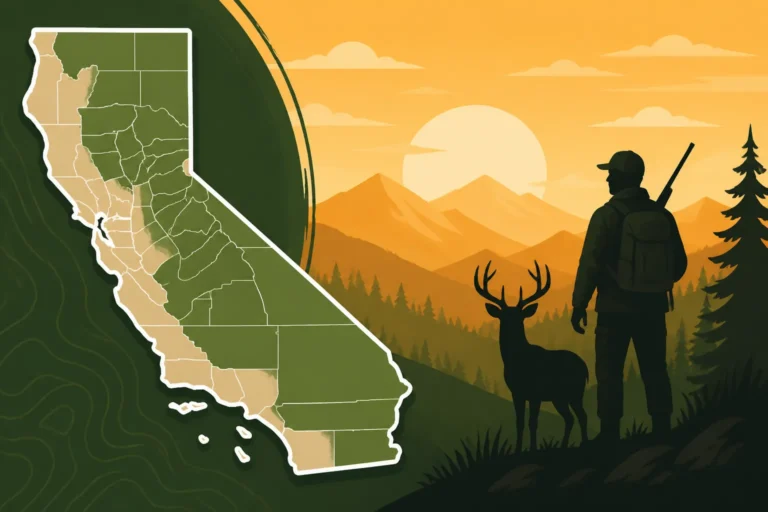
While the general rule for National Forests is "open to public access," the devil is in the details, particularly with checkerboarded land ownership. Many bottomland areas are a patchwork of public and private ownership, making a tool like onX Hunt indispensable for staying on the right side of the law. You must know where the public land begins and ends. Posting private land, even within or adjacent to National Forest boundaries, is common. Always carry your license and tags, and be prepared to show them to any warden or landowner. It's also crucial to be aware of any specific forest-wide or district-specific rules, such as temporary closures for fire danger, logging operations, or other management activities. Before heading out, check the Six Rivers National Forest website for any alerts. While not strictly bottomland related, knowing Camping Rules on California National Forest Land is important if you plan a multi-day hunt. Remember, you might be hunting in areas where California's Non-Lead Ammunition Requirement is in effect, so ensure your rifle is loaded with legal, non-lead bullets.
Seasonal Challenges: Water Levels and Weather
The seasons dictate much about bottomland hunting in Six Rivers. Early archery seasons, like Hunting California's Zone A July Archery Opener or Hunting the Zone C August-September Archery Window, can mean hot, dry conditions where deer are concentrated around perennial water sources, and vegetation, while thick, might be less saturated. However, as fall progresses into rifle seasons, the weather often turns. Rain can quickly swell rivers and creeks, making crossings dangerous and turning game trails into muddy quagmires. This changes game behavior, too; deer might spread out more as temporary water sources become available, but they'll still rely heavily on dense cover for protection from the elements.
Later in the season, particularly if you're hunting zones that extend into November, cold fronts can bring snow to higher elevations, pushing deer down into the lower bottomlands for food and shelter. Always pack for dynamic weather conditions; a warm, sunny morning can quickly turn into a cold, wet afternoon in the Coast Range.
Respecting Private Land Boundaries Within the Bottomlands
This cannot be stressed enough: know your boundaries. The Six Rivers National Forest, like many public land areas in California, has a complex ownership mosaic. Private timber companies, small landowners, and even some historical homesteads can own tracts of land completely surrounded by or adjacent to public forest. These private lands often include prime bottomland habitat. Relying solely on physical signs can be misleading, as fences might be down, or signs weathered. A GPS-enabled mapping app like onX Hunt or GoHunt is not just helpful; it's almost mandatory. It allows you to see property lines in real-time on your phone, preventing accidental trespass which can lead to hefty fines and loss of hunting privileges.
Always err on the side of caution. If you're unsure if a patch of land is public or private, stay off it. If you happen to down game that crosses onto private land, Retrieving Game From Private Land in California has specific legal requirements, often necessitating immediate contact with the landowner for permission to retrieve. Ignoring these rules can severely damage the reputation of all hunters.
Essential Gear and Preparedness for Six Rivers Bottomland Hunts
Hunting these unique environments demands specialized gear to ensure safety, comfort, and success. The wet, dense, and often steep terrain will test both you and your equipment.
Footwear and Clothing for Wet and Brushy Conditions
Forget your lightweight mesh hikers for these hunts. You need serious footwear. Waterproof, sturdy boots with excellent ankle support are non-negotiable. Look for boots designed for wet conditions, perhaps even rubber boots or knee-high models if you anticipate frequent wading. Leather or synthetic boots with GORE-TEX or similar waterproof membranes are excellent choices. A good pair of Best Boots for Steep Wet-Season Sierra Trails (which often applies to Six Rivers as well) can make all the difference, preventing soaked feet and potential blisters.
Your clothing system should prioritize durability, water resistance, and layering. Outer layers should be brush-resistant to withstand pushing through thickets of blackberry and alder. Waterproof and breathable rain gear is essential, even if the forecast looks clear. Layering is key for managing your body temperature during strenuous climbs and descents, especially when you might be Layering for a Cold Sierra Morning but expecting a warm afternoon. Blaze orange or pink, though not always mandatory for deer hunting in California, is always a good idea for safety when hunting thick cover.
Navigation Tools for Dense, Often Featureless Terrain
Because visibility can be extremely limited in dense bottomlands, traditional landmark-based navigation can be difficult. A GPS device or, more commonly and effectively, a smartphone with a robust hunting app like onX Hunt is critical. Download offline maps for your hunting area before you lose cell signal, as many bottomlands are dead zones. These apps allow you to mark your vehicle, trails, and any sign you find, ensuring you can navigate in and out safely. Knowing Best Offline Map App for BLM Desert Land might seem out of place, but the principles of offline map use are universal to remote public land.
A physical compass and map are always wise backups, just in case your electronics fail. Learn how to use them. The last thing you want is to be disoriented in a thick, wet canyon bottom as dusk approaches.
Packing Smart: Safety and Game Recovery
Your pack should be equipped for both emergencies and success. Beyond your navigation tools, carry a first-aid kit, a headlamp with extra batteries (essential for those unexpected late-evening recoveries), water, and high-energy snacks. A knife for field dressing, game bags, and perhaps a small saw are also crucial. Given the steep terrain and dense cover, Packing Meat Out of a Steep Canyon is a very real possibility, so consider a lightweight frame pack or game cart if your access allows for it.
Bear spray is a prudent addition, especially if you're hunting an area with a healthy bear population. A satellite communicator or personal locator beacon (PLB) can literally be a lifesaver in areas with no cell service, allowing you to call for help in an emergency. Finally, remember to plan for game recovery. If you down a deer in a deep, brushy canyon bottom, getting it out can be a monumental task. Think about how you'll quarter and pack out your animal before you even take the shot.
| Item Type | Essential Gear for Six Rivers Bottomlands | Why You Need It |
|---|---|---|
| Navigation | GPS-enabled mapping app (e.g., onX Hunt) | Real-time land boundaries, topo, marking waypoints |
| Offline maps | No cell signal in many remote areas | |
| Compass & physical map | Electronic backup | |
| Footwear | Waterproof, high-ankle support boots | Mud, creek crossings, steep, uneven terrain |
| Gaiters | Keep debris out of boots, protect lower legs from brush | |
| Clothing | Durable, brush-resistant layers | Protect from thorns and dense vegetation |
| Waterproof & breathable rain gear | Frequent rain, wet brush, creek spray | |
| Blaze orange/pink vest (optional but wise) | Increased visibility in dense cover | |
| Pack/Carry | Daypack (25-40L) | Carry essentials, water, snacks, layers |
| Game bags | Keep meat clean and cool for recovery | |
| Field dressing kit (knife, gloves, wipes) | Immediate processing of harvested game | |
| Headlamp & extra batteries | Early morning entries, late evening recoveries | |
| Safety | First-aid kit | Minor injuries from brush, falls |
| Bear spray (if in bear country) | Deter unexpected bear encounters | |
| Satellite communicator/PLB (optional) | Emergency communication outside cell service |
Navigating the Six Rivers bottomlands for hunting is a challenging but incredibly rewarding endeavor. With the right preparation, knowledge of regulations, and appropriate gear, you can unlock some of California's most productive and wild hunting experiences.
Disclaimer
This article is for general informational purposes only and does not constitute professional advice. Laws, prices and regulations vary by location and change over time. Consult a qualified professional for guidance on your specific situation.