Hunting Six Rivers’ Redwood Timber
Hunting California's majestic Six Rivers National Forest, especially in the towering redwood timber, can feel like stepping into a different world—one that's incredibly beautiful but also presents unique challenges for hunters. Many folks find themselves overwhelmed by the sheer density of the forest, the steep terrain, and the seemingly impenetrable cover, making it tough to locate and pursue game. This guide is here to walk you through the specific strategies, gear, and mindset you'll need to successfully hunt deer and other game within the unique environment of the Six Rivers' redwood and mixed-conifer forests.
Understanding Six Rivers National Forest and Redwood Timber
Six Rivers National Forest stretches across a vast and rugged portion of northwestern California, encompassing an incredible diversity of landscapes. But it's the towering redwood and mixed evergreen timber that truly defines much of its character, especially for those of us with a hunting tag in hand. This isn't your open, rolling oak country; it's a world of immense trees, deep shadows, and often very limited visibility.
What Makes Six Rivers Unique for Hunters?
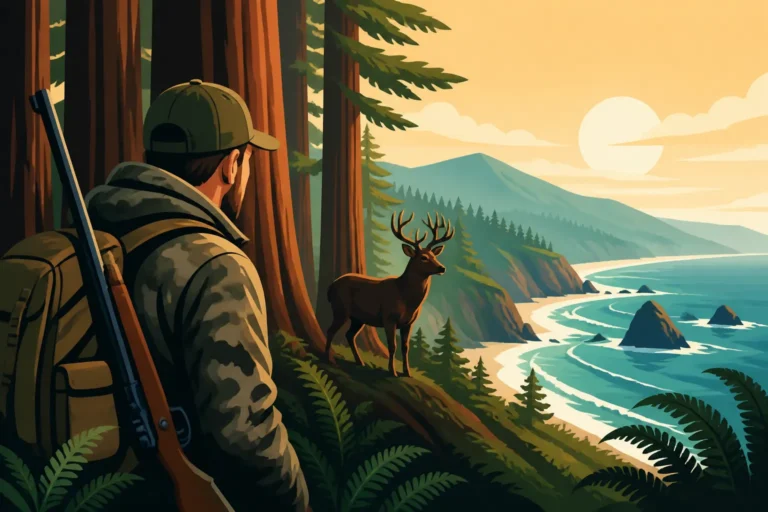
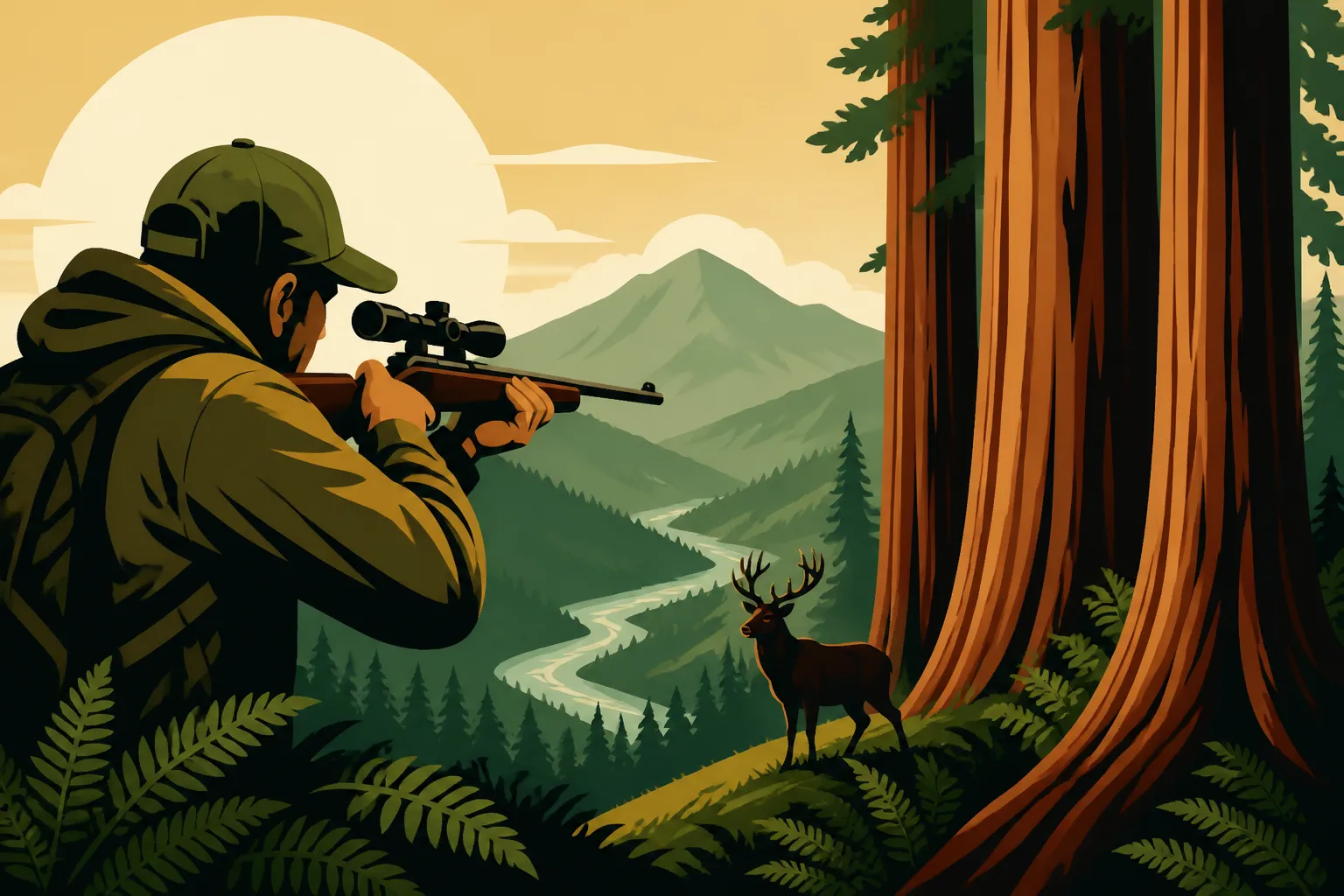
When you step into the Six Rivers, especially in areas with significant redwood and Douglas fir stands, you're immediately struck by the scale. The trees are colossal, forming a dense canopy that filters out much of the sunlight, leaving the forest floor relatively open in places, but incredibly thick with underbrush in others. This creates a mosaic of habitat that can be both frustrating and rewarding for hunters. Deer, like the Columbia blacktail that call this region home, are masters of navigating this dense cover. They use it for bedding, feeding, and escaping pressure.
The terrain itself is often steep and broken, cut by numerous drainages and creeks. You'll find yourself climbing ridges that seem to go on forever, only to drop into equally steep canyons. This constant elevation change, combined with the often-wet conditions, means that physical fitness and careful navigation are paramount. Unlike some of the more open D-zones, where you might glass vast expanses, hunting Six Rivers is often an intimate affair, requiring you to get close to the game. It demands a different kind of patience and an ability to read subtle signs that are easily missed in such a grand environment. The dense timber also impacts wind currents, creating swirling thermals that can carry your scent in unpredictable ways.
Navigating the Redwood Environment
Moving through redwood timber can feel like pushing through a wall, especially if you're not used to it. The understory, depending on the area, can range from relatively clear duff under old-growth redwoods to incredibly thick rhododendron, huckleberry, and tanoak brush in regenerating clear-cuts or less mature stands. This makes for slow going, creating noise with every step, which is a major concern when hunting wary blacktail. Your visibility is often limited to mere yards, making long shots rare and close-quarters encounters the norm.
Old logging roads, many of them gated or overgrown, crisscross the forest and can be a blessing or a curse. They offer easier travel but can also be corridors for other hunters or recreational users. Learning to differentiate between actively used roads and those that have become deer trails is key. The silence in some of the deeper redwood canyons can be profound, amplifying every snap of a twig or rustle of leaves, both yours and the animals'. This environment demands hyper-awareness of your surroundings, both audibly and visually. You'll need to develop an eye for anomalies in the dense cover—a horizontal line of a deer's back against the vertical tree trunks, the flicker of an ear, or the glint of an antler. Hunting Six Rivers' Redwood Timber means being acutely tuned into every detail.
Scouting Strategies for Redwood Timber
Effective scouting in Six Rivers National Forest, particularly within its dense redwood and mixed-conifer timber, is absolutely critical. You can't just show up on opening day and expect to stumble into game. The sheer amount of cover means deer can be right under your nose and you'd never know it. Smart scouting, both from your living room and on the ground, will give you a significant edge.
Using Technology to Your Advantage
Before you ever set foot in the woods, modern mapping applications can be your best friend. Tools like onX Hunt and GoHunt offer invaluable layers that help you dissect the terrain from afar. Start by identifying the public land boundaries—a crucial step in California. Then, look for features that might concentrate deer. Think about topography: saddles, benches, natural funnels between drainages, and areas where steep slopes might moderate into more negotiable terrain. These are all places deer will use for travel and bedding.
Next, focus on vegetation. While redwood timber is dense, look for changes within it. Are there areas of recent timber harvest (clear-cuts or selective logging)? These can be goldmines for browse and new growth, attracting deer. Old growth might offer more open understories for easier movement and bedding cover. Seek out water sources—springs, creeks, or seeps—especially as the season progresses and things dry out. Remember, these apps allow you to mark waypoints, measure distances, and understand elevation changes, giving you a detailed plan before you ever strap on your boots. You can even check layers for specific timber types, which can hint at the understory you'll encounter.
On-the-Ground Scouting Techniques
Once you've done your digital homework, it's time to put boots on the ground, ideally weeks or even months before the season opens. In dense redwood timber, you're not looking for deer out in the open; you're looking for their sign. Pay close attention to trails—well-worn paths are obvious, but also look for more subtle routes deer use to move through the thickest cover. These often follow the path of least resistance, around dense brush patches or along the base of steep slopes.
Look for rubs on small trees and scrapes on the ground, especially as the rut approaches. These are clear indicators of buck activity. Bedding areas will often be found on benches just below a ridge top, in dense cover that offers both protection from the elements and a good vantage point to watch their backtrail and downwind approach. In the Six Rivers, these might be in thick rhododendron patches or under the canopy of fallen giants. Don't forget to check around water sources for fresh tracks. As you move, practice "still-hunting" even when scouting. Move slowly, pause frequently, and scan the woods not just for deer, but for the subtle clues they leave behind. Think about Finding Sign in a Coastal Oak Woodland, but adapt it to the redwood environment. The principles of observation remain the same, even if the flora changes.
Hunting Tactics Specific to Redwood Timber
Hunting in Six Rivers' redwood timber requires a unique approach compared to more open environments. You can't rely on long-range glassing or covering miles of open ground quickly. It's about patience, stealth, and intimate knowledge of the immediate forest around you.
Still-Hunting and Ambush Techniques
Given the limited visibility and dense cover, still-hunting is often the most effective tactic in redwood timber. This means moving incredibly slowly, taking a few steps, then pausing for several minutes to observe, listen, and scan. Think of it like a slow, deliberate crawl through the forest. Focus on reading the terrain: follow game trails, move along the contours of ridges, and explore benches and saddles where deer are likely to travel or bed. Pay attention to wind and thermals, which can be tricky in this steep, broken country. Deer will often bed with a good view of their backtrail and their nose into the wind, letting their eyes and nose cover their escape routes.
Ambush techniques also work well, especially near bedding areas, water sources, or natural funnels. Identify these key spots during your scouting trips and consider setting up before first light or hunting into them during the evening hours. A natural funnel could be a narrow saddle between two drainages or a constricted path along a creek bottom. Blending into the environment is crucial; pick a spot that breaks up your outline and offers clear shooting lanes, however short they might be. Remember, shots are likely to be close and fast. For more on navigating dense timber, consider the insights from Still-Hunting California's Sierra Nevada Timber, applying the slow, methodical approach to the unique Six Rivers environment.
Dealing with Weather and Visibility
The coastal influence on Six Rivers National Forest means you're likely to encounter a variety of weather conditions, often within the same day. Rain, fog, and low-hanging clouds are common, especially early in the season or during fall storms. While these conditions can make hunting challenging for humans, they can actually benefit you. Rain and wet conditions can help muffle your footfalls, allowing for quieter movement through the dense forest. Fog reduces visibility for both you and the deer, often making them feel more secure and less likely to bolt at the first sign of danger.
However, these conditions also demand preparedness. Waterproof and quiet outerwear is essential. A good headlamp with fresh batteries is a non-negotiable for navigating pre-dawn or post-dusk through dense woods. Optics can fog up, so bring lens cloths and consider anti-fog treatments. Low light conditions in the redwoods can be intense, even in the middle of the day, making it harder to spot deer or identify legal animals. Take your time, confirm your target, and be ready for very limited shooting light. Your ability to adapt to these conditions, rather than being deterred by them, will significantly increase your chances of success.
Essential Gear for Redwood Timber Hunting
Hunting in Six Rivers' redwood timber is physically demanding and often requires specialized gear to ensure comfort, safety, and success. The dense cover, steep terrain, and variable weather mean your equipment choices matter.
Clothing and Footwear
Forget the cotton, especially if you expect rain or heavy dew. You need durable, quiet, and moisture-wicking layers. A good base layer that pulls sweat away from your body is critical, even on cooler days, given the exertion of climbing steep slopes. Mid-layers for insulation should be easy to add or remove as conditions change. For outerwear, prioritize something waterproof but breathable, and quiet. Rustling fabrics will give you away in the silent redwood canyons. Camo patterns that break up your outline in deep timber, mimicking tree trunks and shadows, will serve you well. Best Camo for Oak Woodland in August can offer insights on pattern effectiveness, which often translates to other timbered environments.
Footwear is arguably the most critical gear item. You'll be traversing steep, uneven terrain, often covered in slick duff, wet leaves, or loose rocks. Sturdy, waterproof boots with excellent ankle support and aggressive tread are non-negotiable. Look for boots that can handle both the relentless climbing and the often-damp conditions of the forest floor. Breaking in your boots well before the season is paramount; blisters are a hunt-killer. Consider gaiters to keep debris and moisture out of your boots, especially when pushing through thick brush or crossing shallow creeks. When comparing options, check out tips like Best Boots for Steep Wet-Season Sierra Trails for durable, comfortable choices, understanding that the principles apply to similar challenging terrains.
Navigation and Safety
Given the dense, often featureless terrain of the redwoods, reliable navigation is essential. A GPS device or a robust mapping app on your phone (like onX Hunt or GoHunt, with downloaded offline maps) is an absolute must. Cellular service is unreliable at best in many parts of Six Rivers, so don't count on it. Always carry a traditional compass and a physical map as a backup, and know how to use them. Marking your truck, important trails, and any game sign as waypoints will save you immense frustration and potential danger.
Beyond navigation, personal safety should be a top priority. A first-aid kit stocked for remote emergencies is vital. Consider carrying bear spray, as black bears are common in the Six Rivers. A satellite communicator (like a Garmin inReach or Zoleo) can be a lifesaver, allowing you to send messages or call for help even without cell service. Pack enough water and high-energy snacks for longer than you expect to be out, and always let someone know your hunting plan, including your expected return time and exact location. The solitude of the redwood timber is part of its allure, but it also means you're often on your own if something goes wrong.
Comparing Tools for Scouting and Navigation in Redwood Timber
| Feature | onX Hunt | GoHunt | Traditional Map & Compass |
|---|---|---|---|
| Primary Use | Detailed land ownership & hunting layers | Western hunting draw odds & advanced mapping | Backup, basic navigation, no battery needed |
| Offline Mapping | Excellent, critical for no cell service | Good, requires premium subscription | Always offline |
| Topography | Detailed topo lines, 3D views | Detailed topo lines, often integrated data | Basic topo lines |
| Vegetation Layers | Specific timber type, burn scar layers | Habitat layers, often species-specific | Limited to general forest annotations |
| Access Roads | Identifies public/private roads, gates | Road networks, potential access points | May show main roads, less detail on logging |
| Waypoint/Track | Easy to mark & follow | Easy to mark & follow | Manual marking & plotting |
| Cost | Subscription-based | Subscription-based, higher tiers for draws | One-time purchase of physical items |
| Battery Life | Dependent on phone/device | Dependent on phone/device | None, always functional |
| Learning Curve | Moderate, feature-rich | Moderate to high, extensive data | Low for basics, higher for advanced use |
Disclaimer
This article is for general informational purposes only and does not constitute professional advice. Laws, prices and regulations vary by location and change over time. Consult a qualified professional for guidance on your specific situation.