Hunting the Big Sur Coastal Range
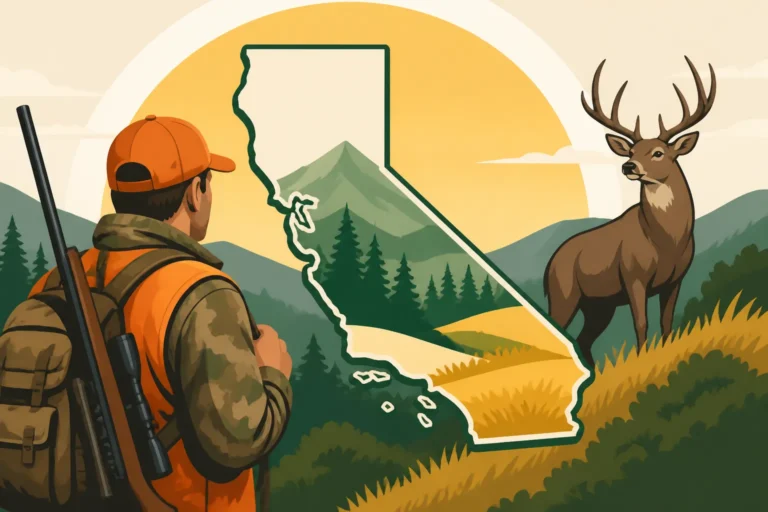
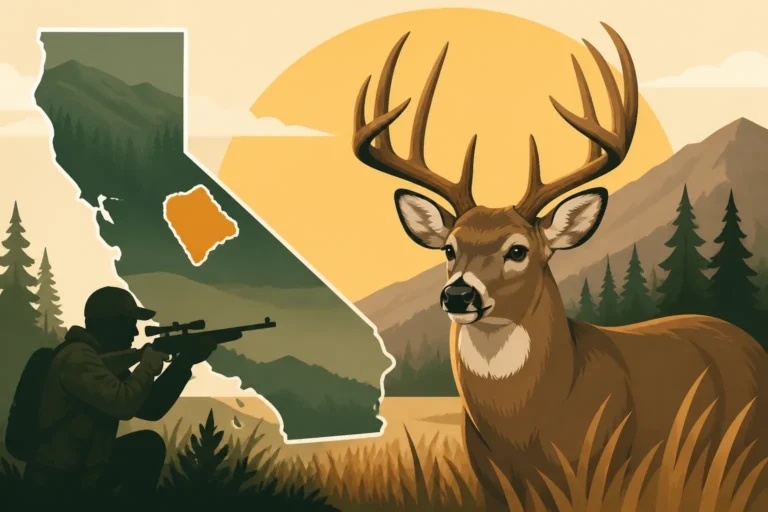
Hunting the Big Sur Coastal Range presents a truly unique challenge for California deer hunters. It’s a place of dramatic beauty, but also incredible ruggedness, dense vegetation, and a complex tapestry of public and private land. Many hunters feel overwhelmed trying to decipher where to even begin in this vast and unforgiving landscape. This guide will cut through that frustration, providing you with actionable strategies and essential knowledge to confidently plan and execute a successful hunt in Big Sur's iconic coastal mountains.
Understanding the Big Sur Terrain and Challenges
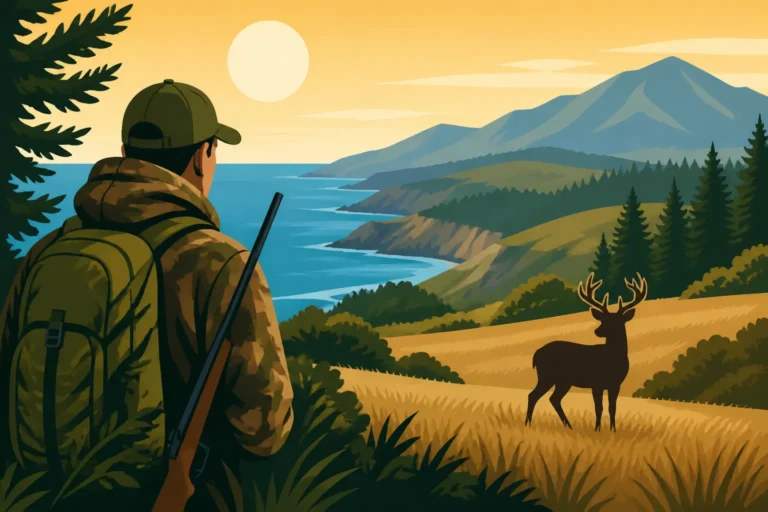
The Big Sur region isn't just a scenic drive; it's a formidable hunting ground defined by its incredibly steep slopes, dense vegetation, and proximity to the Pacific Ocean. Many hunters envision wide-open vistas, but the reality on the ground for a hunter is often thick, tangled brush and incredibly challenging footing. It's a place that demands respect, preparation, and a willingness to work harder than in many other hunting zones in California.
The Rugged Landscape and Vegetation
Imagine canyons that plunge thousands of feet down to the ocean, only to be met by equally steep ridges climbing back up. That's Big Sur. The terrain is characterized by incredibly dramatic elevation changes over short distances, meaning you're almost always climbing or descending. This isn't gentle rolling hills; it's a relentless up-and-down trek that will test your physical limits. The ground is often loose, rocky, and covered in slippery duff, making every step a calculated effort.
Compounding the steepness is the incredibly dense vegetation. You'll encounter vast stretches of chaparral – a thorny, intertwined mix of manzanita, ceanothus, and scrub oak that can be nearly impenetrable. Below the chaparral, or in the folds of canyons, you'll find thick stands of coastal live oak and canyon live oak, creating dense canopies that limit visibility even further. This cover provides exceptional refuge for blacktail deer, allowing them to remain unseen even when you're just yards away. It's a far cry from open-country glassing; here, every bush could be hiding a bedded buck.
The difficulty in moving through this landscape directly impacts your hunting strategy. Long-range shooting opportunities are rare, as visibility is often limited to a few dozen yards. This means hunts here often boil down to close-quarters encounters, requiring stealth, patience, and precise shot placement. Forget about easy walks; expect to push through brush, crawl on hands and knees, and constantly evaluate your next step. It's not for the faint of heart, but the rewards of tagging a blacktail in this wild country are immensely satisfying.
Navigating Public and Private Land Boundaries
One of the biggest headaches when hunting the Big Sur Coastal Range is figuring out where you can actually hunt. Much of the land in and around Big Sur is a complex patchwork of private ranches, conservation easements, and public access points. It’s not uncommon to find a small sliver of public land completely surrounded by private parcels, effectively cutting off access. This can be incredibly frustrating for hunters who assume all vast wilderness areas are open to them.
This is where detailed mapping tools become absolutely non-negotiable. Services like onX Hunt have revolutionized how hunters navigate these complex land ownership boundaries. You can use their app to clearly see public lands (like portions of Los Padres National Forest), private property lines, and even landowner information in some cases. Without such a tool, you risk inadvertently trespassing, which can lead to serious legal issues and give all hunters a bad name. Before you ever set foot on the ground, use these digital maps to identify legal access points, potential pinch points between public and private land, and routes that stay within legal boundaries.
For those parcels that are private, gaining permission is the only way to hunt them. This often means knocking on doors, making phone calls, or even writing letters to local landowners. It takes time, persistence, and a great deal of respect. Some areas might have small, privately leased hunting clubs, while others might be strictly off-limits. Always err on the side of caution; if you’re not 100% sure you’re on public land or have explicit permission, don’t hunt there. Understanding California Trespass and Permission Law is crucial before heading out. The effort to gain private access can be substantial, but it can also open up incredible, less-pressured hunting opportunities.
Target Species and Hunting Seasons in Big Sur
While the Big Sur Coastal Range offers breathtaking views, it's the game animals that truly draw hunters to its rugged slopes. The primary draw is the elusive Columbia blacktail deer, but don't overlook opportunities for wild pigs, which are abundant in certain areas. Understanding their habits and the specific seasons is key to planning a successful hunt.
Blacktail Deer: The Primary Quarry
The Columbia blacktail deer is the undisputed king of the Big Sur hunting experience. These deer are generally smaller than their mule deer cousins found in other parts of California, but they make up for it in their cunning and adaptability to dense cover. They are masters of their environment, able to disappear into thick chaparral with barely a whisper, even when you're incredibly close. Their dark coats and shy nature make them exceptionally challenging to spot, especially in the low light of dawn or dusk when they are most active.
Big Sur falls within California's Zone A for deer hunting, which typically has one of the earliest archery openers in the state, often in July, followed by a general rifle season. The early archery season can be incredibly hot, but it also coincides with the deer's summer patterns, which can involve them seeking water and shade. For a deeper dive into archery hunting in this region, check out Bowhunting California's Zone A Season. The general season, while still challenging, brings cooler weather and can sometimes coincide with early rutting activity, which might make bucks more active. However, success in Zone A is rarely about seeing dozens of deer; it's about spotting that one ghost in the brush and executing a perfect stalk. Familiarize yourself with California Zone A Season Dates well in advance.
Hunting these blacktails requires immense patience and keen observational skills. They often bed down in dense pockets of brush on north-facing slopes, seeking refuge from the sun and wind. They’ll utilize ridge tops and saddles as travel corridors, and knowing how to identify these natural funnels is paramount. Unlike glassing open country for mule deer, finding blacktails in Big Sur often involves picking apart small openings in the brush, looking for an antler tip, a flicker of an ear, or the dark patch of a body against the shadows. Their elusive nature makes harvesting one a truly earned trophy, a testament to your woodsmanship and determination.
Other Opportunities: Wild Pigs and Predators
While blacktails steal the spotlight, the Big Sur Coastal Range also offers thrilling opportunities for wild pig hunting. Wild pigs are an invasive species in California and are present in significant numbers throughout many of the oak woodlands and brushy canyons of Big Sur. Unlike deer, wild pigs can be hunted year-round with the appropriate tag, offering an excellent alternative or addition to a deer hunt. Wild Pig Hunting California Year-Round provides comprehensive information on these animals.
Hunting pigs in Big Sur presents its own unique challenges. They are incredibly tough animals, and the dense cover they inhabit means close-range encounters are common. You'll often find them rooting around oak trees, especially during acorn season, or near water sources. They are particularly active during the cooler parts of the day, moving between bedding areas in thick brush and feeding grounds. While they don't offer the same classic "trophy" appeal as a big buck for some hunters, the challenge and the excellent table fare they provide make them a worthwhile pursuit.
Additionally, predators like coyotes are present throughout the Big Sur ecosystem. While not typically the primary target for most hunters in this region, their presence adds to the wildness of the area. Some hunters enjoy calling coyotes, especially when deer activity is slow, offering another engaging experience. Always ensure you are familiar with regulations regarding predator hunting and proper carcass disposal if you do pursue them. Focus on the primary target, but be aware of the other wildlife that calls this rugged coastline home.
Essential Gear and Tactics for Coastal Range Success
Successfully hunting the Big Sur Coastal Range requires more than just a hunting license and a rifle. The unique challenges of this steep, brushy, and often hot environment demand specific gear choices and a deliberate approach to tactics. Cutting corners on your equipment or strategy here can quickly lead to a miserable, unsuccessful, or even dangerous hunt.
Footwear, Clothing, and Navigation
Your feet are your most important asset in Big Sur. Invest in high-quality, sturdy hunting boots that provide excellent ankle support and aggressive traction. You'll be traversing steep, uneven, often loose terrain, and a twisted ankle far from the trailhead can be a serious problem. Look for boots that are durable enough to withstand constant abrasion from chaparral and resistant to moisture, as coastal fog or unexpected rain can make conditions slick. Many hunters find a mid-height or high-cut boot offers the best balance of support and mobility for this environment. Prioritize comfort and ensure your boots are well-broken in before your hunt. For more on this, check out Boots and Clothing for California's Varied Terrain.
Clothing needs to be versatile and adaptable to rapidly changing conditions. Early season hunts can start with cool, damp coastal fog that burns off quickly, leaving you sweating under a hot sun in the afternoon. Layering is key: start with a moisture-wicking base layer, add an insulating mid-layer for warmth, and top it with a durable, brush-resistant outer layer. Camo patterns that blend with oak woodlands and chaparral will serve you well. Don't forget a wide-brimmed hat for sun protection and good quality gloves to protect your hands when pushing through brush.
When it comes to navigation, a reliable GPS device or a smartphone app like onX Hunt or GoHunt is absolutely essential. Paper maps are a good backup, but the precision and real-time location tracking of digital maps are invaluable for staying on public land, identifying terrain features, and marking waypoints. Cellular service is often non-existent in the deeper canyons and remote ridges, so ensure your maps are downloaded for offline use. A portable power bank is also a wise investment to keep your devices charged. Knowing exactly where you are and where you're going is not just about success; it's about safety in this vast and unforgiving landscape.
| Gear Category | Key Considerations for Big Sur | Recommended Features |
|---|---|---|
| Footwear | Steep, loose, brushy terrain; potential moisture | High ankle support, aggressive outsole, durable construction, waterproof membrane |
| Clothing | Rapid weather changes (fog to sun); dense brush | Layering system (wicking base, insulation, brush-resistant outer), quiet fabric, sun protection |
| Navigation | Remote areas, no cell service, complex boundaries | GPS device or mapping app (onX Hunt, GoHunt) with offline maps, power bank, compass/paper map backup |
| Optics | Dense cover, limited long-range views | Lightweight binoculars (8x-10x), rangefinder for accurate close shots |
| Pack | Carrying essentials, potentially quartered meat | Durable internal/external frame pack, sufficient capacity for day trip or overnight |
| Weapon | Close quarters, tough animals | Rifle or bow suitable for brush, legal non-lead ammunition |
Spot-and-Stalk vs. Still-Hunting Strategies
Hunting Big Sur is less about sitting and waiting and more about active pursuit. The dense cover often negates traditional stand hunting, though a well-placed ground blind can be effective near water sources during dry periods. Instead, hunters typically employ a combination of spot-and-stalk and still-hunting tactics.
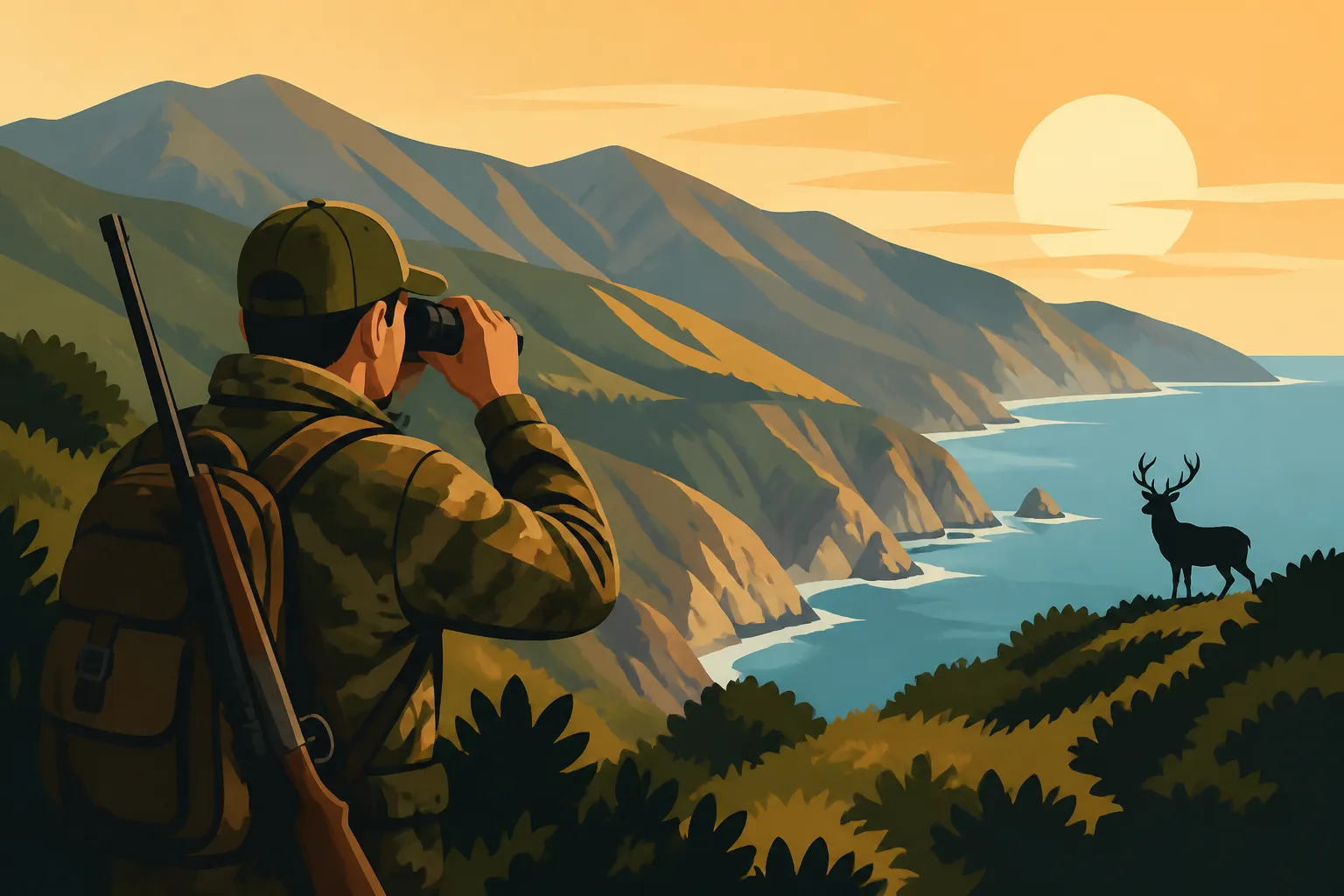
Spot-and-stalk here looks different than in open country. You won't be glassing across vast canyons to pick out a buck a mile away. Instead, you'll be slowly and methodically picking apart smaller pockets of open oak woodland, edges of chaparral thickets, and shaded canyon bottoms. Use good quality binoculars to scrutinize every shadow, every broken branch, every unusual shape. Focus on areas where deer might feed or bed, such as north-facing slopes with dense cover for bedding and nearby areas with acorns or browse for feeding. The key is to climb high, find a vantage point that overlooks a promising basin or ridge, and then patiently glass. Once a deer is spotted, the stalk begins, often through incredibly tough terrain, demanding extreme stealth and often involving long detours to stay out of sight and downwind. Learn more about Glassing a Canyon for a Bedded Buck.
Still-hunting is arguably the most effective tactic for the Big Sur Coastal Range. This involves moving incredibly slowly through the woods, taking one or two steps, then stopping and carefully scanning your surroundings for several minutes. The goal is to imitate a predator, moving quietly enough that you might stumble upon a bedded deer before it bolts. Pay close attention to wind direction and thermals, which are critical in this steep country. Deer rely heavily on their sense of smell, and a shifting wind can quickly give you away. Focus on moving into the wind or with a consistent crosswind, particularly along ridge tops or through saddles. Still-Hunting California's Sierra Nevada Timber principles can be adapted to Big Sur's coastal oak woodlands. This method requires immense discipline, patience, and the ability to focus intently for long periods, but it puts you in the best position for a close-range encounter with a blacktail buck.
Ammunition and Field Care Considerations
California mandates the use of non-lead ammunition for all hunting. This is a crucial regulation to adhere to, especially in areas like Big Sur where conservation efforts for species like the California Condor are paramount. Ensure you have practiced with and zeroed your rifle or chosen your broadheads specifically for non-lead projectiles. These can perform differently than traditional lead bullets, so testing them at the range is non-negotiable for ethical hunting. Choosing Non-Lead Rifle Ammunition in California offers detailed guidance on this topic. It’s also wise to carry enough ammunition for follow-up shots but not so much that it burdens your pack on long, steep climbs.
Field dressing and meat care are paramount, especially during the often-warm early seasons in Big Sur. The combination of steep terrain and warm temperatures means you need to be efficient and prepared. Quartering a deer in the field and packing it out in game bags is often the most practical solution, rather than attempting to drag a whole animal out of a steep canyon. Quality game bags are essential to protect the meat from dirt and insects, and a lightweight but sturdy pack frame can be a lifesaver for hauling heavy loads. Always carry plenty of water for yourself, and if available, extra water to rinse your hands and equipment. Rapid cooling of the meat is critical to prevent spoilage, so plan your extraction route with this in mind.
Consider carrying a satellite communication device. While not directly related to ammunition or field care, it's vital for safety in remote areas with no cell service. In case of an emergency, being able to contact help or check in with family can be life-saving. The ruggedness of Big Sur makes it an area where self-sufficiency and preparedness are not just good ideas, but absolute necessities.
Scouting and Preparation for a Big Sur Hunt
Hunting the Big Sur Coastal Range is as much about the preparation as it is about the hunt itself. Simply showing up on opening day with a tag and a rifle is a recipe for frustration. A successful hunt here begins months in advance with thorough scouting, both from your computer and, if possible, on the ground, coupled with rigorous physical conditioning.
Pre-Season Scouting and E-Scouting
E-scouting from home is your first, and often most critical, step. Utilize high-quality satellite imagery and topographic maps available through platforms like onX Hunt or GoHunt. Start by identifying public land boundaries and potential access points, paying close attention to roads, trails, and any areas that look less steep or brushy. Look for natural funnels, such as saddles between ridge lines, benches on steep slopes, and creek bottoms that might offer travel corridors. Water sources are critical, especially during the dry summer and early fall, so mark springs, seeps, and seasonal creeks.
Focus on identifying areas with a mix of dense cover for bedding and more open oak woodlands for feeding. North-facing slopes often hold more moisture and provide cooler bedding areas. Also, study historical burn scar areas; new growth after a fire can be a magnet for deer. Mark potential glassing points – high spots that offer good visibility into multiple drainages. Pay attention to how the terrain transitions from coastal chaparral to higher elevation timber or grasslands. The more thoroughly you can dissect the landscape on your screen, the more effectively you can plan your on-the-ground efforts.
If possible, follow up your e-scouting with physical scouting trips well before the season opens. Walking the ground will give you an invaluable understanding of the true density of the brush, the steepness of the slopes, and the actual condition of access roads. Look for deer sign: tracks, droppings, rubs, and beds. Identify trails that deer use regularly. Even if you don't carry a weapon, these trips are essential for building a mental map of the area and confirming your e-scouting observations. These reconnaissance missions are a crucial component to deer hunting in coastal areas, as covered in Hunting Coastal Range Oak Woodlands.
Physical Conditioning and Safety
The Big Sur Coastal Range is not for the physically unprepared. The sheer steepness and density of the terrain will push your cardiovascular endurance and leg strength to their limits, especially when carrying a pack, a rifle, and potentially meat. Start a rigorous training regimen months before your hunt. Focus on exercises that mimic climbing, such as hiking with a weighted pack on steep inclines or stair climbers. Incorporate core strength and flexibility exercises to help prevent injuries on uneven ground. The better your physical condition, the safer and more enjoyable your hunt will be, and the more ground you'll be able to cover effectively.
Safety should always be your top priority. Beyond physical conditioning, ensure you pack a comprehensive first-aid kit suitable for remote backcountry use. This should include items for cuts, scrapes, blisters, and sprains – all common occurrences in rugged terrain. Always carry ample water, more than you think you'll need, and a reliable water filter or purification tablets. Dehydration in steep country is a serious risk. Inform a trusted friend or family member of your exact hunting plans, including your planned entry and exit points, and expected return time. Carrying a satellite communication device, as mentioned earlier, is a wise investment for emergency communication where cell service is absent.
Be aware of the local wildlife beyond your quarry. Rattlesnakes are present in the warmer months, especially in rocky, sunny areas. Always watch where you step and place your hands. Bears, while generally reclusive, are also in the area, so practice bear-safe food storage. Finally, be mindful of fire danger, especially during dry periods. California's wildlands are prone to wildfires, and extreme caution with any open flame or heat source is critical. Respect the land, respect the regulations, and come home safe.
Disclaimer
This article is for general informational purposes only and does not constitute professional advice. Laws, prices and regulations vary by location and change over time. Consult a qualified professional for guidance on your specific situation.