Madera County Public Hunting Ground
It can feel incredibly daunting to identify good hunting ground in California, especially in counties like Madera, where sprawling private agricultural lands give way to vast, yet often confusing, stretches of national forest. Many hunters struggle to pinpoint accessible public spots beyond the obvious main roads. This guide aims to cut through that confusion, helping you understand and locate the prime public hunting opportunities available within Madera County, from its oak woodlands to its high Sierra peaks.
Navigating Madera County's Public Land Landscape
Madera County, nestled in California's Central Valley and extending eastward into the Sierra Nevada, offers a diverse range of public hunting opportunities. However, it's not always straightforward to distinguish public from private, or to understand the regulations that apply to specific areas. The county's geography transitions dramatically, influencing both the game species present and the practicalities of accessing hunting land.
The Dominance of Sierra National Forest
When we talk about public hunting ground in Madera County, the Sierra National Forest is undeniably the star of the show. This massive tract of federal land covers a significant portion of the county's eastern half, offering everything from rolling foothills dotted with oak and chaparral to rugged high-alpine wilderness. For many, this forest is the gateway to deer, bear, and even some upland bird hunting. The sheer size can be overwhelming, but it also means there are countless canyons, ridges, and basins waiting to be explored by those willing to put in the effort.
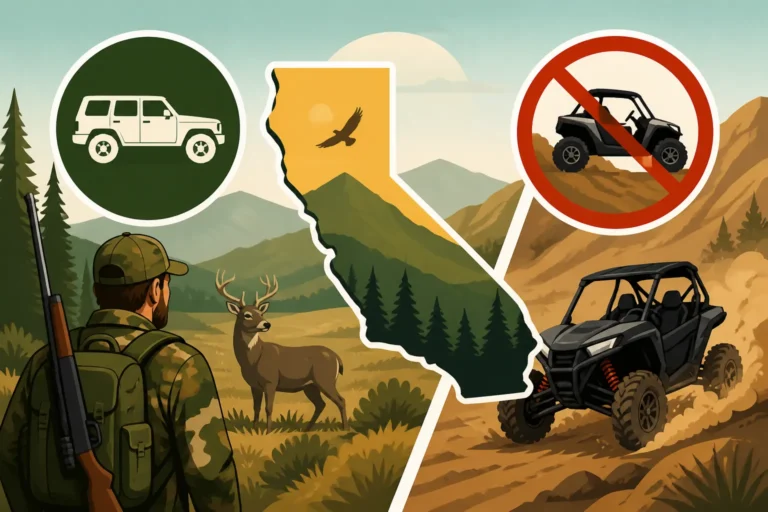
Access points vary considerably. You'll find well-maintained Forest Service roads leading to popular camping and trailhead areas, but also countless two-track roads and even designated wilderness areas where motorized travel is strictly prohibited. Understanding the various regulations, such as those regarding vehicle use or dispersed camping, is crucial before you head out. This is where tools like onX Hunt become invaluable, allowing you to instantly see land ownership boundaries, road statuses, and even topographic features right on your phone, preventing accidental trespass and helping you plan your routes effectively. When you're Hunting California's Sierra Nevada Backcountry, precise navigation is key to safety and success.
Smaller Public Land Tracts and BLM Opportunities
While Sierra National Forest dominates the public land scene, Madera County also has some scattered Bureau of Land Management (BLM) holdings. These are often smaller parcels, sometimes checker-boarded with private land, and can be found in the foothills or more arid regions. BLM land often offers a more open, desert-like hunting experience, though in Madera, it's typically mixed with oak-grassland habitats. These areas might be less traveled than some of the popular national forest zones, potentially offering a more secluded hunt for savvy individuals.
Accessing these smaller BLM parcels can sometimes be tricky. They might be landlocked by private property or require traversing less-maintained dirt roads. Again, verifying property boundaries with a reliable mapping application is non-negotiable. Don't assume an old cattle trail is a public right-of-way; always check your maps. These zones can hold resident populations of wild pigs, coyotes, and various small game, and occasionally deer moving between larger habitats. Sometimes, these smaller, overlooked pieces of public ground can hold hidden gems for those willing to do their homework.
Key Hunting Zones and Game Species
Madera County's diverse topography directly influences the types of game you'll encounter and the hunting strategies you'll employ. From the lower elevations to the towering peaks, each habitat offers unique challenges and rewards. Understanding these zones is essential for successful planning.
Foothill Oak Woodlands and Chaparral
The lower and mid-elevations of Madera County, particularly within the Sierra National Forest boundaries, are characterized by rolling hills, dense chaparral, and iconic oak woodlands. This habitat is prime country for Columbia blacktail deer, wild pigs, and various small game like California Valley Quail. The cover can be thick, making spot-and-stalk hunting challenging, often requiring still-hunting techniques or setting up ambushes along game trails.
During the early archery seasons or general rifle seasons, these areas can see significant pressure, especially near easily accessible roads. However, if you're willing to hike a few miles off the beaten path, you can often find unpressured pockets of game. Focus on areas with water sources, north-facing slopes for bedding, and acorn-producing oak flats when the season allows. Hunting Coastal Range Oak Woodlands often shares similar strategies, though the specific species might differ slightly. Knowing Where California Blacktail Bucks Bed in this type of cover can give you a significant advantage.
High Sierra Wilderness and Backcountry
As you ascend into the higher elevations of Madera County, the landscape transforms into granite peaks, pine forests, and expansive meadows – classic Sierra Nevada high country. This is where you'll find mule deer and black bears. Hunting in these areas is physically demanding, requiring excellent conditioning, navigation skills, and a willingness to pack in and out. Tags for these higher zones, often X-zones or specific subunits, are usually draw-only and highly sought after due to the potential for larger deer.
Successful high-country hunting here often involves extensive glassing of distant slopes and basins, followed by long, careful stalks. Early morning and late evening are crucial, as deer move between bedding areas and feeding grounds. You'll need specialized gear for this type of hunt, including good optics, a reliable backpack, and clothing suitable for rapidly changing mountain weather. Many hunters use applications like GoHunt to research draw odds and historical success rates for specific high-country units, helping them decide where to focus their valuable preference points. Remember, for Hunting California's High-Country X-Zones, preparation is half the battle.
Water Sources and Riparian Zones
Throughout Madera County's public lands, water sources – whether natural springs, perennial creeks, or man-made stock tanks – are absolute magnets for wildlife. In the hot, dry California hunting seasons, understanding where these vital resources are located can be the key to finding game. Deer, bear, and pigs will all frequent water holes, especially during the middle of the day or in drier periods.
Hunting near these riparian zones requires careful scouting and an understanding of wind and thermals. Animals will often approach water cautiously, using available cover. Setting up a ground blind or finding a natural ambush point downwind of a well-used trail leading to water can be a highly effective strategy, particularly for archery hunters. Be sure to understand any restrictions on setting up blinds or altering vegetation in certain areas. Hunting a Water Seep at First Light can be a productive tactic, especially in zones with limited water.
Planning Your Madera County Public Land Hunt
Hunting Madera County's public lands requires thorough preparation, from understanding regulations to having the right gear and a solid backup plan. Don't underestimate the challenges, but also embrace the incredible opportunities that exist.
Understanding Regulations and Seasons
Before you even think about putting boots on the ground, you need to be intimately familiar with California's hunting regulations. This includes statewide rules like the non-lead ammunition requirement, as well as specific regulations for deer zones (Madera County primarily falls into D-zones and some X-zones), bear seasons, and wild pig hunting. Seasons vary significantly based on the zone and species.
Madera County General Hunting Overview
| Game Species | Primary Zones/Areas | Typical Season Dates | Common Hunting Method |
|---|---|---|---|
| Columbia Blacktail | Foothill Oak Woodlands, Chaparral, Lower Sierra NF | Aug-Oct (Archery), Sep-Nov (General Rifle) | Still-hunt, Spot-and-stalk |
| Mule Deer | High Sierra Wilderness, Eastern Sierra NF | Sep-Oct (Draw dependent) | Glassing, Spot-and-stalk |
| Black Bear | Sierra National Forest, especially higher elevations | Aug-Dec (Quota dependent) | Spot-and-stalk, Still-hunt |
| Wild Pig | Foothills, Oak Woodlands, Near water sources | Year-round (with tag) | Spot-and-stalk, Ambushes |
| California Valley Quail | Foothills, Chaparral, Brushy areas | Oct-Jan (General) | Walk-up, Dogs |
Note: Always consult the current California Department of Fish and Wildlife (CDFW) regulations for precise dates, bag limits, and specific zone information, as these can change annually.
Pay close attention to fire restrictions, especially during the dry summer and fall months. Forest closures due to wildfires are not uncommon and can derail a carefully planned hunt. Always check the Sierra National Forest website or local ranger stations for current conditions and closures before heading out. California's Multi-Zone Deer Season System can be complex, so take the time to understand your specific tag.
Essential Gear for Madera County Hunting
The varied terrain and weather in Madera County demand versatile gear. For any significant public land hunt here, you'll need reliable navigation tools. While physical maps are a must, digital apps like onX Hunt are incredibly useful for real-time location tracking, marking waypoints, and confirming property boundaries, especially in areas with confusing land ownership. Having offline maps downloaded is critical, as cell service is often nonexistent in the backcountry.
For clothing, layering is key. Mornings can be chilly, even in August, especially at higher elevations, but midday temperatures can soar. Good quality boots are non-negotiable for traversing steep, rocky, or brushy terrain. Optics, especially binoculars and a spotting scope for mule deer in open country, are indispensable. And, of course, ensure you have proper Choosing Non-Lead Rifle Ammunition in California to comply with state law, and confirm your rifle is sighted in with that specific load.
Scouting and Local Knowledge
While maps and apps provide a fantastic starting point, nothing beats boots-on-the-ground scouting. Visiting your chosen area before the season opens allows you to identify game trails, water sources, bedding areas, and potential ambush points. Look for fresh sign like tracks, scat, rubs, and scrapes. Pay attention to food sources; an area rich in acorns or browse can be a hotspot.
Talk to local experts, if possible – fellow hunters, CDFW biologists, or even Forest Service rangers can sometimes offer valuable insights into game movement and pressure. Understanding Hunting Pressure on California Public Land will help you strategize to find less disturbed animals. Remember that game patterns can change rapidly due to hunting pressure, weather, and food availability, so adaptability is crucial. Madera County offers incredible hunting if you're prepared to put in the work.
Disclaimer
This article is for general informational purposes only and does not constitute professional advice. Laws, prices and regulations vary by location and change over time. Consult a qualified professional for guidance on your specific situation.