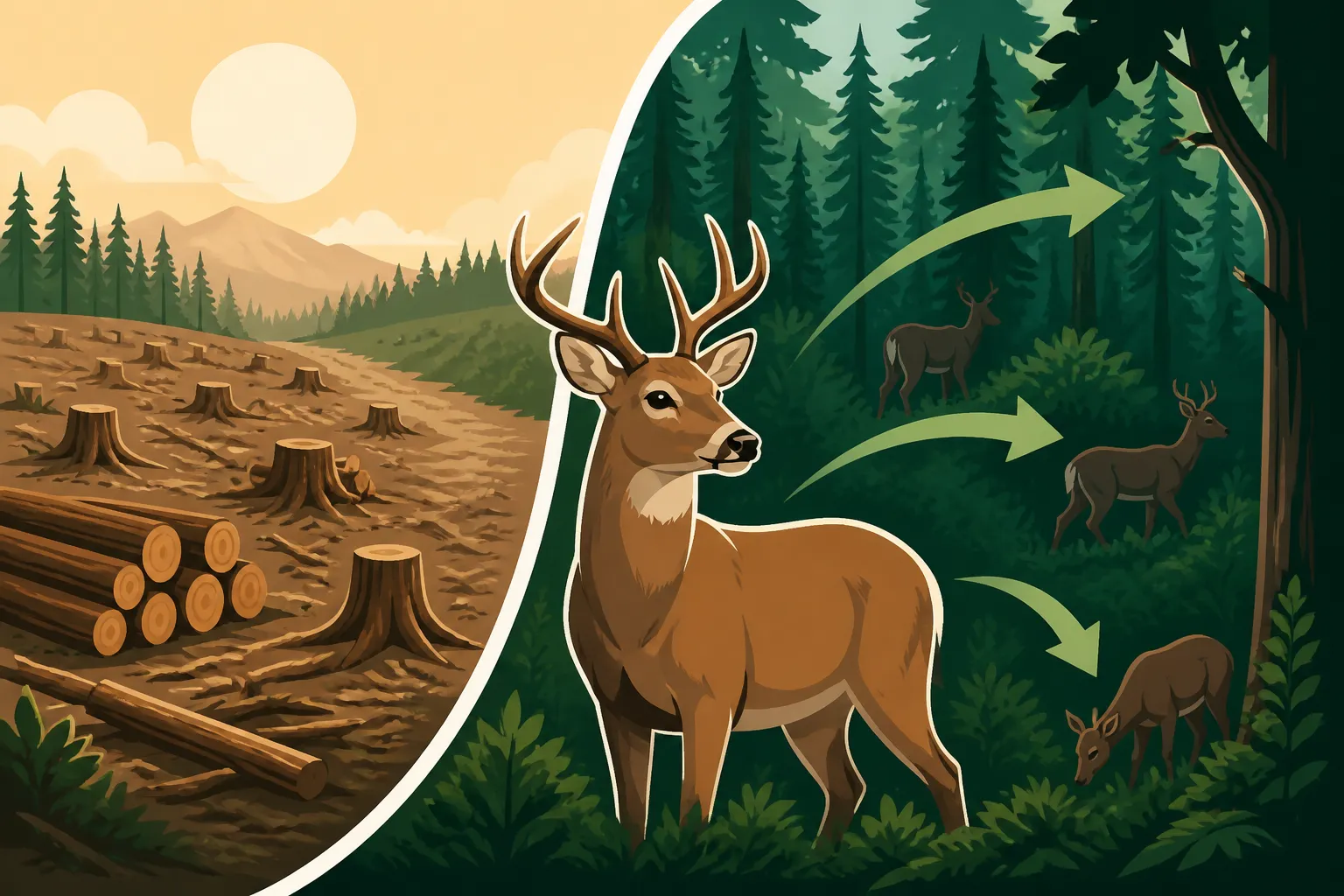
Timber Cuts and Where Deer Move After
Few things can throw a wrench into your carefully laid out hunting plans quite like showing up to your favorite honey hole only to find a fresh timber cut. It’s a gut punch, really. One season you’re scouting prime cover and deer sign, the next it’s a chaotic mess of stumps, slash piles, and skid trails. But don't despair! While it feels like your hunting grounds have been ruined, these changes actually create new patterns and opportunities for deer movement. This guide will help you understand how deer react to timber cuts and how you can adapt your strategies to find them.
Understanding California's Forest Management and Timber Practices
Forests in California are incredibly dynamic, managed for everything from fire suppression to timber production and ecosystem health. Timber cuts aren't just random acts; they're often part of a larger, long-term plan, and understanding the different types of cuts can give you a major advantage in predicting deer movement.
The Rationale Behind Timber Operations
You might drive past a section of forest that looks like a war zone and think, "What a waste!" But there’s usually a reason behind it. Timber operations in California, whether on federal lands like a National Forest or private parcels owned by timber companies, employ various techniques.
- Clear-cutting: This is the most dramatic. As the name suggests, nearly all trees in a designated area are harvested. While it looks devastating at first, clear-cuts are often done to regenerate shade-intolerant species, create early successional habitat, or as part of a fuel reduction strategy. For deer, it's an immediate upheaval. Imagine your house just vanished – you'd be looking for new shelter, pronto!
- Selective Logging: Here, individual trees or small groups of trees are removed, leaving a diverse stand of varying ages and sizes. This is often practiced to improve overall forest health, promote growth of residual trees, or maintain aesthetic appeal. Deer tend to be less displaced by selective cuts, as much of their cover remains intact, though the increased human activity and noise can push them deeper into unlogged pockets.
- Thinning: This involves removing smaller, weaker, or overcrowded trees to reduce competition and fire risk, allowing the remaining dominant trees to grow larger and healthier. You'll see this a lot in densely packed conifer stands in the Sierra Nevada. Thinned areas can open up the understory, allowing more sunlight to hit the forest floor, which eventually leads to new browse growth.
- Salvage Logging: After a wildfire or disease outbreak, salvage logging removes dead or dying trees. This helps recover economic value from damaged timber and can reduce future fire hazards. Deer might already be displaced by the initial event (fire, disease), but the logging itself adds another layer of disturbance to an already stressed environment.
The sheer noise from chainsaws, skidders, feller bunchers, and log trucks can be deafening. The ground gets churned up by heavy machinery, creating new roads and landings. All of this disturbance sends deer scrambling for quieter, more secure locations. They’re looking for peace and quiet, just like us, but their survival depends on it.
Immediate Post-Cut Landscape for Deer
When the cutting is fresh, the landscape is utterly transformed. What was once a canopy offering shade and concealment is now an open expanse littered with stumps, branches (slash), and often deep tire ruts. The forest floor, previously soft with duff and pine needles, might be exposed mineral soil, muddy, or compacted.
For deer, this immediate aftermath is all about security. Their primary concern is avoiding predators, and a wide-open, noisy clear-cut offers no comfort. They can't hide, and the constant sounds and smells of human activity are a huge deterrent. You’ll find them quickly vacating the direct vicinity of the cut block. They might move just a few hundred yards, or they might relocate miles, depending on the size of the cut and the availability of suitable cover nearby.
Think about a deer's basic needs: food, water, and cover. A fresh timber cut temporarily disrupts all three. Food sources are either destroyed or buried, water sources might be muddied, and cover is drastically reduced. It's a stressful time for the local deer population, and their behavior reflects that stress. You're unlikely to find a mature buck casually strolling through a fresh clear-cut during daylight hours, for example. They become incredibly wary.
Short-Term Deer Movement: The Immediate Aftermath
So, the saws stop buzzing, the trucks have moved on, and you’re standing at the edge of what used to be a prime hunting spot. Where did the deer go? In the short term, deer are mostly driven by their instinct for self-preservation, which means seeking immediate security and, if possible, new food sources that emerge from the disturbance.
Seeking Refuge and Security Cover
Deer don't just disappear into thin air. They tend to shift their core areas to adjacent, undisturbed habitat. If there's a thick, unlogged finger of timber jutting into the cut, or a steep, brushy canyon nearby that wasn't touched, that's where they'll go. These areas offer the immediate visual and thermal cover they need to feel safe.
Consider the following potential refuge areas:
- Adjacent Undisturbed Timber: This is the most obvious choice. Deer will often just move to the nearest patch of dense woods. This could be simply over the next ridge, down into a deep drainage, or into a neighboring timber stand. The key is that it offers thick canopy and understory where they can bed down and feel hidden.
- Dense Chaparral or Brush: California is famous for its thick chaparral. Even if the timber is gone, a dense stand of chamise, manzanita, or scrub oak provides incredible hiding cover. These areas can be incredibly difficult for humans to penetrate, making them ideal sanctuaries for deer. This is especially true in the coastal ranges or foothills where such brush is abundant. You can find more information on Hunting Coastal Range Oak Woodlands which often feature these dense brush pockets.
- North-Facing Slopes: These slopes often retain more moisture, leading to denser vegetation and cooler temperatures, especially in the warmer months. Deer might gravitate to these areas for both cover and comfort, particularly if the timber cut occurred on a south-facing slope that's now exposed to intense sun.
- Proximity to Water Sources: Deer still need water. If a cut area was near a spring or creek, deer will move to the nearest dense cover that still offers access to that water. These water sources can become crucial focal points, especially in dryer parts of the state or during later seasons.
You might find that the deer's patterns become very compressed in these refuges. They might move less, sticking to the densest parts, making them incredibly hard to find until they feel secure enough to venture out. Your job as a hunter is to identify these pockets of safety and then figure out how to approach them without blowing the deer out.
Early Food Opportunities in Disturbed Areas
While security is paramount immediately after a cut, new food sources can quickly emerge, drawing deer back to the edges of the disturbed area. The disturbance itself can trigger growth.
- New Browse from Disturbed Soil: When heavy machinery churns up the soil, it exposes dormant seeds to sunlight and moisture. Pioneer plants, many of which are excellent deer forage, can sprout quickly. Think about species like ceanothus (deer brush), various forbs, and young woody sprouts. These can offer a fresh, nutrient-rich buffet that wasn't available before.
- Early Succession Plants: Within a few months to a year, the clear-cut can start to "green up" with grasses, forbs, and young shrubs. These tender new growths are highly palatable to deer. While they might not venture deep into the open, the edges where new growth meets the established timber become prime feeding grounds.
- Why Deer Might Return to the Edges: Deer are opportunists. Once the immediate human disturbance subsides, and especially once new forage begins to appear, they will cautiously explore the edges of the cut. These transition zones offer a blend of security (the standing timber) and food (the fresh browse in the cut). You'll often see distinct trails developing along these edges, especially under the cover of darkness or during low-light hours. This is where scouting before the season really pays off; look for these subtle new paths and fresh droppings.
A fresh cut isn't just a loss; it's a reset. And like any good reset, it brings new life. The trick is to be patient, understand the stages of recovery, and adapt your Scouting California Public Land Before Season to these new conditions.
| Cut Type | Immediate Impact on Deer | Short-Term Deer Behavior | Long-Term Habitat Benefit (2-10+ years) |
|---|---|---|---|
| Clear-cut | Severe displacement, high stress | Seek dense adjacent cover, nocturnal edging | Excellent new browse, dense thermal/security cover as saplings grow |
| Selective Log | Moderate displacement, increased wariness | Shift to thickest unlogged pockets nearby | Improved understory growth, maintained diverse forage and cover |
| Thinning | Minor disturbance, some displacement | Utilize remaining cover, move through edges | Increased sunlight to forest floor, new forage and improved travel lanes |
| Salvage Log | Compounding previous disturbance (fire/disease) | Seek untouched areas away from logging | Partial restoration of cover, some new forage growth, reduced fire risk |
Long-Term Deer Movement: Adaptation and Habitat Creation
While the immediate shock of a timber cut might seem negative for deer, over the long haul, these disturbances are often beneficial. They create the kind of diverse habitat that deer thrive in, offering a mosaic of food, cover, and travel corridors that a uniformly mature forest simply can't provide.
Regrowth and Forage Development
Within a few years, a clear-cut or heavily thinned area can transform from an ugly scar into a veritable deer buffet. This is where the magic really starts to happen for wildlife.
- The "Deer Factory" Effect: As sunlight reaches the forest floor, it encourages an explosion of herbaceous plants, grasses, and fast-growing shrubs. These are often primary forage species for deer. A mature forest, with its dense canopy, often has a sparse understory because little sunlight penetrates. A young, regrowing forest, however, is packed with nutrient-rich browse. Think of it as opening up a gigantic, all-you-can-eat salad bar for the deer.
- Saplings and Brush: After three to five years, depending on moisture and soil conditions, you'll see a mix of conifer saplings and deciduous brush beginning to dominate. Species like California lilac (ceanothus), manzanita, various oaks, and willow will shoot up. These provide both food and, increasingly, security cover. This dense, young growth becomes incredible bedding habitat – thick and impenetrable, offering deer a feeling of safety.
- Successional Stages: Forests go through successional stages. Timber cuts reset that clock, pushing the area back to an early stage that's incredibly valuable for deer. As the forest matures again, other wildlife will benefit, but for a solid 10-20 years after a major cut, it can be a deer haven. Understanding these stages will help you predict Late-Season Food Sources for California Deer and optimal hunting conditions.
Changes in Travel Corridors and Bedding Areas
As the vegetation in a cut area grows taller and denser, deer will begin to adapt their movement patterns and bedding preferences.
- New Trails and Funnels: Over time, deer will establish new trails through the regenerating growth. These trails often connect bedding areas within the cut to feeding areas, water, and adjacent mature timber. Look for areas where the new growth is funneling deer into specific travel lanes. These pinch points, often where a small creek runs through or a ridge juts into the cut, become prime ambush spots. This is similar to Hunting a Funnel Between Two Oak Ridges, but with the added complexity of regenerating timber.
- Daytime Bedding in Young Growth: While mature bucks might initially avoid open cuts, as the regrowth reaches chest to head height, these areas become ideal daytime bedding spots. The dense, young trees offer concealment and thermal cover, particularly important during hot California hunting seasons. They might bed just inside the cut, where they can watch for danger from a concealed position. Pay attention to Where California Blacktail Bucks Bed in these situations.
- Edge Habitats: The boundary where the young growth meets the mature, untouched timber is often the most productive. Deer will use the cover of the older forest for security and then slip into the regenerating area to feed. These "edges" are high-traffic zones, especially during dawn and dusk.
The "Edge Effect" and Transition Zones
The concept of the "edge effect" is critical when hunting timber cuts. It refers to the increased diversity and density of wildlife that often occurs at the boundary between two different habitats.
- Optimal Deer Habitat: A timber cut creates a massive amount of edge habitat. Where the dense, mature forest meets the regenerating growth of the cut, you'll find a dynamic ecosystem. This provides everything a deer needs: security cover in the older timber, abundant forage in the new growth, and diverse plant species that flourish in the transition.
- Prime Hunting Locations: For hunters, these transition zones are goldmines. Deer will often browse along these edges, feeling secure enough to step out into the younger growth. They also use these edges as travel corridors. You might find more deer sign – tracks, scat, rubs, and scrapes – concentrated along these lines than deep within either the old forest or the center of the cut. These are perfect places to set up a ground blind or still-hunt slowly. Using a Ground Blind on BLM Land principles apply here, even if you are in a National Forest.
Scouting and Hunting Strategies for Timber Cuts
Okay, so we know timber cuts are a mixed bag initially, but they turn into excellent deer habitat. How do you find those deer and make the most of the changing landscape? It all starts with diligent scouting and smart hunting tactics.
Interpreting Maps and Aerial Imagery
Your scouting efforts for timber cuts begin long before you even set foot in the woods. Modern mapping tools are indispensable.
- Identifying Cut Blocks: Platforms like onX Hunt or GoHunt allow you to zoom in and examine satellite imagery. Look for distinct changes in tree cover, light-colored areas that indicate recent logging, or areas with uniform, young-looking trees. Some mapping services even update their aerial photos frequently, showing recent cuts. You might even find layers that show active timber sales or past burn scars, which have a similar effect on the landscape. This is where Reading Aerial Photos for Sierra Deer becomes a crucial skill.
- Analyzing Historical Imagery: Many mapping apps offer historical satellite imagery. This is a game-changer. You can scroll back in time to see when a cut occurred and estimate its age. A cut that's 2-3 years old will have different appeal than one that's 7-10 years old. This helps you gauge the stage of regrowth and potential forage availability.
- Identifying Access Points and Escape Routes: Once you've identified cut blocks, study the terrain around them. Where are the nearest roads or trails? Are there steep drainages or thick patches of timber that could serve as natural escape routes or security cover for deer? Use topographic maps to identify natural funnels and pinch points that deer might use to travel between the cut and undisturbed areas. These maps also help you understand Wind and Thermals in Steep Sierra Country which is vital for planning your approach.
On-the-Ground Reconnaissance
No map, however detailed, can replace boots on the ground. You need to physically scout these areas to confirm what you see on the screen and find fresh sign.
- Finding Fresh Sign: Once you're in the area, look for the definitive clues: fresh tracks, droppings, rubs, and scrapes. Deer will often rub saplings or small trees in regenerating cuts, especially along the edges. Finding Sign in a Coastal Oak Woodland is a similar process, just in a different habitat.
- Bedding Areas: As mentioned, once the regrowth offers sufficient cover, deer will bed inside the cut, especially in the densest pockets. Look for flattened areas, often under a small tree or in a thicket. These spots often offer a clear view downwind but are difficult to approach from other directions.
- Trails and Movement Corridors: Deer are creatures of habit. They will establish preferred travel routes. In a timber cut, these might follow contours, old skid trails that have softened, or simply the path of least resistance through dense regrowth. Look for concentrated trails along the edges of the cut where it meets mature timber, or leading to water sources. Reading California Mud for Fresh Deer Movement can be particularly useful near water crossings or wet areas within or around the cut.
- Assessing Pressure: Timber cuts are often popular hunting spots because they're known to attract deer after a few years. You’ll need to gauge the Hunting Pressure on California Public Land in these areas. If it's heavily pressured, you'll need to go deeper, work harder, or find the small pockets Finding Ground Others Walk Past that other hunters overlook.
Hunting the Edges and Pockets
Your hunting strategy should revolve around exploiting the "edge effect" and the deer's need for security.
- Focus on Transition Zones: As discussed, the boundary between the cut area and the adjacent uncut timber is a prime location. Set up your stand or ground blind within the mature timber, overlooking the edge of the regenerating cut. Deer will often step out into the new growth to feed during low light conditions. You might consider placing a ground blind strategically along one of these edges, especially if the new growth provides good concealment for your setup.
- Hunt Unlogged Fingers and Ridges: Within large clear-cuts, sometimes small fingers or islands of mature timber are left untouched. These can act as critical travel corridors or bedding areas within the larger cut. Deer might feel safe moving through these narrow bands of cover. Likewise, a steep, brushy ridge that bisects a cut might hold deer that feel secure in its rough terrain.
- Still-Hunting the Regrowth: Once the growth is tall enough for concealment (waist to chest high), slowly still-hunting into a regenerating cut can be incredibly effective. Move slowly, taking one step at a time, pausing often to scan for movement. The dense cover makes it difficult for deer to see you coming, but it also makes it difficult for you to see them. Focus on reading the wind and thermals, and look for subtle clues like flicking ears or horizontal lines that don't belong.
- Be Patient and Adaptable: Hunting timber cuts requires patience. Deer might not be where you expect them. Be willing to move, adapt your strategy based on fresh sign, and embrace the dynamic nature of these areas. The deer are constantly adapting to their changing environment, and so should you.
Disclaimer
This article is for general informational purposes only and does not constitute professional advice. Laws, prices and regulations vary by location and change over time. Consult a qualified professional for guidance on your specific situation.