Hunting California’s Eastern Sierra Alabama Hills Corridor
The Eastern Sierra and Alabama Hills corridor is undeniably one of California's most breathtaking landscapes, but its sheer beauty often belies the immense challenges it presents to hunters. Between the towering peaks, the unique rock formations, and the vast, open expanses, understanding how to effectively pursue game here can feel like trying to solve a complex puzzle. This comprehensive guide is designed to cut through that complexity, offering practical, on-the-ground insights to help you navigate this iconic hunting area, understand its quirks, and ultimately increase your chances of a successful and memorable hunt.
Understanding the Eastern Sierra and Alabama Hills Landscape
Hunting in the Eastern Sierra and Alabama Hills isn't just about finding deer; it's about understanding and respecting a truly unique environment. This isn't your typical timber hunting or dense brush country. This is big, open, high-desert country that demands a different approach and a deep appreciation for its distinct characteristics.
Geographical Overview and Terrain Challenges
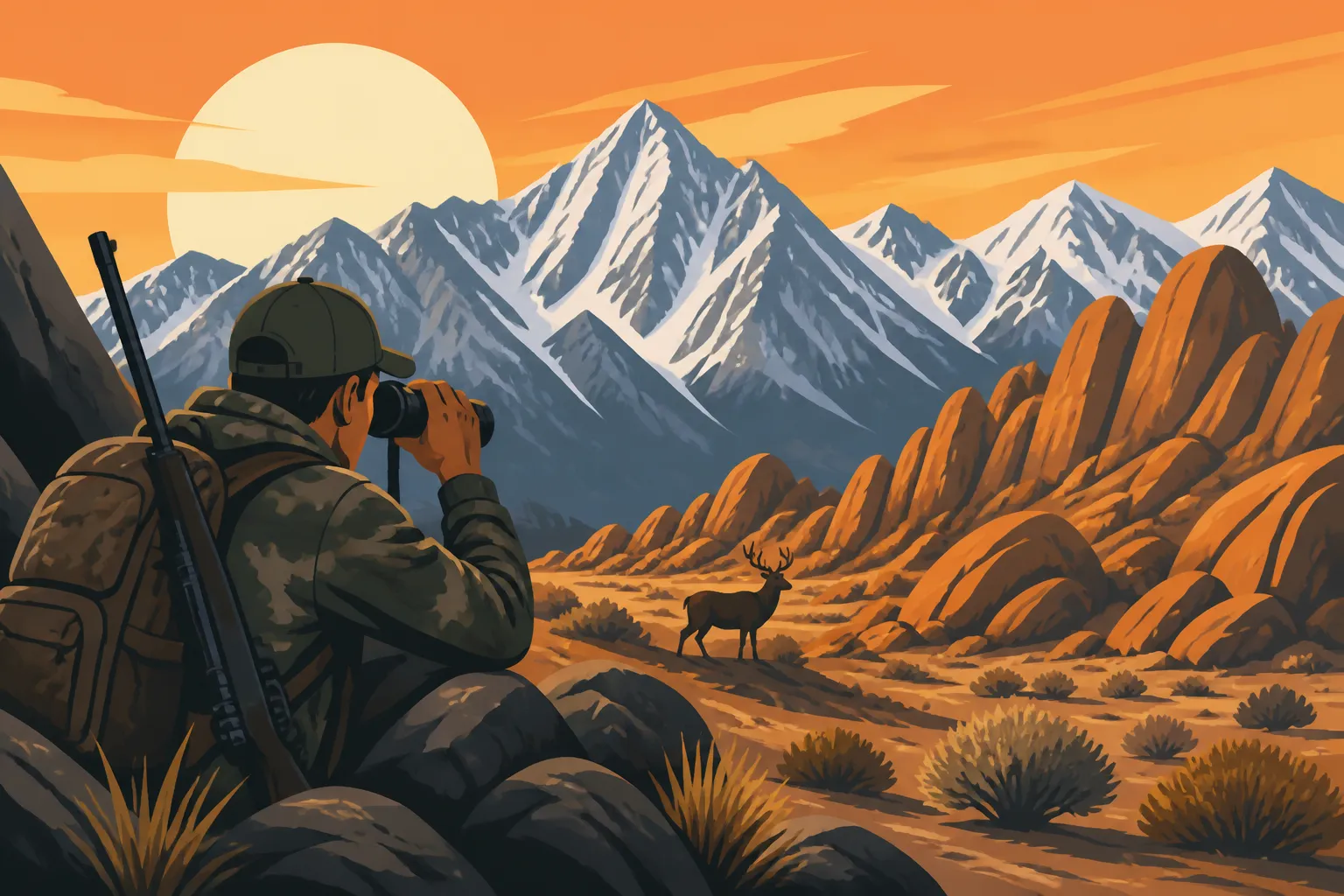
The Eastern Sierra and Alabama Hills present a dramatic transition from the arid floor of the Owens Valley to the jagged, snow-capped peaks of the Sierra Nevada. What you'll encounter is a dizzying array of terrain, from sagebrush-dotted flats that stretch for miles, to rolling pinyon-juniper woodlands, and then quickly escalating into steep, rocky canyons and high-altitude timber pockets. The Alabama Hills themselves are a geological marvel, with rounded, weathered granite formations that offer both unique cover and frustratingly broken sightlines. Every ridge and every drainage can hide an animal, making meticulous observation absolutely critical.
This incredible diversity means you're constantly adapting your strategy. You might be still-hunting through a sparse pinyon-juniper stand one moment, and then scrambling up a scree slope the next, trying to gain an advantage. The sheer verticality of some areas can be deceptive from a distance. A gentle-looking slope on a map can quickly become a lung-burning, calf-burning ascent over loose rock and thorny brush. Hunters often underestimate the physical demands, leading to exhaustion and missed opportunities. Navigating these steep, broken landscapes, especially when trying to maintain stealth, is a constant challenge that requires both physical fitness and careful route planning.
Climate and Weather Patterns
If there's one thing you can count on in the Eastern Sierra, it's that the weather is unpredictable. This region epitomizes high desert climate, meaning scorching hot and dry summers can give way to brutally cold, windy, and snowy winters with little warning. During the early archery seasons in August or early September, you might start your day in short sleeves, only to be caught in a sudden afternoon thunderstorm or even a freak snow flurry if you're up high. Later rifle seasons, typically in October or November, can bring frosty mornings followed by pleasant, sunny afternoons, but they can just as easily usher in blizzard conditions that dump feet of snow overnight.
These wild temperature swings and sudden weather events profoundly influence not just your comfort, but also game behavior. Deer will move differently in response to a cold snap, seeking shelter or different forage. Water sources can dry up quickly in extended hot periods, forcing animals to concentrate around fewer, more reliable spots. Conversely, a sudden heavy snow can push deer down from higher elevations, opening new opportunities but also making travel and tracking incredibly difficult. Being prepared for everything – from blistering sun to freezing snow – isn't just a recommendation; it's a necessity for safety and success. Always pack layers and contingency gear.
Vegetation Zones and Game Habitat
The diverse terrain of the Eastern Sierra supports a fascinating patchwork of vegetation zones, each dictating where you're likely to find certain game. On the valley floor and in the lower Alabama Hills, you'll find vast expanses of sagebrush, rabbitbrush, and bitterbrush, interspersed with grasses. This scrubland provides excellent forage and cover for mule deer, especially during cooler parts of the day or later in the season when they descend from higher elevations. It's also prime habitat for jackrabbits and coyotes.
As you ascend, the landscape transitions into pinyon-juniper woodlands. These areas, characterized by scattered, often gnarly pinyon pines and juniper trees, offer more vertical cover than the open sage flats and can hold deer during midday bedding periods. Further up, particularly in the foothills leading into the national forest, you'll find stands of Jeffrey pine and other conifers, often mixed with mountain mahogany and various oaks in drainages. These higher elevations are the summer range for many mule deer, offering cooler temperatures, different forage, and thicker cover. Understanding these distinct zones and how game utilizes them throughout the day and the season is fundamental to effective scouting and hunting in this region. Knowing what food sources are available in each zone, and how those change with the seasons, can be a game-changer.
Target Game Species and Their Behaviors
When you're hunting the Eastern Sierra and Alabama Hills, you're primarily pursuing the iconic mule deer, but there's a host of other exciting opportunities if you know where to look. Each species has its own set of behaviors and preferred habitats that dictate how and where you'll find them.
Eastern Sierra Mule Deer – The Primary Quarry
The majestic mule deer is the undisputed star of the show in the Eastern Sierra. These are not your coastal blacktail or timber deer; Eastern Sierra muleys are often larger-bodied with impressive antlers, adapted to the rugged, open country. Their behavior is heavily influenced by the seasonal changes in the mountains. During the summer, most mule deer reside in the high country, above 8,000 feet, where feed is lush and temperatures are cooler. As fall approaches and hunting seasons open, cooler weather and often the first snows trigger their migration. These deer utilize established California Deer Migration Corridors, moving down from their summer ranges to lower elevation wintering grounds in the Owens Valley and surrounding foothills.
Understanding these migratory patterns is absolutely critical. Early season hunts might find you pushing higher into the national forest, while later seasons often see deer concentrated in the pinyon-juniper and sagebrush flats of the BLM lands around the Alabama Hills. Mule deer in this open country are masters of using what little cover is available, often bedding on north-facing slopes to escape the sun, or tucking themselves behind a cluster of junipers or a prominent rock outcrop. They rely heavily on their eyesight and incredible hearing. They are notorious for busting out of what seems like sparse cover, disappearing into the vastness before you can even raise your binoculars. Effective hunting often means anticipating their movements, knowing their bedding habits, and being ready for a quick shot in broken terrain.
Smaller Game and Predators
While mule deer command most of the attention, the Eastern Sierra and Alabama Hills corridor also offers excellent opportunities for smaller game and predator hunting, providing year-round action beyond big game seasons. Cottontail rabbits and the larger black-tailed jackrabbits are abundant in the sagebrush flats and rocky areas. They provide a fun and challenging hunt, perfect for honing your stalking skills or introducing new hunters to the field. Their quick bursts of speed and ability to disappear into seemingly non-existent cover make for exciting hunting.
Coyotes are also prevalent throughout the entire corridor, from the valley floor to higher elevations. These wily canids are constantly on the move, scavenging and hunting small game. This open landscape, with its long sightlines, is fantastic for predator calling. Setting up with a good vantage point, using electronic or mouth calls, can often bring coyotes in from surprisingly long distances. It's a thrilling hunt that adds another layer of challenge and excitement to the Eastern Sierra experience. If you’re looking to try your hand at calling, check out Coyote Calling California Ranch Land for some tips that translate well to this landscape.
Upland Birds in the Foothills
For those who enjoy upland bird hunting, the Eastern Sierra offers some unique prospects, most notably for chukar partridge. These incredibly tough and fast-flying birds thrive in the steep, rocky, arid canyons and foothills of the region, often near water sources. Hunting chukar is a truly physical endeavor, requiring strong legs, good boots, and a willingness to climb. They are masters of using the terrain to their advantage, often running uphill when pressured, then flushing downhill at incredible speeds. Finding a covey is one thing; getting a shot is another entirely.
While less numerous than chukar in the core Eastern Sierra, you can also find populations of California Valley Quail in the lower elevations, particularly near riparian areas or in the pinyon-juniper zones where water is present. These classic California birds offer fast-paced action and are a joy to hunt with a good dog or by working drainages and brushy creek bottoms. Understanding California Valley Quail Population Trends can give you an idea of where to focus your efforts in a given year. Upland bird hunting here is less about volume and more about the quality of the experience, the breathtaking views, and the challenge of pursuing these hardy birds in their rugged home.
Navigating Regulations and Access
Hunting in California, especially in diverse areas like the Eastern Sierra, comes with its own set of rules and access considerations. Knowing the lay of the land, both literally and legally, is paramount for a successful and lawful hunt.
Public Land Access: BLM and National Forest
One of the greatest assets of the Eastern Sierra and Alabama Hills corridor is the sheer amount of public land available for hunting. The vast majority of this region falls under the management of the Bureau of Land Management (BLM) and the Inyo National Forest. This means miles upon miles of accessible ground for the persistent hunter. However, "public land" doesn't automatically mean "easy access." It's critical to understand the nuances. While large blocks are public, you'll also encounter a patchwork of private inholdings, particularly in the lower elevations or near developed areas. Trespassing, even inadvertently, is a serious offense.
Utilizing modern mapping applications like onX Hunt is absolutely essential here. These tools allow you to clearly see property boundaries, land ownership types, and designated roads versus closed areas. Never rely solely on paper maps, as they often don't show the intricate details of property lines. Familiarize yourself with regulations regarding vehicle access; many areas have strict rules about off-road travel or require you to stay on established routes. Respecting these rules not only keeps you legal but also preserves the resource for future generations. Don't be afraid to use your feet – often, the best hunting begins where the roads end. For more details on navigation, check out Using an App for California BLM Land Status.
Understanding Deer Zones and Special Hunts
The Eastern Sierra and Alabama Hills fall under specific deer hunting zones within California's complex system. This area is primarily covered by a combination of D-zones and X-zones, with the latter often being highly coveted and requiring successful participation in the annual Big Game Drawing. D-zone tags are generally more numerous and some can even be purchased over-the-counter in certain years, offering more accessible opportunities for hunters. However, even within D-zones, subunits can have different season dates and tag allocations, so a deep dive into the regulations for your specific area is crucial.
Understanding California's Multi-Zone Deer Season System is key to planning your hunt. The application process for X-zone tags involves building preference points, which can take several years for a hunter to accumulate enough to draw a tag in a popular zone. For more on this, read up on California Preference Point System Explained. It's a long game, but the reward of hunting a premium X-zone can be well worth the wait. Always double-check the current year's hunting regulations and season dates published by the California Department of Fish and Wildlife (CDFW) before making any plans, as dates and quotas can shift annually.
Non-Lead Ammunition Mandate
California has a statewide ban on lead ammunition for all hunting, a regulation that deeply impacts hunters in the Eastern Sierra and Alabama Hills. This means any projectile you use, whether for rifle, shotgun, or muzzleloader, must be certified as non-lead. For rifle hunters pursuing mule deer, this typically means using copper, copper alloy, or monolithic bullets. This mandate is driven largely by conservation efforts, particularly concerning species like the California Condor, which can be affected by lead fragments left in gut piles.
The transition to non-lead ammunition requires hunters to do their homework. Not all non-lead bullets perform identically to their lead counterparts, and you may find that your rifle's point of impact changes when switching loads. It's imperative to purchase your non-lead ammunition well in advance of the season and spend ample time at the shooting range. You need to zero your rifle with your chosen non-lead load and practice shooting at various distances to ensure accuracy and confidence. Don't assume your old lead load zero will translate; it rarely does. For detailed guidance on this critical topic, refer to Choosing Non-Lead Rifle Ammunition in California.
Effective Hunting Strategies for the Eastern Sierra
Hunting the Eastern Sierra is a game of patience, optics, and smart strategy. The landscape itself is both your biggest ally and your most formidable opponent, demanding a unique set of skills to succeed.
The Art of Glassing and Spot-and-Stalk
In the vast, open expanses of the Eastern Sierra and Alabama Hills, your eyes are your most valuable tools, and quality optics are your best friends. Glassing – the methodical scanning of terrain with binoculars and spotting scopes – is not just a technique here; it's the primary strategy. Unlike hunting dense timber where you might only see a small patch of hide, here you're looking for an entire animal, or often, just a tell-tale flicker of an ear, a splash of antler, or the outline of a body against a distant hillside. A good pair of 10x binoculars on a tripod is indispensable for covering ground quickly, and a high-quality spotting scope will help you evaluate animals from extreme distances without spooking them. You can learn more about this approach by reading Glassing Mule Deer in Open California Country.
Once an animal is spotted, the real work begins: the spot-and-stalk. This involves carefully planning your approach, utilizing every fold in the terrain, every juniper bush, and every rock outcrop for cover. Wind direction is absolutely critical; mule deer have an incredible sense of smell. You must approach from downwind, often making long, circuitous routes to get into position. Movement must be slow, deliberate, and minimized. The goal is to close the distance without being seen, heard, or smelled, positioning yourself for an ethical shot. This is a mentally and physically demanding process that often involves crawling, waiting, and patiently observing before making your final move. For a comprehensive guide on selecting the right tools, check out Optics for California's Open-Country Deer Hunting.
Water Sources and Game Movement
In an arid environment like the Eastern Sierra, water is life, and it dictates game movement, especially during drier periods or warmer hunting seasons. Deer, like all wildlife, need consistent access to water, and understanding where these vital sources are located can be a major advantage. While some areas have flowing creeks, many rely on intermittent springs, seeps, and man-made guzzlers. During extended dry spells, deer will often travel significant distances to access these reliable water points, creating predictable travel corridors.
Scouting for water sources both before and during your hunt is a highly effective strategy. Look for green patches of vegetation in otherwise dry country, which often indicate an underground spring or seep. Utilize topographical maps and satellite imagery to identify potential drainages or depressions where water might collect. Sitting near a well-used water source during the early morning or late evening hours can be a productive ambush strategy. Deer often visit water during these cooler times, especially if temperatures are high. Understanding the importance of these critical resources and how to identify them will give you a significant edge. If you're planning on utilizing these spots, be sure to read Hunting a Water Seep at First Light.
Dealing with Hunting Pressure
It's a reality that popular hunting areas, especially those with good public access like parts of the Eastern Sierra, will experience hunting pressure. When deer are constantly pushed and disturbed, they become warier, often changing their movement patterns and retreating to thicker cover or more remote, difficult-to-access areas. The key to success in pressured environments is often to do what other hunters aren't willing to do.
This might mean hiking further and deeper than the average hunter, leaving the easily accessible roads and trails behind. It could involve hunting during less popular times of day, like midday, when many hunters have returned to camp. It also means using terrain features to your advantage, such as focusing on steep, brushy north-facing slopes that offer escape cover and shade, areas that many hunters might overlook. Often, deer simply move into pockets of cover just off a main road that are a few hundred yards too far for a casual stroll. Patience and persistence are vital; if you know deer are in an area but they're not moving, it might be because they're hunkered down due to pressure. Sometimes, waiting them out, or making a careful, slow stalk into perceived sanctuaries, can yield results. For more insight into this common challenge, consult Hunting Pressure on California Public Land.
Essential Gear and Preparation
Hunting the Eastern Sierra and Alabama Hills isn't just a physical and mental challenge; it's also a gear challenge. The diverse and often extreme conditions demand careful planning and the right equipment to ensure both success and safety.
Optics and Navigation Tools
We've already touched on the importance of optics for glassing, but it bears repeating: don't skimp here. High-quality binoculars (10x-15x are popular for this country), a reliable spotting scope (20-60x or similar), and a sturdy tripod are non-negotiable. The tripod is especially important for long glassing sessions, preventing fatigue and allowing for steady, precise scanning. A rangefinder is also essential for ethical shot placement in this open country, where judging distance can be notoriously difficult due to the vast scale.
Equally important are your navigation tools. While a physical map and compass are always wise backups, a modern GPS unit or a robust mapping application on your smartphone (like onX Hunt) is indispensable. These apps provide detailed topographical maps, satellite imagery, and critical land ownership overlays, allowing you to pinpoint your location, track your movements, mark waypoints, and most importantly, stay on public land. Ensure your device is fully charged, and consider carrying a portable power bank. Planning your routes, marking potential game trails, and saving key landmarks using these tools beforehand, perhaps with data gathered from GoHunt research, will save you invaluable time and prevent getting lost in the field.
Clothing and Footwear for Varied Conditions
Given the extreme temperature swings and varied terrain, a thoughtful layering system is critical for hunting the Eastern Sierra. Start with a moisture-wicking base layer to manage sweat, followed by insulating mid-layers (fleece or puffy jackets) that can be easily added or removed. Your outer layer should provide protection from wind and rain, which can come out of nowhere. Avoid cotton, as it retains moisture and loses its insulating properties when wet. Choose durable, quiet fabrics in camouflage patterns appropriate for high desert and sagebrush environments.
Footwear is arguably the most important piece of clothing you'll choose. You need sturdy, comfortable, and well-broken-in boots with excellent ankle support and aggressive tread for navigating steep, rocky, and often loose terrain. Waterproofing is a huge plus, even in an arid environment, for unexpected stream crossings or wet morning dew. Prioritize comfort and fit above all else; blisters or sore feet will cut your hunt short faster than anything else. Consider pairing your boots with quality merino wool socks to prevent blisters and manage moisture. For more insights on this, refer to Boots and Clothing for California's Varied Terrain.
Survival and Safety Essentials
The remote and rugged nature of the Eastern Sierra means you must be self-sufficient and prepared for emergencies. Always carry a comprehensive first-aid kit, tailored to handle everything from cuts and scrapes to more serious injuries. Pack ample water, and consider a water filter or purification tablets for extended trips or emergencies. High-energy snacks are crucial to keep you fueled throughout long days.
Beyond the basics, think about emergency shelter (a lightweight tarp or emergency blanket), fire-starting tools, and a reliable headlamp with extra batteries for those pre-dawn hikes and post-sundown pack-outs. Perhaps one of the most important items for remote hunting is a satellite communication device (like a Garmin inReach or Zoleo). Cell service is non-existent in much of this country, and these devices allow you to send emergency messages and communicate with loved ones, providing immense peace of mind. Always inform someone of your hunting plans, including your route and expected return time. The mountains are beautiful, but they are unforgiving, and being prepared is the best way to ensure a safe and successful trip.
| Item Type | Specific Item / Feature | Why It's Essential in Eastern Sierra |
|---|---|---|
| Optics | 10-15x Binoculars & Tripod | For long-range glassing of open terrain; reduces fatigue, increases stability. |
| High-Power Spotting Scope (20-60x) | Evaluating animals at extreme distances, confirming species/sex without spooking. | |
| Laser Rangefinder | Crucial for accurate shot placement in vast, open country where distances are deceiving. | |
| Navigation | GPS/Mapping App (e.g., onX Hunt) + Power Bank | Detailed land ownership, topo maps, satellite imagery; essential for staying legal and oriented. |
| Paper Map & Compass | Reliable backup in case of electronic failure; fundamental backcountry skill. | |
| Clothing | Layering System (Base, Mid, Outer) | Adapt to drastic temperature swings from freezing mornings to hot afternoons. |
| Waterproof/Windproof Outer Shell | Protection from sudden Sierra storms and persistent high-desert winds. | |
| Durable, Moisture-Wicking Fabrics (non-cotton) | Keeps you dry and warm by wicking sweat; cotton is dangerous when wet. | |
| Footwear | Sturdy, High-Ankle Boots (broken-in & waterproof) | Excellent support and grip for steep, rocky, uneven terrain; protection from moisture. |
| Quality Merino Wool Socks | Prevents blisters, wicks moisture, regulates temperature. | |
| Safety/Survival | Comprehensive First-Aid Kit | For handling common injuries in a remote environment. |
| Water Filter/Purification + Ample Water | Water sources can be scarce; essential for hydration and safety. | |
| Satellite Communication Device (e.g., Garmin inReach) | No cell service in much of the area; vital for emergencies and communication. | |
| Headlamp with Spare Batteries | Critical for pre-dawn hikes, camp tasks, and navigating after dark. | |
| Fire Starter (Lighter/Matches + Tinder) | For emergency warmth and signaling. | |
| Ammunition | Non-Lead Rifle Ammunition | California state law requires non-lead for all hunting; ensure your rifle is zeroed with it. |
Disclaimer
This article is for general informational purposes only and does not constitute professional advice. Laws, prices and regulations vary by location and change over time. Consult a qualified professional for guidance on your specific situation.