Camo Patterns for California Oak Woodland Cover
There’s nothing quite like the unique beauty and challenge of hunting California’s sprawling oak woodlands. From the rolling hills of the Central Coast to the foothills of the Sierra Nevada, these iconic landscapes offer incredible opportunities for deer, pig, and turkey, but they also demand a thoughtful approach to camouflage. If you've ever felt like your standard "forest" camo just doesn't quite blend into those golden hillsides or the dappled light of a live oak canopy, you're not alone. This guide is here to help you understand the specific visual dynamics of California's oak woodlands and choose the camo patterns that will truly make you disappear into the diverse environment.
Understanding California's Oak Woodland Environment
California's oak woodlands are a world unto themselves, distinct from the dense pine forests of other regions or the open prairies. They're a mosaic of ancient oaks, interspersed with chaparral, grassy clearings, and riparian corridors. This complex environment means your camouflage needs to be adaptable and smart, working with the natural features rather than against them. It’s not just about hiding; it’s about becoming part of the landscape.
The Dynamic Color Palette of Oak Woodlands
The color scheme of California's oak woodlands is anything but static. You're dealing with a vibrant, ever-changing spectrum that shifts dramatically with the seasons and even within a few hundred yards. Imagine standing in a patch of deep green live oaks, looking across a golden, sun-baked grassland to a distant ridge covered in the muted browns and grays of deciduous black oaks. A pattern that works perfectly in one spot might scream "hunter!" in another.
Beyond the dominant greens of the live oaks and the seasonal browns of the deciduous varieties, you have the undergrowth. This includes everything from verdant poison oak and wild grapes to sun-bleached annual grasses and scattered wildflowers. These elements add layers of texture and color, creating a complex visual environment. Your camo needs to acknowledge this rich tapestry, picking up on the dominant greens, but also incorporating the tans, yellows, grays, and deep browns that are always present. It's about blending into the overall "feel" of the woods, not just one specific type of foliage.
Light and Shadow Play in the Timber
One of the most defining characteristics of an oak woodland is the way light filters through the canopy. The large, often gnarled branches of oak trees create a mesmerizing dance of sunlight and deep shadow. This dappled lighting is your best friend when it comes to camouflage, as it naturally breaks up shapes and obscures outlines. However, a poorly chosen camo pattern can actually work against this effect.
Consider how a patch of bright sunlight might highlight a flat, uniform section of your clothing, drawing attention to your silhouette. Conversely, a pattern with too much contrast might look unnatural in deep shade. The ideal oak woodland camo should have enough visual depth to leverage these natural light effects. It should contain elements that appear to recede into shadow, while others catch the light in a way that mimics the texture of bark or leaves, rather than a solid block of color. Understanding how light changes throughout the day, from the long, horizontal shadows of early morning to the harsher, overhead light of midday, is key to truly disappearing.
Key Principles of Effective Camouflage in Oak Woodlands
Before you even think about specific patterns, it's crucial to grasp the foundational principles that make any camouflage effective. In the challenging and varied terrain of California's oak woodlands, these principles are paramount for success, whether you're stalking a wary blacktail or trying to remain hidden from sharp-eyed turkeys.
Breaking Up Your Silhouette
The human form is remarkably distinct in nature, and animals are incredibly adept at recognizing it. A deer doesn't necessarily need to see the intricate details of your camo pattern to know you're not a tree; it just needs to perceive an unnatural shape. Therefore, the number one goal of any camouflage is to break up your human silhouette. This means disrupting the continuous lines of your shoulders, head, and torso, making it difficult for an animal to discern your true form.
Effective patterns achieve this by using contrasting colors and irregular shapes that mimic the natural visual clutter of the environment. Think about how a jumbled pile of fallen branches or the irregular outline of a rocky outcrop naturally breaks up the background. Your camo should aim to do the same, creating false edges and blending your form into the surrounding environment. This principle is especially vital when you're moving or shifting position, as the slightest change can reveal a recognizable outline.
Mimicking Natural Textures and Tones
Beyond just breaking up your shape, truly effective camouflage for oak woodlands needs to mimic the specific textures and tones of the environment. It's not enough to be "brown"; you need to be the right kind of brown, with visual elements that resemble bark, dried leaves, or shadowed crevices. This depth and realism become increasingly important the closer an animal gets to your position.
Consider the rough, furrowed bark of an ancient blue oak, or the smooth, mottled gray of a sycamore often found near oak woodlands. Your camo pattern should incorporate these kinds of details, often through photographic elements or intricate digital designs. The overall tone of the pattern should also align with the dominant hues of the season and specific habitat you're hunting. For example, a pattern with too much bright green will stand out like a sore thumb in a dry, golden oak hillside, even if it has good disruptive qualities. Matching the general color temperature – whether warm, cool, or neutral – to your specific hunting ground dramatically improves your concealment.
Popular Camo Patterns and Their Suitability
With countless camouflage patterns on the market, choosing the right one for California's oak woodlands can feel overwhelming. However, by understanding the underlying design philosophies of different patterns, you can make an informed decision that best suits your hunting style and the specific terrain you'll encounter. Brands like GoHunt often feature comprehensive gear reviews, including insights into how various patterns perform in different western landscapes, which can be a valuable resource.
Traditional Woodland and Tree Bark Patterns
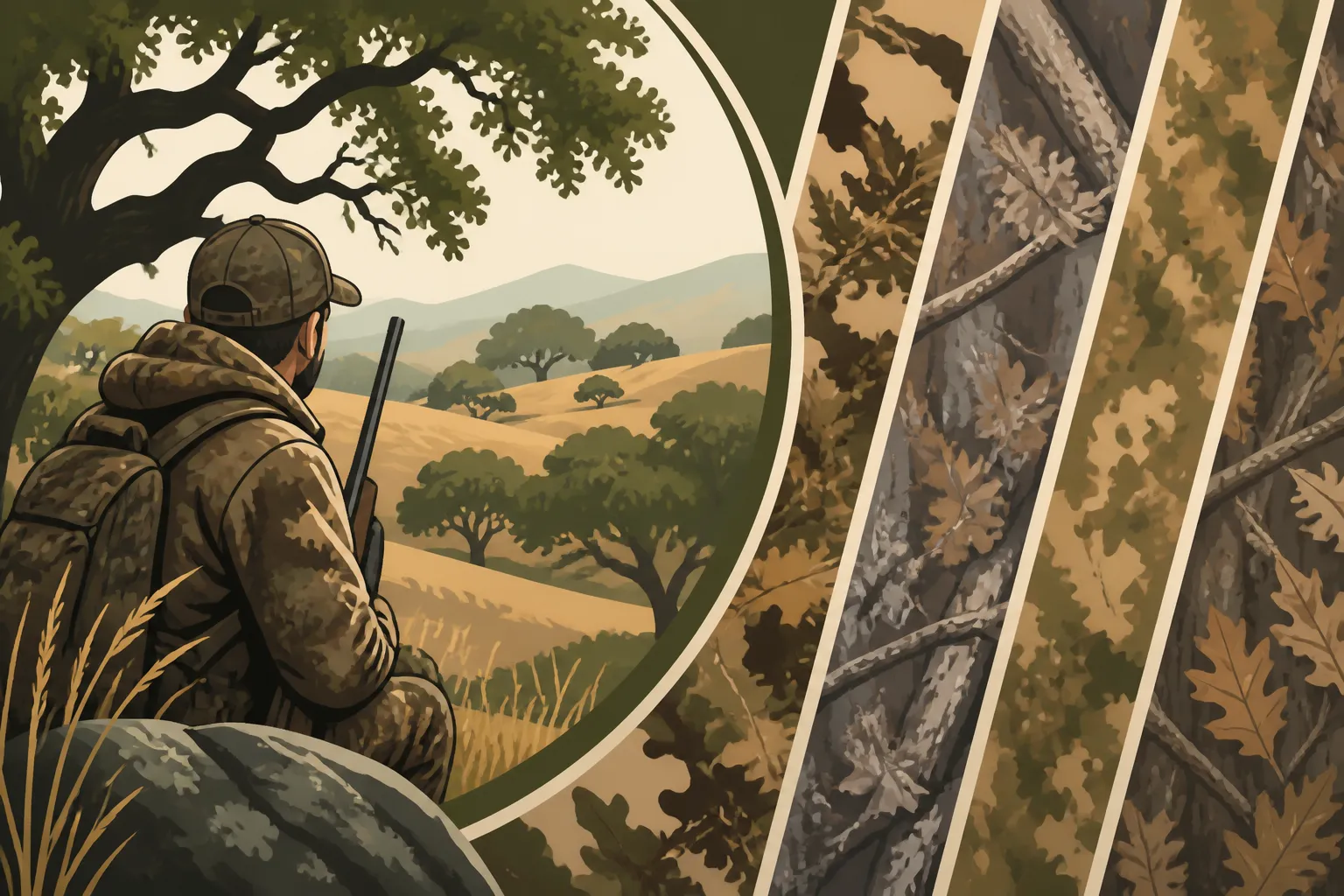
Many of the most recognizable camouflage patterns fall into this category. Think about patterns like Mossy Oak Break-Up Country, RealTree Edge, or even classic Woodland designs. These patterns typically feature large, highly realistic elements like tree trunks, branches, leaves, and often deep shadows. Their strength lies in their ability to blend seamlessly into a cluttered, dense background, making you virtually invisible when standing or sitting against a tree.
These patterns are exceptional for still-hunting or stand hunting where you're remaining stationary in relatively thick cover. The large, high-contrast elements do a fantastic job of replicating the immediate surroundings. However, their primary weakness can emerge in more open environments or when you're on the move. The very features that make them effective up close can, at a distance, cause them to "blob" into a less defined mass of color, potentially making your outline more discernible to an animal across a clearing. They are particularly well-suited for situations where you're Calling a Gobbler in Oak Woodland or hunkering down for a blacktail to move through thick timber.
Digital and Blended Patterns for Versatility
In contrast to the macro-patterns, many modern camouflage designs, often referred to as digital or blended patterns, take a more abstract approach. Brands like Sitka Gear (with patterns like Optifade Subalpine) and First Lite (like Fusion or Specter) employ smaller, often pixelated or multi-scale elements. These patterns are engineered to confuse the eye at varying distances, effectively breaking up your outline whether an animal is 10 yards away or 100 yards away. The idea is not to perfectly replicate a specific leaf, but to create a 'visual noise' that prevents the brain from recognizing a distinct form.
The primary benefit of these patterns is their versatility. For hunters who might be traversing varied terrain, moving from dense oak timber through open chaparral and onto grassy hillsides – common in California's D-zones or when Hunting Pigs on Central Coast Oak Ranges – a blended pattern offers a broader spectrum of effectiveness. They tend to perform well when moving and in transitional areas, adapting to different light conditions and backgrounds more readily than a pattern designed for a single specific environment. GoHunt's field testers often report on the adaptability of these patterns across different western states, highlighting their value for a diverse landscape like California's.
Solid Colors and Earth Tones as an Alternative
Sometimes, the simplest approach is surprisingly effective. Many seasoned hunters opt for solid colors or muted earth tones like dark green, various shades of brown, or charcoal gray. This approach foregoes intricate patterns entirely, relying instead on the hunter's ability to utilize natural cover, shadow, and disciplined movement to achieve concealment. The logic here is that a well-placed hunter in solid, muted clothing who moves slowly and deliberately, constantly utilizing available cover, is often harder to spot than a poorly hidden hunter in the latest camo pattern.
This strategy requires superior woodsmanship and an acute awareness of your surroundings. When you're Hunting a Funnel Between Two Oak Ridges with solid colors, you must become intimately familiar with every rock, bush, and shadow that can break up your form. It emphasizes hunting smarter, not just blending in. While it may not offer the instant "disappearing act" of a well-matched pattern, it fosters a deeper connection with the environment and forces a greater reliance on stealth and strategy. For many, the quiet comfort of simple, well-made earth-toned clothing is preferable to the visual complexity of patterns, especially when stalking.
Adapting Camo to Seasonal Changes
California's oak woodlands undergo dramatic seasonal transformations, and your camouflage should ideally reflect these shifts. What blends perfectly in the vibrant greens of late spring will stick out starkly against the golden hills of autumn. Being mindful of these changes can significantly improve your chances of remaining undetected by wary game.
Early Season: Greenery and Sparse Undergrowth
When California's early archery and general deer seasons kick off, particularly in zones like A or C, you're often hunting in conditions that are still quite green. While some grasses might be browning, many oak trees, particularly the evergreens like live oaks, are in full foliage. This is often when the chaparral is at its most vibrant as well. Your camo needs to reflect this lushness.
For early season hunts, especially if you're targeting areas with dense live oak or riparian zones, prioritize patterns that feature a healthy amount of dark green, mixed with browns and tans. Consider how the light filters through the canopy, creating deep shadows that are almost black. Best Camo for Oak Woodland in August would lean heavily into these deeper, richer green tones, preventing you from appearing as a brown blob against a green backdrop. Even in areas where annual grasses have turned golden, often the understory directly beneath the oaks retains more color, providing a key element for your pattern to mimic.
Mid-Season: Golden Hues and Falling Leaves
As September gives way to October and November, the oak woodlands really hit their stride in terms of color transformation. Many deciduous oaks, like the black oak, begin to turn brilliant shades of gold, orange, and russet brown. The ground becomes a carpet of crunchy, fallen leaves, and the once-green grasses bleach to various shades of tan and straw. This is the quintessential fall hunting season, particularly for rifle deer hunters in many D-zones.
During this period, your camo should transition to warm, earthy tones. Patterns featuring a dominant mix of gold, tan, amber, and deep reddish-browns will be most effective. Look for patterns that also incorporate the subtle grays of exposed bark and the dark shadows that contrast with the brilliant foliage. The goal is to melt into that rich, autumnal tapestry of the oak forest. This is when those classic "fall foliage" patterns truly shine, allowing you to blend seamlessly into the visual noise of the golden timber.
Late Season: Bare Branches and Earthy Tones
As the hunting season extends into late fall and early winter, particularly for tags that run into November or December, the oak woodland landscape dramatically changes once again. Many oak species will have shed their leaves, leaving behind a stark, skeletal network of branches. The ground is often a muted canvas of decaying leaves, exposed soil, and dormant vegetation. The greens are largely gone, replaced by shades of gray, dark brown, and black from shadows.
For these late-season hunts, camouflage needs to shift towards patterns that mimic bare branches, exposed bark, and deep shadows. Grays, charcoal, and muted, almost desaturated browns become the dominant colors. Patterns with higher contrast, designed to break up your outline against the starkness of bare trees, can be very effective. This is particularly relevant when you're Hunting Into a Late-November Zone Close, when concealment is more about becoming part of the forest's skeletal structure and the long, deep shadows. The subtle textures of bark and the interplay of shadow are paramount here, rather than vibrant leaf patterns.
Beyond Pattern: Other Critical Camouflage Considerations
While choosing the right camo pattern is undoubtedly important, it's just one piece of the larger puzzle of concealment. Experienced hunters know that true stealth involves a multi-faceted approach, addressing all the senses an animal uses to detect danger. In the challenging terrain of California's oak woodlands, overlooking these other factors can quickly negate the benefits of even the most perfectly matched pattern.
Scent Control and Noise Reduction
Let's be brutally honest: no matter how visually camouflaged you are, if a wise old blacktail buck catches your human scent on a swirling breeze, or a wild pig hears the rustle of your jacket, your hunt is over. Animals rely heavily on their sense of smell and hearing, often detecting predators long before they see them. Therefore, scent control is paramount. This means showering with scent-eliminating soaps, washing your hunting clothes in scent-free detergent, and storing them in airtight bags. Consider using scent sprays or ozone treatments before heading into the woods, especially when trying to get close to game in thick cover.
Equally critical is noise reduction. Many modern synthetic fabrics, while durable, can be notoriously noisy, creating a distinct "swishing" sound with every movement. In the quiet stillness of an oak woodland, especially when Hunting a Funnel Between Two Oak Ridges, these sounds carry far. Opt for fabrics that are inherently quiet, such as fleece, brushed cotton, or wool. Pay attention to zippers, buckles, and any other accessories on your pack or clothing that might clink or rub together. GoHunt's gear reviews often include insights into the noise level of various hunting garments, which can be invaluable when making your selections. Every rustle and whisper could be the difference between success and a spooked animal.
Proper Layering and Fit
California's diverse topography, particularly in the oak woodlands, can present extreme temperature swings. A morning hunt in the Sierra foothills might start in freezing temperatures, only to quickly warm up to the 70s by midday. Effective layering is essential for comfort and performance, but it also plays a role in camouflage. Too many bulky layers can make your silhouette appear unnatural, while overly loose clothing can create noise as it flaps or snags on brush.
Your camo should fit well enough to allow unrestricted movement – essential for stalking or drawing a bow – without being baggy. A snugger, athletic fit often means less material to catch on twigs or generate sound. Furthermore, consider the breathability of your chosen garments. Hauling yourself up and down steep oak-covered canyons will quickly lead to overheating and sweating, which then exacerbates scent issues. Prioritize moisture-wicking base layers and outer shells that allow for ventilation. This thoughtful approach to Layering for Hot-to-Cold Zone A Archery Days not only keeps you comfortable but also subtly enhances your overall concealment strategy.
Accessorizing for Maximum Concealment
It’s easy to focus on your main clothing, but many hunters forget that exposed skin and brightly colored accessories can utterly betray their position. Your face and hands are particularly reflective and often stand out against the muted tones of the forest. A camo face mask or face paint is non-negotiable for close-range encounters, especially when pursuing wary game like wild turkeys or blacktail deer. Similarly, camo gloves complete the picture, preventing the flash of bare skin from catching an animal's eye.
Don't stop there. Your headwear should also be camouflaged, breaking up the round outline of your head. Even items like your backpack, binoculars harness, and the sling on your rifle or bow can be visual liabilities if not properly camouflaged or covered in muted, non-reflective materials. Think about the glint of sunlight off a scope lens or a shiny buckle. Every detail matters. When you're Hunting Coastal Range Oak Woodlands, where shot opportunities can be fleeting and at close range, a comprehensive approach to accessorizing ensures that no small detail gives away your presence.
Practical Tips for Maximizing Your Concealment
Having the perfect camo pattern is a fantastic start, but it’s how you apply that gear in the field that truly makes the difference. Maximizing your concealment in California's oak woodlands goes hand-in-hand with sound hunting strategy and an intimate understanding of the terrain.
Scouting and Terrain Matching
Before you even step foot in the woods with your hunting gear, dedicate time to thorough scouting. This is perhaps the single most important factor in effective camouflage. Scouting California Public Land Before Season isn't just about finding game sign; it's about understanding the environment you'll be hunting in. Observe the predominant colors, the density of the canopy, the types of undergrowth, and how the light falls at different times of day. Take mental notes – or even discreet photos – of the specific shades of green, brown, and gold that define your hunting spot.
With this intimate knowledge, you can then choose a camo pattern that truly matches the specific conditions of your hunting area, not just a generic "oak woodland" pattern. What works perfectly for the dense, dark live oak canyons of the coastal range might be too dark for the sparse, sun-drenched blue oak hillsides of the Sierra foothills. Consider even bringing a small swatch of your camo out during scouting trips to compare it directly with the actual environment. This level of meticulous terrain matching significantly elevates the effectiveness of your chosen pattern.
Using Natural Cover Effectively
No matter how advanced or realistic your camo pattern is, it is merely an aid – it is not a magic shield of invisibility. The most effective camouflage strategy always involves actively utilizing natural cover to break up your form and hide your movements. Think of your camo as enhancing the concealment offered by the environment, not replacing it.
Always strive to position yourself against a background that is visually complex and helps to disrupt your outline. This means sitting in front of a wide tree trunk, hunkering down behind a thick bush, or positioning yourself in the deep shadows of a rock outcrop. Avoid standing in the open, even if you feel confident in your pattern, as the lack of background clutter will make you much more obvious. When you're Finding Sign in a Coastal Oak Woodland, look not just for tracks and rubs, but also for natural ambush points that offer optimal cover and a clear line of sight. Combining your well-chosen camo with strategic use of topography and vegetation is the ultimate recipe for disappearing into the California oak woods.
Disclaimer
This article is for general informational purposes only and does not constitute professional advice. Laws, prices and regulations vary by location and change over time. Consult a qualified professional for guidance on your specific situation.