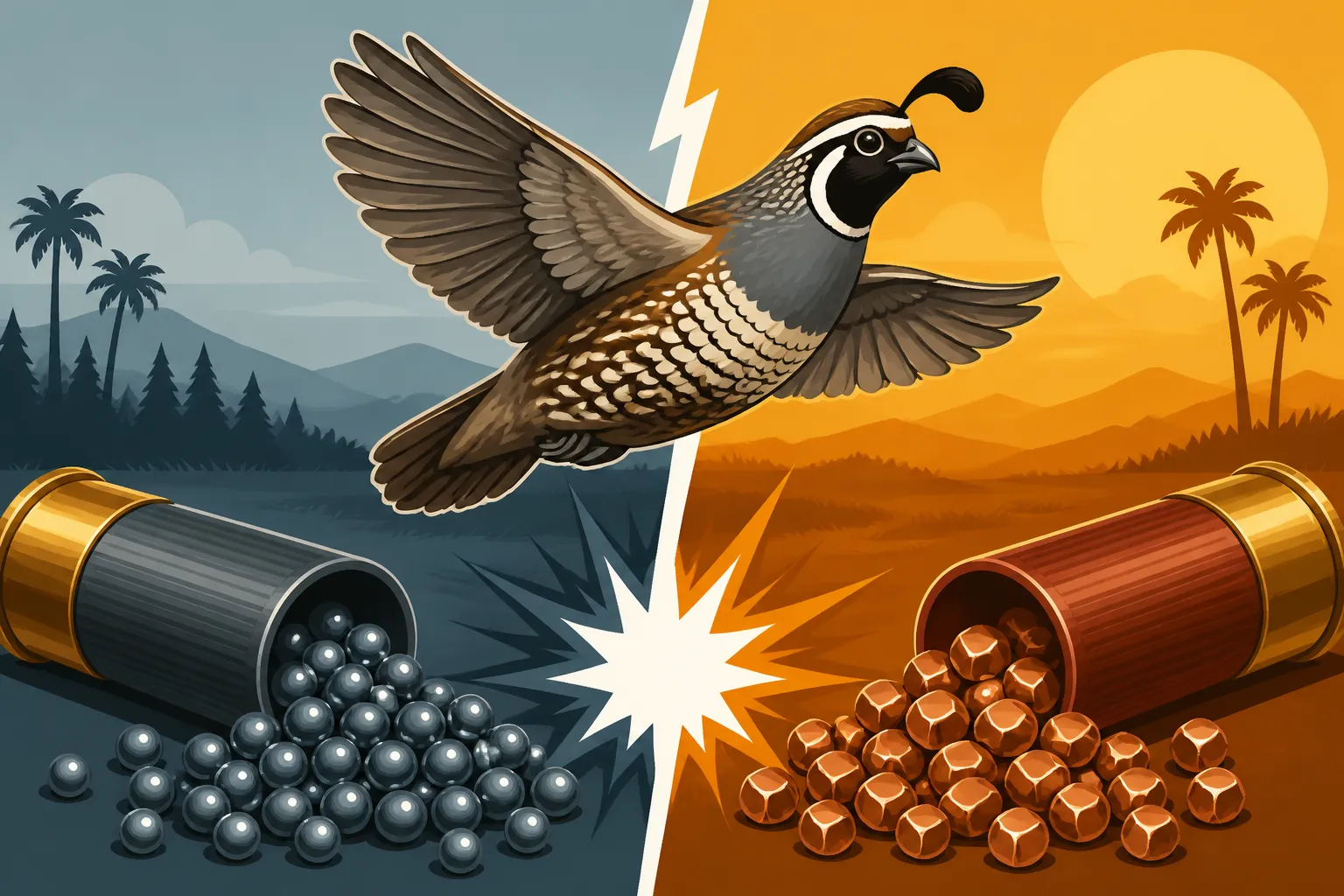
Steel Shot Versus Bismuth for Upland Birds
Choosing the right ammunition for upland birds in California can feel like navigating a maze, especially with the non-lead mandate firmly in place. Many hunters struggle with the stark differences between traditional lead shot and the various non-lead alternatives, often wondering if they're sacrificing performance or breaking the bank. This comprehensive guide will break down the crucial differences between steel and bismuth shotshells, helping you make an informed decision for your next California upland bird hunt.
The California Mandate: Why We're Talking Non-Lead
For years, hunters across California grew accustomed to a wide array of lead shot options for everything from dove to quail. Then, the rules changed. The statewide non-lead ammunition requirement came into full effect, shifting the landscape for every hunter in the state. This wasn't just a minor tweak; it was a fundamental change that required everyone to re-evaluate their gear and strategies. It’s a frustration many of us share, having to adapt after years of doing things a certain way, but it's the reality of hunting in our beautiful state.
The Environmental Rationale
The primary driver behind California’s non-lead mandate is environmental conservation, particularly concerning the California condor and other scavenging wildlife. Lead fragments, even tiny ones left behind in gut piles or unrecovered game, can be ingested by scavengers, leading to lead poisoning. These majestic birds, already on the brink of extinction, are particularly vulnerable. The state recognized this as a serious threat, and while the transition was certainly challenging for hunters, the intention was to protect these iconic species. It means we, as hunters, play a direct role in maintaining the health of the ecosystems we cherish.
The science behind it points to how persistent lead can be in the environment, even at microscopic levels. A bird that eats a gut pile or a carcass containing lead fragments can suffer neurological damage, reproductive failure, or even death. It’s a slow, insidious threat, and moving to non-toxic alternatives is seen as a crucial step in breaking that chain. While the impact might seem distant to a hunter pursuing a covey of quail, our collective actions contribute to the broader health of California’s wildlife populations, from the smallest mouse to the largest condor.
Impact on Upland Bird Hunters
For upland bird hunters, the shift to non-lead brought a whole new set of considerations. Lead shot performed reliably and was generally inexpensive. Non-lead options, on the other hand, often present a different ballistic profile, and certainly a different price point. Many of us felt like we were starting from scratch, figuring out what worked best for our shotguns, our birds, and our wallets. It led to a lot of experimentation, a fair bit of frustration, and plenty of conversations at the gun club about what everyone else was using.
The most immediate impact was on ammunition availability and cost. Suddenly, your go-to boxes of shells were either illegal or hard to find in non-lead versions. Companies like GoHunt became invaluable resources for hunters looking to research available loads and understand the nuances of non-lead ballistics. Beyond that, the performance characteristics of steel, bismuth, and other non-lead alternatives required hunters to adjust their chokes, lead, and overall shooting style. What worked perfectly with lead might not translate directly to steel or bismuth, demanding patience and practice on the clays range before heading out into the field. This learning curve is real, and it’s something every California upland hunter has had to navigate.
Understanding Steel Shot for Upland Birds
Steel shot has become the most widely adopted non-lead alternative, mainly due to its relatively lower cost compared to other options. While it's been a staple for waterfowl hunting for decades, its application for upland birds, particularly smaller, faster species, comes with its own set of advantages and disadvantages that hunters need to understand. Many of us have grown up with tales of steel shot and its limitations, but modern advancements have certainly improved its performance.
Pros of Steel Shot
One of the biggest advantages of steel shot is its affordability. When you're buying multiple boxes for a full season of dove or quail hunting, the cost difference adds up quickly. This makes it a very practical option for hunters who spend a lot of time in the field and go through a lot of shells. It helps keep the barrier to entry lower, encouraging more people to participate in hunting without breaking the bank. It also tends to be widely available, so finding it on the shelves isn't usually an issue.
Modern steel shot loads also offer surprisingly good performance, especially at closer ranges. The pellets are extremely hard and round, which can lead to tighter patterns than lead, given the right choke. With advancements in wad technology and powder formulations, manufacturers have managed to mitigate some of the traditional issues associated with steel. For fast-flying birds like doves or quail flushing from cover, a tight pattern can be beneficial, delivering sufficient energy when the shot connects.
Furthermore, steel shot is incredibly tough. It resists deformation, meaning the pellets maintain their shape better as they travel down the barrel and through the air. This helps maintain consistent patterns and energy transfer. You won't have to worry about the pellets deforming into irregular shapes that can fly erratically, a common problem with softer lead shot, especially in tighter chokes. It’s a robust material that can take a beating, which is good when you’re pushing it through a shotgun.
Cons of Steel Shot
The primary drawback of steel shot is its lighter weight and lower density compared to lead or bismuth. Steel pellets carry less kinetic energy, which translates to a reduced effective range and less knockdown power, especially on larger upland birds or at longer distances. A shot that would have been a clean kill with lead might only wound with steel, leading to lost birds. This means hunters often need to adjust their shooting distances and be more disciplined about taking only closer, ethical shots. It's a hard lesson learned when you watch a bird fly off seemingly untouched.
Because steel is so hard, it doesn't compress or deform. This characteristic requires different choke considerations. Using traditional full or extra-full chokes designed for lead can actually damage your barrel, as the steel pellets won't squeeze down like softer lead. Most shotgun manufacturers recommend using modified or improved cylinder chokes with steel shot to avoid this issue and still achieve good patterns. This often means buying new chokes, which is another added expense many hunters didn't anticipate.
The hardness of steel also means it doesn't impart energy as effectively as denser materials. Instead of flattening or expanding upon impact and creating a wider wound channel like lead, steel tends to punch through, leaving a narrower path of destruction. This is why pattern density becomes so critical; you need more pellets hitting the bird to ensure enough energy transfer for a clean kill. It's not about the size of the hole, but about the amount of damage done internally, and steel often requires a different approach to achieve that. For more on this, check out Patterning a Shotgun With Steel Shot.
Best Uses and Choke Considerations
Steel shot really shines for smaller upland birds at reasonable ranges. Think doves coming into a cut grain field, or quail flushing within 30-35 yards. For these scenarios, a well-patterned load of steel can be highly effective. The key is to know your limits and ensure you’re taking high-percentage shots where the pattern density is sufficient to guarantee a clean kill. Many hunters will size up their steel shot one or two sizes compared to what they’d use in lead to compensate for the lighter weight (e.g., using #6 steel where they’d use #7.5 lead).
When it comes to chokes, stick to improved cylinder or modified chokes for most upland applications with steel. Anything tighter can risk barrel damage in older shotguns, and even in modern guns, it can deform patterns, leading to inconsistent results. Many modern firearms are "steel shot approved" and will specify which chokes are safe. Always check your shotgun's manual or consult the manufacturer. Remember, the goal is a consistent pattern, not necessarily the tightest, especially with the reduced pellet count often found in steel loads. You can learn more about specific choke options by reading Best Shotgun Choke for Non-Lead Loads.
| Shot Type | Pros | Cons | Ideal Choke (for most guns) | Ideal Distance (approx.) |
|---|---|---|---|---|
| Steel | Affordable, widely available, hard, good patterns at close range | Lighter, less energy, reduced range, can damage old barrels | Improved Cylinder, Modified | Up to 35-40 yards |
| Bismuth | Dense, softer than steel, good energy, traditional lead-like performance | More expensive, less available, can be brittle | Improved Cylinder, Modified, Light Full | Up to 45-50 yards |
Diving into Bismuth Shot for Upland Birds
Bismuth shot offers a middle-ground solution between steel and lead, aiming to replicate lead’s performance characteristics while remaining non-toxic. For many hunters who miss the familiar feel and knockdown power of lead, bismuth can be an attractive option, especially when pursuing larger or tougher upland species. It’s a premium product, and its performance reflects that, but it also comes with a higher price tag.
Pros of Bismuth Shot
The most significant advantage of bismuth is its density, which is much closer to lead than steel. This means bismuth pellets retain more energy downrange, delivering better knockdown power and extending your effective shooting range compared to steel. For a hunter accustomed to the performance of lead, bismuth feels much more familiar, allowing for more consistent results and fewer wounded birds. This enhanced performance can make a real difference on challenging birds or in windy conditions.
Unlike steel, bismuth is a much softer metal. This softness means it won't damage your shotgun barrel, even with traditional lead-specific chokes. This is a huge relief for hunters with older or heirloom shotguns who want to use their favorite tighter chokes without worry. The softer nature of bismuth also allows for a bit of deformation on impact, which can create a larger wound channel and improve lethality compared to the punch-through nature of steel. This combination of density and softness is what makes bismuth such a compelling alternative.
Bismuth also breaks down naturally in the environment, making it a truly non-toxic option. While steel is also non-toxic, bismuth's biodegradability means that even if a pellet is lost, it poses no long-term threat to wildlife. This aligns perfectly with the environmental goals of California's non-lead mandate and offers peace of mind to hunters concerned about their ecological footprint. When looking for Non-Lead Shotgun Loads for Upland Birds, bismuth consistently ranks high for its balance of performance and environmental responsibility.
Cons of Bismuth Shot
The most immediate "con" of bismuth is its cost. Bismuth shells are significantly more expensive than steel, often costing two to three times as much per box. This can be a tough pill to swallow for hunters on a budget or those who burn through a lot of shells during a season. For a casual hunter, the cost might be manageable, but for someone hunting every weekend, it quickly adds up and becomes a major consideration. This higher price point is the biggest barrier for many.
Another potential drawback is the relative brittleness of bismuth. While it’s softer than steel, it can sometimes fracture on impact, especially with very tight chokes. This can reduce the effectiveness of individual pellets and lead to more pellet fragments rather than a solid hit. Modern bismuth loads have largely addressed this issue with improved manufacturing processes and pellet coatings, but it’s still something to be aware of. The technology continues to evolve, making bismuth an increasingly reliable choice.
Finally, while availability has improved, bismuth might not be as readily found on every sporting goods shelf as steel. You might need to order it online or visit specialized retailers, which requires some planning ahead of your hunt. This is where resources like GoHunt can be helpful in tracking down specific loads or finding reviews from other hunters. It’s not as scarce as it once was, but it's not as ubiquitous as steel either, so don't wait until the night before opening day to go looking for it.
Best Uses and Choke Considerations
Bismuth really excels when you're looking for lead-like performance without the lead. It's an excellent choice for larger upland birds like pheasants or chukars, where you might need a bit more range and knockdown power, or when you simply want the confidence of a denser shot. It's also ideal for hunters who prefer to stick with their tighter chokes on their classic shotguns. If you’re hunting in areas where shots might stretch out to 40-50 yards, bismuth gives you a much better chance of clean kills than steel.
In terms of chokes, bismuth allows for much more flexibility. You can typically use the same chokes you would with lead shot, including improved cylinder, modified, and even light full chokes, without fear of barrel damage. Always refer to the ammunition manufacturer's recommendations, but generally, bismuth is far more forgiving than steel. This flexibility allows hunters to fine-tune their patterns without having to invest in an entirely new set of chokes, or worry about damaging a cherished firearm. For example, if you're hunting a D-Zone that opens in August and need every advantage for a wary bird, bismuth could give you that edge.
Making Your Choice: Steel Versus Bismuth
Deciding between steel and bismuth often comes down to a balance of performance, cost, and personal preference. There’s no single right answer for every hunter or every bird, but by understanding the nuances of each, you can make the best choice for your specific hunting style and local conditions. California’s hunting scene is diverse, from Quail Hunting California Foothill Chaparral to Dove Hunting a Cut Grain Field, and your ammunition choice should reflect that.
Cost-Benefit Analysis
The cost difference between steel and bismuth is undeniable. If you're on a tight budget or plan to shoot a high volume of shells (think several boxes during a single dove opener), steel is almost certainly the more economical choice. You can purchase many more steel shells for the price of a single box of bismuth. This means more trigger time, more practice, and less worry about the cost of each shot. For many hunters, especially those just starting out or taking youth hunters, this financial accessibility is paramount.
However, consider the cost of potentially wounded or lost birds. If steel isn't performing adequately for your setup or typical shooting distances, the perceived savings might be offset by the frustration of unrecovered game. Bismuth, while more expensive per round, often provides better terminal performance, leading to cleaner kills and potentially fewer lost birds. For some, the peace of mind that comes with better performance is worth the higher price tag. This is a personal calculation, and sites like GoHunt can help you compare prices and availability before you buy.
Personal Preference and Bird Type
Ultimately, your choice will also hinge on what feels right in your hands and what you’re hunting. If you primarily hunt fast-flying, smaller birds like doves or California Valley Quail at close to moderate ranges, and you've practiced with steel to get comfortable with its ballistics, it can be a perfectly effective option. Many seasoned hunters have adapted their techniques to make steel work incredibly well for these scenarios.
For larger upland species such as pheasants, chukar, or even late-season wild turkeys during the archery-only fall season where you might need a bit more punch, bismuth offers a clear advantage. Its density and energy retention are closer to lead, which can be critical for ensuring quick, ethical kills on tougher birds that often present longer shots. If you prioritize performance and are willing to pay the premium, bismuth will likely provide a more familiar shooting experience and better results on larger or more distant game. Trying both on the skeet or trap range before season is always a good idea.
Practical Tips for Switching
Regardless of whether you choose steel or bismuth, here are a few practical tips to make the transition smoother:
- Pattern Your Shotgun: This is non-negotiable. Every shotgun patterns differently with different loads and chokes. Spend time at the range patterning your chosen non-lead ammunition to understand its effective range and shot density. This will build confidence and prevent guesswork in the field. Don’t assume it will shoot like lead; it won’t.
- Adjust Your Chokes: If using steel, ensure you’re using steel-safe chokes, typically modified or improved cylinder. With bismuth, you have more flexibility, but still, pattern your setup to find the optimal combination.
- Practice, Practice, Practice: The feel and lead required for non-lead shot can be different. Spend time shooting clays with your chosen upland loads. This will help you get accustomed to the new ballistics and build muscle memory.
- Consider Shot Size: You might need to go up one or two shot sizes with steel to compensate for its lighter weight compared to lead or bismuth. For instance, if you used #7.5 lead for doves, try #6 steel.
- Research and Read Reviews: Utilize online resources, forums, and sites like GoHunt to read reviews from other hunters. They can offer valuable insights into what loads perform well in specific regions or for particular bird species. This collective wisdom can save you a lot of trial and error.
- Understand Your Game: Know the typical ranges at which you'll encounter your target birds. If most of your shots are within 25 yards, steel is often perfectly adequate. If you frequently find yourself taking shots closer to 40-50 yards, bismuth becomes a much stronger contender.
Choosing between steel and bismuth for upland birds in California is a personal decision, driven by your hunting style, target species, and budget. Both have their merits and drawbacks, but with careful consideration and practice, you can find a non-lead solution that allows you to continue enjoying California’s fantastic upland hunting opportunities responsibly and effectively.
Disclaimer
This article is for general informational purposes only and does not constitute professional advice. Laws, prices and regulations vary by location and change over time. Consult a qualified professional for guidance on your specific situation.