Non-Lead Slugs for Shotgun Deer Hunting
Navigating the unique challenges of deer hunting in California, especially for those who favor a shotgun, can feel like a whole new ball game. Many hunters, myself included, have long relied on familiar lead slugs for their tried-and-true performance. But with California's statewide non-lead ammunition requirement now firmly in place, that trusty box of lead slugs sitting in the back of your cabinet is no longer an option for deer. This guide is here to walk you through everything you need to know about making the switch to non-lead slugs for shotgun deer hunting, ensuring you’re compliant, effective, and ready for the season.
Navigating California's Non-Lead Mandate for Shotgun Deer Hunters
The transition to non-lead ammunition in California has been a significant shift for hunters, particularly for those pursuing big game like deer. It’s not just about swapping out one type of ammo for another; it’s about understanding the underlying reasons, the specific requirements, and how these changes directly impact your gear and hunting strategy. For shotgun hunters targeting deer, this means a deep dive into the world of non-lead slugs.
Why the Shift to Non-Lead Ammunition?
At its core, California's non-lead mandate is rooted in conservation efforts, primarily aimed at protecting scavengers, most notably the California condor. These magnificent birds, often feeding on gut piles or carcasses left by hunters, were inadvertently ingesting lead fragments from traditional ammunition. This led to lead poisoning, posing a serious threat to the condor's recovery efforts. While the focus often falls on condors, the mandate extends to all wildlife, recognizing that lead fragmentation can impact a wide range of species that consume carrion. It's a fundamental change that prioritizes the health of the ecosystem over traditional hunting practices, and while it created some initial hurdles, it's a reality we all operate within now.
This mandate applies to all hunting of small and big game throughout California, regardless of the specific zone or public/private land designation. There's no escaping it, which is why understanding California's Non-Lead Ammunition Requirement is absolutely paramount for anyone heading afield. Ignoring this can lead to serious legal repercussions, not to mention ethical concerns about wildlife. It’s a change that asks us to adapt, to educate ourselves, and to embrace new technologies that align with conservation goals.
What Qualifies as "Non-Lead" for Shotgun Slugs?
When we talk about "non-lead" for shotgun slugs, we're primarily looking at projectiles made from materials like copper, copper alloys, or sometimes bismuth. These materials do not fragment like traditional lead, which is the key to preventing lead poisoning in wildlife. It's not enough for a slug to simply be "lead-free" in its core composition; it must also be designed to minimize or eliminate fragmentation upon impact with game. This distinction is important because some older, less common lead-free materials might not meet the spirit of the law if they still break into tiny pieces.
The California Department of Fish and Wildlife (CDFW) maintains a list of certified non-lead ammunition. While this list often highlights rifle cartridges, the principles apply directly to shotgun slugs. You want to ensure the slugs you choose are explicitly designed and marketed as non-lead for hunting, typically made from solid copper or copper-plated steel. Always double-check manufacturer specifications to confirm compliance. Don't assume; verify. For a broader understanding of approved materials, researching Which Non-Lead Bullets California Approves can offer additional insight into the types of alloys and construction deemed acceptable across different firearm types.
Impact on the Shotgun Hunter
For the traditional shotgun deer hunter, the non-lead mandate introduces a few key considerations. First, there's the availability and cost. Non-lead slugs, especially those made from solid copper, can be more expensive than their lead counterparts, and sometimes harder to find on shelves, especially if you wait until the last minute before season. Planning ahead is crucial. Second, and perhaps most importantly, is performance. Non-lead slugs often have different ballistic characteristics than lead slugs, including weight, velocity, and how they interact with your shotgun's choke. This means that your old setup, which grouped lead slugs perfectly, might not perform the same with non-lead.
This isn't a minor detail; it's a critical factor that directly impacts accuracy and ethical hunting. You simply must test your non-lead slugs through your shotgun before hunting season. This isn't just a recommendation, it's a requirement for responsible hunting. The feeling of missing a deer or making a poor shot because you didn't pattern your gun is something no hunter wants to experience. Take the time, invest in a few different brands or types of non-lead slugs, and find what works best for your specific firearm.
Exploring the World of Non-Lead Slugs: Materials and Design
Once you accept the non-lead reality, the next step is to understand what options are actually out there for shotgun slugs. It’s not just about one generic "non-lead" slug; there are different materials and designs that can affect performance, energy transfer, and ultimately, your success in the field. This section will break down the common types you’ll encounter and what to consider for each.
Copper and Copper Alloy Slugs
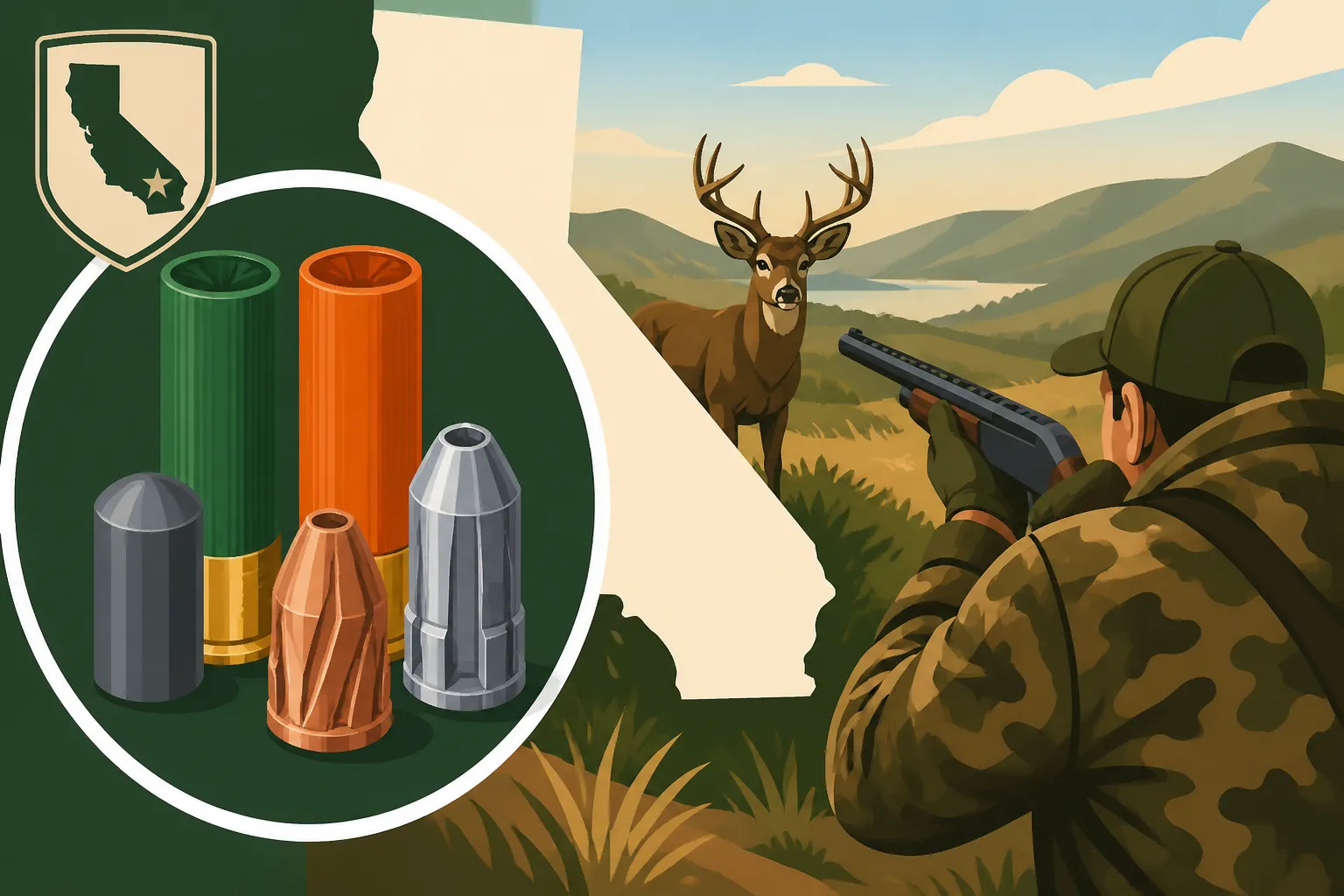
Copper and copper alloy slugs are by far the most prevalent and reliable non-lead options for shotgun deer hunting. These slugs are typically constructed from a solid piece of copper or a copper-based alloy, designed to retain their weight and expand consistently upon impact. Unlike lead, which tends to fragment, copper slugs are engineered for controlled expansion, creating a clean wound channel without leaving behind harmful lead particles in the carcass or environment. This consistency is a huge advantage for hunters, offering deep penetration and reliable energy transfer.
Manufacturers like Federal Premium, Remington, and Winchester all offer excellent lines of copper slugs specifically designed for rifled shotgun barrels, and sometimes for smoothbore options with appropriate chokes. When you're browsing the sporting goods store or looking online, you'll often see terms like "solid copper hollow point" or "bonded copper." These indicate the slug's construction, emphasizing its ability to mushroom effectively. The terminal performance of these slugs, when matched correctly to your firearm, can be exceptional, often rivaling or even surpassing that of traditional lead slugs.
Solid Lead-Free Slugs and Other Compositions
While copper dominates the non-lead slug market for deer, you might occasionally encounter slugs made from other lead-free materials. Some manufacturers experiment with bismuth, tungsten-based compounds, or even specially treated steel. However, it's important to note that these are far less common for slugs designed for big game, more frequently appearing in shotshells for upland birds or waterfowl (like Non-Lead Shotgun Loads for Upland Birds). For deer hunting, where deep penetration and reliable expansion are critical, solid copper is generally the go-to.
The reason copper is favored for slugs is its excellent balance of density, malleability (for expansion), and strength. Other materials might be too hard, leading to insufficient expansion, or too light, resulting in less energy transfer and penetration. Always exercise caution and thoroughly research any less common slug material to ensure it meets both California's non-lead regulations and your performance expectations for deer. When in doubt, stick with the widely recognized and proven copper options.
Specialized Designs and Construction
Beyond just the material, the actual design of a non-lead slug plays a significant role in its performance. Many modern non-lead slugs feature specialized designs, such as deep hollow points, skived jackets, or unique ballistic tips. These are all engineered to promote optimal expansion at various impact velocities, ensuring the slug delivers maximum energy and creates a wide wound channel. For example, some slugs are designed with a plastic tip that initiates expansion, while others rely on a large hollow cavity.
Another key design consideration is whether the slug is intended for smoothbore or rifled barrels. Sabot slugs, which are smaller-diameter projectiles encased in a plastic sleeve (sabot) that falls away after leaving the barrel, are almost exclusively designed for rifled barrels. These are what give modern slug guns rifle-like accuracy at extended ranges. For smoothbore shotguns, you'll typically use "Foster" or "Brenneke" style slugs, which are designed to stabilize themselves aerodynamically and can be safely fired through various chokes. Knowing your barrel type is crucial to selecting the correct non-lead slug and maximizing its potential.
| Slug Material | Typical Design Characteristics | Ideal Barrel Type | Pros | Cons |
|---|---|---|---|---|
| Copper/Alloy | Solid, controlled expansion, hollow point, often sabot-style | Rifled (sabot), Smoothbore (Foster/Brenneke) | Excellent penetration, reliable expansion, non-toxic | Can be more expensive, requires careful patterning |
| Bismuth | Denser than steel, softer than lead, less common for slugs | Smoothbore | Non-toxic, good for older shotguns | Fragile, less penetration than copper, very rare for slugs |
| Steel | Very hard, minimal expansion, often sub-caliber for slugs | Smoothbore (sabot if sub-gauge) | Non-toxic, inexpensive | Poor terminal performance for deer, rarely used as slugs |
Matching the Right Non-Lead Slug to Your Shotgun and Hunting Style
Choosing a non-lead slug isn’t a one-size-fits-all proposition. Just like finding the perfect pair of boots for Hunting Coastal Range Oak Woodlands or selecting a rifle that handles non-lead bullet ballistic coefficient effectively, you need to consider your specific firearm and how you plan to hunt. A slug that performs beautifully in one shotgun might be wildly inaccurate in another, even if both are the same gauge.
Understanding Your Shotgun's Bore and Choke
This is arguably the most critical factor. Shotguns come in two primary barrel types for slugs: smoothbore and rifled.
- Smoothbore Barrels: These are the most common type of shotgun barrel, designed for firing shot. If you're using a smoothbore, you'll typically want to stick with non-sabot slugs like Foster or Brenneke designs. These slugs are designed to stabilize themselves, often with an attached wad or a weight-forward design. For smoothbores, the choke selection is vital. Generally, improved cylinder or modified chokes are recommended for slugs, as tighter chokes like full can deform the slug or even damage the barrel, especially with older designs. Always check the slug manufacturer's recommendations.
- Rifled Barrels: Dedicated slug barrels feature rifling, much like a rifle, which imparts spin to the projectile for greater accuracy. For these barrels, you must use sabot slugs. The plastic sabot engages the rifling, spinning the smaller-diameter projectile, and then separates from the slug shortly after it exits the muzzle. Using a non-sabot slug in a rifled barrel will lead to excessive lead fouling (if it's not non-lead) or extreme deformation and poor accuracy. Conversely, firing sabot slugs through a smoothbore barrel will result in terrible accuracy because there's no rifling to stabilize them.
Before you even buy a box of slugs, you need to know what kind of barrel you have. Is it a dedicated rifled slug barrel? Or is it a standard smoothbore with interchangeable chokes? This knowledge dictates your slug choice completely.
Considering Shotgun Action Types
While less critical than barrel type, the action of your shotgun can influence your experience.
- Pump-Action Shotguns: These are incredibly reliable and popular for slug hunting. The manual cycling allows you to feel the interaction with different ammunition types. They are generally robust and can handle a wide variety of slug loads.
- Semi-Automatic Shotguns: Many modern semi-autos are fantastic for slugs, offering quick follow-up shots. However, some semi-autos can be particular about the loads they cycle reliably. If your semi-auto is finicky, you might need to experiment with different slug weights or velocities to find one that consistently cycles without issues. This is less about safety and more about reliable function in the field. Older or gas-operated semi-autos might struggle with the recoil impulse of some heavy slug loads, leading to short-stroking or failures to eject. Testing is the only way to be sure.
Regardless of your action, remember that a shotgun set up for slugs, especially a rifled barrel, can achieve surprisingly good accuracy out to distances that blur the lines with centerfire rifles. However, this accuracy is entirely dependent on finding the right slug for that specific gun.
Range and Target: What Distance Are You Shooting?
Consider the typical ranges you expect to encounter deer. Are you hunting dense brush country where shots are rarely beyond 50 yards, or are you in more open oak woodlands or field edges where 100-yard shots might be possible?
- Close Range (Under 75 yards): For smoothbore shotguns, a good Foster or Brenneke style non-lead slug can be highly effective. Accuracy might not be sub-2-inch groups, but it's more than sufficient for deer at these ranges.
- Extended Range (75-150+ yards): If you're aiming for these distances, a rifled barrel with sabot slugs is almost mandatory. The spin imparted by the rifling drastically improves accuracy and extends the ethical range of your shotgun. With the right combination, 150-yard shots can be very achievable, and some setups can even push 200 yards with expert shooting. However, remember the projectile drop at these distances can be significant, so a good rangefinder and ballistic knowledge are key.
Always match your expected shot distance to your equipment's capabilities. It's unethical to take a shot you're not confident in, and knowing your shotgun's maximum effective range with your chosen non-lead slug is part of responsible hunting. This is where tools like GoHunt can be incredibly useful, not just for finding promising hunting spots, but also for scouting the terrain to understand typical shot distances you might encounter. They offer mapping tools that help visualize ranges and potential shooting lanes.
The Critical Step: Patterning Your Shotgun with Non-Lead Slugs
You’ve got your California hunting license, you’ve picked out your non-lead slugs, and you’re ready to hit the woods. But before you even think about stepping into Hunting California's Zone A Season or any other deer zone, there’s one absolutely non-negotiable step: patterning your shotgun. This isn't just a suggestion; it’s an ethical imperative. Just like you wouldn't take a rifle into the field without sighting it in, you cannot hunt deer with a shotgun and slugs without knowing exactly where those slugs are going to hit.
Setting Up Your Test Environment
Patterning your shotgun correctly requires a systematic approach. First, find a safe shooting range or a large property where you have a clear backstop and can safely shoot at targets. You’ll need a sturdy rest—sandbags, a shooting bench, or a bipod—to eliminate as much human error as possible. This isn’t about testing your offhand shooting skills; it's about evaluating the slug and gun combination.
Set up multiple targets at the distances you anticipate shooting in the field. I'd recommend starting at 25 yards to get a general idea, then moving out to 50 yards, 75 yards, and even 100 yards if your setup is a rifled barrel and sabot slugs. Use large paper targets, at least 12×12 inches, with a clear aim point. Bring a cleaning kit, a spotting scope or binoculars, and plenty of patience. For shotgun slugs, especially if you’re using a scope, treat it as seriously as you would Sighting In Before Switching to Non-Lead with a hunting rifle.
Evaluating Performance: Accuracy and Point of Impact
Start by firing a few shots at your closest target (25 yards) to get on paper. Make any necessary sight adjustments to bring your point of impact to your point of aim. Once you’re consistently hitting the center at 25 yards, move to your longer distances. Fire at least three to five shots at each range, letting your barrel cool between groups if necessary, especially with heavier slug loads that can heat barrels quickly.
What you're looking for is consistency. Do the slugs group tightly? Or are they all over the target? Where is the center of the group relative to your aiming point? It's not uncommon for a shotgun to prefer one brand or type of slug over another, even if they are both non-lead. You might find that Brand A groups perfectly, while Brand B spreads like a buckshot pattern. This is why testing multiple types of slugs is so important. Document your results. Take pictures of your targets, note the slug type, distance, and environmental conditions. This data will be invaluable.
Adjusting Your Setup for Optimal Results
If your slugs aren't grouping well, or if the point of impact is consistently off, don't despair. Here’s what you can adjust:
- Try Different Slugs: This is often the quickest fix. Different non-lead slug manufacturers use varying bullet weights, designs, and propellant charges. Your shotgun might simply prefer one over another. Buy a few different boxes if you can.
- Check Your Choke (Smoothbore): For smoothbore shotguns, experiment with different chokes. An improved cylinder or modified choke is usually best for slugs, but sometimes a light full or even cylinder bore can surprise you. Always ensure the slug is rated for the choke you are using.
- Optics Adjustment: If you have a scope or red dot sight, fine-tune your adjustments. Be patient, making small, consistent clicks. Remember that shotgun slugs have a much more pronounced trajectory curve than most rifle bullets, so your zero distance (e.g., 75 yards) will be a significant factor in your holdovers at longer ranges.
- Barrel Cleaning: A clean barrel is a more accurate barrel. Ensure there's no plastic fouling from wads or sabots built up in your bore, especially in rifled barrels. Consistent cleaning between patterning sessions can help maintain accuracy.
Remember, the goal is to find a non-lead slug that consistently delivers ethical accuracy for the ranges you plan to hunt. Don't settle for "good enough" when it comes to patterning. Your success, and the welfare of the game, depend on it. Tools like GoHunt also provide robust community forums and resources where hunters often share their patterning experiences with different shotguns and non-lead slugs, which can offer valuable insights before you even buy a box.
Disclaimer
This article is for general informational purposes only and does not constitute professional advice. Laws, prices and regulations vary by location and change over time. Consult a qualified professional for guidance on your specific situation.