Best Goose Decoy Spread Near a Refuge
Hunting geese near California's renowned wildlife refuges can be one of the most rewarding, yet frustrating, pursuits for a waterfowler. These birds are pressured, educated, and often seem to have an uncanny ability to skirt even the most elaborate setups. This guide is dedicated to helping you unravel the mystery of effective goose decoy spreads when hunting those tricky refuge-adjacent fields, ensuring your efforts lead to more birds cupping their wings for a landing.
Understanding Goose Behavior Near Refuge Boundaries
When you're hunting within spitting distance of a major wildlife refuge in California's Central Valley or other prime waterfowl areas, you're dealing with a different breed of bird. These aren't the naïve geese of early season farm ponds; these are seasoned veterans who have survived countless hunting days, seen every decoy spread imaginable, and quickly learned to associate certain sounds and sights with danger. Their patterns are deeply influenced by the safety of the refuge and the hunting pressure they experience daily.
The Refuge Effect: Pressure and Patterns
Geese that spend their nights and non-hunting hours within the secure confines of a refuge develop predictable patterns, but these patterns are born out of survival. They'll typically leave the refuge at first light, flying to feeding grounds that might be miles away, or sometimes just a few hundred yards outside the refuge boundary. The challenge is that they often use specific flight corridors, and they've learned to eye anything that looks "off" in their feeding zones. A decoy spread too close to the refuge, or one that looks unnatural, will often be given a wide berth. These birds are constantly scanning for threats, making it crucial that your spread not only looks real but also feels safe. Reading a Wetland for a Morning Flight is vital for understanding these nuanced behaviors.
You'll notice that the geese might fly incredibly high, seemingly out of range, especially on bluebird days. This is a direct response to pressure. They know that staying high reduces their vulnerability. Your decoy spread needs to be inviting enough to pull them down through those protective layers of air. This means realism, motion, and a layout that speaks to their natural social instincts. If they're flying wide, it means something in your setup, or your hide, is broadcasting a warning.
Key Feeding Areas and Flight Corridors
Refuges provide sanctuary, but geese still need to eat. Their main objective after leaving the refuge is to find food. This often means targeting private agricultural fields like cut corn, flooded rice, or winter wheat that are within a reasonable flight distance. Identifying these specific feeding fields is paramount, and it often requires extensive scouting. A field that geese are actively working is always going to be your best bet, regardless of how perfect your spread is.
Observing their flight corridors is equally important. Geese are creatures of habit. They'll often follow the same lines of trees, power lines, sloughs, or terrain features to and from the refuge. Setting up your spread directly under or adjacent to one of these established flight paths gives you a distinct advantage. If you're not on a flyway, you're asking them to change their entire travel plan, which is a big ask for pressured birds. Utilizing tools like those found in a GoHunt membership can help map out these corridors and identify potential feeding hotspots adjacent to public lands or refuges.
Essential Decoy Types and Numbers for Refuge Edge Hunting
Hunting smart near a refuge means having the right tools. Your decoy arsenal needs to be versatile, convincing, and substantial enough to draw in large flocks. Forget about just throwing out a dozen shells and hoping for the best; these birds have seen it all.
Full-Bodied Decoys vs. Shells vs. Silhouettes
Each type of goose decoy has its place, and a truly effective spread often incorporates a mix to create the most realistic illusion.
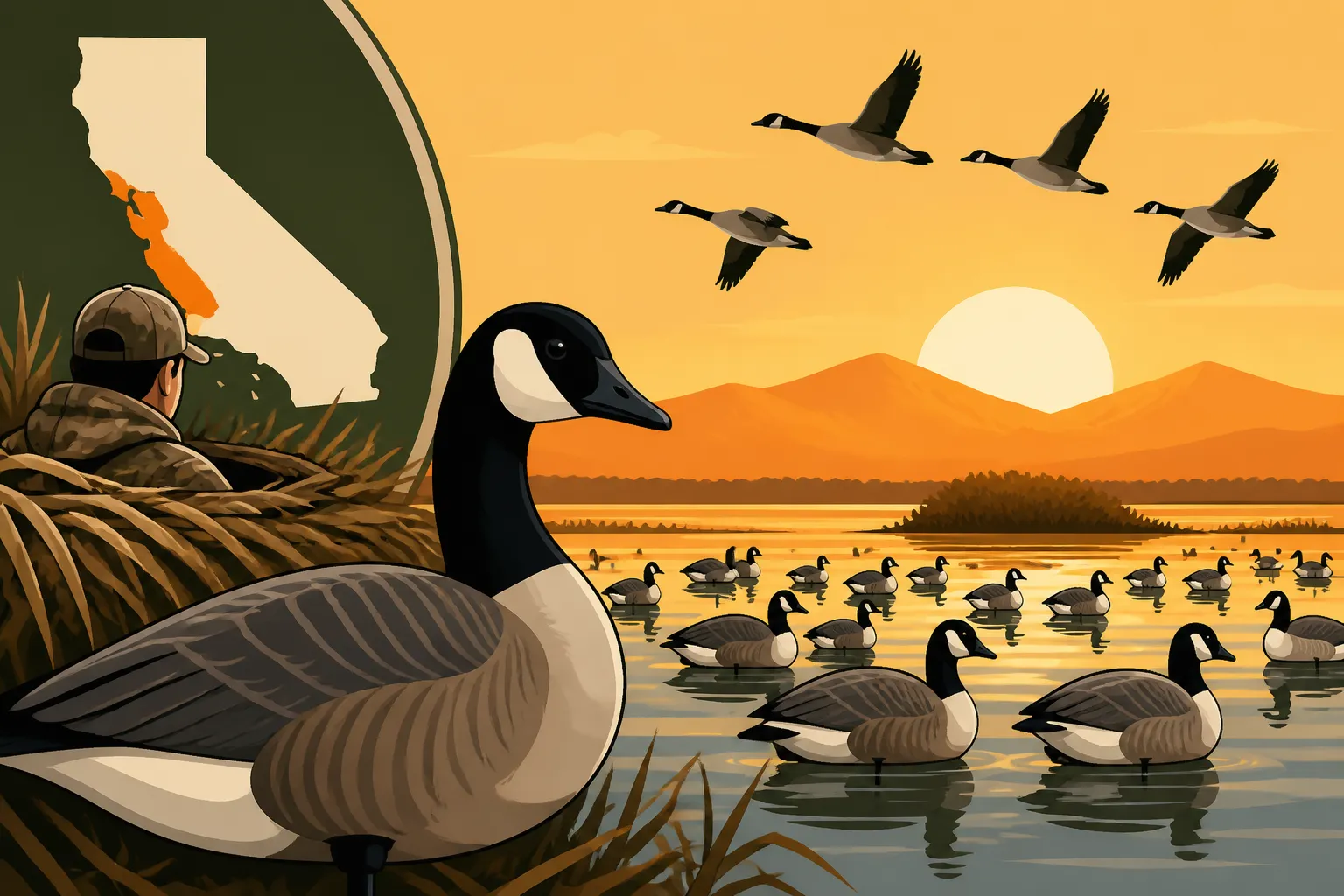
- Full-Bodied Decoys: These are the backbone of any serious goose spread. Their three-dimensional realism, especially with flocked heads and natural paint schemes, makes them incredibly convincing from all angles. They mimic geese at rest, feeding, and alert. The downside? They're bulky, heavy, and can be expensive. But near a refuge, their realism is often non-negotiable for drawing in wary birds. You need to consider how many you can transport and deploy effectively. For a long-tail setup, a good number of full-bodies creates a strong visual magnet.
- Shell Decoys: Lighter and more portable than full-bodies, shells provide good bulk and a three-dimensional look from a distance, especially when feeding. They're great for filling out the "body" of your spread without breaking your back or your bank account. Place them in feeding postures to create the illusion of a contented flock.
- Silhouette Decoys: While they might seem less realistic up close, silhouettes excel at creating massive visual impact from a distance. They're incredibly lightweight and portable, allowing you to deploy a huge number quickly. When geese are high, a large silhouette spread can be the first thing to catch their eye, pulling them in for a closer look where your full-bodies and shells can seal the deal. Think of them as your distant advertising.
The key is a mix. Use full-bodies at the core of your spread, especially near your blind, where discerning eyes will have their closest look. Surround them with shells to add density and realism. Then, use silhouettes to extend the spread, making it look like a much larger flock than it actually is.
Adding Motion and Realism: Flags, Kites, and Spinners
Static spreads just don't cut it for refuge geese. These birds are constantly moving, feeding, and interacting. Your spread needs to mimic this life to appear natural and safe.
- Goose Flags: A simple hand-held goose flag can be a game-changer. Used judiciously, it simulates a landing goose or a goose stretching its wings. The flash of black and white from a flag can grab the attention of distant birds that might not even notice your decoys. The trick is not to overdo it; a few strategic waves are more effective than frantic flailing. It’s about creating a subtle, irresistible signal.
- Kite Decoys: Kite decoys, especially those designed to realistically imitate a goose flying, can add incredible realism and vertical appeal. These kites, tethered to poles, can soar above your spread, mimicking a flock descending or circling. When birds are hesitant to commit, a kite can be just the confidence booster they need, suggesting other geese are arriving. This adds a crucial dimension that static decoys can't.
- Spinning Wing Decoys (Motion Decoys): While often associated with ducks, smaller, realistic motion decoys can be effective for geese, particularly the flapping wing varieties. They add movement that can be seen from a long distance. However, use them cautiously; some older, less realistic spinner models can actually flare wary geese. Opt for newer, ultra-realistic flapping wing decoys or those that mimic subtle head movements. Always observe how the geese react and be ready to remove them if they're spooking birds.
A well-placed motion decoy, combined with a subtle flag, can turn a hesitant fly-by into a committed landing approach. Remember that the goal is to convince the geese that your field is a safe, bustling feeding ground.
How Many Decoys Do You Really Need?
The simple answer? More than you think. When hunting near a refuge, big numbers often translate to big confidence for the geese. These birds fly in large flocks, and they expect to see a lot of their kind. A small spread of 10-20 decoys, while effective in some situations, can look sparse and uninviting to a flock of 50-plus high-flying geese.
Aim for a minimum of 50-75 decoys, with 100-200 being ideal if you can manage it. This includes your mix of full-bodies, shells, and silhouettes. The sheer volume of decoys creates a visual mass that is hard for passing geese to ignore. It screams "safety in numbers" and "great food here!" Of course, the exact number depends on the species you're targeting (Canada geese vs. smaller cacklers or specklebellies), the size of the field, and your physical capacity to deploy and retrieve them. Consider how to manage such a large spread effectively, and remember that Scouting California Public Land Before Season is crucial to ensure you're setting up in a spot that justifies such an effort.
Crafting the Perfect Spread: Layouts and Concealment
Now that you have your arsenal, it's time to arrange it. The layout of your spread is just as critical as the quality and quantity of your decoys. It needs to look natural, welcoming, and facilitate those close-range shots.
Classic U-Shaped or J-Shaped Spreads
These are the go-to spread designs for a reason – they work. The idea is to create an open landing zone directly in front of your blind, guiding the geese right into your wheelhouse.
- U-Shape: Imagine a large "U" laid out in the field. The bottom of the U, or the widest part, faces the direction you expect the geese to approach from (often downwind or crosswind). The two arms of the U extend towards your blind, creating a wide, inviting gap in the middle. Your blind is usually placed at the closed end of the U, or slightly within one of the arms, ensuring that incoming birds are focused on the open landing area and not directly on your hide. Place more full-bodies and active decoys closer to the landing zone to draw their eye.
- J-Shape: Similar to the U-shape, but with one "arm" shorter or curved more sharply. This is excellent for funneling birds along a specific flight path or when you have a crosswind. The hook of the "J" creates a natural turn and landing pocket, again, ideally bringing birds in front of your concealment. This can be particularly effective when trying to pull geese away from the refuge boundary and into your field.
In both these layouts, the goal is to make the landing zone feel safe and accessible. Don't crowd the center. Geese need room to land, and they prefer to touch down where other geese appear comfortable and undisturbed.
Wind Direction and Landing Zones
The wind is your best friend or your worst enemy in goose hunting. Geese, like all birds, almost always land into the wind. This means your landing zone must be set up with the prevailing wind in mind.
If the wind is coming from the north, your decoys should be spread out to the north, creating a gap to the south (where the geese will try to land, facing north). Your blind should be placed downwind of the landing zone, allowing you to shoot at incoming birds as they decelerate and prepare to touch down, often with their wings cupped and feet down. This is why Wind and Thermals in Steep Sierra Country talks about similar principles, even for deer hunting – understanding air movement is universal.
A good rule of thumb is to place your main landing pocket 15-30 yards from your blind. This provides an ethical and effective shooting range for most shotguns. Always have an alternate spread plan in your head, or even a few scattered "confidence decoys" upwind of your primary spread, in case the wind shifts unexpectedly. Remember to check weather forecasts for wind shifts; a sudden change can ruin an otherwise perfect setup.
Concealment is Non-Negotiable
No matter how perfect your spread, if the geese see you, they're gone. These refuge birds are paranoid. Your blind needs to disappear into the landscape.
- Layout Blinds: For field hunting, layout blinds are king. They get you down low, nearly invisible, and offer a comfortable shooting platform. Make sure to brush them in thoroughly with natural vegetation from the field you're hunting. If it's a cut corn field, use corn stalks. If it's a dry grass field, use dry grass. Don't leave any unnatural edges or dark spots that will stick out. Blending in is key. Layout Blind Hunting a Flooded Field covers some of the techniques to make yourself invisible.
- A-Frame Blinds or Pit Blinds: In some situations, especially where you can hide a larger structure along a fenceline or ditch, an A-frame blind or even a pit blind can work. These offer more room and allow you to sit upright, but they are much harder to conceal effectively in the middle of a flat field. Pit blinds, if legal and feasible, offer the ultimate concealment as you're completely below ground level.
- Natural Cover: Whenever possible, leverage existing natural cover. A hedgerow, a line of trees, or a depression in the field can offer fantastic concealment. Always try to position your blind with the sun at your back, if possible, to keep your face in the shadows and make it harder for incoming birds to pick you out.
Remember, geese have incredible eyesight. They can spot unnatural shapes and movements from hundreds of yards away. Take the extra time to brush in your blind perfectly, minimize movement, and stay completely hidden until it's time to shoot. A good pair of binoculars, like those you might use for Glassing Mule Deer in Open California Country, can help you check your own concealment from a distance before the birds arrive.
| Decoy Type | Realism (Close) | Realism (Distance) | Portability | Cost (per dozen) | Typical Use |
|---|---|---|---|---|---|
| Full-Body | Excellent | Excellent | Low | High | Core of spread, close to blind, highly visible |
| Shell | Good | Good | Medium | Medium | Adding bulk and feeding postures |
| Silhouette | Fair | Good (Mass) | High | Low | Extending spread, creating large numbers |
| Flag/Kite | N/A (Motion) | Excellent (Motion) | High | Medium | Adding vertical and horizontal motion |
| Motion Decoy | Good | Good | Medium | High | Subtle wing or head movement, close to blind |
Advanced Tactics and Troubleshooting for Wary Geese
Even with the perfect spread and hide, refuge geese can be a challenge. They're smart, and you need to be smarter. Thinking outside the box and adapting to their behavior is key.
Effective Calling Strategies
Goose calling is an art, not just a noise. When dealing with refuge birds, less can often be more, and realism is paramount.
- Less Aggressive Calling: Forget those loud, frantic volleys that might work on less pressured birds. Refuge geese have heard it all. Often, soft clucks, moans, and murmurs of contented feeding geese are far more effective. You want to sound like a peaceful, safe haven, not a honking competition.
- Responsive Calling: Pay attention to the geese. If they're high and circling, a subtle greeting call might get their attention. If they break and turn towards you, back off the call or switch to soft feeding sounds. Let them work. If they start to drift away, a slightly louder, more pleading call might bring them back. It's a conversation.
- The Power of the Solo Call: Sometimes, a single, lonely honk or cluck from a "lost" goose can be incredibly enticing to a passing flock. It triggers their social instinct to join up. Experiment with different calls and volumes to see what the birds are responding to on any given day. Remember, consistency and realism beat volume every time.
Practicing your calling is essential. Listen to real geese, not just other hunters. Mimic their rhythms and inflections. A well-executed call can make all the difference, drawing in those hesitant birds to your perfectly arranged Goose Decoy Spread Near a Refuge.
Scouting, Adaptability, and Confidence Decoys
You can't just set up and hope. Thorough scouting and the ability to adapt your plan on the fly are critical for success with refuge geese.
- Pre-Season and In-Season Scouting: This is where you put in the homework. Drive around the refuge-adjacent fields for days, even weeks, before the season opens. Use a good spotting scope and binoculars (like those you’d need for Glassing a Canyon for a Bedded Buck) to identify which fields geese are actively using, what their flight paths are, and where they seem to feel safest. Pay attention to private land; gaining permission on a field geese are already using is gold. Even once the season starts, devote time to scouting for fresh feeding patterns. Birds will move due to pressure, food availability, and weather. Many hunters utilize mapping platforms, often found through a GoHunt membership, to log scouting observations and pinpoint prime locations.
- Adaptability to Conditions: The weather changes, the birds change, and so should your strategy. If the wind shifts, be prepared to quickly reposition your blind and adjust your spread. If birds are flaring from a certain type of motion decoy, remove it. If they're landing short, expand your landing zone or move your blind back. Don't be afraid to change things up mid-hunt.
- Confidence Decoys and Feeders: These are decoys placed slightly away from your main spread, perhaps a dozen or two upwind or off to the side, depicting geese that are completely oblivious and content. They serve as "confidence boosters," making your main spread look even more natural and safe. If the main flock is hesitating, these "outlier" birds can often convince them that all is well. Similarly, adding a few feeder decoys (heads down, rear up) close to your landing zone reinforces the idea of a prime food source. These subtleties are especially important when Hunting a Refuge-Adjacent Field at Dawn.
Ultimately, hunting wary geese near a refuge demands a blend of careful planning, realistic tools, and the mental fortitude to adapt. It's challenging, but when a big flock commits, wings cupped, to your meticulously crafted spread, there's no feeling quite like it. Keep learning, keep scouting, and keep honing your setup; the rewards are worth the effort.
Disclaimer
This article is for general informational purposes only and does not constitute professional advice. Laws, prices and regulations vary by location and change over time. Consult a qualified professional for guidance on your specific situation.