Choosing a Rifle Twist Rate for Non-Lead Bullets
Navigating California's unique hunting regulations, especially the statewide non-lead ammunition requirement, can throw a real curveball into what used to be simple choices, like picking your hunting load. One area that often gets overlooked, but is absolutely critical when switching to non-lead, is your rifle's twist rate. Many hunters find their tried-and-true rifles suddenly struggle with accuracy when feeding them non-lead bullets, and often, the culprit is an incompatible twist rate. This guide will dive deep into understanding rifle twist rates and how to ensure your firearm is perfectly matched for the longer, lighter-for-weight non-lead projectiles that are now mandatory for hunting in our beautiful state.
Understanding Rifle Twist Rates and Why They Matter for Non-Lead
Before we get into the nitty-gritty of non-lead, let's make sure we're all on the same page about what rifle twist rate actually means and why it's so fundamental to accurate shooting. It's not just a technical spec; it's the very foundation of bullet stability.
What is Rifling and Twist Rate?
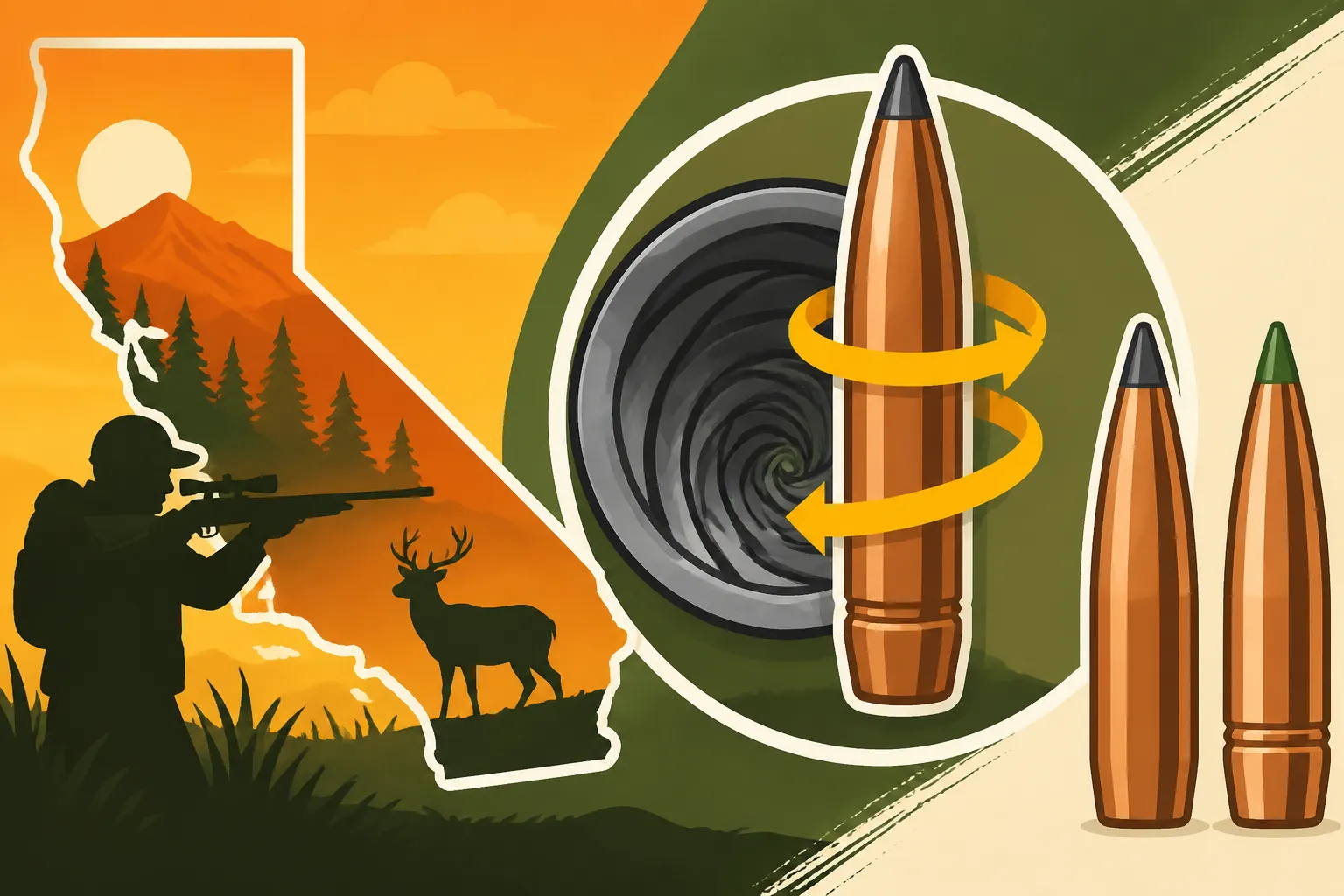
Imagine looking down the barrel of your rifle. You'll notice that the inside isn't perfectly smooth; it has helical grooves cut into it. This is called rifling. These grooves, or "lands" and "grooves," are precisely machined to impart a spin to the bullet as it travels down the barrel. Think of it like throwing a football with a spiral – that spin is what keeps the football stable and on target. Without rifling, a bullet would tumble end-over-end, flying erratically and inaccurately.
The "twist rate" is simply how quickly that rifling makes a complete rotation. It's typically expressed as a ratio, like "1:10" or "1:12". A 1:10 twist means the rifling completes one full rotation in 10 inches of barrel length. A 1:12 twist means it takes 12 inches for one full rotation. So, a lower second number (e.g., 1:8) indicates a "faster" twist, meaning the bullet spins more rapidly over a shorter distance. Conversely, a higher second number (e.g., 1:14) indicates a "slower" twist, meaning less spin over the same distance. The faster the twist, the more revolutions per minute the bullet will make as it exits the muzzle.
The Stability Factor: How Twist Rate Affects Bullet Flight
The primary goal of rifling is to stabilize the bullet, ensuring it flies point-first all the way to the target. If a bullet isn't adequately stabilized, it will start to yaw or wobble, and in extreme cases, it might even "keyhole" – meaning it strikes the target sideways, leaving an elongated hole instead of a clean, round one. This is a clear sign of severe instability. An under-stabilized bullet loses accuracy rapidly, especially at longer ranges, and its ballistic coefficient (how efficiently it flies through the air) is severely degraded.
Bullet stability is a complex interplay of several factors, including bullet length, bullet weight, muzzle velocity, and of course, the twist rate. Generally speaking, longer bullets require a faster twist rate to stabilize them because they have more surface area for the air to act upon, trying to tip them over. Think of trying to throw a short, stubby dart versus a long, slender arrow; the arrow needs more spin or fletching to stay true. While less common, it's also possible to slightly over-stabilize a bullet with too fast a twist, which can sometimes lead to reduced precision, though this effect is usually far less detrimental than under-stabilization for typical hunting ranges. The goal is always optimal stabilization.
The Non-Lead Difference: Why California's Ammo Matters for Twist
California's non-lead ammunition requirement isn't just about switching bullet materials; it fundamentally changes the characteristics of the projectiles we use. This material shift has significant implications for barrel twist rates that many hunters learned through trial and error, sometimes frustratingly so, when they first made the switch.
The Material Shift: Copper vs. Lead Core
Traditional hunting bullets have primarily been made with a lead core, often jacketed in copper. Lead is incredibly dense, meaning a relatively small amount of material weighs a lot. This density allowed bullet manufacturers to create bullets that were fairly short for their weight. For instance, a 150-grain lead-core .30 caliber bullet would be a certain length. When that bullet leaves the barrel, its weight and length combine with the spin from the rifling to ensure a stable flight.
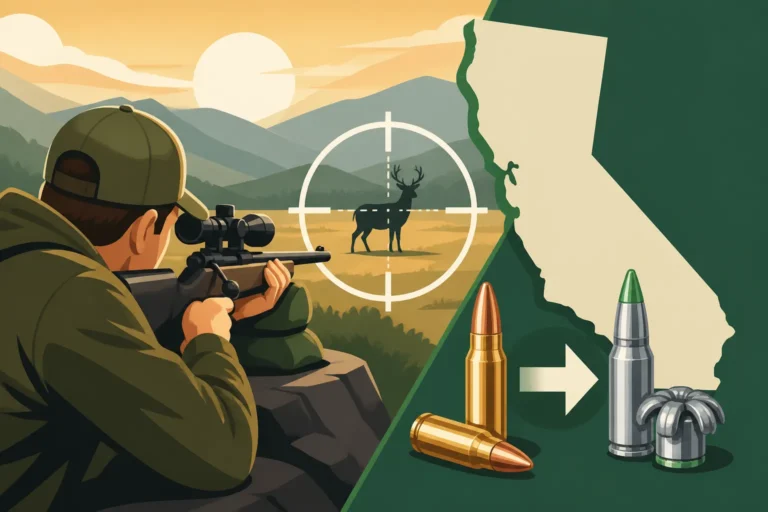
However, non-lead bullets, such as those made from solid copper or copper alloys, are significantly less dense than lead. To achieve the same bullet weight as a lead-core projectile, a non-lead bullet must be longer. It's simply physics: if you use a lighter material to achieve the same mass, you need more of that material, which translates to a longer bullet. For example, a 150-grain solid copper bullet might be the same length, or even longer, than a 180-grain lead-core bullet in the same caliber. This is the crucial difference that often causes issues with twist rates that were perfectly adequate for lead-based ammunition. The difference in length can be quite surprising when you hold them side-by-side.
The Impact of Bullet Length on Stabilization
As we discussed, longer bullets require a faster twist rate to achieve the same degree of stability as shorter bullets of the same caliber. This is where many older or traditionally-rifled hunting rifles can run into trouble when forced to shoot non-lead. A rifle that was perfectly accurate with 150-grain lead bullets and a 1:12 twist might suddenly see those same-weight 150-grain solid copper bullets "keyhole" or fly wildly inaccurate. Why? Because the much longer copper bullet isn't getting enough spin to stabilize its greater length as it exits the muzzle. It's akin to trying to spin a longer, heavier top with the same amount of force you use for a shorter, lighter one – it just won't spin as fast or as stably.
This issue is particularly pronounced with popular calibers that historically featured slower twist rates optimized for shorter, heavier-for-caliber lead projectiles. Many .30-06 Springfield rifles, for example, have a 1:10 twist, which is generally quite versatile. However, some older .270 Winchesters might have a 1:12 twist, which can sometimes struggle with the longer 130-grain or 140-grain non-lead bullets. Similarly, some .243 Winchester rifles, often with 1:10 twist rates, might find the longest non-lead projectiles challenging. This is a common frustration for hunters who have been using the same rifle for decades only to find it underperforms with the required new ammunition.
To give you a clearer picture, let's look at how bullet length can vary between lead and non-lead for a common hunting caliber:
| Caliber | Bullet Weight (Grains) | Material Type | Approximate Bullet Length (Inches) | Typical Recommended Twist Rate |
|---|---|---|---|---|
| .308 Winchester | 150 | Lead Core | 1.15 | 1:12 to 1:10 |
| .308 Winchester | 150 | Solid Copper | 1.35 | 1:10 to 1:8 |
| .270 Winchester | 130 | Lead Core | 1.05 | 1:10 |
| .270 Winchester | 130 | Solid Copper | 1.25 | 1:10 to 1:9 |
| 7mm Rem Mag | 160 | Lead Core | 1.25 | 1:9.5 |
| 7mm Rem Mag | 160 | Solid Copper | 1.45 | 1:9 to 1:8 |
Note: These lengths are approximations and can vary between manufacturers and specific bullet designs. Always check the manufacturer's data.
As you can see, even for the same weight, the non-lead bullets are noticeably longer, necessitating a potentially faster twist rate to achieve stable flight. This is why a rifle that always shot fantastic groups with a particular lead load might start sending its non-lead equivalent all over the target.
Matching Your Rifle's Twist to Non-Lead Ammunition
The good news is that with a little homework, you can figure out the best non-lead ammunition for your existing rifle or, if you're in the market, choose a new rifle with a twist rate optimized for California hunting. It's all about knowing your rifle and understanding your ammunition.
Checking Your Rifle's Twist Rate
The first step is to definitively know your rifle's twist rate. Don't guess! The easiest way is often to check the manufacturer's specifications. Most modern rifle manufacturers will list the twist rate in the owner's manual or on their website. A quick search for " [Your Rifle Model] twist rate" will usually yield the answer. For example, if you have a Winchester Model 70, you'd look up its specific variant and caliber. You might find specific information about California Legal Firearms for Deer Hunting that details common twist rates.
If you can't find the information, you can measure it yourself. It's a bit more hands-on but not difficult:
- Clear the rifle: Ensure the rifle is unloaded and the chamber is empty.
- Clean the bore: Run a patch through to make sure there's no debris.
- Use a tight patch and cleaning rod: Insert a cleaning rod with a tight-fitting patch or a bore brush into the muzzle end. Mark the rod with a piece of tape or a marker exactly where it enters the muzzle.
- Push and rotate: Slowly push the rod down the barrel, allowing the rifling to rotate the rod. Keep gentle, consistent pressure.
- Mark a full rotation: Once the mark you made on the rod has completed one full 360-degree rotation (back to its original position), stop.
- Measure: Measure the distance the rod traveled from the muzzle mark to the point where the full rotation occurred. That measurement is your twist rate. For example, if it rotated once in 10 inches, your twist rate is 1:10.
Knowing this number is your foundation for successful non-lead shooting. Without it, you're just guessing.
Consulting Bullet Manufacturers for Recommendations
Once you know your rifle's twist rate, the next critical step is to consult the non-lead bullet manufacturers. Companies like Barnes, Hornady (with their CX line), Nosler (with their E-Tip), and Federal (with their Edge TLR) put a lot of research into their bullet designs. They almost always provide recommended twist rates for their specific projectiles. This information is usually found on their websites under the bullet's specifications or in their reloading manuals. This is your primary source of truth for finding the right match.
For example, if you're considering Best Non-Lead Bullet for a .270, you'd go to Barnes' website, look up their 130-grain TTSX bullet, and find its recommended minimum twist rate. If your .270 has a 1:10 twist and Barnes recommends 1:10 or faster, you're likely in good shape. If they recommend 1:9 and your rifle is 1:12, you might have an issue. Don't be afraid to reach out to their customer service if you can't find the information or have specific questions about a bullet and your rifle's twist. Many online hunting forums and resources like GoHunt's forums also contain anecdotal data from other hunters regarding what bullets work well in various twist rates.
Practical Considerations and Testing
Even with all the data, the true test is at the shooting range. Ballistic calculators can give you an "optimal twist" number (like those found on the excellent Berger Bullets website, which provides stability calculators for different bullet types, though they mainly focus on target bullets, the principles apply). These tools are fantastic for theoretical understanding. For instance, you could input your bullet length (found on manufacturer sites or by measuring), bullet weight, and muzzle velocity (estimated or chronographed), along with your rifle's twist, and it will give you a stability factor. A factor of 1.5 or greater generally indicates good stability.
However, nothing beats actual range time. Buy a box or two of different non-lead loads that, on paper, seem compatible with your twist rate. Head to the range and test them for accuracy.
- Look for tight groups: This is the ultimate indicator of good stabilization. If your groups are consistent and tight, your twist rate is working well with that bullet.
- Watch for "keyholing": If you see elongated or sideways holes in your target, immediately stop using that ammunition. It's severely unstable and will be highly inaccurate in the field.
- Test different bullet weights: If a heavier non-lead bullet doesn't stabilize, try a lighter one of the same caliber. A 150-grain solid copper might not stabilize, but a 130-grain solid copper might due to its shorter length.
- Consider conditions: While not directly twist-related, remember that factors like temperature, altitude, and wind can also affect bullet flight. Try to test in consistent conditions initially.
- Sighting in: Always re-zero your rifle after switching to a new ammunition type, especially when moving from lead to non-lead, as point of impact will almost certainly shift. Our guide on Sighting In Before Switching to Non-Lead can help you through this process.
It's a process of elimination and fine-tuning, but it's essential for ethical hunting and maximizing your rifle's potential with California-compliant ammunition.
What to Do If Your Twist Rate Isn't Ideal
So, you've done your homework, hit the range, and discovered that your rifle's twist rate isn't playing nicely with the non-lead bullets you had hoped to use. Don't despair! You have a few options before throwing in the towel on your favorite rifle.
Choosing Lighter, Shorter Non-Lead Projectiles
The most common and often easiest solution for an older rifle with a slower twist rate is to experiment with lighter-for-caliber non-lead bullets. As we discussed, bullet length is the primary driver for twist rate requirements. A 150-grain solid copper bullet is much longer than a 150-grain lead bullet, but a 130-grain solid copper bullet will be shorter than that 150-grain solid copper. By dropping down in bullet weight, you reduce the overall length of the non-lead projectile, making it easier for your rifle's existing twist rate to stabilize it.
For example, if your .30-06 with a 1:12 twist struggles with 165-grain solid copper bullets, try dropping down to a 150-grain or even 130-grain solid copper option. While you might lose a little kinetic energy or ballistic coefficient at extreme ranges compared to a heavier bullet, for most California deer hunting scenarios (especially in timber or typical coastal oak woodlands), a well-placed shot with a lighter, accurate bullet is always superior to a heavier, inaccurate one. You might even find that these lighter, faster projectiles offer a flatter trajectory at common hunting distances.
Exploring Different Non-Lead Bullet Designs
Not all non-lead bullets are created equal, even within the same caliber and weight. Manufacturers are constantly innovating, and some designs are inherently more forgiving with twist rates than others. For instance, some bullets might feature a slightly different ogive (the curved part of the bullet nose) or boat tail design that influences how they fly. Others might be constructed with different copper alloys that allow for slightly shorter profiles.
It's worth researching different brands and their specific non-lead offerings. For example, a 150-grain solid copper bullet from one manufacturer might have a slightly different length or aerodynamic profile than a 150-grain solid copper from another. Reading reviews and forums, like those found on the GoHunt platform, can provide valuable insights into real-world performance with various rifle twist rates. Sometimes, a subtle change in bullet design can make all the difference in achieving acceptable accuracy. Don't be afraid to try a few different options from different brands; what one rifle "likes," another might reject.
Considering a Rebarrel or a New Rifle (Long-Term Solution)
Sometimes, despite your best efforts with different bullet weights and designs, your rifle simply won't perform ethically with non-lead ammunition. This can be a tough pill to swallow, especially if you have a cherished family heirloom or a rifle with sentimental value. In such cases, you have a couple of more significant, long-term options.
One option is to rebarrel your existing rifle with a new barrel that has a faster twist rate. This involves taking your rifle to a skilled gunsmith who can remove the old barrel and install a new one with a twist rate optimized for modern non-lead bullets. This is a considerable investment, often comparable to the cost of a new budget rifle, but it allows you to keep your action and potentially your stock, preserving some of the rifle's original character. For example, if you have an older .270 with a 1:12 twist, you might opt for a new barrel with a 1:9 or 1:10 twist, which would easily stabilize most non-lead options.
The other, and often more straightforward, solution is to invest in a new rifle. Many modern rifles are now manufactured with twist rates specifically designed to handle the longer, non-lead projectiles that are becoming standard in many hunting jurisdictions, including California. If you're looking for a new hunting companion, you can actively seek out models known for their faster twist rates in your desired caliber. This ensures you're starting fresh with a setup that's ready for any non-lead challenge. You can find detailed information on Rifles and Calibers for California Big Game to help guide your decision. While it might sting to put your old trusty rifle on the shelf, ensuring ethical, accurate shots in the field is paramount.
Disclaimer
This article is for general informational purposes only and does not constitute professional advice. Laws, prices and regulations vary by location and change over time. Consult a qualified professional for guidance on your specific situation.