Best Headlamp for a Pre-Dawn Sierra Climb
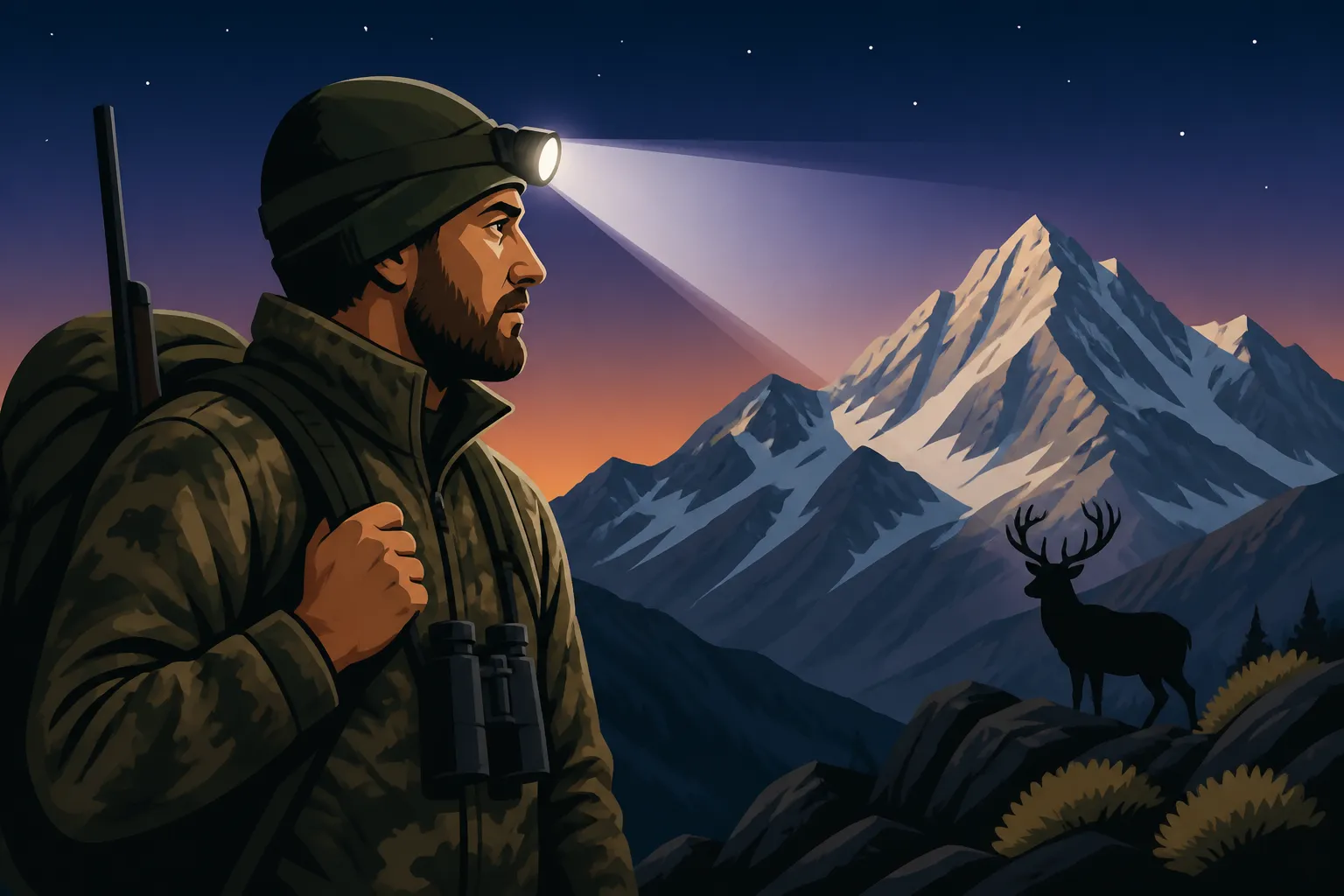
Ever tried to navigate a steep Sierra Nevada trail before the first hint of dawn, fumbling with a weak flashlight or a dim headlamp that bounces all over the place? It's not just frustrating; it's downright dangerous when you're carrying a pack and a rifle. This guide is all about helping you pick the perfect headlamp to illuminate your pre-dawn climbs, ensuring safety and efficiency on your California hunting adventures.
Why a Reliable Headlamp is Non-Negotiable for Sierra Climbs
When you're starting your hunt hours before the sun even considers showing its face, especially in the rugged Sierra Nevada, a reliable headlamp isn't just a convenience; it's a critical piece of safety gear. Those pre-dawn hours are often the most productive for covering ground and getting into position, but they also come with inherent risks if you can't see properly.
Navigating Treacherous Terrain in Darkness
Imagine trying to quietly traverse a steep, rocky game trail, or push through dense manzanita, all while holding a flashlight in one hand and your rifle in the other. It’s a recipe for disaster. The Sierra is notorious for its unforgiving terrain – loose scree, hidden roots, slick granite, and unexpected drops. A headlamp keeps your hands free, allowing you to maintain three points of contact on a steep ascent, hold your trekking poles, or simply keep a firm grip on your firearm. A sudden slip or fall in the dark, especially when you're alone or far from the trailhead, can turn a promising hunt into a survival situation.
Furthermore, being able to clearly see every foot placement allows for a much quieter approach. Stumbling over a loose rock or snapping a branch in the darkness can send every alert animal in the vicinity scattering long before legal shooting light. A good headlamp with a clear, focused beam helps you pick your path with precision, minimizing noise and maximizing your chances of a successful setup. It’s all about moving with purpose and stealth, which is almost impossible without proper illumination.
Maintaining Stealth and Situational Awareness
Beyond just seeing where you're going, a quality headlamp significantly enhances your overall situational awareness in the dark. You can scan the timberline for an emerging outline, check your map or GPS without fumbling, or quietly arrange your gear. The ability to switch between a wide floodlight for close-up tasks like tying a bootlace or grabbing a snack from your pack, and a focused spot beam for scanning distant ridges or creek bottoms, is invaluable.
A hands-free light source also means you can easily transition from movement to spotting. If you hear a faint rustle or see an odd shape, you can quickly bring up your binoculars or scope without dropping your light source or shifting your rifle. This quick reaction time can be the difference between identifying a legal buck and letting it slip by unnoticed. Being able to scan your surroundings, both near and far, without breaking your stride or losing your balance is fundamental to effective pre-dawn hunting in challenging mountain country. It truly integrates the light into your movement.
Essential Features for Your Sierra Headlamp
Choosing the right headlamp isn't just about grabbing the brightest one on the shelf. The Sierra environment demands specific features to ensure it performs when you need it most. Think about the conditions you’ll encounter: cold, damp mornings, dense fog, thick timber, and wide-open glassing points.
Lumens, Beam Patterns, and Adjustability
Lumens are often the first thing people look at, and while a high lumen count is great for maximum throw, it's not the only factor. For a pre-dawn Sierra climb, you need versatility. Look for a headlamp that offers a range of brightness settings, from a low glow (20-50 lumens) for map reading or close-up tasks without blinding yourself or your hunting partners, to a powerful high beam (300+ lumens) that can punch through the darkness to spot distant landmarks or verify an unexpected shadow. Many reliable headlamps feature a "boost" mode that gives you a short burst of extreme brightness for critical moments, which can be a lifesaver when you need to quickly identify something far off.
Beam patterns are equally important. A wide floodlight beam is excellent for illuminating the immediate area around your feet, helping you avoid tripping hazards on the trail. In contrast, a focused spot beam is crucial for long-distance visibility, allowing you to scan distant ridgelines or game trails before first light. The best headlamps offer both, or at least a highly adjustable beam that can transition between these patterns. Having this flexibility means you don't have to carry multiple lights for different tasks, streamlining your gear. When researching these technical aspects, resources like GoHunt often provide detailed reviews and comparisons of different headlamp models, breaking down their lumen output and beam characteristics for various hunting scenarios.
Red Light Mode and User-Friendly Controls
A red light mode is absolutely non-negotiable for serious hunters. It’s a game-changer for preserving your natural night vision. When your eyes adjust to the darkness, a blast of white light will completely ruin that adaptation, making it harder to see subtle movements in the low light after you turn the white light off. Red light, on the other hand, allows you to perform tasks like checking your compass, looking at a map, or rummaging in your pack, without compromising your ability to see in the dark. It also makes you less conspicuous to game, as many animals perceive red light differently than white light, or it simply doesn't alarm them as much.
Intuitive and glove-friendly controls are another must-have. Fumbling with tiny buttons in the freezing cold, especially with numb fingers or heavy gloves, is incredibly frustrating and can waste precious minutes. Look for headlamps with large, easily discernible buttons that offer good tactile feedback. Some models even feature lock-out functions to prevent accidental activation in your pack, saving your batteries. Furthermore, having a memory function that turns the light on at its last used setting (ideally red light or a low white setting) prevents you from inadvertently blasting bright white light when stealth is paramount. This attention to user experience is vital for a smooth, efficient pre-dawn climb.
Powering Your Ascent: Battery Life and Cold Weather Performance
Nothing is more frustrating than a dying headlamp halfway up a mountain in the dark. Proper battery management and understanding how cold affects performance are crucial for any Sierra hunt.
Choosing the Right Battery Type
When it comes to headlamps, you typically have two main battery options: alkaline (disposable) or rechargeable (lithium-ion, often integrated). Both have their pros and cons for a pre-dawn Sierra climb. Alkaline batteries are convenient because you can easily swap in fresh ones, and they're readily available. However, they can drain quickly in cold weather and create more waste. Rechargeable lithium-ion batteries, often built right into the headlamp, offer excellent performance and are more environmentally friendly. They tend to hold their charge well, but if your integrated battery dies, you're out of luck unless you have a power bank to recharge it.
Many premium headlamps now feature hybrid systems, allowing you to use either a proprietary rechargeable battery pack or standard alkaline batteries in a pinch. This flexibility is a huge advantage for extended trips or unexpected delays. For longer hunts or multi-day backcountry excursions, consider models that use external battery packs. These often sit on the back of your headlamp strap or can be carried in your pack, connected by a cable. This design helps distribute weight and, critically, allows you to keep the battery pack warm inside your jacket, significantly extending its life in freezing Sierra mornings. Always carry spare batteries or a fully charged power bank, especially if your hunt involves multiple pre-dawn starts.
Maximizing Run Time and Battling the Cold
The cold is a battery killer, plain and simple. As temperatures drop, batteries lose their efficiency and capacity much faster than at moderate temperatures. In the high Sierra, where pre-dawn temperatures can easily dip below freezing even in early fall, this is a significant concern. To maximize your headlamp's run time, always start with fresh or fully charged batteries. If using disposables, avoid buying them too far in advance, as they can slowly lose charge over time. For rechargeable batteries, charge them just before your trip.
During the hunt, keep spare batteries or external battery packs close to your body, perhaps in an inner jacket pocket, to keep them warm. This can dramatically improve their performance and longevity when you swap them in. Using lower brightness settings whenever possible also conserves power. Often, 50-100 lumens is perfectly adequate for navigating a trail or setting up your gear, saving those high-lumen blasts for critical moments. Always plan for more battery life than you think you’ll need, especially when Hunting California's Sierra Nevada Backcountry or any remote area where resupply isn't an option.
| Feature | Benefit for Sierra Hunting | Considerations |
|---|---|---|
| High Lumens (300+) | Spotting distant objects, navigating tricky terrain | Drains battery faster, can be overkill for close tasks |
| Low Lumens (20-50) | Map reading, setting up camp, preserving night vision | Insufficient for long-distance visibility |
| Adjustable Beam | Versatility for flood (close) and spot (distance) lighting | Ensure controls are easy to use with gloves |
| Red Light Mode | Preserves night vision, less disturbing to game | Should be easily accessible, not buried in menus |
| Rechargeable Battery | Eco-friendly, consistent power, good cold weather options | Requires charging, potential for dead battery if not managed |
| Alkaline Option | Easy to swap in new batteries, readily available | Heavier, less consistent in cold, more waste |
| IP Rating (e.g., IPX7) | Withstands rain, snow, accidental drops in puddles | Higher rating equals better protection and durability |
Comfort and Durability for Rugged Mountain Environments
A headlamp that constantly slips, bounces, or falls apart in challenging conditions is worse than no headlamp at all. In the Sierra, your gear takes a beating, and your headlamp needs to be as tough as you are.
Secure Fit and Balanced Design
There’s nothing quite as maddening as a headlamp that bounces around on your head with every step you take, especially when you’re climbing a steep grade. A secure, comfortable fit is paramount. Look for headlamps with wide, adjustable straps that are designed to stay put, even when you're moving vigorously or wearing a hat. Some straps feature an overhead band for extra stability, which can be particularly useful when you're loaded down with a heavy pack or pushing hard on a steep ascent. Silicon grip strips on the inside of the strap can also help prevent slippage against skin or beanies.
A balanced design is also key to long-term comfort. Headlamps with the battery pack located at the rear of the strap, counterbalancing the light unit on the front, distribute the weight more evenly. This reduces strain on your forehead and prevents the feeling of the headlamp wanting to tip forward. When you're spending hours Hunting a Sierra Nevada High Country in the dark, every bit of comfort makes a difference, and a well-balanced headlamp reduces fatigue and keeps your focus on the hunt, not on adjusting your gear.
Weather Resistance and Robust Construction
The Sierra Nevada weather is famously unpredictable. A clear, crisp night can quickly turn into a driving rain or a sudden snow flurry. Your headlamp needs to be able to handle whatever Mother Nature throws at it. Look for an IP (Ingress Protection) rating, which indicates its resistance to dust and water. An IPX4 rating is usually sufficient for light rain and splashes, but for true Sierra reliability, an IPX7 or IPX8 rating offers superior protection, meaning it can withstand immersion in water for a certain depth and duration. This is crucial for peace of mind, knowing your light won't fail if you drop it in a puddle or get caught in a downpour.
Beyond water resistance, robust construction is vital. Your headlamp will inevitably get bumped, scraped, or even dropped. Models made with high-quality, impact-resistant plastics or aluminum alloys will stand up to the rigors of backcountry hunting far better than flimsy alternatives. Check reviews on sites like GoHunt for feedback on how headlamps hold up in real-world, rugged conditions. Little details like sturdy hinges, secure battery compartments, and high-quality wiring can make a huge difference in the longevity of your headlamp. Investing in a durable headlamp means you won't be scrambling for a replacement mid-season, ensuring you're always prepared for those essential Pre-Dawn Sierra Climb moments.
Headlamp Care and Maintenance for Longevity
Even the best headlamp won't last if it's not properly cared for. A little maintenance goes a long way in ensuring your light is always ready when you need it most, especially after an arduous hunt.
Post-Hunt Cleaning and Storage
After a long day or night in the Sierra, your headlamp is likely to be covered in dirt, dust, sweat, or even mud. It’s important to give it a quick clean before stowing it away. Use a soft, damp cloth to wipe down the exterior of the light and the strap. If your headlamp has an IPX7 or IPX8 rating, you can even rinse it gently under a faucet, but always ensure the battery compartment is sealed tightly beforehand. Pay special attention to any grime around the buttons or seals, as this can degrade their effectiveness over time.
For storage, always remove alkaline batteries if you won't be using the headlamp for an extended period. This prevents corrosion from leaking batteries, which can permanently damage the electronics. For rechargeable models, it’s generally best to store them with a partial charge (around 50-70%) rather than fully charged or completely drained, to maximize battery life over the long term. Store your headlamp in a cool, dry place, ideally in a protective pouch or case to prevent scratches to the lens or accidental activation, especially when packed away with other gear. This simple routine ensures your headlamp remains in peak condition for every adventure, whether it's Scouting California Public Land Before Season or Hunting Into a Late-November Zone Close.
Battery Management Best Practices
Effective battery management extends beyond just carrying spares. It's about developing good habits. Always check your battery level before heading out, even if you think it's fully charged. Many modern headlamps have battery indicators that give you a clear sense of remaining power. If your headlamp uses standard alkaline batteries, consider investing in high-quality lithium primary batteries; they are more expensive but perform much better in cold temperatures and have a longer shelf life, making them ideal for emergency spares.
For rechargeable headlamps, using a portable power bank can be a game-changer on multi-day hunts. These allow you to top off your headlamp battery even in remote locations. Just make sure your power bank is also fully charged and can withstand the rigors of the backcountry. As mentioned earlier, keeping batteries warm in cold weather is critical. If your headlamp has a removable battery pack, consider sleeping with it in your sleeping bag on particularly cold nights. This ensures you wake up to a fully functional headlamp for your Hot-Weather Sitting Strategy in August or freezing December morning. By treating your batteries as a critical component, you ensure reliable light when you need it most.
Disclaimer
This article is for general informational purposes only and does not constitute professional advice. Laws, prices and regulations vary by location and change over time. Consult a qualified professional for guidance on your specific situation.