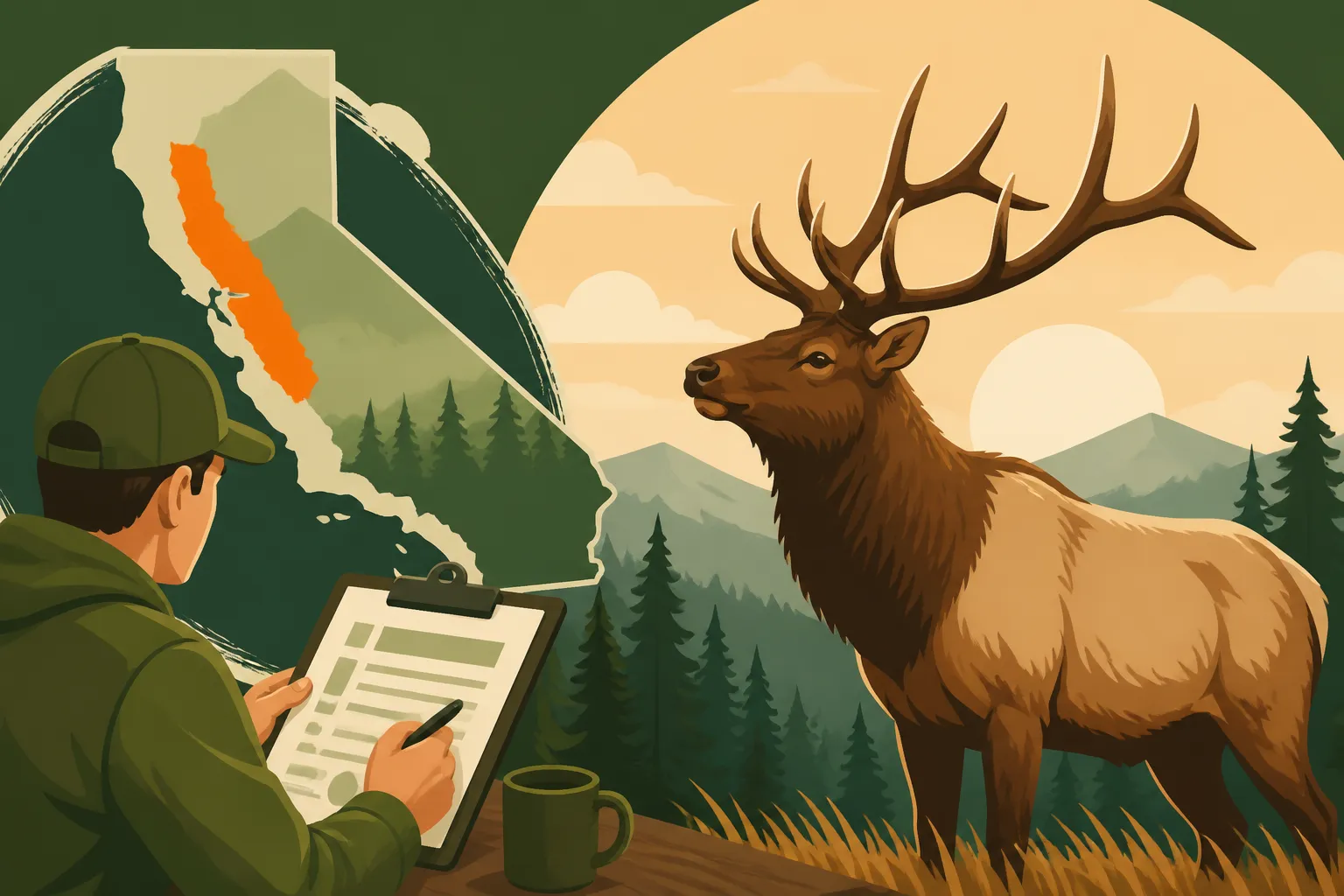
Applying for a Roosevelt Elk Tag in the Northwest
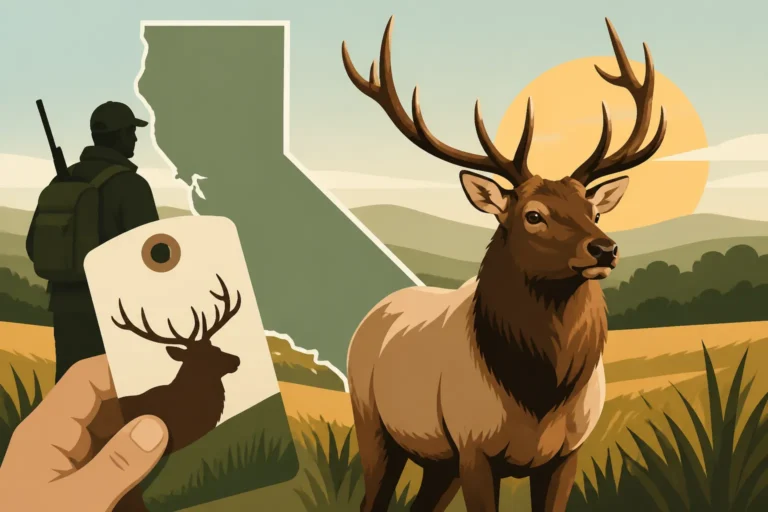
Drawing a Roosevelt elk tag in California's challenging lottery system can feel like trying to win the actual lottery – a dream for many, but a reality for very few each year. The dense, rugged terrain of the state's northwest, home to these magnificent animals, only adds to the mystique and difficulty. This guide is here to walk you through the often-complex process of applying for a California Roosevelt elk tag, offering insights into the draw, strategic application advice, and what to expect once you put your name in the hat.
Understanding Roosevelt Elk in California's Northwest
California's Roosevelt elk population is a true testament to conservation efforts, thriving in the dense, wet forests of the state's far northwest. These are not your wide-open country mule deer hunts; this is an experience steeped in the thick timber and steep canyons of the Pacific Coast.
Range and Habitat Specifics
Roosevelt elk in California are primarily concentrated in the dense redwood and mixed-conifer forests of Humboldt, Del Norte, and parts of Siskiyou and Trinity counties. This region is characterized by steep, heavily timbered slopes, deep river drainages, and consistent rainfall, creating a lush, challenging environment. Unlike their Rocky Mountain cousins, these elk are creatures of the forest, often found in smaller, more dispersed herds, making them incredibly elusive.
Hunting this type of country demands a completely different approach than chasing elk in the high desert or open plains. You're typically still-hunting or glassing small openings, relying heavily on tracking skills, understanding wind currents in dense timber, and extreme patience. It's an intimate hunt, often at close quarters, in conditions that can range from misty rain to dense fog, and sometimes even unexpected sunshine breaking through the canopy. Success often hinges on knowing the specific movements of a herd within a small, defined area, and being prepared for the physical demands of navigating such steep, brushy terrain. Hunters should also be familiar with the unique aspects of Hunting Roosevelt Elk in Redwood Country, as the dense canopy and undergrowth present specific challenges.
The Unique Appeal of a Northwest California Roosevelt Tag
For many, drawing a Roosevelt elk tag in California is the pinnacle of their hunting aspirations within the state. It's not just about the animal, but the experience of pursuing a magnificent bull in some of California's most breathtaking, primeval landscapes. The sheer size of a Roosevelt bull, with their heavy, dense antlers, is truly impressive, often dwarfing the more slender racks of other elk subspecies. Beyond the trophy, it's the immersion in their remote habitat, the silence of the ancient forests broken only by the snap of a twig or the distant bugle, that makes these hunts so sought after.
The difficulty of the draw further enhances the value of these tags. With extremely limited tags issued each year, successful applicants often spend a decade or more building preference points. This makes a Roosevelt tag less about "just going hunting" and more about earning a once-in-a-lifetime opportunity. It’s a hunt that demands meticulous preparation, both physically and mentally, and rewards those who truly commit to the challenge of the terrain and the elusive nature of the game. The unique conditions also mean hunters need to consider specialized gear, which is why a deep dive into Packs and Gear for a Backcountry Elk Hunt is so important.
Navigating the California Big Game Drawing System
California's drawing system for premium big game tags, including Roosevelt elk, is primarily based on a preference point system designed to give applicants with more unsuccessful attempts a better chance over time. It's a system that requires patience and a long-term strategy.
Understanding Preference Points
At its core, the California big game drawing awards preference points for each year you apply unsuccessfully for your first-choice hunt. These points accumulate, and in subsequent drawings, your application is essentially "weighted" by the number of points you have. So, if you have 10 preference points, your application goes into the draw with a higher priority than someone with only 2 points. The more points you have, the better your odds of drawing a desirable tag. However, it’s crucial to understand that even with a high number of points, a draw is never guaranteed, especially for highly coveted tags like Roosevelt elk.
Every year you apply and don't draw your first choice, you gain one point for that species (deer, elk, antelope, bear, or bighorn sheep). If you draw your first choice, your points for that species reset to zero. If you draw your second, third, or fourth choice, your points for your first choice are still carried forward for the next year. This encourages hunters to apply for their dream tag year after year, slowly increasing their odds. Familiarizing yourself with The California Big Game Drawing Explained is critical for any serious applicant.
The Application Process and Deadlines
Applying for a Roosevelt elk tag in California is done through the California Department of Fish and Wildlife (CDFW) online license and tag sales service, or at a licensed agent. The process typically opens in April and closes in early June, though it's always wise to check the official CDFW website for the exact California Elk Application Deadline each year.
To apply, you'll first need a valid California hunting license. Then, you select your elk hunt choices. For Roosevelt elk, these will be specific hunt codes tied to the Northwest California units. You can list up to four choices, but only your first choice contributes to building or using preference points. If you apply for multiple species, the point system works independently for each. It's a straightforward process online, but double-checking hunt codes and ensuring all information is correct before submitting is paramount. Many hunters also review the broader context of California Hunting Licenses and What They Cost before diving into the specific tag applications.
Specifics of the Roosevelt Elk Drawing
The Roosevelt elk drawing is one of the toughest draws in the state, primarily due to the very limited number of tags available for these specific hunt units.
Tag Quotas and Key Hunt Zones
California manages its Roosevelt elk hunts through a few select hunt zones, each with its own specific tag quota. These quotas are incredibly small, often in the single digits for bull tags in any given zone. The primary Roosevelt elk zones are located in the northwestern part of the state, encompassing areas like the Marble Mountains, Siskiyou, Del Norte, and Humboldt counties. For instance, the Northwestern (North Coast) hunt may have a handful of bull tags and an even smaller number of antlerless tags. These numbers fluctuate slightly year to year based on population surveys and management objectives, but they always remain extremely low.
The limited tags mean intense competition. When you consider that potentially thousands of hunters are applying and building points for these few tags, the challenge becomes clear. It’s not uncommon for a hunt unit with just two bull tags to see over 100,000 applications (when factoring in points). This scarcity is why drawing a Roosevelt elk tag often takes a decade or more of consistent application. Understanding these specific hunt zones and their historic tag allocations is crucial for strategic application.
The Reality of Draw Odds for Roosevelt Elk
Let's be blunt: the draw odds for a Roosevelt elk tag in California are incredibly low. We're talking about odds that often hover well under 1% for most applicants, even for those with a significant number of preference points. For a first-time applicant, drawing a Roosevelt bull tag is statistically almost impossible. This isn't meant to discourage, but to set realistic expectations.
The table below illustrates hypothetical draw odds for a Roosevelt elk bull tag in a given unit, demonstrating how preference points impact your chances. Keep in mind, these are illustrative, and actual odds can vary annually based on total applicants, tag quotas, and the point distribution of the applicant pool.
| Preference Points | Hypothetical Draw Odds (Bull Tag) |
|---|---|
| 0 | <0.1% |
| 5 | 0.2% |
| 10 | 0.5% |
| 15 | 1.0% |
| 20 | 2.5% |
As you can see, even with a substantial number of points, the odds remain slim. This is why many hunters focus on building points consistently, viewing it as a long-term investment rather than an immediate gratification lottery. It's a game of patience and perseverance, where the reward is truly exceptional. For a broader perspective on the challenges, see California Elk Tag Draw Odds by Species.
Maximizing Your Application Strategy
Given the challenging draw odds, a well-thought-out application strategy is paramount for anyone serious about pursuing a California Roosevelt elk. It’s not just about applying; it’s about applying smartly.
Building Points Wisely
The most common and effective strategy for drawing a Roosevelt elk tag is to consistently apply for a point-only option or for your desired Roosevelt elk hunt as your first choice, year after year, without drawing. This builds your preference points for elk. If your primary goal is a Roosevelt elk bull, you'll want to select a Roosevelt bull hunt as your first choice every year. Even if the odds are miniscule, that consistent first-choice selection is what accumulates points.
Some hunters, especially those with fewer points, might consider applying for a less popular antlerless tag as a second or third choice. While drawing a lower-preference tag won't reset your points for your first choice, it can offer an earlier elk hunting opportunity if that's also a goal. However, if your singular focus is a bull tag, stick to applying for the bull hunt as your first choice. The key is never to skip a year of applying, as you lose that crucial opportunity to gain a point. Remember, it's a marathon, not a sprint, and every point counts.
Selecting Hunt Choices Strategically
When it comes to selecting your actual hunt choices, especially for Roosevelt elk, strategic thinking goes a long way. While your dream might be a specific high-demand bull hunt, it's wise to research historical draw success rates for all available Roosevelt elk hunts. Some units or hunt periods might have slightly better odds than others, often due to accessibility, difficulty of terrain, or specific timing.
For instance, an early season archery hunt might have marginally better odds than a general rifle season in the same unit, simply because the pool of archery hunters is typically smaller. However, this also means preparing for Hunting the August Archery Bear Window or elk, which brings its own set of challenges, from dense foliage to heat. If you're point-building, always put your absolute dream hunt as your first choice. But if you have accumulated a significant number of points and want to maximize your chances of drawing any Roosevelt tag, you might consider using your later choices for hunts with slightly less competition, if they still align with your goals. Always verify hunt codes and dates carefully before finalizing your application to ensure you're applying for the correct season and location.
Using Data Resources Like GoHunt
In today's competitive big game drawing environment, leveraging data analytics tools can give you a significant edge. Platforms like GoHunt provide invaluable resources for hunters looking to dissect draw odds, analyze point creep, and understand the nuances of each hunt unit. They compile historical draw data, tag quotas, and applicant numbers, allowing you to filter results by species, unit, and point level. This kind of detailed information is crucial for making informed decisions about which hunt codes to prioritize based on your current point total and long-term goals.
For instance, GoHunt might show that a particular Roosevelt elk hunt has historically taken X number of points to draw, or that the average successful applicant had Y points. This allows you to realistically assess your chances and adjust your strategy. Are you still several years away from competitive odds for your top choice? This data helps you plan. It can also highlight units that might be slightly easier to draw, perhaps due to lower harvest success rates or more challenging access, offering a "backdoor" into a Roosevelt elk hunt sooner. While these tools require a subscription, many serious hunters consider them a worthwhile investment given the time and money spent on licenses and applications.
What to Do If You Draw That Coveted Tag
The moment you see that "successful" notification is exhilarating, but the real work has just begun. Drawing a Roosevelt elk tag is just the first step; preparing for the hunt itself is an entirely different beast.
Pre-Season Scouting and Reconnaissance
Once you've drawn a tag, especially for a Roosevelt elk hunt in the dense Northwest, extensive pre-season scouting is non-negotiable. This isn't a hunt you can show up for cold. Roosevelt elk live in some seriously rugged and brushy country, often with limited access. Start by diving into maps – topographic, aerial, and public land ownership. Use tools like onX Hunt or Gaia GPS to identify potential access points, water sources, bedding areas, and feeding zones. Pay close attention to terrain features like saddles, benches, and ridges that elk might use to navigate the steep country. You can learn more about this in Scouting California Public Land Before Season.
Ideally, make several trips to your hunt unit before the season opens. Walk the areas you've identified, looking for fresh sign: tracks, rubs, wallows, and droppings. Identify common travel corridors and escape routes. Pay attention to prevailing winds and thermals in the steep canyons, as these will dictate your approach during the hunt. This physical scouting is vital not just for finding elk, but also for understanding the immense physical challenge the terrain presents. You'll want to pinpoint specific areas where you'd focus your efforts and potentially stage camp, especially for a multi-day backcountry hunt.
Physical Preparation and Gear Considerations
Hunting Roosevelt elk in Northwest California is physically demanding. The terrain is often steep, covered in dense brush and downed timber, and can be relentlessly wet. You'll be doing a lot of hiking, often off-trail, through thick cover. Therefore, a serious fitness regimen long before the season is crucial. Focus on cardio, leg strength, and endurance. Being able to move quietly and efficiently through tough country will be a major asset.
Your gear selection needs to be robust and appropriate for the conditions. Waterproof and durable boots with excellent ankle support are essential. Layered clothing made from quiet, quick-drying materials will be your best friend against the often-damp and variable weather. A quality backpack capable of comfortably carrying your gear for a day or multiple days, and then packing out heavy meat, is vital. Don't forget a reliable non-lead rifle or archery setup, as California mandates Choosing Non-Lead Rifle Ammunition in California. Strong optics, including binoculars and potentially a spotting scope, will aid in piercing through the dense timber. A GPS or mapping app with downloaded offline maps is non-negotiable for navigation in these often-remote areas.
Alternative Elk Tag Opportunities
While the Roosevelt elk in the Northwest are often the dream, California offers other elk species and tag opportunities that might be worth considering, especially if you're looking to get an elk tag sooner.
California's Other Elk Species: Tule and Rocky Mountain
Beyond the majestic Roosevelt, California is home to two other distinct elk subspecies: Tule elk and Rocky Mountain elk.
- Tule Elk: These elk are unique to California and are the smallest of North American elk subspecies. Their populations are primarily found in the Central Valley, coastal ranges, and some private ranches. While still challenging to draw, Tule elk tags are often slightly more numerous than Roosevelt tags, and some specific hunts might have marginally better odds. The hunting experience for Tule elk varies greatly depending on the unit, ranging from open grasslands to dense oak woodlands. Many hunters apply for Applying for a California Tule Elk Tag in the Big Game Drawing as a way to potentially hunt elk sooner.
- Rocky Mountain Elk: Found in the northeastern part of the state, near the Oregon border, these elk are genetically similar to those found in states like Colorado or Montana. Their habitat is more open, reminiscent of traditional Western elk hunting, involving glassing expansive landscapes. These tags are also incredibly limited, often even more so than Roosevelt tags, making them equally, if not more, difficult to draw. For those interested, there's specific guidance on Applying for a Rocky Mountain Elk Tag Near Oregon.
Each of these species offers a unique hunting experience, and diversifying your application strategy across all three could increase your overall chances of drawing an elk tag in California, albeit potentially for a different subspecies or region than your initial dream hunt.
Landowner Tags and Other Access
For hunters who have the financial means and a strong desire to hunt elk without navigating the arduous public land draw system, California does offer landowner tags for all three elk species. These tags are allocated by CDFW to private landowners who manage elk populations on their property and are then often sold to hunters. The cost for these tags can be substantial, often ranging from several thousand dollars to well over ten thousand, depending on the species, location, and hunt quality.
While expensive, landowner tags provide a guaranteed hunt opportunity and often come with guided services, increased success rates, and access to prime private land not available to public land hunters. This can be an excellent option for a hunter who prioritizes the experience and opportunity over the long wait in the draw. It’s also important to consider all aspects of Buying a Tule Elk Landowner Tag or other species landowner tags if this is an avenue you're exploring. Additionally, some private land operations may offer guided hunts without a landowner tag if you've already drawn a public tag, providing enhanced access and support.
Disclaimer
Always consult the official California Department of Fish and Wildlife (CDFW) regulations for the most current and accurate information regarding hunting licenses, tag applications, season dates, and specific hunt unit rules. Regulations can change annually, and it is the hunter's responsibility to ensure full compliance.