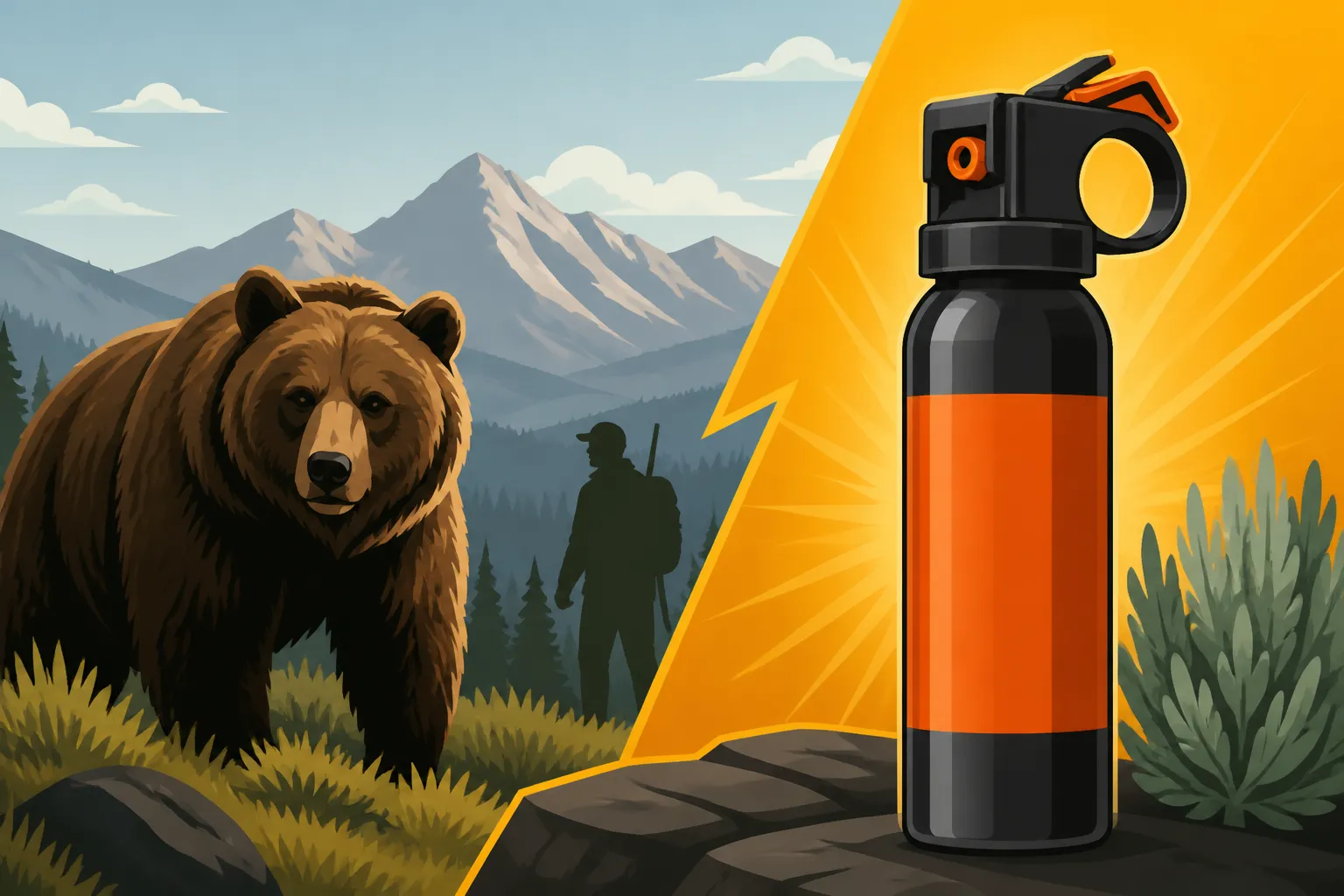
Best Bear Spray for Sierra Backcountry
Heading out into California's breathtaking Sierra Nevada backcountry offers unparalleled beauty, but it also means stepping into the territory of wildlife, including black bears. While most encounters are harmless, that sudden heart-stopping moment when a bear appears can be terrifying, and knowing how to safely deter an aggressive animal is absolutely crucial for your peace of mind and safety. This guide is all about helping you understand why bear spray is an indispensable piece of gear for your Sierra adventures, what to look for when choosing it, and how to use it effectively.
Why Bear Spray is Essential in the Sierra Nevada Backcountry
The Sierra Nevada is a wild place, and while we often romanticize the solitude, it's also a shared space with incredible wildlife. Understanding the dynamics of these interactions, especially with bears, is the first step in preparing yourself responsibly for any backcountry trip.
Understanding California's Black Bears
Let's get one thing straight: when we talk about bears in California, we're talking about black bears, not grizzlies. California's grizzly population was extirpated long ago. However, black bears are still powerful, intelligent, and wild animals, and their numbers have actually been on the rise in recent decades. You might be surprised to learn How Many Black Bears Live in California now, compared to historical figures. While typically shy and keen to avoid humans, a hungry bear, a startled bear, or a sow protecting cubs can behave unpredictably. They're naturally curious, especially about food, and repeated exposure to human food sources can lead them to become habituated, losing their natural fear of people. This is where many problems start.
It's easy to assume that a bear will always run away, and most of the time, they do. But imagine you're deep in the wilderness, miles from the nearest trail, rounding a bend and finding yourself face-to-face with a bear. Your heart pounds, your mind races, and you suddenly realize you're not in a zoo. This isn't just a hypothetical scenario; it happens to hikers, backpackers, and hunters every year. While California has a robust Black Bear Hunting California's Spot-and-Stalk Season, even experienced hunters respect the unpredictability of these animals. It's this potential for an unexpected, close-range encounter that underscores the need for a reliable deterrent.
The Role of Bear Spray as a Deterrent
When faced with an aggressive, charging bear, a split-second decision can mean the difference between a scary story and a serious incident. This is where bear spray shines as a non-lethal, highly effective deterrent. Unlike a firearm, which requires precise aim, skill under extreme duress, and carries the risk of a missed shot or an injured, even more enraged animal, bear spray creates a wide, irritating cloud that immediately affects the bear's eyes, nose, and respiratory system. It doesn't permanently harm the bear, but it creates enough discomfort to break off an attack and encourage the bear to retreat.
The goal isn't to kill the bear, but to stop its aggressive behavior and reinforce its natural aversion to humans. Think of it as a clear boundary: "This is far enough, friend." This method is generally considered more effective than firearms in stopping a charging bear, especially for the average person under extreme stress, and it’s certainly safer for the bear. Furthermore, carrying and using bear spray is legal and encouraged in the vast majority of California's backcountry areas, including our Hunting California's Sierra Nevada Backcountry lands. It’s a tool designed specifically for this purpose, and its track record is impressive when deployed correctly.
What Makes a Bear Spray "Best" for the Sierra Backcountry
Choosing the right bear spray isn't just about grabbing the first canister you see. There are specific features that make some products better suited for the demands of the Sierra Nevada environment and the intensity of a bear encounter.
Key Features and Specifications to Look For
When you're comparing bear sprays, it's not just about the label; it's about the science and the delivery system. The best bear spray for your Sierra adventure will have a few critical characteristics. Firstly, and perhaps most importantly, look for EPA approval. This means the product has been tested and approved by the Environmental Protection Agency specifically for use on bears. Without this certification, it's just pepper spray, which might not have the potency or range required for a bear.
Next, consider the active ingredient concentration. Bear spray contains Capsaicin and related Capsaicinoids (CRC), typically ranging from 1.0% to 2.0%. A higher percentage generally means more potency. You want something on the higher end of that spectrum for maximum effectiveness. The spray distance and duration are also crucial. Most effective bear sprays can project a stream or cone of spray 25 to 35 feet, giving you a vital buffer zone. They should also spray for several seconds, allowing you to create a sufficient cloud to deter a charging animal. Imagine having to aim precisely at a rapidly approaching target – a wider, longer-lasting cloud gives you a much better chance. Reputable outdoor gear retailers, like those you might find recommendations for on GoHunt, often carry brands that meet these specifications.
Finally, think about canister size and weight for practicality. You want enough volume to be effective, but not so heavy or bulky that you'll be tempted to leave it behind. Most common sizes are around 7.9 oz to 9.2 oz. Always check the expiration date; bear spray loses effectiveness over time, and you don't want to find out yours is expired when you need it most.
| Feature | Description | Why it Matters in the Sierra Backcountry |
|---|---|---|
| EPA Approval | Certified by the Environmental Protection Agency specifically for deterring bears. | Ensures legal compliance and proven effectiveness against bears, not just humans. |
| OC Concentration | Capsaicin and related Capsaicinoids (CRC) content, typically 1.0% to 2.0%. | Higher concentration (closer to 2.0%) means greater irritation and deterrent power, especially for large animals. |
| Spray Distance | How far the spray can reach (e.g., 25-35 feet). | Provides a critical safety buffer, allowing you to deploy early and effectively before the bear is too close. |
| Spray Duration | How many seconds the canister can spray continuously (e.g., 6-9 seconds). | Allows for creating a wider, more persistent cloud, increasing the chances of hitting the bear's sensitive areas. |
| Spray Pattern | Whether it's a cone (wider dispersion) or a stream (more directed). | A cone is generally preferred for bears, as it offers a larger target area and is easier to deploy under stress. |
| Canister Size/Weight | Total volume and ounces of the canister. | Balances sufficient deterrent power with portability; you need to carry it comfortably for miles. |
| Shelf Life | The expiration date printed on the canister. | Ensures the active ingredients and propellant are still effective; an expired can may not work. |
Holsters and Accessibility
Having the best bear spray in the world won't do you any good if you can't get to it in a hurry. Accessibility is paramount. Bear encounters can unfold in seconds, and fumbling in your pack is not an option. You need a holster that keeps your bear spray instantly reachable, ideally without having to take your eyes off the bear. Chest holsters are a favorite among many backcountry users because they position the canister right on your sternum strap or backpack shoulder strap. This allows for a quick, one-handed draw while keeping it secure during strenuous activity.
Hip holsters are another popular choice, often attaching to a belt or backpack hip belt. The key here is to ensure it doesn't interfere with your stride or get snagged on brush as you hike. Some hunters who might also be carrying a rifle for something like Rifle Hunting California's General Deer Season find hip holsters easier to manage alongside other gear. Whichever you choose, practice drawing it repeatedly. You want that motion to be muscle memory, smooth and swift, even when your heart is pounding. Remember, if you're not wearing it where it's immediately accessible, it's almost as good as leaving it at home.
How to Properly Use and Practice with Bear Spray
Possessing bear spray is only half the battle; knowing how to use it correctly and confidently is what truly prepares you for a backcountry encounter. This isn't a "point and shoot" scenario; there's a strategy involved.
Situational Awareness and Deployment Strategy
The best defense starts long before a bear becomes aggressive. Maintaining situational awareness is key. That means constantly scanning your surroundings, making noise as you hike to avoid surprising an animal, and looking for fresh bear signs like scat, tracks, or claw marks on trees. If you spot a bear from a distance, the best strategy is usually to slowly back away, speaking calmly and making yourself appear large. Avoid direct eye contact, which can be seen as a challenge.
However, if a bear approaches aggressively, stands its ground, or begins a charge, that's when you prepare to deploy your spray. The moment of truth arrives quickly. You want to aim for the bear's face and eyes, creating a cloud of spray between you and the bear. Depress the actuator tab for a quick burst, then be ready to spray again if the bear continues to advance. Don't spray too early; you want the cloud to hit the bear as it gets close, maximizing the irritating effect. Remember, this isn't about covering the entire bear, but rather targeting its sensitive facial areas to disorient and deter it. Having a clear understanding of when and how to deploy your bear spray is as vital as the product itself. Many online resources, including comprehensive guides found on platforms like GoHunt, provide excellent visual aids and scenarios for this kind of training.
Storage, Maintenance, and Practice Drills
Think of your bear spray like any other piece of critical safety equipment: it needs proper storage and occasional maintenance. Always keep it in a readily accessible holster, as discussed, but ensure the safety tab is in place to prevent accidental discharge. Protect it from extreme temperatures; leaving it in a hot car can cause the canister to burst, and freezing temperatures can reduce its effectiveness. Regularly check the pressure gauge (if your model has one) and, most importantly, the expiration date. Replace it before it expires.
Practice makes perfect, even with bear spray. While you shouldn't discharge a live canister unnecessarily (it's expensive and can create a hazmat situation!), many manufacturers sell inert training cans. These cans spray a harmless propellant, allowing you to practice drawing, aiming, and activating the spray without wasting your real deterrent. Go into your backyard, set up a target (a piece of cardboard or a tree stump), and practice the motion of grabbing the canister, flipping the safety, and spraying. Get a feel for the spray pattern and distance. This muscle memory is invaluable when your adrenaline is pumping. Combining this practice with comprehensive California Hunter Education Requirements will give you a well-rounded approach to safety in the field.
Legality and Considerations for Carrying Bear Spray in California
Understanding the legal landscape of carrying bear spray is just as important as knowing how to use it. California has specific nuances that every backcountry user should be aware of.
California Specific Regulations
The good news is that carrying and using EPA-approved bear spray for the purpose of deterring an aggressive animal is legal in California. This is a common misconception, as many people confuse bear spray with personal self-defense pepper spray. The key difference lies in the formulation and intended use. Bear spray canisters are typically larger, project a wider cloud, and contain a higher concentration of the active ingredients specifically designed to deter animals.
However, there can be some minor restrictions depending on your exact location, especially within certain state parks or highly regulated areas. Always double-check the rules for the specific wilderness area, national forest, or state park you plan to visit. While it's generally accepted in places like Los Padres National Forest or the Sierra Nevada's vast stretches of public land, a quick check of the local agency's website before you go can save you a headache. Also, remember that possessing bear spray is for animal deterrence only; using it on a human is illegal and carries serious consequences. For broader considerations on what to carry in the backcountry, you might also find value in articles like Best First Aid Kit for a Remote Hunt or Best Satellite Communicator for BLM Desert Land.
Responsible Backcountry Practices
Bear spray is a tool, but it's not a substitute for responsible backcountry behavior. The best way to avoid a negative bear encounter is to prevent it in the first place. This means practicing impeccable food storage. Always use an approved bear canister when backpacking in areas where required, or properly hang your food out of a bear's reach. Never leave food unattended, and always pack out all your trash, including food scraps. Hunting Into a Late-November Zone Close often means bears are focused on last-minute foraging before winter, making food storage even more critical.
Beyond food, be aware of your impact on the environment. Leaving no trace isn't just a mantra; it's a critical safety measure that reduces human-wildlife conflicts. Respect wildlife, observe them from a distance, and never approach a bear, especially a sow with cubs. Understanding Black Bears in California and their natural behaviors is crucial for coexisting. By combining knowledge, responsible practices, and the appropriate gear like bear spray, you can ensure your Sierra Nevada adventures are both thrilling and safe.
Disclaimer
This article is for general informational purposes only and does not constitute professional advice. Laws, prices and regulations vary by location and change over time. Consult a qualified professional for guidance on your specific situation.