California Valley Quail Population Trends
It’s a familiar story for many of us who chase California’s iconic Valley Quail: one year, the coveys seem to be everywhere, flushing with explosive energy from every patch of chaparral. The next, you can walk for miles through prime habitat and only hear a whisper or two. This inconsistency can be incredibly frustrating, leaving hunters wondering what’s really going on with our feathered friends. This guide is here to pull back the curtain on the dynamic and sometimes perplexing world of California Valley Quail population trends, helping you understand the forces at play and what it means for your next upland adventure.
Understanding California Valley Quail: A Beloved Game Bird
Few birds embody the spirit of California’s wildlands quite like the Valley Quail. With their distinctive forward-curving top knot and their melodious "chi-ca-go" call, they are a vibrant part of the landscape, from coastal scrub to high desert fringes. For hunters, they offer fast-paced action and a delicious reward, but understanding their ecology is key to consistent success.
The Iconic "Top Knot" and Social Nature
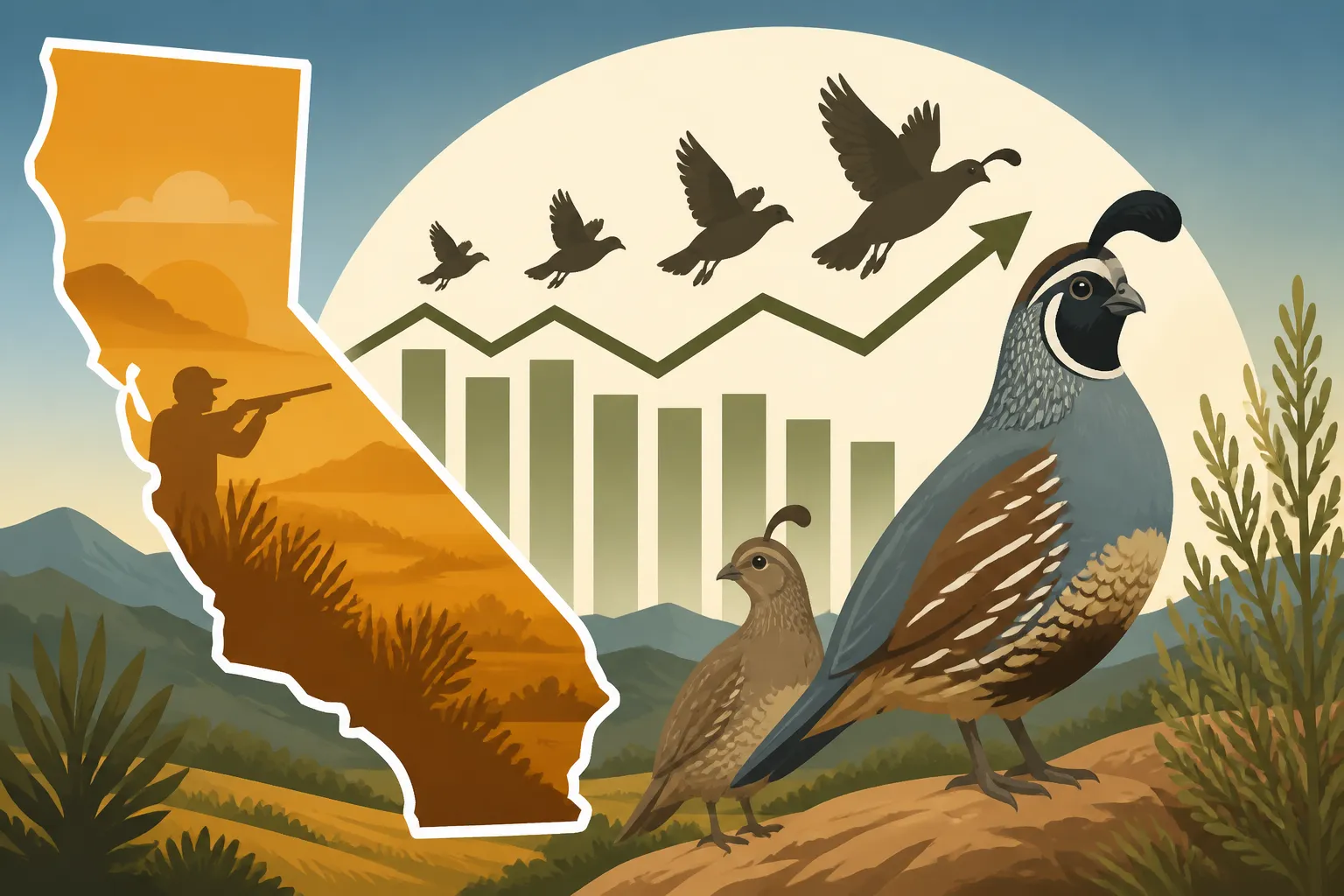
The Valley Quail, or Callipepla californica, is instantly recognizable by its comma-shaped plume of black feathers adorning its head. Males typically boast more striking plumage, with a black face framed by a white stripe, a chestnut crown, and a scaled belly. Females are more subtly patterned, though they still carry that charming top knot. These birds are highly social, especially outside the breeding season. You'll rarely find a single quail; instead, they gather in coveys that can range from a handful of birds to dozens. This social structure is a crucial survival mechanism, offering more eyes and ears for predators and helping them find food and cover more efficiently. During the fall and winter, these coveys are often concentrated near water sources and dense escape cover, making them a primary target for hunters. Their sudden, explosive flush when startled is an adrenaline rush unlike any other, demanding quick reflexes and precise shooting.
Historical Abundance and Changing Landscapes
Tales from old-timers often speak of quail populations so vast they would darken the sky. While that might be a bit of a hunter's exaggeration, there's no doubt that Valley Quail were historically incredibly abundant across much of California. Their preferred habitat – a mosaic of open grassy areas for foraging, dense shrubby cover for escape and roosting, and reliable water sources – was once widespread. However, California has undergone massive landscape transformations over the last century. Urban development has consumed vast tracts of historic quail range, pushing them into smaller, more fragmented pockets. Agricultural expansion has also played a dual role: while some farming practices create valuable edge habitat and food sources, intensive monoculture operations can eliminate critical cover and disrupt migration patterns. Thinking about how the state's natural bounty has changed definitely makes you appreciate the efforts to preserve what we have left, and it adds another layer to our understanding of California Valley Quail population trends.
Key Factors Influencing Valley Quail Populations
Valley Quail populations are highly dynamic, a testament to their adaptability but also their vulnerability to environmental shifts. Unlike some larger, longer-lived game species, quail numbers can fluctuate dramatically year to year based on a confluence of factors, making consistent hunting a challenge and a reward.
Habitat Loss and Fragmentation
Perhaps the most significant long-term threat to Valley Quail is the continuous creep of human development. As California’s population grows, sprawling communities, new roads, and industrial zones inevitably consume prime quail habitat. What’s left isn't just reduced in size but often fragmented into isolated patches. Imagine a covey that historically moved freely between a large oak woodland for acorns and a nearby chaparral slope for cover. Now, a freeway or housing development might separate those essential resources, making it difficult or impossible for birds to access everything they need. This fragmentation limits genetic diversity, makes populations more susceptible to localized disasters like fire or disease, and reduces overall carrying capacity. Even small changes, like a new fence line that cuts through an old travel corridor or a field converted to a crop that offers no cover, can have ripple effects on local coveys.
Weather Patterns and Drought Cycles
California's climate is famously boom or bust, and Valley Quail populations are incredibly sensitive to these cycles. Good rainfall years typically lead to lush growth of grasses and forbs, providing abundant insects for chicks and seeds for adults. This translates directly into higher breeding success, better chick survival, and robust coveys. Conversely, prolonged droughts, which are an increasing concern in California, can be devastating. When the landscape dries out, food and water become scarce. Hens may not be able to gather enough energy to lay multiple clutches, and chicks born in dry years struggle to find the insects critical for their early development. Even if they survive, adult birds may enter the winter in poorer condition, making them more vulnerable to predators and disease. When you're out Scouting California Public Land Before Season, paying close attention to the previous winter's rainfall can give you a strong indication of what to expect from the quail numbers.
Predation Pressure and Its Role
Predation is a natural and healthy part of any ecosystem, and quail have evolved alongside a host of predators, from coyotes and bobcats to various raptors like hawks and owls. Normally, a healthy quail population can absorb natural predation rates. However, when other factors like habitat loss or drought stress a population, predation can become a more significant limiting factor. For instance, if dense escape cover is reduced, quail become easier targets for aerial and ground predators. Similarly, if food sources are scarce, quail may have to spend more time in the open foraging, increasing their exposure. While it's rare for predators alone to wipe out a quail population, an imbalance can certainly suppress numbers, especially in areas where habitat quality is already compromised. Understanding these dynamics is crucial for grasping the overall picture of game species like the Valley Quail.
The Impact of California's Dynamic Environment on Quail
California’s landscape is a vibrant, ever-changing tapestry, influenced by natural forces and human activities alike. These dynamics create a constant push and pull on our wildlife, and Valley Quail are no exception. Their adaptability is remarkable, but there are limits to how much they can endure.
How Fire and Rainfall Shape Habitat
Fire is a natural, albeit often dramatic, component of California's ecosystems. For Valley Quail, a healthy fire regime, typically characterized by frequent, low-intensity fires, can actually be beneficial. These fires clear out dense undergrowth, promote new, nutritious herbaceous growth, and create a mosaic of open and covered areas – exactly what quail prefer. They create "edge" habitat that is highly productive. However, the catastrophic, high-intensity wildfires we've seen in recent years are a different story. These can incinerate vast tracts of prime habitat, leaving behind barren landscapes that offer little food or cover for years. On the flip side, rainfall is the lifeblood of quail country. Following a year of generous winter rains, the hills explode with wildflowers and green grasses, bringing with them an abundance of insects. This bounty directly translates to successful breeding seasons, robust broods, and higher survival rates for young birds. In contrast, dry years mean less forage, fewer insects, and increased stress on hens and chicks, leading to diminished coveys come fall. It’s truly a feast or famine cycle out there for the quail.
Agricultural Practices and Edge Habitat
Agriculture in California presents a complex picture for Valley Quail. On one hand, vast expanses of monoculture crops, like vineyards or endless rows of certain row crops, can be detrimental. They often lack the diverse cover and varied food sources quail need, especially if fields are tilled right to the fence line, eliminating crucial edge habitat. These operations might also use pesticides that reduce the insect populations essential for quail chicks. On the other hand, traditional farming practices, particularly those involving smaller fields, hedgerows, and fallow ground, can create excellent habitat. Fields of grains, for example, provide abundant food, while brushy fencerows and unmanaged corners offer vital escape cover and roosting sites. Even livestock grazing, when managed properly, can benefit quail by keeping vegetation at an ideal height – not too tall to walk through, not too short to hide in. The presence of water sources, whether natural or agricultural, is also a huge draw. If you're Hunting Pigs on Central Coast Oak Ranges, you'll often find quail in similar areas where there's a mix of oaks, grass, and brush, demonstrating that shared need for diverse habitat.
Disease and Parasite Considerations
While not as frequently discussed as habitat or weather, disease and parasites can also play a role in Valley Quail population health, especially in localized areas. Quail, like any wild animal, can be susceptible to various avian diseases, though widespread outbreaks are less common than in more concentrated bird populations. Parasites, such as mites, ticks, and internal worms, can weaken individual birds, making them more vulnerable to predation, stress, and starvation. This is particularly true in crowded conditions or when birds are already stressed by drought or poor habitat. Healthy, well-nourished birds in good habitat are generally more resilient to these challenges. While hunters aren't likely to directly observe disease outbreaks, understanding that these natural stressors are always present helps paint a complete picture of why quail numbers might fluctuate. It's just another element in the intricate web of factors affecting their survival.
Monitoring and Management Efforts for Valley Quail
Given the popularity of Valley Quail as a game bird and their ecological importance, wildlife agencies and conservation groups are actively involved in monitoring their populations and working towards their long-term health. These efforts provide crucial insights into how our quail are faring across the diverse regions of California.
CDFW Surveys and Data Collection
The California Department of Fish and Wildlife (CDFW) undertakes various survey methods to estimate game bird populations, including Valley Quail. While a comprehensive statewide count is virtually impossible due to the birds' wide distribution and secretive nature, CDFW relies on several tools. These often include roadside call counts during the breeding season, where biologists stop at designated points to listen for and count quail calls, giving an index of breeding activity and density. Harvest data submitted by hunters also provides valuable information. Each hunter who purchases a state hunting license contributes to the funding of wildlife management, and the game take surveys provide an important metric on success rates and regional abundance. By tracking harvest trends over time, wildlife managers can identify areas where populations might be declining or thriving, helping them make informed decisions about season lengths and bag limits. It’s an imperfect science, but these indices are vital for understanding the broader picture of California Valley Quail population trends.
Conservation Initiatives and Habitat Restoration
Dedicated conservation efforts are critical for supporting Valley Quail. Many organizations, alongside CDFW, focus on habitat restoration projects that directly benefit quail and other upland species. This can involve restoring native shrublands, planting cover crops, developing perennial water sources like guzzlers in arid regions, or managing existing landscapes to create that ideal mosaic of food and cover. For example, projects might focus on removing invasive species that outcompete native forage plants or thinning overly dense stands of brush to promote new growth. Landowners, too, play a crucial role by implementing quail-friendly land management practices. These efforts often aim to reverse the effects of habitat fragmentation and provide robust, connected corridors that allow quail to thrive. Organizations like Quail Forever work tirelessly to protect and improve quail habitat, understanding that healthy habitat is the cornerstone of healthy populations.
The Hunter's Role in Population Management
Hunters are often the first line of conservation. By purchasing hunting licenses and upland game bird stamps, they directly contribute funds that are earmarked for wildlife research, habitat acquisition, and restoration projects. This financial contribution is absolutely essential for the sustained health of California’s wildlife, including Valley Quail. Beyond financial support, ethical hunting practices are paramount. Adhering to bag limits and season dates ensures that harvest levels are sustainable and don't negatively impact breeding populations. Many hunters also participate in citizen science efforts, reporting their observations in the field, which can supplement formal surveys. Furthermore, many hunters are actively involved in habitat improvement projects, volunteering their time to clear brush, plant native seeds, or maintain guzzlers. Organizations like GoHunt also provide resources and mapping tools that can help hunters understand public land boundaries and identify potential habitat restoration areas, reinforcing their connection to the land and its wildlife. Our passion for hunting truly fuels the conservation necessary for future generations to enjoy these experiences.
Interpreting Population Trends for the Hunter
Understanding general population trends is one thing, but translating that into practical knowledge for your next hunt is what truly matters. Valley Quail are masters of localized survival, and what’s happening in one valley might be completely different from a ridge just a few miles away.
Regional Variations: Why Numbers Differ Across the State
California is a vast state with incredible ecological diversity, and this is perfectly reflected in its Valley Quail populations. You can't simply say "quail numbers are up" or "quail numbers are down" for the entire state. A mild, wet winter in the Central Coast Range might lead to a banner year for coveys there, while a severe drought in the southern Sierra Nevada foothills could decimate populations in that region. Factors like local rainfall, specific habitat types, grazing pressure, predator populations, and even localized hunting pressure can create significant variations. For example, some areas consistently hold high numbers of quail year after year due to stable, high-quality habitat, while others might fluctuate wildly. This means that successful quail hunters need to be diligent in their pre-season scouting and not rely solely on statewide pronouncements. Knowing about how California Valley Quail Population Trends ebb and flow is key to having realistic expectations for your hunt.
Reading the Landscape: What to Look For Afield
When you’re out scouting or actively hunting, learning to read the immediate landscape for signs of quail abundance is crucial. Forget broad generalizations; focus on the micro-habitat. Look for:
- Evidence of Recent Rain: Lush green growth, especially tender annual grasses and forbs, indicates good food and insect availability. If it's bone dry and crunchy, quail will struggle.
- Water Sources: Seeps, springs, troughs, or even lingering puddles are magnets for quail, especially in dry years or during hot weather. Quail need to drink regularly.
- Diverse Cover: A mix of open ground for feeding, dense thorny brush (like blackberry thickets, chamise, or coyote brush) for escape, and taller trees or shrubs for roosting. Monocultures, whether agricultural or natural (e.g., solid stands of single tree species), often lack this diversity.
- Signs of Foraging: Small scratchings in soft dirt under bushes or near water can indicate recent quail activity.
- Dusting Bowls: Shallow depressions in dry soil where quail take dust baths. Finding these means birds are actively using the area.
- Droppings and Feathers: Fresh sign is always a good indicator.
Using mapping tools like those offered by GoHunt can help you identify these habitat components from home, allowing you to prioritize your scouting efforts. The more you immerse yourself in the landscape, the better you become at predicting where the birds will be. This is a skill honed over many seasons, much like learning to read California Mud for Fresh Deer Movement.
Adjusting Hunting Strategies to Current Conditions
Your hunting strategy should never be static; it needs to adapt to the current quail population and environmental conditions.
- Good Year (High Numbers): In years of high quail populations, you might find coveys more widely dispersed. They can afford to be less concentrated around prime resources because food and water are abundant everywhere. You might cover more ground, focusing on expansive habitat with good edge cover. Working larger areas with a good pointing dog can be incredibly productive. You might even find them in areas that typically don't hold many birds in tougher years. Consider Quail Hunting Behind Pointing Dogs to make the most of these banner years.
- Tough Year (Low Numbers): When quail populations are low, birds will be concentrated in the very best, most secure habitat. They'll be tightly tied to reliable water sources and the densest escape cover. Focus your efforts on these "quail factories"—small, prime pockets of habitat that have everything a covey needs. You might need to slow down, work cover more meticulously, and be prepared for fewer flushes. Concentrate on creek bottoms, canyon edges, and areas with dense brush next to open feeding areas. Access routes through a Sierra Foothill Meadow can lead to these critical zones. Don't waste time in marginal habitat; find the best spots and work them thoroughly.
- Hot Weather Considerations: In early season or during warm spells, quail will be even more dependent on water and shade. Adjust your hunting times to early mornings and late afternoons, and target areas with heavy shade near water. Remember, quail are small birds and can quickly overheat.
- Hunting Pressure: If you're on public land, be aware that quail can quickly become pressured. If a covey is flushed multiple times, they may become very wary, running far ahead of dogs or holding incredibly tight. Consider changing your approach, perhaps trying to flank them or revisiting the area later in the day after they've settled.
By combining an understanding of the broader California Valley Quail population trends with keen observation and flexible hunting tactics, you can increase your odds of success and, more importantly, deepen your appreciation for these remarkable game birds.
| Factor | General Impact on Valley Quail Populations | Notes |
|---|---|---|
| Rainfall (Winter) | Positive (Strong) | Essential for forage growth, insect abundance, and successful breeding. |
| Drought | Negative (Strong) | Reduces food, water, chick survival, and adult condition. |
| Habitat Loss | Negative (Long-term) | Urbanization, agriculture fragment and remove critical diverse cover. |
| Habitat Fragmentation | Negative (Long-term) | Isolates populations, limits movement, increases vulnerability. |
| Wildfires (Low Intensity) | Variable (Often Positive) | Clears undergrowth, promotes new forage, creates beneficial edge habitat. |
| Wildfires (High Intensity) | Negative (Severe) | Destroys vast tracts of habitat, long recovery time. |
| Predation Pressure | Variable (Natural & Conditional) | Natural part of ecology; exacerbated by poor habitat or stressed populations. |
| Agricultural Practices | Variable (Positive & Negative) | Diverse farming with edge habitat can help; monoculture without cover can hurt. |
| Disease/Parasites | Negative (Localized/Conditional) | Can weaken birds, especially when stressed by other environmental factors. |
| Conservation Efforts | Positive (Long-term) | Habitat restoration, water development, sustainable management. |
| Hunting Pressure | Variable (Localized, managed by regulations) | Can disperse coveys; regulated seasons prevent population decline. |
Disclaimer
This article is for general informational purposes only and does not constitute professional advice. Laws, prices and regulations vary by location and change over time. Consult a qualified professional for guidance on your specific situation.