California Turkey Roost Tree Preferences
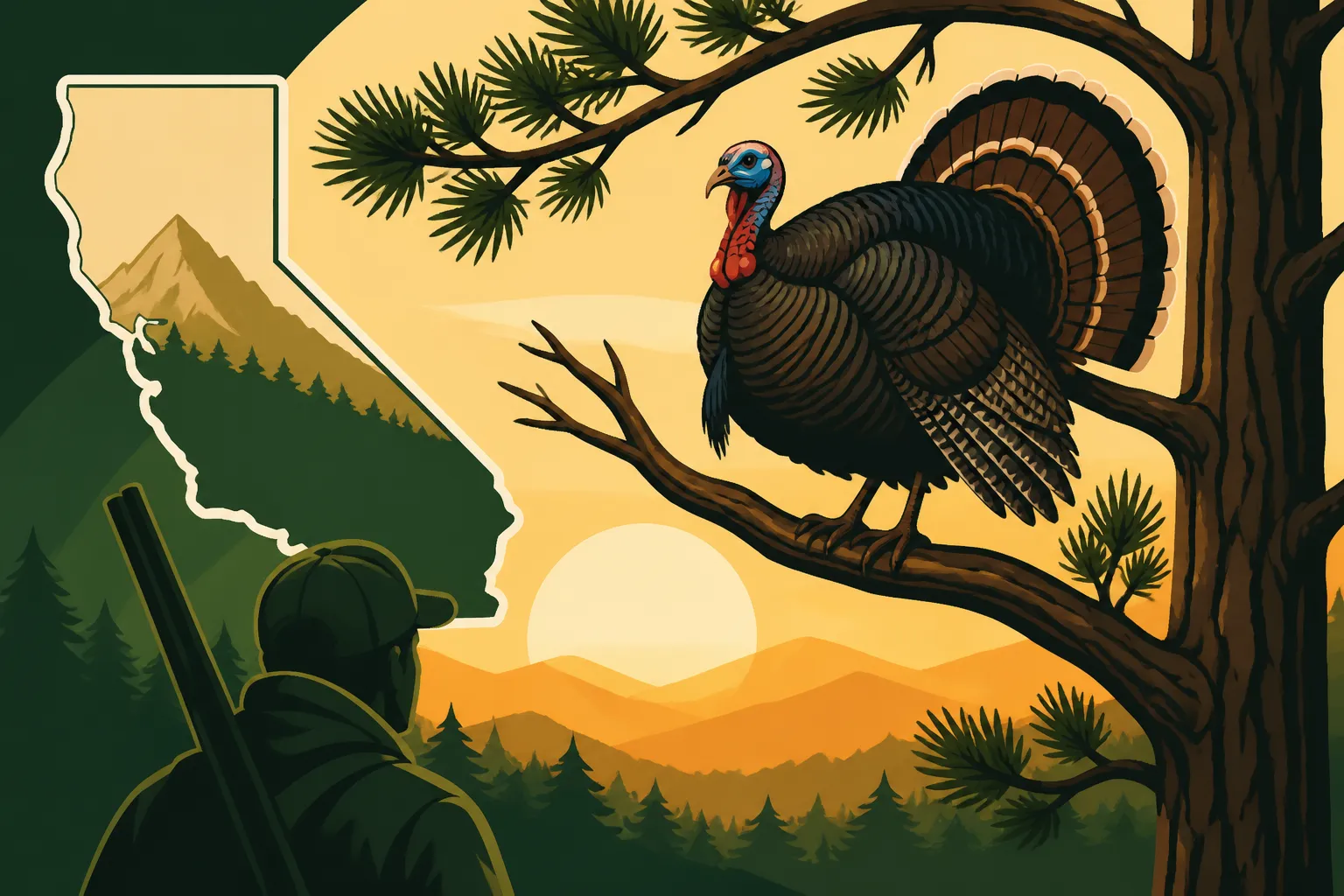
There's nothing quite like the anticipation of a California spring morning, slipping through the oak woodlands before first light, hoping to get under a gobbler's roost. But here's the tough truth: if you don't know where that gobbler spent the night, your chances of a successful morning fly-down setup drop dramatically. This guide is all about peeling back the layers on why California turkeys pick the trees they do for roosting, giving you the insights you need to pinpoint their evening hangouts and be in the right place at the right time.
The Why Behind the Roost: Security and Survival
Wild turkeys aren't just picking a random branch to snooze on; their roost choices are deeply ingrained survival strategies. Every decision, from the species of tree to its height and location, is about mitigating risk and ensuring they wake up safely to gobble another day. Understanding this fundamental "why" is the first step to finding them consistently.
Predator Avoidance and Overhead Safety
At night, turkeys are largely defenseless on the ground against predators like coyotes, bobcats, mountain lions, and even foxes. Getting off the ground and into a sturdy tree is their primary defense mechanism. They're looking for height and structure that keeps them out of reach. Often, they prefer trees with an open understory beneath the canopy, allowing them a clear line of sight and an unobstructed flight path if a ground predator approaches. A low-hanging branch might be easy to get to, but it also makes them vulnerable. They need to feel that elevation gives them a significant advantage over anything that might be stalking below.
Consider a scenario where turkeys are roosting in a stand of large valley oaks. These trees typically have massive limbs that spread out horizontally, creating multiple perching options. They'll often pick the highest, thickest branches that offer maximum protection, especially if those branches are somewhat isolated from other trees that a predator might use as a jumping-off point. It’s a calculated risk assessment they make every evening before dark. They're weighing the effort of getting up high against the security it provides.
Thermal Regulation and Weather Protection
While safety from predators is paramount, turkeys also have to contend with the elements. California weather can be unpredictable, even during turkey season. A cold, wet night or a blustery evening can significantly impact where a bird chooses to roost. Trees that offer dense canopy cover can shield them from rain, sleet, or heavy dew, keeping their feathers dry and insulating. Similarly, thick conifer stands might be preferred in colder temperatures for the thermal mass they offer and the way they block biting winds.
Think about a crisp spring evening in the Sierra foothills. Turkeys might opt for the more sheltered, lee side of a ridge, finding pines or live oaks that break the prevailing wind. If there’s an unexpected late-season rain, they'll instinctively gravitate towards the densest cover available, even if it's not their usual spot. This flexibility is key to their survival. You might find them bundled up in a cluster of trees that offers a microclimate of warmth and dryness, which tells you to look for those specific features when scouting in similar conditions. Their comfort, alongside their safety, is a major driver of their choice.
Escape Routes and Fly-Down Strategy
A roost tree isn't just a place to sleep; it's also the launchpad for the next day's activities. Turkeys prefer trees that allow them an easy, unobstructed fly-down in the morning. This often means trees on the edge of a clearing, along a ridge line, or with wide-open spaces beneath them. They don't want to get tangled in dense branches or thick brush when they hit the ground, especially if they're flying down into a potential food source or a staging area to meet other birds.
Imagine a group of turkeys roosting in an ancient black oak overlooking a sprawling alfalfa field. That tree provides ample height and sturdy limbs, but critically, it also offers a clear flight path straight into the field where they know they'll find breakfast. If the same tree were surrounded by impenetrable chaparral, they might still use it, but they’d likely pick a limb that offers the most direct and safest descent. Observing where they fly to in the morning is often as important as knowing where they fly from at night, as it can give you clues about their preferred morning routines and feeding areas. This whole process is often what you're trying to intercept when you plan your hunt.
California's Favorite Roost Trees
California's diverse landscape means a variety of tree species, and turkeys adapt their preferences accordingly. While there are some clear favorites that offer the ideal combination of safety and comfort, they're surprisingly opportunistic when necessary. Understanding the common types of trees they favor in different regions can significantly narrow your search.
Majestic Oaks: Valley Oaks and Live Oaks
If there's one family of trees that dominates the roosting preference list for California turkeys, it's the mighty oaks. Specifically, the Valley Oak (Quercus lobata) and various species of Live Oak (such as Coast Live Oak, Interior Live Oak) are prime real estate for gobblers. Valley oaks are often massive, with huge, spreading limbs that can be dozens of feet off the ground, creating perfect, sturdy platforms for multiple birds. Their open canopy structure allows for good visibility, and their sheer size deters many predators. Why Turkeys Thrive in California Oak Woodland often comes down to the food source, but the roosting opportunities these trees provide are equally important.
Live oaks, with their dense, evergreen foliage, offer year-round cover and excellent protection from the elements. A group of turkeys tucked into the thick canopy of a live oak on a blustery day will be far more comfortable than those exposed in a bare deciduous tree. These trees are particularly favored during colder or wetter periods when insulation is more important. Whether it's a sprawling valley oak on the edge of a foothill meadow or a dense thicket of live oaks on a coastal hillside, if you're hunting in California's turkey country, these are the first trees you should be looking at when it comes time to find a roost.
Towering Pines and Sycamores
While oaks are kings, other tree species play a significant role, especially outside the classic oak woodland. In areas transitioning into higher elevations or where coniferous forests dominate, Foothill Pines (Pinus sabiniana) and various Ponderosa Pine species become important roost sites. Their height provides excellent security, and their needle-filled branches offer good camouflage. Turkeys might use dead pines too, especially those with strong, bare limbs that allow for an easy perch and a clear view.
Western Sycamores (Platanus racemosa), often found along riverbeds, creeks, and drainages, are another common roost tree. These trees can grow quite large and have distinctive mottled bark and broad leaves. Their strong, often convoluted branches provide excellent perching options. While they lose their leaves in winter, their sturdy structure and proximity to water (a critical resource) make them attractive. If you're scouting areas like the American River canyon or other riparian zones, make sure to scan the sycamores at dusk. You might be surprised at how often they're utilized, especially if suitable oaks are scarce nearby.
Less Common but Usable Species
Turkeys are adaptable, and in areas where prime oak or pine roosts are limited, they will make do with what's available. You might find them in large Cottonwoods (Populus fremontii), particularly along larger river systems like the Sacramento Valley. These trees can grow very tall and offer decent perching. Eucalyptus trees, an introduced species common throughout California, can also serve as roosts, especially mature ones with robust limbs. While not their first choice due to typically less sturdy branching patterns, a large eucalyptus grove can sometimes hold turkeys if other options are exhausted or hunting pressure is high.
Even fruit trees in old orchards or stands of mature walnut trees can be used, though these are more common on private lands where disturbance is lower. The key is size and structure – a tree needs to be tall enough to offer security from ground predators, and its branches must be strong enough to support the weight of several birds. Remember, turkeys are looking for the path of least resistance to safety, and sometimes that means using what's readily available in a pinch. It really comes down to what the local habitat provides.
| Tree Type | Common Location | Key Roosting Features | Seasonal Usage |
|---|---|---|---|
| Valley Oak | Foothills, Open Woodlands | Massive spreading limbs, great height | Year-round |
| Live Oak | Coastal, Interior Foothills | Dense evergreen canopy, wind break | Especially cold/wet |
| Foothill Pine | Higher Elevations, Conifers | Tall, good cover, strong branches | Year-round, cold |
| Western Sycamore | Riverbeds, Creeks, Drainages | Large size, sturdy branches | Spring/Fall |
| Cottonwood | Valley River Systems | Very tall, good visibility | Spring/Fall |
| Eucalyptus (Mature) | Introduced, disturbed areas | Height, can offer cover | Opportunistic |
Factors Influencing Roost Tree Selection
Beyond the specific tree species, a host of environmental and situational factors constantly influence which tree a turkey will choose on any given evening. Season, weather, and the ever-present threat of human disturbance all play a critical role in their daily decision-making process. Overlooking these variables means you might be scouting the right type of tree in the wrong location or at the wrong time.
Seasonal Changes and Weather Conditions
The changing seasons dramatically impact roosting preferences. In the spring, with leaves emerging on deciduous trees, turkeys gain more cover. They might spread out more, utilizing individual large oaks on field edges. As the weather warms, finding a roost that offers good air circulation can become important to avoid overheating. During the hot days of early season, a turkey might seek out a roost tree that gets the first rays of morning sun to warm up, or conversely, one that remains shaded longer if the heat is oppressive.
Conversely, in the late fall or early winter (though we don't have a winter turkey season, this applies to their general behavior), with leaves dropped from many trees, the dense cover of a live oak or a conifer becomes even more valuable. These evergreens provide essential windbreaks and thermal insulation. A frosty morning will see birds packed tightly into the thickest cover available. Understanding the microclimates created by different tree types and terrain features is crucial. A Hunting After a Poor Acorn Year might shift their feeding patterns, but their basic need for a secure roost remains constant, adapting to the weather and available cover.
Hunting Pressure and Human Activity
Perhaps no factor influences turkey behavior more than hunting pressure. Turkeys that have been hunted know the game. They learn quickly that roads, trails, and easily accessible areas are dangerous. As a result, they'll often abandon prime roosting spots close to human activity in favor of more secluded, harder-to-reach locations. This means pushing deeper into canyons, climbing higher ridges, or opting for dense, brushy areas that offer more concealment.
For example, a group of birds might regularly roost in a prominent oak stand near a well-used Forest Service road during pre-season scouting. However, once opening day arrives for California Spring Turkey Season Opening Day, those same birds are likely to have relocated to a much more remote area. They might choose a less ideal tree type simply because it’s further from the truck. This is where using tools like GoHunt can be invaluable. By looking at topographical maps and public land boundaries, you can identify areas that are less accessible and therefore less likely to be pressured, even if the roost trees there aren't textbook perfect. Sometimes finding ground others walk past means finding less obvious roosts.
Proximity to Food and Water Sources
While security is the primary driver for a roost, turkeys are also pragmatic. They prefer to roost relatively close to their morning food sources and water. This minimizes the energy expenditure and exposure during their vulnerable fly-down. Imagine a gobbler roosting high on an oak ridge. If a prime feeding field or a reliable water source is just down the hill, that's often where he'll fly down. If the nearest food is a mile away, he might still fly down there, but his initial descent will be a strategic move to a staging area closer to the breakfast buffet.
This is where your scouting during the day comes into play. If you're seeing fresh scratch marks in a particular flat or around a water seep, look for suitable roost trees on the surrounding ridges or edges of those areas. A turkey won't fly across two canyons and a highway just to get to a good food source right after flying down from its roost. They want convenience combined with security. Finding those prime feeding areas will often lead you to the nearby roosting locations.
Scouting for Roosts and Applying Knowledge
Finding a turkey's roost is one of the most exciting and productive parts of turkey hunting. It's detective work, combining listening, observation, and intelligent use of mapping tools. Knowing the preferred tree types and influencing factors means you're not just wandering aimlessly; you're looking for specific clues in specific places.
Listening for the Roost: Evening and Morning
The most direct way to confirm a roost site is to listen. Turkeys are vocal birds, especially around dawn and dusk. In the evening, as they prepare to fly up to roost, you might hear soft clucking or yelping as they gather, followed by the distinctive sound of heavy wings beating as they make their ascent. They often "tree yelp" a bit after settling in, giving you a strong auditory cue to their precise location. Similarly, in the morning, their first gobble often comes directly from the limb before fly-down, followed by wingbeats.
Your best bet is to be in the woods well before sunset, finding a vantage point where you can hear a wide area. Listen intently, and use natural sound breaks to your advantage. A sharp gobble at first light confirms a roost. You can often pinpoint the exact tree by listening to consecutive gobbles, especially if you move slightly between calls. Just be careful not to get too close and disturb them. Knowing Calling a Gobbler Off an Oak Ridge Roost is one thing, but knowing where he spent the night gives you the ultimate advantage for a pre-dawn setup.
Using Technology and Terrain for Roost Identification
Modern technology has revolutionized scouting, and it's a game-changer for finding turkey roosts. Mapping applications like GoHunt offer satellite imagery, topographical maps, and public/private land boundaries that are indispensable. You can virtually scout potential roost sites from your couch. Look for the "dark spots" on satellite imagery that indicate dense stands of large trees, especially on ridge lines or along water features. Use the topo lines to identify benches or saddles that might offer sheltered roosting.
Overlaying public land boundaries helps you identify accessible areas where you can actually get in to scout. GoHunt's layers can show you different types of cover and terrain features that turkeys might favor. By studying these maps, you can identify potential travel corridors, water sources, and feeding areas, and then look for large, suitable roost trees nearby. This kind of remote scouting can save you countless hours of walking. Don't forget to mark potential roosting areas with waypoints so you have specific spots to check when you're physically in the field for Scouting California Public Land Before Season.
Setting Up for the Morning Fly-Down
Once you’ve identified a likely roost site, the real work begins: planning your morning setup. The goal is to arrive in the dark, well before fly-down, and position yourself within calling range, but not so close that you spook the birds. Ideally, you want to be between the roost and their likely fly-down destination (e.g., a field or a clearing), giving you a shot as they descend or as they hit the ground. Consider the direction they're likely to fly down – often towards lower ground, an open field, or a water source.
A classic move is to position yourself against a large, wide-trunked tree like a sturdy valley oak, giving you a solid backdrop for concealment. Setting Up Against a Big Valley Oak not only hides your outline but also helps break up your scent. Wind and thermals are critical here; try to position yourself so your scent isn't blowing directly towards the roost. If you can get within 100-200 yards of the roost without being detected, you're in a prime position to call them in when they hit the ground. Remember to be patient, stay still, and let the morning unfold. Sometimes the toughest part isn't finding the roost, but having the discipline to make the perfect setup.
Disclaimer
This article is for general informational purposes only and does not constitute professional advice. Laws, prices and regulations vary by location and change over time. Consult a qualified professional for guidance on your specific situation.