What Happens If Your Deer Draw Application Fails
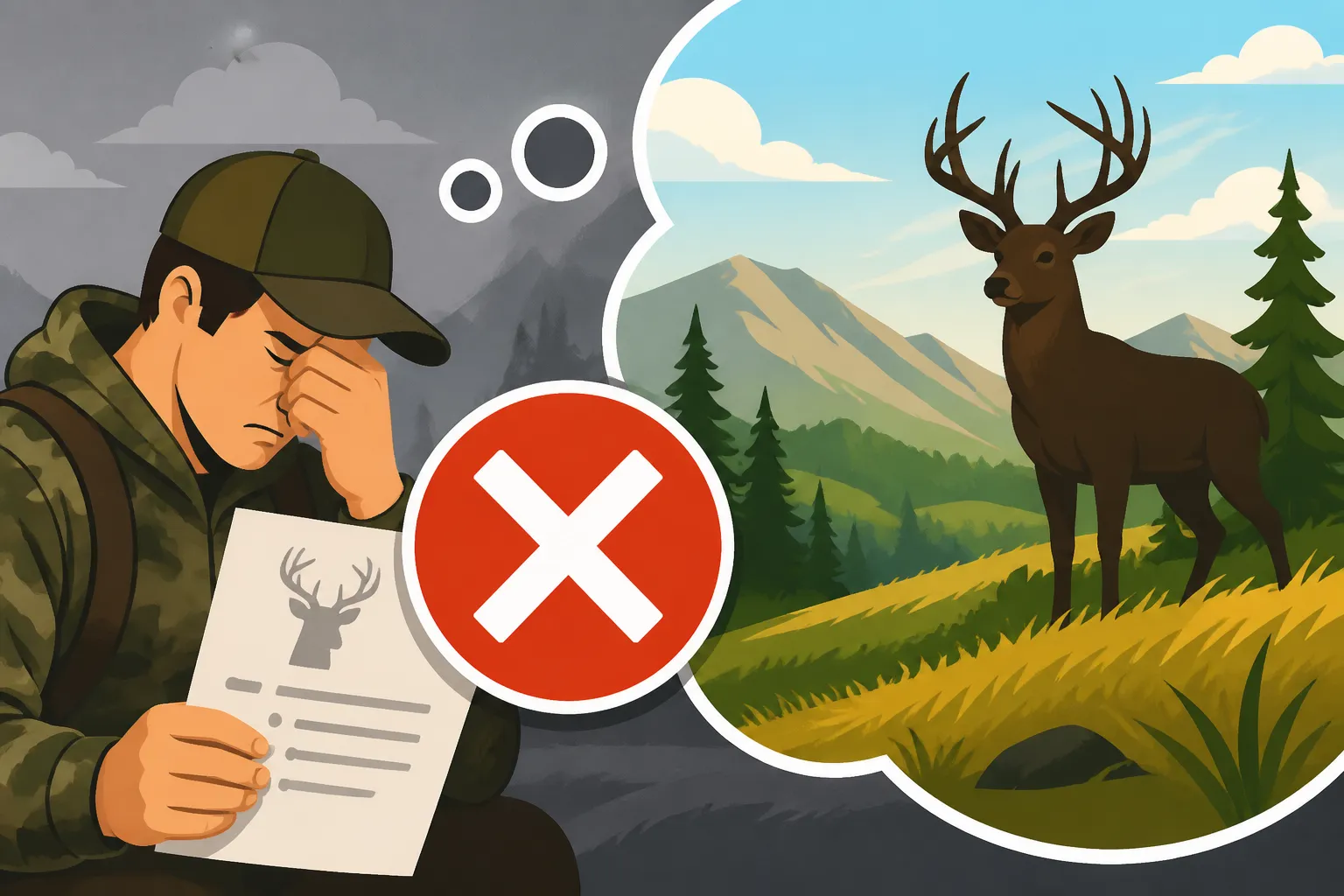
That sinking feeling in your stomach when the email from the California Department of Fish and Wildlife (CDFW) lands, and it's not the news you hoped for – it's something every California deer hunter has experienced. After poring over regulations, dreaming of that big buck, and putting in for your coveted deer tag, a failed draw application can truly take the wind out of your sails. This guide is here to walk you through what happens after that disappointment, explore your immediate options, and help you plan for a successful season, even if your first choice didn't pan out.
The Initial Sting of a Failed California Deer Draw Application
It’s a tough pill to swallow when you realize your name wasn't called in the California deer tag drawing. We've all been there, checking the results repeatedly, hoping we just misread it. But understanding what happened and why can help you process it and move forward with your season planning.
Understanding the Draw Results Notification
When the draw results are released, typically in mid-June, you'll receive an email notification from the CDFW. This email usually directs you to log into your ALDS (Automated License Data System) account to view the specific outcome of your application. Don't be surprised if your heart races a bit as you log in; it's a moment of truth for many of us. You'll see if your first, second, or third choice was successful, or, for many, the dreaded "Unsuccessful" message. This initial disappointment is a completely normal reaction. We invest so much time and hope into these applications, and it’s okay to feel that sting. The system is highly competitive, especially for premium tags, so an unsuccessful draw is far more common than many new hunters realize.
Why California Deer Draws Are So Competitive
The simple truth is, there are far more hunters than there are tags for many of California's most desirable deer zones. Areas like the coveted X-zones, or even some of the more productive D-zones, often have draw odds that can feel like winning the lottery. This high demand, combined with limited tag allocations designed to manage deer populations sustainably, creates intense competition. Hunters often spend years, even decades, accumulating preference points to finally draw one of these tags. The cost of tags also plays a role in who applies, though for residents, the base California Deer Tag Costs by Residency are relatively affordable, encouraging many to throw their hat in the ring. The competition just underscores how special it is when you do draw, and why a "no" isn't a reflection on you as a hunter.
Your Options Immediately Following a Failed Draw
Alright, the initial disappointment has settled. Now what? A failed draw doesn't mean your hunting season is over. In California, there are several avenues you can pursue, from playing the long game with preference points to finding immediate opportunities.
Accumulating Preference Points for Future Draws
One of the most crucial things to understand about the California draw system is the role of preference points. If your first choice application for a premium deer tag is unsuccessful, you're automatically awarded one preference point for that year. These points accumulate over time, and for many of the highly sought-after tags, drawing one often requires a significant number of points. It’s definitely a long game, but it's the pathway to those dream hunts in units like X9a or X12. You can always check your current point totals by logging into your CDFW ALDS account. Organizations like GoHunt provide fantastic resources that break down draw odds by zone and show how many points past successful applicants typically had. This kind of data can be invaluable for strategizing your applications in future years, helping you decide whether to keep building points for a truly premium tag or to apply in a zone where your current point total gives you a better chance. For a deeper dive into the mechanics, check out The California Big Game Drawing Explained.
Exploring Over-the-Counter OTC Opportunities
Not all deer tags in California require a draw. Many D-zones, especially those with larger quotas or less public land access, are available as over-the-counter (OTC) purchases once the draw results are finalized and often throughout the general season. These tags are typically first-come, first-served and can be purchased directly from a CDFW license agent or through the online ALDS portal. While these zones might not offer the same trophy potential as a premium X-zone, they still provide excellent hunting opportunities and are a fantastic way to get out in the field. They often cover vast areas of public land, such as national forests or BLM property. It's crucial to act relatively quickly once the general season sales open, as even OTC tags can sell out, especially for more popular D-zones. For more specific information, you can research Which D-Zone Tags Skip the Draw.
Second Deer Tag Options
California also offers the possibility of purchasing a second deer tag. These "additional deer tags" become available after the initial draw period and often after the initial sales of general season tags. They are typically designated for specific zones, methods (like archery-only), or even antlerless deer, and are sold on a first-come, first-served basis. Availability varies greatly year to year and by zone, depending on deer population estimates and harvest objectives. If you didn't draw your first tag, keeping an eye on the CDFW's announcements for these second tag opportunities can be a game-changer for your season. It provides another chance to get afield, sometimes in a zone you hadn't initially considered. These tags are a great way to extend your time in the woods or explore new hunting areas. Make sure to consult the regulations carefully regarding where and how these tags can be used. For specific details on availability, see California Second Deer Tag Availability.
Strategies for Salvaging Your Season or Planning Ahead
A failed deer draw doesn't have to spell the end of your hunting aspirations for the year. It simply means it's time to pivot and explore other exciting possibilities or start laying the groundwork for future success.
Shifting Focus to Other Game Species
California boasts an incredible diversity of hunting opportunities beyond deer. If your deer draw application didn't pan out, consider shifting your focus to other game species. Wild pigs offer fantastic, challenging hunting opportunities and can be pursued Wild Pig Hunting California Year-Round in many areas, with a tag that's purchased over-the-counter and has no bag limit. Spring turkey hunting in California is another popular pursuit, offering thrilling calling action in beautiful oak woodlands. The spring season requires a specific tag, but the odds of getting one are much higher than for premium deer tags, and it’s an incredibly rewarding experience to call in a gobbler. And don't forget about Small Game and Predator Hunting in California. California has abundant cottontails, jackrabbits, squirrels, and coyotes that provide year-round action and hone your hunting skills, often on public lands. These hunts are generally less restricted by draw systems and can offer continuous opportunities to be in the field.
Re-evaluating Your Zone Choices for Next Year
This is where the sting of an unsuccessful draw can actually turn into a valuable learning experience. Take the time to genuinely re-evaluate your zone choices. Did you apply for a highly competitive X-zone with only a few preference points? Perhaps next year, you could consider a D-zone that historically has better draw odds, even if it’s not as renowned for giant bucks. Resources like GoHunt compile historical draw data, including success rates and required preference points for each zone. This data can be instrumental in making a more strategic application. You might discover less-pressured zones, or even a different hunt method, like an archery-only season, that offers significantly better odds. California's California's Multi-Zone Deer Season System is complex, with varying dates and opportunities. Understanding these nuances can give you an edge for the next application period. Perhaps a zone you’ve never considered holds consistent, albeit smaller, deer, and offers a great hunting experience without requiring a decade of accumulated points.
Embracing the Hunt for Public Land Opportunities
Even without a coveted draw tag, California offers millions of acres of Public Hunting Land in California. National Forests, Bureau of Land Management (BLM) lands, and even some State Wildlife Areas provide vast expanses for hunting deer with general tags or those readily available OTC. The key here is often effort. These areas see significant hunting pressure, so success often comes down to scouting diligently and being willing to go deeper or harder than other hunters. Look for overlooked pockets, steep canyons, or remote ridges that others might bypass. Using mapping applications to identify areas far from roads or with difficult terrain can be incredibly beneficial. Focus on finding unique access points or routes that give you an advantage. For some great tips on how to identify these spots, explore Finding Ground Others Walk Past. It's about out-thinking, not just out-hunting, the competition.
Maximizing Your Chances in Future California Deer Draws
While an unsuccessful draw is a bummer, it's also a clear signal to refine your strategy for the future. Don't just throw your name in the hat blindly next year; empower yourself with knowledge and a plan.
Understanding California's Preference Point System
California's preference point system is designed to reward loyalty and persistence. For every year you apply for your first-choice deer tag and are unsuccessful, you accrue one preference point. These points are accumulated and then used to give you a higher priority in subsequent draws for your first-choice selection. It's a "bonus" system where more points give you a better chance, but don't guarantee a tag. You're still in the draw, but with a better number. The key takeaway here is to apply every year, even if you don't plan to hunt deer that specific season. Many hunters apply for a point-only option to steadily build their total for those elusive tags. Understanding California Preference Point System Explained is foundational to successfully navigating the draw. The higher your points, the better your odds become for those truly premium hunts in limited-entry zones.
Researching Draw Odds and Zone Performance
This is where your homework really pays off. Don't just pick a zone based on a friend's recommendation or a cool photo you saw. Dive into the data. The CDFW publishes draw odds and harvest statistics, and platforms like GoHunt consolidate this information, often adding their own analysis. You can look at the minimum and average preference points required to draw a tag in a particular zone, as well as the success rates for hunters in that zone.
Consider a table like this when evaluating your choices:
| Deer Zone | Average Points to Draw (Resident) | Hunter Success Rate (%) | Public Land Access | Typical Buck Quality |
|---|---|---|---|---|
| X9a | 15-20 | 25-35% | Moderate | High |
| D3-5 | 3-7 | 10-18% | High | Moderate |
| D12 | 0-2 | 5-10% | Low | Moderate |
| X12 | 10-15 | 20-30% | Moderate | High |
| A Zone Archery | OTC (often) | 10-15% | Variable | Moderate |
This kind of detailed research allows you to make an informed decision. Maybe an X-zone requires too many points for your current total, but a D-zone with good public land access and a respectable success rate is perfectly attainable. It's about balancing your aspirations with realistic draw odds.
The Importance of a Solid Hunt Plan
Even if you secure an over-the-counter tag or draw for a less competitive zone, success is rarely accidental. A solid hunt plan is paramount. This includes extensive scouting, both virtually (using online maps, satellite imagery, and topography apps) and physically in the field. Understand the deer behavior in your chosen area. When does When the California Rut Peaks by Zone in that region? What are the Late-Season Food Sources for California Deer? Where do deer bed, water, and travel? Utilize tools like onX Hunt or Gaia GPS to mark potential stand locations, game trails, water sources, and escape routes. Physical scouting before the season opens allows you to identify fresh sign, understand access points, and get a feel for the terrain. Being familiar with the land can give you a significant advantage, especially in public land areas that see a lot of pressure. For comprehensive tips, make sure to read Scouting California Public Land Before Season. The more prepared you are, the higher your chances of success, regardless of how you obtained your tag.
Disclaimer
Please note: Hunting regulations, tag availability, and draw odds in California are subject to change annually. Always consult the most current California Department of Fish and Wildlife (CDFW) hunting regulations booklet and their official website for the most accurate and up-to-date information before planning any hunt.