Hunting California’s High-Country X-Zones
You’ve been applying for years, dreaming of that coveted tag, pouring over draw odds, and maybe even hiking into some of California’s most remote and rugged country during the off-season. Hunting California’s high-country X-zones isn't just about drawing a tag; it's about committing to an experience that will test your physical limits, mental fortitude, and hunting skills like few other hunts in the Lower 48. This comprehensive guide is dedicated to demystifying the X-zone experience, from understanding the complex drawing system to the boots-on-the-ground tactics that give you a fighting chance in some of California’s most breathtaking and challenging deer country.
Understanding California's X-Zones: The Elite Tags of the Golden State
For many California deer hunters, an X-zone tag represents the pinnacle of big game hunting in the state. These aren't just any deer zones; they are special designations reserved for areas known for their potential to produce older, larger bucks, often in pristine, remote wilderness settings. But with that prestige comes incredible competition and a steep learning curve.
What Makes X-Zones So Desirable?
The allure of the X-zones isn't hard to understand. Imagine endless acres of towering peaks, alpine meadows, and granite canyons, far from paved roads and the typical weekend warrior crowds. This vastness directly translates to less hunting pressure, which allows bucks to mature beyond the "forked horn" stage seen in many over-the-counter D-zones. When you finally draw an X-zone tag after years, or even decades, of applying, you're not just getting a piece of paper; you're earning an opportunity to hunt a truly wild animal in its unspoiled habitat.
These zones are legendary for holding impressive mule deer and, in some cases, robust blacktail deer. The success rates, while still challenging, are often significantly higher than in general season zones, primarily because the number of tags issued is so limited. This scarcity creates a natural advantage for those who are lucky enough to draw, giving them vast landscapes to explore with minimal competition. It's a chance to truly immerse yourself in a wilderness hunting experience, far removed from the hustle and bustle of everyday life, and that alone is worth the long wait for many.
Key Characteristics of X-Zone Terrain
If you've ever looked at a topo map of an X-zone, you know they are defined by ruggedness. We're talking about high elevations, often ranging from 7,000 to over 14,000 feet, characterized by steep climbs, boulder fields, dense timber patches, and expansive basins dotted with small alpine lakes. The terrain is a mix of exposed granite, scree slopes, thick manzanita and ceanothus brush, and forests of pine and fir.
Accessibility is a major factor here. Many X-zones encompass vast wilderness areas, meaning mechanized travel is strictly forbidden. You'll be relying on your own two feet, or perhaps a trusty pack animal, to get deep into the prime hunting grounds. This isn't a place for short day hunts from the truck; it demands multi-day backpacking trips, often miles from the nearest trailheads. The sheer scale of the landscape can be overwhelming, with immense canyons and ridgelines stretching as far as the eye can see. Understanding these challenges is the first step in successful preparation.
The X-Zone System Explained
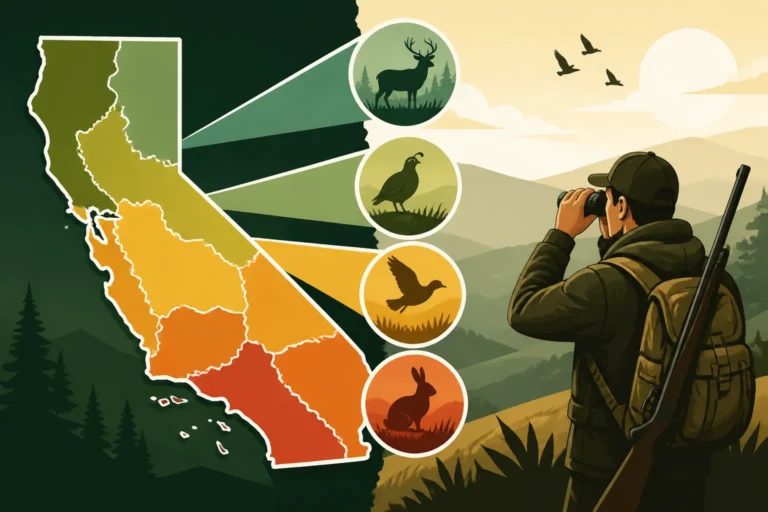
California's deer hunting is organized through a comprehensive California's Multi-Zone Deer Season System. The X-zones are a subset of this system, specifically designed to offer limited-entry hunting opportunities for high-quality deer. There are numerous X-zones across the state, primarily concentrated in the Sierra Nevada and Cascade mountain ranges, each with its unique characteristics, season dates, and tag quotas.
These zones are highly regulated, with specific boundaries and, crucially, very limited tag numbers. The California Department of Fish and Wildlife (CDFW) allocates these tags through a lottery system, requiring hunters to apply well in advance of the season. Unlike general D-zones where tags can often be purchased over the counter, X-zone tags are exclusively draw-only. This means consistent application over many years is the only path to securing one of these coveted permits, making patience an indispensable virtue for any aspiring X-zone hunter.
Navigating the California Big Game Drawing for X-Zone Tags
Drawing an X-zone tag is often half the battle, and it's a battle fought not with a rifle, but with a calendar and careful strategy. The California Big Game Drawing system can feel like a labyrinth, but understanding how it works is crucial to improving your odds over the long term.
Decoding the Preference Point System
California employs a preference point system for its big game drawings, including X-zone deer. Essentially, for every year you apply for a premium tag (like an X-zone) and are unsuccessful, you accrue one preference point. These points don't guarantee you a tag, but they do increase your odds in subsequent drawings. The more points you have, the better your chances are, theoretically. It's designed to reward consistent participation, acknowledging the long wait times for these desirable tags.
It's a long game, for sure. Many hunters apply for 10, 15, or even 20+ years to accumulate enough points for a reasonable shot at the most sought-after X-zones like X9a, X10, or X5b. Understanding your point total, and how it stacks up against the average points drawn in previous years, is a key part of your application strategy. You can check your point balance and historical draw results through the CDFW's online portal, which provides valuable insights into your potential success. This system is a core part of The California Big Game Drawing Explained.
Application Strategies for Maximizing Your Chances
So, how do you play the game to win? First, consistency is king. You must apply every single year if you want to build points and eventually draw. Missing a year means you're effectively resetting or significantly delaying your progress. Second, research is paramount. Tools like GoHunt's Insider platform, or similar analytics provided by other services, can crunch the numbers for you, showing historical draw odds, success rates, and the point totals it took to draw each zone. This data is invaluable for making informed decisions.
You'll need to decide if you want to chase the dream zones with incredibly high point requirements or if you're willing to apply for X-zones with slightly better odds but perhaps less legendary status. Some hunters opt for a "point-building" strategy, always applying for a super-hard-to-draw zone to maximize their points, knowing they might not draw for a very long time. Others might try to draw a tag every few years by applying for zones that have a lower point requirement. It's a personal choice based on your patience and hunting goals. Remember, the application period for deer tags typically runs from April to June, so mark your calendar!
Understanding Draw Odds and Historical Success
Managing expectations is crucial when it comes to the X-zone drawing. Even with maximum points, drawing some of the truly premium tags is never a guarantee. The odds can be incredibly low, sometimes less than 1% for resident tags, and even lower for non-residents. This isn't meant to discourage you, but rather to ground your expectations in reality.
It helps to study the CDFW's annual draw statistics. These reports show the minimum and maximum points drawn for each zone, as well as the average points it took to be successful. You'll often see distinct point creep, where the average points required to draw a particular zone gradually increases year after year. This trend means that what was a "safe" zone to apply for a few years ago might now require significantly more points. Understanding these trends, often facilitated by research platforms like GoHunt, allows you to adjust your strategy annually, ensuring you're making the most informed decision possible with your hard-earned preference points.
Essential Gear and Preparation for High-Country X-Zone Hunts
The X-zones are no place for shortcuts when it comes to gear and physical preparation. The ruggedness of the terrain, combined with unpredictable weather and the sheer remoteness, demands meticulous planning and reliable equipment.
The Right Optics for Vast Mountain Landscapes
In the high country, your eyes are your most valuable tool, and quality optics extend their reach exponentially. You'll be doing a lot of glassing, often sitting for hours overlooking vast basins, canyons, and distant ridge lines. A good pair of 10×42 or 12×50 binoculars are essential for scanning the immediate to mid-range. Look for clarity, light gathering capabilities, and a wide field of view. But for true X-zone hunting, a spotting scope is non-negotiable.
A quality 60-80mm objective spotting scope with 20-60x magnification, mounted on a sturdy tripod, will allow you to pick apart distant hillsides, identify potential game from miles away, and most importantly, discern antlers from branches. This is particularly critical when you're trying to judge a buck from afar, determining if it meets legal requirements or is the trophy you've been waiting for. When choosing, consider something like the Best Spotting Scope for a Blacktail Buck, ensuring it offers robust construction and clear glass for the challenging conditions you’ll encounter. Lightweight yet durable options are key since you'll be packing it deep into the backcountry.
Physical Conditioning: More Than Just a Hike
This isn't your grandma's stroll in the park. X-zone hunting is an athletic endeavor that will push your cardiovascular system, leg strength, and mental toughness to their limits. You'll be climbing thousands of feet in elevation, often with a heavy pack, at high altitudes where the air is thin. Waiting until a month before the season to start training is a recipe for a miserable, potentially dangerous, hunt.
Start your physical conditioning months in advance. Focus on consistent cardio — hiking, running, cycling – with an emphasis on inclines and stair climbing. Incorporate strength training, particularly for your legs, core, and back, which will be crucial for hauling heavy packs and quartered game. Don't forget to train with weight. Gradually increase the weight in your pack during your training hikes to simulate carrying hunting gear and, hopefully, venison. The better shape you are in, the safer you'll be, and the more you'll enjoy the hunt. You want to be able to hike miles, glass efficiently, and then, if successful, have the strength left to pack out your animal.
Backcountry Pack Systems and Essential Survival Items
Your backpack is your lifeline in the X-zones. For multi-day trips, you'll need an internal or external frame pack with a capacity of at least 60-80 liters. Comfort and fit are paramount, especially when you're hauling a heavy load. Look for packs with good weight distribution, adjustable harnesses, and durable materials. For tips, consider how one might choose the Best Pack for a Multi-Day Elk Hunt, as the principles for a multi-day deer hunt are similar.
Beyond the pack itself, the contents are critical. Think lightweight, multi-functional, and absolutely essential. This includes a robust shelter (tent or tarp), a warm sleeping bag rated for alpine conditions, a reliable water filter or purification tablets, a small first-aid kit, fire-starting tools, navigation devices (GPS, compass, maps, and a good app like OnX), headlamps, and enough food for your planned trip plus a few extra days for emergencies. Don't forget game bags for meat, a sharp knife for field dressing, and plenty of paracord. Every ounce counts, so prioritize wisely, but never skimp on safety essentials.
Scouting and Pre-Season Planning for X-Zone Success
Drawing the tag is just the beginning. The real work starts long before opening day, with diligent scouting and meticulous pre-season planning. In the vastness of the X-zones, simply showing up and hoping for the best is rarely a recipe for success.
Utilizing Digital Tools for Remote Scouting
Before you even step foot in the mountains, technology can be your best friend. Digital mapping applications and satellite imagery are incredibly powerful for remote scouting. Use tools like OnX Hunt, Google Earth, or CalTopo to pour over your zone. Identify potential access points, major drainages, ridgelines, saddle crossings, and north-facing slopes where deer might bed. Look for burn scars, recent timber cuts, or areas with distinct vegetation changes that could provide forage or cover. Checking out Reading Aerial Photos for Sierra Deer can give you a leg up on this process.
Pay close attention to water sources – springs, seeps, alpine lakes. In arid California, water is often a key factor dictating deer movement. Mark potential camping spots, emergency exits, and escape routes. By studying these maps, you can create a virtual "game plan" long before your boots hit the trail, helping you narrow down vast areas into manageable sections for physical scouting or actual hunting. Platforms like GoHunt also provide invaluable data on historical deer movement and success areas within specific zones, further refining your digital reconnaissance.
Reading Sign in High-Elevation Terrain
Once you’re boots-on-the-ground, understanding how to read deer sign in the high country is paramount. Unlike lower elevations where agricultural fields might concentrate deer, X-zones demand a keen eye for subtle clues. Look for fresh tracks, especially around water sources or along well-used game trails that traverse benches and ridgelines. Fresh droppings are a strong indicator of recent activity.
Rub lines on small pines or aspens, and freshly pawed scrapes under branches, signal that bucks are in the area and actively marking their territory, especially as the rut approaches. Pay attention to bedding areas – sheltered spots, often on north-facing slopes or under dense timber, that offer security and a good vantage point. Deer will often bed where they can watch their backtrail and the terrain below them. The presence of chew marks on forbs or browse lines on shrubs also tells you what deer are feeding on and where. The more fresh sign you find, the closer you are to finding your buck.
Understanding Seasonal Deer Movement in the Sierra
Deer in California's high country are highly migratory, responding to snow levels, forage availability, and the breeding season. Understanding these patterns is critical for timing your hunt. Early season hunts (August/September) might find bucks still in their high-elevation summer ranges, often in velvet, feeding on lush alpine forage. This is a great time for spotting bucks in open basins.
As fall progresses and temperatures drop, deer begin their annual migration to lower elevations, following traditional migration corridors. This movement can be triggered by the first significant snowfall. The rut typically kicks in from late September through October, depending on the zone and specific elevation, offering an excellent opportunity to find bucks that are more focused on breeding than their usual cautious behavior. Knowing when and where to intercept these migrating herds, or when the bucks are most active for breeding, significantly increases your chances of success. Researching Where California Mule Deer Range Begins can help you predict these movements.
Effective Hunting Tactics for High-Country Mule Deer and Blacktail
Once you're in the field, with your gear dialed and your scouting complete, it's time to put your hunting skills to the test. High-country deer hunting is a demanding pursuit that rewards patience, stealth, and a deep understanding of animal behavior and the terrain.
Glassing for Bedded Bucks in Open Basins
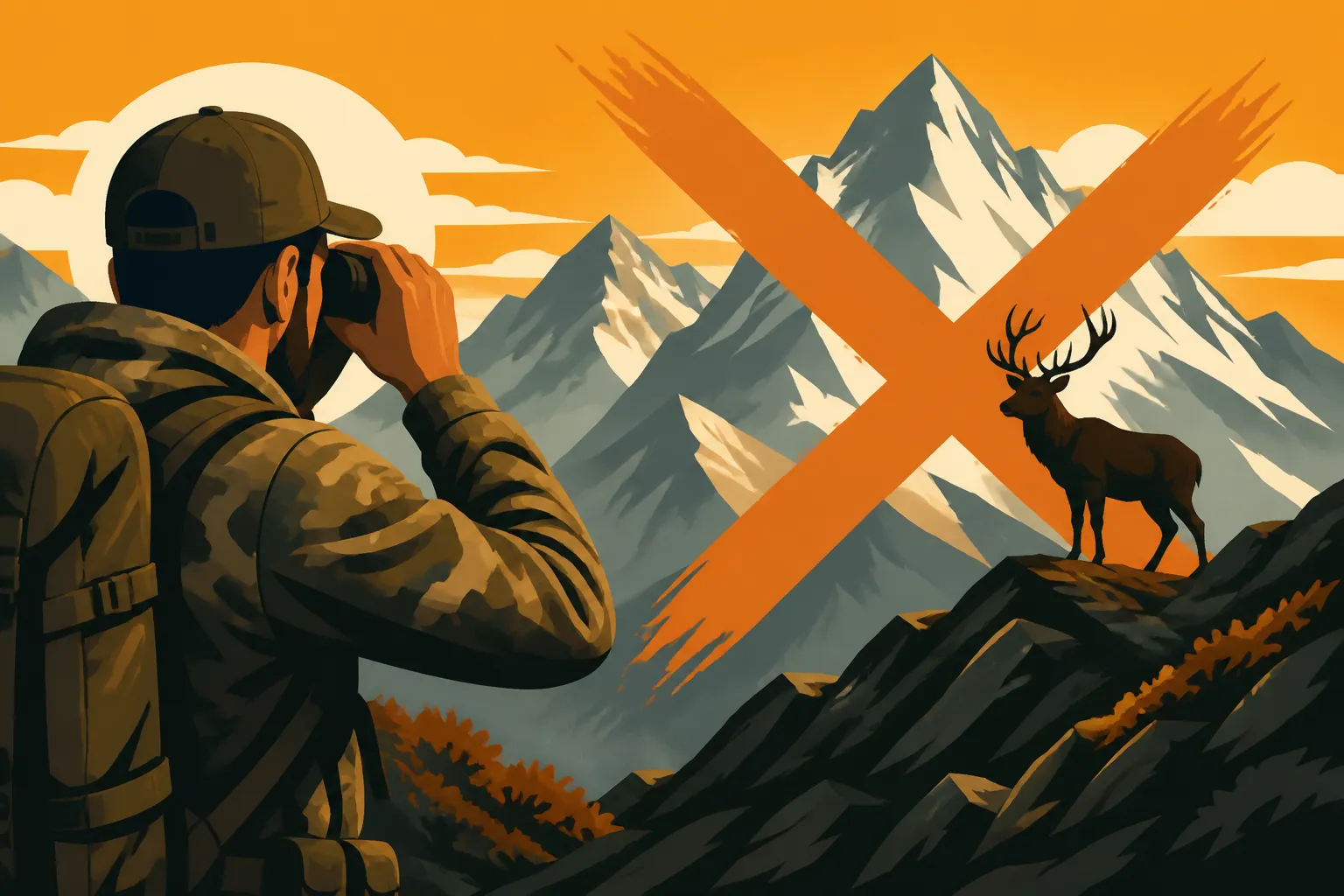
This is arguably the most effective tactic for finding big bucks in the vast X-zone country. Find a high vantage point – a ridge, a peak, or a prominent knoll – that overlooks expansive basins, timbered slopes, or open meadows. Set up your spotting scope and binoculars on a sturdy tripod. Then, settle in and begin to systematically pick apart the landscape. This is where patience truly pays off.
Start by scanning obvious features like rock slides, timber edges, and shaded slopes where deer might bed down to escape the midday sun. Look for small details: an ear twitch, the glint of an antler, a patch of fur that doesn't quite look like a rock. Mule deer are masters of camouflage, often blending seamlessly into their surroundings. You're not necessarily looking for a whole deer, but rather parts of one. Dedicate at least 15-20 minutes, sometimes much longer, to meticulously scan an area before moving your optics. As detailed in Glassing Mule Deer in Open California Country, using grid patterns can ensure you don't miss anything. Move slowly, deliberately, and let your optics do the walking.
Spot-and-Stalk Approaches in Rugged Country
Once you've spotted a buck, the real challenge begins: closing the distance for a shot. The spot-and-stalk method is king in the open, rugged terrain of the X-zones. This requires an intimate understanding of the wind, thermals, and terrain features that can either conceal your approach or give you away in an instant. Always plan your stalk to keep the wind in your favor; a deer's nose is its primary defense. Remember, the Wind and Thermals in Steep Sierra Country can be tricky, often shifting with sun exposure and elevation changes.
Use the topography to your advantage. Deep draws, ridgelines, rock outcrops, and dense timber can all provide cover for your approach. Move slowly, deliberately, and silently. Every step matters. If the deer is bedded, pay attention to its attentiveness; if it raises its head, freeze until it settles back down. Your goal is to get within comfortable shooting range, ideally 300 yards or less for most rifle hunters, without being detected. This often involves long detours, crawling on hands and knees, and exercising extreme patience. A successful stalk is a testament to your woodsmanship and discipline.
Still-Hunting Timbered Ridges and Alpine Meadows
While glassing open country is effective, sometimes the biggest bucks hide in the dense timber or transition areas between open basins and heavy cover. This is where still-hunting comes into play. Still-hunting is essentially moving through the woods at an incredibly slow pace, taking a few steps, then pausing to observe, listen, and scan your surroundings. It's about blending in, becoming part of the landscape, and surprising a buck in its element.
Focus on timbered ridgelines, saddles, and edges of alpine meadows, especially during periods when deer might be moving between bedding and feeding areas. Pay attention to every sound, every flicker of movement. Walk into the wind or with a crosswind to keep your scent from blowing ahead. Use cover to break up your outline, and always be prepared to stop and raise your binoculars at a moment's notice. This method demands an incredible amount of focus and quiet movement. For more detailed insights, reference Still-Hunting California's Sierra Nevada Timber. It's a challenging but rewarding tactic for those times when deer aren't out in the open.
Field Care, Recovery, and the Journey Out
Congratulations, you've done it! You drew the tag, put in the work, and now you have an X-zone buck on the ground. But the hunt isn't over. In the high country, getting your animal out cleanly and efficiently is as critical as the shot itself.
Proper Field Dressing in Remote Wilderness
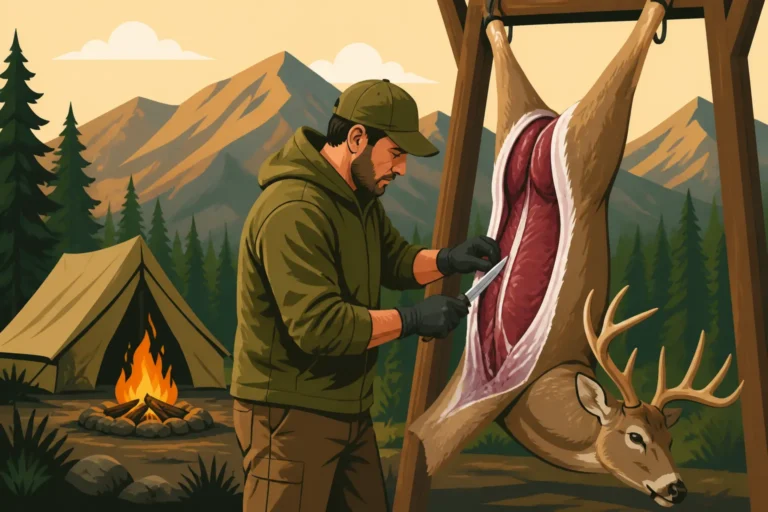
When you're miles from the nearest road, usually in rugged terrain, proper field dressing isn't just about preserving meat; it's about making the pack-out manageable. Start by immediately bleeding the animal and removing the entrails. This rapidly cools the carcass and significantly reduces weight. In warmer early-season X-zones, getting the hide off quickly is also crucial for cooling, as described in Field Dressing a Deer in Hot Weather.
Once gutted, skinning the animal and quartering it into manageable pieces (two front quarters, two hindquarters, backstraps, tenderloins, neck meat) is the next step. Use clean game bags to protect the meat from flies, dirt, and debris. These breathable bags allow the meat to cool while preventing contamination. Hang the meat in a shady, airy spot if possible, away from direct sunlight, while you prepare for the pack-out. Don't forget to securely attach your tag to the largest portion of the carcass.
Quartering and Packing Out Heavy Loads
Unless you're incredibly lucky and your buck drops right next to a trail, you'll be packing out heavy loads. A mature X-zone mule deer can weigh 200-300 pounds or more on the hoof, meaning you'll be carrying 60-100+ pounds of bone-in meat, hide, and head. This is where all that physical conditioning really pays off.
You'll need a stout pack frame designed to carry heavy, awkward loads. Distribute the weight evenly, with the heaviest portions close to your back. If you have hunting partners, divide the load, but be prepared to carry multiple loads yourself if solo. Plan your route out carefully, prioritizing safety over speed. Take frequent breaks, stay hydrated, and refuel with snacks. Every step with a heavy pack in steep, broken terrain is a mental and physical battle, but the reward of fresh wild game makes it all worthwhile. Remember to secure the antlers to prevent them from snagging on brush.
Navigating Challenging Terrain with Meat
Packing out a deer from an X-zone is often the most grueling part of the entire hunt. You’re no longer just covering ground; you’re carrying a heavy, cumbersome load across uneven surfaces, up steep ascents, and down rocky descents. This significantly changes your balance and movement. Take your time, especially on technical terrain like boulder fields or steep, loose scree.
Use trekking poles for stability, especially when navigating downhill with weight. Pay close attention to your footing to prevent falls, which can lead to injury for you or damage to the meat. If you're hunting with a partner, communicate constantly about the best path forward and offer assistance on tricky sections. Sometimes, especially in extremely steep canyons, a game cart might be an option once you reach more level ground, but deep in the high country, your pack frame and legs are generally your only tools. For those unexpected moments, having insights into Tracking a Deer in Fresh Sierra Snow can also be invaluable, though hopefully you’ll have a clear view of your downed animal.
Overcoming Common X-Zone Challenges
High-country hunting isn't just about deer; it's about the environment itself. The X-zones present unique challenges that can quickly turn a dream hunt into a survival situation if you're not prepared.
Dealing with Weather Extremes and Altitude Sickness
California’s high country is notorious for its fickle weather. A clear, warm August morning can quickly devolve into a freezing rainstorm or even an early season snow squall by afternoon. Temperatures can swing wildly from above 80 degrees Fahrenheit during the day to well below freezing at night. You must be prepared for everything. Layering is key: synthetic or wool base layers, insulating mid-layers, and a waterproof/windproof outer shell. Always pack extra warm clothing, even if the forecast looks clear.
Altitude sickness is another real concern, especially if you're coming from sea level. Symptoms can range from headaches and nausea to more severe, life-threatening conditions. Acclimatize by spending a day or two at a moderate elevation (5,000-7,000 feet) before heading higher. Stay hydrated, avoid alcohol, and don't overexert yourself on the first day. If symptoms worsen, descend immediately. Your safety is paramount, and a trophy buck is never worth risking your life.
Managing Bear Encounters and Wildlife Interactions
The X-zones are wild country, and you're sharing it with a host of other creatures, including California's significant black bear population. While bears are generally shy, they are attracted to food and can become a nuisance or even a danger if proper precautions aren't taken. Always store food and scented items in bear-resistant containers or hang them from a bear pole/bag, well away from your camp. Never keep food inside your tent.
Be aware of your surroundings, especially when moving through dense brush or near berry patches. Carry bear spray and know how to use it. While encounters are rare, knowing how to react – making noise, appearing large, and slowly backing away – is crucial. You're a visitor in their home, and respecting their space and following wilderness safety protocols is essential for a safe and enjoyable hunt in Hunting California's Sierra Nevada Backcountry.
The Mental Game: Persistence and Resilience
Perhaps the toughest challenge in X-zone hunting isn't physical, but mental. The vastness of the country, the difficulty of the terrain, the lack of immediate success, and the sheer effort involved can be incredibly draining. There will be moments of doubt, frustration, and exhaustion. You might go days without seeing a single deer, or blow a stalk on a buck you've been chasing for hours.
This is where persistence and resilience come into play. Staying positive, maintaining focus, and remembering why you’re there is crucial. Celebrate small victories: a successful climb, finding fresh sign, or a breathtaking sunrise. Remind yourself that X-zone hunting is about the entire experience, not just punching a tag. Break down your hunt into smaller, achievable goals. A positive mindset, combined with thorough preparation, will carry you through the tough times and allow you to fully appreciate the profound beauty and challenge of hunting California's high-country X-zones.
X-Zone Comparison Table: Select Sierra Zones
To give you a better idea of the differences and challenges across some popular X-zones, here's a comparative look at a few, based on recent historical data. Keep in mind that draw odds and success rates fluctuate annually.
| X-Zone | Primary Location (Range) | Average Points to Draw (Resident) | General Terrain | Typical Season Dates | Primary Deer Species |
|---|---|---|---|---|---|
| X1 | Northern Sierra/Cascades | 15-20+ | Mixed Conifer, High Alpine | Late Sept – Early Oct | Mule Deer |
| X5b | Southern Sierra | 18-25+ | Alpine, Granite, Lodgepole Pine | Early Oct – Mid Oct | Mule Deer |
| X9a | Central Sierra | 10-15+ | Steep Canyon, Mixed Oak/Pine | Late Sept – Mid Oct | Blacktail/Mule Deer Hybrid |
| X10 | Eastern Sierra | 20-30+ | High Desert Sage, Juniper, Alpine | Early Oct – Late Oct | Mule Deer |
Note: "Average Points to Draw" is an estimate and highly variable year-to-year. Always check current CDFW draw statistics for the most up-to-date information.
Disclaimer
Hunting is an inherently dangerous activity. This article provides general information and recommendations for hunting in California's X-zones. All hunters are responsible for understanding and complying with all current California Department of Fish and Wildlife (CDFW) regulations, including licensing, tag requirements, season dates, weapon restrictions, and land access rules. Always prioritize safety, prepare thoroughly, and be aware of your physical limitations and environmental conditions.