Where California Mule Deer Range Begins
Many hunters across California are intimately familiar with the coastal blacktail, the elusive ghost of the oak woodlands and dense chaparral. But as their hunting ambitions turn eastward towards the rugged Sierra Nevada or southward into the vast, open desert landscapes, a common question arises: where exactly does the iconic California mule deer begin to roam? This guide will help demystify those geographical and ecological dividing lines, offering a clear understanding of where these magnificent deer truly make their home and what that means for your next hunt.
Understanding the Deer Species Divide: Blacktail vs. Mule Deer
It's easy to get confused when talking about deer in California, especially when you hear terms like "blacktail" and "mule deer" used somewhat interchangeably by new hunters. However, while they are both subspecies of the larger mule deer species (Odocoileus hemionus), their ranges, characteristics, and even behavior can be quite distinct. Understanding this fundamental difference is the first step to knowing where California mule deer range begins.
The Elusive Blacktail and Its Domain
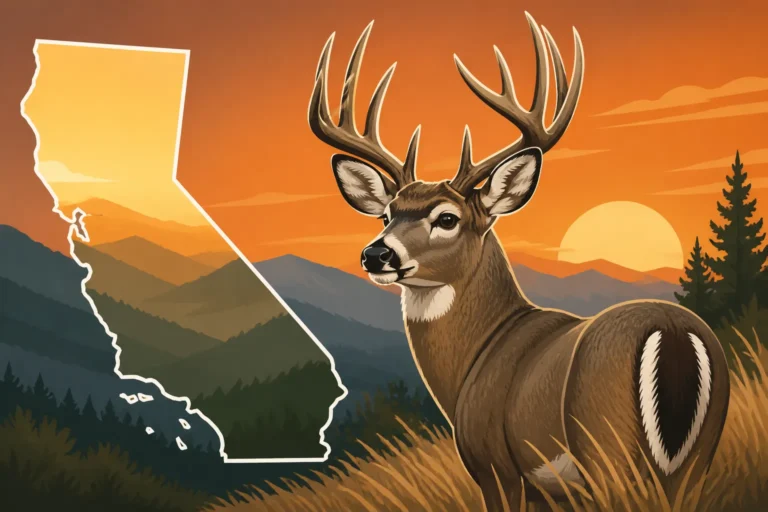
The Columbia blacktail deer (Odocoileus hemionus columbianus) is the most widespread deer in California. Think of the dense, brushy coastal ranges, the thick timber of the Klamath Mountains, and even many of the oak-studded foothills of the central and northern parts of the state – that's prime blacktail country. These deer are typically smaller-bodied than their mule deer cousins, with antlers that tend to fork, and then fork again, often lacking the tall, wide racks you might associate with open-country muleys. Their tails are almost entirely black or dark brown on top, which is where they get their name.
Blacktails are masters of cover, often preferring to stick to the thickest brush, timber, and chaparral, making them notoriously challenging to hunt. Their diet often consists of browse from various shrubs and trees, as well as acorns when available. If you've been hunting deer in Zone A or many of the D-zones in the Coast Range, chances are you've been chasing blacktails. These deer are incredibly adapted to their often-dense environments, often moving through terrain that seems impenetrable to a human. For a deeper dive into their presence in the state, you might want to read our article on Columbia Blacktail and Mule Deer in California.
Identifying True Mule Deer Characteristics
When we talk about "true" mule deer in California, we're generally referring to the Rocky Mountain mule deer (Odocoileus hemionus hemionus) or the desert mule deer (Odocoileus hemionus eremicus) subspecies. These are the deer that capture the imagination with their large ears (like a mule, hence the name), often taller, wider antlers that typically grow in a distinct "forked" pattern from each main beam, and generally larger body size. Their tails are usually a creamy white with a black tip, or entirely white with a small black tip, setting them apart from the blacktail.
Behaviorally, mule deer are more accustomed to open, often arid environments. They tend to browse on shrubs, forbs, and grasses, and often rely on their eyesight and incredible ability to navigate vast, exposed landscapes. When startled, they often "pronk" or "stot"—a distinctive bounding gait where all four hooves push off the ground simultaneously. This behavior is a tell-tale sign of a mule deer and something you rarely, if ever, see with a blacktail. The shift from blacktail to mule deer isn't always a hard line; there are transitional zones, particularly in the Sierra foothills, where hybridization can occur, making identification a fun challenge!
Geographical Boundaries of Mule Deer Habitat in California
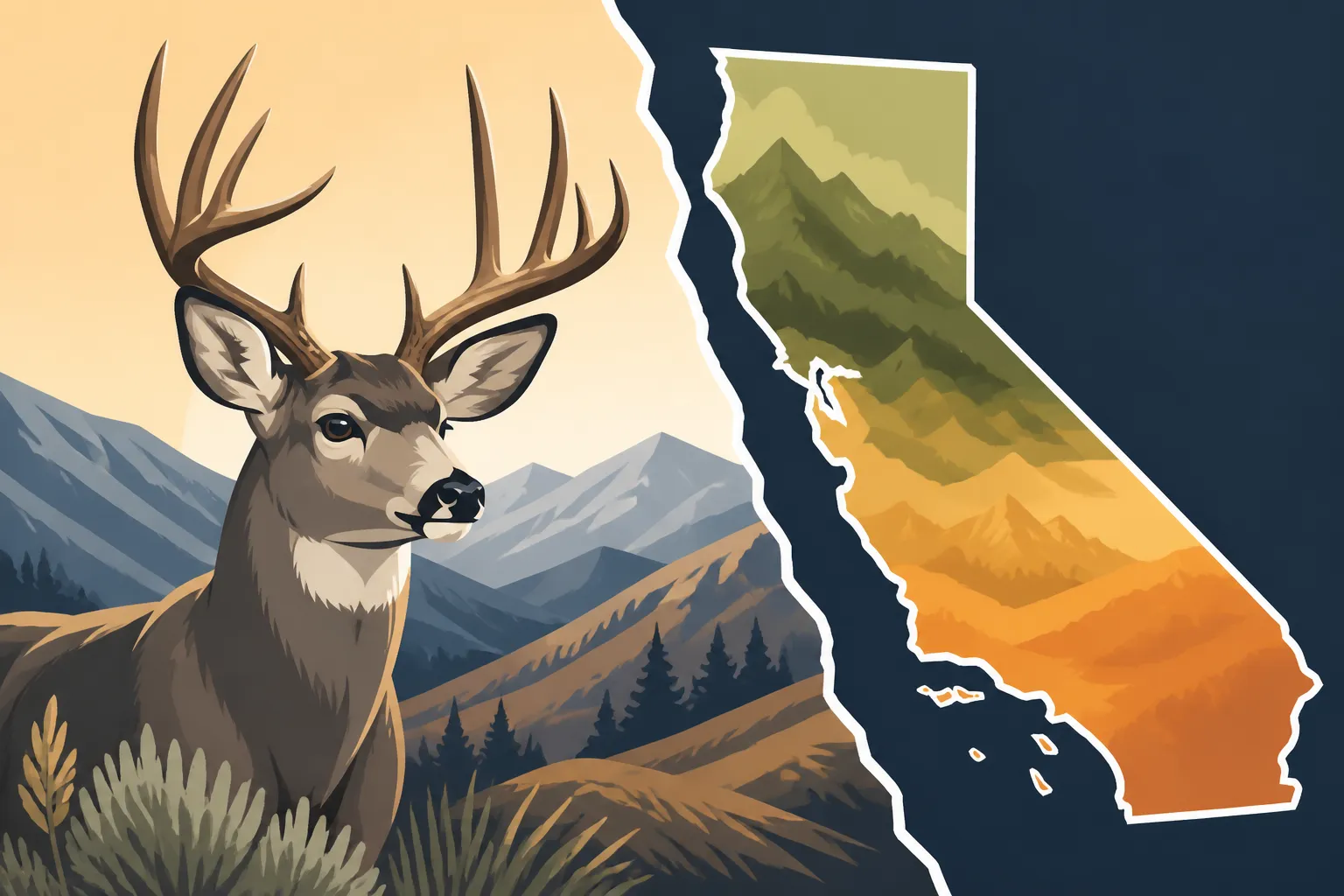
California is a state of incredible diversity, and its deer populations reflect that. The transition from blacktail to mule deer range isn't a single, sharp line, but rather a series of ecological shifts as you move from the coastal influence inland and eastward.
The Sierra Nevada Transition Zone
The most prominent beginning of mule deer range in California starts as you ascend the western slopes of the Sierra Nevada. While blacktails can be found in the lower, brushier foothills, particularly in the north, as you gain elevation and the landscape opens up into more conifer forests, aspen groves, and high-alpine meadows, you begin to enter classic mule deer country.
The D-zones that butt up against the Sierra crest, and especially the revered X-zones found within the higher elevations, are where you'll encounter these majestic animals. These deer spend their summers high in the mountains, feasting on lush vegetation, only to migrate down to lower elevations as the snows begin to fly. This migratory pattern is a hallmark of Sierra mule deer. Areas like the eastern slopes of the Sierra, especially around Mono and Inyo counties, are undeniably mule deer strongholds. If you're planning a trip to these majestic areas, our guide on Hunting California's Sierra Nevada High Country might be a valuable resource. It's truly breathtaking country, but requires different tactics and gear than a typical blacktail hunt. Many hunters use tools like GoHunt's mapping and scouting features to identify these migratory corridors and potential staging areas, which can be invaluable in such vast terrain.
Eastern California Deserts and High Plateaus
Venturing further east beyond the Sierra crest, into regions like the Owens Valley, the Mojave Desert fringe, and the Modoc Plateau, you are squarely in mule deer territory, specifically the desert mule deer subspecies in the south and Rocky Mountain mule deer characteristics in the north. This is a landscape of vast, open spaces, sagebrush flats, juniper and pinyon pine woodlands, and isolated mountain ranges that rise dramatically from the desert floor.
Water sources, often scarce and scattered, become critical focal points for deer in these arid environments. Hunting in these areas often involves extensive glassing, covering large distances, and a deep understanding of how deer use topography to their advantage. For those interested in this unique hunting challenge, our article on Hunting California's BLM Desert Land offers a lot of useful information. Here, your optics are your best friend, allowing you to scan vast expanses for tell-tale signs of a mule deer.
Southern California's Mountain Ranges
Even within Southern California, often thought of as blacktail country, there are distinct enclaves where mule deer are the primary residents. The higher, more remote mountain ranges, such as parts of the San Gabriel, San Bernardino, and San Jacinto Mountains, harbor mule deer populations. These deer often exhibit characteristics of both subspecies due to their unique geographical isolation and historical connections, sometimes showing traits of the desert mule deer.
These mountain islands are often surrounded by dense chaparral and urban sprawl at lower elevations, making access and scouting particularly challenging. However, for those willing to put in the effort, these areas can offer rewarding mule deer hunting opportunities, often requiring significant physical exertion to reach the less pressured pockets.
Ecological Factors Defining Mule Deer Range
Beyond mere geography, the type of environment itself dictates where mule deer thrive. They are animals adapted to specific ecological niches, which in turn defines where their range truly begins.
High Elevation and Open Country Preferences
Mule deer, unlike their blacktail cousins, are generally creatures of open spaces and higher elevations. They feel more comfortable in landscapes where they can use their keen eyesight to spot predators from a distance, or utilize vast expanses to escape. This is why you'll find them ranging from the high Sierra peaks in summer to the vast sagebrush deserts. The dense, thick brush that blacktails call home often acts as a deterrent for mule deer, who prefer a more expansive view of their surroundings.
Their diet, consisting of a variety of forbs, grasses, and browse from shrubs like bitterbrush and mountain mahogany, is typically more abundant in these open, higher-elevation zones. The vegetation found in these areas provides the necessary nutrients for antler growth and overall health, contributing to the larger body and antler size often seen in mule deer. This preference for open country directly influences hunting tactics; where a blacktail hunt might involve still-hunting through thick timber, a mule deer hunt often means long hours behind quality glass. Our article on Glassing Mule Deer in Open California Country dives deep into this technique.
Water Sources and Migration Patterns
Water is a critical factor, especially for desert mule deer. In arid regions, their distribution is heavily influenced by the availability of springs, guzzlers, and temporary rainwater catchments. Mule deer in these environments develop incredible knowledge of these sparse water points, often traveling significant distances between them. Understanding these patterns is key to locating deer. GoHunt's detailed maps can be incredibly useful for pinpointing potential water sources and historical travel routes, especially when scouting remotely.
In the Sierra Nevada, water is usually less of a concern, but migration patterns become paramount. As mentioned earlier, high-country mule deer are migratory, moving from high-elevation summer ranges to lower-elevation winter ranges as the seasons change. The timing of these migrations is heavily influenced by snowfall and forage availability. Knowing when and where these deer funnel through specific corridors is crucial for success in zones like the X-zones. You can often track these movements by Reading Aerial Photos for Sierra Deer to identify natural funnels and transitions.
Hunting Strategies for California Mule Deer
Hunting mule deer in California is a distinctly different experience than chasing blacktails. The open country, the nature of the deer themselves, and the vastness of the landscape demand a different approach.
Scouting and Glassing Techniques
Because mule deer thrive in open environments, your eyes and optics become your most valuable tools. Successful mule deer hunting often begins long before the season opener, with extensive scouting. This involves spending time in the field, often with high-quality binoculars and spotting scopes, systematically picking apart hillsides, rimrocks, and drainages for any sign of deer. Look for fresh tracks around water sources, rubs on scattered trees, and most importantly, the deer themselves.
When you're out there, patience is a virtue. Find a good vantage point, set up your optics, and glass, glass, glass. Pay attention to shaded areas where deer might bed down during the day, and areas with good feed near cover during dawn and dusk. For those looking to upgrade their gear for these conditions, checking out Optics for California's Open-Country Deer Hunting can provide some excellent guidance. A good pair of Best Binoculars for Glassing Open California Desert Terrain can make all the difference, revealing a bedded buck miles away that you'd never spot with the naked eye. Don't forget a sturdy tripod for your spotting scope; it will save your neck and shoulders during those long glassing sessions.
Essential Gear for Mule Deer Country
The terrain mule deer inhabit often means rugged, remote, and physically demanding hunts. Your gear needs to reflect this. Good quality boots are non-negotiable, especially if you're hiking into the Sierra or covering miles of desert washes. Layers of clothing are crucial as temperatures can swing wildly, from freezing mornings to scorching afternoons. Consider lightweight, breathable clothing that can handle harsh brush and sudden weather changes.
Beyond your weapon and optics, a reliable backpack is essential. You'll need to carry water, food, emergency supplies, and potentially the meat from a successful hunt. A good GPS device or a mapping app like GoHunt on your phone, with downloaded offline maps, is indispensable for navigating vast public lands like those often found in D-zones and X-zones, and especially in BLM country. Planning your hydration for these demanding hunts is also key. Don't underestimate the physical toll; hunting mule deer is often an endurance sport. You might find our guides on Lightweight Boots for Steep California Sierra Terrain or Desert Boots for California BLM Wash Hunting helpful in choosing the right footwear.
Table: Key Differences Between California Blacktail and Mule Deer Ranges
| Characteristic | California Blacktail Deer | California Mule Deer |
|---|---|---|
| Primary Habitat | Dense coastal forests, oak woodlands, chaparral, foothills | Open conifer forests, high alpine meadows, sagebrush flats, desert mountains |
| Typical Elevation | Lower to mid-elevations | Mid to high elevations, arid desert regions |
| Geographical Area | Coastal Range, Inner Coast Range, Western Sierra foothills, Klamath | Eastern Sierra Nevada, Modoc Plateau, Mojave Desert fringes, higher Southern California mountains |
| Tail Appearance | Almost entirely black/dark brown on top | White with a black tip (Rocky Mtn), or entirely white with small black tip (Desert) |
| Antler Growth | Tendency to fork, then fork again (typical "blacktail" fork) | Typically taller, wider, main beams fork once, then tines off those forks |
| Body Size | Generally smaller | Generally larger and more robust |
| Movement Style | Often slips through cover, runs | Distinctive "pronking" or "stotting" (bounding with all four feet) |
| Hunting Style | Still-hunting, still-hunting, tracking, ambushing | Glassing, spot-and-stalk, long-range shooting |
Disclaimer
This article is for general informational purposes only and does not constitute professional advice. Laws, prices and regulations vary by location and change over time. Consult a qualified professional for guidance on your specific situation.