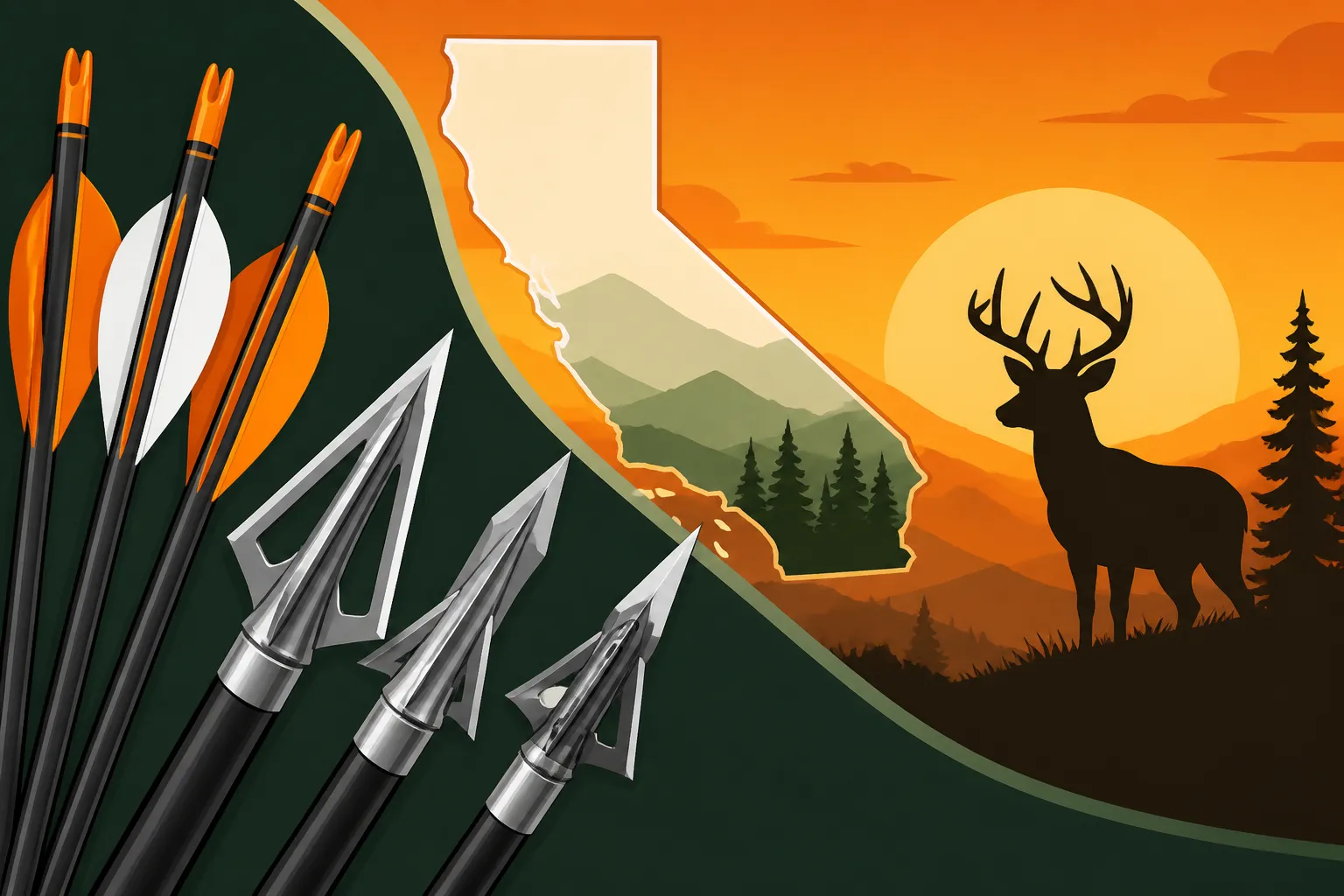
Broadheads and Arrows for California Archery Season
One of the most exciting aspects of preparing for California's archery season is dialing in your gear, but let's be honest, it can also be one of the most frustrating. With ever-evolving regulations, different game animals, and the sheer variety of products out there, choosing the right broadheads and arrows for your bow setup can feel like a daunting task. This comprehensive guide will walk you through everything you need to know to make informed decisions, ensuring your setup is legal, ethical, and ready for whatever California's diverse landscapes and game throw your way.
Understanding California's Archery Regulations and Lead-Free Mandate
Navigating the rules and regulations for archery hunting in California is the first, and arguably most important, step before you even think about buying a new arrow or broadhead. It's easy to get caught up in the latest gear trends, but if your equipment isn't compliant, all that effort and expense are for nothing. The Golden State has some specific requirements that every bowhunter must be intimately familiar with, especially when it comes to the type of projectile you can use.
General Archery Equipment Rules
When you're out in the field, whether it's chasing blacktail in the coastal range or hoping for a spot-and-stalk opportunity on a wild pig, you need to be confident that your bow and arrow setup meets the letter of the law. Generally, California law stipulates that an archery hunter must use a bow that is capable of casting a legal hunting arrow, equipped with a broadhead, a minimum distance of 130 yards. This isn't about how far you can accurately shoot, but rather the raw power of the bow itself. Most modern compound bows and recurves will easily meet this criterion, but it's something to be aware of, particularly if you're using older equipment or a youth bow.
Beyond the bow's casting capability, there are also rules around things like sights and arrow components. For instance, any device attached to the bow that magnifies the target is usually prohibited during archery-only seasons. While rangefinders are generally fine for estimating distance, using a magnified optic on your bow sight itself is a no-go. Similarly, arrows must be at least 20 inches long and fitted with a broadhead. These aren't just arbitrary rules; they're in place to promote ethical hunting and minimize the chances of wounding game. Many new hunters, in their excitement, might overlook these details, only to find themselves in a sticky situation with a game warden. Always double-check the current regulations before heading afield to ensure you're squared away.
It's also worth noting that while some states have specific draw weight minimums, California focuses more on the overall energy delivery. Still, for ethical hunting, most experienced bowhunters aim for a setup that generates enough kinetic energy to confidently take down their target animal. This often means a minimum draw weight that, when combined with a proper arrow, provides sufficient penetration. Think about the game you're pursuing—a blacktail deer in thick brush requires a different energy threshold than a large bull elk in open country. Understanding these foundational rules sets the stage for choosing the right components. You can find more details on these legal requirements in resources like Legal Weapons During California Archery Season.
The Non-Lead Ammunition Requirement for Broadheads
This is where California really stands apart, and it's absolutely crucial for every bowhunter to understand. As of July 1, 2019, California implemented a statewide ban on lead ammunition for all hunting, across all game species, and in all areas of the state. This isn't just for rifle hunters; it explicitly includes archery broadheads. You cannot use a broadhead that contains any lead whatsoever, even if it's just a tiny component of the ferrule or a weight system. This mandate stems from concerns over lead fragmentation in harvested animals and its potential impact on scavenging wildlife, particularly the endangered California condor.
For bowhunters, this means your traditional broadheads, which might have had a lead core or lead-containing brazing, are no longer legal. This change required a significant shift in thinking for many archers, ourselves included, who had relied on certain brands and designs for years. It forced manufacturers to innovate and produce truly lead-free options, and for hunters, it meant re-evaluating our gear and often re-tuning our bows to accommodate new broadhead types.
The biggest frustration here often comes from ensuring that a broadhead advertised as "lead-free" truly is 100% compliant with California's strict interpretation. Some companies might use a "reduced lead" or "environmentally friendly" label that still isn't fully lead-free. It's incumbent upon the hunter to verify. Look for broadheads explicitly marketed as "all-copper," "all-steel," or "non-lead" and ensure they make no mention of lead content. This mandate impacts everything from the smallest small game broadhead to those intended for bear and elk. Don't take chances; confirm compliance before your hunt. It's a critical piece of the puzzle for Which Non-Lead Bullets California Approves, and it applies equally to your arrow tips.
Arrow Selection for California's Varied Game and Terrain
Once you’ve got the regulations down, it’s time to think about your arrow—the direct conduit of your bow’s energy. Choosing the right arrow isn't a one-size-fits-all situation, especially in a state like California where you might be chasing tiny quail one season and massive Tule elk the next. Your arrow needs to be perfectly matched to your bow, your target, and even the type of terrain you'll be navigating. Get this wrong, and you're fighting an uphill battle for accuracy and penetration from the start.
Matching Arrow Spine to Your Bow Setup
The spine of an arrow refers to its stiffness, or how much it flexes when launched from the bow. This is, without exaggeration, the most critical factor for accurate arrow flight. An arrow that is too stiff for your bow will fly inconsistently, often hitting to one side of your target. An arrow that is too weak (too flexible) can be even more dangerous, potentially breaking upon release or flying wildly, making ethical shot placement nearly impossible. Imagine lining up on a beautiful blacktail buck in the thick timber of the Coast Range; if your arrow spine isn't right, that perfect shot could become a frustrating miss or, worse, a wounded animal.
Your bow's draw weight, your draw length, and even the cam system (aggressive versus smooth) all influence the ideal arrow spine. A higher draw weight generally requires a stiffer spine, while a longer draw length also demands more stiffness. Arrow manufacturers provide spine charts that are an excellent starting point, but they are just that—starting points. It’s highly recommended to consult these charts carefully and, if possible, work with a reputable pro shop to ensure you’re selecting the correct spine for your specific setup. Trying to save a few dollars by guessing on spine can lead to endless tuning headaches and a significant decrease in accuracy, which is the last thing you want when that moment of truth arrives.
Furthermore, factors like arrow length (longer arrows flex more) and the weight of your broadhead (heavier broadheads act like a lever, increasing flex) also play a role. A 100-grain broadhead will require a different spine than a 125-grain broadhead on the same arrow for optimal flight. This is why when you start Tuning a Bow for Broadhead Flight, matching components is so important. Don't be afraid to experiment with different spine ratings within the recommended range to find what truly shoots best for your unique bow and shooting style.
Arrow Weight and FOC (Front of Center) for Hunting Performance
Once spine is sorted, the next big consideration is arrow weight and its distribution, known as Front of Center (FOC). These factors directly impact your arrow's flight trajectory, kinetic energy, and most importantly, its ability to penetrate your target animal. It’s a delicate dance between speed and penetration. A lighter arrow typically flies faster and flatter, which can be appealing for longer shots or when judging distance is tricky. However, it will carry less momentum and kinetic energy, potentially reducing penetration, especially on larger, tougher game like wild pigs or elk.
On the flip side, a heavier arrow flies slower, resulting in a more arcing trajectory, but it retains more kinetic energy and momentum. This increased "punch" is crucial for deep penetration, particularly if you encounter bone or the dense muscle of a big animal. For most California big game, like deer, black bear, or elk, many experienced bowhunters prioritize momentum and penetration over blistering speed. A good rule of thumb for deer-sized game is an arrow weighing around 400-450 grains total, while for elk or bear, you might push that to 500 grains or more. This is why discussing Arrow Weight for Elk-Sized Game is so important—a light arrow meant for deer simply won't cut it.
FOC refers to the percentage of an arrow's total weight located in the front half of the arrow. A higher FOC (typically 10-15% for hunting) generally leads to more stable arrow flight, better penetration, and less wind drift. This is because the arrow effectively becomes more "front-heavy," helping it maintain its trajectory like a dart. You can adjust FOC by using heavier broadheads, heavier inserts, or even heavier fletching. Achieving the right balance here will make your arrow more forgiving and more effective when it matters most, especially if you're hunting in windy conditions common in many parts of California, from the high desert to exposed ridgelines.
Carbon, Aluminum, or Hybrids: Choosing Your Material
The material your arrow is made from significantly impacts its characteristics, including durability, straightness, and cost. Each has its place, and understanding their pros and cons will help you choose the best fit for your California hunting adventures.
Carbon Arrows: These are arguably the most popular choice for modern bowhunters. They are known for their lightness, speed, and excellent durability. Carbon arrows offer superior straightness retention compared to aluminum, meaning they're less prone to bending if they hit a hard object or if you bump them in the quiver. This resilience is a huge advantage when you're trekking through dense chaparral or scrambling over rocky Sierra terrain. They can, however, splinter if severely damaged, so it's crucial to inspect them regularly for hairline cracks, especially after a pass-through or a hard impact. Brands like Easton, Victory, and Gold Tip offer a wide range of carbon arrows suited for various hunting scenarios.
Aluminum Arrows: While less common than they once were for serious hunting, aluminum arrows still have their devotees. They are generally heavier than carbon, which can be beneficial for increasing momentum and penetration at lower draw weights. They are also typically more affordable. The main drawback is their susceptibility to bending; even a minor impact can cause an aluminum arrow to bend, rendering it useless for accurate flight. This makes them less ideal for rugged, backcountry hunts where falls and bumps are common. However, for target practice or certain close-range hunting scenarios, they can still perform well and offer good value.
Hybrid Arrows: These arrows combine materials, often a carbon core wrapped in aluminum, or vice versa. The goal is to blend the best characteristics of both worlds: the durability and straightness of carbon with the heavier weight and momentum potential of aluminum. These can be excellent choices for hunters seeking a very specific weight and FOC, or those wanting a little extra toughness. The trade-off is often a higher price point compared to pure carbon or aluminum. For hunters chasing larger game or those who demand the utmost performance and durability in challenging environments, hybrids might be worth the investment. Consider your budget, the game you're after, and the physical demands of your preferred hunting spots when making this choice.
The Broadhead Debate: Fixed Blade vs. Mechanical for California Hunting
Ah, the age-old broadhead debate! Every bowhunter has an opinion, and rightly so, as your broadhead is the business end of your arrow—it's what does the actual work on game. In California, this choice is further complicated by the non-lead mandate, but the fundamental differences between fixed blade and mechanical broadheads remain. Understanding these differences, along with their pros and cons, is crucial for making an ethical and effective choice for your hunting pursuits.
Fixed Blade Broadheads: Reliability and Penetration
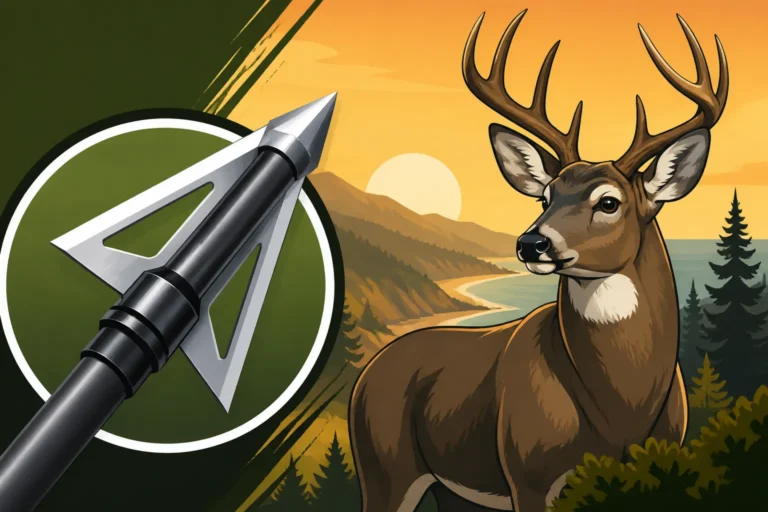
Fixed blade broadheads are the traditional workhorses of archery hunting, and for good reason. Their design is simple: a solid ferrule with blades that are permanently attached and don't move. This inherent simplicity translates directly into reliability. There are no moving parts to fail, no blades to deploy, and no deployment mechanism to potentially malfunction. When you release that arrow, you know exactly what kind of cutting surface is heading towards your target. This gives many hunters a profound sense of confidence, especially in high-pressure hunting situations.
The primary advantage of fixed blade broadheads, beyond reliability, is their superior penetration capabilities. Because their blades are always open and directly aligned with the arrow's momentum, they offer less resistance upon impact compared to a mechanical broadhead's initial deployment. This means more energy is conserved for driving the broadhead deep into the animal, which is absolutely critical when you hit dense muscle, ribs, or even shoulder bone. For animals like a tough old wild boar or a bull elk, that extra penetration can mean the difference between a quick, ethical kill and a long, difficult tracking job. Broadhead Choices for California Blacktail often lean towards fixed blades due to their penetration through brush.
The main challenge with fixed blade broadheads is tuning. Because their blades create a larger surface area than a field point, they can act like miniature wings, catching the air and causing the arrow to plane or steer off course. This means achieving perfect flight with fixed blades often requires more meticulous bow tuning, such as paper tuning and walk-back tuning, to ensure they fly exactly like your field points. Many hunters also find them to be louder in flight than field points or mechanicals, which can be a minor consideration. However, for unmatched reliability and penetration, fixed blades remain a top choice for many serious bowhunters in California.
Mechanical Broadheads: Field Point Accuracy and Larger Cut
Mechanical broadheads, often called "expandable broadheads," exploded onto the scene promising field point accuracy and massive wound channels. Their design features blades that remain tucked away during flight, presenting a much smaller profile similar to a target arrow's field point. This small profile minimizes air resistance and drag, often allowing mechanicals to fly with remarkable accuracy, mirroring your field points right out of the box without extensive tuning. This "set it and forget it" accuracy is incredibly appealing to hunters who struggle with fixed blade tuning or simply want to spend more time practicing with field points.
Upon impact with the animal, the blades of a mechanical broadhead deploy, often expanding to create a much larger cutting diameter than most fixed blade designs. This larger cutting diameter translates directly into a wider wound channel, which can lead to more rapid blood loss and a quicker, more humane harvest. For many, the idea of a wider cut means a better blood trail, which is a huge advantage when hunting in areas with thick cover or difficult tracking conditions, something common in California's diverse landscapes.
However, mechanical broadheads do come with potential drawbacks. The deployment mechanism, while generally reliable, is still a mechanical system, meaning there's a small chance of failure. Blades might not deploy fully, or they might deploy prematurely if bumped in the quiver or if brushing against dense vegetation. Additionally, the act of deploying the blades upon impact consumes some kinetic energy, which can slightly reduce penetration compared to a fixed blade broadhead of similar weight. This energy loss is a bigger concern when hunting larger game or when a less-than-ideal shot angle might mean hitting more bone. While many mechanicals are now designed to be tough and penetrate well, they are often less forgiving than fixed blades on poor shot placement or when encountering heavy bone.
Hybrid Broadheads and Understanding the Trade-offs
Recognizing the strengths and weaknesses of both fixed blade and mechanical designs, manufacturers have introduced hybrid broadheads. These clever designs aim to offer the best of both worlds by incorporating elements from each category. A common hybrid design might feature two small, fixed blades that are always open, providing a guaranteed cutting surface and initial penetration, combined with two larger mechanical blades that deploy upon impact. The fixed blades ensure a solid wound channel even if the mechanical blades don't fully deploy, and they often aid in stabilizing flight.
The appeal of hybrid broadheads lies in their versatility. They offer a certain degree of "fail-safe" reliability due to the fixed blades, while still promising a larger cutting diameter thanks to the expandable components. For a hunter who values both excellent penetration and a generous wound channel, a hybrid can be an attractive option. Imagine hunting a strong wild pig where you need that penetration through its tough hide and gristle, but also want a wide wound to ensure a quick recovery. A well-designed hybrid could fit the bill perfectly.
However, like any hybrid solution, they also come with their own set of trade-offs. They can be more complex in design than a simple fixed blade, potentially introducing more points of failure. While they may fly better than many fixed blades, they still require diligent tuning to ensure the fixed and mechanical elements work in harmony with your arrow. Their cost can also be higher. Ultimately, the choice between fixed, mechanical, or hybrid broadheads comes down to personal preference, confidence in your gear, the type of game you're pursuing, and your commitment to proper tuning and practice. Always ensure any broadhead you choose is fully compliant with California's non-lead regulations.
Non-Lead Broadhead Options and Compliance in California
The shift to non-lead ammunition in California has been a significant change for all hunters, and bowhunters are no exception. For decades, many relied on broadheads that, while sometimes made primarily of steel, often contained lead in their ferrules, tips, or even in the brazing used to attach blades. With the statewide mandate, understanding what constitutes a truly "non-lead" broadhead and how it performs has become paramount. It's not enough to simply think your broadhead is compliant; you must know it definitively.
Identifying Compliant Broadheads
The core of California's non-lead requirement is that any component of the projectile that could enter the animal's carcass must be lead-free. For broadheads, this means the entire cutting head, including the ferrule, blades, and tip, cannot contain lead. This is why you need to be cautious about certain terms. A broadhead might be marketed as having "steel blades," but if the ferrule is made of a lead-containing alloy, it's not legal. Similarly, some older fixed blade designs used lead for weight in the tip, or lead-based solder for attachment, which would also render them non-compliant.
When you're shopping for broadheads, look for clear declarations from the manufacturer stating "100% lead-free," "all copper," "all stainless steel," or "non-lead approved for California." Reputable brands have updated their lines to offer specific non-lead versions of their popular broadheads. For instance, some companies will have a standard version and then a "California-compliant" or "non-lead" version. Always scrutinize the packaging and product descriptions. If there's any ambiguity, it's best to err on the side of caution or contact the manufacturer directly for clarification. Using a non-compliant broadhead, even accidentally, can lead to significant penalties, and nobody wants that kind of hassle after a successful hunt. Remember, platforms like GoHunt often have great resources for understanding gear, but the ultimate responsibility for compliance lies with the hunter.
It's also worth noting that non-lead doesn't mean "weak" or "inferior." Modern metallurgic advancements have allowed manufacturers to create incredibly tough and sharp broadheads from materials like high-grade stainless steel, hardened aluminum alloys, and solid copper. These materials offer excellent integrity and edge retention, ensuring your broadhead performs as expected in the field. The key is knowing what you're buying and ensuring it ticks all the regulatory boxes.
Performance Considerations for Non-Lead Broadheads
One of the initial concerns many hunters had when the non-lead mandate came into effect was whether these new materials would perform as well as their traditional counterparts. Would they hold an edge? Would they penetrate as effectively? Would they be prohibitively expensive? Thankfully, the technology has evolved, and today's non-lead broadheads are incredibly effective, often surpassing older lead-containing designs in certain aspects.
Modern non-lead broadheads, particularly those made from solid steel or copper, are designed for extreme durability. They typically hold their edge very well, and many can be resharpened with standard broadhead sharpeners, though some specialized materials might require diamond sharpeners. The mass of these materials also allows manufacturers to create broadheads that provide excellent FOC (Front of Center) weight distribution, contributing to superior arrow flight and penetration. While the cost of non-lead broadheads can sometimes be slightly higher than entry-level lead-containing options, the difference is often negligible when you consider the overall investment in a hunt.
When switching to non-lead broadheads, it’s essential to approach them like any other new piece of gear. Test them extensively. Ensure they fly true with your field points. Pay attention to how they perform on practice targets, checking for blade integrity and penetration. For instance, some solid copper broadheads are very hard and hold up extremely well, while certain steel alloys might offer different sharpening characteristics. Don't assume that because it's non-lead, it will perform identically to a previous broadhead model you used. Take the time to understand its unique characteristics, practice with it, and build confidence in its capabilities before heading out to Hunt a D-Zone That Opens in August or any other challenging California hunting ground.
Tuning Your Archery Setup for Optimal Performance
Even with the best bow, the perfect arrows, and top-tier broadheads, your setup is only as good as its tune. Proper tuning is the process of making subtle adjustments to your bow and arrow components so that they work together in perfect harmony, ensuring consistent, accurate arrow flight. In California, where shot opportunities can be fleeting and distances varied, a perfectly tuned bow is the difference between a clean harvest and a frustrating miss. Don't skip this critical step; it's where all your gear choices truly come together.
Paper Tuning for Arrow Flight Perfection
Paper tuning is often the first and most fundamental step in dialing in your archery setup. It's a diagnostic process that helps you identify and correct issues with your arrow's flight path as it leaves the bow. The concept is simple: you shoot an arrow through a piece of paper suspended a few feet in front of you (typically 6-10 feet). The tear that the arrow makes in the paper reveals how the arrow is flying. A perfect tear will show a clean, round hole made by the broadhead, surrounded by three small tears where the fletching passed through.
If your tear shows the nock end of the arrow tearing high, low, left, or right, it indicates a problem that needs to be addressed. A high tear often means your nocking point is too low, or your rest is too high. A low tear indicates the opposite. Tears to the left or right typically point to an issue with your arrow rest's horizontal position or your cam timing. The beauty of paper tuning is that it provides immediate, visual feedback, allowing you to make precise adjustments to your arrow rest, nocking point, or even slight cam adjustments until you achieve that perfect tear. This process, while sometimes tedious, is absolutely crucial for building a consistent foundation for accurate shooting and ensuring your broadheads fly true.
Think of it like aligning the wheels on your truck. If they're out of alignment, you'll chew through tires and never drive straight. The same goes for your bow; if it's not paper tuned, your arrows will never fly perfectly, leading to inconsistency downrange. This foundational tuning is critical before moving on to more advanced steps. For bowhunters pursuing everything from Wild Pig Hunting California Year-Round to high-country deer, paper tuning provides the confidence that your arrow is leaving the string cleanly and consistently.
Walk-Back Tuning and Broadhead Tuning Techniques
Once your paper tune looks good, you're ready to move on to more advanced tuning techniques like walk-back tuning and broadhead tuning, which confirm your setup's accuracy at longer distances.
Walk-Back Tuning: This method helps fine-tune your sight pins and ensures your arrow rest is horizontally aligned perfectly. You'll set up a large target face (or simply a large piece of paper) with a vertical line drawn down the middle. Stand 10 yards from the target and shoot an arrow directly at the line. Then, without adjusting your aiming point, walk back to 20 yards and shoot another arrow at the same aiming point. Repeat this at 30, 40, and even 50 yards. If your arrows consistently fall in a straight vertical line, your horizontal alignment is excellent. If they start walking left or right, you'll need to make very small adjustments to your arrow rest's horizontal position (a tiny bit left if the arrows are drifting right, and vice versa) until they stack vertically. This confirms your horizontal accuracy at various ranges.
Broadhead Tuning: This is the ultimate test: ensuring your hunting broadheads fly identically to your field points. After paper tuning and walk-back tuning with field points, switch to your broadheads. Shoot a few arrows with broadheads and a few with field points at the same aiming spot at various distances (e.g., 20, 30, 40 yards). Ideally, they should all group together. If your broadheads are consistently hitting in a different spot than your field points, it indicates that either your bow isn't perfectly tuned, or the broadheads themselves are causing planning issues. For fixed blades, you might need to make micro-adjustments to your rest or even slightly rotate the broadhead on the arrow shaft to find a "sweet spot" where it flies true. Mechanicals, by their nature, should fly closer to field points, but if they don't, it might point to a fletching issue, an inconsistently spined arrow, or a very slight bow tuning issue that the field points didn't reveal. Perfect Tuning a Bow for Broadhead Flight is paramount for ethical hunting.
Practice, Practice, Practice: The Ultimate Performance Enhancer
All the tuning in the world means nothing without consistent, deliberate practice. Your gear can be perfectly dialed in, but if your form is inconsistent or you're not confident in your shot, you won't perform when it counts. Practice isn't just about sending arrows downrange; it's about building muscle memory, reinforcing good habits, and mentally preparing for the challenges of hunting. For California bowhunters, this means simulating real-world hunting scenarios as much as possible.
Don't just shoot from a flat, level stance at known distances. Practice shooting from kneeling, sitting, and awkward angles, mimicking the positions you might find yourself in on a steep hillside in Hunting California's Sierra Nevada Backcountry or hunkered down in dense oak brush. Practice shooting at varying distances, and don't rely solely on a rangefinder in practice; try to judge distances by eye to hone that skill. Practice with your broadheads on a regular basis, especially as hunting season approaches, to build confidence in their flight and to ensure they are still grouping with your field points. Many hunters save their expensive hunting broadheads for tuning and then practice with "practice" versions or field points, but it's vital to shoot your actual hunting broadheads enough to be fully confident.
Crucially, practice under pressure. This doesn't mean having someone yell at you, but rather creating mentally challenging situations. Shoot after a short sprint to elevate your heart rate, simulating the exertion of stalking. Practice shooting in varying weather conditions if safe to do so. The goal is to make the shot routine and automatic, even when your adrenaline is pumping and that magnificent blacktail buck finally steps into your shooting lane. Consistent, thoughtful practice builds the confidence you need to make ethical, effective shots when the opportunity arises in California's challenging hunting environments.
Essential Considerations Beyond the Gear
While having the right broadheads and arrows, and a perfectly tuned bow, are absolutely crucial, there are several other elements that contribute to your overall success and ethical hunting practices. These often-overlooked details can make a significant difference in the field, from ensuring a clean kill to safely transporting your gear. Ignoring them can lead to frustration, or worse, an unethical outcome.
Kinetic Energy and Momentum for Effective Harvests
In archery, kinetic energy (KE) and momentum are two key metrics that describe the power delivered by your arrow, and thus its ability to penetrate game. Kinetic energy is a measure of the arrow's raw power, while momentum is a measure of its "pushing" force. For hunters, momentum is often considered a more important factor for penetration, especially on larger animals or when bone is encountered. Without sufficient KE and momentum, even the sharpest broadhead may not achieve the deep penetration needed for a humane kill.
Calculating your arrow's KE and momentum isn't difficult with readily available online calculators. You'll need your arrow's total weight (in grains) and its speed (in feet per second) as measured by a chronograph. While there are no hard-and-fast legal minimums for these numbers in California, most experts recommend certain thresholds:
- Deer-sized game: Aim for at least 40-50 ft-lbs of kinetic energy and around 0.40-0.50 slug-feet per second of momentum.
- Larger game (elk, bear, wild pig): You'll want to push those numbers higher, ideally 60-70+ ft-lbs KE and 0.50-0.60+ slug-feet per second of momentum.
These are guidelines, not absolutes, and a sharp, well-placed broadhead can sometimes compensate for slightly lower numbers. However, aiming for these ranges provides a good margin of safety and ensures your setup has the power to get the job done ethically. Remember, simply having a fast bow doesn't automatically mean high momentum; heavier arrows at moderate speeds can often generate more momentum than light arrows at blistering speeds. It's about finding the right balance for your specific hunting scenario and ensuring you're generating enough force for a confident harvest.
Sharpening Your Broadheads and Field Care
A broadhead, regardless of its design or material, is useless if it isn't razor-sharp. A truly sharp broadhead slices through hide, muscle, and organs, creating a clean, wide wound channel that leads to rapid blood loss. A dull broadhead, on the other hand, can push tissue aside, causing a less effective wound and potentially leading to a long, difficult, and unethical tracking job. This is not a step to be overlooked or rushed.
For fixed blade broadheads, you'll need a sharpening system appropriate for your blade angle. Many come with replaceable blades that can be swapped out, but permanent blade designs require careful sharpening. Mechanical broadheads often come with incredibly sharp factory blades, but some models allow for replacement blades, which is a great option if they become dull or damaged. Regardless of type, always test the sharpness of your broadheads. The "shave test" (lightly touching the blade to arm hair—if it shaves, it's sharp) or the "thumbnail test" (lightly pressing the blade against your thumbnail—if it digs in, it's sharp) are common methods.
Field care for your broadheads is also critical. Always transport them securely in a quiver that protects the blades from dulling or bending. Some quivers have individual broadhead covers, which is ideal. After a shot, even if you don't recover the animal immediately, inspect your broadhead. If it hit the ground or passed through heavy material, it might be dull or damaged. Carrying a small, reliable sharpening stone or extra blades in your pack can be a lifesaver. Ensuring your broadheads are sharp and ready is a non-negotiable part of ethical hunting. This is especially true when hunting close to home or in accessible areas where you might be Hunting Small Private Tracts in California.
Quiver Choices and Arrow Transport in the Field
How you carry your arrows in the field might seem like a minor detail, but it can significantly impact your hunting experience and readiness. Your quiver needs to protect your arrows and broadheads, keep them readily accessible, and remain quiet during your movements. California's diverse terrain, from dense timber to open sagebrush, demands a thoughtful approach to quiver selection.
There are generally three main types of quivers:
- Bow-mounted Quivers: These attach directly to your bow's riser and are popular for their convenience, keeping arrows immediately at hand. They come in various capacities, from 3-arrow models for minimalist hunters to 6-arrow versions. The main drawback can be the added weight and bulk to your bow, which some find affects balance and handling. However, modern designs are lightweight and securely hold arrows, preventing noisy rattling while you're still-hunting through thick brush or glassing from an exposed ridge.
- Hip Quivers: Worn on your belt, these quivers are common in target archery but some hunters use them for stalking. They keep the bow lighter and unencumbered. The downside is that arrows are less protected and can snag on brush, make noise, or even fall out if not secured properly.
- Back Quivers: These classic quivers, worn over the shoulder, keep arrows out of the way for silent movement through dense cover. However, they can be awkward to draw arrows from quickly, especially in a sudden encounter, and broadheads can be exposed, posing a safety risk if not covered. They're typically better suited for traditional archery or situations where quick access isn't paramount.
For most California bowhunters, a well-designed bow-mounted quiver offers the best balance of protection, accessibility, and quiet transport. Look for models with sturdy grippers that hold arrows securely and a hood that fully encases broadheads. If you're undertaking a multi-day backcountry hunt or plan to remove your quiver from your bow, a pack-mounted quiver system or a dedicated backpack with an arrow sleeve can be a great option. Whichever you choose, practice drawing arrows silently and quickly from your chosen quiver. The last thing you want is a noisy fletching scrape or a dropped arrow when that trophy animal is within range.
| Feature | Fixed Blade Broadheads | Mechanical Broadheads | Hybrid Broadheads |
|---|---|---|---|
| Reliability | Extremely high, no moving parts to fail. | High, but with a small potential for deployment issues. | Very high, fixed blades offer backup if mechanical fail. |
| Penetration | Excellent, maximizes kinetic energy on impact. | Good, but some energy lost to blade deployment. | Excellent, with initial fixed blade cut. |
| Accuracy | Requires meticulous tuning to match field points. | Often field-point accurate with minimal tuning. | Generally good, may require some tuning. |
| Wound Channel | Defined by blade width, consistent. | Can offer wider, more devastating wound channels. | Combines fixed blade cut with expandable width. |
| Flight Noise | Can be slightly louder due to blade surface area. | Very quiet, streamlined flight. | Generally quiet, but check specific designs. |
| Durability | Very durable, especially solid one-piece designs. | Varies by design, some susceptible to blade damage. | Good, fixed components add robustness. |
| California Non-Lead Compliance | Many options available in steel or copper. | Many options available in steel or aluminum. | Growing number of compliant options. |
| Ideal CA Use | Larger game, tough hides, situations requiring max penetration (elk, pig, bear, tight timber). | Deer, lighter framed animals, open country for accuracy. | Versatile for various game and conditions. |
| Pros | Simple, robust, deep penetration, ethical. | Easy tuning, larger wound, better blood trails. | Blend of reliability and wide wound channel. |
| Cons | Can be harder to tune, smaller cut than some mechanicals. | Small chance of failure, energy loss on impact, less forgiving. | More complex, potentially higher cost. |
Disclaimer
This article is for general informational purposes only and does not constitute professional advice. Laws, prices and regulations vary by location and change over time. Consult a qualified professional for guidance on your specific situation.