Gear for Spot-and-Stalk Bear Hunting
The thrill of chasing a black bear through California's rugged backcountry is unlike any other hunt. But let's be real, it's also a serious physical and mental challenge that demands the right gear. You can't just throw on any old clothes and hope for the best when you're spot-and-stalking a wary bruin across varied terrain. This guide is all about equipping you with the knowledge and confidence to choose the right gear for a successful, safe, and ethical California bear hunt.
The Unique Demands of California Bear Hunting Terrain
California is a massive state, and its bear habitat is just as diverse as its geography. From the dense, brushy coastal ranges to the vast, timbered slopes of the Sierra Nevada, and even the scattered pockets in the high desert fringes, bears are masters of adapting. This incredible variety means your gear needs to be just as adaptable, or you'll find yourself miserable, or worse, unprepared. Understanding the terrain you'll be hunting is the first step in packing smart.
Varied Landscapes and Their Gear Implications
Imagine still-hunting through the thick chaparral of the Los Padres National Forest during the August archery season. The brush is unforgiving, snagging at clothing, scratching exposed skin, and demanding boots with serious ankle support. You might be pushing through dense manzanita for an hour, only to emerge onto an open, sun-baked slope that requires long-range glassing. This isn't flat ground; it's steep, often loose, and constantly changing.
Contrast that with a late-season rifle hunt in the northern Sierra, where you might be navigating old-growth timber, crossing icy creeks, and traversing burn scars from previous wildfires. The ground could be covered in thick duff, fallen logs, or sharp, brittle snags. Your clothing needs to be silent, your boots waterproof, and your pack capable of handling a quartered bear over truly challenging ground. A flimsy daypack won't cut it, and thin pants will be shredded in an hour. Even a simple walk through an oak woodland can present slippery leaf litter and hidden holes. Each landscape presents its own unique set of challenges, from traction to durability.
These varied conditions mean your gear choices are paramount. Are you primarily hiking ridge tops to glass? Then a lighter boot and perhaps more specialized optics might be your focus. Are you going to be in thick cover, pushing through brush? Then durability in your clothing and tougher fabrics become essential. The weight of your gear, its ability to withstand abuse, and how it helps you move quietly and efficiently through these diverse environments will directly impact your success and your comfort.
Weather Extremes from August Archery to Late Fall Rifle
California's weather can be just as unpredictable as its terrain, especially when you're hunting bears. An August archery hunt in Zone A can start with a pre-dawn chill that quickly gives way to scorching temperatures well into the 90s by midday. You might find yourself sweating profusely during a strenuous climb, then shivering on a shaded ridge if you stop to glass for an extended period. This kind of drastic temperature swing, sometimes within a single hour, demands a well-thought-out layering system.
Later in the fall, during the general rifle season, especially in higher elevations, you could encounter anything from crisp, sunny days to sudden downpours, sleet, or even early snowfall. A warm, dry morning can quickly turn into a cold, wet afternoon, leaving you soaked and miserable if you don't have adequate rain gear. Wind is another factor, especially on exposed ridgelines, which can dramatically drop the "feels like" temperature and make glassing uncomfortable.
Beyond temperature and precipitation, sun exposure is a constant concern, particularly in the more open country or above the tree line. Long days spent under the California sun require robust sun protection – hats with wide brims, sunglasses, and high-SPF sunscreen. Neglecting this can lead to severe sunburn, dehydration, and exhaustion, impacting your focus and endurance. The best way to combat these extremes is to always be prepared for the worst-case scenario, building your kit around adaptability.
Essential Optics for Spot-and-Stalk Success
When you're spot-and-stalk hunting for bear, your eyes are your most powerful tool. Bears are often found in areas with good feed, like berry patches, acorn flats, or succulent green-ups in burn scars. These areas can be vast, and spotting a dark-colored bear against a shadowed hillside or within dense timber requires keen observation and quality optics. Without the ability to effectively glass and identify your target, your chances of success plummet.
Binoculars for Broad Area Scanning
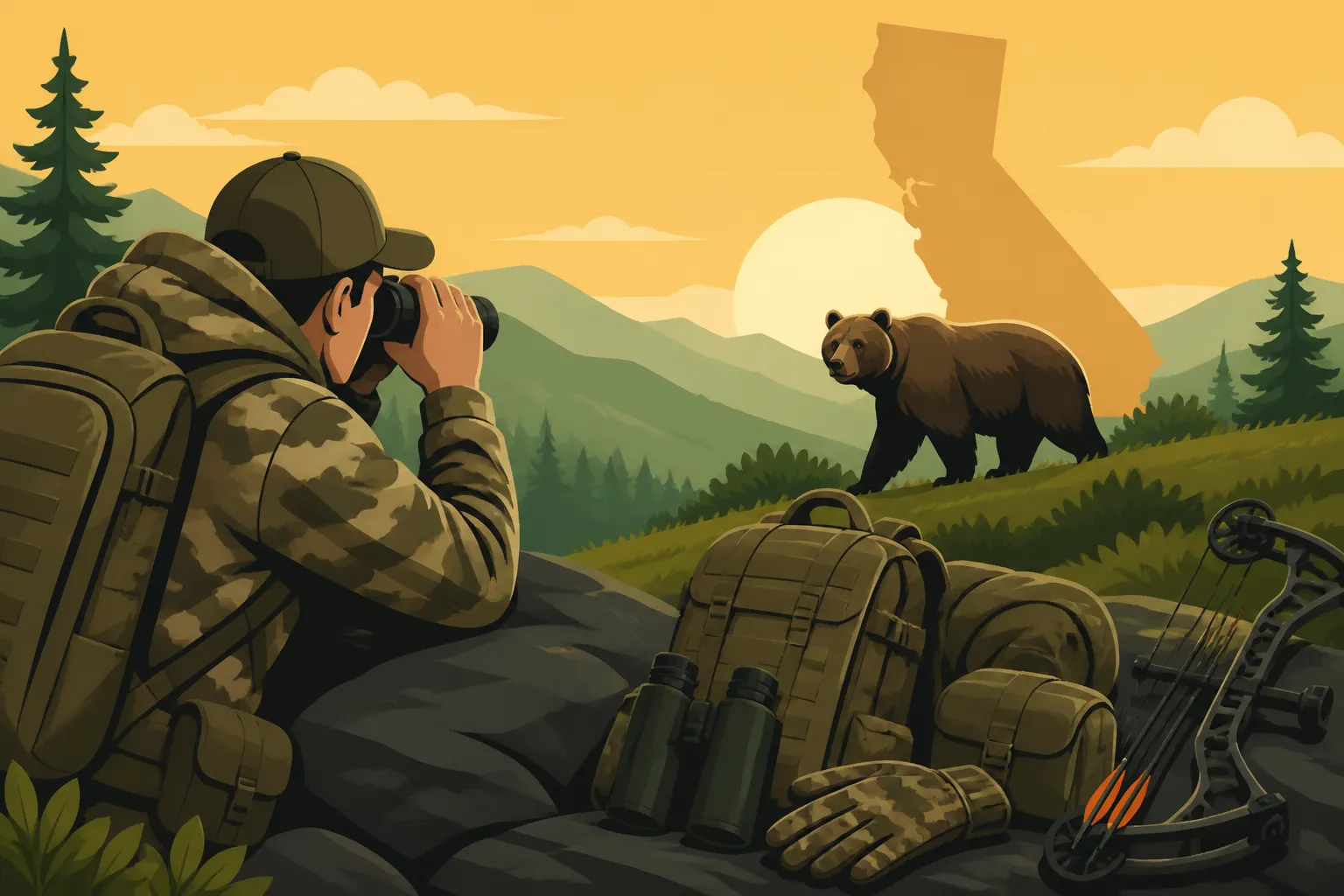
Your binoculars are the workhorse of your optical setup. They're what you'll use for 90% of your initial glassing, helping you scan vast expanses of hillside, timber edges, and clearings for any sign of movement or a tell-tale black blob. For general bear hunting in California, a 10×42 or 10×50 binocular is often considered a sweet spot. The 10x magnification provides enough power to pick apart distant details, while the 42mm or 50mm objective lens gathers sufficient light for effective use in low-light conditions, like dawn and dusk when bears are most active.
While it might be tempting to go for higher magnification, remember that a steady image is crucial. Hand-holding binoculars above 10x magnification becomes increasingly difficult, leading to a shaky view that causes eye fatigue and makes it harder to identify subtle details. Consider investing in a binocular harness to keep your optics secure, easily accessible, and to distribute the weight comfortably. For serious glassing, especially in open, sprawling country like much of the Eastern Sierra foothills or the more arid BLM lands, a tripod adapter for your binoculars can be a game-changer. This stabilizes the image completely, allowing you to pick out tiny details that would otherwise be missed.
When you're scanning, don't rush. Break the landscape into grids and systematically search each section. Look for movement, yes, but also for anomalies in shape or color. A bear feeding on a distant hillside might just look like a dark rock until you really focus. Practice at home by picking out small objects in distant trees or shadows to train your eyes and technique.
Spotting Scopes for Detailed Evaluation
Once your binoculars have picked up a potential bear, that's where the spotting scope truly shines. A spotting scope allows you to magnify that distant blob into a clear image, enabling you to accurately determine if it's actually a bear, what its size is, and critically, if it's a legal animal. In California, you cannot shoot a sow with cubs, and from a distance, it can be incredibly difficult to discern a lone bear from a sow followed by tiny cubs without a high-powered scope. This ethical and legal requirement makes a spotting scope an indispensable tool.
For bear hunting, a spotting scope with a variable magnification range, something like 20-60x or even 25-75x, is ideal. The larger objective lens (60mm to 85mm) will provide brighter, clearer images, especially in challenging light. A quality tripod is non-negotiable for a spotting scope; trying to handhold one at high magnification is utterly futile. You'll want a sturdy tripod that can handle the scope's weight and won't wobble in a breeze. For backpack hunters, lightweight carbon fiber tripods have become incredibly popular, offering a good balance of stability and portability.
Using a spotting scope takes practice. Set it up on a stable surface, level the scope, and start at the lowest magnification to find your target. Once you have it centered, slowly increase the magnification, making small, precise adjustments to the focus. Take your time to really study the animal. Look for distinguishing features, gait, and any companions. This is where you make those critical decisions that ensure an ethical and legal harvest.
Rangefinders for Ethical Shots
In spot-and-stalk bear hunting, understanding your shooting distance is paramount for an ethical shot. Terrain in California is rarely flat, and when you're shooting across canyons or up steep hillsides, the actual ballistic distance can be significantly different from the straight-line distance. This is where a rangefinder with angle compensation becomes absolutely vital. Most modern hunting rangefinders now offer this feature, providing an "adjusted for angle" distance that helps you make accurate ballistic calculations.
Look for a rangefinder with a robust maximum range, especially if you anticipate hunting in open country where long-range glassing might lead to long-range shots. While you should always strive for the closest, most ethical shot possible, knowing the true distance to a bear that's 400 or 500 yards away is crucial for making the decision to attempt a stalk or adjust your approach. A simple button press should give you the distance quickly and clearly.
Practice with your rangefinder before the season. Get used to ranging various targets at different distances and angles. Understand its capabilities and limitations. In thick timber or heavy fog, some rangefinders can struggle to get a clear return. Know your equipment inside and out. It’s not just a tool for shooting; it’s a tool for planning your stalk and ensuring you're making a responsible decision once you have eyes on a bear. Having a reliable rangefinder means you're never guessing, and that confidence translates directly into a more ethical and effective hunt.
Footwear and Clothing: Comfort, Stealth, and Protection
Outfitting yourself correctly for a California bear hunt is about far more than just looking the part. It's about enduring the elements, moving silently, and protecting your body from the rigors of the backcountry. California's varied topography, from jagged peaks to dense brush, and its wild temperature swings demand a thoughtful approach to what you put on your feet and body.
Boots Built for the Backcountry Grind
Your feet are your foundation in spot-and-stalk hunting, and they take a beating. California's bear country is rarely flat; you'll be traversing steep ascents, navigating rocky descents, and pushing through dense undergrowth. A good pair of boots is not just a comfort item; it's a critical piece of safety gear. Look for boots that offer excellent ankle support to prevent twists and sprains on uneven terrain. A stiff sole provides stability on jagged rocks and helps distribute weight when carrying a heavy pack.
Waterproofing is another non-negotiable feature. Even in dry conditions, you might encounter dewy mornings, unexpected creek crossings, or wet brush. GORE-TEX or similar waterproof membranes are essential to keep your feet dry, which in turn prevents blisters and discomfort. However, true waterproofing often means less breathability, so balance this with consideration for the typical temperatures you'll encounter. For hot early-season hunts, you might opt for a lighter, more breathable boot with good drainage, knowing you might get wet but dry out quickly. For late-season hunts in higher, potentially snowy country, a more insulated and robust waterproof boot is a must. You can find more detail on Lightweight Boots for Steep California Sierra Terrain to help you decide.
Break in your boots long before opening day. Wear them on hikes, trail runs, and even around the house. Discover any hot spots or pressure points and address them with different lacing techniques or aftermarket insoles. Nothing will ruin a hunt faster than debilitating blisters or constant foot pain. Invest in quality hiking socks, too – merino wool blends are excellent for moisture-wicking and odor control.
Layering Systems for Unpredictable Conditions
The key to comfort in California's constantly changing bear hunting weather is a versatile layering system. Forget heavy, bulky coats; think about adaptable layers that can be added or removed as conditions dictate. Start with a moisture-wicking base layer. This is crucial for regulating body temperature. Whether it's hot or cold, sweat against your skin will make you uncomfortable and can lead to hypothermia in cooler conditions. Synthetic fabrics or merino wool are excellent choices for base layers, as they move sweat away from your body, keeping you dry.
Next, add a mid-layer for insulation. This could be a fleece jacket or a puffy vest made with synthetic insulation or down. The mid-layer traps warm air, providing warmth without excessive bulk. For active stalks, you might shed this layer, but it's invaluable when you stop to glass or when the temperature drops at dusk. Finally, an outer shell is your protection against wind and precipitation. This should be lightweight, waterproof, and breathable. A good quality shell will keep you dry during a sudden rain shower and block chilling winds on an exposed ridge.
The beauty of a layering system is its flexibility. As you hike uphill, generating heat, you can strip down to your base layer. When you crest a ridge and stop to glass in the wind, you can add your mid-layer and shell. Always pack enough layers to be comfortable in the coldest, wettest conditions you might reasonably expect, even if the forecast looks clear. Conditions can change rapidly in the mountains, and being prepared means staying safe and focused.
Camouflage and Durability in California's Cover
While bears don't have the same visual acuity as deer, breaking up your human outline is still important for getting close on a spot-and-stalk. California's diverse landscapes call for versatile camouflage patterns. For the oak woodlands and chaparral common in much of the bear habitat, patterns that mimic the broken light and shadow of dry brush, muted greens, browns, and grays are highly effective. A pattern that works well in the deep green of a redwood forest might stand out like a sore thumb in the golden grasses of the Sierra foothills.
Beyond pattern, the durability of your clothing is paramount. You're not going to be sitting in a blind; you're going to be pushing through manzanita, scrambling over rocks, and potentially crawling through prickly brush. Your pants, in particular, need to be tough. Ripstop fabrics and reinforced knees are a huge plus. Avoid noisy fabrics like stiff nylon or heavy canvas that can rustle and alert game as you move. Look for soft, quiet materials that allow for silent movement through the undergrowth.
Consider specialized hunting clothing that is designed for both stealth and durability. Many brands offer pants and jackets with reinforced areas, articulate knees, and quiet fabrics. Pay attention to how the clothing fits and moves with you; it shouldn't restrict your range of motion when climbing, crouching, or drawing a bow. The goal is to blend seamlessly into the environment, protecting you from its challenges while allowing you to move undetected.
Packs and Carrying Systems for the Long Haul
A bear hunt, especially a spot-and-stalk endeavor in California's vast public lands, is often a multi-day affair, even if you're returning to camp each night. The sheer amount of gear you need to carry – optics, water, food, first-aid, extra layers, and potentially a quartered bear – necessitates a thoughtful approach to your pack system. This isn't just about carrying capacity; it's about comfort, accessibility, and efficient load management.
Day Packs for Quick Hunts and Essential Gear
For day hunts where you're planning to be back at your vehicle or base camp by evening, a good quality day pack is essential. These packs typically range from 2,000 to 4,000 cubic inches in volume, offering enough space for your core essentials: water, snacks, a rain shell, an extra insulating layer, a first-aid kit, game bags, and your optics. The key here is quick access and a comfortable fit. You'll be taking it on and off frequently, especially when glassing or making adjustments during a stalk.
Look for a day pack with a comfortable hip belt that distributes weight effectively, padded shoulder straps, and a ventilation system for your back, which is invaluable on those hot California days. External pockets and quick-access pouches are great for items you need frequently, like your rangefinder, calls, or a GPS device. Some day packs also come with integrated hydration sleeves, allowing you to carry a water bladder, which is much more convenient than fumbling with water bottles.
While a day pack is designed for lighter loads, it's still crucial that it can handle the unexpected. If you are fortunate enough to harvest a bear, you'll need to bone out the meat and make multiple trips, or at least one heavy initial trip to get the prime cuts out. While not ideal for a full bear, a sturdy day pack might be pressed into service for that first load of boned-out quarters if you're not far from your vehicle. Prioritize durability and a quiet exterior fabric that won't rustle as you move through brush.
Hauling Packs for Meat and Multi-Day Hunts
If you're planning a multi-day backcountry bear hunt or are serious about being able to pack out a whole bear in one go (or at least substantial quarters), you'll need a dedicated hauling pack or an external frame pack. These packs are designed with robust frames and suspension systems capable of comfortably carrying very heavy loads – often 70-100+ pounds. They typically have a larger volume, ranging from 5,000 to 8,000+ cubic inches, to accommodate camp gear, food, and plenty of room for meat.
External frame packs often feature a separate "meat shelf" or compression system that allows you to secure boned-out quarters or even a whole hide outside the main bag, keeping your sleeping bag and other gear clean. Internal frame packs achieve similar load-carrying capabilities through their design, with a strong internal structure and multiple compression straps. The choice between internal and external often comes down to personal preference for fit, weight distribution, and how you plan to access your gear. You can gain more insight into this with Packs for a Multi-Day California Backcountry Elk Hunt.
Regardless of the type, look for a pack made from extremely durable materials that can withstand abrasion from rocks and brush. The hip belt and shoulder straps should be heavily padded and highly adjustable to ensure a custom fit. Practice packing your heavy hauling pack with weighted objects (sandbags, water jugs) at home, then go for a long hike. Learn how to properly load it for balance and comfort, as this will make a monumental difference when you're packing out hundreds of pounds of meat over difficult terrain.
Water and Hydration Strategies
Dehydration is a serious threat in California's often hot and dry bear country. Planning your hydration strategy is just as important as your gear list. You should aim to carry at least 2-3 liters of water for a day hunt, and significantly more for multi-day excursions. However, water is heavy, so you'll often need a way to filter or purify water from natural sources.
Water bladders are popular for their convenience, allowing you to sip water easily throughout the day without stopping. Make sure your bladder is durable and leak-proof. Complementing a bladder with a sturdy water bottle can also be wise, as it's easier to mix electrolyte supplements in a bottle. Portable water filters or purification tablets are absolute must-haves for any backcountry hunt. Even if you plan to carry all your water, an unexpected night out or a wrong turn could leave you needing to access natural water sources.
Beyond just water, electrolyte supplements can be incredibly helpful, especially on hot, strenuous days. They replenish essential salts and minerals lost through sweat, helping to prevent cramping and fatigue. Start hydrating well before your hunt begins, and continue to sip water regularly throughout the day, even if you don't feel thirsty. Your mental and physical performance is directly tied to your hydration levels, and a dehydrated hunter is an unsafe and ineffective hunter.
Rifles, Ammunition, and Archery Equipment
The moment of truth for a bear hunter often culminates in a shot that requires precision, power, and adherence to California's unique regulations. Whether you prefer the raw stopping power of a rifle or the intimate challenge of a bow, your weapon system must be meticulously chosen and sighted in. This is where ethical hunting and legal compliance intersect directly with your gear choices.
California's Non-Lead Ammunition Mandate
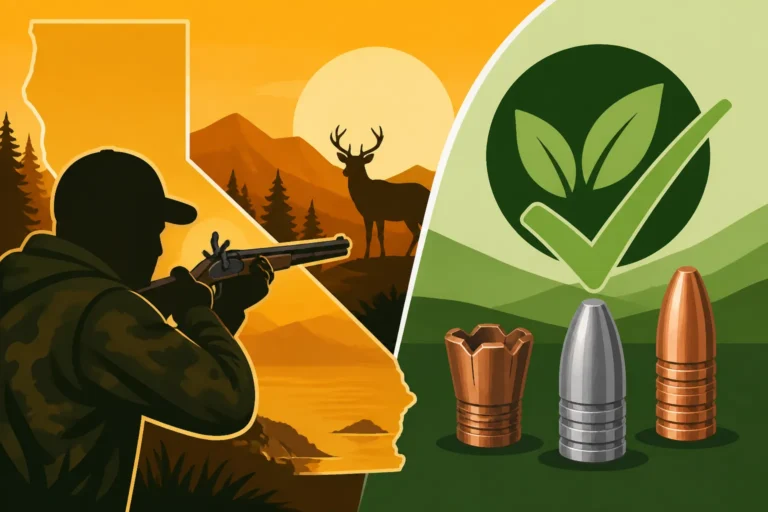
California has a statewide non-lead ammunition requirement for all hunting. This means that if you're hunting bear with a rifle or shotgun, you absolutely cannot use lead bullets or shot. This law, enacted to protect scavenging wildlife like the California condor from lead poisoning, applies throughout the entire state. For rifle hunters, this primarily means using copper-alloy bullets. For shotgun hunters targeting small game or predatory species that might coincide with bear season, steel or bismuth shot would be the alternative.
The transition to non-lead can sometimes involve a bit of re-learning for hunters accustomed to traditional lead rounds. Copper bullets often behave differently; they typically retain more weight, expand differently, and can have different ballistic coefficients. It is imperative that you test multiple brands and bullet weights of non-lead ammunition in your specific rifle to find what shoots most accurately. What shoots well in your friend's .30-06 might not be ideal in yours. You can explore this topic further with Choosing Non-Lead Rifle Ammunition in California.
It's also worth noting that non-lead ammunition can sometimes be more expensive and, depending on market conditions, harder to find. Plan ahead! Purchase your ammunition well in advance of the season, and give yourself plenty of time at the range to zero your rifle with your chosen non-lead load. Confidence in your ammunition's accuracy is paramount for a clean, ethical harvest.
Caliber Choices for Black Bear
Black bears are tough animals, solid and muscled, requiring a cartridge with sufficient energy and a well-constructed bullet to ensure a quick, humane kill. While bears aren't bulletproof, you want to ensure your chosen caliber and bullet combination can penetrate heavy bone and vital organs effectively.
Popular and effective calibers for California black bear include:
- .30-06 Springfield: A classic choice, offering excellent versatility and power with a wide range of non-lead bullet options.
- .308 Winchester: Compact, accurate, and powerful, the .308 is a favorite for good reason and performs admirably on bear.
- 6.5 Creedmoor: Gaining immense popularity, the 6.5 Creedmoor, when loaded with appropriate non-lead bullets, delivers excellent long-range accuracy and sufficient energy for black bear.
- .270 Winchester: Another proven performer, the .270 with a good non-lead bullet is perfectly capable for bear.
Bullet construction is just as important as caliber. Look for copper bullets designed for controlled expansion and deep penetration. Examples include monolithic copper designs from manufacturers that consistently perform well on game. Avoid light, frangible bullets that might break up on heavy bone. Your goal is a through-and-through shot that creates maximum damage to vital organs.
Practice shooting from field positions – kneeling, sitting, off a tripod or pack – not just from a bench. Bears rarely stand perfectly still at a shooting range. Understand your rifle's capabilities and, more importantly, your own. Knowing your effective range in a calm, controlled environment is one thing; making that shot after a strenuous stalk with your heart pounding is another.
Archery Setups for Close-Range Encounters
For the archery hunter, spot-and-stalk bear hunting represents the pinnacle of close-range challenge. It demands exceptional stealth, patience, and precise shot placement. Your bow setup needs to be perfectly tuned for accuracy and deliver enough kinetic energy to penetrate deeply.
- Draw Weight: Ensure your bow's draw weight is set to a poundage you can comfortably and accurately hold for an extended period, even under pressure. While there are legal minimums for draw weight in California, focus on what you can shoot consistently.
- Arrow Build: A heavier arrow typically carries more kinetic energy and momentum, which is beneficial for penetrating the tough hide and dense bone of a bear. Aim for an overall arrow weight that provides good FOC (Front of Center) balance for stable flight.
- Broadhead Selection: This is critical. Fixed-blade broadheads are often favored by bear hunters for their reliability and deep penetration, especially if you anticipate hitting bone. Mechanical broadheads can also be effective if they are robustly designed for large game and can withstand heavy impacts without failing. Test your broadheads extensively before the season to ensure they fly true with your field points. Best Broadhead for California Blacktail can give you insights into selection for similar tough game.
- Practice, Practice, Practice: Archery hunting requires consistent practice, not just at static targets, but at varying distances, angles, and from different field positions. A bear might appear suddenly, requiring a quick, quiet draw and shot. Practice these scenarios. Understand bear anatomy and shot placement for bears, which can be different from deer due to their heavy bone structure and thick fat layers.
Successful archery bear hunting hinges on impeccable form, a finely tuned setup, and the mental fortitude to execute a perfect shot when the opportunity finally arises, often at very close range.
Navigation, Safety, and Miscellaneous Gear
Beyond the core hunting gear, there's a host of other equipment that can make or break your bear hunting experience in California. These items enhance your safety, improve your efficiency, and ensure you're prepared for the unexpected, which is almost always a part of backcountry hunting. Neglecting these details can lead to difficult situations or even dangerous outcomes.
GPS and Mapping for Remote Country
California's public lands are vast and often remote, with complex terrain. Getting lost is not just a nuisance; it can be life-threatening. A reliable GPS device or a mapping app on your smartphone is absolutely critical. Modern hunting apps like GoHunt offer incredible detail with satellite imagery, public/private land boundaries, and topographical maps, allowing you to mark waypoints, track your movement, and navigate confidently. These apps can even show you animal activity hotspots or good glassing points.
However, don't rely solely on electronics. Batteries die, signals drop, and screens crack. Always carry a physical map of your hunting area and a compass. Know how to use them, even if it's just as a backup. Before you head out, download offline maps to your phone app, as cell service is often non-existent in remote bear country. Using a tool like GoHunt to scout and plan your routes beforehand, dropping pins for potential water sources, ridge crossings, or escape routes, can significantly increase your efficiency and safety in the field. Best GPS App for California Public Land provides more detailed advice on this topic.
Knowing your position relative to roads, trails, and public land boundaries is vital. Many D-zones and X-zones in California are patchwork quilts of public and private land, and inadvertently trespassing is a serious offense. Regularly checking your map and GPS helps you stay aware of your surroundings and avoid problems.
Bear Safety Essentials
While black bears are generally shy and not aggressive, encountering one, especially at close range, can be startling. If you harvest a bear, you'll also be dealing with a large carcass in bear country. Therefore, specific bear safety measures are prudent:
- Bear Spray: Carry bear spray on your hip or chest rig, not buried in your pack. It should be easily accessible. Know how to use it. While encounters are rare, a surprised bear, or a sow with cubs, could react defensively.
- Food Storage: If you're camping, properly store all food and scented items in bear-resistant containers or hung from a tree well away from your camp. This prevents bears from becoming habituated to human food, which can lead to dangerous encounters.
- Situational Awareness: Always be aware of your surroundings. Look for fresh tracks, scat, or rubbed trees. Make noise when moving through dense cover to avoid surprising a bear.
- First Aid Kit: A comprehensive first-aid kit is a must for any backcountry hunt. It should include items for cuts, scrapes, blisters, sprains, and any personal medications. Knowing basic wilderness first aid can save a life.
- Satellite Communicator: For truly remote areas, a satellite messenger or personal locator beacon (PLB) can be a lifesaver. These devices allow you to send emergency messages even without cell service, providing peace of mind for you and your loved ones.
Field Dressing and Meat Care Tools
Harvesting a bear is only half the battle; ensuring the meat is properly cared for is the other. Bears, especially in warmer early seasons, can spoil quickly. You need the right tools and knowledge for efficient field dressing and meat preservation.
- Sharp Knives and a Bone Saw: Carry at least two sharp knives (one for rough work, one for finer cuts) and a small, lightweight bone saw for quartering. A knife sharpener is also invaluable.
- Latex Gloves: Always wear latex or nitrile gloves when field dressing to protect yourself from potential diseases and keep your hands clean.
- Game Bags: Bring plenty of breathable, high-quality game bags. These protect the meat from flies, dirt, and debris while allowing it to cool. Avoid plastic bags, which trap heat and accelerate spoilage.
- Cooling Strategies: Once the bear is field dressed and quartered, the priority is to cool the meat as quickly as possible. Hang the quarters in the shade, allow air circulation, and if hunting in hot weather, consider packing out immediately with dry ice or frozen water bottles in your cooler. Field Dressing a Deer in Hot Weather provides similar principles applicable to bears.
- Reporting: Remember to report your bear harvest to the California Department of Fish and Wildlife (CDFW) as required.
This combination of essential gear, planning, and safety practices ensures that your California bear hunting experience is not only successful but also responsible and memorable.
Essential Gear Checklist for California Bear Hunting
To help you get organized, here’s a quick rundown of the essential gear categories and key items you'll want to consider for your spot-and-stalk bear hunt in California.
| Category | Key Items | Considerations |
|---|---|---|
| Licenses & Permits | California Hunting License, Bear Tag, Hunter Education Proof | Always carry physical copies and photo ID. Understand all regulations before hunting. |
| Optics | 10×42 or 10×50 Binoculars, Binocular Harness, Spotting Scope (20-60x or higher), Spotting Scope Tripod, Angle-Compensating Rangefinder | Quality optics are critical for spotting and judging bears. Stability (tripod) enhances performance. |
| Footwear | Waterproof, High-Ankle Support Boots, Quality Merino Wool Socks (multiple pairs) | Break in boots well in advance. Prioritize comfort and protection against varied terrain. |
| Clothing | Moisture-Wicking Base Layers, Insulating Mid-Layers (fleece/puffy), Waterproof/Breathable Outer Shell, Durable Camouflage Pants & Jacket, Wide-Brimmed Hat, Gloves | Layering is key for California's unpredictable weather. Quiet, durable fabrics are essential for stealth. |
| Packs & Hydration | Day Pack (2000-4000 ci) or Hauling Pack (5000+ ci), Water Bladder (2-3L+), Water Bottle, Water Filter/Purification Tablets, Electrolyte Supplements | Choose pack size based on hunt duration/meat hauling. Hydration is vital; plan for water sources and purification. |
| Weapon System | Rifle (e.g., .30-06, .308, 6.5 Creedmoor) with Non-Lead Ammunition OR Bow with Heavy Arrows & Robust Broadheads, Scope/Sight, Sling | Must comply with California's non-lead ammo law. Practice extensively with your chosen setup and ammunition. |
| Navigation | GPS Device / Smartphone with Offline Mapping App (e.g., GoHunt), Physical Topographical Map, Compass, Power Bank for Electronics | Essential for safety and preventing trespass. Redundancy is key; don't rely on a single device. |
| Safety | Comprehensive First-Aid Kit, Bear Spray (easily accessible), Satellite Communicator/PLB, Headlamp with Spare Batteries, Whistle | Always be prepared for emergencies and unexpected overnight stays. |
| Field Processing | Sharp Knives, Bone Saw, Latex Gloves, Breathable Game Bags, Paracord/Rope (for hanging meat) | Critical for ethical harvest and meat preservation, especially in warmer conditions. |
| Miscellaneous | Fire Starter, Sunscreen, Lip Balm, Multi-tool, Small Repair Kit (duct tape, zip ties), Trash Bags, Food/Snacks | Small items can make a big difference in comfort and preparedness. |
This comprehensive list, combined with a thorough understanding of your hunting area and a commitment to practice, will set you up for success in California's challenging and rewarding bear country.
Spot-and-stalk bear hunting in California is an adventure that tests your physical limits, mental grit, and hunting prowess. The vast, rugged landscapes and the elusive nature of black bears make it a truly challenging pursuit. But with the right gear, meticulously chosen for the unique demands of California's diverse terrain and unpredictable weather, you'll be well-prepared to face those challenges head-on. Take the time to research, invest in quality equipment, and most importantly, practice with your gear. Your preparation is what will ultimately lead to a safe, successful, and ethical hunt. Remember, every piece of gear, from your heavy-duty boots to your trusted rangefinder, plays a crucial role in your journey.
Disclaimer
This article is for general informational purposes only and does not constitute professional advice. Laws, prices and regulations vary by location and change over time. Consult a qualified professional for guidance on your specific situation.