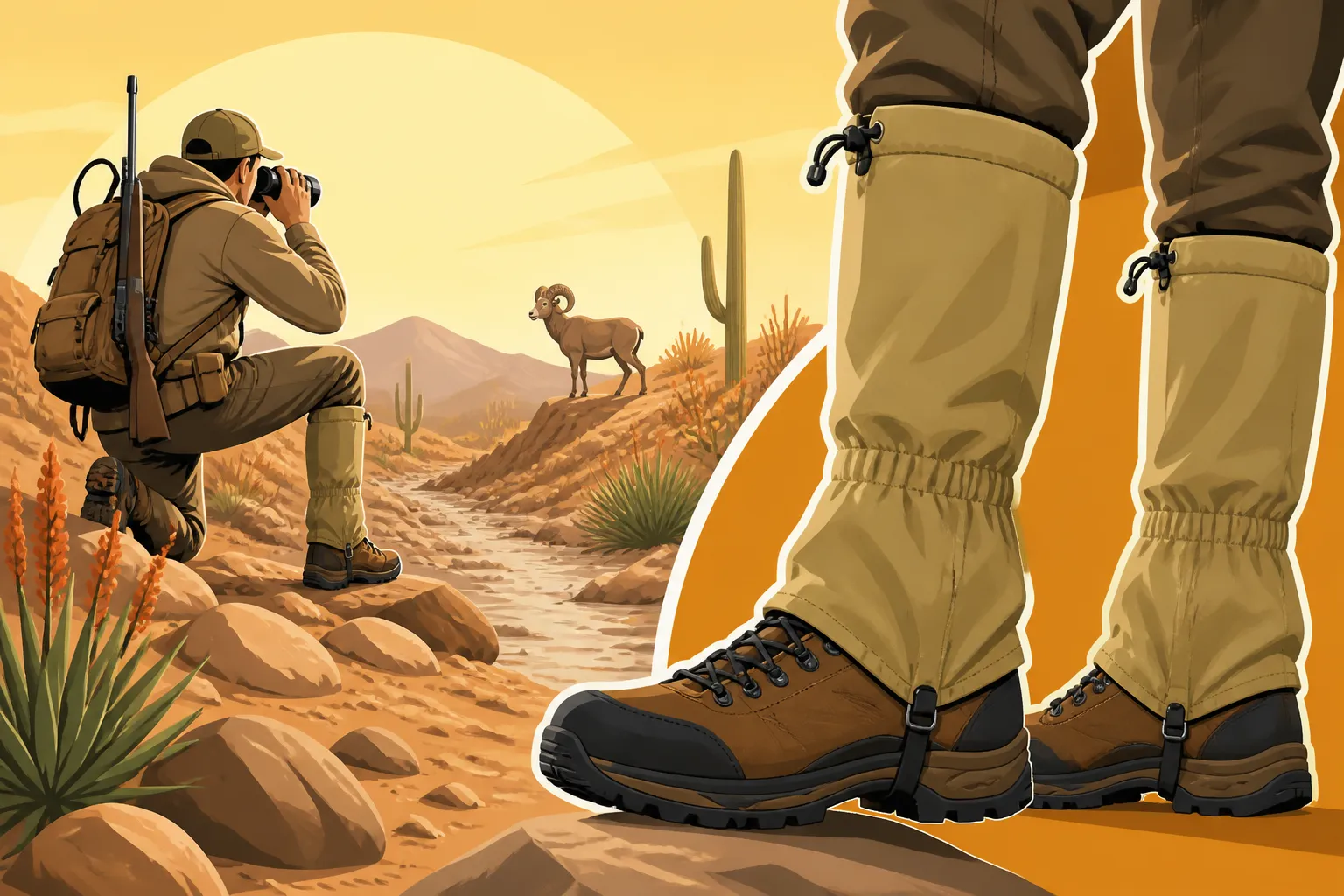
Best Gaiters for Desert Wash Hunting
Venturing into California's vast and often unforgiving desert washes for a mule deer or wild pig hunt presents a unique set of challenges. One moment you're traversing loose sand, the next you're pushing through sharp, thorny vegetation or scaling rocky outcrops, all while trying to keep annoying sand, burrs, and even venomous critters out of your boots and off your socks. This guide will walk you through choosing the best gaiters specifically designed to protect you and enhance your comfort when hunting these demanding desert environments.
Why Gaiters Are Essential for California Desert Wash Hunting
When you picture hunting in California, many folks immediately think of towering pines and lush coastal forests. But head out to the sprawling Bureau of Land Management (BLM) lands or national forests in the Mojave or Colorado deserts, and you’re in a whole different world. The terrain is often an incredible mix of loose sand, sharp gravel, jagged rocks, and surprisingly dense, thorny chaparral. This isn't just about comfort; it's about safeguarding your feet, your gear, and ultimately, your hunt.
Protection from Abrasive Terrain and Debris
Imagine walking miles through a dry wash, the kind where every step kicks up fine, gritty sand that seems to find its way into every crevice. Then you transition to a rocky section, where sharp-edged stones constantly threaten to abrade your boot laces or even tear at the fabric of your pants. Without gaiters, your boots and the bottom of your pant legs take a beating, shortening their lifespan considerably. More importantly, those tiny bits of sand and gravel that inevitably work their way into your boots can quickly lead to painful blisters, turning a promising hunt into a grueling march back to the truck. Gaiters act as a crucial barrier, preventing this constant ingress of debris and protecting your expensive hunting boots from premature wear and tear.
Beyond the grit, desert washes are often choked with incredibly tough, thorny plants like creosote bush, mesquite, and various types of cactus. These aren't just annoying; their thorns can be surprisingly long and sharp, easily puncturing regular pant fabric and scratching your legs. Gaiters, especially those made from robust materials, create an impenetrable shield against these botanical defenses. This means you can push through denser cover with confidence, knowing your shins and ankles are protected, allowing you to access those hidden pockets where game might be bedding. It's about maintaining your focus on the hunt, not on dodging every sharp sticker.
Consider a hunt deep into the Cady Mountains or out near the Carrizo Plain, where you're covering vast distances, often off-trail. You might be following game trails that disappear into thickets, or traversing a steep, gravelly slope. In these scenarios, the constant friction and impact from the environment would quickly degrade standard hunting pants and boots. Gaiters, with their reinforced construction, absorb this punishment, acting as sacrificial armor for your primary clothing and footwear. This extended durability is a significant advantage, especially on multi-day excursions where gear failure isn't an option.
Defense Against Creepy Crawlies
The desert is home to some incredible wildlife, and unfortunately, some of it has a bite or a sting you'd rather avoid. Rattlesnakes are a very real concern when you're Hunting California's BLM Desert Land, especially when you're pushing through thick brush or stepping over downed logs in a wash. While no gaiter can guarantee 100% protection against a determined snakebite, many heavy-duty desert gaiters offer an additional layer of material that can significantly mitigate the risk. This extra defense can mean the difference between a scary encounter and a potentially life-threatening emergency, especially in remote areas where medical help is hours away.
It's not just the big stuff either. Ticks, scorpions, and various biting insects are all part of the desert ecosystem. Ticks are notorious for latching onto pant legs and then crawling upwards, seeking bare skin. Scorpions, particularly small ones, can hide in leaf litter or under rocks, and a surprise sting when you brush against something can be incredibly painful. Gaiters seal off the vulnerable gap between your boot tops and pant cuffs, creating a physical barrier that makes it much harder for these unwelcome hitchhikers to access your skin. This simple piece of gear contributes significantly to peace of mind, allowing you to concentrate on the hunt rather than constantly checking for crawlies.
Think about glassing a remote canyon for a bedded buck, perhaps after following a game trail into a rocky crevice. Your concentration is solely on the optics, but your lower legs are exposed to whatever might be lurking in the shadows. With gaiters, you have that added layer of reassurance. It's not about being fearless, but about taking smart precautions. This is especially true when setting up a temporary blind or resting against a rock, where you might inadvertently disturb a hidden critter. The barrier gaiters provide is invaluable in these situations, helping you avoid painful surprises that could cut your hunt short.
Keeping Dust and Sand Out of Your Boots
This is arguably one of the most immediate and frustrating problems desert hunters face. That fine, powdery desert dust, along with loose sand, has an uncanny ability to infiltrate even the most tightly laced boots. Once it's in, it creates friction, irritates your skin, and can lead to hot spots and blisters faster than you can say "mule deer." Anyone who's spent a long day walking in sandy washes knows this particular misery all too well. Gaiters create a snug, protective seal over the tops of your boots, effectively preventing this insidious intrusion.
The constant scraping of fine sand against your socks and skin inside your boots is more than just uncomfortable; it's a serious impediment to long-term mobility. Even if you manage to avoid immediate blisters, that constant irritation can wear you down, affecting your focus and endurance. Gaiters eliminate this problem almost entirely, allowing your feet to remain clean and relatively free from abrasive particles. This means your expensive, specialized Desert Boots for California BLM Wash Hunting can perform their job without being compromised by environmental factors.
Consider a multi-day backcountry hunt where you have limited opportunities to clean out your boots. Every grain of sand that gets in accumulates, making the problem worse with each passing hour. With a good pair of gaiters, your boots stay cleaner, your socks stay cleaner, and your feet stay happier for longer. This small investment in gear can make a massive difference in your overall comfort and ability to cover ground effectively, especially when you're far from the trailhead and every step counts. For serious desert hunters, gaiters are just as important as a good map and plenty of water.
Key Features to Look for in Desert Gaiters
Not all gaiters are created equal, especially when it comes to the specific demands of desert wash hunting. The temperate forest gaiter designed for dew and light brush won't cut it against a spine-riddled cholla cactus or relentless abrasive sand. Knowing what features to prioritize will ensure you get a pair that truly performs when you're miles from anywhere, stalking game in rugged California desert country.
Material Durability and Breathability
The desert environment is tough on gear. You need materials that can withstand constant abrasion from rocks, resist punctures from thorns, and yet still allow your feet and lower legs to breathe in often scorching temperatures. Look for gaiters made from rugged fabrics like heavy-denier nylon, Cordura, or reinforced polyester. Many premium gaiters will feature a heavier, more puncture-resistant material around the lower ankle and instep where contact with sharp objects is most frequent, often paired with a lighter, more breathable fabric higher up. This dual-material design is key to balancing protection with comfort.
While durability is paramount, breathability cannot be overlooked. Hunting in desert conditions often means high temperatures, and trapping all that heat and sweat around your lower legs is a recipe for discomfort and chafing. Look for gaiters that explicitly mention breathable membranes or designs, even if they are heavy-duty. Some gaiters incorporate mesh panels or a looser weave higher up to facilitate airflow. Remember, even in the cooler mornings, you'll be exerting yourself, and sweat management is crucial. A good gaiter will help wick moisture away, preventing that clammy feeling that can contribute to skin irritation.
The overall construction also plays a role. Reinforced stitching, especially at stress points like the instep strap and front closure, will significantly extend the lifespan of your gaiters. A common failure point can be the attachment where the instep strap meets the gaiter fabric. Brands like GoHunt often highlight these construction details in their gear reviews, pointing out where a product stands up to real-world abuse. Investing in gaiters with high-quality materials and robust construction upfront will save you money and frustration in the long run.
Fastening Systems and Fit
A gaiter is only effective if it stays securely in place and provides a tight seal around your boot and calf. The fastening system is critical here. Most gaiters feature a combination of a front closure (usually velcro or zippers, sometimes both), an instep strap that runs under your boot, and a top closure (drawstring, buckle, or elastic) around your calf. For desert hunting, a robust instep strap made from durable Hypalon or a reinforced synthetic material is crucial. Thin nylon straps can fray or cut easily on sharp desert rocks, leading to failure mid-hunt.
The front closure needs to be secure and easy to operate, even with gloves on. Velcro is common, offering quick adjustments and a strong seal, but it can sometimes collect burrs or degrade over time. Zippers, often covered by a velcro flap for extra protection, offer a very secure closure but can be prone to jamming if dirt gets into the teeth. Some gaiters use a combination, offering the best of both worlds. Whatever the system, test it for ease of use and durability. You don't want to be fumbling with a flimsy clasp when you're trying to quietly navigate a tricky section of terrain.
Fit is just as important as the fastening system. Gaiters should fit snugly but not restrictively over your boots and lower legs. Too loose, and they'll slide down, allowing debris in. Too tight, and they can cut off circulation or be uncomfortable, especially when moving dynamically. Many gaiters come in different sizes, and some offer adjustable straps to fine-tune the fit. If possible, try them on with the specific Boots and Clothing for California's Varied Terrain you plan to wear for your desert hunt. A well-fitted gaiter moves with you, becoming an almost unnoticeable extension of your leg and boot.
Height and Coverage
The height of your gaiter determines how much of your lower leg is protected. For desert wash hunting, where you're dealing with tall grasses, thick brush, and potentially deeper sand or mud after a rare rain, a mid-calf or full-height gaiter is generally recommended. Shorter ankle gaiters might be fine for manicured trails, but they won't offer sufficient protection against the array of hazards found in California's arid regions. A taller gaiter protects more of your pants from abrasion and provides a greater barrier against thorns, burrs, and those sneaky crawlies mentioned earlier.
Consider the type of vegetation you expect to encounter. If you're hunting areas known for dense, thorny scrub like buckhorn cholla or catclaw acacia, a taller gaiter provides invaluable protection. It prevents those aggressive thorns from snagging on your pant legs or scratching your calves. This extra coverage also helps keep your pant cuffs from riding up, maintaining a consistent seal over your boots. On a long day, every bit of protection that prevents a minor annoyance from becoming a major discomfort adds up.
While full-height gaiters offer maximum protection, they can sometimes feel warmer in extremely hot conditions. It’s a trade-off, but for desert washes, the benefits of increased coverage often outweigh the slight increase in warmth. However, some manufacturers are now designing lighter, full-height options with better ventilation to address this. Always match the gaiter height to the expected conditions and hazards of your specific hunting area, but when in doubt in the desert, lean towards more coverage.
Choosing the Right Gaiter for Your Hunt Style
Selecting the perfect pair of gaiters isn't a one-size-fits-all endeavor. Your choice should be influenced by the specifics of your hunt: how long you'll be out, how rugged the terrain is, and what kind of footwear you'll be sporting. Tailoring your gaiters to your hunting style ensures maximum effectiveness and comfort.
Lightweight Options for Fast and Light Hunts
If your desert hunting strategy involves covering a lot of ground quickly, perhaps pursuing fast-moving coyotes across flat expanses or Hunting a BLM Desert Wash for Mule Deer with a minimal pack, then lightweight gaiters are your friend. These are typically made from lighter-denier nylon or breathable synthetic blends. They prioritize minimal bulk and weight, making them almost unnoticeable while you're on the move. Their primary role is to keep dust, sand, and small pebbles out of your boots, and offer light protection against low-lying brush and grass seeds.
While they might not offer the same puncture resistance as their heavy-duty counterparts, their breathability and lack of bulk are significant advantages when you're pushing hard in warm temperatures. They often feature simpler fastening systems, such as hooks for your boot laces and a single instep strap, making them quick to put on and take off. This efficiency is key when every minute counts, and you're trying to stay mobile and agile. They are excellent for day hunts or short overnight trips where extreme ruggedness isn't the top concern.
However, be realistic about their limitations. These lighter gaiters won't stand up to aggressive encounters with dense, thorny chaparral or provide much defense against a snake strike. They are designed for speed and comfort in moderately challenging desert environments. If you expect to traverse truly gnarly terrain, consider whether the trade-off in protection is worth the weight savings. For checking trail cameras or scouting relatively open areas, they are perfect.
Heavy-Duty for Rougher, Multi-Day Trips
When your desert hunt takes you deep into the backcountry for multiple days, across extremely rugged canyons, or through dense, unforgiving thorn thickets, you'll want to reach for heavy-duty gaiters. These are built like tanks, using robust materials like Cordura or reinforced nylon, often with additional layers or coatings for enhanced abrasion and puncture resistance. Their purpose is uncompromising protection, even if it means a slight increase in weight and bulk.
These gaiters excel at providing a fortress-like barrier against everything the desert can throw at you: sharp rocks, aggressive thorns, and even potential snake encounters. Many heavy-duty models will feature sturdy metal hooks for boot laces, wide and durable Hypalon instep straps, and comprehensive velcro or zippered closures that are virtually impervious to debris. They are designed to withstand days, if not weeks, of relentless abuse without showing signs of failure, which is crucial when you're far from any resupply point.
While they might feel a bit warmer or heavier than lightweight options, the peace of mind and protection they offer on a demanding, multi-day Hunting California's Sierra Nevada Backcountry or deep desert adventure is invaluable. They'll keep your expensive boots and pants from being shredded, and more importantly, they'll keep your legs safe and comfortable, allowing you to maintain focus and endurance throughout your grueling journey. Think of them as essential armor for serious desert expeditions, a non-negotiable part of your gear list alongside your Best Backpack Frame for Quartered Elk.
Considerations for Different Footwear
The type of boots you wear will also influence your gaiter choice. Most hunting boots, from lightweight hiking boots to heavy-duty mountain boots, are designed to accommodate standard gaiter instep straps. However, there are nuances. If you're wearing very low-cut hiking shoes for a quick, fast-paced scout, an ankle-height gaiter might be all you need, but still consider the potential for debris ingress in washes. For traditional mid-to-high ankle hunting boots, which are common in the desert, most mid-to-full height gaiters will integrate seamlessly.
When using insulated boots for colder late-season desert hunts (yes, the desert can get surprisingly cold!), ensure the gaiter's top opening is wide enough to fit comfortably over the bulkier calf area. Similarly, if your boots have very aggressive tread patterns, make sure the instep strap of the gaiter doesn't get excessively worn or caught. Some gaiter designs have a more integrated look that works better with certain boot profiles. If your boots have D-rings or lace hooks on the toe, many gaiters offer a small metal hook that attaches there, providing an even more secure fit.
Ultimately, the best way to determine compatibility is to try your chosen gaiters on with the actual boots you'll be hunting in. Walk around, squat, and simulate typical hunting movements to ensure there are no pinch points, no areas where the gaiter rides up, and that the instep strap remains secure and doesn't interfere with your stride. This simple test can prevent discomfort and gear issues when you're out in the field. GoHunt's extensive gear reviews often test various gaiters with different boot types, providing excellent insights.
Maintenance and Longevity of Your Gaiters
Gaiters are tough, but they're not indestructible. Like any piece of essential hunting gear, a little care goes a long way in ensuring they last season after season. Neglecting them can lead to premature wear, failed fasteners, and a lot of frustration when you need them most.
Cleaning and Care in the Field
It's easy to just toss your dusty gaiters in the back of the truck after a long day in the desert, but a quick field clean can make a big difference. Before packing them away or heading home, take a moment to shake off any loose sand, dust, or dirt. Use a stiff brush or even a small stick to gently scrape off any caked-on mud or burrs. Pay particular attention to the Velcro closures, as they can quickly become clogged with debris, reducing their effectiveness.
If you encounter any moisture, either from dew or a rare desert rain, try to let your gaiters air dry as much as possible before folding them up. Storing them wet or damp can lead to mildew, which not only smells bad but can also degrade the fabric over time. A quick wipe-down with a damp cloth can remove stubborn dirt, but avoid harsh chemicals that might damage waterproof coatings or fabric integrity. The goal is to remove the abrasive elements and ensure they are dry before prolonged storage.
Always inspect the instep strap for any nicks or fraying after each hunt, especially if you've been navigating rocky terrain. This is often the first component to show wear. If you spot a minor issue, addressing it immediately can prevent a complete failure. Having a small repair kit, even just some strong tape like Tenacious Tape, in your pack can be a lifesaver for field repairs, allowing you to finish your hunt comfortably.
Storage and Repair
When the season's over or you know you won't be using your gaiters for a while, proper storage is crucial. Ensure they are thoroughly cleaned and completely dry before storing them. Hanging them up in a cool, dry place, away from direct sunlight, is ideal. Avoid stuffing them into a cramped gear bag where they might be creased or crushed, especially if they have rigid components. Sunlight can degrade synthetic fabrics over time, so keep them out of direct UV exposure during storage.
For minor tears or abrasions, many gaiters can be repaired. Fabric repair kits with adhesive patches designed for outdoor gear work well for tears in the main body of the gaiter. If the instep strap starts to fray or break, some manufacturers offer replacement straps, which can extend the life of your gaiters considerably. Learning basic sewing skills can also be invaluable for repairing stitching that comes loose. Don't be afraid to mend your gear; it's a badge of honor for a dedicated hunter.
It's also a good idea to periodically check the DWR (Durable Water Repellent) coating on your gaiters if they have one. While desert hunting isn't typically wet, a DWR coating can help shed light rain or dew and prevent mud from sticking. If water is no longer beading up, you can reapply a spray-on DWR treatment designed for outdoor fabrics. This simple step can restore some of their original performance and extend their usefulness.
When to Replace Your Gaiters
Even with the best care, gaiters won't last forever. There comes a point when repairs become too frequent, or the material itself has simply worn out. Obvious signs include large holes or significant thinning of the fabric that compromises protection against thorns and abrasion. If the instep straps are constantly breaking or the buckles no longer hold securely, it's probably time for a new pair. A gaiter with a compromised fastening system is useless, as it won't stay in place.
Another indicator is if the gaiters no longer provide an effective seal against debris. If you find yourself consistently dumping sand or burrs out of your boots despite wearing gaiters, their fit might have degraded, or the elastic/closures are no longer doing their job. Repeatedly getting wet feet from dew or light rain also suggests the waterproofing or DWR is gone, and the material might be too degraded to effectively re-treat.
Ultimately, your safety and comfort are paramount. If your gaiters are no longer reliably protecting you from the hazards of California's desert washes, it’s a sign to invest in a new pair. Think of it as investing in the success and enjoyment of your future hunts. Checking gear reviews on sites like GoHunt can often give you an idea of typical lifespan and help you decide when it's time to upgrade. A fresh, reliable pair of gaiters can make all the difference in a challenging desert environment.
| Gaiter Feature | Lightweight Desert Gaiter | Heavy-Duty Desert Gaiter |
|---|---|---|
| Primary Use | Fast & light scouting, day hunts, open terrain | Multi-day backcountry, dense brush, rocky terrain |
| Material | Lighter denier nylon, breathable synthetic blends | Heavy denier Cordura, reinforced polyester, Hypalon |
| Puncture Resistance | Moderate (for light brush, grass seeds) | High (for thorns, sharp rocks, increased snake defense) |
| Weight/Bulk | Minimal, highly packable | Moderate to high, robust |
| Breathability | Very good, prioritizes ventilation | Good, with focus on durability (may feel warmer) |
| Fastening System | Boot lace hook, simple instep strap, velcro/elastic top | Metal lace hook, robust Hypalon strap, full velcro/zip closure |
| Height | Ankle to mid-calf | Mid-calf to full height |
| Debris Seal | Good against dust/sand | Excellent against all debris |
| Durability | Good for intended use | Excellent, built for extreme conditions |
Disclaimer
This article is for general informational purposes only and does not constitute professional advice. Laws, prices and regulations vary by location and change over time. Consult a qualified professional for guidance on your specific situation.