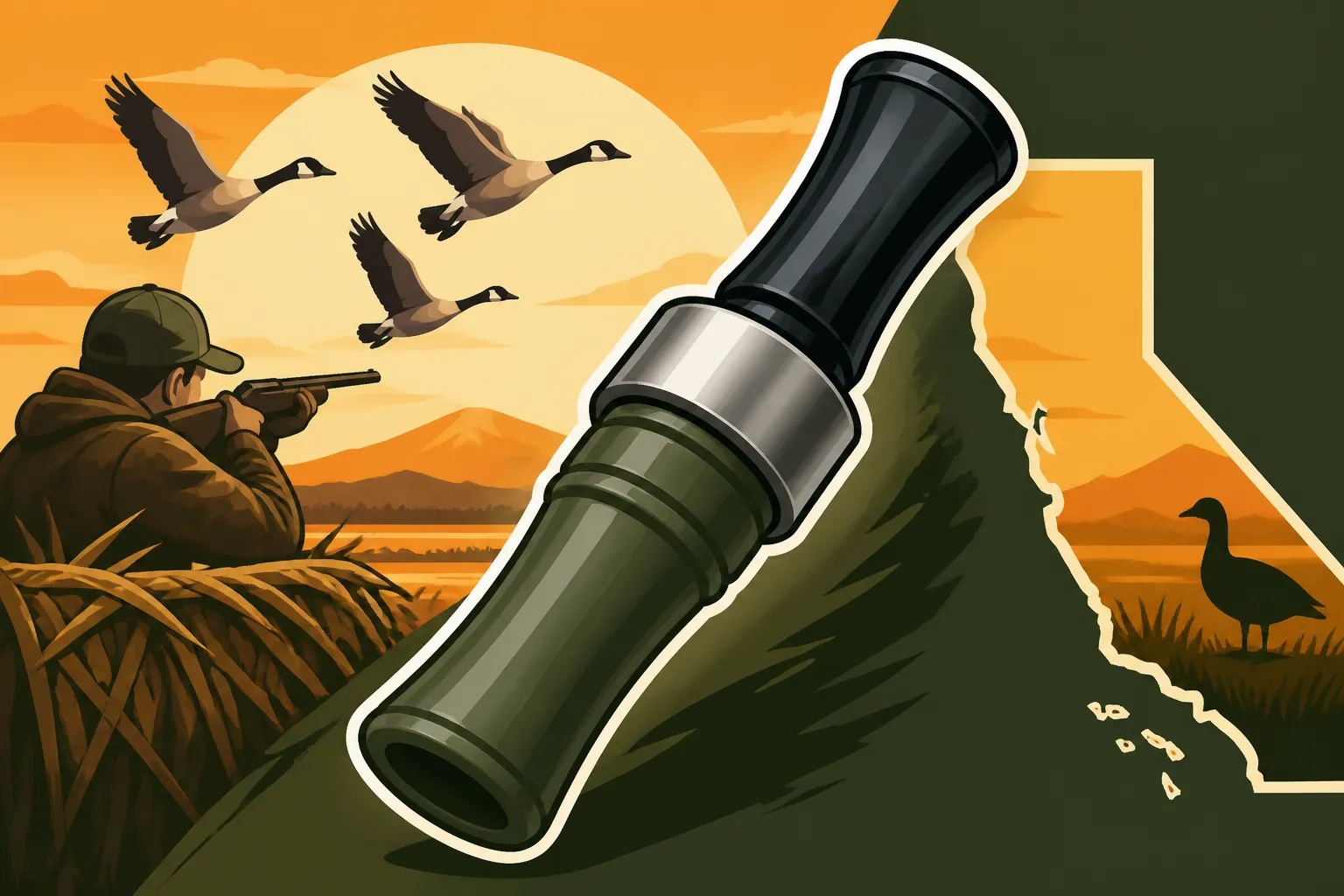
Best Goose Call for Pass-Shooting
There’s nothing quite like the sight of a distant line of geese, high in the sky, maybe glinting off the winter sun, that you just know are heading your way – or at least in the general vicinity. But convincing those wary birds to swing within shooting range when they’re not interested in committing to decoys can feel like trying to hail a taxi in a ghost town. This guide is all about helping you pick and master the best goose call for those challenging pass-shooting scenarios here in California, turning distant specks into close-range opportunities.
Understanding Pass-Shooting Goose Behavior in California
Pass-shooting geese is a unique challenge that sets itself apart from hunting over a full decoy spread. It’s a game of interception, of drawing attention and subtly altering a bird’s flight path just enough to present a shot. In California, particularly in the vast agricultural landscapes of the Central Valley, geese often fly high, covering long distances between roosting and feeding grounds. They've seen it all, and they’re often in a hurry, which means your calling has to be pinpoint and persuasive.
Why Pass-Shooting Demands a Different Calling Approach
When you're hunting over decoys, your goal is to draw birds down, to make them commit fully to landing. Your calls are often intricate, simulating a bustling flock on the ground, inviting them to join the party. But with pass-shooting, you're not necessarily trying to land them. You're trying to get their attention, perhaps make them cup their wings for a second, or even just slightly divert their flight path closer to your position. It's about pulling them within range as they fly past, not to. This means a focus on volume, clarity, and calls that convey urgency and interest from afar, rather than comfortable contentment. It's a much more aggressive and attention-grabbing style of calling.
The birds you're targeting are often high, sometimes out of comfortable shotgun range, and certainly too high to see your subtle decoy spread, if you even have one. They're relying purely on sound. Think of it like trying to get someone's attention from across a noisy stadium; you need to project and cut through the ambient noise, not just whisper sweet nothings. The calls you use for pass-shooting need to carry farther and hold a goose's attention for a longer duration as they cover ground. This fundamentally changes the type of call and the calling cadence you’ll employ compared to a decoying scenario.
Common Goose Species and Their Vocalizations for Pass-Shooting
In California, you'll primarily be pass-shooting three main goose species: Snow geese, Ross's geese, and Greater White-fronted geese (often called Specklebellies). Each has distinct vocalizations that require specific calls. Snows and Ross's, for example, have a high-pitched "honyk" or "whistle" that can sometimes sound like a dog toy. They often fly in massive, chaotic gaggles, and their sheer numbers can make it tough to get individual birds to respond. Your call needs to mimic this frenetic energy and often the high-pitched "feeding chatter" to grab their attention from high altitudes.
Specklebellies, on the other hand, have a much different, more distinct "ka-lunk" or "kuh-lunk" call. It's a two-note call, often described as sounding like a laugh, and it's imperative to get this rhythm and tone right. These birds are notoriously wary and their smaller flock sizes mean every call counts. They're intelligent and often respond to realism, so a versatile call that can accurately replicate their distinctive voice is key. For more on the different goose populations we see, check out California Waterfowl on the Pacific Flyway. Understanding these vocal differences is the first step in choosing the right call.
Reading the Wind and Flight Paths for Effective Calling
Knowing when and where to call is just as crucial as having the right call. Geese are masters of efficiency, and they'll almost always fly with the wind or quartering to it when traveling long distances. This means understanding prevailing wind patterns for your chosen hunting area. If the wind is strong, your calls will carry farther downwind, but birds might also be moving faster, making a quick decision even more critical. Conversely, calling upwind can be tougher as your sound doesn't travel as far, but birds might be flying slower, giving you more time to work them.
Observing typical flight paths is also vital. Are geese consistently flying over a certain ridge, following a river corridor, or cutting across a particular field edge? Many hunters use tools like GoHunt to scout aerial photos and topographical maps, identifying these natural highways that geese use. Setting up along these established flyways, with the wind at your back if possible, gives your calls the best chance to be heard and to redirect passing birds. Remember, you're trying to intercept them, so positioning yourself where they intend to go, or close to it, is paramount. If you're hunting near a refuge, you'll find similar patterns, as discussed in Pass-Shooting Geese on California's Sacramento Refuges.
Key Features of an Effective Pass-Shooting Goose Call
When you’re staring at a wall of goose calls, it’s easy to get overwhelmed. But for pass-shooting, you’re looking for a very specific set of characteristics. This isn’t about just having a call; it’s about having the right call that can perform under the specific demands of high-flying, wary geese.
Volume and Pitch: Why a Loud, Clear Call is Crucial for High-Flying Birds
The number one feature for a pass-shooting goose call is its ability to project volume. These birds are often hundreds of yards up, or even higher, and the sound needs to reach them clearly through wind and atmospheric conditions. A call that can produce a loud, sharp "honk" or a piercing "whistle" is essential for getting their attention. It's not about being obnoxious; it's about being heard. Many calls designed for decoying are tuned for softer, more realistic close-in sounds, which simply won't cut it when birds are practically in the stratosphere.
Beyond sheer volume, the pitch matters. Higher-pitched calls tend to travel farther and cut through wind noise more effectively, especially for Snow and Ross's geese. For Specklebellies, while the pitch is important, the crispness and realism of the "ka-lunk" are paramount to make it sound like genuine communication rather than just noise. A call that gets muffled or loses its tone at higher volumes is detrimental. You need a call that maintains its clarity and realism even when you're blowing it hard enough to make your lungs burn. This often means a call with a tight bore and a reed system designed for maximum air flow and projection.
Ease of Use and Durability for Field Conditions
A great call is useless if you can't blow it effectively when the moment counts, especially with fast-moving pass-shooting opportunities. You need a call that is responsive and easy to operate with cold fingers, in the dark, or when adrenaline is coursing through your veins. Some calls require a lot of back pressure or intricate hand movements to achieve realism, which is fine for leisurely decoying, but can be a handicap when you need to make a quick, loud series of hail calls. Look for calls that are intuitive and don’t require an advanced degree in acoustics to sound good.
Durability is another non-negotiable factor. California's hunting seasons can expose gear to everything from freezing fog to pounding rain, mud, and gritty dust. A call needs to withstand these elements without cracking, swelling, or losing its tune. Materials like acrylic or high-quality polycarbonate are often preferred over wood for their stability in varying humidity and temperature. Reeds should be robust and securely seated, and the overall construction should feel solid. The last thing you want is a call that malfunctions mid-flight when a perfect line of geese is bearing down on you because it got a little wet or dropped in the mud.
Realism and Versatility
While volume is king, realism is the queen. A loud call that sounds completely unnatural will scare birds off just as effectively as silence. The best pass-shooting calls offer a good balance: they're loud enough to reach distant birds, but realistic enough to convince them. This means the ability to replicate the full range of vocalizations for your target species, from loud hail calls to softer clucks and murmurs that might seal the deal as they get closer. A versatile call can also adapt to different conditions – sometimes you need a piercing high note, other times a deeper, more resonant sound might be what's needed to get a reaction.
Some calls excel at one specific type of goose or one particular sound. While that can be excellent for specialized hunting, for general pass-shooting where you might encounter different species or needs, versatility is a huge advantage. Imagine a mixed flock of Snows and Specklebellies passing by; a call that can pivot between a Snow goose whistle and a Specklebelly 'ka-lunk' with minimal effort is incredibly valuable. Having a range of tones and the ability to control them quickly makes your calling repertoire much more effective and convincing to those wary, high-flying birds. Using a platform like GoHunt to analyze habitat can even give you clues as to what species you might encounter most frequently in an area, helping you pick a versatile call or a species-specific one.
Types of Goose Calls Best Suited for Pass-Shooting
Given the unique demands of pass-shooting, not all goose calls are created equal. Different designs excel at different aspects, and understanding these distinctions will guide you to the right choice for your California hunting adventures.
Short-Reed Calls and Their Advantages
Short-reed calls are arguably the most popular and versatile choice for goose hunters today, and for good reason. They offer incredible control over tone, pitch, and volume, making them highly adaptable. For pass-shooting, a well-tuned short-reed call can produce piercing, high-volume hail calls that reach distant birds, followed by quick, realistic clucks and moans to keep their attention as they approach. Many short-reed calls are designed with a very open bore and a powerful reed system, allowing for maximum projection without sacrificing clarity. This is particularly beneficial for Snow geese and Ross's geese, where the ability to mimic their rapid, often frenzied chatter and high-pitched notes is key.
These calls typically require a bit more practice to master than a flute call, but the payoff in realism and versatility is immense. The ability to "break" the call and transition seamlessly between loud honks, excited clucks, and even murmurs is critical. Good short-reed calls are usually made from durable acrylic or polycarbonate, which holds up well to California's varied weather conditions and provides a crisp, loud sound. If you're serious about mastering goose calling for various situations, including pass-shooting, investing time in a quality short-reed call is almost always recommended. Many brands offer beginner-friendly models that provide excellent sound and responsiveness, allowing you to develop your skills quickly.
Flute Calls and Their Role in Long-Range Attraction
Flute calls are the traditional workhorse for many goose hunters, especially those targeting Canada geese, but they also have a distinct advantage in specific pass-shooting scenarios for Snows or even distant Specklebellies. Their design, which often involves a longer barrel, naturally produces a deeper, more resonant sound that can carry an incredible distance. While they might not offer the same intricate control as a short-reed call for close-in work, their ability to produce loud, drawn-out "honks" and "clucks" with less air pressure makes them excellent for getting the attention of very high or far-off geese.
For hunters who primarily focus on Snow geese pass-shooting, a flute call that can produce the higher-pitched, wailing "ki-ki-ki" sounds of a Snow goose can be incredibly effective at stopping or turning flocks. They are generally easier to learn for beginners compared to short-reed calls, making them a good entry point. While they might not be as dynamic for rapidly changing calls, their consistent, loud projection makes them a fantastic tool for the initial contact with distant birds, acting as a beacon to draw them closer before you might switch to a more nuanced call or try to finish them with a short-reed. You'll often see hunters carrying both types, using the flute for long-range attraction and the short-reed for closer work.
Are Electronic Calls an Option for California Goose Hunting?
This is a crucial point for California hunters: electronic calls for waterfowl are generally prohibited in the state. California has strict regulations regarding the use of electronic devices to aid in hunting, particularly for migratory game birds. For the vast majority of goose hunting scenarios, including pass-shooting, you will need to rely on traditional mouth-blown calls. It’s absolutely vital to be aware of and adhere to these regulations to avoid legal trouble.
However, there is a very specific, limited exception that sometimes applies to snow geese during federal conservation order seasons. These special federal orders are designed to reduce the population of overabundant snow geese and may allow the use of electronic calls, extended shooting hours, and no bag limits for a specific period. But this is not a permanent rule and varies year to year. Hunters must check the current California Department of Fish and Wildlife (CDFW) regulations and federal waterfowl regulations annually to confirm if electronic calls are permissible for snow geese during any specific conservation order season. For all other goose species (Specklebellies, Ross's, Canada geese) and outside of specific conservation orders, electronic calls remain illegal in California for hunting purposes. Always consult the official CDFW regulations before heading afield.
Techniques for Mastering Pass-Shooting Goose Calling
Having the best call in your hand is only half the battle; knowing how to use it effectively is the other, often more challenging, part. Pass-shooting geese requires precise timing, keen observation, and the ability to adapt your calling on the fly.
The "Hail Call" and Its Variations for High Flyers
The hail call is your primary weapon for pass-shooting. This is a loud, attention-grabbing series of calls designed to get the attention of high-flying geese that are far away. For Canada geese, it's typically a series of loud, drawn-out "hhooooonk-hhooooonk-hhooooonk" notes, often rising in pitch. For Snow and Ross's geese, it's a more frenetic, high-pitched "ki-ki-ki-ki" or a series of rapid "whistle-honks," mimicking the chaos of a large, excited flock. The key is volume and repetition. You want to make enough noise to cut through the distance and the wind.
Varying the hail call can also be effective. Instead of a monotonous rhythm, try adding a few quicker clucks or a slightly different pitch within your sequence. Imagine a couple of geese breaking off from the main flock and communicating excitedly – that's the feeling you want to convey. Watch the birds carefully for any reaction: a subtle change in flight path, a head turn, or a slight dip in altitude. As soon as you see a reaction, you can adjust your calling. Sometimes, a single, perfectly timed hail call is all it takes, while other times, a sustained barrage is necessary to pull them out of their determined flight path.
Timing Your Calls for Maximum Impact
Timing is absolutely everything in pass-shooting. Blowing your call too early might grab their attention, but they might lose interest before they're close enough. Blowing too late means they've already flown past your optimal range. The general rule of thumb is to start calling when the birds are just within or just entering your perceived effective range – but remember, they often look closer than they are when they're high up. Many hunters use rangefinders to gauge distances, which can be immensely helpful, especially in open areas.
Once you have their attention, adjust your calling intensity. As the geese approach, you might lessen the volume slightly and try to introduce more realistic feeding chatter or softer clucks, making them feel more comfortable about continuing their approach. If they start to turn away or gain altitude, hit them with another strong hail call to try and pull them back. However, if they commit and are coming straight in, sometimes going quiet and letting your setup (or lack thereof, in pass-shooting) do the work is best. Over-calling can make wary geese suspicious, so learn to read their body language and react accordingly. When hunting big areas like those covered in Waterfowl Hunting California's Central Valley, timing your calls is paramount.
Practice, Practice, Practice
Like any skill, goose calling takes practice. Don't expect to pick up a call and sound like a seasoned pro on your first try. Spend time at home, in your truck, or in the backyard, practicing the different vocalizations. Listen to actual goose calls online or from recordings to get the cadence and tone right. Focus on consistency – being able to reliably reproduce the same sounds under pressure. Many hunters find that recording themselves and listening back helps them identify areas for improvement.
Practicing also helps build the lung capacity and breath control needed for extended calling sessions in the field. Try practicing different sequences: a long hail call, followed by some clucks, then another hail. Work on transitioning smoothly between notes. Understand that different calls might require different amounts of air pressure or different hand placements. Over time, it will become second nature, and you'll be able to produce realistic and effective sounds instinctively when those geese appear on the horizon. Resources like GoHunt sometimes offer educational content or community forums where you can pick up tips from other experienced hunters, which can be invaluable for refining your skills. The more you practice, the more confident and successful you'll be when it counts. Even scouting efforts, such as those described in Reading a Wetland for a Morning Flight, can give you opportunities to observe and internalize natural goose vocalizations.
| Call Type | Primary Advantage for Pass-Shooting | Best For | Learning Curve | Typical Sounds | Durability (Material Dependent) |
|---|---|---|---|---|---|
| Short-Reed | Volume, control, realism, versatility | Snow, Ross's, Specklebelly (all-around) | Moderate-Steep | Loud honks, clucks, moans, chatter, whistles | High (Acrylic/Polycarbonate) |
| Flute Call | Extreme long-range volume, deep resonance | Very distant Canada, high-flying Snow | Easy-Moderate | Deep honks, long drawn-out clucks, wails | Medium-High (Polycarbonate/Wood) |
Disclaimer
This article is for general informational purposes only and does not constitute professional advice. Laws, prices and regulations vary by location and change over time. Consult a qualified professional for guidance on your specific situation.