Hunting a Standing Alfalfa Field
For many California deer hunters, the endless sprawl of public land, thick chaparral, or dense timber is the immediate thought. But overlooking the agricultural gems, especially standing alfalfa fields, means missing out on some seriously hot hunting action. Deer, particularly blacktails and mule deer in the state's agricultural fringes, are drawn to these green oases like magnets, offering unique challenges and incredible opportunities if you know how to approach them. This guide will walk you through everything you need to know to successfully hunt a standing alfalfa field in California.
Why Alfalfa Fields Are Deer Magnets in California
It might seem counterintuitive to focus on a farm field when you're dreaming of big bucks in the mountains, but a standing alfalfa field is often a whitetail hunter's secret weapon, and in California, it's just as effective for our blacktails and mule deer. These fields aren't just pretty green patches; they're vital food sources, especially when natural forage is scarce or less palatable.
Year-Round Food and Nutrition
Alfalfa is a powerhouse of nutrition for deer. It's packed with protein, vitamins, and minerals that deer crave, especially during antler growth for bucks and fawn development for does. Unlike seasonal natural browse that might dry up or lose its appeal, alfalfa often remains green and succulent for much of the year thanks to irrigation in California's drier climates. This consistency makes it an incredibly reliable food source.
Think about a hot, dry August in the Central Valley or the foothills. Natural grasses are crispy brown, and acorns might not have dropped yet. What's left? That vibrant, green alfalfa field, often freshly cut or in a prime stage of growth. Deer don't have to work hard to find good forage; it's right there, abundant and easily digestible. This is particularly true in areas like Tehama County or parts of the San Joaquin Valley where agriculture dominates the landscape adjacent to wilder ground. Deer will travel significant distances from their bedding areas in oak woodlands or brushy canyons to hit these fields. You'll often see distinct trails leading from denser cover straight to the field edges, beaten down by generations of deer. It's a prime example of a late-season food source for California deer, extending well beyond what natural browse might offer.
Cover and Security
While an alfalfa field isn't dense timber, standing alfalfa, especially when it's several feet tall, provides surprising cover and a sense of security for deer. They can move through it, browse, and even bed down in it, feeling relatively concealed from predators or human eyes. This is a critical factor, particularly during hunting season when deer are feeling pressure. They might be wary of entering wide-open spaces, but the visual break offered by even waist-high alfalfa can make all the difference.
Consider a scenario in the coastal range, where a small alfalfa plot might butt up against a dense patch of chaparral. Deer can slip out of the thick brush, feed comfortably within the alfalfa, and quickly disappear back into the safety of the brush if spooked. In some areas, deer will actually bed down right in the middle of these fields during the day, particularly if the field offers cooler temperatures or a breeze on a hot afternoon, or if surrounding cover is minimal. It's not uncommon to jump a bedded buck out of a standing alfalfa field if you're still-hunting carefully. The sheer biomass of the plants can hide a deer remarkably well, making it a critical aspect of their daily routine in agricultural zones.
Water Sources Nearby
Another huge draw for alfalfa fields in California is their proximity to water. Most alfalfa fields are irrigated, whether by pivots, flood irrigation, or sprinklers. This means not only is the forage itself moisture-rich, but often there are ditches, canals, or wet spots around the field edges. In a state prone to dry conditions, especially during the early deer seasons like the Zone A Archery Opener, these water sources are invaluable.
Deer need water daily, and when coupled with a high-quality food source, an alfalfa field becomes an irresistible combination. You might find deer lingering longer in the mornings or arriving earlier in the evenings if they can satisfy both their hunger and thirst in one location. This is especially important in dry, hot areas like the Mojave Desert fringe country or the foothills of the Sierra Nevada, where naturally occurring water can be scarce. Always scout the irrigation ditches and low-lying areas around the perimeter of an alfalfa field; you might find tracks and signs of deer coming in specifically for a drink, even when the field itself isn't their primary target for food at that moment.
Scouting and Strategy for Alfalfa Field Success
Hunting an alfalfa field effectively isn't just about showing up and hoping for the best. It requires meticulous scouting, an understanding of deer behavior, and a smart strategy tailored to the specific conditions of that field.
Reading the Sign in and Around the Field
The first step to successful alfalfa hunting is becoming a detective. Deer leave a wealth of clues, and knowing how to interpret them will tell you where they're entering, where they're feeding, and when.
Start by driving or walking the perimeter of the field, if allowed, before the season. Look for distinct trails leading from adjacent cover into the alfalfa. These are often primary entry and exit points. Pay close attention to corners, fence lines, and any natural funnels, such as a narrow strip of timber that connects two larger patches of woods, or a funnel between two oak ridges, where deer would naturally prefer to cross exposed ground quickly. Fresh tracks in the dirt, especially along irrigation ditches or muddy spots, are invaluable. Large, deep tracks indicate heavier deer, potentially mature bucks. Look for browse lines on the alfalfa itself—sections where the plants have been consistently nipped back. This tells you exactly where they're feeding. Droppings are another key indicator; fresh, moist droppings mean deer are actively using that area. The more sign you find, the higher the likelihood of a successful encounter.
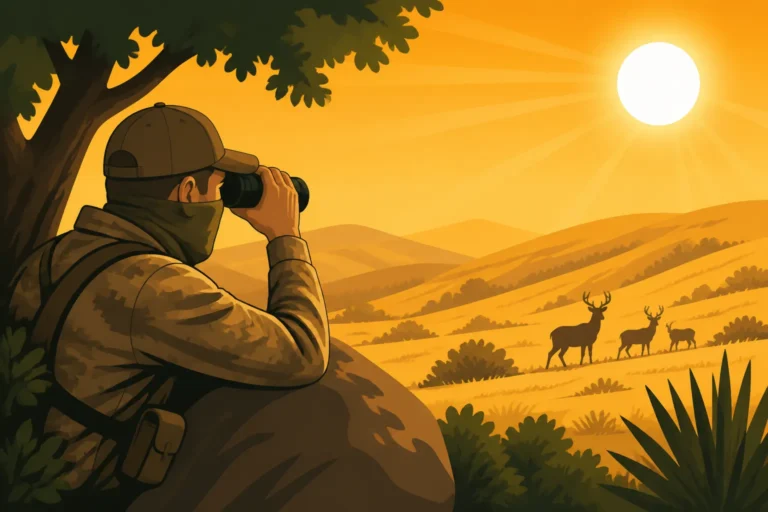
Don't just look at the field itself; examine the surrounding cover. Where are the likely bedding areas? Is there a thick stand of oaks, a dense hillside of chaparral, or a riparian corridor nearby? Understanding these patterns will help you predict not just where deer will feed, but when. Early morning glassing from a distance with good optics can reveal exactly where deer are exiting the field at first light, or where they might be bedded just inside the perimeter. Apps like GoHunt are fantastic for overlaying satellite imagery with property boundaries, helping you identify prime travel corridors and potential bedding cover adjacent to alfalfa fields, even on public access areas or land where you've secured permission.
Wind, Thermals, and Approach
This is absolutely critical when hunting open fields. Deer rely heavily on their sense of smell, and a swirling wind can ruin a hunt before it even begins. In flat terrain, wind can be fairly predictable, but near hills, draws, or timber lines, it becomes complex.
Always approach your stand or blind with the wind in your face or quartering away from where you expect deer to approach. This means walking around the field, not through it, to get to your position. In the mornings, thermals generally fall, meaning air moves downhill. Deer exiting the field and heading uphill to bed will often use this falling thermal to scent-check anything below them. In the evenings, thermals rise, so deer moving downhill to feed will have the advantage. You need to be aware of these subtle shifts. A good rule of thumb is to position yourself so your scent cone blows away from the primary deer travel routes and feeding areas. If you're hunting an afternoon sit, a stand on a field edge where the rising thermal carries your scent over the field into open air, rather than down into the field, is often ideal. Understanding wind and thermals in steep Sierra country is a complex skill, but even in flatter agricultural areas, neglecting it is a recipe for failure.
Best Times and Conditions to Hunt Alfalfa
Deer are crepuscular, meaning most active during dawn and dusk. This holds true for alfalfa fields. The first hour of light in the morning and the last hour of light in the evening are your prime windows.
Mornings can be tricky if deer have already entered the field to feed before legal shooting light. You might catch them leaving, or even feeding well into the morning on overcast days. However, the evening hunt is often more productive. Deer feel safer moving into the open as daylight fades. Cloudy days, or days immediately following a rain shower, can also be excellent. The cooler temperatures and damp ground often encourage deer to move more freely and for longer periods. Avoid hunting sunny, hot afternoons unless you've specifically patterned deer bedding in the field.
During the rut, deer behavior around alfalfa fields can change. Bucks might cruise field edges looking for does, even in the middle of the day. If you're hunting during California's general deer season, keep an eye out for this shift, which can vary by zone. For instance, in some D-Zones, the rut might peak in late October or early November, while in Zone A, it's often earlier. Be aware of deer migration corridors; if an alfalfa field is along a migration route, it can become a temporary staging ground for many deer.
Setup and Execution for Field Hunting
Once you've done your scouting and understand the deer's patterns and the local wind dynamics, it's time to choose your setup and execute your hunt.
Choosing Your Stand or Blind Location
Your choice of setup will largely depend on the available cover, the terrain, and your personal hunting style. Each has its advantages and disadvantages.
- Tree Stands: If there are mature trees along the field edge, a tree stand can be an excellent option. It gets you above a deer's primary line of sight and helps disperse your scent more effectively. Look for trees that offer cover from behind (e.g., a thick oak or a cluster of pines) and good visibility across the field and along likely entry trails. A stand overlooking a funnel where a game trail enters the alfalfa is ideal. Make sure you have a clear shooting lane. Consider the sun's position throughout the day to avoid being silhouetted or having the sun in your eyes during prime hunting hours.
- Ground Blinds: When suitable trees are absent, or if you prefer a more concealed approach, a ground blind can be incredibly effective. A pop-up blind brushed into the existing cover along a field edge, or even within the standing alfalfa (if permitted and you can brush it in naturally), can work wonders. Remember to set up your blind well in advance of the season to allow deer to get used to it. Ensure your blind offers good visibility and shooting windows, and most importantly, that it's positioned to account for the prevailing wind. Using a ground blind on BLM land where trees might be sparse is a common tactic. You want to match your blind's camo to the surrounding environment; for example, a leafy pattern for an oak woodland edge, or a more open pattern for a stubble field.
- Natural Cover: Sometimes, the best blind is no blind at all. Using existing natural cover like a thick fencerow, a patch of tall weeds, or the brush line of a creek bottom can provide excellent concealment. This requires careful positioning and absolute stillness. This approach is highly effective for Still-Hunting California's Sierra Nevada Timber or hunting Coastal Range Oak Woodlands, and can be adapted for field edges. The key is to break up your human outline. Don't sit directly on the edge; instead, sit a few yards back into the cover, allowing you to peek out without being directly exposed.
| Setup Type | Pros | Cons | Best Use Case |
|---|---|---|---|
| Tree Stand | Elevated view, scent dissipation, good visibility | Limited by tree availability, challenging setup | Open field edges with mature trees, established travel routes |
| Ground Blind | Excellent concealment, weather protection, comfortable | Can be spotted if not brushed in, requires setup time | Fields with sparse trees, fence lines, natural funnels |
| Natural Cover | Highly adaptable, no equipment needed, mobile | Requires stillness, less weather protection, limited visibility | Stalking, ambushing deer along brushy transitions |
Calling and Decoying Strategies
Deer in alfalfa fields are primarily focused on feeding, so aggressive calling might not be necessary, but subtle calls can sometimes draw in a curious buck or redirect a deer's path.
- Subtle Grunts and Bleats: A soft doe bleat or a few quiet grunts can sometimes pique the interest of deer already in the field, making them pause or even come closer to investigate. During the rut, rattling and grunting California blacktail bucks can be effective along field edges if you believe a buck is cruising for does. However, use these sparingly and pay close attention to deer reactions. If they appear alarmed, back off the calls.
- Decoying: Decoying is less common for deer in active alfalfa fields than it is for, say, waterfowl or turkeys. Deer are usually intent on eating. However, a single doe decoy placed near an entry point can occasionally draw a cruising buck into range, especially during the rut. The key is realism and placement. Make sure the decoy is visible but not overtly exposed, and always position it so the approaching deer will offer you a good shot. Ensure your decoy doesn't compromise your shooting lanes or draw attention to your position.
Dealing with Pressure and Other Hunters
Alfalfa fields, especially those on public land or accessible private land, can attract attention. Over-pressuring a field will quickly make deer nocturnal or push them to find other food sources.
- Early Season & Off-Peak Hours: Try to scout and hunt early in the season before deer become too wise. Consider hunting during less popular times, like mid-week, or if you're comfortable, sitting a water hole in late season or hunting after a cold front when other hunters might stay home.
- Finding Unpressured Spots: Use mapping tools like GoHunt or onX Hunt to identify potential travel corridors that other hunters might overlook. Often, the best spots are not directly on the obvious field edges but a little further back in the cover where deer stage before entering the field, or where they might cross an obscure corner. Look for ground that others walk past.
- Private Land Permission: If you can secure permission on private land, these alfalfa fields often offer phenomenal, unpressured hunting. Many California ranches have small alfalfa plots. Researching California trespass and permission law is important here. Often, landowners are more willing to grant access if you're polite, professional, and offer to help with pig control, as wild pigs are often drawn to alfalfa fields as well and can cause significant damage.
Gear and Considerations for Alfalfa Field Hunts
Having the right gear is crucial for maximizing your success and ensuring a safe, ethical hunt, especially in varied California conditions.
Optics for Field Hunting
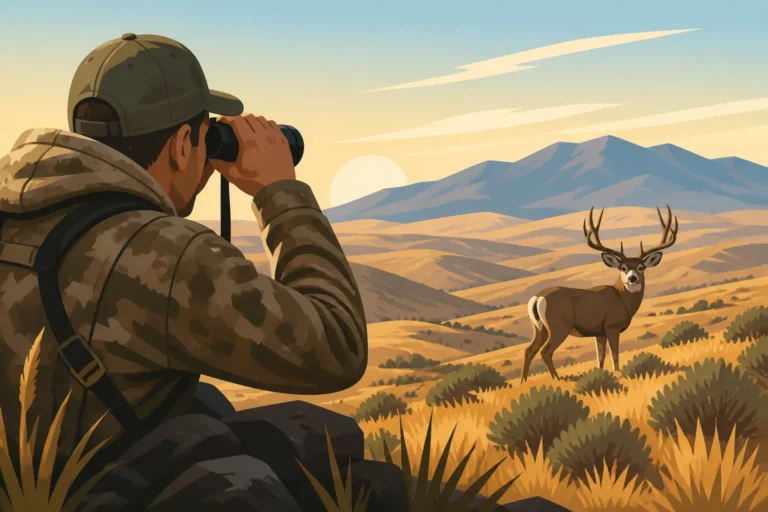
Good optics are non-negotiable when hunting fields. You'll be glassing large open areas, often at dawn and dusk when light is low.
- Binoculars: Quality binoculars (10×42 or 10×50 are popular choices) are essential for scanning the field, identifying deer at a distance, and picking out details. You'll need them for glassing a canyon for a bedded buck or scanning the entire length of an alfalfa field for subtle movement. Brands like Vortex, Leupold, and Maven offer excellent clarity and low-light performance.
- Rangefinder: A rangefinder is vital for accurate shot placement across open fields. Distances can be deceiving, and knowing the exact yardage to your target is key, especially with California's non-lead ammunition which can have different ballistic profiles than lead. Best rangefinder for open desert country applies here too; you're dealing with similar long-range visibility.
- Spotting Scope: For truly expansive fields or if you're glassing from a significant distance to avoid disturbing the area, a spotting scope can be invaluable for identifying antler points, judging a blacktail's fork versus a forked horn, and confirming if a deer is a shooter before making a move.
Ammunition and Weapon Considerations
California's non-lead ammunition requirement means specific considerations for your weapon and rounds.
- Non-Lead Ammunition: Ensure you are using certified non-lead ammunition. For deer-sized game, popular choices include copper monolithic bullets from manufacturers like Barnes (TTSX, LRX), Hornady (GMX, CX), and Federal (Copper). These bullets perform excellently, retaining most of their weight and creating good wound channels. Choose a non-lead load options for .308 hunters that you have thoroughly patterned with your rifle.
- Caliber Choice: Since shots can range from close-up to potentially longer distances across an open field, choose a caliber that offers good flat trajectory and sufficient energy for deer. Common choices like .270, .308, 30-06, and 6.5 Creedmoor are all excellent with the right non-lead bullet weight for blacktail deer or mule deer. Practice shooting at various distances to understand your non-lead bullet's ballistic coefficient versus lead.
- Archery: If bowhunting, ensure your broadheads and arrows are well-tuned. Best broadhead for California blacktail should offer excellent flight and penetration for a clean kill. Ensure your arrow weight for elk-sized game is appropriate if you are hunting those species in an alfalfa field setting.
Post-Shot Recovery in Tall Alfalfa
One of the biggest challenges of hunting standing alfalfa is tracking a deer that runs into it after the shot.
- Mark the Spot: Immediately after the shot, mark the exact spot where the deer was standing and where you last saw it run into the field. Use a tree, a fence post, or even a piece of flagging if legal.
- Wait: Resist the urge to immediately pursue. Give the deer time to lay down and expire. For a well-hit deer, 30-60 minutes is often sufficient. For a questionable hit, wait longer, even several hours.
- Systematic Grid Search: Once you begin tracking, move slowly and methodically. Look for blood, broken alfalfa stems, and displaced plants. If blood is scarce, start a systematic grid search from the last known location. Crawling on your hands and knees might be necessary.
- GoHunt Mapping & GPS: Use your GPS or a mapping app like GoHunt to mark your last blood or sign. This creates a virtual breadcrumb trail and helps you maintain your search pattern, especially if you have to retreat and come back later or bring in help. Blood trailing after dark in California can be challenging, so having a good headlamp and a systematic approach is vital.
- Consider Assistance: Don't be afraid to ask for help from fellow hunters or a tracking dog (where legal) if the trail is difficult. Recovering the animal is paramount.
Hunting standing alfalfa fields offers a unique and often highly rewarding experience for California hunters. By understanding deer behavior, mastering your scouting techniques, and being prepared with the right gear and strategies, you can unlock some truly fantastic opportunities.
Disclaimer
Hunting is an inherently dangerous activity. Always prioritize safety, adhere to all California Department of Fish and Wildlife regulations, and obtain proper licenses and tags before heading into the field. This guide is for informational purposes only and does not supersede official hunting regulations or safety guidelines.