Finding Sign in a Coastal Oak Woodland
Hunting California's vast coastal oak woodlands can often feel like an overwhelming task. These beautiful, rolling landscapes, characterized by their sprawling live oaks, dense chaparral, and hidden canyons, hold plenty of deer, but finding their sign can be incredibly challenging. Without a clear understanding of what to look for and where to focus your efforts, you might spend countless hours just walking, feeling like you're missing the secret language of the blacktail. This guide is designed to cut through that frustration, helping you interpret the subtle clues and navigate these unique environments to pinpoint deer activity.
The Unique Challenges of Coastal Oak Woodlands
Coastal oak woodlands are a world unto themselves, distinct from the higher elevations of the Sierra Nevada or the open deserts. Their character changes dramatically with the seasons, impacting everything from vegetation density to deer behavior. Understanding this dynamic environment is your first step to unlocking its secrets.
Understanding the Habitat and Deer Behavior
Unlike the sprawling timber stands or wide-open plains, coastal oak woodlands are a patchwork. You’ll find dense stands of live oak, often intertwined with poison oak and various thorny bushes, giving way to open grassy hillsides or steep, brushy canyons. This mosaic creates excellent cover and food sources for deer, but it also makes them incredibly hard to spot. Blacktail deer, in particular, are masters of concealment in these environments, often bedding down in seemingly impenetrable thickets just yards from a well-used trail. They utilize every fold in the terrain, every dense clump of brush, and every shadowed draw to stay out of sight.
The behavior of deer here is heavily influenced by the availability of food and water, as well as prevailing weather patterns. During the scorching late summer and early fall, deer will stick close to reliable water sources, often moving only during the cooler hours of dawn and dusk. As the weather cools and acorns begin to drop, their patterns shift dramatically. They become more active, moving longer distances to exploit these rich food sources. For a deeper dive into the general habitat, consider reading about Hunting Coastal Range Oak Woodlands, which covers many of these specific conditions.
The Impact of Acorns and Water Sources
Acorns are the lifeblood of deer in oak woodlands. When the acorn crop is abundant, deer will congregate in areas with heavily laden trees, often ignoring other food sources. This means that scouting for deer sign needs to be heavily focused on these prime feeding grounds. Not all oak trees produce acorns equally every year; some years are "mast years" with bumper crops, while others are lean. Learning to identify which oak species are producing and where the heaviest drops are occurring is crucial. Coast live oaks, canyon live oaks, and interior live oaks are common species in California's coastal ranges, and their acorn production can vary. A good acorn year can draw deer from miles around, making a traditionally "dead" area suddenly come alive with activity. Conversely, knowing Hunting After a Poor Acorn Year can help you pivot your strategy to alternative food sources or water.
Water, especially during the dry California summers and early fall, is another non-negotiable factor. Deer need to drink daily, and finding springs, seeps, or reliable stock ponds can reveal consistent travel patterns. Look for heavy trails leading to and from these water sources, and pay attention to tracks in the mud around the edges. Even a small, stagnant puddle can be a deer magnet when everything else is dry. Knowing where these critical resources are located, especially on public land, is paramount. Often, these areas will also have more lush vegetation, attracting deer even further.
Decoding Deer Sign: More Than Just Tracks
While fresh tracks are always exciting to find, they are just one piece of the puzzle. Coastal oak woodlands are filled with a rich tapestry of signs, and learning to read them all will give you a much clearer picture of deer activity.
Scrapes, Rubs, and Communication Hubs
When bucks begin to get restless in the pre-rut and rut phases, their communication sign becomes much more apparent.
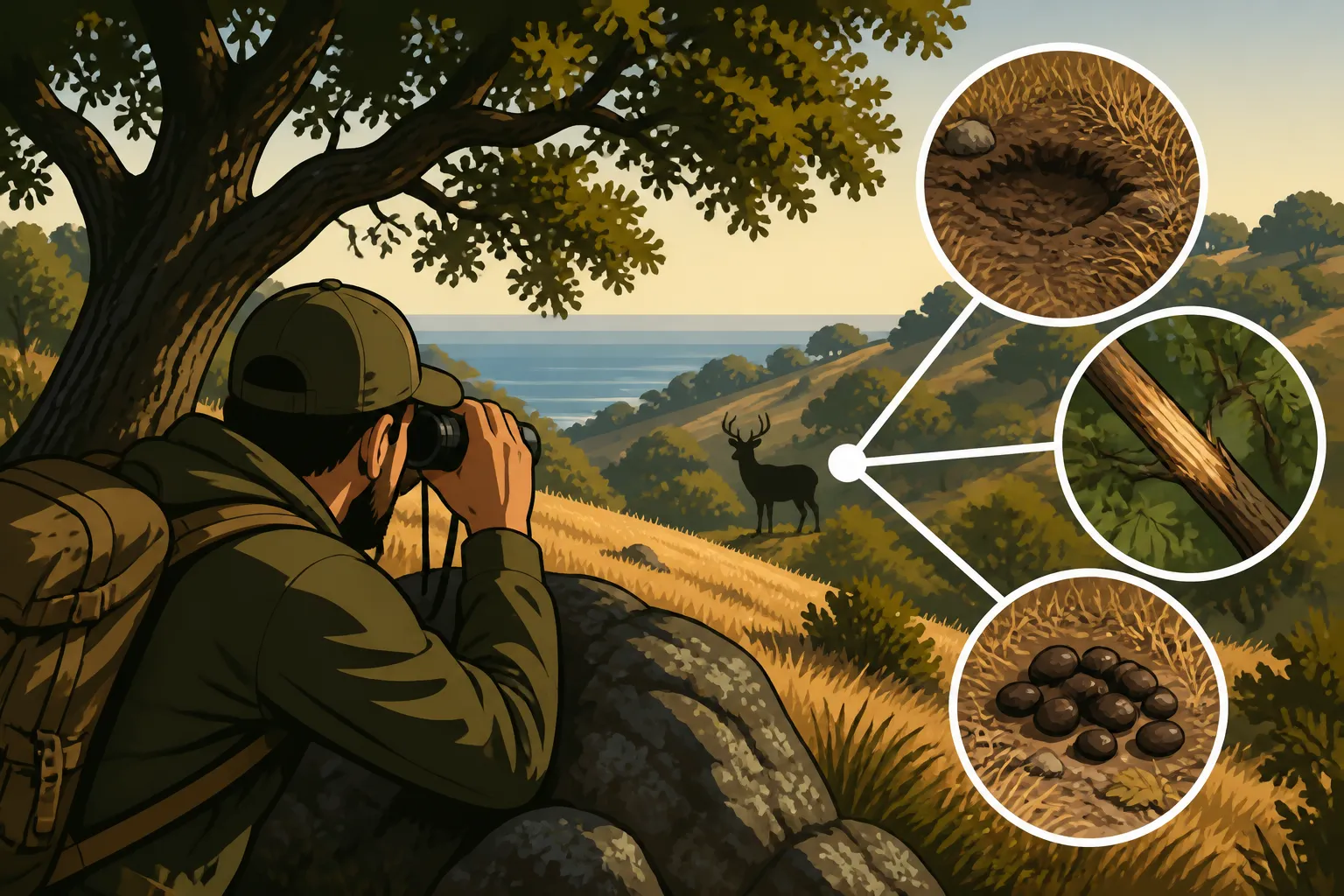
Rubs: These are trees where bucks have rubbed their antlers, typically to remove velvet, strengthen their necks, and mark their territory. Early season rubs will often have velvet shreds still attached. Look for rubs on small- to medium-sized trees, especially saplings or sturdy bushes, along travel corridors or near bedding areas. A single rub might be incidental, but a "rub line"—a series of rubs leading in a particular direction—is a clear indicator of a buck's travel route. These are often made by a dominant buck repeatedly using the same path.
Scrapes: Scrapes are patches of disturbed earth, typically about 2-3 feet in diameter, where a buck has pawed away leaves and debris. Above the scrape, you'll often find a "licking branch," a low-hanging branch that the buck has chewed on or rubbed its preorbital glands against. Scrapes are like a buck's personal billboard, communicating his presence and readiness to breed to does and other bucks. Active scrapes will be moist, with fresh dirt exposed. Pay close attention to these; they are prime locations for bucks to check repeatedly. During the rut, knowing how to interpret these signs can be incredibly helpful for Rattling and Grunting California Blacktail Bucks.
These communication hubs are more than just isolated markings; they are often strategically placed in funnels, along ridge lines, or at the edges of bedding areas. Finding a concentration of rubs and scrapes indicates a high-traffic area, a place where bucks are regularly moving through and asserting their dominance.
Bedding Areas and Travel Corridors
Finding where blacktail bucks bed is a huge step toward understanding their daily patterns. In coastal oak woodlands, bedding areas are usually thick, brushy pockets that offer thermal cover, concealment, and a good vantage point to watch downwind. Think dense patches of chaparral, especially on south-facing slopes in winter for warmth, or north-facing slopes in summer for coolness. They will often be close to a ridge top, allowing the deer to scent-check anything coming from below. Knowing Where California Blacktail Bucks Bed is critical. Look for "beds"—oval depressions in the grass or leaves—that show signs of recent use. These might have compressed vegetation, fresh droppings, or even shed hair.
Connecting these bedding areas to feeding grounds and water sources reveals the deer's primary travel corridors. These can be faint trails through the brush, well-worn paths along creek bottoms, or subtle dips in the terrain that offer easy movement. Look for tracks, droppings, and broken vegetation along these routes. These corridors are often found along saddles between ridges, through natural funnels in the topography, or along the edges of different vegetation types. A great example is Hunting a Funnel Between Two Oak Ridges, which highlights how deer use the landscape to their advantage. Learning to identify these routes will allow you to predict deer movement and set up effectively.
Seasonal Shifts and Scouting Strategies
The coastal oak woodland is a dynamic environment, constantly changing with the seasons. Your scouting approach needs to adapt to these shifts to remain effective.
Adapting Your Approach Through the Year
The best time to find deer sign isn't always during hunting season.
Spring and Summer Scouting: This is a crucial time to map out water sources before they dry up and identify potential food sources. With less dense undergrowth than later in the year, spring can be ideal for locating old rubs and scrape lines, giving you an idea of where bucks were active in previous seasons. Look for trails that lead to agricultural fields bordering oak woodlands, such as alfalfa or grain fields, which can be critical food sources. The GoHunt mapping system can be invaluable here, allowing you to mark water sources, potential bedding areas, and areas with good acorn production from year to year. During the hot months, deer movement is minimized, often making early morning or late evening the only times to spot them, so focusing on water is key.
Fall Scouting (Pre-Season): As summer gives way to fall, and especially as acorns begin to drop, deer activity picks up dramatically. This is when fresh sign starts to appear. Focus on checking those key acorn-producing areas. Are the trees dropping? Is there fresh scat under them? Are new rubs appearing? This pre-season scouting is vital for understanding current year patterns. It's also when you can identify the most used travel corridors between bedding and feeding, paying close attention to Wind and Thermals in Steep Sierra Country, as these principles often apply to coastal hills too, guiding deer movement for scent advantage.
In-Season Scouting: During the actual season, conditions can change rapidly. Pressure from other hunters, changes in weather, or the depletion of food sources can shift deer patterns. Be prepared to adapt. If your initial spots aren't producing, use the fresh sign you do find to make educated moves. Look for sign that indicates recent activity – fresh tracks, warm droppings, or still-moist scrapes – and adjust your strategy accordingly.
Utilizing Modern Tools for Effective Scouting
Gone are the days when a paper map and compass were your only tools. Modern technology can dramatically enhance your scouting efforts, especially in complex terrain like coastal oak woodlands.
Mapping Applications: Tools like GoHunt are indispensable. They allow you to overlay satellite imagery with public and private land boundaries, topo maps, and even historical burn data. You can mark water sources, potential bedding areas, rub lines, and historical deer sightings. This creates a living map of your hunting area, accessible right on your phone in the field. Before you even set foot in the woods, you can use these apps for Reading Aerial Photos for Sierra Deer which applies to coastal areas too, identifying pinch points, saddles, and dense cover that are likely deer magnets. This proactive approach saves countless hours of aimless wandering.
Trail Cameras: Trail cameras are excellent for gathering intelligence on deer movement without being present. Place them on well-used trails, near water sources, or over active scrapes. They will tell you what deer are in the area, when they are moving, and in which direction. Battery life and scent control are important factors to consider when deploying them, especially in areas with potential human interaction. While rules vary, remember that Trail Camera Rules on California Public Land should always be followed.
Glassing: Although coastal oak woodlands can be brushy, there are often open hillsides or clearings that offer opportunities for glassing. A good pair of binoculars, or even a spotting scope for longer distances, can help you pick apart distant hillsides for movement, or even spot a bedded deer. Early mornings and late evenings are prime times. Look for subtle movements, a flicker of an ear, or the horizontal line of a deer's back against the vertical lines of brush.
Putting It All Together for Success
Finding sign is one thing; interpreting it and translating it into a successful hunt is another. It requires patience, keen observation, and the ability to adapt.
Developing a Game Plan
Once you've spent time scouting and identifying key deer sign, it's time to develop a tactical game plan. This plan isn't rigid; it's a living document that you'll adjust based on new information.
Prioritize Areas: Based on your scouting, identify your top 2-3 most promising areas. These should be places with fresh, consistent sign, good food/water sources, and favorable wind/thermal conditions. GoHunt can help you visualize these areas and plan your access routes.
Plan Access Routes: How will you get to your chosen spots? Consider wind direction, noise, and visibility. You want to approach your hunting location without alerting any deer. This might mean taking a longer, more circuitous route that keeps you out of the deer's primary travel corridors. Think about where you'll park and how far you'll need to walk.
Consider the Time of Day: Deer movement patterns change dramatically throughout the day. Early morning might be best for intercepting deer moving from feeding areas to bedding areas, while late afternoon is prime for catching them moving from beds to food. Mid-day can be effective for still-hunting through thick bedding cover, as deer are often bedded and less prone to long-distance escapes.
Remember, the goal is not just to find deer sign, but to understand what it tells you about the deer's habits, allowing you to be in the right place at the right time. For general preparation, check out Scouting California Public Land Before Season.
Common Mistakes to Avoid
Even seasoned hunters can make mistakes, especially in challenging terrain. Being aware of these common pitfalls can save you frustration and increase your odds of success.
Overlooking Subtle Sign: Don't just look for obvious tracks or massive rubs. Often, the most telling sign is subtle: a barely visible trail through tall grass, a small browsing mark on a bush, or a few fresh droppings. Blacktail are notoriously secretive, and their sign can be equally understated. Take your time, slow down, and literally look everywhere.
Ignoring Wind and Thermals: In the rolling hills and canyons of coastal oak woodlands, wind and thermals are constantly swirling and shifting. Ignoring these can quickly blow your hunt. Deer rely heavily on their sense of smell. Always try to hunt with the wind in your face, or at least quartering to you, allowing your scent to be carried away from where you expect deer to approach. Understand how thermals work—typically rising in the morning and falling in the evening—and plan your stands or still-hunting routes accordingly.
Lack of Patience: This isn't wide-open country where you can glass for miles. Patience is a virtue in oak woodlands. Still-hunting slowly, pausing frequently to observe and listen, is often more effective than covering vast distances quickly. Give an area time to reveal its secrets before moving on. Sometimes, sitting quietly near an active scrape or a well-used trail for an extended period can be incredibly productive.
Wearing the Wrong Camo: While not strictly about sign, wearing the correct camouflage can help you blend into the environment as you search for it. For example, Best Camo for Oak Woodland in August can give you an edge in these specific conditions.
By understanding the unique environment, meticulously decoding the myriad forms of deer sign, adapting your scouting to seasonal changes, and avoiding common missteps, you'll be well on your way to consistently finding and connecting with blacktail deer in California's coastal oak woodlands. It's a rewarding challenge that truly tests your woodcraft and patience, but the satisfaction of putting it all together is unmatched.
Deer Sign Cheat Sheet for Coastal Oak Woodlands
Here's a quick reference to help you identify and interpret common deer sign in your scouting efforts:
| Sign Type | Description | What it Indicates | When Most Visible / Relevant |
|---|---|---|---|
| Tracks | Impressions in dirt, mud, or dust. Size and clarity vary. | Deer presence, direction of travel, size (buck vs. doe). Freshness is key. | Year-round, especially after rain or near water. |
| Droppings (Scat) | Pellets or clumps of feces. Size and consistency vary with diet. | Deer presence, recent activity, diet (pellets = browse, clumps = green feed). | Year-round, freshness indicates recent use. |
| Rubs | Trees or bushes with bark rubbed off by antlers. | Buck presence, territorial marking, antler development. | Late summer through fall/rut. |
| Scrapes | Bare patches of earth pawed clean by bucks, often with an overhead licking branch. | Buck communication, territorial marking, pre-rut/rut activity. | Primarily pre-rut and rut (late fall). |
| Trails | Worn paths through vegetation, often faint. | Consistent travel routes between bedding, feeding, and water. | Year-round, more visible in dense cover. |
| Beds | Depressions in grass/leaves where deer have rested. | Bedding locations, thermal cover, security. | Year-round, more distinct where deer frequently bed. |
| Browsing | Clipped twigs, leaves, or shrubs. | Feeding activity, preferred food sources. | Year-round, more concentrated during lean times for acorns. |
| Hair | Deer hair caught on fences, thorns, or bedding areas. | Recent deer presence, shedding cycle. | Year-round, especially during spring shed. |
| Shed Antlers | Dropped antlers found on the ground. | Buck presence, indicates a buck survived the season, gives an idea of size. | Late winter/early spring. |
Disclaimer
Hunting is an inherently dangerous activity. Always prioritize safety, follow all local, state, and federal regulations, and obtain proper licenses and tags. This guide is for informational purposes only and does not replace professional instruction or advice. Always be aware of your surroundings and hunt ethically and responsibly.