Hunting Small Woodlots Near Sacramento
Hunting small pockets of timber near Sacramento can feel like trying to find a needle in a haystack, especially when you’re used to thinking about vast public lands or sprawling ranches. Many hunters feel frustrated, assuming that anything close to the city must be devoid of game or simply too pressured to be worthwhile. But let me tell you, there's a real secret to these seemingly insignificant spots, and with the right approach, they can offer surprisingly rewarding hunting opportunities for various game animals. This guide is all about uncovering the potential of these overlooked woodlots, providing actionable strategies to make them productive.
Why Small Woodlots Are Often Overlooked Goldmines
It’s easy to dismiss a 10-acre patch of oaks or a narrow riparian corridor as "too small" or "too close to civilization" to hold anything. We often associate successful hunting with remote wilderness or massive private land holdings. However, that mindset is exactly why these smaller woodlots become hidden gems. They're often overlooked by the masses, meaning less pressure, and surprisingly, they can act as crucial travel corridors, bedding areas, and food sources for game living on the fringes of urban or agricultural areas.
The Appeal of Limited Acreage
Think about it: smaller acreage means less ground to cover, making scouting and hunting much more manageable. You don't need a multi-day expedition or an extensive network of trails to learn the lay of the land. A few dedicated trips, sometimes even just an afternoon, can reveal key game patterns. For someone with limited time, maybe just a few hours after work or on a Saturday morning, these smaller parcels are incredibly appealing. They cut down on travel time, fuel costs, and the sheer physical exertion of covering vast distances. What might seem like a disadvantage at first, the small size, actually becomes a huge benefit, allowing for intense, focused hunting efforts.
Providing Crucial Cover and Food
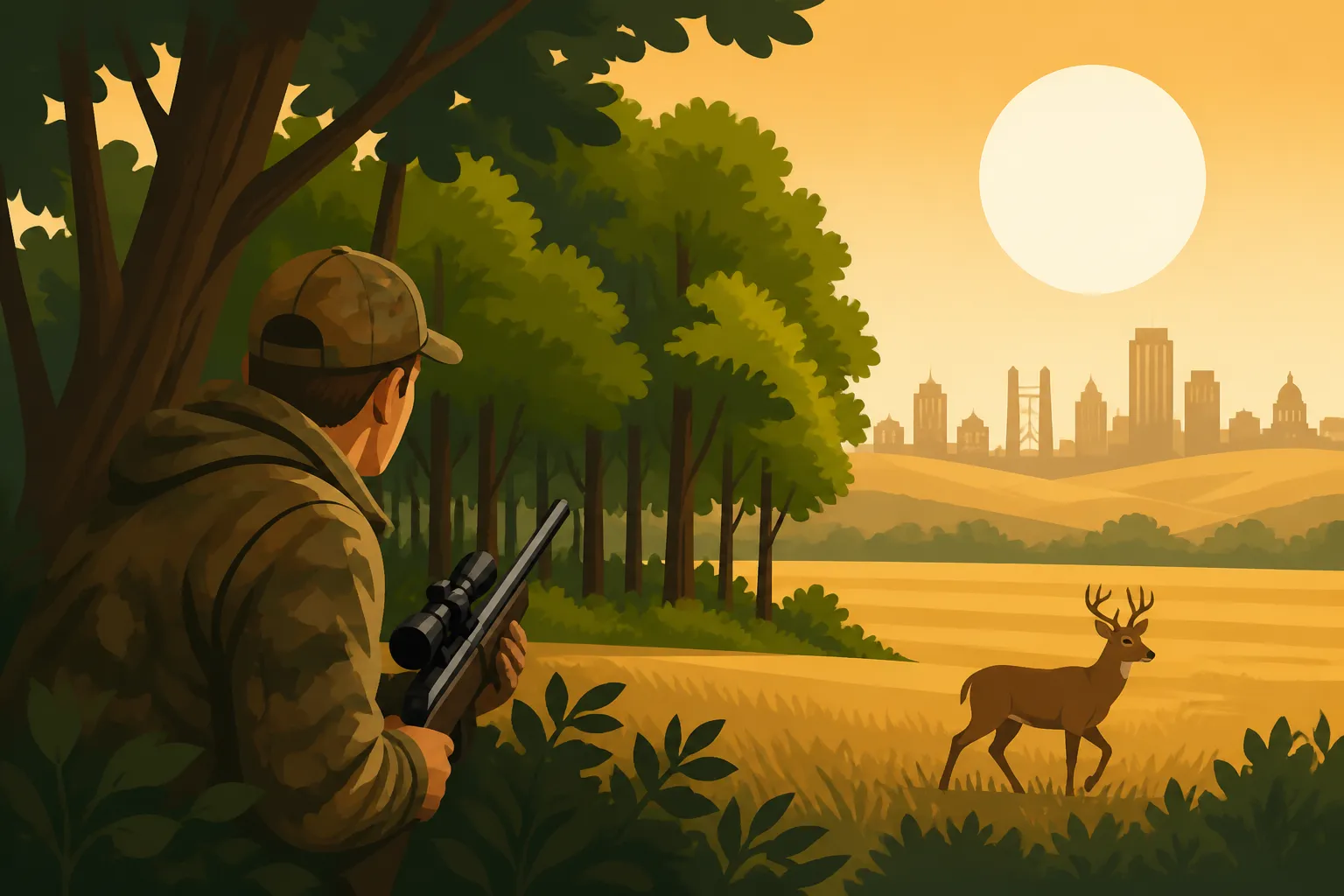
Even a modest woodlot, especially those with mature oaks, dense brush, or a water source, provides essential cover and forage for deer, turkeys, and even wild pigs. These animals are incredibly adaptable and learn to use small, undisturbed areas right under our noses. Imagine a narrow strip of oaks bordering an alfalfa field or a small creek bottom winding through vineyards—these spots are magnets for game traveling between feeding and bedding areas. They offer refuge from human activity, a place to feel safe, and often a reliable food source like acorns or various berries. Game animals, particularly deer, often funnel through these small, wooded corridors when moving from their bedding areas in heavier cover to agricultural fields at dawn and dusk. Understanding this natural movement is key to successful hunting.
Scouting Small Woodlots Effectively
Successfully hunting small woodlots near Sacramento starts long before opening day. Unlike vast wilderness areas where you might rely on broad patterns, these smaller parcels demand meticulous, detailed scouting. Every deer trail, every rub, every turkey scratch, and every pig rooting sign tells a story. You need to become a detective, piecing together the daily lives of the game animals that call these small patches home.
Pre-Season Reconnaissance and Mapping
Before you ever set foot in the woods with a weapon, grab your mapping apps. Tools like GoHunt or onX provide invaluable aerial views, topo maps, and land ownership information. Spend time digitally scouting. Look for natural funnels, pinch points, dense cover, water sources, and any nearby agricultural fields that might draw game. Identify potential bedding areas within the woodlot itself or in adjacent unhuntable areas. Note any obvious travel corridors.
Once you have a few spots identified, hit the ground running, but be stealthy. Your goal is to gather information without disturbing the animals. Walk the perimeter, identifying entry and exit points that offer concealed access. Look for major game trails crossing between cover and feed. Focus on finding fresh sign:
- Deer: Droppings, tracks, rubs on small trees (especially in early fall), and scrapes. A well-used game trail leading into or out of a small woodlot is a highway for deer. Learning to identify and understand them can give you a significant advantage, especially when thinking about Entry Routes Through a Sierra Foothill Meadow.
- Turkeys: Droppings, feather piles, wingtip drags in dusty areas, and scratch marks where they’ve been foraging for acorns or insects. Look for roosting trees—tall oaks or sycamores near a water source.
- Pigs: Extensive rooting, wallows, rubs on trees (often muddy), and fresh tracks. Pigs are notorious for using dense, overlooked cover, and these small woodlots provide exactly that. If you're seeing signs of these animals, it might be worth considering Trapping a Sounder on Private Land if appropriate and legal for your specific situation.
Pay attention to elevation changes, even subtle ones. A small ridge or saddle can be a natural travel route, offering a slight advantage for movement against prevailing winds. Consider how deer might use Hunting a Funnel Between Two Oak Ridges to move between bedding and feeding.
Utilizing Trail Cameras and Wind Direction
Trail cameras are your best friends in small woodlots. They allow you to gather intel 24/7 without being present, minimizing disturbance. Place cameras on well-used game trails, near water sources, or overlooking potential scrape lines. Position them discreetly to avoid alerting game or drawing attention from non-hunters. Pay close attention to the time stamps on photos to establish patterns of movement – when are the deer, turkeys, or pigs entering and exiting the woodlot? Is it primarily at night, or are there consistent daylight movements?
Understanding wind direction and thermals is paramount, especially in these compact areas where your scent can quickly fill the entire hunting zone. Even a small woodlot will have its own micro-thermals, often influenced by nearby open fields or water. As the sun rises, thermals typically rise, carrying scent uphill. In the evening, as the air cools, thermals drop, carrying scent downhill. Always plan your approach and stand locations based on the prevailing wind and the anticipated thermal shifts throughout your hunt. A slight breeze can become a major issue in tight quarters. Remember, you can't control the wind, but you can control your approach and where you position yourself.
Hunting Strategies for Confined Spaces
Hunting small woodlots requires a different mindset than hunting large tracts of wilderness. Here, precision, stealth, and patience are your greatest assets. You're not covering miles; you're observing, waiting, and capitalizing on limited opportunities.
Stand Hunting for Deer and Pigs
For deer and pigs, stand hunting is often the most effective method in small woodlots. Whether it's a tree stand, a ground blind, or simply sitting against a large oak, a static position allows you to blend into the environment and remain undetected. The key is setting up close to a well-traveled game trail, a bedding area, or a natural funnel that animals use to enter or exit the woodlot.
- Tree Stands: If the trees allow, a hang-on or ladder stand offers an elevated vantage point, getting your scent above the primary travel lanes and increasing your visibility. Look for locations that offer good cover for your stand and clear shooting lanes without excessive trimming. Always use a safety harness.
- Ground Blinds: A pop-up ground blind can be incredibly effective, especially if you set it up well in advance to allow animals to get accustomed to its presence. Brush it in thoroughly with natural vegetation to break up its outline. Position it downwind of where you expect animals to appear, ideally with a natural backdrop to further conceal your silhouette. You can learn more about Using a Ground Blind on BLM Land, and the principles often apply to private woodlots too.
- Natural Concealment: Sometimes, simply finding a thick bush, a fallen log, or the base of a large oak to sit against is all you need. The goal is to break up your outline and remain motionless. This often works best when the woodlot has naturally dense undergrowth.
Choose your stand location meticulously, considering not only the wind but also your entry and exit routes. You want to be able to get in and out undetected, long before the animals move. This might mean getting to your stand an hour or more before first light or waiting well after dark to exit.
Still-Hunting and Ambush Techniques
Still-hunting is a highly effective method for small woodlots, especially if you're targeting game that might be bedded down or slowly moving through the cover. This involves moving incredibly slowly and deliberately, taking a few steps, then pausing to observe for several minutes. Use your binoculars to pick apart the cover, looking for the flick of an ear, a horizontal line that shouldn't be there, or the subtle outline of a deer or pig.
- Patience is Key: This isn't about covering ground; it's about seeing the animal before it sees you. Every five steps you take, spend two minutes scanning.
- Wind Awareness: Always still-hunt into the wind or with a quartering wind to keep your scent from blowing ahead of you.
- Focus on Cover: Concentrate your efforts on the densest parts of the woodlot where animals are most likely to bed during the day. This could be a thicket of blackberry bushes, a patch of dense oaks, or a riparian area.
- Reading Sign: As you move, constantly look for fresh tracks, droppings, or rubs that indicate recent activity. A fresh rub or a new scrape could mean a buck is actively working that area, and this kind of detailed observation can be a game-changer when Finding Sign in a Coastal Oak Woodland.
Ambush hunting works particularly well for turkeys and pigs. For turkeys, identifying a roost tree and setting up an hour before fly-down can be lethal. You want to be positioned where they'll land and walk into your decoys. For pigs, ambushing them as they exit dense bedding cover to feed in an adjacent field can be effective. This requires precise timing and thorough scouting to pinpoint their exact travel lanes.
Calling and Decoys for Turkeys and Deer
Don't underestimate the power of calling and decoying in small woodlots, especially for turkeys. A single hen decoy or a pair can be incredibly effective in drawing in a wary gobbler. Set your decoys where they are visible from potential turkey travel routes but still offer a clear shot from your position.
For deer, subtle calling can sometimes work wonders. A soft doe bleat or a few gentle grunts can pique the curiosity of a passing buck. Don't overdo it in these smaller areas, as loud calls can quickly educate animals or make them wary. Stick to soft, natural sounds. In some cases, light rattling can even draw in a curious buck, particularly during the pre-rut or rut, but be mindful of the habitat – Rattling Volume in Thick Chaparral is different than open timber. If you're hunting in the Zone A area near Sacramento, you might also consider the Hunting California's Zone A July Archery Opener and how calls might play a role then.
| Game Animal | Primary Signs | Typical Movement Patterns | Recommended Hunting Method |
|---|---|---|---|
| Blacktail Deer | Tracks, droppings, rubs, scrapes | Dawn/dusk movement between bedding cover (dense woodlots) and feeding areas (fields, oak mast) | Stand hunting on trails/funnels, slow still-hunting in cover |
| Wild Pig | Rooting, tracks, wallows, rubs, scat | Often nocturnal, but will move during day in dense cover; travel between bedding and feed | Stand hunting near exit points to fields, still-hunting thickets |
| Wild Turkey | Droppings, feathers, scratch marks, dust bowls | Roost in tall trees, forage on ground in woodlots, move to open areas | Ambush near roost, calling/decoying, still-hunting |
| Coyote | Tracks, scat, occasional howls/barks | Patrols edges of cover, uses trails; opportunistic predator | Predator calling from concealed position, stand hunting |
Maximizing Success in Tight Woodlots
Hunting small woodlots isn't just about finding game; it's about executing your hunt flawlessly. Every detail matters, from how you enter the woods to how you handle scent control. Because these areas are compact, mistakes are often amplified.
Scent Control and Stealthy Approaches
Scent control is absolutely critical in small woodlots. Your scent, even a faint whiff, can quickly permeate the entire area, sending game packing. Shower with scent-free soap, use scent-eliminating sprays on your clothes and gear, and store hunting clothes in airtight containers. Avoid filling your vehicle with gas while wearing hunting clothes, and refrain from eating strong-smelling foods before your hunt.
Beyond sprays, focus on tactical scent management. Always approach your stand or hunting area from a downwind direction. If the wind shifts unexpectedly, be prepared to adjust your position or even abandon the hunt if necessary. In these smaller areas, sometimes the best move is to wait for more favorable conditions rather than risk blowing out the entire spot.
Stealth is equally important. Move slowly and quietly, even when you're not actively still-hunting. Avoid crunching leaves, snapping twigs, or bumping gear. Practice walking silently, especially during your approach and exit. If you’re utilizing a ground blind, ensure it’s brushed in naturally weeks before the season starts. If Brushing In a Blind on a Field Edge can be done effectively, it significantly reduces the animals' wariness.
Understanding Pressure and Timing Your Hunts
Small woodlots are highly susceptible to hunting pressure. If multiple hunters are consistently in the same small area, game animals will quickly become nocturnal or abandon the area entirely. This is where patience and strategic timing come into play.
- Hunt Mid-Week: Weekends often see an influx of hunters. If possible, hunt on Tuesdays, Wednesdays, or Thursdays when pressure is typically lower.
- Focus on Weather Changes: A cold front, a light rain, or the day after a storm can often get animals moving more during daylight hours.
- Hunt the Rut: For deer, understanding When the California Rut Peaks by Zone is vital. During the rut, bucks are less cautious and more susceptible to calls and decoys, making them more active even in small woodlots.
- Early and Late Season: Consider hunting early in the season when animals might not be as pressured, or late in the season when other food sources have dwindled and the woodlot's mast crop (like acorns) becomes more attractive.
- Consider Adjacent Unhuntable Areas: Often, small woodlots that border golf courses, housing developments, or other no-hunting zones can be absolute hotspots. Deer and pigs will stage in these safe areas and only venture into the huntable woodlot during low-light hours. Understanding their daily patterns as they exit and enter these safe zones is key.
Remember, if you hunt a small woodlot too frequently or too aggressively, you'll burn it out. Treat these spots gently, allowing animals time to recover and return to their natural patterns between your visits.
Safety First in Close Quarters
Hunting in smaller areas, especially near populated regions, requires an even greater emphasis on safety. Always be aware of your surroundings, beyond just the game you're pursuing.
- Know Your Backstop: Every shot taken must have a safe backstop. Be absolutely certain of what is beyond your target. This is paramount when hunting near roads, homes, or other structures.
- Blaze Orange: Even if not legally required for your specific game or weapon (though California Blaze Orange Requirements exist for big game on public lands during rifle seasons), consider wearing blaze orange while walking in and out, or even a vest on your stand, especially if other hunters might be in the vicinity.
- Communication: If hunting with a partner, always communicate your movements and stand locations.
- Respect Property Lines: Be absolutely certain of the property boundaries you are hunting. With mapping apps like GoHunt, you can avoid accidental trespass. Confirm whether Do You Need Written Permission in California? on private land to avoid legal trouble.
- Weapon Safety: Always follow the fundamental rules of firearm and archery safety. Treat every weapon as if it's loaded, keep the muzzle in a safe direction, keep your finger off the trigger until ready to shoot, and be sure of your target and what's beyond it.
Hunting small woodlots near Sacramento isn't just about finding game; it's about refining your skills, understanding animal behavior in pressured environments, and experiencing the thrill of a successful hunt closer to home. With careful planning, stealth, and respect for these unique pockets of habitat, you'll discover that even the smallest woodlot can yield big rewards.
Disclaimer
Hunting is an inherently dangerous activity. This article provides general information and recommendations. Always consult the most current California Department of Fish and Wildlife regulations, local ordinances, and landowner permissions before engaging in any hunting activities. Safety should be your number one priority at all times.