Calling Coyotes Over a Winter Feed Site
Hunting coyotes around a winter feed site can feel like trying to outsmart a ghost. You know they're there, drawn in by the promise of an easy meal, but they’re often incredibly wary, circling wide, and sometimes disappearing before you even get a shot off. It's a frustrating dance, especially when you're battling the elements yourself. This guide is here to walk you through the specific strategies, gear, and calling techniques you need to confidently call in those elusive coyotes when they're keying in on a consistent winter food source in California.
Understanding Winter Coyote Behavior Around Feed Sites
Coyotes are incredibly intelligent and adaptable predators, and their behavior shifts significantly with the seasons. When winter truly sets in here in California, especially in areas where natural prey might be a bit scarcer, those feed sites become prime real estate for them. It’s not just about desperation, though; it’s about efficiency.
Why Winter Feed Sites Attract Coyotes
During the colder months, coyotes are expending more energy just to stay warm, which means they need more calories to survive. A winter feed site—whether it's a rancher's cattle supplement station, a pile of deer carcasses from a late-season hunt, an unfortunately exposed backyard bird feeder, or even livestock afterbirth—represents a consistent, low-effort food source. They become regulars, establishing patterns and travel routes around these spots. What might seem like an easy meal to them also means they’re more prone to associating the area with safety, or at least predictability, which we can exploit.
However, this consistency can also breed wariness. If they’ve had negative encounters with humans or other predators around these sites, they’ll be exceptionally cautious. They’ll often approach downwind, using natural cover to their advantage, and will be quick to bolt at the first sign of trouble. This makes understanding their likely approach vectors and wind direction paramount. A tool like the GoHunt app can be incredibly useful for scouting these areas from afar, allowing you to mark potential approach corridors and set up points based on prevailing winds and topographical features. Knowing if they're relying heavily on carrion or actively hunting around a site will dictate your calling strategy. For example, a coyote scavenging a gut pile might respond differently to a distress call than one trying to catch a rabbit near a hay bale.
Common Types of Winter Feed Sites in California
California is a massive state with incredibly diverse landscapes, and what constitutes a "winter feed site" can vary wildly from region to region. In the vast ranch lands of the Central Coast and Sierra Nevada foothills, you're likely to encounter cattle operations. These often have mineral licks, hay bales, or supplemental feed troughs where cattle congregate. Coyotes are drawn to these not just for potential afterbirth or sick/dead calves, but also for the rodents and birds that are attracted to spilled feed. You might even find them shadowing the herd, looking for an opportunity. For those interested in pursuing pigs on these same lands, our guide on Hunting Pigs on Central Coast Oak Ranges offers some excellent insights into understanding land use.
In more rural residential areas, especially those bordering open country, even something as innocuous as a bird feeder or pet food left outside can become a consistent, albeit smaller, feed site. Post-hunt, especially after a successful deer season, gut piles and discarded carcasses can be massive attractors in areas like the Sierra Nevada or Modoc Plateau. These are often less predictable in location but can draw coyotes from miles around. Lastly, in the agricultural regions, think about grain storage or processing facilities, or even fields after a harvest where residual grains remain. Each of these sites requires a slightly different approach, but the underlying principle remains: coyotes are looking for easy calories during winter, and these sites provide them.
Essential Gear for Winter Coyote Calling in California
When you're out there braving the chilly California winter, trying to entice a sharp-eyed coyote, your gear needs to be on point. It’s not just about having the right call; it's about comfort, concealment, and being prepared for anything.
Calls and Sound Devices
The cornerstone of winter coyote calling is, naturally, your call. You essentially have two main options: hand calls or electronic callers. Both have their place, and often, a combination is best.
- Electronic Callers: For winter feed sites, e-callers like those from Foxpro or ICOtec are often the preferred choice. They offer a vast library of sounds—distress calls (rabbit, fawn, bird), pup sounds, and various howls—that you can switch between instantly. This versatility is crucial when you're trying to figure out what will pique a wary coyote's interest. The ability to place the speaker away from your position, perhaps 50-100 yards downwind of where you expect the coyote to appear, can draw attention away from you, masking your exact location. The volume control is also a huge advantage, allowing you to start soft and build up, or blast out a loud howl to grab distant attention. In the wide-open country of the Mojave Desert, where you might be Predator Calling California's Mojave Desert Country, an e-caller's range and volume can be a game-changer.
- Hand Calls: Don't underestimate the power of a good hand call. Open-reed calls give you incredible versatility, allowing you to mimic a range of distress sounds, from a dying rabbit to a desperate bird. Closed-reed calls are easier to master for consistent rabbit or mouse squeaks. Howler calls are also essential for challenging dominant coyotes or locating them. While e-callers have their place, the nuanced, realistic sounds you can produce with a hand call, especially subtle whimpers or soft barks, can be exactly what it takes to seal the deal with a call-shy coyote or when trying to draw one away from a very active feed site. Sometimes, less is more, and the subtle distress of a hand call is perfect for a close-range setup.
Optics, Firearm, and Ammunition
Your ability to spot and ethically harvest a coyote relies heavily on your choice of optics and firearm.
- Optics: A good pair of binoculars (10×42 or 10×50) is indispensable for scanning vast landscapes, picking out subtle movements, and identifying your target. Remember, coyotes blend in remarkably well, especially in the dry, scrubby terrain often found near California feed sites. A rangefinder is also critical, especially if you anticipate longer shots or need to confirm distances to obstacles in your shooting lane. You might be glassing a wide canyon for a bedded buck, but the same techniques apply to coyotes. For more specific advice, check out Best Rangefinder for Sierra Canyon Shots.
- Firearms: For coyotes, a flat-shooting rifle in a caliber like .223 Remington, .22-250, .204 Ruger, or even a .243 Winchester is ideal. These calibers offer good accuracy, minimal recoil, and enough punch to humanely dispatch a coyote. Shotguns, particularly with larger shot sizes like BB or T, can be effective in thick brush or at closer ranges, but often present challenges with the non-lead ammunition requirement.
- Ammunition: This is a critical point for California hunters: you must use non-lead ammunition for all hunting statewide. This includes coyotes. For rifles, choose expanding non-lead bullets like copper monolithic designs. For shotguns, steel or bismuth shot are the way to go. Make sure you zero your rifle specifically with your chosen non-lead load, as bullet weights and point of impact can differ significantly from traditional lead rounds. For more on this, our guide on California's Non-Lead Ammunition Requirement provides comprehensive details. Understanding Non-Lead Load Options for .308 Hunters can also give you insights, even if you’re using a different caliber.
Concealment and Comfort
Winter conditions can be brutal, and coyotes have exceptional eyesight and a keen sense of smell.
- Clothing and Camouflage: Layering is key for California winters, which can range from freezing mornings to surprisingly warm afternoons. Start with a good moisture-wicking base layer, add insulating layers like fleece or down, and top it with a waterproof/windproof outer shell. Your camo pattern should match the terrain—desert camo for arid regions, or patterns that mimic oak woodlands or chaparral for other areas. Good gloves and a warm hat are also essential. Remember, staying still and silent is often more important than being perfectly camouflaged.
- Scent Control: Coyotes rely heavily on their nose. While complete scent elimination is impossible, minimizing your human odor is crucial. Use scent-eliminating sprays, wash your hunting clothes in scent-free detergent, and store them separately. Pay attention to the wind direction at all times, ensuring your scent isn't blowing into the area where you expect coyotes to approach. A smart hunter always uses the wind to their advantage, a concept we delve into further in Wind and Thermals in Steep Sierra Country.
- Accessories: A comfortable hunting chair or pad can make a long sit much more bearable. Shooting sticks or a bipod are invaluable for stable shots, especially after a prolonged period of stillness. A backpack to carry all your gear, water, and snacks is also a must. Finally, always have a small first-aid kit, a headlamp, and a fully charged phone with a mapping app like GoHunt for navigation and marking successful stands.
| Call Type | Best Use for Winter Feed Sites | Pros | Cons |
|---|---|---|---|
| E-Caller | Versatile for various distress, pup, and howler sounds; drawing attention away from hunter. | Wide sound library, remote control, high volume. | Battery dependent, can sound less natural, higher cost. |
| Open-Reed | Mimicking multiple distress calls (rabbit, fawn, bird) with nuance. | Highly versatile, realistic sounds, no batteries. | Requires practice to master, hands-on operation. |
| Closed-Reed | Consistent, easy-to-learn rabbit or mouse squeaks. | User-friendly, good for consistent sounds. | Less versatile than open-reed, can sound less realistic. |
| Howler | Locating coyotes, challenging dominant animals, adding realism to sets. | Excellent for eliciting responses and locating. | Requires good timing; can spook coyotes if overused or mistimed. |
Mastering Coyote Calling Techniques for Feed Sites
Calling coyotes over a winter feed site requires a blend of traditional calling knowledge and specific adaptations for their heightened wariness and focus on food. It’s about being smart, patient, and understanding the nuances of their winter behavior.
Strategic Setup and Wind Awareness
Your setup is perhaps the most critical component of a successful call. Coyotes will almost always approach from downwind to use their superior sense of smell to detect danger.
- Wind Direction is King: Always approach your chosen stand location so that the wind is in your face, blowing from the direction you expect coyotes to appear, and over your back into an area you've already scouted and deemed safe. This means your scent is blowing away from their likely approach. It’s not always possible to have the wind perfectly in your face for the entire setup, especially in undulating terrain, but strive to have it crossing away from your primary kill zone. Remember, a coyote might circle a quarter-mile or more downwind before committing.
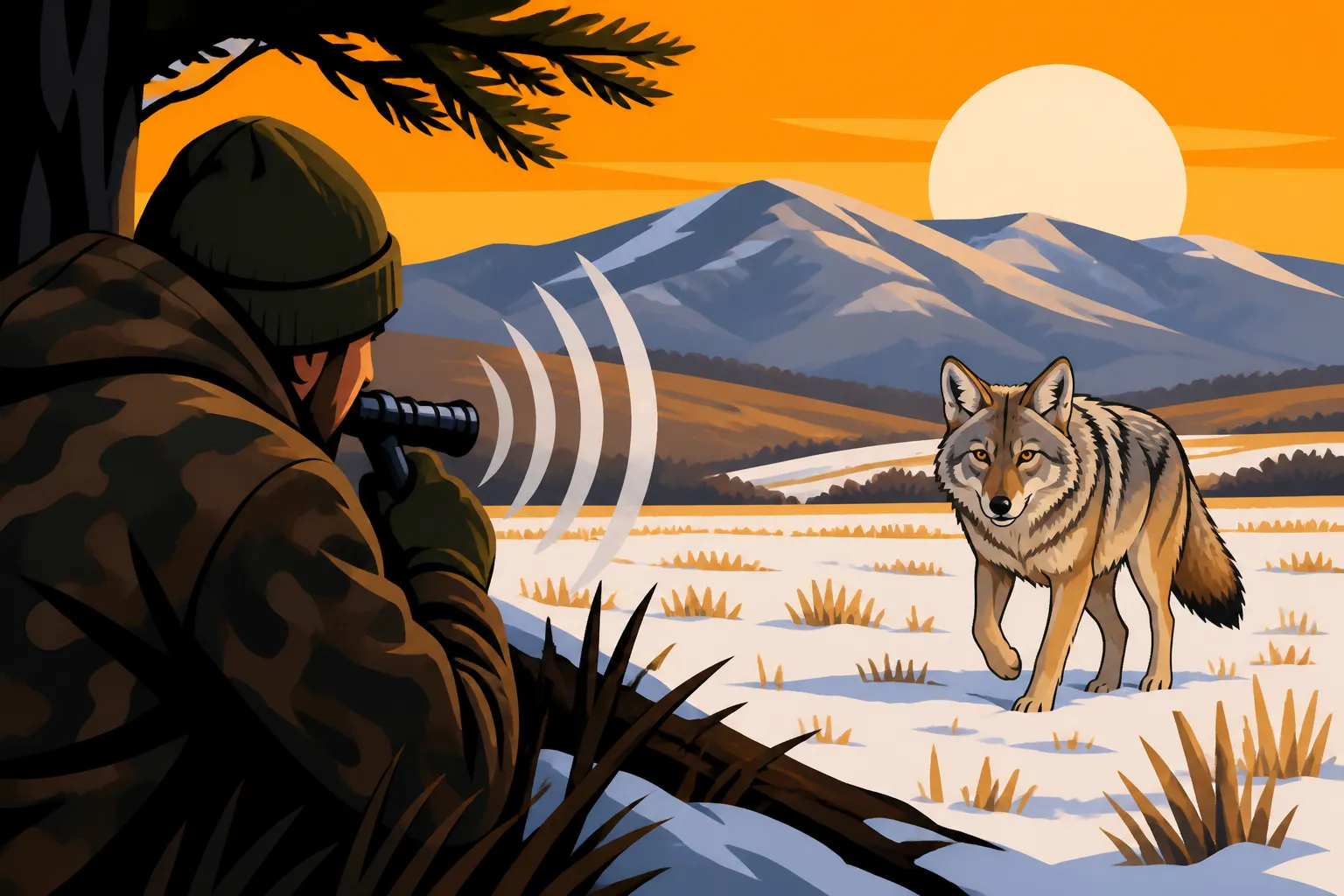
- Choosing Your Stand: Look for locations that offer good visibility for shooting, but also sufficient cover to break up your outline. A natural rise, the edge of a timber block, or even a large rock outcropping can work. Position yourself so you can see where a coyote is likely to appear after circling downwind. Placing your e-caller 50-75 yards in front of your position, offset to one side of your shooting lane, can draw the coyote's attention away from you. This allows you to potentially move for a better shot if needed. When you’re Using a Ground Blind on BLM Land, this type of setup can be especially effective.
- Concealment and Stillness: Once you're set up, become a part of the landscape. Minimize movement. Wear appropriate camouflage. If you're hunting in thick chaparral or oak woodlands, try to find a natural hide that allows you to see out without being seen in. Even the slightest twitch can send a wary coyote scrambling.
The Art of the Call Sequence
The type of calls you use and how you sequence them can make all the difference. When calling coyotes that are keying in on a feed site, your goal is to either tap into their predatory instinct or challenge their territoriality.
- Start with Distress Calls: A common and effective starting point is a high-pitched distress call, mimicking a rabbit, mouse, or even a bird in trouble. This taps into their opportunistic predator side. Start with a moderate volume and let it run for 30-60 seconds. Then, be silent for 1-2 minutes, scanning intently. Repeat this sequence for about 10-15 minutes. If nothing shows, increase the volume or switch to a different distress sound. For specific calling tips, you might find valuable crossover information in Rattling Volume in Thick Chaparral.
- Incorporate Pup Distress or Challenge Howls: If distress calls aren't working, especially if you suspect dominant coyotes are protecting the feed site, try adding pup distress calls. The sound of a pup in trouble can sometimes bring in protective adults. Alternatively, a series of challenge howls can provoke a territorial response. A single, drawn-out male howl, followed by a few shorter barks, can sometimes trigger a response from a dominant male who thinks another coyote is encroaching on his winter food source. This can be especially potent when dealing with well-established packs.
- Patience and Persistence: Winter coyotes, especially around a consistent food source, can be incredibly patient themselves. They may sit and listen, trying to pinpoint the source of the sound, before committing. Your stands should ideally last 20-30 minutes, sometimes longer in very cold, calm conditions. Don't give up too early. Sometimes a coyote will materialize seemingly out of nowhere after a long period of silence.
Practical Tips and Considerations for Success
Beyond the technical aspects of gear and calling, there are several practical considerations that can dramatically improve your success rate when calling coyotes over a winter feed site in California.
Adapting to Local Conditions
California's winter weather can be unpredictable, ranging from crisp, clear days to heavy rain or even snow in higher elevations. Each condition requires a slight adaptation to your strategy.
- Weather Impact: On clear, cold days with stable winds, coyotes might be more active and responsive to calls, but also more visually aware. Use distant e-caller placement to your advantage. If it's windy, you'll need to call louder and more frequently to cut through the noise, but the wind can also help mask your approach and scent. Rainy or snowy days often mean coyotes are hunkered down, but once the precipitation stops, they can be ravenous and very receptive. Fresh snow, for instance, provides excellent tracking opportunities and quiet approaches. Always check local forecasts, and consider how recent weather might have influenced coyote movement patterns around the feed site.
- Terrain Challenges: Whether you're hunting the rolling hills of the Coastal Range or the rugged Sierra Nevada foothills, the terrain will always play a role. Thick brush can make spotting difficult, but it also provides excellent cover for your approach. Open country demands longer-range glassing and shooting skills. Understanding how coyotes use washes, ridgelines, and timber stringers for travel can help you predict their approach to a feed site. Mapping tools like the GoHunt app are invaluable for analyzing topography, identifying potential travel corridors, and planning your entry and exit routes. This becomes even more important in zones like D-zones where understanding deer movement patterns, and by extension, coyote predation, is key. Our article on Hunting a California BLM Desert Wash for Deer offers insights into how animals use these features.
Legal and Ethical Considerations
Hunting coyotes in California, while generally less regulated than big game, still comes with important rules and ethical responsibilities.
- Year-Round Hunting, No Bag Limit: Coyotes are considered non-game animals in California, which means there is no closed season and no bag limit. You can hunt them year-round. However, this freedom comes with responsibility. Always ensure you have a valid California hunting license.
- Non-Lead Ammunition: As mentioned, all ammunition used for hunting in California must be non-lead. This applies to coyotes as well. Make sure your chosen rifle or shotgun ammunition complies with this statewide mandate.
- Public vs. Private Land: Ensure you have legal access to the land you're hunting. If it's private land, you absolutely need written permission from the landowner. Public lands like National Forests or BLM areas are open to hunting, but always double-check specific regulations for that area, as some might have additional restrictions (e.g., weapon restrictions, vehicle access). While you can't hunt California mountain lions, coyotes are fair game. For broad information on rules, consider our article on California Coyote Hunting Season Rules, though remember it's largely about general regulations due to their non-game status.
- Ethical Shots: Always strive for a clean, ethical shot that results in a quick harvest. Know your effective range with your chosen firearm and ammunition, and only take shots that you are confident in making. Avoid taking shots where you can't clearly identify your target or where there's a risk of harming livestock or non-target animals.
- Reporting and Impact: While not mandatory, it's good practice to be aware of the impact of coyote populations. In some areas, California Coyote Attacks on Livestock are a significant concern for ranchers, making your efforts beneficial to local communities.
Conclusion: Winter Calling Rewards Persistence
Calling coyotes over a winter feed site isn't always easy, and it demands more than just randomly blowing on a call. It requires a keen understanding of their winter behaviors, meticulous preparation with the right gear, and a strategic, patient approach to your calling techniques. By focusing on wind direction, choosing effective call sequences, and adapting to the diverse conditions California throws your way, you'll significantly increase your odds. Remember, the goal is to outsmart these cunning animals by playing into their natural instincts for survival and territoriality. The rewards—whether it's managing local populations or simply the thrill of the hunt—are well worth the effort.
Disclaimer
The information provided in this article is for general guidance and informational purposes only. Hunting regulations, seasons, and requirements can change frequently. Always consult the latest official regulations from the California Department of Fish and Wildlife (CDFW) before engaging in any hunting activities. It is your responsibility to know and abide by all applicable laws and regulations.