California Firearms Discharge Setback Rules
One of the most nerve-wracking aspects of preparing for a California hunt is the constant worry about inadvertently breaking a rule, especially when it comes to firearm discharge. It’s not just about what species you can hunt or what tag you have, but where you can actually pull the trigger without running afoul of the law or, worse, endangering someone. This guide aims to demystify California's firearms discharge setback rules, offering clarity so you can hunt with confidence and peace of mind.
Understanding California's Core Setback Laws
Navigating the legal landscape of firearm discharge in California can feel like trying to hit a moving target – it's often confusing and the rules aren't always crystal clear from a single source. At its heart, the state prioritizes public safety, which means there are fundamental distances you absolutely must respect when discharging any firearm, whether for hunting, target practice, or any other lawful purpose.
General Public Safety Requirements
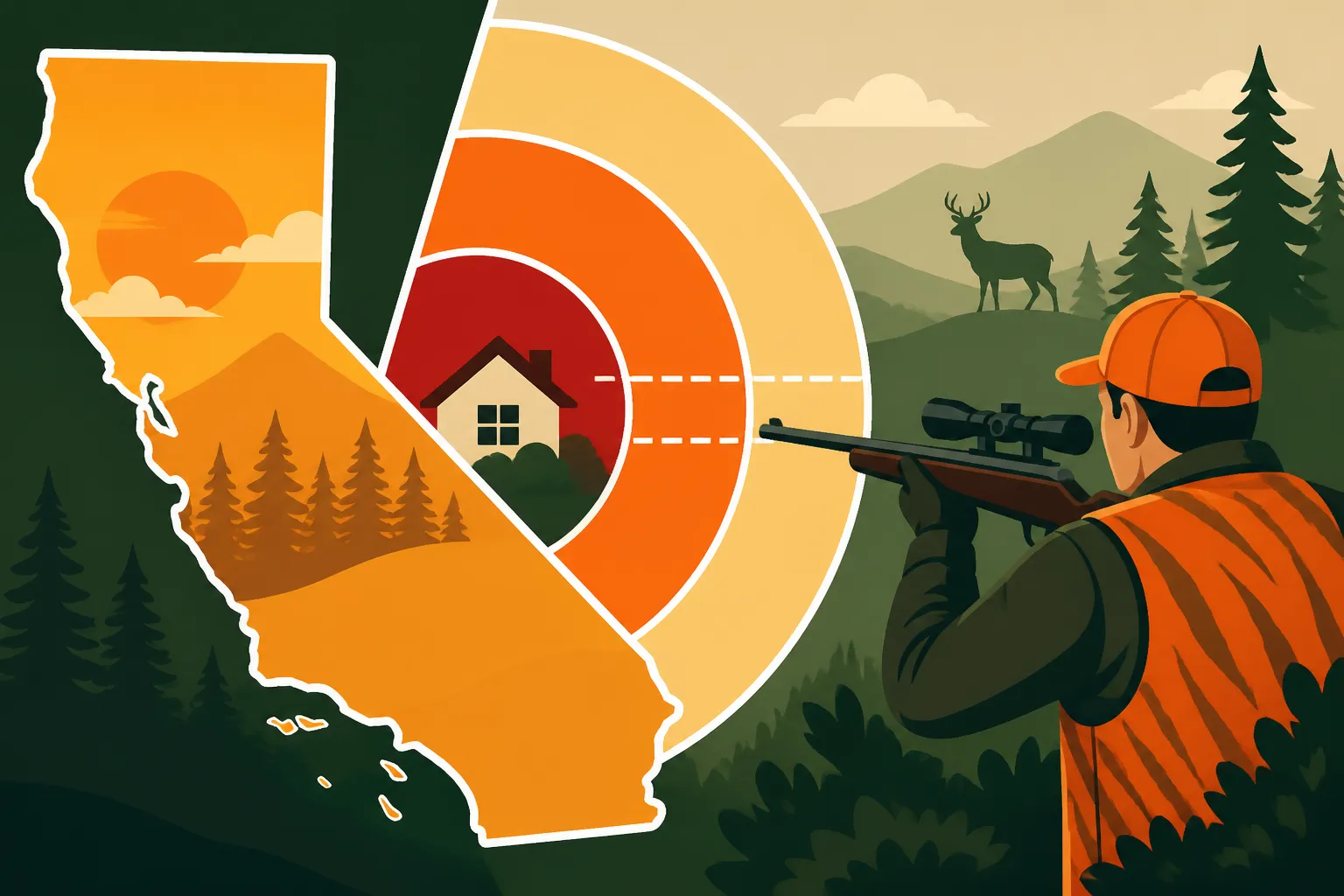
The foundational rule, one that every hunter needs to engrave into their memory, is detailed in California Penal Code Section 3004. This statute dictates that it is unlawful to discharge a firearm "within 150 yards of any occupied dwelling house, residence, or other building or any barn or other outbuilding used in connection with a farm or ranch or other livestock, without the permission of the owner or person in possession of such dwelling, house, or building." That's a mouthful, but the essence is simple: you need a good 150 yards (which is about one and a half football fields) between your muzzle and any occupied structure or farm building. This isn't just about homes; it includes sheds, barns, and any structure tied to livestock operations.
The rationale behind this rule is pretty straightforward: safety. Stray bullets can travel incredibly far, and the risk of injury or property damage is a very real concern in areas where people live or work. Imagine an errant round impacting a farmhouse miles away, or hitting a fence and spooking valuable livestock. For hunters, this means meticulously scouting your shooting lanes and being absolutely certain of your backdrop, not just for the animal, but for any potential structures beyond it. It’s a measure designed to prevent accidents and maintain a harmonious, safe environment for both hunters and non-hunters.
Specific Distances and Variances
While the 150-yard rule is the statewide baseline, it's critical to understand that this isn't a one-size-fits-all distance. Local jurisdictions, specific land management agencies, and even the type of land you're on can impose stricter setback requirements. For instance, some counties might have local ordinances that expand this safety zone to 200 or even 300 yards in certain areas, particularly near suburban fringes or designated rural residential zones. It's a patchwork of regulations, and the onus is always on the hunter to know the most restrictive rule that applies to their specific hunting spot.
Beyond local ordinances, you'll encounter variations on federal and state-managed lands. For example, within developed recreation sites on National Forests—think campgrounds, picnic areas, or trailheads—the rules are often far more stringent. Discharging a firearm might be entirely prohibited, or limited to designated shooting ranges, regardless of the 150-yard rule. These areas are considered "safety zones" and require an even higher degree of caution. Before heading out, especially to a new area, always consult the specific regulations for that public land unit. A quick call to the local ranger station or CDFW office can save you a lot of headache and potential legal trouble.
Navigating Different Land Designations
California offers a vast array of hunting opportunities, but the rules for discharging firearms can vary significantly depending on whether you're on federal land, state wildlife areas, or private property. Understanding these distinctions is paramount to staying legal and safe.
National Forests and BLM Land Considerations
When you're out hunting across California's massive tracts of federal land, like the Los Padres National Forest or the vast expanses of BLM desert, the general state setback rules usually apply. However, that doesn't mean you can just assume anything. Each National Forest and BLM district often has its own set of specific regulations, which can include temporary closures due to fire danger, designated no-shooting zones, or even restrictions on certain types of firearms in particular wilderness areas.
It's not uncommon to find areas within federal lands that are popular for dispersed camping or off-roading, and these informal recreation spots can create additional "safety zones" that you need to be aware of, even if they aren't explicitly marked as occupied dwellings. Always check the local Forest Service or BLM office for current regulations and maps before your trip. Tools like onX Hunt or even GoHunt's mapping features are invaluable for identifying property lines and areas of potential human activity. Knowing onX Layers for California Land Status can quite literally keep you out of trouble, allowing you to see where designated recreational areas might overlap with your hunting grounds.
State Wildlife Areas and Ecological Reserves
California's Department of Fish and Wildlife (CDFW) manages numerous Wildlife Areas and Ecological Reserves, which are fantastic resources for public hunting. However, these areas come with their own unique set of rules that often go beyond general state law. Many of these areas, particularly those focused on waterfowl or upland game, have highly specific regulations regarding when, where, and what type of firearms can be discharged. For example, some wildlife areas might only permit shotguns with specific non-lead shot during certain seasons, completely prohibiting rifles or handguns.
You might find designated shooting blinds or specific hunting zones within these areas where firearm use is permitted, while other sections are strictly off-limits. It's not uncommon for these areas to have shorter shooting hours than general state law allows, or to have mandatory check-in/check-out procedures that include firearm declarations. Always, always consult the specific regulations for the Wildlife Area or Ecological Reserve you plan to hunt. A great starting point is the CDFW website, or reviewing information on California Wildlife Areas and Ecological Reserves to find links to the specific area rules. Don't rely on general knowledge; these locations are often managed with precision due to high public use and specific habitat goals.
Private Land and Permission
Hunting on private land in California, while offering incredible opportunities, also carries its own set of responsibilities when it comes to firearm discharge. The baseline 150-yard rule from occupied dwellings still absolutely applies, regardless of who owns the land. Even if a landowner gives you permission to hunt, they cannot grant you permission to violate this statewide safety setback. It is your responsibility as the hunter to ensure you are not shooting within that distance of your host's home, their neighbor's home, or any other occupied structure.
Beyond the legal minimum, responsible hunting on private land means respecting any additional requests or restrictions the landowner might impose. They might ask you to avoid certain fields, stay away from livestock, or only shoot in specific directions. Clear communication is key here. Before you even step foot on their property, make sure you've had a thorough discussion about where you plan to hunt, what you'll be shooting at, and any areas they'd prefer you avoid. It's also wise, and often legally required, to have Do You Need Written Permission in California? before you even consider discharging a firearm on someone else's property. This protects both you and the landowner.
Exceptions and Special Circumstances
While California's firearm discharge setback rules are generally quite strict, there are a few nuanced situations and exceptions that hunters should be aware of. These don't negate the general rules but offer context for specific equipment or scenarios.
Archery and Muzzleloader Considerations
When we talk about "firearms discharge setback rules," it's natural to think of modern rifles and shotguns. However, different hunting implements sometimes fall under slightly different regulations, or at least carry different practical considerations. For archery equipment, such as a bow and arrow, the 150-yard rule for occupied dwellings generally doesn't apply in the same way it does to firearms. An arrow isn't considered a "projectile discharged from a firearm" in the legal sense of Penal Code Section 3004. That said, common sense and ethical hunting practices still dictate a substantial safety zone around dwellings. No responsible archer would shoot in a direction where a stray arrow could pose a risk to people or property.
Muzzleloaders, on the other hand, are considered firearms and are subject to the same 150-yard setback rule as modern rifles. The projectile, whether a patched round ball or a modern sabot, is still propelled by an explosive charge, meaning it carries the same potential for long-distance travel and unintended consequences. Additionally, all ammunition used for hunting in California, including projectiles for muzzleloaders, must be non-lead. While this doesn't change the setback distance, it's a critical legal requirement that often comes up in discussions about firearm use in the field. Make sure to consult the guidelines on California's Non-Lead Ammunition Requirement to ensure your muzzleloader projectiles comply.
Legal Self-Defense and Other Exclusions
It's important to briefly touch upon instances where firearm discharge might be legally permissible even within a "safety zone," though these are almost entirely outside the scope of recreational hunting. The laws regarding self-defense are complex and highly specific, generally allowing the lawful use of a firearm to protect oneself or others from imminent danger. This is a very narrow exception and is not a justification for discharging a firearm for hunting purposes in restricted areas.
Another area of exception involves pest control or depredation permits. If a landowner is experiencing damage from certain wildlife, such as wild pigs or deer, they can sometimes obtain permits from CDFW that allow for the lethal take of these animals under specific, controlled circumstances. These permits might, in some cases, include provisions that allow for firearm discharge closer to structures than typically allowed, but only under strict conditions and often with specific instructions from CDFW. For hunters, this isn't a general permission slip; it's a highly regulated measure for landowners dealing with significant wildlife conflicts. If you're hunting on private land under a depredation permit, ensure you understand all the terms and conditions. Information related to California Deer Damage Permits for Farmers might provide more context on these specialized situations.
Practical Strategies for Hunters to Ensure Compliance
The responsibility for knowing and abiding by California's firearm discharge setback rules falls squarely on the hunter. While it might seem daunting, especially with varying regulations, there are highly effective strategies you can employ to ensure you’re always hunting legally and safely.
Pre-Hunt Research and Mapping Tools
The internet and modern mapping technology have revolutionized how hunters prepare for a trip. Gone are the days of relying solely on paper maps and word-of-mouth. Before you ever leave your home, you should be dedicating significant time to researching your chosen hunting area. Start by identifying the specific land manager—is it a National Forest, BLM land, a State Wildlife Area, or private property? Each will have its own set of rules available online. Don't be shy about calling the local ranger district or CDFW office; they are a wealth of information and can clarify any ambiguities.
Beyond general regulations, utilize powerful mapping applications like onX Hunt, BaseMap, or the tools available on platforms like GoHunt. These apps allow you to overlay private property boundaries, public land designations, and even identify structures that might trigger setback rules. You can literally drop pins and measure distances from potential shooting positions to nearby homes or buildings. This kind of digital scouting is invaluable for planning safe shot opportunities and avoiding problematic areas. For example, if you're planning a deer hunt in a particular D-Zone, using these tools to identify access points and then zooming in to check for any cabins or ranches within 150 yards of a potential game trail is a non-negotiable step. This kind of detailed planning can transform a stressful hunt into a confident and successful one.
On-the-Ground Awareness and Safe Practices
No amount of digital scouting can replace vigilance and common sense once you're in the field. Even with the best maps, unexpected situations can arise – a new cabin might have been built, or a temporary camp might be set up. Always, always operate with the highest regard for safety. Before you even shoulder your rifle, take a moment to confirm your surroundings. Are there any structures, people, or livestock visible within your potential shooting lane or beyond your target? Your target, and what is beyond it, should always be your primary concern.
Using a rangefinder isn't just for gauging distance to your target animal; it's an indispensable tool for confirming setback distances to buildings or property lines. If you're ever in doubt about whether you're within the 150-yard minimum, or any stricter local setback, err on the side of caution. Move to a different position, change your shooting angle, or simply pass on the shot. It's far better to walk away empty-handed than to face legal repercussions or, worse, cause an accident. Furthermore, always have a solid backstop for your shot. Even if you're well beyond the setback, a bullet can ricochet or pass through an animal, and knowing what's behind your target is a crucial part of responsible firearm discharge. Remember, the rules are there to protect everyone, and proactive safety measures reflect positively on all hunters. These practices, combined with thorough Scouting California Public Land Before Season, will significantly enhance your safety and success.
Here's a quick reference table for common setback considerations:
| Land Type / Situation | General Setback Rule (Minimum) | Additional Considerations for Hunters |
|---|---|---|
| General California Law | 150 yards from any occupied dwelling, building, barn, or livestock. | Applies everywhere unless stricter rules exist. Permission from owner overrides the 150-yard rule for their property only. |
| National Forests / BLM | 150 yards (state law baseline) | Check local forest/district regulations; may have designated no-shooting zones, developed recreation area restrictions. Use onX Hunt. |
| State Wildlife Areas (WA) | Varies greatly by area; often very specific. | Consult individual WA regulations (CDFW website). May have specific hunting zones, firearm types, or shooting hour restrictions. |
| Ecological Reserves | Varies; often highly restricted or prohibited. | Consult individual ER regulations. Many are conservation-focused and may prohibit hunting or firearm discharge entirely. |
| Private Land | 150 yards (state law baseline) | Always obtain written permission. Landowner may impose stricter rules. Know neighbors' property lines. |
| Archery Equipment | Not subject to 150-yard firearm rule. | Ethical hunting dictates substantial safety zones. Always ensure a clear backdrop and know what's beyond. |
| Muzzleloaders | 150 yards (considered a firearm). | Same rules as modern rifles. Non-lead projectiles required for hunting. |
| Near Recreation Areas | Often stricter (e.g., campgrounds, trailheads). | Discharging may be prohibited. Treat as safety zones. |
Remember, hunting is a privilege that requires responsible and informed participation. Understanding the rules, especially those related to firearm discharge, is fundamental to upholding that privilege. Whether you're planning for Hunting California's BLM Desert Land or navigating Hunting Coastal Range Oak Woodlands, knowing these regulations keeps everyone safe.
Disclaimer
The information provided in this guide is for general informational purposes only and does not constitute legal advice. California's hunting and firearm laws are complex and subject to change. Always consult the most current California Department of Fish and Wildlife regulations, local county ordinances, and relevant federal land management rules before engaging in any hunting or firearm-related activity. It is the individual hunter's responsibility to understand and comply with all applicable laws and regulations.