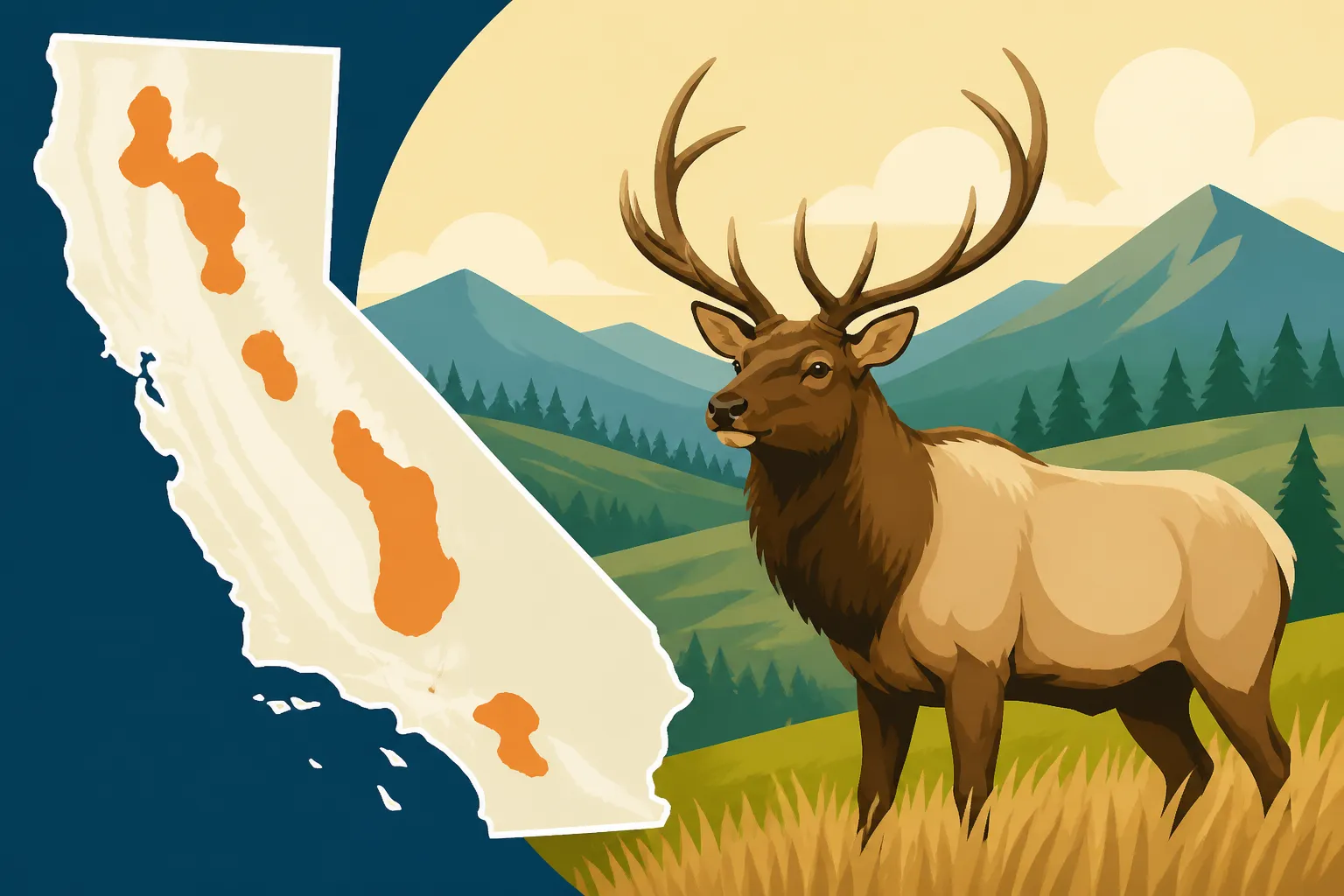
Where California’s Tule Elk Herds Range
For many California hunters, the dream of pursuing an elk is a powerful one, but actually figuring out where to even begin looking for these magnificent animals in our diverse state can feel like an insurmountable challenge. The Tule Elk, a species unique to California, has a fascinating history of survival and recovery, yet finding their current strongholds requires a deep understanding of their preferred habitats and herd movements. This comprehensive guide will peel back the layers of history and habitat to pinpoint exactly where California's Tule Elk herds roam today, giving you the knowledge you need to focus your scouting efforts and navigate the often-complex application process.
A Brief History of Tule Elk in California: A Remarkable Comeback
The story of the Tule Elk in California is one of incredible resilience and dedicated conservation. It's a tale that every hunter should know, not just for historical context, but because it explains so much about their current, albeit scattered, distribution across the state. Understanding how we got to this point helps us appreciate every opportunity to pursue these unique animals.
Near Extinction and Early Conservation Efforts
Imagine a California where Tule Elk once roamed in the hundreds of thousands, stretching across the vast Central Valley and into the foothills. Historical accounts from early Spanish explorers and American settlers paint a picture of abundant herds. However, the Gold Rush era and the subsequent rapid agricultural development of California in the mid-19th century proved devastating. Unregulated hunting, combined with massive habitat destruction as grasslands were converted to farms and ranches, pushed the Tule Elk to the brink of extinction. By the 1870s, it’s believed that fewer than ten Tule Elk remained, surviving precariously on the vast private land of Henry Miller's Miller & Lux ranch in the southern San Joaquin Valley. It's a stark reminder of how quickly unchecked expansion can decimate even the most abundant wildlife populations.
Thankfully, Miller, recognizing the plight of these majestic animals, took proactive steps to protect the last remnants of the species. His personal conservation efforts, coupled with the establishment of early game laws, marked the beginning of a long and arduous road to recovery. These initial efforts, though small, were monumental, literally saving the Tule Elk from disappearing forever, making their journey one of the most remarkable wildlife comebacks in North American conservation history. It really drives home the impact that even a few dedicated individuals can have.
Population Recovery and Relocation Successes
The journey from a handful of elk to a healthy, huntable population is a testament to persistent conservation. Once the species was stabilized on Miller's ranch, the California Department of Fish and Game (now CDFW) embarked on a series of ambitious relocation programs throughout the 20th century. The goal was to establish new, self-sustaining herds in suitable habitats across the state, ensuring that the entire population wasn't vulnerable to a single catastrophic event. These relocation efforts were not always easy; early attempts sometimes faced challenges with elk adapting to new environments or conflicts with livestock. However, through careful planning, habitat assessments, and dedicated teamwork, many of these efforts proved successful.
From the modest beginnings in the San Joaquin Valley, Tule Elk were carefully trapped and transported to diverse locations such as the Owens Valley in the eastern Sierra, Grizzly Island in the Suisun Bay marshlands, and various units within the coastal range. These new homes, often on public lands or managed reserves, provided the space, forage, and water necessary for the herds to thrive. This strategic dispersal has been incredibly successful, expanding the Tule Elk's footprint significantly. Today, thanks to these efforts, the Tule Elk population is estimated to be over 5,000 animals, spread across more than two dozen herds throughout California. This success story stands as a beacon for wildlife management, demonstrating that even species on the brink can be brought back through determined human intervention. For more depth on this, you can look into how the Tule Elk Population Recovery From Near-Extinction truly unfolded.
Understanding the Modern Tule Elk Landscape in California
While the Tule Elk has made an incredible comeback, their distribution today isn't random. It's highly influenced by specific habitat requirements and environmental factors that either support or restrict their presence. For a hunter looking to find these animals, understanding these landscapes is absolutely key. You can't just stumble upon them anywhere; you need to know where to look.
Key Habitat Types and Environmental Factors
Tule Elk are incredibly adaptable, but they generally thrive in specific types of environments that provide a crucial combination of forage, water, and cover. Historically, they were animals of the vast grasslands and wetlands of California's Central Valley, where abundant grasses and seasonal water sources supported massive herds. Today, you'll find them inhabiting a somewhat wider array of ecosystems, but always with these core needs met.
- Grasslands and Oak Woodlands: Many herds, particularly in the coastal ranges and foothills, are found in expansive grasslands interspersed with scattered oak woodlands. The grasses provide primary forage, while the oaks offer acorns as a seasonal food source and the shade and cover needed for bedding and calving. Think of areas like the La Panza range in San Luis Obispo County or the Cache Creek area in Lake and Colusa counties. These habitats often feature rolling hills, providing both vantage points for spotting and draws for escape.
- Wetlands and Riparian Zones: The "Tule" in Tule Elk refers to the sedges and rushes (tules) found in marshy areas, reflecting their historical preference for wetlands. Herds like the one on Grizzly Island still utilize these marshy environments, where abundant wetland vegetation provides year-round forage and water, especially crucial during California's dry summers. Rivers, creeks, and permanent water sources are absolute magnets for elk, particularly in arid regions.
- High Desert and Sagebrush Steppe: In the eastern Sierra, herds like those in the Owens Valley thrive in a starkly different environment: high desert country characterized by sagebrush, bitterbrush, and sparse grasslands. Here, their survival depends on access to perennial springs, riparian corridors along creeks fed by mountain snowmelt, and the ability to find thermal cover in canyons or dense pockets of vegetation. These areas often experience extreme temperature swings, requiring elk to adapt to both hot summers and cold, snowy winters. Understanding these environmental nuances is critical for effective scouting, as elk will gravitate to specific micro-habitats within these broader zones depending on the time of year and weather conditions.
Challenges of Habitat Fragmentation and Human Development
Despite their impressive recovery, Tule Elk still face significant challenges, primarily stemming from California's ever-growing human population and the associated development. Habitat fragmentation is a major concern. As urban areas expand, new roads are built, and agriculture intensifies, the continuous tracts of land that elk need for seasonal migration, breeding, and simply existing become broken up. This can isolate herds, limit genetic diversity, and increase conflicts with humans.
Development often encroaches on crucial wintering grounds or calving areas, forcing elk into smaller, less ideal spaces. The Central Valley, once prime Tule Elk habitat, is now largely agricultural, which means the few herds remaining there often contend with irrigation canals, fences, and limited natural forage. These fragmented landscapes also increase the risk of vehicle collisions, particularly where elk must cross busy roads to access different parts of their range. Furthermore, human activities such as recreation, logging, and even responsible grazing can, if not managed carefully, disturb elk patterns and displace them from optimal feeding or bedding sites. Conservation efforts today often focus not just on maintaining existing populations but also on securing habitat corridors and minimizing human-wildlife conflict to ensure the long-term viability of these unique California animals.
Primary Tule Elk Herd Locations and Associated Hunts
For hunters, knowing the general range of Tule Elk isn't enough; you need to know the specific herd units and where opportunities exist. California's Tule Elk hunting opportunities are almost exclusively draw-only, highly coveted tags that require a strategic approach to the big game drawing. These herds are managed as individual units, each with its own specific characteristics and, importantly, its own draw odds. You can learn more about applying for a specific herd by reviewing how to apply for a California Tule Elk Tag in the Big Game Drawing.
Central Valley Herds: Owens Valley, La Panza, and Grizzly Island
The Central Valley region, broadly speaking, is home to some of the most well-known Tule Elk herds, though they are geographically quite distinct from one another.
-
Owens Valley Herd: This is perhaps the most iconic Tule Elk population, thriving in the expansive Owens Valley in Inyo County, situated in the rain shadow of the Sierra Nevada. These elk inhabit a high-desert environment, utilizing the lush riparian zones along the Owens River and its tributaries, as well as the surrounding sagebrush flats and foothills. The sheer scale of the Owens Valley is immense, offering vast public land opportunities on BLM and Forest Service ground. Hunting here can be incredibly challenging due to the open terrain and the elk's ability to cover vast distances. However, the potential for a large bull is a significant draw, making these tags some of the most sought-after in the state. Hunters often rely heavily on optics like those discussed in Optics for California's Open-Country Deer Hunting to pick apart the distant hillsides.
-
La Panza Herd: Located in San Luis Obispo County, primarily within the Los Padres National Forest and surrounding private lands, the La Panza herd represents a different type of Tule Elk habitat. Here, elk roam through rolling oak woodlands, chaparral, and open grasslands. This area sees less extreme weather than the Owens Valley, offering a milder environment. The terrain can be steep and brushy in places, requiring physically fit hunters to navigate. Access can be a mix of public and private land, so understanding land ownership boundaries is crucial. The La Panza tags are highly desirable due to the beautiful country and generally healthy elk population.
-
Grizzly Island Herd: This herd is truly unique, residing in the Suisun Marsh area of Solano County, an estuarine wetland ecosystem near the Sacramento-San Joaquin River Delta. These elk are perfectly adapted to a marshy environment, feeding on tules, sedges, and grasses found in the flooded wetlands. Hunting on Grizzly Island is a unique experience, often involving waders and navigating sloughs and islands. Access is highly controlled, with limited draw permits for specific hunt periods. The close proximity to major urban areas makes this an accessible yet incredibly wild hunting opportunity for those lucky enough to draw a tag.
Coastal Range Herds: Cache Creek and Mendocino
Moving west into California's diverse Coastal Ranges, we find other significant Tule Elk populations that offer distinct hunting experiences.
-
Cache Creek Herd: Found primarily in Lake and Colusa counties, within the Cache Creek Wilderness Area and adjacent lands, this herd inhabits a rugged landscape of oak woodlands, chaparral, and steep canyons. The terrain here can be extremely challenging, with dense cover and dramatic elevation changes. Elk in this area are often elusive, utilizing the thick brush for cover. Hunters here need to be prepared for strenuous hikes and methodical still-hunting or glassing strategies. The Cache Creek herd is a true testament to the Tule Elk's ability to thrive in tough, wild country. These hunts often take place on public lands managed by the Bureau of Land Management (BLM) or National Forest, but surrounding private land also plays a role in elk movements.
-
Mendocino Herd: Further north in Mendocino County, these elk roam in a mix of timber, oak woodlands, and open grasslands. The habitat here can be quite varied, from dense conifer forests to rolling rangelands. These herds are often more scattered than those in larger, more open valleys, making scouting and locating them a significant challenge. However, the beautiful, rugged country provides a rewarding experience for those who put in the work. Like other coastal range herds, understanding local land ownership and respecting private property is paramount. For detailed scouting, an app like GoHunt can be invaluable for pinpointing public access and identifying potential elk corridors.
Other Notable or Emerging Herds
Beyond these primary, well-established herds, California is also home to several smaller, more recently established, or emerging Tule Elk populations. These herds, while perhaps not offering as many hunting opportunities, are vital for the overall genetic diversity and long-term health of the species. For example, scattered groups can be found in areas of Monterey County, Kern County, and even parts of northern California, often on private ranchlands or within more remote public land pockets.
These smaller herds sometimes offer unique, limited-opportunity tags through specific landowner programs or through the statewide drawing if they are integrated into a larger hunt unit. While the tag numbers are low, the experience can be incredibly rewarding, offering a chance to hunt truly wild, less pressured elk in diverse environments. Keeping an eye on CDFW's annual hunt applications and herd reports is crucial, as the status and hunt opportunities for these smaller populations can change over time. These emerging herds underscore the ongoing success of Tule Elk conservation and the potential for new hunting grounds to develop as the population continues to expand its range.
Navigating the California Big Game Drawing for Tule Elk
So, you've learned where California's Tule Elk herds range, and now you're dreaming of a tag. The next, and arguably most critical, step is understanding and effectively navigating the California Big Game Drawing. This isn't like buying an over-the-counter tag; it requires careful planning, strategy, and a good dose of patience. The tags are incredibly limited, making success feel like winning the lottery, but a calculated approach can improve your chances.
The Application Process and Tag Allocation
California's Tule Elk tags are allocated through a centralized lottery system managed by the California Department of Fish and Wildlife (CDFW). The application period typically runs in the spring, with deadlines usually in June. You must possess a valid California hunting license to apply. The process is straightforward: you apply online through the CDFW's Automated License Data System (ALDS) portal, selecting your desired elk hunt choices. You can rank up to three choices, and it's essential to research each hunt code carefully, as they correspond to specific herd units, weapon types (archery or general rifle), and hunt dates.
The draw system utilizes a preference point system for elk, which means that every year you apply and are unsuccessful, you accrue a point. These points increase your chances in subsequent years, but they don't guarantee a tag. It's a true lottery, but those with more points have a mathematically better chance. Tag allocation is designed to manage specific herd populations and is strictly controlled. For example, some units might only offer a handful of bull tags, while others might offer a few either-sex tags. The number of tags available for each unit is published annually, along with the previous year's draw odds. Understanding these numbers is critical for making informed decisions on your hunt choices. You can explore more about this process in our guide on The California Big Game Drawing Explained.
Leveraging Information for Better Draw Odds
To maximize your chances in the drawing, you need to do your homework. Simply picking a random unit is a recipe for perpetual disappointment. Several strategies and resources can help you make more informed decisions.
- Research Draw Odds: CDFW publishes statistics on previous years' draws, including the number of applicants, tags issued, and the points required by successful applicants. Analyze these numbers carefully. If you're a first-time applicant, units requiring 20+ points are likely out of reach for a long time. Consider units with slightly higher odds, even if they mean a more challenging hunt or a less "glamorous" location. Tools from services like GoHunt offer detailed draw odds analysis and hunt planner tools that can give you a significant edge in understanding where your points might actually be competitive. This type of platform can help you strategically apply for tags, especially for highly sought-after species like Tule Elk.
- Understand Hunt Codes and Seasons: Pay close attention to the specific hunt codes. A single herd unit might have multiple hunt codes for archery season, general season, either-sex tags, or even junior-only hunts. Each will have different draw odds and requirements. Sometimes a later season hunt, or one with more restrictive weapon requirements, might have slightly better odds. Our article on California Elk Tag Draw Odds by Species provides further insights here.
- CDFW Reports and Maps: The CDFW website is a treasure trove of information. Look for herd management plans, harvest statistics, and hunt boundary maps. These documents provide insights into population health, success rates, and the actual geographic boundaries of each hunt unit. Knowing the terrain and potential access points before you apply can help you choose units that align with your hunting style and physical capabilities.
- Consider Landowner Tags: While expensive, California Tule Elk landowner tags are another avenue for a guaranteed tag, bypassing the draw entirely. These tags are typically offered by private landowners who have elk on their property and are allocated a certain number of tags by CDFW. They are significantly more costly than a public land draw tag, but they provide an immediate opportunity if you have the means. The cost of these tags can be quite substantial, as highlighted in California Tule Elk Landowner Tag Costs.
| Tule Elk Herd Unit (Example) | Primary Counties | General Habitat Type | Draw Difficulty (Avg. Points) | Key Challenges |
|---|---|---|---|---|
| Owens Valley | Inyo | High Desert, Riparian | Very High (15-25+) | Open terrain, vast area |
| La Panza | San Luis Obispo | Oak Woodland, Grassland | High (10-20+) | Mix of public/private |
| Grizzly Island | Solano | Wetlands, Marsh | Extremely High (20+) | Controlled access, marshy |
| Cache Creek | Lake, Colusa | Rugged Chaparral, Canyons | Moderate-High (5-15+) | Steep terrain, dense cover |
| Mendocino | Mendocino | Timber, Oak Woodland | Moderate (3-10+) | Scattered elk, varied terrain |
Note: Average points are estimates based on historical data and can fluctuate annually. "Draw Difficulty" reflects the number of preference points typically needed for a reasonable chance at a tag.
Scouting and Research Strategies for Tule Elk Success
Drawing a Tule Elk tag is just the first step; the real work begins when you hit the field. Tule Elk are formidable game animals, and successfully locating and harvesting one requires extensive scouting, both digitally and on the ground. You simply can't expect to show up opening morning and find them without prior effort.
Utilizing Digital Tools and CDFW Resources
In today's hunting world, digital tools have become indispensable, especially for large, dispersed game like Tule Elk. They allow you to cover vast amounts of ground from your home, making your limited time in the field far more efficient.
- Mapping Applications: Applications like onX Hunt, BaseMap, or the GoHunt mapping platform are absolute game-changers. They allow you to overlay private and public land boundaries, identify access roads, mark water sources, pinpoint potential bedding areas (often north-facing slopes with dense cover), and locate feeding grounds (open grasslands or clearings). You can drop waypoints for promising areas, measure distances, and even identify potential entry and exit routes. For units with a mix of public and private land, these apps are critical for staying legal and avoiding trespass, as detailed in Finding California Property Lines. They are particularly useful for dissecting areas you've identified as potential elk habitat from CDFW herd maps.
- Satellite and Aerial Imagery: Don't just look at topographic lines; really study satellite imagery for changes in vegetation, distinct game trails, old logging roads, and even faint clearings that might indicate past disturbances or good forage. Look for pockets of dense cover adjacent to open feeding areas. River bottoms and creek drainages often appear as green ribbons through drier landscapes—these are prime corridors for elk movement and vital water sources. Pay attention to elevation changes and how they might affect thermals and wind currents, which are crucial for a successful approach.
- CDFW Hunt Reports and Forums: Dive deep into the CDFW website for annual hunt reports. These often contain success rates, harvest numbers, and sometimes even general comments on herd health or distribution within specific units. Online hunting forums and social media groups dedicated to California hunting can also provide invaluable anecdotal information, recent sightings, and tips from experienced elk hunters. While always take online advice with a grain of salt, it can help you build a broader picture of current conditions or specific areas to focus on. These resources can help you understand California's Multi-Zone Deer Season System and how similar principles apply to elk.
On-the-Ground Scouting and Sign Reading
No amount of digital scouting can replace boots on the ground. Once you've narrowed down potential areas, it's time to physically explore the terrain. This is where you connect the dots between the maps and the reality of the landscape.
- Pre-Season Reconnaissance: Plan multiple scouting trips well before your hunt, if possible. Focus on covering ground, looking for fresh sign. Elk are large animals, and their sign is unmistakable. Look for large tracks (much bigger than deer), distinctive elk droppings (larger and more rounded than deer pellets), and rubs on trees where bulls have polished their antlers. Look for wallows—muddy depressions where elk roll to cool off and deter insects. These are prime locations for trail cameras. You can get tips on scouting by checking out Scouting California Public Land Before Season.
- Focus on Water and Forage: Elk, like all wildlife, need water and food. In dry California, permanent water sources are absolute magnets. Look for springs, seeps, creeks, and stock ponds, especially during the late summer and early fall. Identify prime feeding areas: lush grasslands, oak flats with acorn production, or areas with abundant browse. Elk will move between bedding cover and feeding areas, often using predictable travel corridors, especially during the early morning and late evening.
- Bedding Areas and Travel Corridors: Tule Elk prefer bedding in dense cover on slopes that offer good visibility and protection from the wind. North-facing slopes often retain moisture and provide cooler bedding in hot weather. During colder periods, they might utilize south-facing slopes for warmth. Look for well-worn game trails connecting these bedding areas to water and food sources. These trails, especially those along saddles, ridge lines, or through dense timber, are crucial for ambush points or intercepting moving elk. Understanding Wind and Thermals in Steep Sierra Country is critical when scouting these travel routes to plan your approach. When exploring new country, don't forget the importance of finding Ground Others Walk Past, as this is often where the unpressured animals reside.
Disclaimer
Always consult the latest California Department of Fish and Wildlife (CDFW) regulations and hunt proclamations before planning any hunting trip. Wildlife laws and regulations are subject to change, and it is the hunter's responsibility to ensure compliance. This guide is for informational purposes only and does not constitute legal advice.