California Squirrel and Rabbit Populations
Hunting in California can feel like navigating a maze of regulations, limited tags, and steep competition, especially if you're focused solely on big game. It's easy to get frustrated with draw odds or feel like you need to trek into the most remote wilderness for a chance at success. But what if I told you there's a whole world of opportunity, often right in your backyard or just a short drive away, that offers abundant action, incredible learning experiences, and delicious table fare without the same level of stress? We're talking about small game, specifically the diverse and often plentiful populations of squirrels and rabbits that call California home. This guide is going to walk you through everything you need to know about these fantastic game animals, from their habits and habitats to how you can effectively hunt them across the Golden State.
Understanding California's Small Game Landscape: Squirrels and Rabbits
For many hunters, the pursuit of deer, elk, or bear is the ultimate goal. And I get it – there's an undeniable allure to big game. But overlooking small game in California is truly missing out on a foundational hunting experience that can sharpen your skills, fill your freezer, and connect you with the land in a unique way. Small game hunting offers a fantastic entry point for new hunters, a way to stay active during big game off-seasons, and a chance to introduce kids to the outdoors without the intensity of a multi-day backcountry trek for a trophy animal.
The Appeal of Small Game Hunting in California
Let's be real, the California Big Game Drawing Explained can be a tough pill to swallow year after year. The draw odds for premium zones are often abysmal, and even general tags in some D-zones can feel like a lottery. That's where small game shines. You don't need to draw a special tag for most squirrels and rabbits; a valid hunting license and the appropriate small game validations are usually all it takes. This means more time in the field, more opportunities to hone your shooting and stalking skills, and a much lower barrier to entry.
Think about it: instead of a single, high-pressure shot opportunity over an entire season, a good squirrel or rabbit hunt can offer multiple chances to take game. This helps new hunters build confidence and experienced hunters stay sharp. Plus, the sheer variety of habitats you'll explore while pursuing these animals—from dense oak woodlands and chaparral to high Sierra timber and desert washes—will make you a more well-rounded outdoors person. It's not just about the harvest; it's about the adventure, the delicious meals, and the simple joy of being out there.
General Population Trends and Management
California's wildlife managers keep a close eye on small game populations, just like they do with deer and elk. Generally speaking, both squirrels and rabbits have robust populations across suitable habitats in California, though local densities can fluctuate based on factors like weather, habitat quality, and predation. For instance, a wet spring often means more forage, which translates to healthier rabbit and squirrel populations later in the year. Conversely, prolonged drought can reduce numbers.
The California Department of Fish and Wildlife (CDFW) plays a crucial role in managing these species, setting season dates, bag limits, and other regulations to ensure sustainable hunting opportunities. Unlike some big game species that might be subject to complex population modeling and specific harvest quotas, small game management often focuses on broader habitat health and ensuring that hunting pressure doesn't negatively impact local populations. This means that hunters themselves are part of a valuable feedback loop, with success rates and observations contributing to the overall understanding of these animals. Staying informed about current regulations is key, so always check the latest CDFW regulations booklet before heading afield.
California's Diverse Squirrel Species and Their Habitats
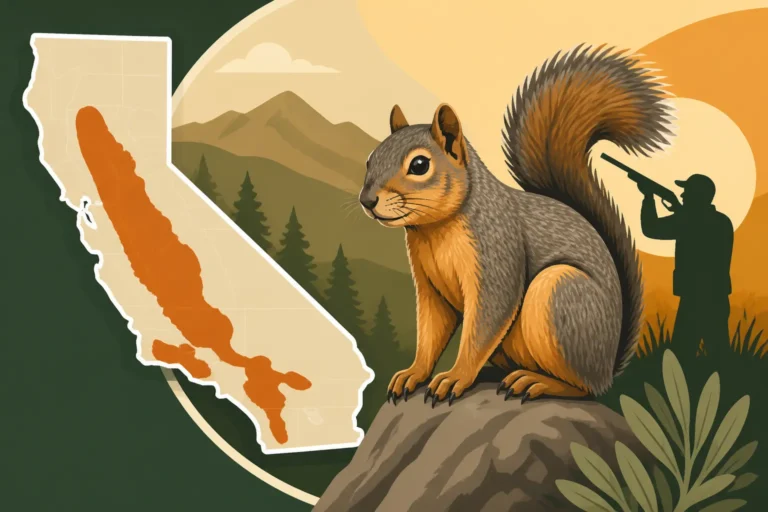
When we talk about hunting squirrels in California, we're mostly looking at two primary species: the Western gray squirrel and the Eastern fox squirrel, plus the ever-present ground squirrels. Each offers a different hunting experience and thrives in distinct environments. Knowing which species you're targeting can drastically change your approach and gear selection.
Western Gray Squirrels: The Timber Dwellers
The Western gray squirrel ( Sciurus griseus ) is truly a quintessential California forest resident. These are the large, bushy-tailed squirrels you'll often see scampering through the trees in mature oak and conifer forests. They are distinctively gray with a white belly, and they are quite beautiful animals. Their range typically includes the Sierra Nevada foothills, the Coast Ranges, and other forested areas throughout the state. You'll find them in places like Hunting California's Sierra Nevada Backcountry or Hunting Coastal Range Oak Woodlands, where ample acorns, pine nuts, and other tree-borne mast crops are available.
Hunting gray squirrels is a fantastic challenge. They are incredibly agile and have excellent eyesight and hearing. A successful gray squirrel hunt often involves a lot of stealthy still-hunting through timber, pausing frequently to scan the tree canopy and listen for their distinctive barks or the rustling of leaves. They tend to be most active in the early morning and late afternoon, foraging on the forest floor before retreating to the safety of the treetops. When spooked, they'll often "tree up," circling the trunk to keep the tree between themselves and you. Patience is absolutely paramount when pursuing these wary critters.
Eastern Fox Squirrels: The Urban Acrobats
The Eastern fox squirrel ( Sciurus niger ) is a fascinating case study in adaptation. Originally not native to California, these squirrels were introduced over a century ago and have since thrived, particularly in urban and suburban parks, golf courses, and riparian corridors. They are larger than gray squirrels, with a reddish-brown fur coat and a less bushy tail. While they can be found in wilder settings, their strong association with human-modified landscapes is notable.
Hunting fox squirrels presents a unique set of challenges, primarily due to their preference for areas close to human habitation. While they are legal to hunt in many areas, hunters must be exceptionally mindful of local ordinances regarding firearm discharge, proximity to dwellings, and general public safety. Often, the best opportunities for fox squirrels on public or private land occur along river bottoms, creek beds, or in outlying park-like areas where they might overlap with other game species. Their diet is similar to gray squirrels, focusing on nuts, seeds, and fruits, but they are also quite adept at taking advantage of urban food sources. Their willingness to inhabit areas near people makes them a good target for those looking for hunting close to home, provided you can find a safe and legal place to pursue them.
Ground Squirrels: Abundance and Agricultural Pests
California ground squirrels ( Otospermophilus beecheyi ) are probably the most commonly seen squirrel in the state, often mistaken for gophers or prairie dogs by the uninitiated. They are smaller than their arboreal cousins, typically grayish-brown, and live in extensive burrow systems. You'll find them almost everywhere: open grasslands, pastures, agricultural fields, rocky outcrops, and even highway embankments. While they are technically a game animal in California, they are also frequently considered agricultural pests due to the damage their burrowing can do to crops, irrigation systems, and livestock.
Hunting ground squirrels is a very different experience than hunting tree squirrels. It's often more about volume and pest control, though they can certainly be a fun target for honing your marksmanship. Because of their pest status, some landowners are quite open to hunters helping control their numbers. However, you must still adhere to all California hunting regulations, including season dates and bag limits, unless you are specifically operating under a depredation permit on private land, which is a different scenario entirely. They are highly alert, often standing upright on their hind legs as sentinels, making long-range shots a common occurrence. Always remember to check California's Non-Lead Ammunition Requirement as this applies to all hunting, including small game.
Exploring California's Rabbit Populations: Cottontails and Jackrabbits
Just like squirrels, California offers a couple of distinct rabbit species for hunters: the ubiquitous cottontail and the larger, faster jackrabbit. Both provide exciting hunting experiences and are fantastic table fare, but they require different strategies.
Cottontail Rabbits: Brushy Cover and Abundance
The various species of cottontail rabbits found in California, such as the Desert cottontail and the Brush rabbit, are small, stocky, and easily identifiable by their fluffy white "cotton" tail. They prefer dense, brushy cover, often found in chaparral, riparian zones, and thickets along the edges of agricultural fields. Think about those transitional areas where open fields meet dense scrub or along dry creek beds in the foothills. This is exactly where you'll find them.
Hunting cottontails is often a social affair and can be quite active. They don't typically run far when flushed, often darting into the nearest dense cover. This makes them ideal for small group hunts where one or two hunters walk through thickets while others post at the ends to intercept flushed rabbits. Many hunters also enjoy using dogs, particularly beagles, to flush and pursue cottontails, adding another layer of excitement to the hunt. The key to cottontail hunting is patience and methodical work through their preferred dense habitats. A good pair of brush pants and a robust shotgun are your best friends here. You might find them in similar spots as you would when Hunting Coastal Range Oak Woodlands, especially in the underbrush.
Jackrabbits: Open Country Speedsters
California is home to a few species of jackrabbits, most notably the Black-tailed jackrabbit ( Lepus californicus ). Despite their name, jackrabbits are actually hares, distinguished by their longer ears, longer legs, and the fact that their young are born fully furred and open-eyed. These creatures are built for speed, capable of incredible bursts to evade predators. They thrive in open country: sagebrush flats, desert washes, grasslands, and agricultural fields. You won't find them hunkering down in thick brush like a cottontail; instead, they rely on their camouflage and blistering speed to escape.
Hunting jackrabbits is often about spotting them from a distance, perhaps even with binoculars, and then executing a quick stalk or a fast shot. They tend to "sit tight" and flush when you get too close, exploding out of seemingly nowhere. This makes them a great target for those who enjoy walking and covering ground. Rimfire rifles are popular for jackrabbits, offering a challenge at longer ranges. Just like ground squirrels, they are incredibly numerous in suitable habitats, and a day chasing jackrabbits can provide plenty of shooting opportunities. Remember that a keen eye and quick reflexes are essential when hunting these desert speed demons. You might spot them while Hunting a BLM Desert Wash for Mule Deer.
Where to Find Squirrels and Rabbits in California
Finding good spots for small game can sometimes feel like a puzzle, especially with California's vast and varied landscape. But the truth is, opportunities abound if you know where to look and how to approach land access.
Public Land Opportunities for Small Game
California boasts a tremendous amount of public land managed by various agencies, offering excellent small game hunting. National Forests are prime real estate for Western gray squirrels, especially those with good oak stands. Places like the Plumas, Stanislaus, or Los Padres National Forests, along with Six Rivers National Forest Hunting, can be fantastic. You'll often find pockets of cottontails in the brushy draws and clearings within these forests, too. For jackrabbits and ground squirrels, vast tracts of BLM (Bureau of Land Management) land, particularly in the Central Valley, high desert, and Southern California, offer expansive hunting grounds. Hunting California's BLM Desert Land can be incredibly productive for these species.
California's Wildlife Areas and Ecological Reserves, managed by CDFW, are also fantastic resources. While some areas might have specific regulations or require a reservation for waterfowl or big game, many allow walk-in public access for small game. It's crucial to check the specific regulations for each wildlife area you plan to visit, as rules can vary greatly. Many of these areas are specifically managed for wildlife habitat, which often means excellent cover and food sources for rabbits and squirrels. Tools like the GoHunt app can be incredibly helpful for identifying public land boundaries and researching specific regulations for different areas. Before heading out, always consult the CDFW website or local office for details on specific areas and current conditions.
Accessing Private Land for Small Game Hunting
While public land offers a lot, don't overlook the potential of private land, especially for ground squirrels and cottontails. Farmers and ranchers often view ground squirrels as pests, and some might welcome responsible hunters who can help reduce their numbers. For cottontails, private properties with overgrown fencerows, abandoned orchards, or brushy creek bottoms can hold excellent populations.
The key to private land access is respectful communication. Knocking on doors and simply asking for permission can open up a lot of opportunities. Be polite, explain exactly what you want to hunt, offer to share your harvest, and always leave the property better than you found it. Landowners appreciate hunters who respect their property, gates, and livestock. Sometimes, a "no" today might turn into a "yes" next season, so build relationships. Consider offering to help with a small chore around the property. Being known as a courteous and helpful hunter can provide invaluable access that others overlook. For more on this, check out our guide on Knocking on Doors in California Ranch Country.
Essential Gear and Tactics for California Small Game
Hunting small game isn't as gear-intensive as big game, but having the right tools and knowing how to use them effectively will significantly increase your success and enjoyment.
Recommended Firearms and Ammunition
For squirrels, a .22 caliber rimfire rifle is a classic choice. It's accurate, quiet, and delivers plenty of punch for a clean kill without over-damaging the meat. Both .22LR and .17 HMR are popular options. Shotguns, typically in 20 gauge or 12 gauge, loaded with small shot (like #4, #5, or #6), are also excellent, especially for fast-moving tree squirrels in dense canopy or when jump-shooting cottontails. Remember, California's non-lead ammunition requirement applies to all small game hunting. So, be sure to use lead-free bullets or shot. Check out our guide on Choosing Non-Lead Rifle Ammunition in California for more details on options.
For rabbits, rimfire rifles are great for jackrabbits in open country, allowing for longer shots. For cottontails in brush, a shotgun is often preferred for its wider pattern, increasing your chances on a fast-flushing target. Many hunters also enjoy hunting small game with a .22 air rifle, which is incredibly quiet and effective at close range, making it ideal for wary squirrels. Regardless of your chosen firearm, ensure it's sighted in properly, and you're comfortable with its use. A pair of good binoculars can also be helpful, even for small game, especially when Glassing a Burn Scar for a Feeding Bear, but also for spotting those camouflaged jackrabbits in open terrain.
Effective Hunting Strategies for Squirrels and Rabbits
Still-Hunting and Stalking: This is a fantastic method for tree squirrels. Move slowly through the woods, stopping frequently to scan the trees and listen. Look for movement, listen for nuts dropping or barks. When you spot one, try to get a clear shot. For cottontails, still-hunting through brushy edges and creek bottoms can jump them up. Patience is crucial.
Sitting and Waiting: For tree squirrels, especially in areas with abundant mast, finding a good vantage point near oak trees or nut groves and waiting can be very effective. Squirrels will eventually move to feed. This is a great strategy for a quiet morning hunt.
Flushing and Driving: This tactic works exceptionally well for cottontails. As mentioned earlier, a small group of hunters can walk through dense cover, pushing rabbits toward "blockers" positioned at the ends of the thicket. Dogs can also be incredibly effective at flushing rabbits from dense cover.
Calling: While less common for rabbits, some hunters use distress calls for coyotes, which can sometimes bring in curious fox squirrels or even jackrabbits. For squirrels, imitating their barks or alarm calls can sometimes draw them closer or make them reveal their position. This is similar to how you might use Calls for California Valley Quail, adapting it for squirrels.
Pest Control Hunts: For ground squirrels, a common tactic is to find a vantage point overlooking an active burrow system or agricultural field and pick off squirrels as they emerge. This often involves careful range estimation and accurate shooting. Using an app like GoHunt can help you scout and plan your approach for these types of hunts, ensuring you're aware of terrain and any potential hidden burrows.
Small Game Season Dates and Regulations
Understanding the specific season dates, bag limits, and other regulations for small game in California is paramount. These rules are designed to ensure sustainable populations and safe hunting for everyone.
Navigating California's Squirrel Seasons and Limits
Generally, California's gray and fox squirrel seasons are quite generous, often opening in September and running through January, with some regional variations. The daily bag limit is typically set at a reasonable number, often four squirrels per day. However, it's absolutely critical to consult the most current CDFW Hunting Regulations booklet for the specific zone or county you plan to hunt. Rules can change annually, and knowing the exact dates and limits for "tree squirrels" in your area will keep you legal.
Ground squirrels often fall under different regulations, sometimes having no closed season or bag limit in certain areas, particularly when they are designated as pests. However, this is not a universal rule, and you must verify it for your specific hunting location. Never assume; always check the regulations. Remember that a basic California Resident License Options, plus a small game validation, is required for squirrel hunting.
Understanding Rabbit Season Rules
Cottontail rabbit and jackrabbit seasons are also usually quite open in California. Cottontail season often runs for several months, typically starting in July or September and extending into late January. Bag limits are common, often around five per day. Jackrabbits, on the other hand, frequently have no closed season or bag limit in many areas, reflecting their abundance and sometimes their pest status.
Again, the golden rule applies: always check the latest CDFW regulations. This is where the value of resources like the GoHunt app comes into play, as they can sometimes integrate regulatory information or at least point you directly to the source. Understanding these specific rules is just as important as knowing how to hunt the animal itself. Being informed not only protects you from potential violations but also ensures that small game populations remain healthy for future generations of hunters. From California Hunter Education Requirements to specific zone regulations, being a knowledgeable hunter is key to enjoying all that California small game has to offer.
Disclaimer
This article is for general informational purposes only and does not constitute professional advice. Laws, prices and regulations vary by location and change over time. Consult a qualified professional for guidance on your specific situation.