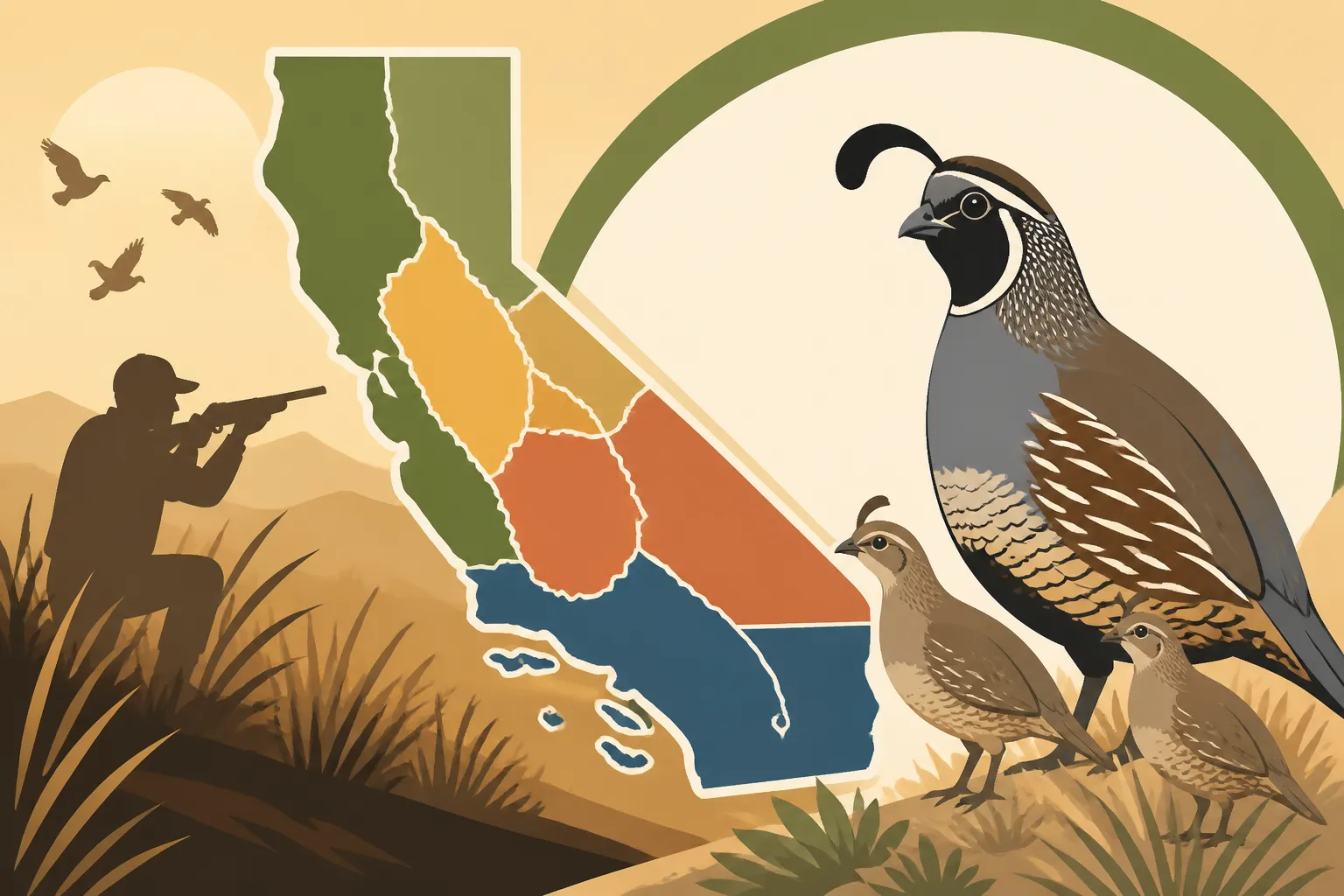
California Valley Quail Numbers by Region
It can feel like you're chasing ghosts sometimes when you're after those elusive California Valley Quail, especially if you're exploring new territory or just haven't had consistent luck. Understanding where these quick-flying, vocal birds actually thrive, and getting a handle on why their numbers can fluctuate so much across California's incredibly diverse landscapes, is absolutely essential for more successful and rewarding hunts. This guide will dive deep into the regional distribution of Valley Quail, helping you pinpoint the best areas and understand the critical factors that shape their local populations.
The Elusive California Valley Quail: An Overview of Their World
Ah, the California Valley Quail (scientific name Callipepla californica)—the official state bird for a reason! These little dynamos are a quintessential part of the California landscape, from the coastal scrub to the high desert fringes. But don't let their widespread presence fool you; finding them in huntable numbers can be a real challenge. They're masters of camouflage and cover, preferring dense, thorny thickets, riparian corridors, and brushy hillsides where they can dart in and out of sight in a flash.
What makes their populations so interesting, and sometimes frustrating, for hunters is their susceptibility to environmental shifts. A good rain year can mean an explosion of birds, while a prolonged drought can decimate coveys. They’re tied closely to specific habitat requirements: places with good escape cover, reliable water sources, and abundant seeds, greens, and insects for food. Without all three, their numbers will inevitably struggle. So, when we talk about where they are, we're really talking about where these elements align perfectly for them. Understanding California Valley Quail Population Trends can give you a historical context for what's happening today.
What Shapes Quail Abundance?
The density of Valley Quail isn't just random; it's a complex interplay of environmental factors. Think of it like this: every covey needs a grocery store, a secure home, and a reliable water fountain. If any of those are missing or compromised, the birds move on or simply don't survive.
- Habitat Quality: This is arguably the biggest driver. Quail need a mosaic of thick cover (chaparral, dense shrubs, blackberry brambles, oak woodlands), open areas for feeding, and access to water. Monoculture farming or heavily grazed rangeland tends to have fewer birds.
- Weather Patterns: Rainfall, especially in late winter and spring, is crucial. It dictates the abundance of herbaceous plants and insects, which are vital food sources for adults and especially for growing chicks. A dry spring means fewer chicks survive to adulthood. Extreme heat can also stress birds, driving them closer to limited water sources.
- Predation: Coyotes, bobcats, raptors, and even domestic cats and dogs can take a toll on coveys, particularly on nesting hens and young chicks. Areas with high predator densities, or fragmented habitats that funnel quail into vulnerable spots, often see lower numbers.
- Hunting Pressure: While hunting is generally managed sustainably and isn't a primary driver of overall population decline, localized over-pressure on specific public land spots can certainly make finding birds harder during the season. It often means birds become "educated" and move to thicker, less accessible cover.
- Disease: While not as commonly discussed as other factors, diseases or parasites can occasionally impact local populations, though widespread outbreaks are less frequent for quail compared to some other game species.
Knowing these factors helps you read the landscape. If you're scouting an area and notice it's lacking dense cover or water, your expectations for finding big coveys should be adjusted. Tools like those offered by GoHunt can help overlay habitat maps with land ownership, giving you a distinct advantage in your scouting efforts.
Regional Breakdown: Where California Valley Quail Thrive
California is a huge state, and its diverse geography means that Valley Quail populations can look drastically different from one region to the next. What works in the coastal ranges might not apply in the foothills of the Sierra or the edges of the desert. Let's explore some of the key regions and what you might expect to find.
North Coast and Inner Coast Ranges
This region, stretching from Del Norte County down through Mendocino, Lake, and Sonoma, and into the heart of the inner Coast Ranges, often boasts some excellent quail habitat. The mix of oak woodlands, chaparral, and riparian zones provides ample food and cover. Rainfall is generally more consistent here than in other parts of the state, which contributes to more stable populations. You'll find good numbers in the valleys, along creek bottoms, and on brushy hillsides. However, access can be a challenge due to extensive private timberland and ranching. When hunting these areas, understanding Hunting Coastal Range Oak Woodlands tactics can be incredibly beneficial.
Sierra Nevada Foothills
Moving eastward, the Sierra Nevada foothills, particularly the lower and mid-elevations, are classic Valley Quail country. Think of the rolling hills from Butte County down through Mariposa, Madera, and into Kern. These areas are characterized by vast expanses of oak savanna, scattered pines, and dense patches of manzanita and other brush. The terrain can be steep and rugged, but pockets of high bird density are common, especially around natural springs, old homesteads, and areas with diverse vegetation. Post-fire landscapes can also be fantastic for quail a few years after a burn, as new growth provides fresh food and cover. However, hunting pressure can be significant on accessible public lands. Hunters often find success here with good boots and solid grit, pushing through the thick stuff where others won't.
Central Valley and Its Edges
The Central Valley itself, being largely agricultural, can be a mixed bag. The intensively farmed areas generally hold fewer quail, but the fringes—where agriculture meets wilder habitat, along major river systems, and on the lower slopes of the surrounding foothills—can be incredibly productive. Areas like the eastern side of the San Joaquin Valley, with its blend of irrigated fields, river bottoms, and adjacent oak woodlands, often host robust populations. Quail here utilize irrigation ditches, fencerows, and fallow fields for food, retreating to thicker riparian strips or brushy edges for cover. The San Joaquin Valley and Sacramento Valley have significant agricultural zones, and finding those transition areas is key.
Southern California Chaparral and Foothills
From the Tehachapis south to the Mexican border, Southern California presents a unique landscape dominated by dense chaparral, coastal sage scrub, and scattered oak groves. Valley Quail are definitely present here, thriving in the rugged canyons and brushy hillsides of areas like the Cleveland National Forest or the public lands in San Diego and Riverside counties. Rainfall can be more sporadic, making water sources even more critical. During dry years, coveys may be concentrated around limited water, while wet years can spread them out. Access can be difficult due to steep terrain and dense brush, but those willing to put in the work can find good numbers. When you're out there, having the right gear, like sturdy boots and appropriate layering for diverse weather, is a must.
Eastern Sierra and High Desert Fringes
While less commonly associated with Valley Quail, the eastern slopes of the Sierra Nevada and the higher elevation fringes of the Mojave Desert also hold populations. These areas are typically drier, and quail numbers can be more localized and dependent on specific microhabitats—think riparian corridors along creeks, springs, or areas with persistent sagebrush and bitterbrush. Success here often depends on covering a lot of ground and focusing on those critical water and cover features. The birds here can be especially wary and hard-flushing due to the more open country.
Localized Pockets and Micro-Habitats: Finding the Gems
Beyond the broad regional classifications, understanding micro-habitats is paramount for finding concentrated quail numbers. Even in a region with generally low quail populations, a small, isolated pocket with ideal conditions can hold a surprisingly large covey.
Riparian Zones and Creek Bottoms
Anywhere there's a permanent or semi-permanent water source, especially with dense vegetation along its banks, is a magnet for Valley Quail. Creek bottoms, river edges, and even small seeps and springs offer water, lush greens, and thick cover from predators and the elements. These are often linear features that you can follow, working your way upstream or downstream. Look for tracks in the mud, droppings, and listen for their distinctive calls.
Old Homesteads and Abandoned Orchards
Farms and homesteads that have been abandoned often create fantastic quail habitat. The mix of old fruit trees, overgrown fields, and the introduction of non-native plants like blackberries can create a dense, diverse cover that quail absolutely love. These spots often retain historic water sources or have a higher concentration of seeds from past cultivation. They're like little oases of quail heaven.
Brush Piles and Clearings
Logging operations, agricultural clearing, or even natural blowdowns can result in large brush piles. These provide incredible escape cover and roosting sites. Coupled with nearby clearings or edges where quail can feed, they form ideal habitat. Look for transitions where dense brush meets more open ground, as these "edges" are frequently used by quail. Using an app for California BLM Land Status can help you identify public land areas that might have these features.
Hunting Strategies Informed by Regional Data
Knowing where the birds might be is one thing, but knowing how to hunt them effectively in those specific regions is another. Your strategy needs to adapt to the local conditions and the typical behavior of quail in that environment.
Leveraging Technology for Scouting
In today's hunting world, mapping apps are non-negotiable, and platforms like GoHunt provide invaluable tools for scouting. You can identify public land boundaries, analyze topography for natural travel corridors or water sources, and even pinpoint areas of dense vegetation that might hold birds. Before you even set foot in the field, you can do a lot of virtual scouting to narrow down your focus areas. Look for the confluence of thick brush, water, and varied terrain on satellite imagery. This is especially useful for Scouting California Public Land Before Season.
Adapting to Terrain and Cover
- Dense Chaparral (Southern California, Coast Ranges): Expect tough going. You'll often hear birds before you see them. Hunting with a partner to work a flush can be effective. Consider Quail Hunting California Foothill Chaparral tactics, which often involve pushing through dense cover. Dogs, especially flushers or close-working pointers, are a huge asset here.
- Oak Woodlands (Sierra Foothills, Coast Ranges): Quail in these areas might use the oak canopy for roosting and the understory for cover. Focus on the brushy edges, creek bottoms, and areas with good acorn crops. A good setter or pointer can systematically work these areas.
- Agricultural Edges (Central Valley): Here, you're looking for those linear strips of cover—fencerows, ditch banks, irrigation canals, and riparian zones. Birds will feed in fields and retreat to these corridors. It often involves long walks and being ready for fast flushes from unexpected places.
When to Bring a Dog
For Valley Quail, a good bird dog is often the difference-maker. Their ability to locate birds by scent, hold them on point, or flush them to your gun is unmatched. This is particularly true in thick cover where visibility is limited, or in open country where birds might run a long way. If you're considering a dog, check out Running Pointing Dogs on California Valley Quail. A well-trained dog can turn a frustrating hunt into a highly successful one by working the dense patches you'd otherwise walk past.
Understanding Hunting Pressure
Especially on public lands, popular spots can see significant hunting pressure, making the birds more wary and prone to running or flushing wild. To counter this, consider:
- Hunting midweek: Avoid the weekend crowds if possible.
- Walking further: Many hunters stick to easily accessible areas. Go the extra mile, push into the thicker, steeper terrain, and you might find undisturbed coveys. Check out tips for Finding Ground That Sees Fewer Hunters.
- Timing: Early morning and late afternoon are generally prime times, but don't discount midday if you're pushing heavy cover where birds might be loafing.
Conservation and the Future of California Valley Quail
As hunters, we're keenly aware of the ebb and flow of game populations. While Valley Quail are generally robust, their numbers are sensitive to habitat loss and climate shifts. Long-term drought, wildfires that completely incinerate large swaths of habitat (rather than beneficial mosaic burns), and unchecked development can all chip away at their available range.
The California Department of Fish and Wildlife (CDFW) monitors these populations and sets seasons and bag limits to ensure sustainability. Hunters contribute directly to conservation through license and tag fees, which fund habitat restoration projects, research, and law enforcement. Being responsible stewards of the land, respecting private property, and practicing ethical hunting are all part of ensuring future generations can experience the thrill of a bursting covey of Valley Quail.
For new hunters, or those looking to refresh their knowledge, remember to always stay current on regulations and safety by reviewing California Hunter Education Requirements. It's not just about passing a test; it's about being a responsible, knowledgeable participant in our hunting heritage.
Conclusion
The pursuit of California Valley Quail is a challenging but incredibly rewarding endeavor. By understanding the regional variations in their populations, the micro-habitats they prefer, and the factors that influence their numbers, you can significantly increase your chances of success. It's about more than just locating birds; it's about appreciating the intricate relationship between these iconic game birds and the diverse landscapes they call home. So, study your maps, pay attention to the details on the ground, and get ready for some exhilarating covey flushes!
Disclaimer
This article is for general informational purposes only and does not constitute professional advice. Laws, prices and regulations vary by location and change over time. Consult a qualified professional for guidance on your specific situation.