California Desert Tortoise Protection Status
For those of us who spend time exploring California's vast and often challenging landscapes, encountering wildlife is part of the draw. However, when you're afield in the state's incredible desert regions, there's a particular resident whose presence carries significant implications for your activities: the desert tortoise. This guide aims to shed light on the California desert tortoise's protected status, what that means for hunters and other outdoor enthusiasts, and how we can all responsibly share their fragile habitat.
The Fragile World of the California Desert Tortoise
Imagine trying to survive in some of California's most extreme environments, enduring scorching summers and surprisingly cold winters, all while finding enough to eat and a safe place to burrow. That's the daily reality for the desert tortoise (Gopherus agassizii), an iconic reptile that has called the Mojave and Colorado deserts home for millions of years. These incredible creatures are perfectly adapted to their arid surroundings, capable of living for 50 to 80 years, slowly but surely traversing the sandy washes and rocky hillsides.
They’re primarily herbivores, munching on a variety of desert plants, especially after the sparse desert rains bring forth a flush of annual wildflowers and grasses. This unique diet and their reliance on burrows – sometimes several feet deep – to escape the temperature extremes are central to their survival. Seeing one of these ancient reptiles slowly making its way across the desert floor is a truly special experience, a living testament to resilience.
Habitat and Range in California
In California, the desert tortoise's primary range is found in the Mojave Desert, stretching across counties like San Bernardino, Kern, Inyo, and parts of Los Angeles County. You'll find them anywhere from sandy flats to rocky bajadas and alluvial fans, generally at elevations below 3,500 feet, though they can occasionally be found higher. These areas often include vast tracts of public land managed by the Bureau of Land Management (BLM) and parts of various national forests. Hunting California's BLM Desert Land is a common pursuit in these areas, and it's precisely why understanding tortoise habitat is so crucial.
Their survival is intricately linked to specific plant communities and soil types that allow them to dig their burrows and provide essential forage. They’re not just randomly distributed; certain areas, known as "crucial habitats" or "critical habitats," are particularly vital for their population's health and recovery. These are the places where tortoise densities are highest and where their continued existence is most threatened by human activity and environmental changes.
Threats to Desert Tortoise Survival
Unfortunately, the desert tortoise faces a daunting array of threats that have led to significant population declines over the last several decades. Habitat loss and fragmentation due to urban development, agriculture, and infrastructure projects like roads and pipelines are huge factors. Imagine a tortoise trying to cross a newly paved highway that bisects its traditional foraging grounds – it's a dangerous proposition, often ending in tragedy. Vehicle strikes on both paved and unpaved roads are a major killer.
Another significant issue is disease, particularly Upper Respiratory Tract Disease (URTD), which has devastated many populations. This disease is highly contagious and can spread rapidly, especially when tortoise populations are stressed or concentrated. Predation by ravens, coyotes, and domestic dogs has also increased in some areas, particularly affecting juvenile tortoises, which are more vulnerable before their shells fully harden. Lastly, climate change, with its potential for increased droughts and extreme temperatures, poses a long-term threat to their food sources and overall habitat suitability. It's a complex web of challenges that makes their protected status so incredibly important.
Understanding Their Protected Status and Why It Matters
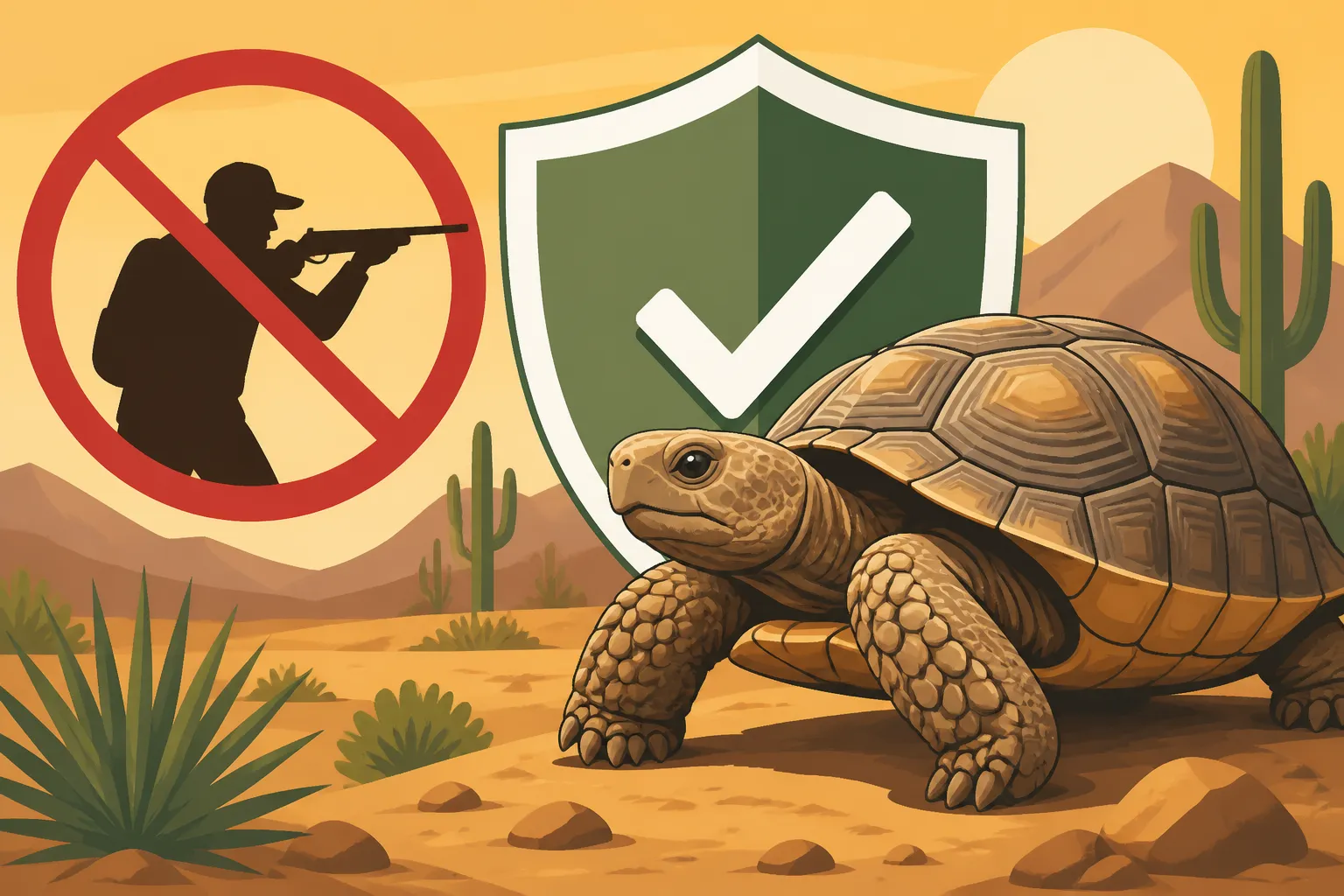
Given the severe threats and the significant population declines, both federal and state agencies have stepped in to provide legal protection for the desert tortoise. This isn't just a suggestion; it's a series of laws and regulations designed to prevent their extinction and aid in their recovery. For anyone enjoying California's deserts, particularly hunters, understanding these protections isn't just good practice—it's legally mandatory.
State and Federal Designations
The desert tortoise is listed as a Threatened species under both the California Endangered Species Act (CESA) and the federal Endangered Species Act (ESA). This dual listing means they receive comprehensive protection from both state and federal governments. The "threatened" designation means the species is likely to become endangered in the foreseeable future throughout all or a significant portion of its range. The ESA, in particular, is one of the strongest environmental laws in the world, prohibiting the "take" of listed species.
"Take" is a broad term that goes beyond just killing an animal. It includes harassing, harming, pursuing, hunting, shooting, wounding, trapping, capturing, or collecting a listed species, or attempting to do so. It also extends to modifying or degrading their habitat in a way that harms them. This is why our actions in desert habitats carry so much weight. It’s not just about avoiding direct harm to a tortoise you see, but also being mindful of how your presence and activities might indirectly affect their ability to survive and thrive.
The Ramifications of "Take"
For hunters, hikers, off-roaders, and anyone else recreating in the desert, understanding the implications of "take" is critical. If you accidentally drive over a tortoise, fill in a burrow, or even disturb one such that it leaves its burrow and becomes exposed to predators or extreme temperatures, you could be in violation of these laws. The intent doesn't always have to be malicious; even accidental harm can have legal consequences. Imagine you're driving a truck on an unpaved road in a known tortoise habitat, maybe looking for a good spot for Hunting a California BLM Desert Wash for Deer. If a tortoise is slow-moving and crosses your path, an accident could have serious ramifications.
The penalties for violating these protections can be severe, including substantial fines and even imprisonment. It’s not something to take lightly. The goal isn't to punish people who are genuinely trying to enjoy the outdoors, but to create a strong deterrent against actions that further jeopardize this species. Agencies like the California Department of Fish and Wildlife (CDFW) and the U.S. Fish and Wildlife Service are diligent in enforcing these regulations, especially in designated critical habitat areas.
Navigating Public Lands with Tortoises in Mind
Hunting and recreating on California's public lands, especially in desert areas, requires an extra layer of awareness when it comes to the desert tortoise. These areas, rich in biodiversity and often open to multiple uses, are also home to these protected reptiles. Responsible outdoor ethics are paramount to ensure that our activities don't inadvertently contribute to their decline.
Identifying Tortoise Habitat
The first step to responsible desert recreation is knowing where tortoises live. While they are broadly distributed across the Mojave, certain areas have higher densities and are officially designated as critical habitat. Mapping tools and resources provided by the CDFW, the BLM, and the U.S. Fish and Wildlife Service are invaluable. When planning your trips, especially for activities like Hunting Mojave Desert Fringe Country or other desert explorations, consult these maps thoroughly. Some land management plans specifically delineate areas where tortoise presence is high and restrict certain activities or impose specific guidelines.
You might not always see a tortoise, but you can look for signs of their presence: burrows, scat, or tracks in sandy areas. A desert tortoise burrow can look like a small cave entrance, often with a crescent-shaped opening. If you see such a sign, consider it a strong indicator that you are in tortoise country, and proceed with extreme caution. Utilizing mapping applications like GoHunt can provide overlays for public and private land boundaries, and often highlight sensitive areas or specific management zones where additional rules might apply, helping you visualize potential tortoise habitats.
Vehicle and Foot Traffic Guidelines
One of the biggest threats to tortoises is vehicle traffic. For this reason, adherence to designated routes is not just a suggestion, but a strict requirement in many desert areas. Stick to established roads and trails, and never drive off-road. Even seemingly harmless excursions into washes or over undisturbed terrain can crush burrows, collapse tunnels, or kill tortoises that are hidden from view. The same applies to ATV and off-highway vehicle (OHV) use; always stay on marked trails. You can find detailed information on Vehicle Rules on California Public Land through the BLM or Forest Service websites.
When on foot, particularly during warmer months when tortoises are most active, keep a keen eye on the ground. They are slow-moving and can be surprisingly camouflaged. If you encounter a tortoise, maintain a respectful distance. Never touch, harass, or pick up a wild tortoise unless it is in immediate danger (e.g., on a road), and even then, only move it a short, safe distance in the direction it was headed, reporting the incident to wildlife authorities.
| Activity Type | Permitted in General Tortoise Habitat | Specific Considerations |
|---|---|---|
| Hunting (Legal Game) | Yes, with restrictions | Must use designated roads, be aware of burrows, no off-roading. |
| Off-Roading (OHV/ATV) | Only on designated routes | Strict adherence to marked trails; avoid crushing burrows. |
| Hiking/Backpacking | Yes | Stay on trails where possible, watch for tortoises, no disturbing burrows. |
| Camping | In designated campsites | Keep camp clean, secure food, ensure no waste attracts predators. |
| Shooting | In designated areas | All non-lead rules apply; ensure targets are not on burrows. |
Note: Specific rules can vary by management area. Always check local regulations.
Camping and Firewood Collection
Camping in desert tortoise habitat also comes with responsibilities. When setting up camp, choose established campsites or previously disturbed areas. Avoid digging new fire pits or clearing vegetation in undisturbed areas, as you could inadvertently collapse a shallow burrow or destroy tortoise forage. Camping Rules on California National Forest Land and BLM lands often specify where you can pitch a tent and have a campfire.
Firewood collection is another area where caution is needed. Downed wood can provide shelter for smaller animals, including juvenile tortoises, and removing it can disturb the delicate desert ecosystem. Stick to collecting wood only where explicitly allowed and from designated piles, or better yet, bring your own firewood to minimize impact. Additionally, improper waste disposal can attract predators like ravens and coyotes, which in turn can prey on tortoises. Always pack out everything you pack in, and leave no trace.
What Hunters and Outdoor Enthusiasts Need to Know
For those of us who cherish the experience of hunting and exploring California's wild spaces, understanding and respecting the desert tortoise's protected status is part of being a responsible steward of the land. It means being prepared, educated, and mindful of our actions. This isn't about curtailing outdoor pursuits entirely, but about ensuring they can continue sustainably alongside vulnerable wildlife.
Pre-Trip Planning and Research
Before you even load your gear, comprehensive pre-trip planning is crucial. Start by identifying if your intended hunting or recreation area falls within desert tortoise habitat. Utilize online resources from the CDFW, BLM, and National Forest Service. Many of these agencies provide detailed maps and specific guidelines for protected areas. For instance, if you're planning a trip to the Carrizo Plain or specific parts of the Mojave Desert, you'll find information on access points, designated routes, and areas of high tortoise density. GoHunt is an excellent tool for overlaying public land boundaries, wilderness areas, and sometimes even specific habitat designations that can help you plan your route to avoid or minimize impact on sensitive areas.
It's not enough to just glance at a map. Read up on any specific regulations for the precise area you'll be in. Some wilderness areas or ecological reserves might have stricter rules regarding vehicle access, camping, or even where you can walk. The more informed you are, the less likely you are to accidentally run afoul of the law or, more importantly, harm a tortoise.
During Your Hunt or Outdoor Activity
Once you're in the field, vigilance is key. If you're Hunting a California BLM Desert Wash for Deer, for example, you're in prime tortoise territory. Drive slowly on all designated dirt roads, scanning ahead for any movement. Tortoises are often out during the cooler parts of the day in spring and fall, and sometimes after summer rains, but they can be active any time the temperature is right for them. Always assume they might be present, even if you don't see one immediately.
When walking, watch your step, especially in brushy areas or near rocky outcrops where tortoises might seek shelter or dig burrows. If you find a tortoise burrow, leave it undisturbed. Do not peer inside, drop anything into it, or attempt to dig around it. These burrows are their homes, their safe havens from predators and extreme weather, and disturbing them can have fatal consequences for the occupant. Remember, the "take" definition is broad, so even seemingly benign actions like repeatedly approaching a tortoise in its burrow could be considered harassment if it alters the animal's natural behavior.
Reporting Sightings and Incidents
Knowing how to report both sightings and incidents is a crucial part of being a responsible desert visitor. If you see a tortoise, especially in an unusual location (like in the middle of a busy road), or if you witness someone harassing or harming a tortoise, report it immediately. The CDFW has various reporting mechanisms, including a hotline and online forms. Note the exact location, time, and any distinguishing features of the tortoise or individuals involved.
If you accidentally injure or kill a tortoise, or if you find a deceased one, it is imperative to report it. Do not attempt to move the animal or cover up the incident. Contact the CDFW or the local land management agency immediately. They will guide you on the necessary steps. This transparency is vital for wildlife managers to track populations, understand threats, and implement effective conservation strategies. It might feel uncomfortable, but it's the right thing to do for the species' long-term survival. Your actions directly contribute to the ongoing efforts to protect these incredible creatures.
Disclaimer
This article is for general informational purposes only and does not constitute professional advice. Laws, prices and regulations vary by location and change over time. Consult a qualified professional for guidance on your specific situation.