Hunting Los Padres Without Lead Ammunition
Hunting in California, especially in expansive and rugged areas like the Los Padres National Forest, presents its own set of unique challenges. Not only do you contend with vast, often steep and brushy terrain, but you also need to navigate the state's comprehensive lead ammunition ban. This guide is here to walk you through everything you need to know about successfully hunting Los Padres National Forest while adhering to California's non-lead ammunition requirement, ensuring you're both ethical and effective in the field.
Navigating the Los Padres National Forest for the Hunter
The Los Padres National Forest is a truly impressive expanse, stretching over nearly two million acres across the central coast mountain ranges of California. For hunters, it offers a diverse and often demanding landscape. It's not just a weekend trip; it's a commitment to understanding the nuances of a vast, wild area that demands respect and thorough preparation.
Vastness and Diverse Terrain
When you look at a map of Los Padres, you see a patchwork of towering peaks, deep canyons, chaparral-covered hillsides, and pockets of oak woodland. This isn't a manicured park; it's raw, untamed wilderness. You might start your day hiking through cool, shaded creek bottoms only to find yourself scrambling up sun-baked, rocky ridges choked with dense, thorny brush just an hour later. The sheer scale means that hunting here isn't about finding a "honey hole" as much as it is about understanding how animals use this varied terrain. Deer, bear, and even wild pigs will move constantly, dictated by water sources, forage, and escape cover, all of which change dramatically with elevation and aspect. Planning for this means studying detailed topo maps, understanding elevation changes, and anticipating thermals. Hunting California's Los Padres National Forest goes into more detail on specific areas within the forest.
Key Hunting Opportunities within Los Padres
While deer are arguably the most sought-after game in Los Padres, the forest also offers opportunities for other species. Columbia blacktail deer thrive in the coastal ranges, utilizing the dense chaparral and oak woodlands for cover. You'll often find them browsing on tender new growth after a fire or seeking acorns in the fall. Black bears also roam these mountains, often found near berry patches or spring seeps. Wild pigs are another prevalent species, especially in the lower, oak-rich canyons and areas bordering private agricultural lands. While less common, some areas might offer opportunities for small game like quail and rabbits. Each species demands a different approach, but the common thread is the need for stealth, patience, and a deep understanding of the animal's behavior in this rugged environment.
Understanding Access and Wilderness Areas
A significant portion of the Los Padres National Forest is designated as wilderness, which impacts how you can access and hunt certain areas. Wilderness areas often prohibit mechanized vehicles, meaning you're on foot, horseback, or mountain bike. This can be a blessing and a curse. It means fewer hunters penetrate the deepest reaches, offering a more genuine wilderness experience, but it also demands a higher level of physical fitness and planning for packing out any game you might harvest. Understanding which roads are open to vehicles versus those designated for foot traffic or administrative use only is critical. Tools like the onX Hunt app, with its detailed public and private land layers, become indispensable for navigating these boundaries and understanding legal access points. Before heading out, it's always wise to check the National Forest website for any fire-related closures or seasonal restrictions that could affect your planned hunt. Los Padres Ridgeline Public Access also has some valuable information on how to get into the backcountry.
California's Non-Lead Mandate: What it Means for Los Padres Hunters
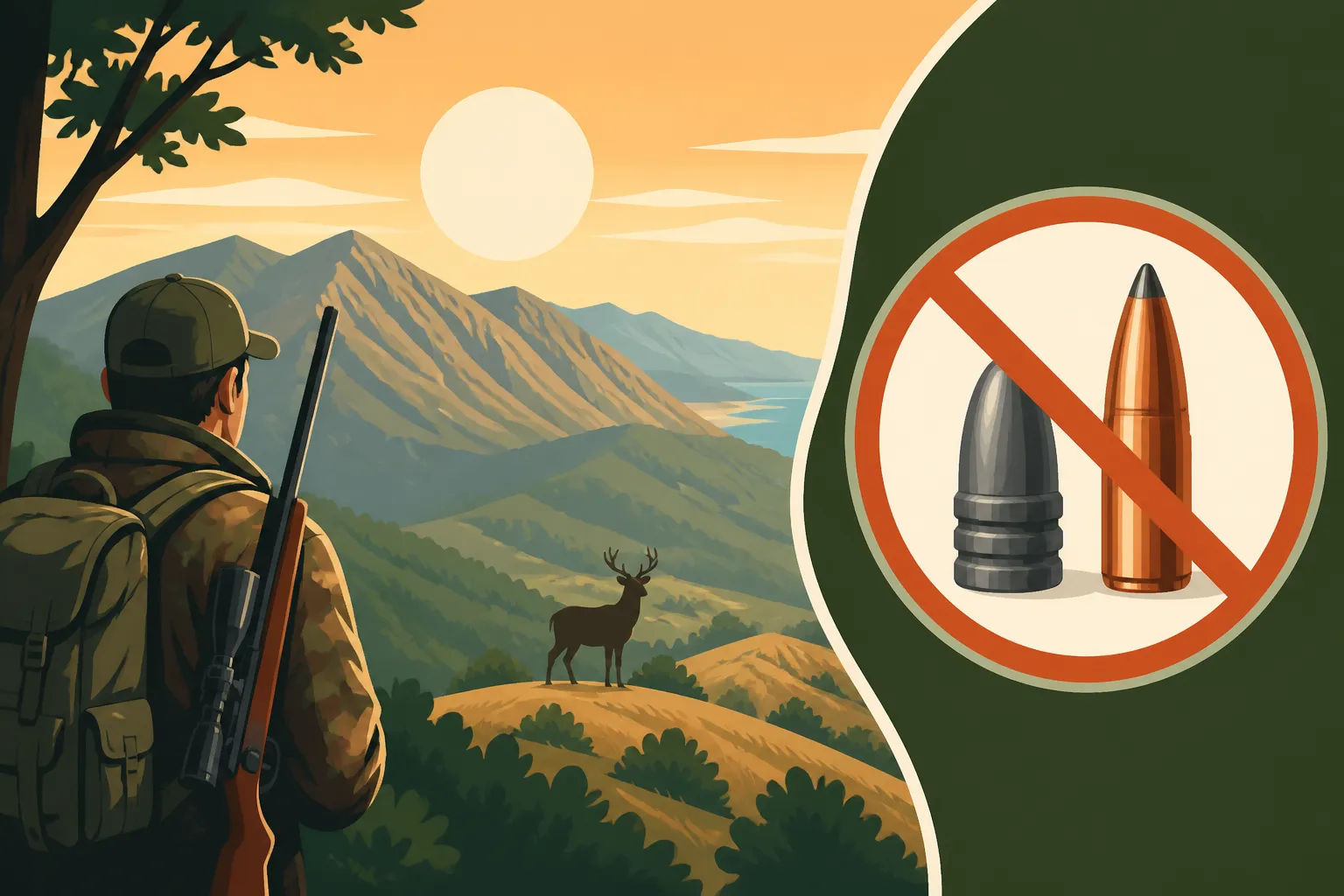
California took a pioneering step in wildlife conservation by implementing a statewide ban on lead ammunition for all hunting, and this mandate profoundly impacts anyone planning to hunt in Los Padres National Forest. It's not just a suggestion; it's the law, and understanding it is paramount for any ethical and legal hunt.
The Statewide Lead Ammunition Ban Explained
The journey to a statewide non-lead requirement was a long one, driven by concerns over lead poisoning in wildlife, particularly scavengers like the California condor, which would ingest lead fragments from animal carcasses left in the field. What started as restrictions in specific condor habitats eventually expanded, culminating in a full statewide ban for all hunting by 2019. This means that if you're hunting anywhere in California, including Los Padres, you must use ammunition that contains no lead projectiles. This applies to rifles, shotguns, and handguns, regardless of the game species you're pursuing. It represents a significant shift for many hunters who grew up with traditional lead-core bullets, and it requires conscious effort to adapt. California's Non-Lead Ammunition Requirement breaks down the regulations in more detail.
Specifics for National Forests like Los Padres
While the ban is statewide, its impact is particularly felt in extensive public lands like the Los Padres National Forest. Unlike some private lands where enforcement might feel more distant, hunting in a National Forest means you're under the direct purview of federal and state wildlife agencies. Forest Service rangers and game wardens are actively patrolling these areas, and they will check for compliance. Being caught with lead ammunition in your rifle or even just in your pack while hunting can result in significant fines, confiscation of equipment, and loss of hunting privileges. It's not worth the risk. The law is clear: if you're hunting in Los Padres, or any other part of California, your ammunition must be non-lead.
Impact on Hunting Practices and Ethics
Beyond the legal aspect, the non-lead mandate has influenced hunting ethics and practices. For many, it's about being good stewards of the land and wildlife. Knowing that your harvested animal won't inadvertently poison another creature brings a certain peace of mind. However, it also requires hunters to become more educated about projectile performance. Non-lead bullets, typically made of copper or copper alloy, behave differently than lead. They tend to retain more weight, often creating smaller but deeper wound channels. This means shot placement becomes even more critical, if that's possible. Hunters have had to re-evaluate their preferred calibers and bullet weights to ensure they are getting sufficient energy transfer and ethical kills with non-lead options.
Selecting and Preparing Your Non-Lead Ammunition
The shift to non-lead ammunition doesn't mean sacrificing performance, but it does mean being more deliberate in your choices and preparation. It's not just about picking up a box that says "non-lead"; it's about understanding how these projectiles perform and ensuring your rifle is dialed in.
Exploring Non-Lead Bullet Types and Materials
Today's market offers a fantastic array of non-lead options, primarily made from copper or copper alloys. Brands like Barnes VOR-TX, Federal Premium Trophy Copper, Hornady CX, and Nosler E-Tip are popular choices among California hunters. These bullets are designed for controlled expansion, meaning they hold together well, penetrate deeply, and shed minimal (if any) fragments.
Another option, though less common for big game rifles, includes bismuth, which is often seen in shotgun shells for waterfowl, and some newer polymer-tipped designs. Each type has its own characteristics. Copper monolithic bullets are known for their high weight retention and deep penetration. Some hunters find them to be highly accurate. It's worth researching specific bullet designs to see which might best suit your chosen caliber and intended game. Best Non-Lead Bullets for California Deer-Sized Game provides excellent guidance.
| Non-Lead Bullet Type | Primary Material | Key Characteristics | Typical Game Application |
|---|---|---|---|
| Monolithic Copper | Copper | High weight retention, deep penetration, controlled expansion | Deer, Elk, Bear, Pigs |
| Copper Alloy | Copper/Zinc | Similar to monolithic copper, sometimes offers slightly different expansion | Deer, Pigs |
| Bonded Copper | Copper with bonded core | Copper jacket bonded to a lead-free core (e.g., polymer) for controlled expansion | Deer, Elk, Bear |
| Bismuth | Bismuth | Softer than steel, used in shotgun shells, less common for rifles | Waterfowl, Upland Birds |
| Frangible/Powdered | Compressed Powder | Designed to disintegrate on impact, often used for training | Varmints, Target Shooting |
Caliber Considerations and Performance with Non-Lead
One common concern among hunters making the switch is how non-lead bullets perform compared to their lead counterparts, especially regarding terminal ballistics. Because non-lead bullets are typically lighter for a given size (due to copper being less dense than lead), some hunters worry about energy transfer. However, modern non-lead designs are engineered to mitigate this. They often require higher impact velocities for optimal expansion, which means pairing the right bullet with your caliber and anticipated shot distances is crucial. For instance, a .270 Winchester, loaded with a 130-grain copper bullet, will perform differently than a 150-grain lead bullet. You might notice a slight reduction in ballistic coefficient, but the critical factor is ensuring enough velocity at impact for the bullet to do its job. For those running popular calibers like the .308, you'll find a wide selection of non-lead options that perform exceptionally well on deer and pigs. Best Non-Lead Bullet for a .270 offers specific recommendations.
Essential Range Time and Sighting-In
The single most important step after selecting your non-lead ammunition is to spend adequate time at the shooting range. You must re-zero your rifle when switching to non-lead ammunition. The point of impact will almost certainly be different due to variations in bullet weight, length, powder charge, and velocity. Don't assume your rifle will shoot the same. Buy at least two boxes of your chosen non-lead ammunition: one for sighting in and practice, and one to carry afield. Practice shooting from various positions you might encounter in the field – prone, kneeling, off a pack, or using shooting sticks. Get comfortable with how your rifle performs with the new load. Understanding your bullet's trajectory out to your maximum ethical hunting range is key to making a clean, one-shot kill, especially in the steep, open country you might find in parts of Los Padres.
Hunting Strategies Tailored for Los Padres with Non-Lead
Hunting in Los Padres is a physically demanding endeavor that requires a combination of smart planning and adaptable field techniques. The non-lead requirement doesn't change how you hunt, but it reinforces the need for ethical shot placement.
Spot-and-Stalk in Brushy Canyons
Much of the Los Padres National Forest is defined by its deep, rugged canyons, often choked with dense chaparral. This makes spot-and-stalk hunting a challenging but rewarding pursuit. The strategy often involves gaining elevation early in the morning, finding a vantage point overlooking prime feeding or bedding areas, and patiently glassing. Quality binoculars and a spotting scope are indispensable here. Once you spot an animal, the real work begins: planning your approach through the thorny brush, paying close attention to wind direction and thermals. The dense cover often means shots can be close-range and quick, or they might require a careful stalk to get a clear, unobstructed lane. Given the deep penetration of non-lead bullets, aiming for the vitals is paramount; don't count on a shoulder shot to drop an animal instantly if you're not confident in your projectile's performance. Glassing a Canyon for a Bedded Buck is an excellent resource for this technique.
Still-Hunting Through Dense Oak Woodlands
In the lower elevations and riparian zones, Los Padres offers beautiful stands of oak woodlands, which can be fantastic for still-hunting, particularly during the early archery season or when acorns are dropping. This involves moving incredibly slowly, taking a few steps, then pausing for several minutes to observe, listen, and scan the woods. The goal is to blend into the environment, becoming part of the natural rhythm. Pay attention to shaded areas, downed logs, and thickets where deer might bed down during the midday heat. Wild pigs also frequent these areas. The key here is patience and keen observation, as animals often detect movement long before you do. With the quiet approach of still-hunting, you might find yourself within close range for an ethical shot. Consider the wind and thermals, especially in mountainous terrain, where they can shift rapidly. Hunting Coastal Range Oak Woodlands offers detailed insights into this specific habitat.
Water Sources and Travel Corridors
In a dry state like California, especially during the warmer early seasons, water sources are absolute magnets for game. Identifying seeps, springs, and creek bottoms that hold perennial water can be a game-changer. Deer, pigs, and bears will travel considerable distances to quench their thirst, particularly at dawn and dusk. Setting up an ambush along a well-used game trail leading to water can be highly effective. Beyond water, look for natural funnels – saddles between ridges, narrow canyon bottoms, or areas where thick vegetation forces animals into predictable travel paths. These corridors are prime locations for intercepts. Using mapping apps like onX Hunt, you can mark potential water sources and funnels during scouting trips, then plan your hunt routes accordingly. Hunting a Funnel Between Two Oak Ridges discusses this in more depth.
Essential Gear Beyond Ammunition for Los Padres Success
Hunting Los Padres isn't just about your weapon and ammo; it's about being prepared for everything this rugged landscape throws at you. The right gear can make the difference between a successful, safe hunt and a miserable, potentially dangerous one.
Footwear and Layering for Varied Conditions
The temperature swings in Los Padres can be dramatic, from freezing nights to scorching midday sun, even during the same hunt. Layering is not just a suggestion; it's a necessity. Start with a moisture-wicking base layer, add an insulating mid-layer (fleece or merino wool works great), and top it off with a windproof and waterproof outer shell. As you exert yourself hiking up steep terrain, you'll shed layers, then put them back on when you stop to glass or as the evening chill sets in.
Footwear is equally critical. You'll be covering miles over uneven, rocky, and often brushy terrain. Good ankle support is non-negotiable to prevent twists and sprains. Boots should be sturdy, waterproof, and comfortable, with aggressive outsoles for traction. Many hunters prefer a stiff-soled boot for stability on side hills and rocky scrambles. Personally, I wouldn't go into Los Padres without a broken-in pair of serious hiking boots. Best Boots for Steep Wet-Season Sierra Trails has some great recommendations.
Navigation Tools and Emergency Preparedness
Getting lost in the vastness of Los Padres is a real possibility, especially when you're focused on game or pushing into unfamiliar territory. A reliable GPS device or a smartphone app like onX Hunt is absolutely essential. Download offline maps before you lose cell service, which will happen. Learn how to use your chosen navigation tool effectively, marking your truck, trailheads, and any key features like water sources or game sign. Always carry a physical map and compass as a backup, and know how to use them.
Beyond navigation, a comprehensive first-aid kit is crucial. Minor cuts, scrapes, blisters, and thorn punctures are common. More serious injuries require immediate attention. A satellite communicator (like a Garmin InReach or Zoleo) can be a lifesaver, allowing you to send emergency messages even when out of cell range. Pack enough water (or a reliable filter system), high-energy snacks, a headlamp with extra batteries, fire-starting materials, and an emergency shelter. Tell someone your detailed hunt plan and when you expect to return. This isn't being overly cautious; it's being realistic about the demands of the backcountry.
Packing Out Game in Challenging Terrain
If you're fortunate enough to harvest an animal in Los Padres, the real work often begins. Quartering an animal in the field is usually the most practical approach, especially for larger game like deer or bear, as it makes the meat manageable for transport. Quality game bags are vital to protect the meat from dirt and flies. Having a sharp, reliable knife and a bone saw makes the field dressing process much smoother.
Once the animal is broken down, you'll need a good pack frame or a sturdy hunting backpack designed to carry heavy loads. Hauling 60-80 pounds of meat (or more for a larger animal) over steep, brushy terrain is grueling. Consider your physical conditioning beforehand. If you're hunting with a partner, you can often split the load, making the extraction significantly easier. In parts of Los Padres, particularly in designated wilderness, you won't have the luxury of ATV access, so your legs and your pack are your only means of transport. Packing Meat Out of a Steep Canyon offers invaluable advice for this critical step.
Disclaimer
This article is for general informational purposes only and does not constitute professional advice. Laws, prices and regulations vary by location and change over time. Consult a qualified professional for guidance on your specific situation.