California Trespass and Permission Law
One of the biggest headaches for California hunters isn't just finding game; it's finding accessible land where you're legally allowed to pursue it. With vast stretches of private ranch land, fragmented public parcels, and strict trespass laws, knowing where you can and cannot go is absolutely critical. This guide will meticulously break down California's trespass and permission laws, offering practical advice to help you navigate land access with confidence and avoid legal pitfalls.
The Basics of California Trespass Law for Hunters
Venturing out into the field in California, especially for hunting, comes with a fundamental responsibility: knowing whose land you're on and whether you have explicit permission to be there. The rules around trespass might seem straightforward, but in practice, they can be surprisingly nuanced, leading to honest mistakes that can carry significant consequences. It’s not just about avoiding a "No Trespassing" sign; it’s about understanding the legal implications of every step you take.
What Constitutes Trespass While Hunting?
In California, trespass isn't just about intentionally sneaking onto someone's property. It can also encompass actions that might seem innocent at first glance but still violate property rights. Generally, anyone who enters private land without the express permission of the landowner or their agent is trespassing. This includes merely stepping foot onto the property, even if you don't intend to hunt or cause damage.
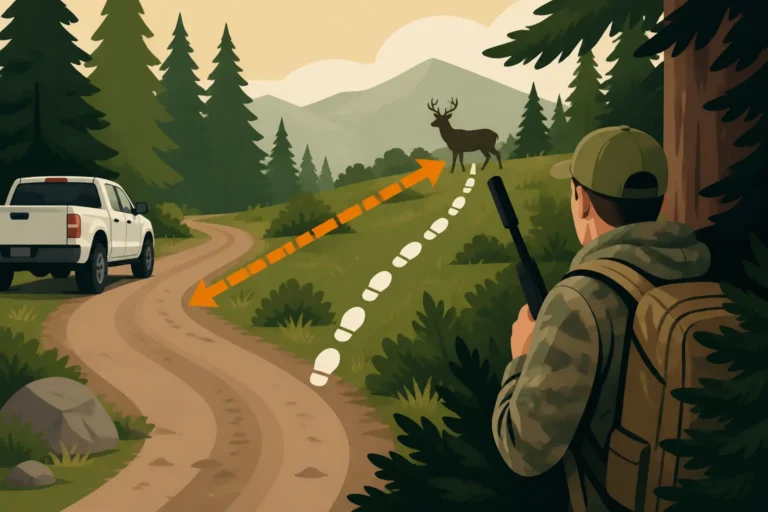
Consider a common scenario: you're hunting along the edge of public land, following a game trail, and suddenly that trail veers onto what you realize is a working cattle ranch. Even if you didn't see a fence or a sign, if that land is private, you're technically trespassing. The law doesn't always require malice or intent to trespass; simply being on land without permission is often enough. This is especially true for hunters, as the presence of a weapon can sometimes escalate the perceived threat, even if your intentions are entirely benign. Furthermore, some lands are considered "posted" simply by being cultivated, fenced, or having structures, meaning you don't even need a sign to know it's private. California Posted Land Rules details this further.
Penalties and Consequences of Illegal Entry
The ramifications of trespassing while hunting in California can range from a stern warning to severe legal and financial penalties. At the very least, you might be asked to leave the property. However, it can quickly escalate. Trespass can be charged as a misdemeanor, leading to hefty fines, potential jail time, and even the forfeiture of your hunting license and equipment. Imagine losing your prized hunting rifle or having your license suspended for a year because of a misstep.
Beyond the immediate legal trouble, there's also the damage to your reputation as a responsible hunter. Landowners are often wary of hunters due to past negative experiences with trespassers or unethical behavior. A single incident of illegal entry can sour relations for all hunters in an area, making it even harder for others to gain permission in the future. Moreover, any damage caused while trespassing, even inadvertently, can lead to civil lawsuits, forcing you to pay for repairs or lost revenue. For instance, if you accidentally leave a gate open and cattle escape, you could be held liable for the cost of rounding them up. It's a risk simply not worth taking.
Why Understanding This Is Crucial
Knowing California's trespass laws isn't just about avoiding a ticket; it's about upholding the integrity of hunting, fostering good relationships with landowners, and ensuring your own safety and legal standing. Hunters often face scrutiny, and demonstrating respect for private property is paramount to maintaining hunting privileges and public support for the sport.
When you meticulously research property boundaries and seek proper permission, you're not just protecting yourself; you're building bridges. A positive interaction with one landowner can sometimes open doors to other private lands in the community. Conversely, a single act of trespass can close those doors for years. It’s a collective responsibility that affects everyone who enjoys hunting in California. Furthermore, clear communication with landowners about your intentions, your route, and even your vehicle can make the experience safer for everyone involved and prevent misunderstandings that could lead to law enforcement involvement.
The Art and Science of Gaining Private Land Access
Hunting private land in California often offers incredible opportunities, but it rarely happens without effort. The key isn't just asking for permission, but how you ask, when you ask, and how you follow up. It’s a delicate dance of respect, preparation, and sometimes, a little bit of luck. Many prime hunting areas are privately owned, so mastering this skill can unlock a world of possibilities that public land simply can't offer.
"Knocking on Doors": Best Practices for Approaching Landowners
The idea of approaching a stranger and asking to hunt on their land can be intimidating, but it's a time-honored tradition. Success often hinges on your approach. First, timing is everything. Avoid showing up during busy farming hours, meal times, or late in the evening. Mid-morning or early afternoon on a weekday can often be ideal.
Second, always present yourself respectfully. Dress neatly, even if it's just clean casual clothes – no dirty hunting gear. Leave your firearms in the vehicle. Be polite, introduce yourself clearly, and state your purpose upfront. Explain that you're a responsible hunter looking for a place to enjoy your sport ethically. Offer to help with chores like mending fences, clearing brush, or even just keeping an eye on the property. Sometimes, trading labor for access can be a win-win. Highlight how you will benefit them, whether it's by helping manage a wild pig population or simply being an extra set of eyes on their property. Remember, a landowner's primary concern is often the safety and security of their property, so addressing those concerns proactively can go a long way.
Formalizing Permission: Written Agreements and Verbal Cues
While a handshake deal might seem sufficient, especially in more rural areas, formalizing permission in writing is always the safest bet for both parties. A written agreement clarifies the terms: who can hunt, what species, during what dates, where on the property, and any other specific rules (e.g., no vehicles off main roads, specific entry points). This protects you by demonstrating you had explicit permission, and it protects the landowner by setting clear boundaries and expectations.
Think of it as a mini-contract. It doesn't need to be overly legalistic, but it should cover the essentials. Even if a landowner prefers a verbal agreement, try to confirm the key details in a follow-up text or email, something like: "Thanks again for allowing me to hunt deer on your property from October 1st to 15th, sticking to the east pasture. I'll park by the old barn as we discussed." This creates a record without being overly formal. Always carry a copy of your written permission or proof of communication when hunting. Do You Need Written Permission in California? delves into why this is such a good idea.
Building Relationships: Beyond a Single Hunt
The goal shouldn't be just a one-time hunt, but to cultivate a long-term relationship with landowners. A successful permission strategy is built on trust and respect. After your hunt, always follow up. Thank the landowner, offer to share some of your harvest, and report anything unusual you observed on their property (like downed fences, trespassers, or unusual animal activity). Leaving the property better than you found it, picking up any trash, and closing all gates are non-negotiable courtesies.
Even if you don't harvest anything, a thank-you note or small token of appreciation can make a lasting impression. These actions show you’re a genuinely respectful individual, not just someone looking to take. Over time, this can lead to perennial access, perhaps even for other species like wild pigs or turkeys. Remember, landowners often appreciate someone who cares about their land as much as they do. This reciprocity is the foundation for securing those coveted private land opportunities year after year. Knocking on Doors in California Ranch Country explores these dynamics in depth.
Navigating Public Land and Adjacent Private Property
California boasts an impressive amount of public land, from sprawling National Forests to accessible BLM acreage. However, even on public ground, hunters must remain acutely aware of boundaries. It’s not uncommon for public lands to checkerboard with private parcels, and unknowingly crossing that invisible line can lead to the same trespass issues as if you'd intentionally sought out private property.
Identifying Boundaries: Public Versus Private Land Challenges
The notion that public land is simply one continuous block is a common misconception, especially in California. Many areas, particularly in the Sierra foothills or the Coast Range, feature a complex mosaic of land ownership. A Forest Service road might run right alongside private timberland, or a BLM parcel could be completely surrounded by private ranches, creating "inholdings" that are off-limits.
This fragmented ownership means that even when hunting on what you believe is purely public ground, you must constantly monitor your position. Natural features like creeks or ridges often don't correspond to property lines. Old, faded property markers, dilapidated fences, or even no physical markers at all can make identification incredibly challenging. Relying solely on a general map or memory is a recipe for disaster. This is where modern mapping tools become absolutely indispensable, allowing you to see property lines in real-time, even deep in the backcountry. Using an App for California BLM Land Status is a great resource for understanding how technology can help.
Accidental Trespass: How to Avoid It and What to Do
Accidental trespass is a genuine concern for diligent hunters. You're deep in a canyon, following game, and suddenly realize your mapping app shows you've crossed onto private property. How do you avoid this? Prevention is key. Before your hunt, meticulously study maps, paying close attention to property lines, easements, and potential pinch points where private and public lands meet. Use multiple data sources if possible, and mark your planned routes, paying special attention to "no-go" zones.
If you do find yourself on private land accidentally, the immediate action is to stop hunting, unload your firearm, and calmly and directly make your way back to public land. If confronted by a landowner, remain polite, explain that it was an honest mistake, apologize, and cooperate fully. Do not argue. Show them your mapping app if it helps explain your confusion. Your willingness to immediately rectify the situation and show respect can often de-escalate what could otherwise become a serious confrontation. It's far better to admit an error and retreat than to double down and face legal repercussions.
Public Access Corridors and Easements
While private land typically requires explicit permission, some private parcels are encumbered by public easements or designated access corridors. These are legal rights that allow the public to cross or utilize specific parts of private land, often for recreational purposes or to reach otherwise landlocked public acreage. These are not always obvious and require careful research.
For example, a ranch might have a historical easement for a Forest Service trail that crosses its property, or a utility company might grant access along a powerline road. However, these easements are usually for specific purposes (e.g., foot traffic only, or for utility maintenance), and hunting might not be permitted within the easement itself, or only while passing through. Always check the specific terms of any easement. Many wilderness areas, especially in places like the Trinity Alps Wilderness, have old mining claims or private holdings deep within their boundaries, which can only be accessed via such corridors. Always consult land management agency maps or local field offices for clarification on specific access rights to avoid any misunderstandings.
| Type of Land | Permission Required | Marking Requirements (General) | Access Considerations | Game Recovery (on adjacent private) |
|---|---|---|---|---|
| Public Land | No (for hunting where permitted) | N/A (implied public access) | Generally open, but check local rules (roads, wilderness) | Requires explicit permission from landowner |
| Private Land | Yes, explicit | "No Trespassing" signs, fencing, cultivation, structures | Owner's discretion, highly restricted | Yes, explicit permission required |
Specific Scenarios: Game Recovery, Leases, and Clubs
Hunting inevitably leads to unique situations that demand clear understanding of property law. What happens when your downed buck crosses a fence? Is a handshake deal enough for a multi-year hunting lease? These aren't just academic questions; they are real-world challenges that hunters face, and mishandling them can turn a successful hunt into a legal nightmare.
Retrieving Downed Game on Private Property
Imagine you've made a perfect shot on a magnificent blacktail buck, only to watch it run a short distance and expire just over the property line onto private land. This is a common, gut-wrenching scenario. In California, you do not have an automatic legal right to enter private property to retrieve downed game, even if you know exactly where it is. Your tag and license only grant you the right to hunt on legal land; they do not supersede private property rights.
The critical step here is to immediately contact the landowner and politely request permission to retrieve your animal. Explain the situation clearly, offer to be escorted, and assure them you will only go directly to the animal and leave. If you can't reach the landowner, contact local law enforcement or the CDFW for assistance, but do not cross that fence without explicit permission. Entering without permission, even for recovery, is still trespassing and can lead to severe penalties, including potential loss of your game, your weapon, and your license. Respecting property boundaries, even in the heat of the moment, is paramount. Blood Trailing After Dark in California often presents this challenge when visibility is poor.
Hunting Leases and Club Memberships
For consistent access to private land, many hunters explore hunting leases or join hunting clubs. A hunting lease is a formal agreement where a landowner grants hunting rights to an individual or group for a specified period (usually a season or year) in exchange for payment. These agreements are legally binding contracts and should clearly define the hunting areas, species, dates, number of hunters, and any additional rules or responsibilities. They offer security of access and often better management opportunities, but come at a significant cost. California Hunting Lease Costs can give you an idea of what to expect.
Hunting clubs offer a similar benefit, pooling resources among members to lease large tracts of land or purchase dedicated hunting properties. Members typically pay annual dues and adhere to club rules. Both leases and clubs can be excellent ways to gain consistent, quality access without the constant "door-knocking," but it's crucial to understand the terms, costs, and liabilities involved before committing. Always read the fine print and ensure you're comfortable with all stipulations.
Landowner Tags: A Unique Access Opportunity
California offers a specific program where landowners in certain zones can be allocated "landowner tags." These tags are often given to landowners whose properties support significant deer populations or who actively engage in habitat management. The landowner then has the discretion to use these tags themselves or sell them to hunters. For a hunter, purchasing a landowner tag can provide access to prime private land that would otherwise be inaccessible.
These tags typically bypass the public drawing system, offering a guaranteed tag and guaranteed access, albeit at a premium price. They are a unique pathway to hunt highly sought-after areas, especially for species like deer or elk, where public draw odds can be incredibly low. While expensive, they represent a legitimate and legal way to gain access to private land and pursue quality game. Always ensure any landowner tag you purchase is legitimate and properly transferred through CDFW channels. California Landowner Deer Tag Rules explains the intricacies of this system.
Leveraging Technology for Confident Navigation
In today’s world, the days of relying solely on paper maps and compasses are largely behind us, especially when navigating the complex tapestry of California's land ownership. Technology has become an indispensable ally for hunters, providing real-time data and helping to prevent accidental trespass.
GPS Mapping Apps as Essential Tools
Modern GPS mapping applications, like onX Hunt and GoHunt, have revolutionized how hunters interact with the landscape. These apps overlay property ownership data onto detailed topographic and satellite maps, allowing you to see exactly where public land ends and private land begins, often down to the foot. Imagine hiking deep into a forest and being able to instantly know if the next ridge belongs to the National Forest or a private timber company.
These apps typically offer various layers, showing not just property boundaries but also features like wilderness areas, game management units, roads, trails, and water sources. The ability to download offline maps is crucial for areas with no cell service, ensuring you always have your bearings. You can mark waypoints for your truck, a game trail, or a promising glassing knob, and track your movements throughout the day. This visual confidence is invaluable for navigating mixed-ownership areas and avoiding unintentional trespass. onX Layers for California Land Status highlights many of these features.
Limitations of Technology: When Apps Aren't Enough
While GPS apps are incredibly powerful, they are not infallible and should not be your only tool. There are several limitations to be aware of. First, battery life is always a concern; a dead phone or GPS unit is useless. Always carry a portable power bank and a physical backup map and compass.
Second, the data, while generally accurate, can sometimes be outdated or have minor discrepancies. Property lines can shift due to surveys, or public land designations might change. Signal interference in deep canyons or dense timber can also cause your GPS to be less accurate. Relying solely on a screen without cross-referencing with physical markers or local knowledge can lead to mistakes. Always approach boundaries with caution and, if in doubt, err on the side of caution by staying on clearly defined public land. A healthy skepticism and an understanding of how GPS works will serve you well.
Integrating Tools: Combining Maps with Local Knowledge
The most effective strategy for confident land navigation is to integrate technology with traditional scouting and local knowledge. Use your GPS app as your primary navigation tool, but also spend time studying paper maps at home to get a broader overview of the area. Walk the property boundaries on public land before season opens, looking for fences, old signs, or other physical indicators that might not be perfectly aligned with your app's digital lines.
Talk to locals—ranchers, other hunters, or even CDFW wardens—who have intimate knowledge of the land. They might be aware of old easements, seasonal closures, or specific property nuances that no app can tell you. For example, a local might know that a certain creek bed is the actual historical property line, despite what a modern survey might indicate on a map layer. Combining the precision of onX Hunt with boots-on-the-ground scouting and the wisdom of those who live and work the land creates the most robust defense against accidental trespass and ensures you're hunting ethically and legally. Scouting California Public Land Before Season is an excellent resource for this integrated approach.
Disclaimer
This article is for general informational purposes only and does not constitute professional advice. Laws, prices and regulations vary by location and change over time. Consult a qualified professional for guidance on your specific situation.