Best Public Ground for Desert Mule Deer
Hunting desert mule deer in California can feel like searching for a needle in a haystack, especially when you’re relying solely on public land. The vast, often unforgiving landscapes of the Mojave and Eastern Sierra present unique challenges, from sparse water sources to vast expanses that swallow up hunters. This guide is here to help you cut through the overwhelming scale of these areas and pinpoint the best public grounds and strategies for finding those elusive desert mule deer.
Understanding California's Desert Mule Deer Habitat
Before you even load up your truck, you need to understand the beast you're after and the terrain it calls home. Desert mule deer aren't like their Sierra Nevada cousins that browse through lush timber or coastal blacktails that hug the chaparral. These deer are built for survival in some of California's harshest environments, and knowing their habits is the first step to finding them on public land.
The Specifics of Desert Mule Deer Country
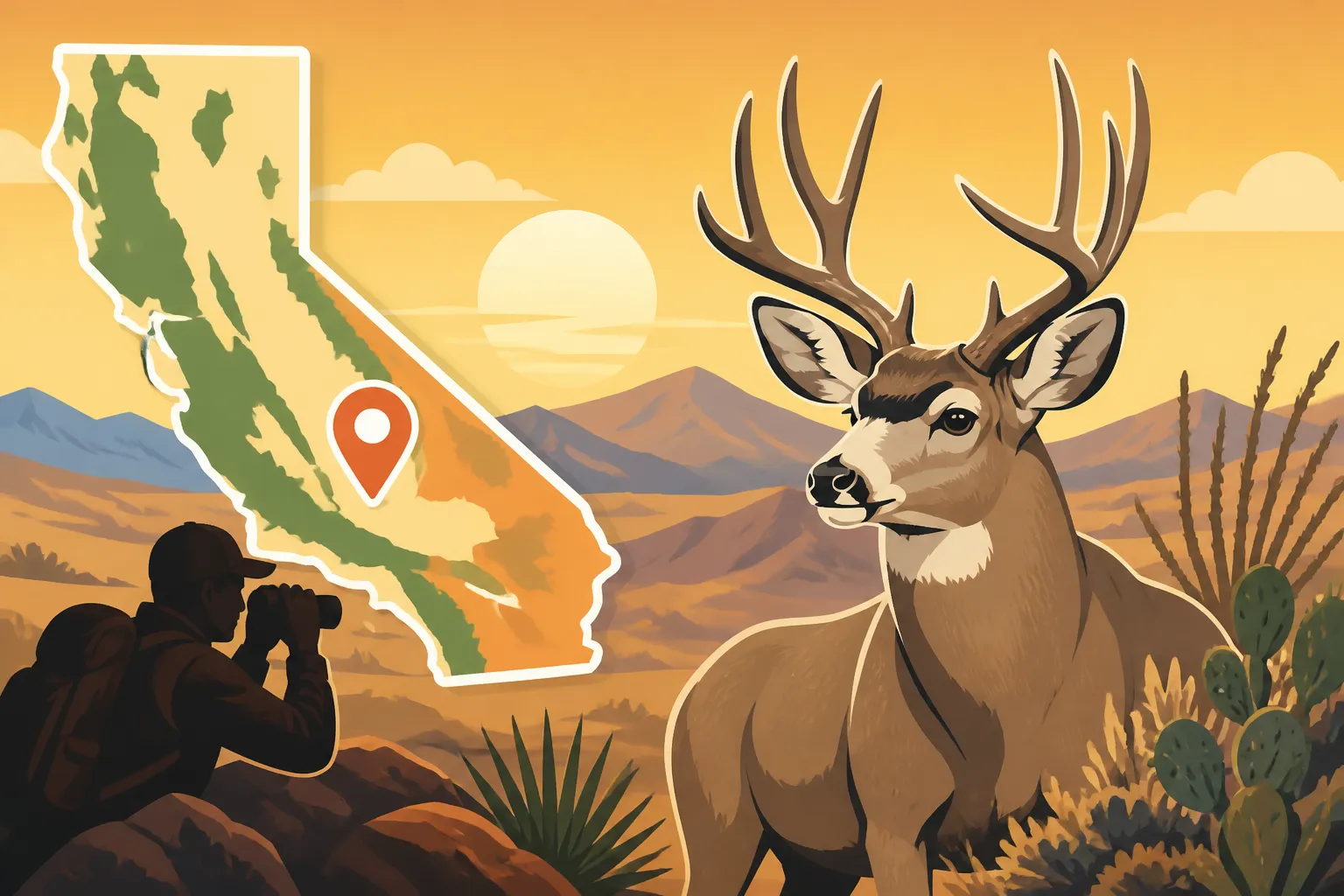
California's desert mule deer are primarily found in the southeastern part of the state, extending through the vast Mojave Desert and into the high desert fringes of the Eastern Sierra. This isn't just barren sand dunes; it's a diverse landscape of broken mesas, deep washes, volcanic rock formations, and scattered pinyon-juniper woodlands at higher elevations. Water, though scarce, dictates their movements more than anything. Deer here are often lighter in body size than other mule deer, a testament to their tough environment. They blend in seamlessly with the sun-baked rocks and sparse vegetation, making them incredibly difficult to spot.
Their diet consists of tough desert shrubs, grasses that appear after sparse rains, and whatever browse they can find near critical water sources like springs, guzzlers, or even man-made stock tanks. Understanding where these resources are located, especially during dry periods, is absolutely crucial. Without reliable water, these deer simply can't survive in an area, making water scouting paramount to your success.
Challenges of Hunting Arid Landscapes
Hunting desert mule deer isn't for the faint of heart, or the ill-prepared. The challenges are numerous and often extreme. First, the sheer scale of the public land is daunting. We're talking millions of acres of Bureau of Land Management (BLM) land and national forest that can look very similar from one ridge to the next. Temperatures can swing wildly, from scorching hot during early season hunts to surprisingly cold nights. Water sources are far apart, demanding you carry significant amounts or plan reliable refills.
The deer themselves are notoriously wary, often having keen eyesight honed by living in open country. There's usually minimal cover to conceal your approach, making spot-and-stalk a true test of patience and skill. Plus, the remoteness means you're often far from help if something goes wrong, emphasizing the need for self-sufficiency and thorough preparation. You might walk for miles without seeing any fresh sign, only to stumble upon a group of deer in the most unexpected place, highlighting the importance of persistence.
Key Public Land Areas for Desert Mule Deer
While the California desert is vast, there are specific public land designations and regions that consistently offer the best opportunities for hunting desert mule deer. It's not about finding any public land, but finding the right public land that offers the necessary habitat and access.
Bureau of Land Management BLM Holdings in the Mojave
When you think of hunting desert mule deer in California, the vast tracts of BLM land throughout the Mojave Desert should immediately come to mind. These lands comprise millions of acres, offering unparalleled access for those willing to put in the work. Look for areas with a mix of habitat: broken terrain with rocky outcrops, volcanic flows, and washes that might hold moisture, alongside scattered pockets of Joshua trees, creosote, and even sparse juniper at higher elevations.
Specific areas like the Jawbone-Butterbredt Wilderness near Ridgecrest, the Kingston Range Wilderness, or the vast expanses around the Alabama Hills in the Eastern Sierra are prime examples. Hunting California's BLM Desert Land will give you a broader overview, but for mule deer, focus on the rougher, more remote sections. These areas typically see less pressure than locations closer to paved roads, though even remote spots can get attention on opening weekend. The key is to understand how deer use the terrain for security and access to limited water and forage.
Eastern Sierra's High Desert Fringe
Moving north from the pure Mojave, the eastern side of the Sierra Nevada Mountains offers a unique high desert fringe habitat that also holds desert mule deer. This includes portions of Inyo National Forest and the interface with BLM lands. Here, you'll find a transition zone where the sagebrush flats meet the lower, drier slopes of the Sierra, often dotted with pinyon pine and juniper. The elevations are higher, and the temperatures can be a bit more forgiving than the deeper Mojave.
Areas around Lone Pine, Bishop, and the valleys leading up towards Death Valley National Park (though hunting is not permitted in the park itself) can be productive. The terrain here can be incredibly steep and rugged, with deep canyons and vast vistas that require excellent optics and physical conditioning. Scouting these transition zones for Hunting California's Eastern Sierra Alabama Hills Corridor can reveal where deer move between higher elevations for browse and lower areas for water. During years with good rainfall, the browse can be surprisingly lush in certain drainages, attracting deer.
National Forests Bordering Desert Regions
While BLM land often gets the spotlight for desert hunting, don't overlook the national forests that butt up against these arid zones. Portions of Sequoia National Forest and Inyo National Forest, particularly their eastern and southern boundaries, can provide excellent desert mule deer habitat. These areas tend to be at higher elevations than the surrounding BLM ground, often providing critical winter range or transitional habitat.
Within these national forests, look for areas where the forest transitions from dense timber to more open, arid pinyon-juniper or sagebrush country. Deer will often utilize the cover of the timbered canyons for bedding and thermal regulation, then move into the more open, high desert benches and draws to feed. Access can be a mix of dirt roads and hiking trails, often less defined than main forest roads, requiring diligent map work with tools like onX Hunt to identify public access points and potential deer strongholds.
| Public Land Type | Typical Habitat Features | Primary Deer Activity | Access Considerations |
|---|---|---|---|
| BLM Land (Mojave) | Vast, open, rocky mesas, deep washes, volcanic terrain, sparse creosote/Joshua trees | Feeding in washes/flats, bedding in broken terrain, moving to water | Extensive dirt roads, often very remote, require 4×4 |
| Eastern Sierra Fringe | Sagebrush flats, pinyon-juniper slopes, rocky canyons, transition zones | Grazing on flats, bedding on slopes, migrating between elevations | Mix of paved/dirt roads, steep hiking, some designated trails |
| National Forests (Bordering) | Higher elevation, pinyon-juniper, scattered timber, steep canyons, more water sources | Seeking cover in timber, feeding on benches, utilizing springs | Forest service roads, hiking trails, can be rugged |
Strategies for Finding and Hunting Desert Mule Deer
Success in the desert doesn't come by accident. It demands a deliberate approach, meticulous scouting, and a willingness to adapt to the challenging conditions. These deer are survivors, and you'll need to be one too.
The Importance of Water and Cover
In the desert, water isn't just important; it's everything. Deer will rarely be far from a water source, especially during the warmer early seasons. Spend time scouting maps (both digital and paper) for known springs, guzzlers, stock tanks, and even natural seeps in canyon bottoms. Then, physically scout these locations for tracks, droppings, and fresh sign. Pay attention to game trails leading to and from these water points. These trails can be faint but are crucial indicators of deer activity. Hunting a Water Seep at First Light or Sitting a Water Hole in Late Season can be incredibly effective strategies, especially if you can get in before dawn and remain undetected.
Beyond water, deer need cover for bedding, security, and thermal regulation. This might be a dense patch of mesquite, a rocky overhang, the shade of a large juniper, or the steep, north-facing slopes of a canyon. Often, the cover will be within reasonable distance of a water source. Look for these "islands" of slightly denser vegetation or rugged topography that offers a vantage point without exposing the deer. In the vastness of the desert, even a small cluster of brush can provide enough concealment for a bedded buck.
Glassing and Spot-and-Stalk Tactics
The desert is a glasser's paradise and a stalker's nightmare. Because of the open nature of the terrain, your optics will be your most valuable tool. Invest in quality binoculars and a spotting scope, along with a sturdy tripod. Find a high vantage point before first light and systematically grid the landscape. Take your time, sometimes hours, scanning every shadow, every rock, and every patch of brush for a flicker of an ear, a horizontal line that breaks the vertical, or the tell-tale glint of an antler. Glassing Mule Deer in Open California Country is an art form in the desert.
Once you spot a buck, the real challenge begins: the stalk. The lack of cover makes closing the distance incredibly difficult. You'll need to use every contour, every rock, and every piece of sparse vegetation to your advantage. Wind direction is paramount, as is moving slowly and deliberately, often taking minutes to move just a few yards. Patience is key. Sometimes, the best stalk is no stalk at all; waiting for the deer to move to a more advantageous position might be your only option. This is where Best Spotting Scope for a Blacktail Buck (which also applies to mule deer) becomes invaluable, allowing you to observe and plan without spooking your quarry.
Utilizing Mapping Tools for Success
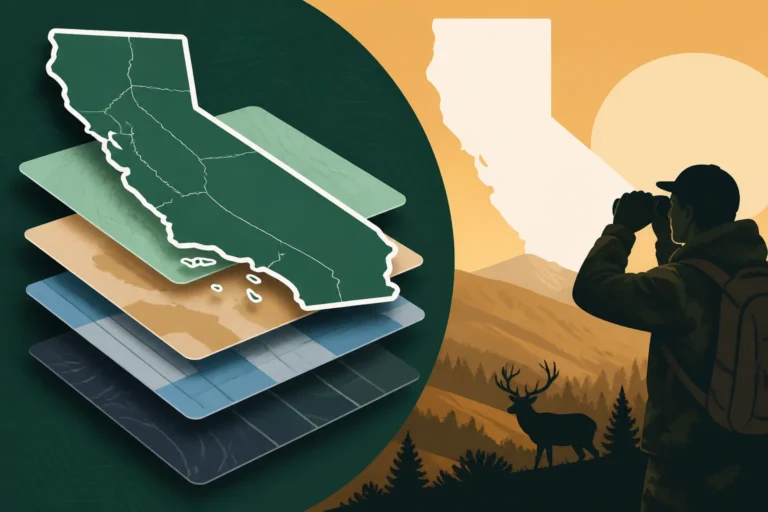
In a landscape as expansive and featureless as much of the California desert, mapping tools are non-negotiable. Digital mapping applications like onX Hunt or GoHunt become your virtual guides. They allow you to:
- Identify Public Land Boundaries: Crucial for staying legal and avoiding trespass.
- Locate Water Sources: Many apps have public land layers that mark springs, guzzlers, and tanks. Confirm these with satellite imagery or previous scouting.
- Analyze Topography: Identify high points for glassing, deep canyons for cover, and benches for feeding. Reading Aerial Photos for Sierra Deer techniques translate well to the desert, helping you understand terrain features remotely.
- Mark Waypoints: Drop pins for sign, sightings, water, and potential hunting spots.
- Track Your Movement: Essential for navigating back to your vehicle and understanding where you've covered.
Before your hunt, spend countless hours poring over these maps, identifying potential areas of interest, planning your access routes, and marking escape routes in case of an emergency. Don't rely solely on cell service; download offline maps to your device, as signal will be spotty to non-existent in many remote desert areas. Using an App for California BLM Land Status is a game-changer for confident public land hunting.
Essential Gear and Preparation for Desert Hunts
The desert demands specific gear and a robust approach to personal preparation. Neglecting either can quickly turn a challenging hunt into a dangerous ordeal.
Optics and Hydration are King
We've already touched on optics, but it bears repeating: don't skimp here. High-quality binoculars (10x or 12x) and a powerful spotting scope (20-60x or 25-75x) are your eyes in this vast landscape. Combine these with a solid tripod for stable viewing, especially during those long glassing sessions. For hydration, think capacity and redundancy. Always carry more water than you think you'll need. A general rule of thumb for desert hiking is a gallon of water per person per day, minimum, and often more if it's hot and you're covering significant ground. Consider a hydration pack with a large reservoir, supplemented by extra bottles. Electrolytes are also critical to prevent cramping and heat exhaustion. Best Binoculars for Glassing Open California Desert Terrain will help you choose wisely.
Beyond water, consider what else you might need to stay comfortable and safe. Sun protection is vital: wide-brimmed hats, light-colored long sleeves, and plenty of sunscreen. Pack lightweight, breathable clothing that can handle thorns and rough brush. Best Boots for Dry Desert Wash Hunting are also essential, offering ankle support for rocky terrain and breathability for hot conditions. Don't forget a quality rangefinder, as shots in open country can often be longer than anticipated, and judging distance in the desert can be deceiving. Best Rangefinder for Open Desert Country is a tool you'll be glad to have.
Physical Demands and Safety Considerations
Hunting desert mule deer is a physically demanding endeavor. You'll be hiking long distances over uneven, rocky, and often steep terrain, often in hot conditions. Start an intense physical conditioning program well before your hunt. Focus on cardio, leg strength, and endurance. Being in peak physical condition will not only make the hunt more enjoyable but will also increase your safety margin if an unexpected situation arises.
Safety in the remote California desert is paramount. Always tell someone exactly where you're going and when you expect to return. Carry a satellite communication device (like a Garmin inReach or a Zoleo) for emergencies, as cell service is unreliable. A comprehensive first-aid kit, fire-starting supplies, extra food, a headlamp, and navigation tools (GPS device with offline maps, compass, and paper map as backup) are non-negotiables. Be mindful of desert wildlife, including rattlesnakes, and understand basic survival techniques. This is a tough environment, and a healthy dose of respect for its challenges is crucial for a successful and safe hunt. Scouting California Public Land Before Season isn't just about finding deer; it's about knowing the terrain and what it demands of you.
Disclaimer
This article is for general informational purposes only and does not constitute professional advice. Laws, prices and regulations vary by location and change over time. Consult a qualified professional for guidance on your specific situation.