Rifles and Calibers for California Big Game
Navigating the world of rifles and calibers for hunting in California can feel like walking through a minefield of regulations, ethical considerations, and personal preferences. It’s not just about picking a powerful gun; it’s about choosing a system that works harmoniously with California's unique non-lead ammunition mandate, the diverse species you're pursuing, and the varied terrain you'll encounter. This comprehensive guide aims to demystify these choices, helping you select the perfect rifle and caliber for your next California big game adventure.
Understanding California's Non-Lead Mandate
Before you even begin to dream about specific calibers or rifle models, the single most important factor for any California hunter is the statewide non-lead ammunition requirement. This isn't just a suggestion; it's the law, and it dramatically impacts your choices from the ground up. Ignoring it means risking fines, losing your hunting privileges, and, most importantly, violating the ethical principles of responsible hunting that we all share.
The "Why" Behind Non-Lead Ammunition
California implemented its non-lead ammunition requirement primarily due to environmental concerns, specifically the protection of endangered species like the California Condor. These majestic birds, and many other scavengers, can suffer from lead poisoning after consuming gut piles or unrecovered game animals shot with traditional lead-based bullets. While the intent is clear, the transition for hunters has been a significant adjustment. Many of us grew up shooting lead, and the change has required adapting our gear, shooting habits, and even our understanding of bullet performance. It's a testament to the hunting community's willingness to adapt for conservation, even when it presents new challenges. This mandate extends across all hunting for big game, small game, and even depredation permits, making it universal.
What Qualifies as Non-Lead: Materials and Performance
When we talk about "non-lead" ammunition, we're primarily referring to bullets constructed from materials like solid copper, copper alloys, or sometimes bismuth for shotguns. These materials perform differently than traditional lead-core bullets. Lead bullets often fragment upon impact, creating a wider wound channel but also scattering small lead particles throughout the animal and the environment. Non-lead bullets, especially solid copper, tend to retain more of their weight, expanding cleanly and creating a deep, penetrating wound channel. This difference means that while you might be used to a certain caliber performing a specific way with lead, its non-lead counterpart might have different terminal ballistics. You'll want to dive deeper into Which Non-Lead Bullets California Approves to ensure your chosen ammunition is compliant and effective. Understanding bullet construction—whether it's a monolithic solid, a hollow point designed for expansion, or a bonded core—becomes critically important when operating under this mandate.
Impact on Rifle and Caliber Selection: Twist Rates and Bullet Weights
The non-lead mandate has a direct impact on the optimal rifle and caliber selection because non-lead bullets are typically longer and lighter for their given diameter than lead-core bullets of the same weight. This increased length can affect how a bullet stabilizes in flight. A rifle's twist rate—how quickly the rifling inside the barrel spins the bullet—is designed to stabilize bullets of a certain length and weight. If you're shooting a long, non-lead bullet through a barrel with too slow a twist rate, you might experience poor accuracy. This might mean that an older rifle perfectly capable with lead ammunition could struggle to stabilize some of the newer, longer non-lead bullets. This is a common frustration for hunters trying to adapt beloved firearms. Therefore, when considering a new rifle or re-evaluating an existing one, researching the barrel's twist rate and its compatibility with various non-lead bullet options is a crucial step. Many ammunition manufacturers now specify recommended twist rates for their non-lead offerings.
Caliber Considerations for California Deer (Blacktail and Mule Deer)
California is home to both the elusive Columbia Blacktail deer, primarily found in the dense coastal and Sierra foothills, and the larger Mule Deer, which roam the more open, high-desert and Eastern Sierra regions. While they are distinct subspecies, the ethical requirement for a clean, humane kill remains the same. The key is finding a balance between sufficient power for a quick harvest and manageable recoil for accurate shot placement, especially with non-lead projectiles. To effectively hunt these animals, having the right tool is paramount. Understanding Columbia Blacktail and Mule Deer in California will help you visualize the scenarios you might face.
Light to Medium Calibers: .243, 6.5 Creedmoor, .270
For many years, calibers like the .243 Winchester have been popular choices for deer, particularly for new or recoil-sensitive hunters. When loaded with modern, expanding non-lead bullets, the .243 can be surprisingly effective on blacktail deer in the brush or smaller mule deer in open country. Its low recoil makes it easy to shoot accurately, which is always more important than raw power. However, shot placement becomes even more critical with lighter calibers, particularly when distances stretch.
The 6.5 Creedmoor has surged in popularity for good reason, offering a flat trajectory and moderate recoil, making it an excellent all-around deer cartridge. It performs very well with the longer, heavier-for-caliber non-lead bullets, often stabilizing them beautifully in common twist rates. This makes it a fantastic choice for both coastal blacktail and open-country mule deer. You’ll find that its ballistic efficiency with non-lead options often surpasses what you might expect from its moderate powder charge.
The .270 Winchester is another classic that has put countless deer in the freezer. It delivers more energy than the .243 and 6.5 Creedmoor, making it a robust option for mule deer, especially if you anticipate longer shots or want a bit more punch for larger-bodied animals. With the right non-lead bullet—typically a 130-grain or 140-grain copper projectile—the .270 offers a great blend of flat shooting and ample power without excessive recoil for most shooters. These calibers offer versatility and performance without making you dread pulling the trigger.
Mid-Range Calibers: .308 Win, .30-06 Sprg
When hunters talk about versatile, reliable deer calibers, the .308 Winchester and .30-06 Springfield almost always enter the conversation. Both are quintessential American hunting cartridges, and they perform exceptionally well with non-lead ammunition.
The .308 Winchester is renowned for its inherent accuracy, moderate recoil, and compact rifle platforms. It’s an incredibly efficient cartridge, capable of taking down both blacktail and mule deer cleanly and reliably. Non-lead bullet options, often in the 150-grain to 165-grain range, perform admirably, offering excellent penetration and expansion. For hunting in areas like the dense oak woodlands where shots might be shorter, or in the open sagebrush where moderate range is needed, the .308 is a fantastic choice that won't punish your shoulder. Many hunters find that rifles chambered in .308 are easier to carry and maneuver in thick cover.
The .30-06 Springfield, often considered the "king of all-around cartridges," offers a noticeable step up in power from the .308, while still being manageable for most shooters. It can handle a wider range of non-lead bullet weights, from 150-grain up to 180-grain, giving it even more versatility. If you anticipate hunting larger mule deer, or if you want a caliber that can pull double duty for elk later on, the .30-06 is an excellent choice. Its ability to effectively launch heavier non-lead bullets with good velocity makes it a very capable performer across all of California's deer hunting scenarios.
Ballistics and Shot Placement: Importance for Ethical Harvest with Non-Lead
Regardless of the caliber you choose, the effectiveness of any non-lead bullet hinges critically on precise shot placement. Unlike some traditional lead-core bullets that might offer a wider margin of error due to fragmentation, many non-lead bullets rely on a clean, expanding frontal area and deep penetration to create a lethal wound channel. This means targeting the vital organs—the heart and lungs—is paramount.
Understanding your chosen non-lead bullet's ballistic characteristics, including its muzzle velocity, trajectory, and energy retention at various distances, is vital. You need to know where your bullet will strike at 100, 200, and 300 yards. Practice at the range with the exact non-lead ammunition you plan to hunt with. GoHunt often features extensive ballistics data for various non-lead loads, which can be invaluable for understanding how your specific bullet performs. This isn't just about hitting a paper target; it's about building the confidence and skill to make a clean, ethical shot on a living animal under field conditions. Remember, a well-placed shot from a smaller caliber is always more effective than a poorly placed shot from a magnum.
Caliber Considerations for California Elk (Tule, Roosevelt, Rocky Mountain)
California is home to three distinct subspecies of elk: the smaller Tule elk, the majestic Roosevelt elk of the redwood forests, and the robust Rocky Mountain elk found near the Oregon border. Each presents a unique hunting challenge, but all demand a caliber that can deliver sufficient energy and penetration for a clean, ethical harvest. Stepping up from deer calibers is often necessary when pursuing these larger, tougher animals. For anyone considering an elk hunt in the Golden State, familiarizing yourself with Tule Elk in California's Central Valley and the other species is a great starting point.
Minimum Requirements and Ethical Harvest
When it comes to elk, the common adage is "use enough gun." Elk are substantially larger and more resilient than deer, with thicker bones and denser muscle mass. While there isn't a strict legal minimum caliber for elk in California, ethical hunting dictates using a cartridge that can reliably deliver at least 1,500 foot-pounds of energy at the point of impact with a non-lead bullet. This ensures adequate penetration through bone and vital organs. Going with a lighter caliber, even with a premium non-lead bullet, risks wounding an animal and a difficult, potentially unsuccessful, recovery. The goal is a quick, humane kill, and that starts with an appropriate caliber. This is where researching your specific non-lead bullet's energy figures at various ranges becomes critical, not just its muzzle velocity.
Popular Elk Calibers: .30-06, .300 Win Mag, 7mm Rem Mag
Many calibers can be effective on elk, but some have risen to prominence due to their proven track record. The .30-06 Springfield, as mentioned earlier, is often considered the minimum for elk by many experienced hunters. With heavier, robust non-lead bullets in the 180-grain range, it possesses the energy and penetration needed for elk at moderate ranges. It's a fantastic choice for the hunter who wants a single, versatile rifle for both deer and elk without stepping into magnum recoil territory.
Moving up, the 7mm Remington Magnum and .300 Winchester Magnum are arguably the most popular elk cartridges worldwide, and for good reason. The 7mm Rem Mag offers a very flat trajectory, making it excellent for longer shots, particularly in open country. It excels with 160-grain to 175-grain non-lead bullets, delivering outstanding penetration and energy. The .300 Win Mag steps up the power even further, capable of launching 180-grain to 200-grain non-lead bullets with tremendous velocity and energy. It's an excellent choice for any elk, especially the larger Roosevelt or Rocky Mountain subspecies, and provides confidence for tougher angles or longer distances. While the recoil is more substantial, the assurance it provides is often worth it for dedicated elk hunters.
Dealing with Heavier Recoil: Practice, Rifle Weight, Muzzle Brakes
Stepping up to magnum calibers for elk often means dealing with increased recoil. For some, this can be a significant barrier to accuracy. The key is to manage it effectively. First and foremost, practice is paramount. Spend time at the range with your chosen elk rifle and non-lead ammunition, getting comfortable with its report and kick. Don't just shoot from a bench; practice from various field positions like prone, kneeling, and off a bipod or shooting sticks.
The weight of your rifle also plays a role. A heavier rifle will absorb more recoil than a lighter one, making it more comfortable to shoot. However, a heavier rifle can be a burden on long, strenuous elk hunts in mountainous terrain. This is a trade-off every hunter must consider. Muzzle brakes are another effective tool for mitigating recoil, significantly reducing felt kick. However, they drastically increase muzzle blast and noise, making hearing protection absolutely essential for both the shooter and anyone nearby. Recoil pads, proper shooting form, and even specialized recoil-reduction systems can also make a noticeable difference, helping you maintain accuracy when it counts the most.
Caliber Considerations for California Wild Pig and Bear
While deer and elk get a lot of attention, California also offers fantastic opportunities for hunting wild pigs and black bears. These animals present their own unique challenges and therefore require specific caliber considerations to ensure a humane and effective harvest. Understanding Wild Pigs Across California and Black Bears in California will help you grasp the specific hunting scenarios and animal characteristics that influence caliber choice.
Wild Pigs: Durable Animals, Shot Placement
Wild pigs are notoriously tough animals. They have thick hides, dense bone structures, and a tenacious will to live, often covered in mud that can compound the challenge. This means you need a caliber and bullet that can reliably penetrate to the vitals. While many deer calibers will work on pigs, the emphasis shifts slightly towards penetration over pure expansion, especially for larger boars.
Calibers like the .308 Winchester and .30-06 Springfield are excellent choices for wild pigs, particularly with well-constructed non-lead bullets in the 150-grain to 180-grain range. These cartridges offer a good balance of power and versatility for shots in dense brush or across open fields. For those hunting in very thick cover or who prefer a classic "thumper" round, the .45-70 Government, especially in a lever-action rifle, is a powerful choice. Loaded with heavy, flat-nosed non-lead bullets, it delivers immense stopping power and deep penetration at closer ranges. Similarly, the .30-30 Winchester, another lever-action classic, can be effective on pigs at closer distances with modern non-lead bullets, though its range is more limited than the .308 or .30-06. The key for pigs, regardless of caliber, is precise shot placement—often just behind the ear for a brain shot, or a double-lung shot for a quick kill, avoiding the shoulder plate which can be incredibly tough.
Black Bears: Ethical Considerations and Power
Black bears in California can range significantly in size, from smaller coastal bears to larger bruins in the Sierra Nevada. Like pigs, they are tough animals with heavy bones and dense muscle, requiring a caliber with ample power and penetration. While often considered omnivores, their robust build demands respect and a cartridge that can reliably anchor them. The ethical considerations here are similar to elk: you need enough gun to ensure a quick, clean kill.
Many of the calibers suitable for elk are also excellent choices for black bears. The .30-06 Springfield with 180-grain non-lead bullets is a solid performer, providing sufficient energy and penetration for even larger bears. Stepping up to a .300 Winchester Magnum or 7mm Remington Magnum offers an extra margin of safety and power, especially if you anticipate longer shots or want greater knockdown capability. For those hunting in thick timber where shots are often close, a .338 Winchester Magnum offers even more authority but comes with significant recoil. Some hunters also opt for calibers like the .35 Whelen or .375 H&H Magnum for bears, which deliver immense power at closer to moderate ranges. The choice often comes down to personal comfort with recoil versus the desire for maximum ethical power.
Lever-Action and Brush Guns: Suitability for Thick Cover
Hunting wild pigs and black bears often means venturing into dense chaparral, oak thickets, or deep timber where visibility is limited and shots are typically close and fast. In these environments, traditional bolt-action rifles with long barrels can be cumbersome. This is where "brush guns" or lever-action rifles truly shine.
Lever-action rifles, such as those chambered in .30-30 Winchester, .45-70 Government, or even the relatively newer .308 Marlin Express, offer quick follow-up shots and are significantly shorter and more maneuverable than many bolt-action rifles. Their tubular magazines generally mean they are best used with flat-nosed or round-nosed bullets to prevent primer detonation, though some modern designs allow for pointed bullets. For non-lead, companies now offer specialized flat-nosed or polymer-tipped copper bullets that are safe for tubular magazines and perform excellently. Their compact size makes them easier to carry through dense undergrowth and quicker to shoulder for snap shots at close quarters. While some might consider them less accurate at long range than bolt-actions, for the typical close-range scenarios encountered in heavy cover, their practicality and speed are undeniable.
| Game Species | Recommended Calibers (Non-Lead Focus) | Typical Non-Lead Bullet Weights | Key Considerations |
|---|---|---|---|
| Blacktail Deer | .243 Win, 6.5 Creedmoor, .270 Win, .308 Win | 80-100gr (.243), 120-140gr (6.5), 130-150gr (.270), 150-165gr (.308) | Excellent for smaller deer, lower recoil for accuracy. Focus on precise shot placement. |
| Mule Deer | 6.5 Creedmoor, .270 Win, .308 Win, .30-06 Sprg | 120-140gr (6.5), 130-160gr (.270), 150-165gr (.308), 165-180gr (.30-06) | Versatile for open country and larger deer. Good balance of energy and manageable recoil. |
| Wild Pigs | .308 Win, .30-06 Sprg, .45-70 Gov't | 150-180gr (.308/.30-06), 300-400gr (.45-70) | Prioritize penetration through tough hide and bone. Good choices for brush hunting. |
| Black Bear | .30-06 Sprg, 7mm Rem Mag, .300 Win Mag | 180-200gr (.30-06), 160-175gr (7mm), 180-200gr (.300) | Sufficient energy and penetration for resilient animals. Magnum calibers offer more power. |
| Elk (all species) | .30-06 Sprg, 7mm Rem Mag, .300 Win Mag, .338 Win Mag | 180-200gr (.30-06), 160-175gr (7mm), 180-200gr (.300), 210-225gr (.338) | Demands significant power and penetration. Heavier non-lead bullets are crucial. |
Rifle Actions and Features for California Hunting
Beyond the caliber itself, the type of rifle action and its various features play a significant role in a hunter's success and enjoyment in the field. California's hunting landscape is incredibly diverse, from vast open deserts and high-alpine timber to dense coastal chaparral and sprawling oak woodlands. The rifle you choose needs to perform reliably under these varied conditions, and sometimes, legal considerations also come into play. For a broader overview of weapon choices, consider California Legal Firearms for Deer Hunting.
Bolt-Action Rifles: Accuracy, Reliability, Common Choice
Bolt-action rifles are, without a doubt, the most popular and widely used rifle action for big game hunting across California, and indeed, the world. Their popularity stems from a few key advantages:
- Accuracy: The simple, rigid design of a bolt-action rifle, with its minimal moving parts, contributes to exceptional accuracy. This is crucial for making precise shots on game, especially when using non-lead ammunition that demands perfect shot placement.
- Reliability: Bolt actions are inherently reliable. They are less prone to stoppages or malfunctions in adverse weather conditions like rain, dust, or cold compared to more complex actions. This dependability is vital when you've hiked miles into the backcountry for that one opportunity.
- Safety: The manual operation of a bolt-action provides a clear visual indicator of the rifle's status, making it easy to confirm if it's loaded or unloaded. The ability to load and unload a single round directly into the chamber, or remove all rounds from the magazine quickly, is a significant safety feature.
Most major rifle manufacturers offer a wide array of bolt-action models, from economical entry-level guns to high-end custom builds. You can find them in virtually any caliber discussed, making them incredibly versatile. Their robust nature stands up to the rigors of hunting, whether you're navigating rough terrain in the Sierra Nevada or enduring hot, dusty conditions in the desert.
Lever-Action and Semi-Automatic Options: Pros and Cons, Legal Considerations in CA
While bolt actions dominate, other rifle actions have their place in California hunting, each with its own set of advantages and limitations.
Lever-Action Rifles: As discussed for pig and bear hunting, lever actions are fantastic "brush guns." Their quick handling, relatively short overall length, and rapid follow-up shot capability make them ideal for close-quarters hunting in dense cover. They are classics, evoking a sense of heritage and tradition. However, their practical range is often shorter than many bolt-action rifles, and they are typically limited to certain calibers (like .30-30, .45-70, .35 Remington) that perform best with flat-nosed or round-nosed bullets. While modern non-lead bullets have addressed some of these projectile limitations, it's still a factor to consider.
Semi-Automatic Rifles: This is where California's legal landscape becomes particularly complex. While semi-automatic centerfire rifles are generally legal for hunting, specific features and configurations are highly regulated. Rifles with certain "assault weapon" characteristics (such as pistol grips, flash suppressors, collapsible stocks, and high-capacity magazines) are often restricted or outright banned. Most hunters wishing to use a semi-automatic for big game will need to ensure their rifle is "featureless" or registered under specific legal provisions. Calibers like .308 Winchester and .30-06 Springfield are available in semi-automatic platforms, offering rapid follow-up shots which can be advantageous in certain situations, but the legal hurdles often steer hunters toward simpler, less regulated options. Always double-check current California Department of Fish and Wildlife (CDFW) regulations and state firearms laws before bringing any semi-automatic rifle into the field.
Stock Materials and Barrel Length: Weight, Maneuverability, Conditions
The stock of your rifle and its barrel length significantly influence the rifle's overall weight, balance, and maneuverability, which are critical factors on a long hunt.
Stock Materials:
- Wood: Traditional and aesthetically pleasing, wood stocks are beautiful but can be heavier and more susceptible to warping or damage from moisture and extreme temperature changes. They require more care.
- Synthetic (Polymer/Fiberglass): These are the workhorse stocks for most modern hunting rifles. Lighter, more durable, and impervious to weather changes, synthetic stocks maintain their zero better in varying conditions. They are also easier to clean and scratch-resistant, making them ideal for rugged California terrain.
- Carbon Fiber: For the ultimate in lightweight performance, carbon fiber stocks offer incredible strength at a fraction of the weight of wood or synthetic. This is a premium option often found on high-end rifles, perfect for arduous backcountry hunts where every ounce counts.
Barrel Length:
- Longer Barrels (24-26 inches): Generally provide slightly higher muzzle velocities, maximizing a cartridge's performance and potentially improving accuracy, especially at longer ranges. However, they make the rifle longer and heavier, which can be a hindrance in thick brush or when maneuvering in a blind.
- Shorter Barrels (20-22 inches): Offer improved maneuverability in dense cover and lighter overall weight, making them easier to carry on long hikes. While there's a slight reduction in muzzle velocity compared to longer barrels, with modern non-lead ammunition, this difference is often negligible for typical hunting distances. For many California hunting scenarios, a shorter barrel (e.g., 22 inches for a .308 or .30-06) strikes an excellent balance.
Consider the primary environment you hunt. If you spend most of your time in open country with longer shots, a 24-inch barrel might be ideal. If you're constantly pushing through dense chaparral or timber, a 20-inch barrel will be far more practical.
Optimizing Your Setup: Optics, Ammunition, and Practice
Having the right rifle and caliber is only part of the equation. To truly be an effective and ethical hunter, you need to optimize your entire setup, from the glass atop your rifle to the bullets in your magazine, and, most importantly, the skills you bring to the field. This holistic approach ensures you’re ready for whatever California’s diverse hunting environments throw at you.
Matching Optics to Caliber and Terrain
The scope on your rifle is your window to the shot, and choosing the right one is as critical as selecting the rifle itself. Matching your optics to your chosen caliber and the typical terrain you hunt will maximize your effectiveness. For a deeper dive into this, check out Optics for California's Open-Country Deer Hunting.
- Magnification: For dense cover hunting, where shots are often 50-150 yards, a lower magnification range (e.g., 1.5-6x or 2-7x) provides a wide field of view and quick target acquisition. If you're hunting open country for mule deer or elk, where shots might extend to 300-400 yards, a scope with a higher top-end magnification (e.g., 3-9x, 3-12x, or even 4-16x) will allow for more precise aiming. Avoid excessively high magnification that narrows your field of view and collects less light, making it harder to find game quickly.
- Objective Lens Size: A larger objective lens (the front lens) gathers more light, which is beneficial in low-light conditions at dawn and dusk when game is most active. However, larger objective lenses also make the scope heavier and bulkier. A 40mm or 44mm objective is a good all-around choice, while 50mm or 56mm might be preferred for dedicated low-light hunting, often paired with magnum calibers.
- Reticle: Simple duplex reticles are excellent for quick target acquisition. More complex reticles with holdover points (BDC or Christmas tree style) can be incredibly useful for longer-range shooting, especially when coupled with a ballistic calculator from GoHunt or similar tools.
- Durability and Clarity: Regardless of features, your scope must be rugged enough to withstand the knocks and bumps of hunting and maintain its zero. High-quality glass provides superior clarity, brightness, and color rendition, which can make a huge difference in spotting game and making an accurate shot in challenging light.
Finding the Right Non-Lead Ammunition: Testing, Availability, Cost
With California's non-lead mandate, selecting the right ammunition isn't just about brand; it's about performance and compliance. Choosing Non-Lead Rifle Ammunition in California is an excellent resource for this.
- Testing Different Loads: Every rifle is unique, and what shoots well in one rifle might not shoot as accurately in another, even with the same caliber. You absolutely must test several brands and bullet weights of non-lead ammunition in your rifle to find what it shoots most accurately. Purchase a few boxes from different manufacturers (Barnes TSX, Hornady GMX, Federal Trophy Copper, Nosler E-Tip are common examples) and spend time at the range.
- Availability: Non-lead ammunition is generally available, but specific calibers and bullet weights can sometimes be harder to find, especially right before hunting season. Plan ahead, purchase your ammunition well in advance, and stock up if you find a load your rifle loves. Ordering online can often provide more options, but be mindful of shipping restrictions.
- Cost: Non-lead ammunition typically costs more than traditional lead-core ammunition. This is due to the materials used and the manufacturing processes. Factor this into your hunting budget, and remember that quality ammunition is a critical investment in an ethical hunt. Don't skimp on ammo after investing in a good rifle and optics.
Range Time and Marksmanship: Crucial for Confidence and Ethical Shots
All the best gear in the world is useless without proficiency. Consistent range time and dedication to marksmanship are the cornerstones of ethical hunting.
- Practice with Hunting Ammunition: Always practice with the exact non-lead ammunition you plan to hunt with. Different loads, even of the same bullet weight, can have different points of impact. You need to confirm your zero and understand your bullet's trajectory.
- Simulate Field Conditions: Don't just shoot from a bench rest. Practice from kneeling, sitting, prone, and off shooting sticks or a backpack. Simulate real-world scenarios you might encounter in the field. Practice shooting quickly and accurately after getting your heart rate up.
- Understand Your Limitations: Know your maximum ethical shooting distance. This isn't just about whether your bullet will get there, but whether you can consistently place that bullet into the vital zone under hunting pressure. For many, that's 200-300 yards. For some, it's less, and for a few highly skilled individuals, it might be more. Be honest with yourself and only take shots you are confident in making.
Special Considerations for California Hunters
Beyond the general choices of rifles and calibers, California hunting presents several unique circumstances that warrant special attention. From specific weapon types to catering to new hunters, and ensuring your gear stands the test of time, these details can significantly impact your hunting experience.
Muzzleloaders and Shotguns: Specific Rules and Applications
While centerfire rifles are the go-to for many big game pursuits, muzzleloaders and shotguns have their own distinct place in California hunting, each with specific rules and applications.
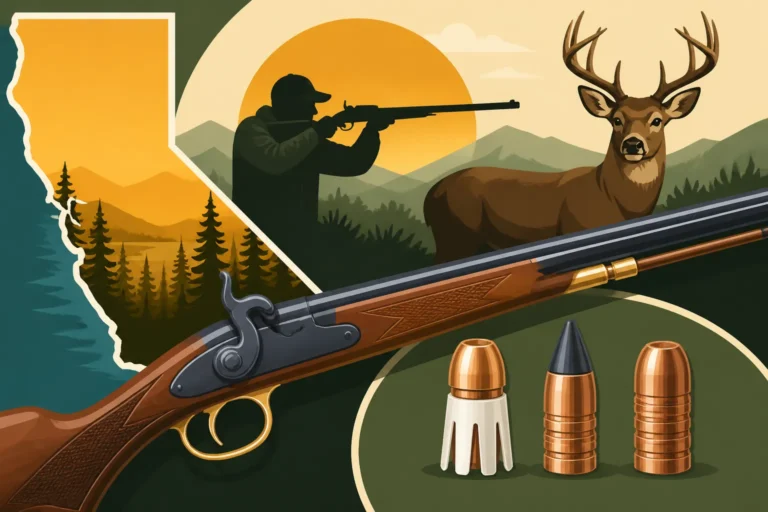
Muzzleloaders: Muzzleloader-only seasons offer unique opportunities, often with less pressure, to pursue big game. For these seasons, you're restricted to traditional muzzleloading firearms. In California, this typically means a rifle loaded from the muzzle with black powder or a black powder substitute, and a single projectile. Critically, the non-lead ammunition requirement also applies to muzzleloaders. This means you must use non-lead projectiles, such as all-copper or brass bullets, specifically designed for muzzleloaders. These can include saboted bullets (a smaller diameter bullet in a plastic cup) or full-bore conical projectiles. You'll want to ensure your chosen non-lead muzzleloader bullet is compliant and that your rifle is sighted in with it. The effective range of a muzzleloader is generally much shorter than a modern centerfire rifle, often limited to 150-200 yards, demanding excellent stalking skills.
Shotguns: Shotguns are primarily used for upland birds and waterfowl, but they can be legal for deer and wild pigs in certain areas, particularly those designated as "shotgun/archery/muzzleloader only" zones (often near urban interfaces or in dense agricultural areas where rifle use is deemed unsafe). When hunting big game with a shotgun, you must use slugs, and these slugs must be non-lead. This means steel, copper, or bismuth slugs are required. Shotguns typically have a much shorter effective range for slugs (often under 100 yards) compared to rifles, so understanding your limitations and practicing with your specific non-lead slug is absolutely vital.
Junior Hunters and Beginner Setups: Lower Recoil, Lighter Rifles
Introducing new hunters, especially juniors, to the sport is crucial for its future. Making their first experiences positive and successful hinges on providing them with appropriate gear that builds confidence rather than instills a fear of recoil. For guidance on youth regulations, refer to California Junior Hunting License Rules.
- Lower Recoil Calibers: Start beginners with calibers known for minimal recoil. The .243 Winchester is an excellent choice for deer, as is the 6.5 Creedmoor. These cartridges are capable of ethically taking deer with proper shot placement, and their mild recoil won't cause flinching or discomfort. For even less recoil, some opt for cartridges like the 7mm-08 Remington, which offers a good ballistic punch with modest recoil.
- Lighter Rifles (But Not Too Light): A lighter rifle is easier for a smaller-statured individual to carry and shoulder. However, an extremely lightweight rifle will have more felt recoil. A good balance is a rifle that is easy to manage but still has enough mass to absorb some recoil. Many manufacturers offer "compact" or "youth" models with shorter stocks and barrels that fit smaller frames better, improving comfort and accuracy.
- Proper Fit: Ensure the rifle fits the shooter. A stock that is too long or too short will make accurate shooting difficult and uncomfortable. Youth models often have adjustable stocks or can be easily modified to fit.
- Patient Instruction: More important than any gear, patient and positive instruction at the range is paramount. Focus on fundamentals—sight picture, trigger control, and breathing—in a no-pressure environment. Celebrate small successes and make learning enjoyable.
Rifle Maintenance and Field Care: Longevity and Reliability
Your rifle is an investment, and like any valuable tool, it requires proper care to ensure its longevity and reliability in the field. This is especially true for hunting in California's often dusty, wet, or rugged conditions.
- Regular Cleaning: After every range trip or hunting outing, especially if the rifle has been exposed to moisture, dirt, or dust, perform a thorough cleaning. This involves cleaning the bore to remove copper fouling and powder residue, cleaning the action, and wiping down all external metal surfaces to prevent rust. Non-lead bullets, particularly solid copper, can sometimes leave different types of fouling than lead, so ensure your cleaning regimen addresses this.
- Proper Lubrication: Lightly lubricate moving parts in the action to ensure smooth operation. Avoid over-lubricating, as it can attract dirt and grime.
- Storage: Store your rifle in a dry, temperate environment. A quality gun safe is ideal, protecting it from theft, curious hands, and environmental damage. Avoid storing rifles in soft cases for extended periods, as they can trap moisture and promote rust.
- Pre-Season Check: Before each hunting season, perform a comprehensive check of your rifle. This includes verifying all screws are tight (especially scope mounts and action screws), checking for any rust or damage, and re-confirming your zero at the range with your chosen hunting ammunition. Ensure your optics are securely mounted and clear. A little preventative maintenance can save a hunt from being ruined by a mechanical issue.
The California hunting landscape demands a thoughtful approach to rifle and caliber selection. By understanding the non-lead mandate, matching your firearm to the game and terrain, and dedicating yourself to proper marksmanship and maintenance, you'll be well-equipped for ethical and successful hunts across the Golden State.
Disclaimer
This article is for general informational purposes only and does not constitute professional advice. Laws, prices and regulations vary by location and change over time. Consult a qualified professional for guidance on your specific situation.