Goose Decoy Spreads for Refuge-Adjacent Fields
Hunting geese in California's refuge-adjacent fields can feel like trying to outsmart a seasoned chess master. These aren't your typical naive birds; they've spent their entire lives living next to sanctuaries where no hunting pressure exists, making them incredibly wary of anything that looks or feels out of place. This guide is all about helping you understand that heightened intelligence and learn how to deploy decoy spreads that consistently fool these notoriously tough birds, turning those frustrating fly-bys into successful opportunities.
Understanding the Pressured Goose Mindset Near Refuges
When you're setting up a goose spread next to a wildlife refuge in California, you're dealing with a different breed of bird. These aren't the easily decoying geese that might come into a spread on private ground miles from any pressure. No, these are geese that have, for generations, observed hunters from the safety of the refuge boundaries. They’ve seen every trick in the book, or so it seems. Understanding their psychology is the first, most crucial step in beating them at their own game.
The "Refuge Effect" and Goose Intelligence
Think about it: these geese spend most of their time in a literal safe haven. They roost there, often feed there, and they learn quickly that anything outside those boundaries might mean danger. This constant exposure to hunting pressure, without actually being hunted themselves, breeds an incredible wariness. They're not just smart; they're educated. They scrutinize everything – the angle of your decoys, the way they're spaced, even the shadows they cast. A single shiny surface, an unnatural grouping, or a decoy facing the wrong way can send an entire flock flaring out of range. It’s like they've got an internal radar for anything amiss, constantly comparing what they see in your field to the undisturbed, natural groups of geese they associate with safety. They often fly high, circling extensively, trying to pick out any discrepancies. This "refuge effect" means you have to be absolutely meticulous with your setup, more so than in almost any other hunting scenario.
Scouting Smart Geese and Identifying Key Flight Paths
Before you even think about putting out a single decoy, you need to become a goose detective. Scouting is non-negotiable for refuge-adjacent fields. These geese have established flight paths from the refuge to their preferred feeding grounds, and these paths can be incredibly consistent, sometimes following hedgerows, ditches, or even power lines. Your job is to identify these travel corridors and, more importantly, figure out where they actually want to land. Don't just pick a field; pick the exact spot in the field where they've been feeding. Look for fresh droppings, plucked stubble, and tracks. This might mean getting up before dawn or staying out until dusk, observing from a distance with good optics. You're trying to learn their rhythm, their preferred entry and exit points, and any subtle features in the field they seem to favor. Using tools like GoHunt can be incredibly helpful for aerial views and identifying potential flight lanes or cover features that might influence their approach. Pay close attention to wind direction on multiple days, as this will dictate their landing approach, which in turn dictates your spread placement.
Reading Goose Behavior and Deciphering Field Preferences
Once you've identified a feeding field, it's time to observe the geese in action. How are they arranged when they feed naturally? Are they in tight family groups, or more loosely scattered? Do they favor certain parts of the field – maybe a slight rise, a drier section, or an area with specific forage? Notice if younger birds are separate from older, more dominant birds. The way wild geese arrange themselves is rarely random; it's a social structure that provides safety and feeding efficiency. For instance, if you observe them landing into the wind on the far side of a large field, that tells you a lot about their comfort zone and preferred approach. If they're constantly wary and circling, never fully committing, that's a sign they're feeling pressure, even from something as subtle as a distant vehicle on a public road. Their body language, how quickly they feed versus how often they look up, can tell you volumes. Are they relaxed, heads down, actively foraging? Or are many birds standing upright, necks extended, scanning the horizon? This detailed observation will inform every aspect of your decoy spread, ensuring it mimics genuine, undisturbed goose behavior as closely as possible.
Building Your Goose Decoy Arsenal for Field Hunting
Hunting pressured geese near a California refuge demands a diverse and realistic decoy spread. You can't just throw out a dozen cheap shells and expect consistent success. Modern goose hunting often involves a significant investment in decoys because realism truly matters. Each type of decoy plays a specific role in creating the illusion of a safe, inviting feeding flock.
Full-Body Decoys: The Foundation of Realism
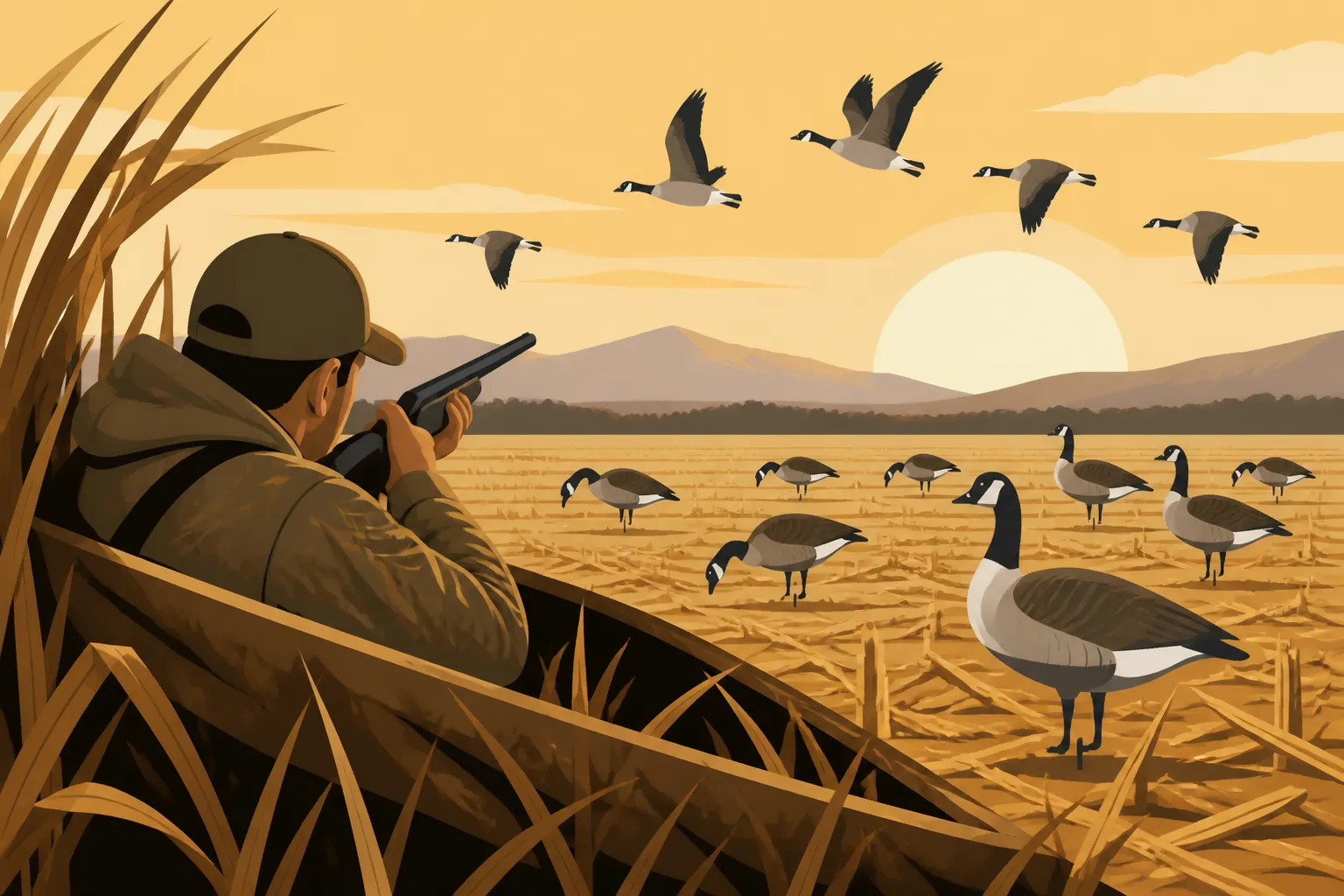
Full-body decoys are, without a doubt, the cornerstone of any effective field spread for pressured geese. Their three-dimensional shape, accurate painting, and realistic flocking (a fuzzy coating that reduces glare) create a lifelike appearance that shells and silhouettes simply can't match. When a wary goose is circling high overhead, trying to pick out anything fake, a full-body decoy presents a much more convincing profile from all angles. They mimic feeding, resting, and sentry positions, allowing you to create a dynamic, natural-looking scene.
The sheer realism of full-bodies helps to build confidence in incoming birds, making them feel like they're dropping into a legitimate flock. They're excellent for simulating "landing zones" or focal points within your spread. While they are bulkier and more expensive than other options, their impact on decoy success, especially with educated birds, is undeniable. Many hunters start their spread with a core of 12-24 high-quality full-bodies and then build around them. Look for models that have intricate feather detail and durable construction, as they'll be hauled in and out of fields frequently.
Shells and Silhouettes: Adding Depth and Numbers
While full-bodies provide realism, shells and silhouettes excel at adding volume and the appearance of a larger flock. Shells are essentially the top half of a full-body, hollowed out and often placed on short stakes. They offer a good profile from the top and sides, making your spread look bigger without the bulk of full-bodies. Silhouettes, on the other hand, are flat, two-dimensional decoys that are incredibly lightweight and easy to deploy in large numbers.
Their primary role is to create the impression of many geese. From a distance, especially in low light or fog, silhouettes can be surprisingly effective. You can use them to extend the perimeter of your spread, fill in gaps, or create long lines of feeding geese without breaking the bank. A common strategy is to use full-bodies as your central "kill hole" or landing zone, and then flank them with dozens of shells and silhouettes to make the spread appear massive. This combination offers the best of both worlds: high realism where it counts (near the hunter) and sheer numbers to attract distant birds. They are also fantastic for quickly breaking down and moving if geese change fields unexpectedly, a common occurrence when you're Hunting a Refuge-Adjacent Field at Dawn.
Motion Decoys: Bringing Your Spread to Life
Motion is the secret sauce that can truly differentiate your spread from a static collection of plastic birds. Geese are constantly moving, feeding, stretching, and interacting. A perfectly still spread, especially on a calm day, can look unnatural to a high-flying bird. Motion decoys, such as flapper decoys, wind socks, or even simple goose flags, break up the static appearance and add vital realism. Flapper decoys mimic the wings of a goose landing or stretching, while wind socks inflate and move with the slightest breeze, simulating active feeding.
Goose flags, wielded by hunters in the blind, can be incredibly effective for flagging down distant birds or giving the impression of a landing goose, especially when combined with good calling. The subtle, unpredictable movement of natural geese is hard to replicate, but motion decoys do an excellent job of hinting at it. A few well-placed motion decoys can make a huge difference, particularly on days with little wind when your static decoys are just sitting there. They add that spark of life that tells wary geese, "It's safe here, come on down!"
Crafting Realistic Decoy Spreads for Adjacent Fields
Once you have your arsenal of decoys, the real art begins: arranging them in a way that convinces those highly educated geese that your field is the best place to be. This isn't about throwing them out haphazardly; it's about thoughtful placement, understanding goose behavior, and being ready to adapt.
The Core Principles of a Natural Goose Spread
Every effective goose decoy spread, especially near refuges, adheres to a few core principles that mimic natural goose behavior. First and foremost, natural spacing is key. Geese typically feed in family groups, but they also maintain a certain personal bubble. Avoid rigidly symmetrical lines or overly tight clusters unless you're specifically trying to create a family group. Instead, aim for a more organic, slightly irregular pattern.
Secondly, always consider the wind. Geese, like all birds, land and take off into the wind. Your "kill hole" or landing zone should always be positioned downwind of your main spread, allowing incoming birds to finish their approach directly over your blinds. Third, directionality matters. Have some decoys facing into the wind, some feeding, some looking around – a mix of positions to simulate a relaxed, confident flock. Fourth, volume and depth are crucial. Use your full-bodies, shells, and silhouettes to create the illusion of a large, inviting flock. Don't be afraid to spread your decoys out; a bigger footprint often looks more natural to distant birds. Finally, identify a landing zone. This is the open area, free of decoys and hunters, where you want the geese to commit and set their wings. It should be easily visible and feel "safe" to the approaching birds.
Common Spreads and Their Ideal Scenarios
There are several tried-and-true decoy spreads, each with its own advantages, which you can adapt for California's refuge-adjacent fields:
- The "J" or "U" Spread: This is a classic for a reason. You create a long line or hook of decoys, with the open end of the "J" or "U" facing into the wind, creating a natural landing zone. The curve allows geese to approach from various angles and still feel comfortable dropping into the open "cup." This is fantastic for larger fields and when you expect birds to commit cleanly.
- The "X" or "V" Spread: Similar to the J, these spreads create a clear landing lane. The two arms of the "X" or "V" extend out into the field, guiding geese towards the central open area where your blinds are usually located. This works well for fields where geese tend to approach from a wide front.
- The "Family Group" Spread: Instead of one large, amorphous blob, this spread involves placing smaller clusters of 3-5 decoys (representing family units) with open lanes between them. This creates a more natural, less threatening appearance, as geese often land within or near existing family groups. This is particularly effective for very wary birds that might be put off by a single, massive cluster.
- The "Spread Out" or "Massive Field" Spread: When hunting truly enormous fields, especially those near major flyways like California's Central Valley, sometimes sheer numbers spread across a vast area is the key. While you'll still have a core landing zone, the goal here is to make your spread visible and appealing from miles away, using hundreds of silhouettes and shells to suggest a huge, safe feeding opportunity. This can be critical when Pass-Shooting Geese on California's Sacramento Refuges.
Adapting Spreads to Changing Conditions and Goose Pressure
No two hunts are ever exactly alike, especially with those wily refuge geese. What worked yesterday might not work today. The key is adaptability.
- Wind Shifts: Always be prepared to adjust your spread if the wind changes direction. Geese will land into the wind, so your landing zone must be downwind. This might mean moving blinds and re-arranging a significant portion of your decoys. It's tedious, but vital.
- Goose Behavior: Are geese flaring consistently at a certain distance? Try shrinking your spread, making it appear less intimidating, or moving your blinds further back. Are they landing short? Extend the "arms" of your J or V spread to draw them closer to your desired shooting zone. Sometimes, less is more; a small, ultra-realistic spread of full-bodies can be more effective than a huge, poorly arranged one.
- Field Type: A spread in a cut grain field will differ from one in a newly mown alfalfa field. Consider the natural cover and topography. A small rise in the field might be a natural gathering point for geese, so position your spread to capitalize on it.
- Pressure: If you're hunting after several days of heavy hunting pressure, geese will be extra cautious. In these situations, simplify your spread, maximize realism, and prioritize concealment. Sometimes, the "less is more" approach, with a smaller number of impeccably placed, high-quality full-bodies, can be more effective than a massive spread that might look intimidating. Using mapping services like GoHunt to scout other hunting pressure in the area can help you gauge how wary the birds might be.
| Decoy Type | Pros | Cons | Ideal Use Case |
|---|---|---|---|
| Full-Body | Max realism, great visibility, versatile | Bulky, expensive, more setup time | Core of the spread, landing zone, close-in realism |
| Shell | Good profile, lighter than full-bodies | Not fully 3D, can look flat from angles | Adding numbers, mid-range depth, extending the spread |
| Silhouette | Very lightweight, portable, affordable | Flat profile, less convincing up close | Adding massive numbers, distant visibility, quickly filling gaps |
| Motion Decoy | Adds life, attracts attention, breaks monotony | Can be mechanical, requires batteries/wind | Key focal points, attracting distant birds, calm days for movement |
| Goose Flag | Active, mimics landing, highly engaging | Requires hunter interaction, can be overused | Drawing in distant birds, finishing hesitant flocks, adding immediate realism |
Blinds, Calling, and Concealment: The Complete Field Setup
A perfect decoy spread is only part of the equation when dealing with highly pressured geese. Your concealment, calling prowess, and overall discipline are equally critical. These elements work in concert with your decoys to create a seamless, believable illusion.
The Art of Concealment in Open Fields
Hiding effectively in an open field is one of the biggest challenges for goose hunters. Geese have incredible eyesight, especially from above. Any unnatural lump, shine, or movement will send them flaring. Layout blinds are the standard for field hunting for a reason: they allow you to lie flat, blend into the stubble, and spring up quickly. However, even a layout blind needs to be brushed in meticulously. Don't just toss some straw on it; make it look like a natural part of the field. Use local vegetation – corn stalks, stubble, alfalfa – to match your surroundings. The goal is for the blind to disappear completely.
Beyond the blind itself, consider your silhouette. Wear camo that matches the field. Avoid bright colors or exposed skin. Even the glint of a watch or a phone screen can ruin a setup. For a multi-day hunt, sometimes the best concealment is digging pit blinds, but that's a whole other level of commitment. Always ensure your blind placement is downwind of your spread's main body, giving the geese a clear path to the landing zone over your blinds. Remember, even the best Layout Blind Hunting a Flooded Field will fail if it's not brushed in properly.
Effective Goose Calling for Pressured Birds
Calling pressured geese near a refuge is a delicate dance. You're not just blasting out calls; you're communicating. These birds have heard it all. Overcalling or making unnatural sounds will work against you. Start with soft, contented clucks and murmurs that mimic feeding geese. These sounds convey a sense of safety and relaxation. As birds get closer, you can increase volume and add more diverse calls like honks and greeting calls, but always be mindful of their response.
Pay attention to the natural rhythm of a goose flock – short bursts of calling, then silence, then another burst. Don't be a one-man band. If hunting with partners, coordinate your calling. One person might do the clucking, another the honking. When birds are directly overhead and locked in, often the best call is no call at all. Let the decoys do the work. Aggressive calling can sometimes spook birds that are already wary. Practice your calling extensively and learn to read the birds to know when to call, and more importantly, when to shut up. Sometimes, a well-placed flag is more effective than any call for Calling a Bull Elk in September. Oops, wrong animal. For geese, a flag is still very effective!
Final Touches: Flags, Motion, and Hunter Discipline
These are the details that often separate a good hunt from a great one.
- Goose Flags: A well-used goose flag can be pure magic. It mimics a landing bird, a stretching bird, or a bird just arriving. When distant birds are staring, a quick flash of the flag can sometimes make them turn. When they're circling, flagging can help them commit. But like calling, don't overdo it. A subtle flash is often better than frantic waving.
- Subtle Motion Decoys: Beyond the motorized flappers, consider manual motion. If you're in a pit blind, occasionally shifting a full-body decoy on a stake can add movement. Simple wind socks that just wobble gently with the breeze are also highly effective at adding a natural shimmer to your spread.
- Hunter Discipline: This is paramount. No peeking over the blind. No sudden movements. Stay absolutely still until the shot opportunity is there. If a goose is looking directly at your blind, freeze. Any movement will be immediately detected. Your face and hands are often the most exposed, so keep them covered. Wait until the birds are committed, cupped up, and within killing range before you call the shot. Rushing a shot often results in a miss and a flared flock. Patient hunters are successful hunters, especially when dealing with the hyper-vigilant waterfowl that frequent public lands where California Duck Daily Bag Limit are often harder to fill.
Troubleshooting and Advanced Strategies
Even with the best gear and knowledge, hunting refuge-adjacent geese will present challenges. These birds are master evaders. Knowing how to adapt on the fly and using every tool at your disposal can make the difference between a frustrating morning and a successful one.
What to Do When Geese Are Flaring
It’s an all too common scenario: you’ve put out what you think is a perfect spread, you’re concealed, you’re calling, and yet flock after flock flares just out of range, mockingly circling before heading back to the refuge. When geese are consistently flaring, it’s a clear sign that something is off with your setup. The first thing to consider is your concealment. Have you brushed in your blinds enough? Is there any glare from shiny surfaces? Are hunters moving or silhouetted? Even a slight bulge in the blind or a gap in the stubble can be enough.
Next, reassess your spread itself. Is it too tight? Too symmetrical? Are the decoys facing the wrong way relative to the wind? Sometimes, less is more; try reducing the number of decoys and focusing on extreme realism with your best full-bodies. If they're flaring consistently at a certain distance, try moving your entire setup back further from their approach, giving them more room to commit without feeling threatened. Another common issue is the landing zone. Is it too small? Too cluttered? Geese want a wide, clear space to land. Finally, consider your calling. Are you overcalling? Are your calls too aggressive for wary birds? Often, going silent or using only soft clucks can calm flaring birds. Sometimes a flock will flare, only to circle back around, perhaps taking a wider arc, testing the spread. This is when patience and perfect stillness are essential.
Leveraging Technology and Advanced Scouting Tools
Modern hunting offers a suite of technological aids that can significantly improve your odds against pressured geese. Beyond just good binoculars, GPS units and mapping apps are invaluable. Apps like GoHunt, or other similar platforms, allow you to study aerial imagery in incredible detail. You can identify subtle changes in field topography, hedgerows, ditches, and power lines that might serve as flight corridors or natural boundaries for your spread. You can mark exact spots where you’ve seen geese feeding, track wind direction history, and even pinpoint potential blind locations long before you ever set foot in the field.
Weather apps are also critical. Knowing wind speed and direction changes throughout the day is vital for planning and adjusting your spread. Some hunters even use specialized long-range spotting scopes and trail cameras (where legal and ethical for scouting, not hunting) to observe goose behavior from afar, gaining insights into their routines without disturbing them. This level of pre-hunt intelligence gathering, facilitated by technology, can give you a significant edge over the un-scouted hunt, especially when trying to understand subtle goose movements in response to Wind and Thermals in Steep Sierra Country (though for geese, it's more about open field winds).
The Importance of Post-Hunt Analysis
Every hunt, whether successful or not, is a learning opportunity. Don't just pack up your gear and forget about it. Take time to analyze what happened. Why did the birds decoy well? Why did they flare? Did they favor a particular part of your spread? Did they come from an unexpected direction?
Make notes, take photos of your spread, and discuss it with your hunting partners. This feedback loop is essential for continuous improvement. Perhaps your blinds weren't quite brushed in enough on the north side, or maybe your landing zone was too close to a prominent tree line. Did the calling seem to help or hinder? By honestly evaluating each hunt, you'll start to build a mental library of what works and what doesn't for your specific fields and your local goose population. Over time, this cumulative knowledge will refine your decoy spreads, improve your concealment, and sharpen your calling, making you a much more effective and consistent goose hunter on California's challenging refuge-adjacent fields. Understanding the birds and constantly refining your approach is how you consistently Decoying Ducks in California's Central Valley Flooded Rice and geese.
Disclaimer
This article is for general informational purposes only and does not constitute professional advice. Laws, prices and regulations vary by location and change over time. Consult a qualified professional for guidance on your specific situation.