Best Non-Lead Bullet Weight for Mule Deer
Hunting mule deer in California's vast, often rugged landscapes presents unique challenges, especially when it comes to choosing the right ammunition. With California's non-lead requirement firmly in place, hunters are constantly weighing options, and a common question I hear is about the ideal non-lead bullet weight for these magnificent animals. It’s a frustrating puzzle to solve, trying to balance trajectory, energy, and terminal performance, but getting it right can mean the difference between a clean harvest and a frustrating day. This guide will walk you through the nuances of selecting the best non-lead bullet weight for mule deer, ensuring you're prepared for your next high-country or desert adventure.
Understanding Mule Deer Anatomy and Shot Placement for Ethical Harvests
Before we even dive into bullet weights, let's talk about the mule deer itself. These aren't tiny whitetails; they're substantial animals, especially those big high-country bucks that haunt the Eastern Sierra or the desert fringes. Their anatomy, while similar to other deer species, demands a precise approach to shot placement. Understanding where vital organs lie and how different bullets perform is crucial for any ethical hunter.
Why Bullet Placement Trumps Weight (Almost Always)
I can't stress this enough: bullet placement is king. You can have the most expensive, perfectly weighted non-lead bullet on the market, but if you don't put it in the right spot, it's not going to do its job. A well-placed shot with a "less than ideal" bullet weight will always be more effective than a poorly placed shot with the "perfect" bullet weight.
Mule deer vitals – the heart and lungs – are relatively large targets, but they're nestled behind ribs and heavy bone. A shot through both lungs is typically fatal, leading to a quick, humane harvest. A heart shot is even faster. Your goal, regardless of the bullet you choose, is to hit this vital area reliably. This means knowing your rifle, practicing extensively, and understanding your effective range. Don't push shots you're not confident in, no matter how big the buck. A clean pass-through creating two holes maximizes blood trail and ensures maximum damage to the vital organs. The non-lead bullet's ability to retain weight and penetrate deeply is a huge advantage here.
The Role of Bullet Construction in Terminal Performance
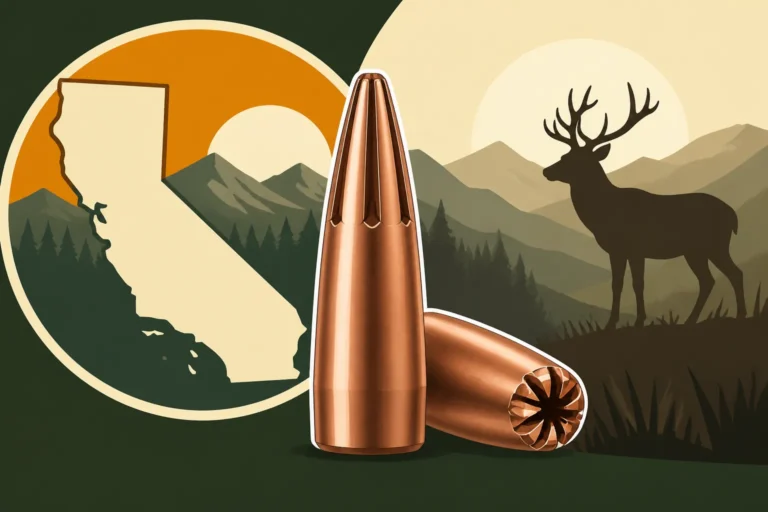
Non-lead bullets, typically made from monolithic copper or copper alloys, behave differently than traditional lead-core bullets. Lead bullets often expand violently, shedding weight and causing significant tissue damage, sometimes leading to fragmentation within the animal. While effective, this fragmentation is exactly what California's California's Non-Lead Ammunition Requirement aims to prevent, reducing lead exposure in the environment and to scavenging wildlife like the California Condor.
Non-lead bullets, on the other hand, are designed to expand in a controlled manner, typically mushrooming out while retaining almost all of their original weight. This means they tend to penetrate much deeper than comparable lead bullets. This deep penetration is a massive advantage for mule deer, especially if you encounter a quartering-away shot opportunity where you need to drive through a shoulder or hip to reach the vitals. Because they retain so much mass, they carry more energy deeper into the animal, creating a larger wound channel and increasing the likelihood of a clean exit wound for tracking purposes. When considering Choosing Non-Lead Rifle Ammunition in California, remember that construction plays a huge part in how that bullet performs.
Deciphering Non-Lead Bullet Weights for California Mule Deer
Now that we've covered the basics of ethical hunting and bullet construction, let's get into the nitty-gritty of bullet weights for mule deer. It's not just about picking the heaviest bullet; it's about finding the right balance for your caliber and hunting conditions.
The "Sweet Spot" for Common Mule Deer Calibers
When it comes to non-lead bullets, many hunters find that a slightly lighter-for-caliber monolithic bullet can perform similarly to a heavier lead-core bullet, due to its superior weight retention and penetration. However, for mule deer, which can be larger and tougher than blacktails, choosing a bullet that offers a good balance of retained energy and ballistic performance is key.
For popular calibers often used on mule deer, here's a general idea of where the "sweet spot" for non-lead bullet weights often lies:
- .270 Winchester: Many hunters find success with non-lead bullets in the 130 to 140-grain range. These offer excellent velocity and flat trajectories, which are beneficial for the longer shots often presented when Glassing Mule Deer in Open California Country.
- .308 Winchester: For the versatile .308, 150 to 165-grain non-lead bullets are popular choices. The 165-grain options often provide a slightly better ballistic coefficient (BC) and more retained energy at longer distances.
- 30-06 Springfield: The old reliable 30-06 performs very well with non-lead bullets in the 165 to 180-grain range. The heavier end of this spectrum can be particularly effective on larger mule deer or if you anticipate shots at extended ranges.
- 6.5 Creedmoor: This modern cartridge shines with non-lead bullets typically in the 120 to 130-grain range. The 6.5mm's inherently high BC translates well to non-lead options, making it a very capable mule deer round.
These weights generally provide a good compromise between velocity for flatter trajectories and enough mass for deep penetration and energy transfer upon impact. Remember, the goal is often deep penetration and a full pass-through with a non-lead bullet, creating maximum damage and a good blood trail.
Factors Beyond Just Weight: Ballistic Coefficient and Velocity
Bullet weight is just one piece of the puzzle. Two other critical factors, especially when hunting mule deer in expansive California territories, are ballistic coefficient (BC) and velocity.
- Ballistic Coefficient (BC): This number quantifies how aerodynamically efficient a bullet is – essentially, how well it cuts through the air. A higher BC means the bullet resists air drag more effectively, retaining more velocity and energy downrange. For long-range mule deer hunting in open country, where shots can easily stretch beyond 300 yards, a high BC non-lead bullet is your best friend. Even a slightly heavier non-lead bullet might have a higher BC, which can reduce wind drift and bullet drop at those extended ranges, making consistent hits much more achievable. Brands like GoHunt often publish ballistic data for various ammunition, which can be an invaluable resource when researching specific loads. Understanding how Copper Bullet Ballistic Coefficient Versus Lead differs is important here.
- Velocity: The speed at which your bullet travels is crucial for two reasons. First, higher velocity generally translates to flatter trajectories, simplifying holdovers at varying distances. Second, most expanding bullets, non-lead included, are designed to perform optimally within a specific velocity window. If a bullet slows down too much at long range, it might not expand as intended, leading to reduced terminal performance. Conversely, if it's too fast at close range, some designs can over-expand, reducing penetration. The trick is to find a non-lead bullet weight that allows your chosen cartridge to launch it at an optimal velocity for expansion and maintains enough speed throughout your anticipated hunting ranges. This is where researching manufacturer data and understanding your rifle's capabilities becomes essential.
Matching Bullet Weight to Your Hunting Conditions and Rifle
Choosing the right non-lead bullet weight isn't a "one-size-fits-all" proposition. It heavily depends on where and how you hunt mule deer in California, as well as the specific characteristics of your rifle.
Considering Shot Distance and Terrain in Mule Deer Country
California mule deer are often found in wide-open, high-desert, or mountainous terrain, particularly in zones like the Eastern Sierra or the more expansive D-zones. This means you might encounter longer shot opportunities than you would when Hunting Coastal Range Oak Woodlands for blacktails.
- Long-range shots: If you're primarily Hunting California's High-Country X-Zones or vast BLM desert lands, you'll likely be taking longer shots. For these scenarios, a non-lead bullet that is slightly heavier for its caliber, possessing a higher BC, will help maintain velocity and reduce wind drift. This minimizes the variables you need to account for, increasing your chances of a clean hit. When you're glassing vast canyons and ridges, every bit of ballistic performance helps.
- Closer-range shots: While less common for mule deer, if your hunting grounds involve more timbered areas or dense brush where shots are generally under 200 yards, a slightly lighter non-lead bullet might be perfectly adequate. These lighter bullets often deliver higher initial velocities, making them very flat shooting at closer distances and still providing excellent terminal performance due to their robust construction. However, the deep penetration benefits of a slightly heavier bullet can still be an advantage in breaking through bone or heavy muscle.
It's all about matching your gear to the environment you plan to hunt. A bullet that's perfect for a 400-yard shot in the open desert might not be the absolute best if you only anticipate 100-yard timber shots, and vice-versa.
Rifle Twist Rate and Its Impact on Bullet Stabilization
This is a crucial point that many hunters overlook, especially when transitioning to non-lead bullets. Rifle barrels have rifling – spiral grooves that impart a spin on the bullet, stabilizing it in flight. The "twist rate" refers to how quickly this rifling makes a full rotation (e.g., 1:10" means one full rotation in 10 inches).
- Why it matters for non-lead: Non-lead bullets, particularly monolithic copper, are typically longer for their weight compared to lead-core bullets of the same caliber. This is because copper is less dense than lead. Longer bullets require a faster twist rate (a lower number, like 1:9" instead of 1:12") to stabilize properly. If your rifle's twist rate is too slow for the length of your non-lead bullet, the bullet can "tumble" or "wobble" in flight, leading to poor accuracy and inconsistent terminal performance.
- Checking your rifle: Before committing to a specific non-lead bullet weight, know your rifle's twist rate. This information is often stamped on the barrel or can be found in your rifle's manual or on the manufacturer's website. If you're unsure, a gunsmith can easily measure it for you. Generally, modern rifles are built with twist rates suitable for a wide range of bullet weights, but it's always good to verify, especially with these longer non-lead projectiles. This is particularly relevant when considering your options for Best Rifle Caliber for California Mule Deer.
Practical Application and Field Testing Your Chosen Load
The absolute most important step after selecting a potential non-lead bullet weight and brand is to take it to the range and shoot it. Your rifle is an individual, and what shoots well in one rifle of the same make and model might not shoot as well in another.
- Accuracy is paramount: Spend time sighting in your rifle with your chosen non-lead load. Pay close attention to group sizes and consistency. You need to be able to place shots reliably and accurately at all anticipated hunting distances. Remember the internal link to Sighting In Before Switching to Non-Lead for more detailed guidance on this critical step.
- Ballistic confirmation: Don't just trust the box data. Confirm your bullet's trajectory at various distances by shooting at 100, 200, 300 yards, and even further if your range allows and your hunting scenarios demand it. This will help you build confidence and truly understand how your bullet performs. Using a rangefinder during practice, like those discussed for Optics for California's Open-Country Deer Hunting, will become second nature.
- Terminal performance practice: While you can't shoot a live mule deer for practice, you can get an idea of terminal performance by shooting into ballistic gel, wet newspaper, or even large water jugs. This isn't a perfect science, but it can give you a visual representation of how your non-lead bullet expands and penetrates, reinforcing your confidence in your choice for an ethical harvest.
Common Calibers and Recommended Non-Lead Bullet Weights
To make things a little easier, let's break down some specific recommendations for popular calibers used for mule deer hunting in California. These are general guidelines, and as we've discussed, always confirm with your specific rifle and hunting conditions.
.270 Winchester
The .270 has been a staple for deer hunters for generations, and it continues to perform admirably with non-lead ammunition. For California mule deer, I generally recommend non-lead bullet weights between 130 and 140 grains.
A 130-grain monolithic copper bullet will fly incredibly flat and retain a high percentage of its weight, driving deep. For instance, the performance from Federal Premium Terminal Ascent or Barnes TTSX in this weight range is often outstanding. If you anticipate longer shots or want a bit more mass, a 140-grain option like those from Hornady CX or Nosler E-Tip can offer a slight edge in retained energy and wind resistance, without sacrificing too much velocity.
.308 Winchester
The .308 is an incredibly popular and efficient cartridge, known for its accuracy and manageable recoil. For mule deer with non-lead, focus on the 150 to 165-grain range.
A 150-grain non-lead bullet from brands like Barnes or Federal will typically deliver excellent velocity and sufficient penetration for most mule deer scenarios. However, many hunters, myself included, lean towards the 165-grain non-lead options for mule deer. These heavier bullets often boast a higher ballistic coefficient, which can be advantageous for the longer shots often associated with Hunting a California BLM Desert Wash for Deer or vast open ranges. They tend to carry more energy downrange and offer excellent penetration through tough hide and bone.
30-06 Springfield
The venerable 30-06 is a powerhouse, and it's perfectly suited for mule deer with non-lead bullets. I recommend exploring non-lead options in the 165 to 180-grain range.
A 165-grain non-lead bullet will provide a fantastic balance of speed and power, replicating much of the performance of traditional 180-grain lead loads. Brands like Hornady CX or Barnes TTSX in this weight are superb. For those chasing larger mule deer in very rugged, remote areas or seeking maximum penetration, moving up to a 180-grain non-lead bullet, such as the Federal Premium Trophy Copper, can offer an added layer of confidence. This heavier bullet will maintain its momentum exceptionally well and drive through just about anything a mule deer can throw at it.
6.5 Creedmoor
The 6.5 Creedmoor has taken the hunting world by storm, and it's a phenomenal cartridge for mule deer, especially when paired with modern non-lead bullets. The sweet spot for non-lead in the 6.5 Creedmoor for mule deer typically falls between 120 and 130 grains.
The 120-grain monolithic copper bullets, like those from Barnes or Hornady, are known for their incredibly flat trajectory and impressive terminal performance, even on larger deer. Given the 6.5mm's inherently high BC, these lighter non-lead options still retain significant energy downrange. If you prefer a slightly heavier option or are hunting particularly large mule deer, a 127 or 130-grain non-lead bullet will offer enhanced ballistic performance and even deeper penetration, making the 6.5 Creedmoor a very capable cartridge for these animals. You can use resources from GoHunt to look up specific bullet characteristics and compare different options to see which best suits your needs.
Here’s a quick summary of common calibers and recommended non-lead bullet weights for California mule deer:
| Caliber | Recommended Non-Lead Bullet Weight Range (Grains) | Key Performance Characteristics |
|---|---|---|
| .270 Winchester | 130-140 | Flat trajectory, excellent velocity, good penetration. Great for open country shots. |
| .308 Winchester | 150-165 | Versatile, accurate, good energy retention, and deeper penetration with heavier options. |
| 30-06 Springfield | 165-180 | Powerful, deep-penetrating, high energy delivery, robust performance on large mule deer. |
| 6.5 Creedmoor | 120-130 | High ballistic coefficient, flat shooting, impressive terminal performance for its size, excellent for longer ranges. |
Ultimately, the "best" non-lead bullet weight for mule deer is the one that shoots most accurately from your rifle, provides consistent terminal performance within your ethical hunting range, and gives you the confidence to make a clean, humane shot. Take the time to research, test, and practice, and you'll be well-prepared for your California mule deer hunt.
Disclaimer
This article is for general informational purposes only and does not constitute professional advice. Laws, prices and regulations vary by location and change over time. Consult a qualified professional for guidance on your specific situation.