How Non-Lead Bullets Pattern at Long Range
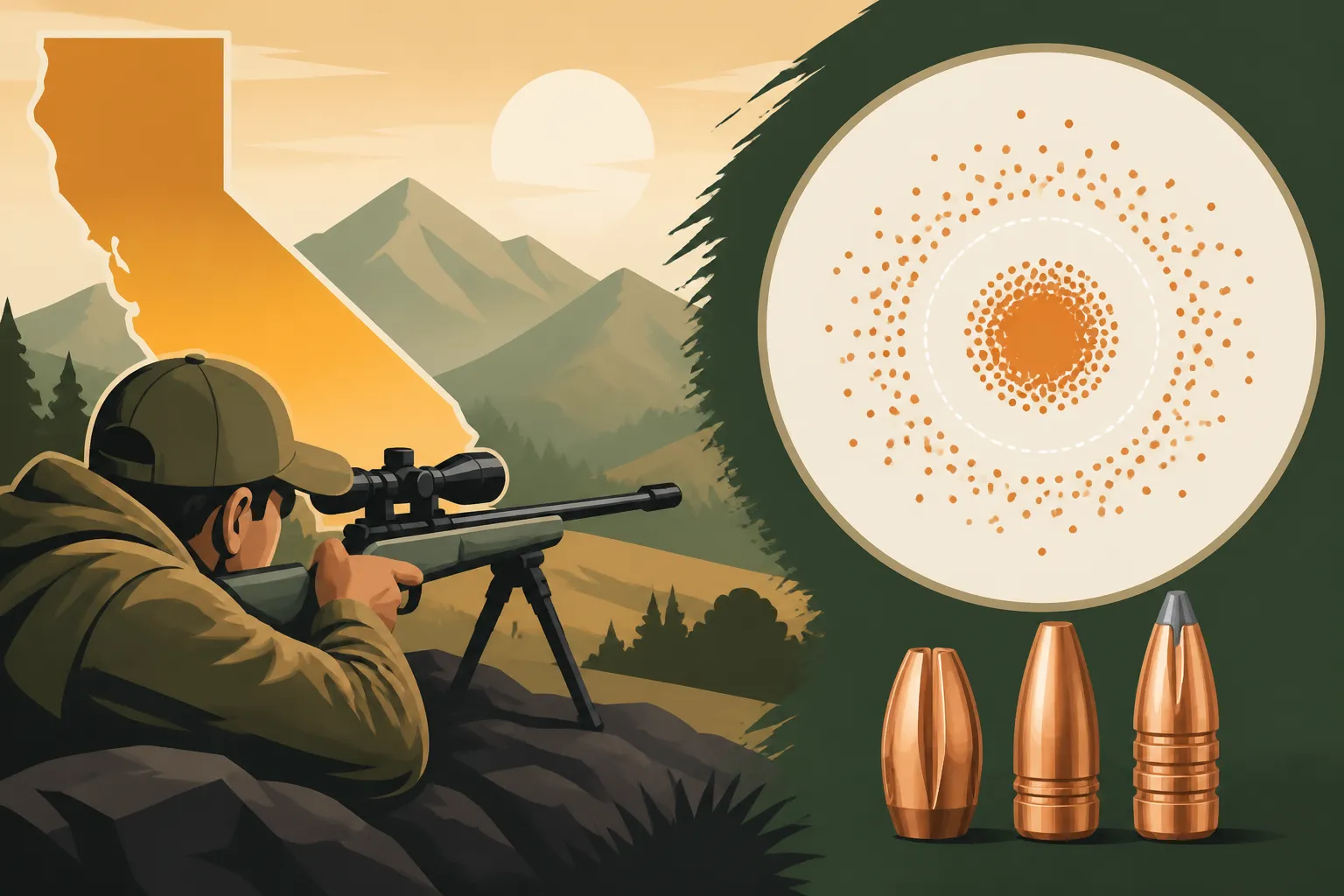
For many California hunters, the switch to non-lead ammunition has brought with it a host of questions, not least of which is how these new projectiles will perform when stretching out to those longer shots we sometimes encounter in wide-open country. It's a valid concern; after all, confidence in your bullet's trajectory is paramount for ethical hunting. This guide aims to thoroughly explore how non-lead bullets pattern at long range, addressing the unique characteristics of these rounds and offering practical advice for hunters navigating this transition.
The Unique Characteristics of Non-Lead Projectiles
Transitioning to non-lead ammunition isn't just about complying with California's statewide requirement; it's about understanding a fundamental shift in bullet design and its implications for performance downrange. Many hunters initially feel a bit lost, wondering if their trusty rifle will still shoot the same, or if they'll suddenly be facing a whole new set of ballistic challenges. The truth is, non-lead bullets do behave differently, and knowing why is the first step toward mastering their performance.
Material Differences and Their Impact
The most obvious difference with non-lead bullets is their composition. Instead of a lead core with a copper jacket, you're typically dealing with solid copper or a copper alloy (gilding metal). This change in material directly impacts how the bullet is manufactured and, critically, how it flies. Solid copper, for instance, is less dense than lead. To achieve a similar projectile weight to a traditional lead bullet, a non-lead bullet often has to be longer. This increased length for a given caliber can affect things like barrel twist rate stabilization, but more profoundly, it changes the bullet's center of gravity and its harmonic interaction with the rifle barrel.
When that solid copper or alloy bullet leaves the barrel, it's a single, cohesive unit designed not to fragment. This means energy transfer upon impact is different, but for long-range trajectory, it primarily means a more stable, consistent flight path, assuming the bullet is properly stabilized by your rifle's twist rate. This consistent construction can be a real advantage for repeatable accuracy, but you absolutely cannot expect it to shoot identically to your old lead loads without adjustment. Many hunters initially try to "get close" with their old zero, but that's a recipe for frustration and, worse, a missed opportunity or a wounded animal. A full re-zero, often from scratch, is almost always necessary.
Ballistic Coefficient and Sectional Density
These two terms might sound like something out of an engineering textbook, but for long-range shooting, they're incredibly important. Ballistic Coefficient (BC) is essentially a measure of a bullet's ability to overcome air resistance. A higher BC means the bullet flies flatter and retains velocity better. Sectional Density (SD) relates a bullet's weight to its diameter, indicating how well it penetrates.
Because non-lead bullets are often longer for their weight due to copper's lower density, their BC can vary compared to lead. Sometimes, the sleek, monolithic design of a solid copper bullet can actually result in a very favorable BC, helping it cut through the air efficiently. Other times, if the design prioritizes expansion over aerodynamics, the BC might be lower than a comparable lead bullet. This means that a non-lead bullet might not drop or drift in the wind exactly as you expect based on your experience with lead. You might find a copper bullet in your .30-06 that, despite being the same weight as your old lead bullet, has a slightly different BC. This subtle difference becomes more pronounced as range increases, altering your holdovers and windage adjustments. Understanding these differences is why some hunters pore over spec sheets and ballistic charts, often leveraging resources like GoHunt's extensive data or community forums to compare specific non-lead bullet performance. It's all about finding the right projectile that not only meets the non-lead requirement but also matches your long-range hunting needs. You can learn more about Copper Bullet Ballistic Coefficient Versus Lead.
Velocity and Energy Retention
Another critical aspect of non-lead bullet performance at long range is how they retain velocity and, by extension, kinetic energy. Often, non-lead bullets are engineered to perform effectively at a wider range of impact velocities, which is particularly beneficial for longer shots where velocity naturally drops. Because they're solid, they tend to maintain their mass and structural integrity better than many traditional lead-core bullets, which might shed weight through fragmentation at higher impact speeds.
What does this mean for patterning at long range? A non-lead bullet that retains velocity well will have less bullet drop and less wind drift over distance compared to a bullet that sheds velocity more quickly. This can lead to a flatter trajectory overall, which can be an advantage in open country, like much of California's D-zone territory or the expansive BLM lands. However, the initial muzzle velocity of non-lead rounds can sometimes be slightly different than lead counterparts, depending on powder charges and bullet design. It's a delicate balance. A higher initial velocity with a good BC will lead to superior long-range ballistics, but a non-lead bullet with a lower BC, even if it starts fast, might lose that advantage further out. This is why thorough testing at the range, not just speculating, is so vital. You need to see how your chosen load actually performs from your rifle.
Understanding Your Rifle's Performance with Non-Lead at Range
The best non-lead bullet in the world is only as good as its compatibility with your rifle and your understanding of its performance. This isn't just theory; it's where the rubber meets the road, or more accurately, where the copper meets the target. Many hunters express frustration when their beloved rifle, which shot sub-MOA with lead, suddenly seems finicky with non-lead. This isn't a flaw in the rifle or the ammo necessarily, but a requirement for careful testing and adjustment.
The Critical Importance of Re-Zeroing
Let me be absolutely clear: if you switch to non-lead ammunition, you must re-zero your rifle. No exceptions. This isn't a suggestion; it's a fundamental requirement for accuracy and ethical hunting. Even if you stick with the same bullet weight and caliber, the change from a lead-core projectile to a monolithic copper or copper-alloy bullet is significant enough to alter your rifle's point of impact dramatically.
Think about it: the weight distribution within the bullet is different, the overall length is often different, and the way the bullet engages the rifling can be subtly different. All these factors change the barrel's harmonics – how it vibrates as the bullet travels down it. What felt like a minor change on paper can translate to several inches of difference at 100 yards, and that error only magnifies at 300, 400, or 500 yards. I've seen countless hunters get frustrated because they sighted in at 50 yards and assumed it would be "close enough," only to be shocked by their misses at deer camp. Start fresh, zero at 100 yards, and then verify at longer ranges. This dedication is crucial for success, especially in zones like the high Sierra backcountry where long shots are common. You can get a head start by understanding Zeroing a Rifle for Non-Lead Loads.
Testing Different Loads and Bullet Weights
Just like with lead ammunition, not all non-lead loads will shoot equally well in your rifle. Your barrel has a preference, a specific twist rate, and a harmonic signature that will favor certain bullet designs and weights over others. This means a period of experimentation might be necessary to find the optimal non-lead round for your firearm. Don't just grab the first box of copper bullets you see and expect miracles.
Consider trying different brands of non-lead ammunition. For example, some rifles might love the Barnes TSX or TTSX, while others might prefer Hornady GMX, Federal Trophy Copper, or Nosler E-Tip. Pay attention to bullet weights too. If you previously shot 165-grain lead bullets, you might find that a 150-grain or even 180-grain non-lead bullet performs better in your rifle. These variations can drastically affect the "pattern" at long range, influencing group size, point of impact, and overall consistency. It’s an investment of time and money, but finding that perfect match is incredibly rewarding. Online resources, and sometimes the intel shared within communities like those found on GoHunt, can offer valuable insights into what other hunters with similar setups have had success with, helping narrow down your choices. This step is as important as the hunt itself, preparing you for success whether you're chasing blacktails in Zone A or mule deer in the eastern Sierra. For specific guidance, check out Best Non-Lead Bullet Weight for Blacktail Deer or Choosing a Non-Lead Round for a 30-06 Rifle.
Environmental Factors and Long-Range Shooting
Even with the perfect rifle and the ideal non-lead load, environmental factors play a massive role in long-range patterning. Wind, temperature, and altitude all affect a bullet's flight path, and non-lead bullets are no exception. While a high-BC non-lead bullet might be more forgiving in the wind than a lower-BC lead counterpart, it's not immune.
- Wind: The single biggest factor affecting long-range accuracy. A 10 mph crosswind can push your bullet several inches or even feet off target at extended ranges. Learn to read the wind, use wind flags or vegetation, and adjust your hold or dial your scope accordingly. This is where a good rangefinder with wind compensation features really shines.
- Temperature: Air density changes with temperature. Colder air is denser, creating more drag and causing bullets to drop more. Hotter, thinner air causes less drag, resulting in a flatter trajectory. For a hunter going from the cool coastal range mornings to a hot afternoon, or from a mild early season to a cold late season, these changes can be significant.
- Altitude: Similar to temperature, higher altitudes mean thinner air, which generally translates to less drag and a flatter trajectory. If you're hunting California's high-country X-zones after practicing at sea level, you'll see a noticeable difference in your point of impact at long range.
These factors compound at longer distances. A non-lead bullet's inherent stability and consistent construction can reduce some variability, but only careful attention to these external elements will ensure a predictable pattern downrange. Remember, the bullet doesn't just "pattern" in a vacuum; it patterns within its environment.
Here’s a hypothetical comparison showing how external factors can affect two different bullet types over distance.
| Range (Yards) | Typical Lead (Drop @ 10mph crosswind) | Non-Lead (Drop @ 10mph crosswind) |
|---|---|---|
| 100 | 0 in / 1.5 in | 0 in / 1.3 in |
| 200 | -4 in / 6.5 in | -3.5 in / 5.8 in |
| 300 | -14 in / 15 in | -12 in / 13 in |
| 400 | -30 in / 28 in | -26 in / 23 in |
| 500 | -55 in / 45 in | -48 in / 38 in |
Note: These figures are purely hypothetical and designed to illustrate relative differences. Actual ballistic performance will vary widely based on caliber, specific bullet design, muzzle velocity, and atmospheric conditions.
Practical Application and Field Considerations for California Hunters
Ultimately, all this talk about ballistic coefficients and barrel harmonics boils down to one thing: making a clean, ethical shot in the field. California's diverse landscapes, from the thick chaparral of the coastal ranges to the vast, open expanses of the desert and high Sierra, demand that hunters are confident in their equipment at all reasonable ranges. Non-lead ammunition is now a permanent part of our hunting landscape, and embracing its nuances will make you a more successful and responsible hunter. This is where all your hard work at the range truly pays off.
Stretching the Range Safely and Ethically
The goal with long-range shooting is never to push the limits just for the sake of it. Especially with big game, the ethical imperative is to ensure a swift, humane kill. With non-lead bullets, which often expand differently than lead (they typically peel back petals rather than mushrooming and fragmenting), shot placement becomes even more critical. While they are incredibly effective, a poor hit is still a poor hit.
This means that while your non-lead load might pattern accurately at 400 yards, your ability to make that shot ethically in field conditions is a separate question. Wind, animal movement, uneven terrain, and your own physical state all contribute to whether a long shot is truly on. Focus on your maximum effective range, which is the farthest distance you can consistently hit a vital zone target under field conditions. For many, that might be 300 yards, even if their rifle can technically group tighter at 500. Non-lead's consistent terminal performance, once it gets there, means you want to ensure it gets there precisely. Always practice shooting from realistic field positions, not just off a bench, to truly understand your limitations. This commitment ensures you uphold the high standards of California's Non-Lead Ammunition Requirement.
Ballistic Calculators and Field Data Cards
In the modern hunting world, there's no excuse for guessing holdovers at long range. Ballistic calculators are invaluable tools for hunters using non-lead ammunition. These apps and online programs allow you to input your specific bullet's BC, muzzle velocity, sight height, and environmental conditions (temperature, altitude, humidity) to generate incredibly accurate drop and wind drift tables.
Once you have your verified data from the range, create a field data card (often called a "dope card"). Laminate it or keep it on your scope cap or stock, readily accessible. This card will tell you exactly how many clicks (MOA or MRAD) to dial on your scope, or how much to hold over, for various distances. Many hunters use apps on their smartphones that can provide real-time ballistic solutions, especially useful when hunting in changing conditions, such as navigating varied terrain in Hunting California's Sierra Nevada Backcountry. Platforms like GoHunt often integrate mapping with ballistic tools, allowing you to plan shots and verify ranges with precision, ensuring you're ready for any opportunity. Remember, a ballistic calculator is only as good as the data you feed it, so getting accurate muzzle velocity and confirming your BC through actual shooting is non-negotiable. Using these tools effectively means less guesswork and more confidence in your non-lead bullet's patterning. You can also explore specific non-lead options approved for use, as outlined in Which Non-Lead Bullets California Approves.
Consistent Practice is Key
All the knowledge about ballistic coefficients, material science, and digital tools means little without consistent practice. The act of shooting a rifle accurately, especially at longer distances, is a perishable skill. For hunters using non-lead ammunition, regular range time is not just about compliance, but about mastering the nuances of their new setup.
Practice at varied distances, not just your 100-yard zero. If you anticipate shots out to 300 or 400 yards, you need to practice at those exact distances. This reinforces your understanding of your bullet's drop and drift, builds confidence in your holds, and helps you identify any inconsistencies in your shooting form that might be magnified at range. Practice from different positions – prone, kneeling, sitting, even off a treestand or using improvised rests. This helps you translate your bench accuracy into field accuracy. The more familiar you are with your non-lead bullet's flight path, the more confident and effective you'll be when that buck steps out at an unexpected distance. Consider pairing your range sessions with improving your visual skills, as covered in Optics for California's Open-Country Deer Hunting, to truly round out your long-range hunting abilities. This preparation is what separates a hopeful hunter from a successful one. If you're looking for more guidance on tuning your rifle, make sure to read Sighting In Before Switching to Non-Lead.
Disclaimer
This article is for general informational purposes only and does not constitute professional advice. Laws, prices and regulations vary by location and change over time. Consult a qualified professional for guidance on your specific situation.