Best Rangefinder for Sierra Canyon Shots
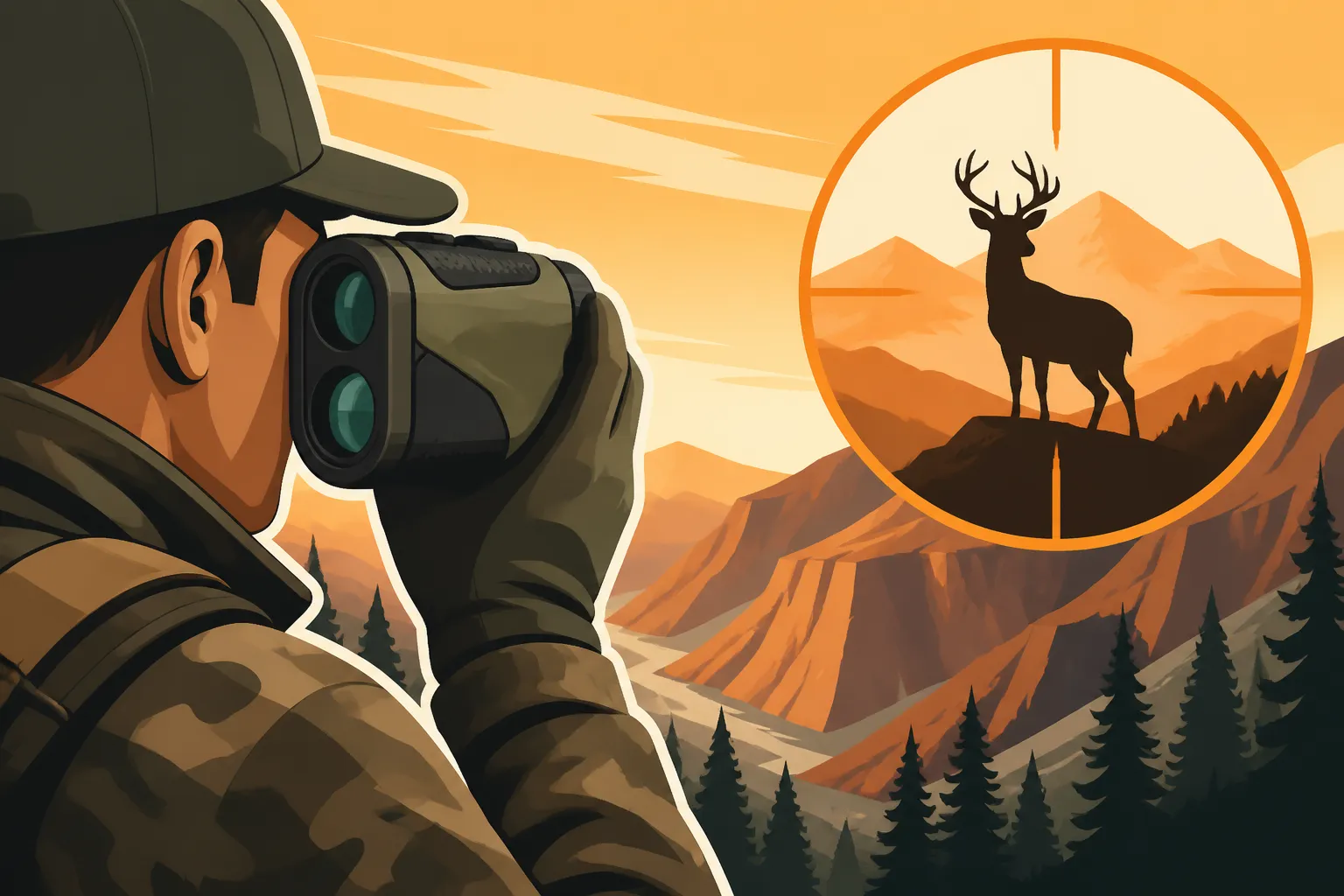
Trying to accurately range a deer across a steep Sierra Nevada canyon can feel like a game of pure guesswork, especially when your standard rangefinder struggles with angles or picking out a buck from the dense timber. It's frustrating to be staring at a trophy animal, knowing you have a clean shot, but having no confidence in your yardage because your equipment isn't up to the task. This guide is all about helping you cut through that confusion and choose the best rangefinder specifically designed to give you precise, reliable readings in California's challenging mountain terrain, ensuring you're ready when that critical moment arrives.
The Unique Challenges of Sierra Nevada Terrain for Ranging
Hunting in the Sierra Nevada isn't like flatland hunting; the very landscape itself conspires to make accurate ranging a complex dance. From the dizzying vertical changes to the dense, broken cover, every aspect of this majestic range demands more from your gear, especially your rangefinder. Understanding these challenges is the first step to choosing the right tool for the job.
Steep Angles and Vertical Drops
Imagine you're perched on a granite outcropping, glassing across a deep canyon. Below you, maybe 400 yards away as the crow flies, a nice blacktail buck steps out onto a bench. Your simple rangefinder tells you "400 yards," but that's a straight-line measurement. If that buck is significantly below you, or perhaps high above you on the opposite slope, that straight-line distance is not the actual horizontal distance your bullet will fly. Gravity pulls bullets down, and their trajectory is calculated based on the horizontal equivalent distance, not the hypotenuse.
Without angle compensation, you're left guessing, and a guess in the high country can mean a clean miss or, worse, a wounded animal. A deer at a true 400 yards on flat ground might only need to be held for 350 yards if it's 200 feet below you in a canyon. The steeper the angle, the more dramatic this difference becomes. It’s a common pitfall for hunters who aren't equipped for the vertical world of the Sierra, leading to shots that sail over or drop short. Being able to confidently range a Glassing a Canyon for a Bedded Buck is essential for success.
Broken Ground and Obstructions
The Sierra Nevada is a mosaic of granite, thick chaparral, dense conifer forests, and scattered oak woodlands. This broken terrain presents constant challenges for a laser rangefinder. Your target buck might be partially obscured by a fallen log, standing just behind a thick patch of manzanita, or bedded down with only its antlers visible above a rock outcropping. A lesser rangefinder might struggle to pick out the small target through these obstructions, or it might give you a reading off a branch in front of the animal instead of the animal itself.
The laser needs a clear path to the target. In areas where you're Still-Hunting California's Sierra Nevada Timber, every step forward might bring a new branch into the line of sight. The frustration of getting multiple, inconsistent readings – or no reading at all – when a buck is standing broadside is a feeling no mountain hunter wants. You need a rangefinder that can cut through a bit of light brush, has a tight beam divergence, and ideally, a "last target" mode to help ignore foreground clutter and range the actual animal.
Variable Light Conditions
From the first glimmer of alpenglow on a frosty granite peak to the deep shadows of an evening canyon, the Sierra Nevada throws every kind of light condition at you. Early mornings often mean dense fog in drainages, then blazing sun reflecting off rock faces, followed by the soft, fading light of dusk. Each of these conditions can impact the performance and readability of your rangefinder.
A display that's perfectly visible in low light might get washed out by bright sunlight, making it impossible to read your yardage quickly. Conversely, a display that's crystal clear at midday might be too dim to see in the pre-dawn gloom. Optic coatings play a huge role here, determining how much light is transmitted and how well glare is managed. A quality rangefinder for these conditions will have a bright, clear display with adjustable brightness settings, ensuring you can get a quick, accurate reading no matter the time of day or light intensity. This is especially important when you’re out Hunting California's Sierra Nevada Backcountry for multiple days.
Key Features to Look for in a Sierra Rangefinder
When you're trying to figure out the Best Rangefinder for Sierra Canyon Shots, it's not just about the furthest distance it can range on a perfectly reflective target. It's about its ability to deliver accurate, usable data under the specific, often harsh, conditions of the high country. Certain features become non-negotiable for success in this environment.
Angle Compensation Technology
This is, without a doubt, the single most critical feature for any rangefinder intended for mountain hunting in the Sierra. As discussed earlier, a straight-line distance doesn't cut it when you're shooting up or down steep inclines. Angle compensation, often called True Ballistic Range (TBR), Horizontal Equivalent Distance (HED), or similar proprietary names like those found in models by Vortex, Leupold, or Sig Sauer, calculates the horizontal distance to your target, taking into account the angle of inclination or declination. This is the "shoot-to" distance your ballistic tables or turret adjustments are based on.
Without it, you're adding an extra, potentially significant, variable into your shot equation – one that’s incredibly hard to estimate accurately in the heat of the moment. Imagine you've Glassing Mule Deer in Open California Country and spot a buck 500 yards away at a steep downward angle. A non-compensating rangefinder might give you 500 yards. But with a rangefinder that uses angle compensation, you might find that the "shoot-to" distance is actually 450 yards. That 50-yard difference is easily a miss, or worse, a marginal hit. This technology essentially takes the guesswork out of steep-angle shooting, making it a must-have for anyone serious about hunting the Sierra Nevada.
Advanced Ranging Capabilities and Display
Beyond just angle compensation, a top-tier Sierra rangefinder will offer a suite of advanced features to enhance accuracy and user experience. "Scan mode" is incredibly useful. Instead of a single, static reading, scan mode allows you to continuously range multiple targets as you pan across an area. This is fantastic for tracking a moving animal, ranging through light brush to ensure you hit the target and not a twig, or for quickly getting distances to multiple landmarks as you plan your approach.
Some rangefinders offer different reticle options, allowing you to select a smaller reticle for more precise aiming on small targets at long distances, or a larger one for quicker acquisition in dense cover. The display itself is another key component. OLED (Organic Light Emitting Diode) displays are often preferred for their brightness and clarity, especially in low light conditions, and their ability to adjust brightness settings. Many quality rangefinders will allow you to cycle through multiple brightness levels, ensuring the display is never too dim or too glaring. When you're constantly dealing with varying light, from the dark timber to open ridgelines, a clear, adaptable display is invaluable. It’s also wise to use tools like GoHunt to understand terrain features that might influence your shot.
Optical Quality and Magnification
While a rangefinder's primary job is to measure distance, it’s still an optical device, and the quality of its glass can significantly impact its usability. Clear, bright optics make it easier to identify your target and precisely place your reticle, especially at longer distances or in challenging light. Cheaper rangefinders often have blurry edges or a dim image, making it tough to differentiate a buck's ear from a branch at 400 yards. When you're Hunting a Late-Opening High-Country Zone, good glass helps you pick out subtle details.
Magnification is another consideration. Most hunting rangefinders offer 6x or 7x magnification, which is a good balance between field of view and target acquisition. An 8x might offer a bit more reach for identifying distant objects but can make it harder to hold steady, especially without a tripod. For the Sierra, where you're often ranging distant targets but also need to quickly acquire a closer animal in dense cover, 6x or 7x is generally sufficient. Look for fully multi-coated lenses, which maximize light transmission and provide a clear, crisp image, making target acquisition faster and more confident.
Durability and Ergonomics for Rugged Mountain Use
The Sierra Nevada is beautiful, but it's also a harsh mistress. Your gear will be exposed to dust, moisture, bumps, and drops. A rangefinder that can't stand up to these conditions is a liability, not an asset. Beyond its optical and ranging capabilities, a good Sierra rangefinder must be built tough and designed for practical, real-world use in rugged terrain.
Weather Resistance and Robust Construction
There's no such thing as "fair weather" hunting in the Sierra. One minute it's sunny, the next a storm rolls in. Rain, snow, fog, and condensation are common, and your rangefinder needs to be impervious to them. Look for units that are explicitly stated as "waterproof" and "fog proof," usually achieved by O-ring sealing and nitrogen or argon purging. This prevents internal fogging and keeps moisture out, protecting the delicate electronics.
Beyond waterproofing, the physical construction matters. Rubber armoring provides a protective layer against impacts and makes the unit easier to grip, even with cold or wet hands. A solid, well-built chassis is crucial. You're going to drop it, bump it against rocks, or have it bang around in your pack. A flimsy unit simply won't survive a full season in the high country. Brands like Leupold and Vortex are known for their robust construction, offering peace of mind when you're miles deep in the backcountry.
Ergonomics and Portability
A rangefinder is only useful if you can deploy it quickly and comfortably. This means paying attention to its ergonomics. Does it fit comfortably in your hand, allowing for easy, single-handed operation of the buttons? Can you operate it effectively while wearing gloves? The button placement, texturing, and overall feel are important for rapid target acquisition.
Portability is another key factor. When you're Packs and Gear for a Backcountry Elk Hunt or just hiking steep trails for deer, every ounce counts. A compact, lightweight rangefinder that easily slips into a bino harness pocket or a side pouch is ideal. Too bulky, and it becomes a hassle to carry, potentially leaving it in your pack when you need it most. Many hunters prefer a lanyard or tether to keep it secure and readily accessible, especially when navigating tricky terrain where a slip could send your valuable optic tumbling down a canyon.
Battery Life and Type
There’s nothing worse than having your rangefinder die on you when you're miles from the truck and a long way from the nearest hardware store. Good battery life is paramount for multi-day Sierra hunts. Most modern rangefinders use readily available batteries like CR2 or CR123A, which are common and relatively easy to find. However, ensure the unit you choose has a reputation for decent battery longevity, especially in cold weather, which can rapidly drain batteries.
Some units have battery indicators, which are incredibly helpful for monitoring power levels. It’s always a good practice to carry a spare battery or two in your pack, especially on extended trips. A little preparation here can prevent a lot of frustration when you're facing a critical shot.
Integrating Your Rangefinder with Sierra Hunting Strategy
Having the right rangefinder is only half the battle; knowing how to effectively use it as part of your overall hunting strategy is what truly makes a difference. In the Sierra, where shot opportunities can be fleeting and the terrain unforgiving, integrating your rangefinder seamlessly into your routine will boost your confidence and your success rate.
Pre-Hunt Preparation and Practice
Just like you'd practice shooting your rifle or bow, you should practice with your rangefinder. Don't wait until opening day to pull it out of the box. Spend time ranging objects at varying distances and angles around your home or a local shooting range. Practice quickly acquiring targets and getting consistent readings. This builds muscle memory and speed, which are crucial when a deer suddenly appears.
It’s also incredibly helpful to integrate your rangefinder with your mapping tools. Use apps like GoHunt or onX to study the terrain of your hunting unit. Identify key ridgelines, saddles, and benches. You can often estimate distances and angles on these maps. Then, when you’re in the field, you can use your rangefinder to confirm those distances. If you're using a ballistic calculator, understanding your rangefinder's angle compensation is key to feeding it accurate "shoot-to" distances. Many hunters will even create their own range cards for specific areas, pre-ranging key landmarks and noting their angle-compensated distances. This is an excellent way to prepare for Wind and Thermals in Steep Sierra Country and make more accurate shot calls.
Field Application and Decision Making
In the field, your rangefinder should become an extension of your eyes. As you move through the terrain, especially in open country or when approaching a new vantage point, take quick readings to prominent landmarks. Know the distance to that big pine tree, that rockslide, or that patch of buck brush. This builds a mental map of your shooting lanes and potential cover, allowing for quicker decisions when game appears.
When you spot an animal, don't just range it once. Use the scan mode to get multiple readings, ensuring consistency. If the animal is moving, track it with scan mode. If it’s in broken cover, use the last-target feature to pick it out from the foreground. Fast, confident ranging means you can focus more on the shot itself and less on the uncertainty of the distance. This is especially vital when you’re presented with an opportunity and need to make a snap decision. Understanding Entry Routes Through a Sierra Foothill Meadow or similar terrain will enhance your ability to make informed shots.
Combining with Other Optics
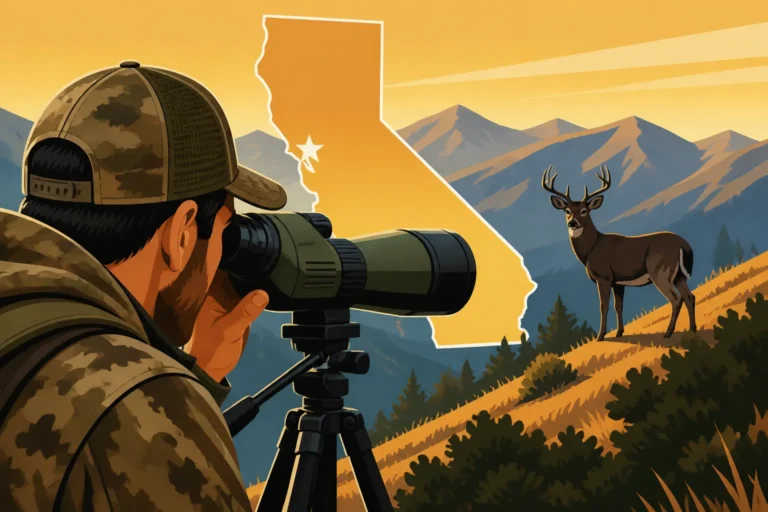
Your rangefinder isn't meant to be used in isolation; it's part of a comprehensive optical system that includes your binoculars and, for long-range glassing, a spotting scope. Often, you'll first spot an animal with your binoculars. Once you've identified it and assessed its quality, you then reach for your rangefinder to get a precise distance.
For truly long-range glassing, say across a massive canyon where a tiny rangefinder might struggle to identify your target, you might use your spotting scope to pinpoint the animal, then carefully bring your rangefinder to bear. Some advanced rangefinding binoculars, which combine a rangefinder and binocular into one unit, can streamline this process by eliminating the need to switch optics. However, for many Sierra hunters, carrying separate, high-quality binoculars and a dedicated rangefinder offers the best performance and flexibility. Using a GPS and Mapping Apps for California Public Land will help you keep track of your location and spotted game.
| Feature | Importance for Sierra Canyons | Description | Benefit for Hunters |
|---|---|---|---|
| Angle Compensation | Critical (5/5) | Calculates horizontal equivalent distance, not just line-of-sight, for inclined/declined shots. | Ensures accurate bullet trajectory and shot placement on steep terrain. |
| Scan Mode | High (4/5) | Provides continuous, real-time readings as you pan across targets or terrain. | Useful for moving game, ranging through light brush, or mapping multiple points. |
| Optical Quality | High (4/5) | Clear, bright, multi-coated lenses for crisp target identification and light gathering. | Better visibility in low light, clearer target acquisition at long distances. |
| Magnification | Medium (3/5) | Typically 6x-8x, balancing field of view with target acquisition and stability. | Optimal for seeing distant targets without excessive shake or tunnel vision. |
| Weather Resistance | Critical (5/5) | Waterproof, fog proof, and robust construction to withstand moisture and impacts. | Reliability in changing Sierra weather, durability for rugged backcountry use. |
| Ergonomics & Portability | High (4/5) | Compact, lightweight, comfortable hand-fit for single-handed operation and easy carrying. | Quick, effortless deployment in critical moments, less fatigue on long hikes. |
| Battery Life | High (4/5) | Long-lasting batteries, ideally with an indicator, to endure multi-day hunts. | Prevents unexpected power loss in the field, reduces need for frequent changes. |
Disclaimer
This article is for general informational purposes only and does not constitute professional advice. Laws, prices and regulations vary by location and change over time. Consult a qualified professional for guidance on your specific situation.