Hunting Pigs on Central Coast Oak Ranges
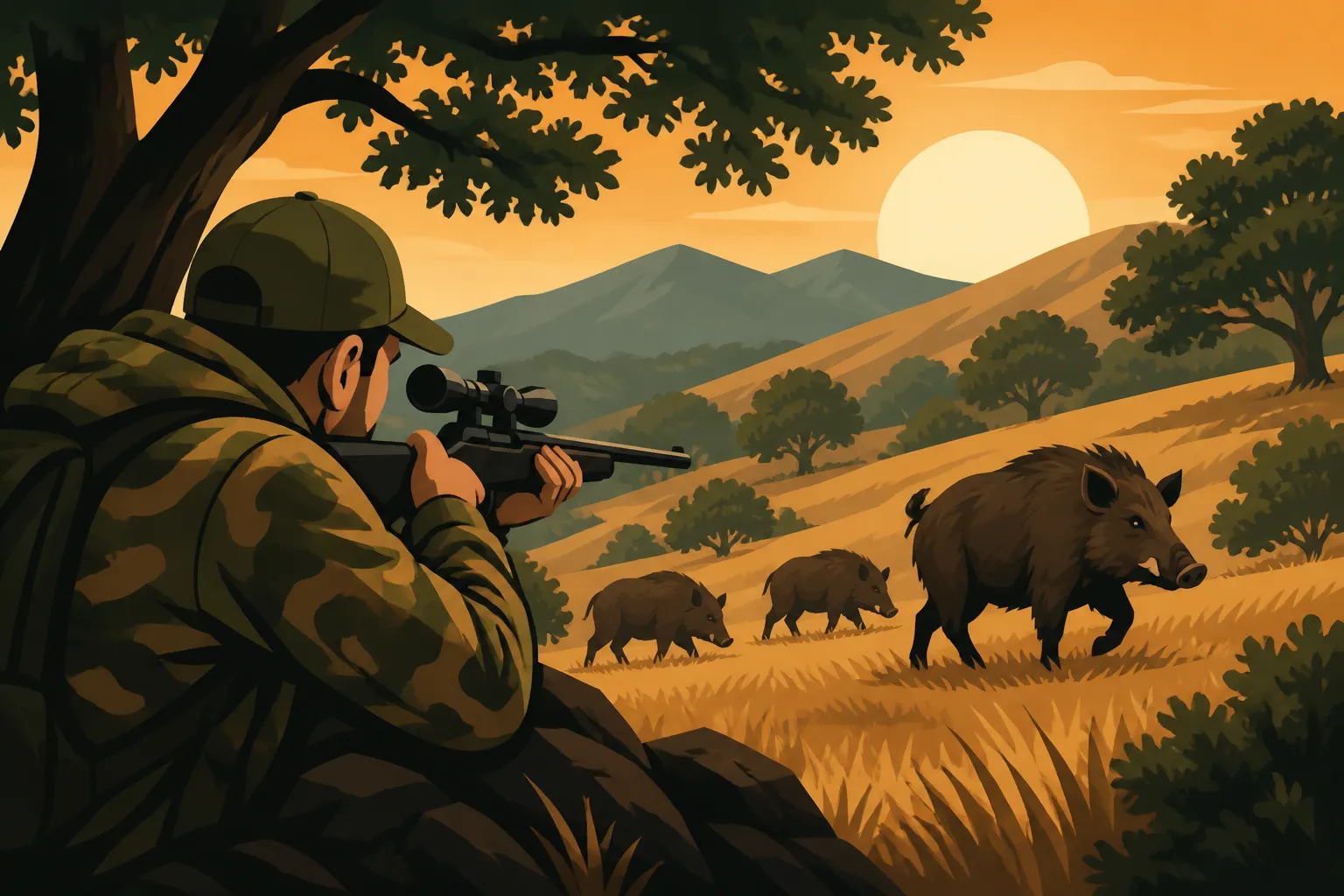
Hunting wild pigs on California's Central Coast oak ranges can feel like a game of hide-and-seek with ghosts. These elusive animals are masters of their environment, thriving in the dense, tangled undergrowth and utilizing every fold of the rolling hills to their advantage. If you've ever spent a frustrating day staring at fresh rooting, hearing distant grunts, but never laying eyes on a hog, you know the particular brand of challenge this habitat presents. This guide is dedicated to dissecting these unique hunting conditions, offering detailed strategies and real-world advice to help you connect with California's most abundant game animal.
Understanding the Central Coast Oak Woodland Habitat
The Central Coast's oak ranges are a unique and beautiful ecosystem, but they pose significant challenges for pig hunters. To consistently find success, you first need to become a student of this environment, understanding how pigs interact with its key features throughout the year.
The Interplay of Oaks, Water, and Cover
Think of the Central Coast oak woodlands as a giant buffet and fortress rolled into one for wild pigs. The dominant tree species here are often the stately Coast Live Oak and the sprawling Valley Oak, both of which produce acorns—a primary, highly sought-after food source for hogs, especially from late summer through winter. When those acorns drop, pigs will gorge themselves, sometimes staying in the same area for days or weeks. But food isn't the only driver; water is equally critical. Seasonal creeks, natural springs, and man-made stock ponds are magnets, especially during the drier months. Pigs need to drink regularly and often seek out muddy wallows to cool off and coat themselves in a protective layer against insects and parasites.
The third, and perhaps most challenging, element of this habitat is the incredible amount of cover. Interspersed among the oaks are dense thickets of chaparral, poison oak, manzanita, and various other brush species. This isn't just a place for pigs to hide; it's their impenetrable fortress. They navigate these thorny labyrinths with ease, making silent escapes and bedding down in areas so thick you could walk within feet of a hog and never know it was there. This dense cover drastically limits visibility, forcing hunters to adjust their traditional spot-and-stalk tactics to accommodate very short engagement distances. For a deeper dive into this specific habitat, you might find this guide on Hunting Coastal Range Oak Woodlands useful.
Seasonal Pig Movement and Foraging Patterns
Wild pig behavior on the Central Coast is heavily influenced by the seasons, primarily driven by food availability and weather. In the fall and early winter, when acorns are falling, pigs are often more active during daylight hours, intensely focused on foraging. You'll find extensive rooting under oak trees, looking like a rototiller has gone through the forest floor. These rooting patterns are crucial indicators of recent activity. During this time, they might be less reliant on distant water sources if there's sufficient moisture in their diet from fresh vegetation or the acorns themselves.
As spring arrives, and the acorns are largely consumed, pigs shift their diet to tender green grasses, forbs, and underground tubers. This can mean they spread out more, moving through meadows and open areas adjacent to dense cover. Summer, however, can be the toughest. With heat reaching triple digits in some inland areas, pigs become almost exclusively nocturnal, moving from water to bedding in the cool hours of darkness. During this period, finding fresh rooting during the day can be less common. Instead, focus on locating fresh tracks around water sources at dawn or dusk, and look for wallows indicating where they cool off. Pressure from hunters can also dramatically alter these patterns, pushing them into even thicker, more inaccessible areas or making them entirely nocturnal. Understanding these shifts is key to anticipating where they might be. It’s important to note that a year with a poor acorn crop can really change things; explore Hunting After a Poor Acorn Year for more insights on how these factors influence game.
Scouting and Locating Pigs in Challenging Terrain
Even with their abundance, finding wild pigs in the vast, dense oak ranges of the Central Coast requires diligent scouting and a keen eye for detail. You can’t just walk out and expect to stumble upon them; you need to piece together their puzzle.
Interpreting Sign and Fresh Activity
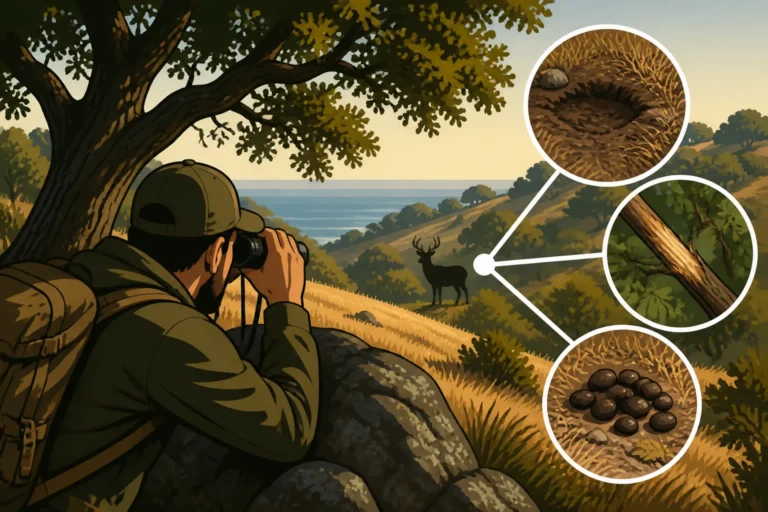
Pigs leave a wealth of clues, but not all sign is created equal. Your mission is to differentiate old, cold sign from fresh activity that tells you pigs are actively using an area right now. Start by focusing on tracks. Pig tracks are distinctive: a cloven hoof, typically wider than a deer's, with often visible dewclaws splayed out behind the main hooves, especially in soft mud or sand. Look for crisp, well-defined edges – these indicate recent passage. Scat is another key indicator. Pig droppings vary based on diet but are generally dark, often containing acorn fragments or grass, and can be relatively large. Fresh scat will be moist and shiny; old scat will be dry and dull.
Wallows are muddy depressions where pigs roll to cool down and get rid of parasites. A fresh wallow will be wet and churned up, with muddy tracks leading in and out, and sometimes even fresh hair rubbed off on nearby trees or rocks. Rubs, where pigs scratch themselves against trees or fence posts, are also valuable. Look for mud and hair at pig-height. Lastly, rooting is perhaps the most obvious sign. Pigs use their powerful snouts to dig up tubers, roots, and grubs. The freshness of the turned-over earth, the moisture in the soil, and any visible tracks nearby will tell you how recent the activity is. When you find these various signs, don't just note them; try to connect them. Do tracks lead from rooting to a water source? Is there dense bedding cover nearby? These connections reveal travel corridors and daily routines. For more specific details on what to look for, check out Finding Sign in a Coastal Oak Woodland.
Utilizing Technology and Topographical Maps
In today's hunting world, technology is an indispensable tool, especially when tackling complex terrain like the Central Coast oak ranges. Mapping applications like onX Hunt or GoHunt provide invaluable layers of information. They allow you to overlay private and public land boundaries, identify crucial water sources, analyze topography, and even mark areas of interest (like fresh sign, potential bedding, or overlooked oak stands) right from your phone or computer. Before you even set foot in the woods, you can use these apps to pinpoint saddles, benches, and drainages that act as natural funnels for animal movement, as well as dense pockets of cover that might serve as bedding areas. Remember, pigs love areas where they can easily move between food, water, and thick security cover. GoHunt, for example, excels at providing detailed public land ownership and historical harvest data, which can guide your initial scouting efforts.
Trail cameras are another fantastic asset. Placing them strategically on game trails leading to water, along travel corridors, or overlooking active rooting areas can provide intelligence on pig movement patterns, preferred times of day, and even give you an idea of their size and numbers. Always check local regulations regarding trail camera use on public lands. When you're using maps, pay close attention to elevation changes and contour lines. Steep, north-facing slopes often hold cooler temperatures and thicker cover, making them prime bedding locations during warmer months. Conversely, south-facing slopes warm up faster and might offer early spring green-ups. Pairing what you see on a topographical map with current weather patterns and seasonal pig behavior will give you a significant edge. If you're looking to maximize your tech for scouting, the article on Scouting With the CDFW Hunting App offers a wealth of information that can be adapted to your pig hunting strategy.
Effective Hunting Strategies for Central Coast Pigs
Once you've done your homework and understand the lay of the land, it's time to put boots on the ground. However, hunting pigs in these oak ranges isn't like hunting deer in open country; it requires different tactics and a great deal of patience.
Spot-and-Stalk in Limited Visibility
The classic spot-and-stalk method often needs significant modification when hunting the dense Central Coast oak ranges. Unlike wide-open spaces where you might glass for miles, here, your "spot" might be a tiny opening in the chaparral or a distant sliver of oak grove. Your binocular work becomes incredibly detail-oriented, focusing on individual trees, shadows, and subtle movements. You're not looking for a whole pig, but perhaps an ear flick, a patch of hide, or a subtle sway of brush. This is where high-quality optics, even hand-held binoculars, become your best friend.
Once you spot a pig or group of pigs, the stalk is paramount. Pigs have incredible noses and decent hearing, but their eyesight is their weakest sense. This means playing the wind is non-negotiable. Always approach from downwind. Moving silently is critical, which means paying attention to every step on crunchy oak leaves or dry twigs. Utilize every piece of terrain for concealment: ridge lines, drainage bottoms, and even the trunks of large oaks. The goal is to close the distance to within a comfortable shooting range before the pig detects you. This often means moving agonizingly slowly, taking several minutes to cover just a few yards, and pausing frequently to scan and listen. Sometimes, the "spot" might just be fresh rooting, and your "stalk" turns into a careful still-hunt through the area, hoping to intercept a pig moving to or from that feeding zone. A similar approach can be found when Spot-and-Stalk California Bear Hunting Before the Quota Closes, highlighting the shared principles of silent, wind-conscious movement in dense terrain.
Still-Hunting the Thickets and Travel Corridors
Still-hunting is arguably one of the most effective, albeit challenging, methods for Central Coast pigs. This isn't about sitting in a stand; it's about actively, but silently, moving through the pig's habitat, hoping to intercept them. The key is "still" in still-hunting—you're moving at a snail's pace, taking one or two steps, then stopping for several minutes to listen and observe. Use your eyes to scan for any unnatural shapes, colors, or movements. Use your ears to pick up the sounds of rooting, grunting, or the snapping of branches that might indicate a pig. Sometimes you’ll hear them before you see them.
Focus your still-hunt on obvious travel corridors: creek bottoms, old logging roads, well-worn game trails, and saddles between ridges. These are the natural highways pigs use to move between bedding, feeding, and watering areas. These spots act as pinch points where you have a higher chance of an encounter. When moving through leaf litter, try to step on logs, rocks, or soft patches of earth rather than dry leaves. The sound of a pig rooting or grunting can often be mistaken for deer or other animals, so pay close attention to the specific cadence and volume. Always have your rifle ready, as encounters in these dense areas often happen quickly and at close range. Much like Still-Hunting California's Sierra Nevada Timber, the principles of slow, deliberate movement and using terrain to your advantage are paramount, even if the specific tree species differ.
Gear and Tactics Specific to Oak Ranges
Having the right gear makes a significant difference when pursuing wild pigs in the rugged Central Coast. Your choices in weaponry, clothing, and essential tools can directly impact your comfort, safety, and success.
Choosing the Right Weapon and Ammunition
When it comes to weapons, a reliable, accurate rifle in a common deer caliber is usually sufficient for pigs. Popular choices like .30-06, .308 Winchester, or 6.5 Creedmoor are excellent options, capable of delivering plenty of energy for a clean kill. For those hunting in particularly thick, close-quarters brush, some hunters opt for a lever-action rifle in a caliber like .45-70 Gov't or even a shotgun loaded with slugs, which can offer quick follow-up shots and good knockdown power at short ranges. Archery hunters should focus on heavy arrows and sharp, durable broadheads designed for penetration, as pigs have tough hides and dense bone structure, especially around the shoulder.
A critical consideration for all California hunters is the state's non-lead ammunition requirement. You absolutely must use certified non-lead bullets for all game hunting. This means lead-core bullets are out. Look for reputable brands offering copper or copper-alloy projectiles, such as Barnes TSX, Hornady GMX, or Federal Premium Terminal Ascent. These bullets perform exceptionally well, retaining nearly 100% of their weight and providing deep penetration. It's vital to practice with your chosen non-lead ammunition to ensure accuracy, as their ballistic properties can differ from traditional lead rounds. Shot placement on pigs is also a bit different than deer; aiming for the shoulder can be effective due to their vitals being further forward and protected by a "shield" of gristle and mud. However, a shot angled behind the shoulder, targeting the lungs and heart, remains a classic and effective choice. For a detailed breakdown of options, be sure to read Choosing Non-Lead Rifle Ammunition in California.
Essential Gear for Success and Safety
Beyond your weapon, several other pieces of gear are non-negotiable for hunting Central Coast pigs.
| Gear Item | Why It's Essential for Pig Hunting on Central Coast Oak Ranges |
|---|---|
| Sturdy Boots | You'll be covering uneven, rocky, and often brushy terrain. Good ankle support, waterproofing (for dewy mornings or stream crossings), and a quiet, grippy sole are paramount. |
| Durable Clothing | The dense chaparral and poison oak will shred lightweight fabrics. Opt for rugged, thorn-resistant pants and jackets in camouflage patterns that blend with the oak woodland (e.g., browns, greens, tans). Layering is essential for California's rapidly changing temperatures. |
| Quality Optics | Even in thick cover, good binoculars (8x-10x) are invaluable for picking apart brush, identifying subtle movements, and verifying targets. A rangefinder is also useful for quick, accurate distance measurements. |
| Game Bags & Knife | Pigs are heavy, and the meat needs to be cooled quickly, especially in warmer weather. Bring at least four good quality game bags to protect the quarters. A sharp, durable knife for field dressing is critical. |
| GPS/Mapping App | The oak ranges can be disorienting. A reliable GPS device or a smartphone app like GoHunt with downloaded offline maps is essential for navigation, marking kill sites, and finding your way back to your vehicle. |
| Water | Even on cooler days, you'll be exerting yourself. Carry more water than you think you'll need. |
| Headlamp | Recovering a pig often extends into low light or darkness. A bright headlamp with extra batteries is a lifesaver. |
| First-Aid Kit | Scrapes, cuts, and minor injuries are common in dense brush. Be prepared. |
| Orange Vest/Hat | Even if not legally required in all situations, wearing blaze orange or blaze pink is a smart safety measure, especially on public land. |
Your footwear and clothing choices are particularly important for comfort and stealth. For more insights on selecting appropriate attire for various California hunting conditions, refer to Boots and Clothing for California's Varied Terrain.
Overcoming Common Challenges
Hunting wild pigs on the Central Coast isn't without its frustrations. Recognizing and proactively addressing these common hurdles will make your hunting experience more rewarding and increase your chances of success.
Dealing with Hunting Pressure
California's wild pig population is robust, but so is the number of hunters seeking them, especially on easily accessible public lands. This hunting pressure can drastically alter pig behavior, transforming daytime foragers into nocturnal ghosts. When repeatedly disturbed, pigs will quickly learn to associate human presence with danger. They'll retreat into the thickest, most impenetrable cover during daylight hours, only venturing out under the cloak of darkness. You might find abundant fresh sign, but never actually see a pig. This is a common frustration for many hunters.
To counter this, you need to think differently. One strategy is to simply walk further. Most hunters stick to main trails and roads, so venturing deep into the backcountry, beyond where most people are willing to go, can often lead you to less pressured pigs. Another approach is to hunt during weekdays or less popular times of the season. Pigs that are active during the week on public land might become completely nocturnal by the weekend. Look for difficult access points on your maps – steep canyons, areas requiring long hikes, or spots with dense, thorny approaches. These areas often provide refuge for pigs because human pressure is naturally limited. Lastly, don't be afraid to adjust your hunting times. If you suspect pigs are going completely nocturnal, focus your efforts on the first hour of light and the last hour of daylight, when they might be transitioning to or from their bedding areas. You can find more comprehensive advice on navigating shared hunting grounds in Hunting Pressure on California Public Land.
Recovering a Pig in Dense Cover
Successfully recovering a downed pig in the dense, often steep, Central Coast oak ranges is arguably one of the biggest challenges hunters face. Pigs are notoriously tough animals, and even a well-placed shot can see them run a surprising distance into the thickest cover imaginable before expiring. When a pig takes off after the shot, it's easy to get flustered, but maintaining composure is vital. Mark the exact spot where the pig was when you shot and the direction it ran. Use a bright piece of flagging tape or a unique tree as a reference.
Resist the urge to immediately run after a wounded pig, especially if the shot wasn't absolutely perfect. Give it time – at least 30 minutes for a gut shot, or even longer (1-2 hours) for a questionable hit, if conditions allow. This gives the animal time to bleed out and lie down. When you begin tracking, move slowly and deliberately. Look for a blood trail, but don't just focus on the ground; check vegetation at various heights for smears or rubbed-off hair. Even if the blood trail is sparse, look for overturned leaves, broken twigs, or disturbed earth that indicates the pig's path. If the trail goes cold, try expanding your search in concentric circles from the last known sign. If you're nearing last light, consider retreating and returning the next morning, as tracking in the dark in this terrain is incredibly difficult and dangerous. Always carry a bright headlamp for any recovery that might extend into the evening, and remember that Blood Trailing After Dark in California presents its own unique set of difficulties that you must be prepared for.
Disclaimer
Hunting involves inherent risks. Always prioritize safety, adhere to all California Department of Fish and Wildlife regulations, and respect private property. This guide is for informational purposes only and does not substitute for hands-on experience or professional guidance. Ensure you have all necessary licenses, tags, and permits before hunting.