Best Duck Decoy Spread for Flooded Rice
There's a special kind of magic, and challenge, that comes with hunting ducks in California's flooded rice fields. Unlike the tangled cattails of a marsh or the timber of a flooded green-tree reservoir, rice fields are vast, open, and often deceptively shallow. This unique environment demands a specific approach to decoy spreads to fool wary birds consistently. This guide is all about helping you master the art of setting up the most effective duck decoy spread for these iconic Central Valley waterfowl havens, turning those long, cold mornings into hot shooting action.
Understanding Flooded Rice Field Dynamics for Decoy Spreads
Before you even think about pulling decoys out of the bag, you've got to understand the stage you're setting them on. Flooded rice fields are a world unto themselves, with distinct characteristics that dictate how ducks approach them and how your spread should be deployed.
The Unique Environment of California Rice Fields
California's Central Valley is a crucial stop on the Pacific Flyway, and its flooded rice fields are absolutely vital to migrating waterfowl. What makes these fields so unique for hunting? First, they're typically very flat and open, often stretching for hundreds of acres with minimal natural cover. This means ducks approaching have a panoramic view, making them incredibly sensitive to anything that looks out of place. Second, the water is usually shallow, ranging from a few inches to maybe a foot deep. This affects how decoys sit and how easy it is for ducks to land. Third, the stubble from harvested rice stalks provides natural hiding spots for feed, but also for ducks to feel secure. Your spread needs to emulate a relaxed feeding and resting flock in this specific setting. Understanding these nuances is the first step toward a successful hunt.
Why Ducks Use Flooded Rice
Ducks don't just land in rice fields by chance; they're there for specific reasons. Primarily, it's about food and sanctuary. After the rice harvest, a significant amount of waste grain remains in the fields. When these fields are flooded, that waste grain becomes an easily accessible, high-energy food source for ducks and geese. It's like an all-you-can-eat buffet after a long flight. Beyond sustenance, these vast, wet expanses offer relative safety from predators, especially if there's enough water depth for them to feel secure. They can preen, rest, and socialize without the constant pressure found in smaller, more confined wetlands. Your decoy spread's job is to mimic these behaviors, suggesting a safe, productive pit stop for weary travelers. This is why a natural-looking spread, rather than just a cluster of plastic, can make all the difference, especially when you consider the overall Waterfowl Hunting California's Central Valley experience.
Reading the Wind and Sun
In open environments like rice fields, the wind and sun are your two most critical allies (or adversaries, if ignored). Ducks almost always land into the wind, much like an airplane needs to land into the wind for lift. This means your landing zone needs to be directly into the prevailing breeze relative to your blind. If the wind shifts, your spread might suddenly be less effective. The sun also plays a huge role. Early morning sun reflecting off your decoys can create an unnatural glare, or worse, silhouette your blind and make it obvious to approaching birds. Ideally, you want the sun at your back, shining on your decoys, making them visible and natural-looking to ducks coming in. Using an app like GoHunt to check wind forecasts and sunrise/sunset directions before you even head out can give you a massive advantage in planning your setup. A proper read on these elements ensures your ducks commit confidently to your spread.
Essential Decoy Spread Principles for Rice Fields
Once you grasp the environment, it's time to delve into the core principles that make a decoy spread work in flooded rice. It’s not just about quantity; it’s about quality of placement and understanding bird behavior.
The Landing Zone is King
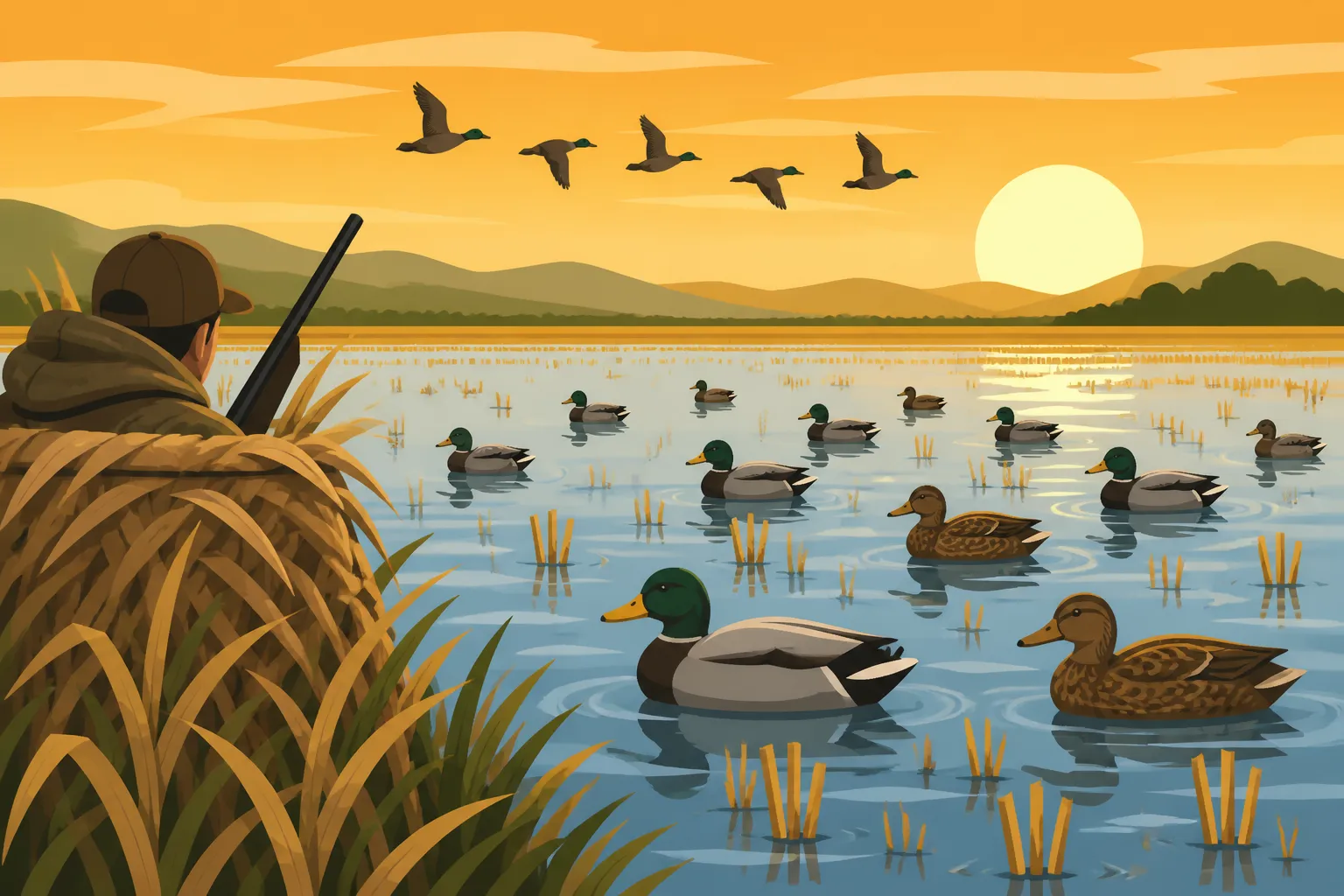
Seriously, if there's one takeaway for rice field decoying, it's this: the landing zone is absolutely paramount. Ducks don't want to land on top of other ducks; they want a clear, open, calm patch of water where they can drop in safely and comfortably. Think of it as their runway. This zone should be directly in front of your blind, into the wind, and large enough for a small flock to feel uncrowded. Depending on the size of your spread, this could be a 15-20 yard gap, or even larger if you're running a massive spread. The decoys should frame this area, drawing the ducks' eyes to it. It's where your calling will focus their attention, and it's where you'll make your shot. Any spread you choose, whether it's a "J" or a "U," needs to prioritize this clear landing area. A well-defined landing zone means ducks will finish strong, setting up ideal shot opportunities.
Confidence Decoys and Species Specificity
While mallards might be your primary target, adding a few "confidence" decoys of other species can significantly boost the realism and appeal of your spread. Pintails, wigeon, and even a few full-body Canada geese (if legal and appropriate for the area) can make the spread look more natural and inviting. Different species often feed and rest together, especially in vast food-rich environments like rice fields. A mixed bag signals a diverse, safe feeding ground. For instance, a few pintail decoys, with their distinctive long necks, can be highly visible from a distance. Also, consider the specific ducks frequenting your area. Are you seeing more green-winged teal or shovelers? Match your spread to what the local birds are doing. This attention to detail can make wary, late-season birds feel more at ease. You might even want to ensure your California Duck and Goose Bag Limits research includes these secondary species.
Motion Decoys: The Game Changer
In the often-still, mirror-like water of flooded rice fields, motion is an absolute game-changer. Without wind, static decoys look, well, static. Ducks are constantly moving, preening, tipping up, and flapping their wings. Motion decoys replicate this vital element of a live flock. Spinning wing decoys, like Mojos, are incredibly effective at grabbing attention from a distance, mimicking birds landing or taking off. However, use them judiciously; too many, or used when birds are close, can sometimes flare wary ducks. Pulsators or feeders that create ripples and simulate dabbling ducks can add more subtle, natural motion within your spread. These subtle movements can be the difference between ducks circling hesitantly and committing fully to your landing zone. When hunting Decoying Mallards on Flooded Rice Ground, incorporating motion is almost non-negotiable for consistent success.
Top Duck Decoy Spreads for Flooded Rice
Now, let's talk about some of the most tried-and-true decoy spreads that consistently perform in California's flooded rice fields. Each has its strengths, and understanding them will help you choose the right one for your conditions.
The "J" Hook or "U" Shape
These are classic spreads for a reason: they work. The basic idea is to create an open pocket (your landing zone) in front of your blind, with the bulk of your decoys forming the arms of a "J" or "U."
- "J" Hook: Imagine the letter "J" lying on its back. The long part of the "J" extends into the wind, drawing attention, while the hook curves back towards your blind, creating a pocket. The blind would be positioned at the short end of the "J" or within the curve, facing into the wind. Ducks fly along the long arm, see the open pocket, and commit to land right in the curve, placing them perfectly in front of your setup. This is particularly effective for attracting birds from a long distance and guiding them precisely where you want them. You can adjust the length of the tail and the tightness of the curve based on wind conditions and how wide you want your landing zone.
- "U" Shape: Similar to the "J," but with two distinct arms extending outwards from your blind, creating a wide, inviting pocket in the middle. The "U" shape offers a larger landing zone, which can be great for bigger groups of ducks or when you're anticipating multiple flocks. It gives ducks more room to work and less of a confined feel. Both the "J" and "U" spreads naturally draw the birds' eye to the open water, implying a safe haven among a feeding flock. Ensure your blind is well-hidden when using these spreads; a Layout Blind Hunting a Flooded Field approach works perfectly.
The Family Group or Loosely Scattered Spread
Sometimes, less is more, especially when ducks are wary. A "family group" or "loosely scattered" spread aims for hyper-realism by mimicking a small, natural group of ducks feeding and resting without any rigid structure.
- The Concept: Instead of forming a distinct shape, you'll place smaller clusters of 3-5 decoys together, with ample space between these clusters. Each cluster might represent a small family or social group. Within each cluster, mix species and positions – a few feeders, a few upright sentinels, and maybe a sleeper or two. This spread avoids the "perfect" look that can sometimes spook pressured birds who have seen every "J" hook under the sun. It suggests tranquility and undisturbed feeding.
- When to Use It: This spread shines on calm days when motion decoys might be less effective, or when you're hunting particularly wary, late-season birds. It's also excellent when you have limited decoys but want to create a natural scene. The key is to still ensure a clear landing zone into the wind, but it won't be as overtly "framed" as with a "J" or "U." The ducks will simply see open water and fall in where it looks safest. It's an art more than a science, relying on your observation of how real ducks behave.
The Funnel or Gauntlet
This spread is designed to really steer ducks into a very specific killing hole, especially effective when you have birds that are circling but hesitant to fully commit.
- The Setup: Imagine two long lines of decoys, starting wide out in front of your blind and gradually narrowing as they get closer, creating a funnel shape. The widest part of the funnel faces the direction of incoming ducks, and the narrowest point is directly in front of your blind, where your landing zone is. You might even add a few blocks at the wide end to appear as a large, attractive mass. The effect is to create a visual "channel" that guides the birds, almost subconsciously, right into your shooting zone.
- Strategic Placement: This spread works best with a consistent wind direction, allowing you to align the funnel perfectly. You can enhance the funnel with spinning-wing decoys positioned at the wider, farther end to attract attention, and then more subtle motion decoys (like feeders) closer to the landing zone to suggest contentment. The idea is to make the path of least resistance lead directly to your target zone. This strategy can be particularly potent on days when you're Calling a Gobbler Off an Oak Ridge Roost or other specific game, as it's all about guiding the animal to a precise location.
Optimizing Your Spread for Success in California
Setting out decoys is only one part of the equation. To truly succeed in flooded rice fields, you need to integrate your spread with other critical hunting elements.
Blind Placement and Concealment
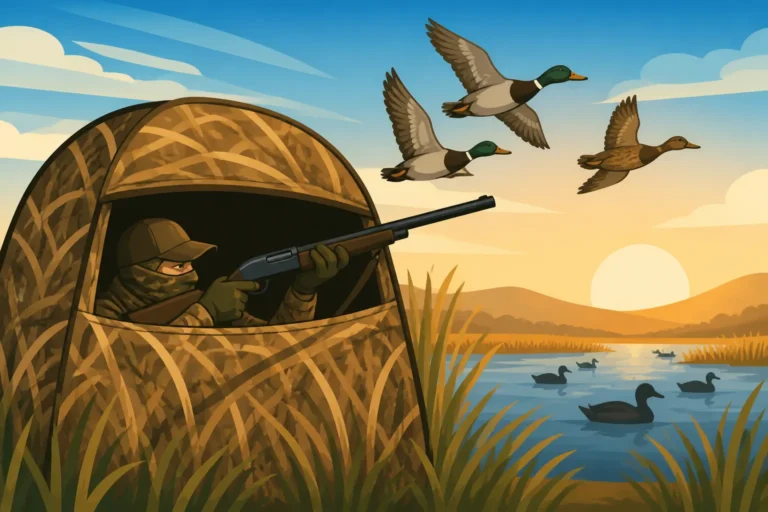
Your decoy spread can be absolutely perfect, but if your blind sticks out like a sore thumb, those ducks are going to flare every time. In the open expanse of a rice field, concealment is paramount. Layout blinds are incredibly popular for a reason – they allow you to lie low and blend into the stubble. However, even with a layout blind, you need to brush it in effectively. Use natural materials from the field itself – rice stubble, mud, and whatever other vegetation is available – to break up its outline.
Think about the sun's angle throughout the morning; you don't want your blind casting a long, dark shadow that spooks birds. Position your blind so you have a clear view of your landing zone, but also so you're not silhouetted against the sky. Sometimes, utilizing an existing levee or a slight rise in the field can offer a natural break-up for your blind, giving you that extra edge. Remember, ducks have incredible eyesight, and in a wide-open field, every detail matters.
Calling and Decoying Together
Decoys attract the eye, but calling seals the deal. The two work hand-in-hand. Your calls should complement your spread, making it sound as inviting as it looks. If your spread shows a relaxed feeding flock, your calling should reflect that with soft quacks, contented chuckles, and feeding calls. When ducks are far out, a louder, more urgent hail call might be needed to get their attention, drawing them toward the visual cue of your spread. As they get closer and work the spread, switch to quieter, more seductive calls to convince them to commit.
Avoid over-calling, especially when birds are already working your spread. Let the decoys do their job. A single, well-timed greeting call or a few contented quacks can be far more effective than a barrage of noise. Pay attention to how the birds respond to your calling and adjust accordingly. Sometimes, silence is the best call. Mastering the blend of visual attraction and auditory temptation is key, just like understanding Grunt Calls in Coastal Oak Timber for deer.
Scouting is Non-Negotiable
This can't be stressed enough: good duck hunting starts long before opening day, or even the morning of the hunt. Scouting is crucial, especially in rice fields where duck habits can shift quickly based on weather, pressure, and food availability. Before you even set foot in the field, a tool like GoHunt can give you an invaluable bird's-eye view, helping you identify potential roosting areas, feeding patterns, and access points.
- Observe Flight Paths: Where are the ducks flying in and out? Are they favoring a particular corner of the field or a specific section of a levee?
- Identify Roosting and Feeding Areas: Often, ducks will roost in larger water bodies or more secure parts of a field and then fly to specific feeding spots. Knowing these patterns helps you place your spread where they naturally want to be.
- Check Water Levels: How deep is the water? This impacts the type of decoy bases you'll need and how your decoys will sit.
- Note Pressure: If the birds in your area are heavily pressured, they'll be warier, necessitating a more natural, less aggressive spread.
Platforms like GoHunt can help you mark these observations on maps, creating a plan that adapts to real-world conditions. Even observing for an hour at dawn or dusk can reveal crucial information about where the birds want to be. This kind of pre-hunt intelligence is what transforms a hopeful outing into a successful hunt, regardless of whether you're chasing ducks or Reading a Wetland for a Morning Flight.
Here's a quick comparison of popular rice field decoy spreads:
| Decoy Spread Type | Primary Goal | Best Conditions | Key Characteristics | Pros | Cons |
|---|---|---|---|---|---|
| "J" Hook or "U" Shape | Guide birds to a precise landing spot | Moderate to strong, consistent wind | Clear landing zone framed by decoys, usually into wind | Excellent for guiding wary birds, strong visual appeal | Requires more decoys, less forgiving if wind shifts |
| Family Group/Scattered | Mimic natural, relaxed feeding flock | Calm days, heavily pressured birds | Small clusters of mixed decoys, ample space between | Highly natural appearance, effective on wary birds | Less defined landing zone, requires good calling to finish |
| The Funnel/Gauntlet | Force birds into a tight shooting lane | Consistent wind, hesitant circlers | Two lines of decoys narrowing towards the blind | Extremely precise landing zone, good for single shots | Can appear unnatural if overdone, less flexible with wind |
| Large Mass/Blob | Attract from extreme distances | Very open fields, good visibility | Large cluster of decoys, often upwind of blind | Draws attention from far away, suggests safety in numbers | Can create crowded landing zone, might lack subtle realism |
Understanding these spreads and their optimal applications, combined with solid blind concealment and effective calling, will significantly increase your odds of success in California's flooded rice fields. Don't forget the importance of your California Federal Duck Stamp Requirement and California HIP Certification for Bird Hunters before heading out. Make sure you've chosen your Best Duck Call for Flooded Rice Ground and that you're comfortable with your Choosing Waders for Flooded Rice Fields. Before the season, take time to ensure you're Patterning a Shotgun With Steel Shot for optimal performance.
Disclaimer
This article is for general informational purposes only and does not constitute professional advice. Laws, prices and regulations vary by location and change over time. Consult a qualified professional for guidance on your specific situation.