Best Rifle Caliber for California Mule Deer
The quest for the perfect rifle caliber for California mule deer can feel like a never-ending debate, especially with our state's unique hunting regulations. Many hunters grapple with finding a round that balances ethical stopping power, long-range accuracy, and the absolute necessity of non-lead ammunition. It's a frustrating maze of ballistics, bullet construction, and recoil considerations. This guide is here to cut through the confusion and help you confidently choose the best rifle caliber to bring home a magnificent California mule deer.
Understanding California Mule Deer and Their Habitat
Before we dive into the nitty-gritty of calibers, it's crucial to understand the animal we're pursuing and the challenging landscapes they call home here in California. Mule deer are a different breed than their blacktail cousins, and their environment often dictates a different approach to rifle selection.
The Landscape: Where Mule Deer Roam in California
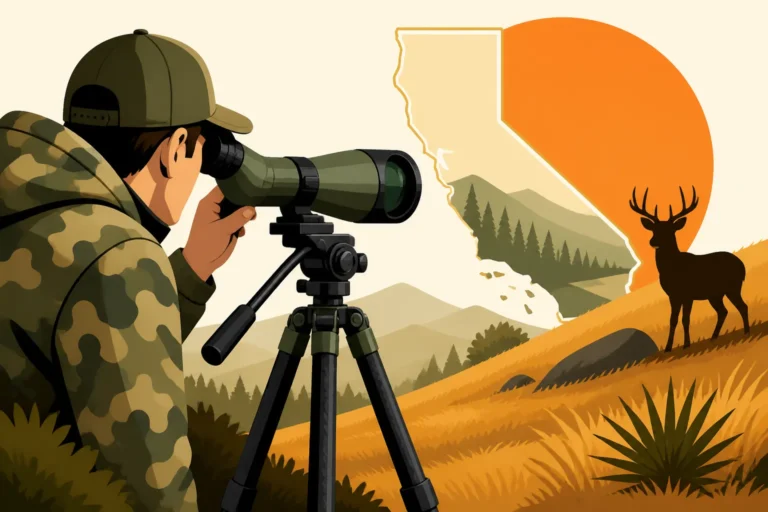
California's mule deer typically inhabit the more open, high-country regions and desert fringes, a stark contrast to the thick, brushy coastal ranges where blacktails dominate. Think of the Eastern Sierra Nevada, the vast expanses of the Modoc Plateau, or the more arid stretches of our BLM desert lands. These are places of sweeping vistas, often sparse cover, and wind-swept ridges. When you're glassing for a buck in these areas, you might spot him a thousand yards away, bedded on a distant slope. The stalk can be long and arduous, and the shot, when it finally presents itself, might be across a wide canyon or an open flat that stretches further than you'd prefer. This isn't usually close-quarters timber hunting. The demands on your rifle and your shooting proficiency are significantly higher in these environments, where a 300-yard shot is common, and 400-500 yards isn't unheard of. Understanding this reality is the first step in choosing a caliber that can deliver reliably at these distances. It's not just about hitting the target; it's about delivering enough energy to ensure a clean, ethical harvest.
Shot Placement and Ethical Harvest Considerations
No matter what caliber you choose, nothing, and I mean nothing, replaces precise shot placement. A perfectly placed shot from a smaller, well-managed caliber will always be more effective than a poorly placed shot from a cannon. Mule deer are tough animals, but their vitals are relatively small, and hitting that sweet spot consistently is paramount for a quick, humane harvest. This becomes even more critical when you consider California's non-lead ammunition requirement. Non-lead bullets, often made of monolithic copper, tend to retain almost all their weight and expand differently than traditional lead-core bullets. They need sufficient velocity to expand reliably and create a devastating wound channel. This means that while a particular caliber might seem adequate, its performance with non-lead bullets at extended ranges – where velocity drops off – needs careful consideration. Always strive for a broadside or quartering-away shot into the heart-lung area. Understanding the anatomy of a mule deer and practicing your shot placement under various conditions, especially at longer ranges, will make you a far more successful and ethical hunter than simply buying the biggest gun.
Key Factors for Choosing a Mule Deer Caliber in California
When you're sifting through all the different rifle calibers out there, trying to decide which one will best serve you for California mule deer, there are some non-negotiable factors that simply must be at the top of your list. These aren't just preferences; they're critical elements that will directly impact your success and compliance with state regulations.
The Non-Lead Mandate: A Primary Consideration
Let's get this out of the way first: if you're hunting deer in California, you must use non-lead ammunition. There are no exceptions, no special zones, it's a statewide mandate. This isn't just a suggestion; it's the law, and it's perhaps the single biggest factor influencing caliber choice for us California hunters. The days of grabbing a box of cheap lead-core bullets off the shelf are long gone.
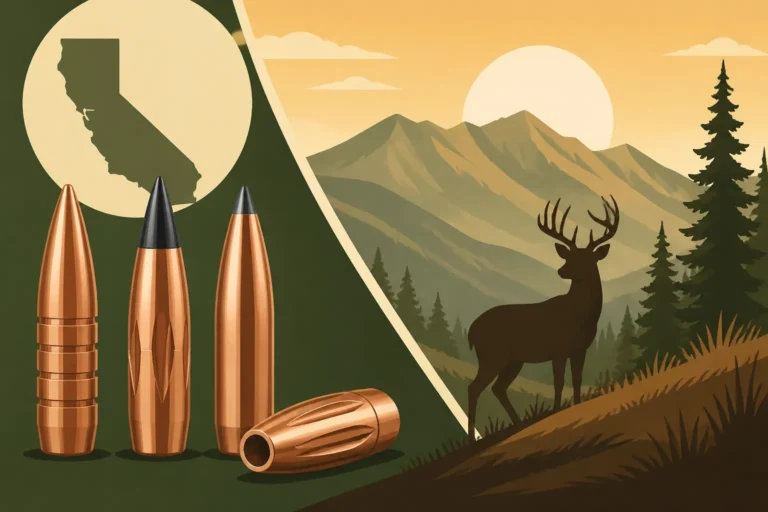
The challenge with non-lead bullets, primarily those made of solid copper or copper alloy, is that they behave differently than traditional lead-core projectiles. They tend to be lighter for their caliber, which means they can shed velocity faster, and they often require a higher impact velocity to achieve optimal expansion. What this means for you, the hunter, is that you can't just pick any caliber and assume any non-lead bullet will perform ideally at 400 or 500 yards. You need a caliber that can push these non-lead bullets at sufficient speeds to ensure they expand properly and transfer enough energy into the animal, even after flying a considerable distance. This is why lighter, faster calibers or those with greater case capacity (magnums) can sometimes shine with non-lead, as they maintain that critical velocity further downrange. It forces us to be more deliberate in our choices, often pushing us towards specific bullet weights and designs within a given caliber. For a deep dive into the specifics, check out California's Non-Lead Ammunition Requirement.
Typical Shot Distances and Ballistics
As we discussed, mule deer country often means longer shots. You might be glassing a ridge line and spot a buck a quarter mile away, or needing to reach across a sage-covered flat. This isn't thick timber hunting where a 50-yard shot is the norm. For mule deer, you should be prepared for shots out to 300-400 yards, and sometimes even further if you're comfortable and practiced.
What does this mean for your caliber choice? Ballistics become incredibly important. You want a cartridge that offers a relatively flat trajectory, minimizing holdover adjustments at varying distances. Equally important is how well the bullet retains energy. A bullet that starts fast but sheds all its steam at 300 yards isn't doing you any favors. We're looking for calibers that maintain enough velocity for those non-lead bullets to expand reliably and deliver sufficient kinetic energy to ensure a clean kill at those extended ranges. Wind drift is another silent killer in open country. A bullet with a high ballistic coefficient (BC) will buck the wind better, which is a huge advantage when you're dealing with those unpredictable Sierra gusts or desert crosswinds. While you can account for wind with practice, minimizing its effect through good ballistics is always a smart move. When you're out there, tools like the GoHunt app can be invaluable for scouting terrain that might present these long-range opportunities, helping you understand the contours and distances before you even step foot in the field.
Recoil Management and Shooter Proficiency
Here's the often-overlooked truth: the "best" caliber is the one you can shoot accurately, consistently, under pressure. There's no point in owning a .300 Win Mag if the recoil makes you flinch every time you pull the trigger. California mule deer hunting requires precision, not just power. If you're going to make a 400-yard shot across a canyon, you need to be absolutely confident in your ability to place that bullet exactly where it needs to go.
Recoil management plays a huge role in shooter proficiency. A lighter-recoiling caliber allows for more comfortable practice sessions, meaning you're more likely to spend time at the range, honing your skills. It also helps you stay on target, recover faster, and make follow-up shots if necessary. Don't fall into the trap of thinking "bigger is always better." A well-placed shot from a .270 Winchester is infinitely more effective than a gut shot from a .338 Lapua Magnum. Be honest with yourself about what you can comfortably shoot. If you're flinching and missing the target because your rifle kicks like a mule, then it's not the right caliber for you, regardless of its ballistic prowess on paper. Comfort and confidence translate directly into accuracy, which is the ultimate goal for ethical hunting.
Top Caliber Recommendations for California Mule Deer
Alright, let's get down to the brass tacks. Considering California's non-lead mandate, the typical long-range shots in mule deer country, and the importance of shooter proficiency, several calibers stand out as excellent choices. These aren't the only options, but they represent a solid cross-section that can perform beautifully when loaded with appropriate non-lead bullets.
The Versatile .308 Winchester
The .308 Winchester is often lauded for its versatility, and for good reason. It's an incredibly popular cartridge, which means ammunition, including non-lead options, is usually plentiful. For mule deer, the .308 offers a fantastic balance of manageable recoil and sufficient power for shots out to 300-400 yards, especially with modern non-lead bullets.
Many hunters find the recoil of a .308 to be quite comfortable, allowing for extensive practice sessions at the range without developing a flinch. This is crucial for building confidence in your ability to make those longer shots that mule deer hunting often demands. While its trajectory isn't as flat as some of the speedier magnums, it's certainly flat enough for most real-world hunting scenarios, and with a good rangefinder and ballistic data, it's very capable. When choosing non-lead ammunition for your .308, look for bullets in the 150-grain range, as these tend to maintain good velocity and expand reliably. For more specific non-lead choices, be sure to check out Non-Lead Load Options for .308 Hunters. It's a fantastic choice for a hunter who wants a reliable, accurate, and ethical rifle for mule deer without excessive recoil or cost.
The Modern 6.5 Creedmoor
The 6.5 Creedmoor has taken the hunting and shooting world by storm in recent years, and for California mule deer, it's an exceptional choice. Its reputation for pinpoint accuracy and mild recoil makes it a dream to shoot, which, as we discussed, is paramount for proficiency.
What makes the 6.5 Creedmoor particularly appealing for mule deer in California is its performance with high ballistic coefficient (BC) bullets, which are often found in non-lead designs. These bullets fly incredibly well, exhibiting a flat trajectory and excellent wind resistance, perfect for those wide-open spaces where mule deer live. They retain energy efficiently downrange, ensuring reliable expansion and ethical performance even on longer shots. Calibers like the 6.5 Creedmoor really shine when pushing monolithic copper projectiles, making it a stellar option under the non-lead mandate. You'll find a wide array of non-lead offerings for the 6.5 Creedmoor, typically in the 120-140 grain range, which is ideal for mule deer. If you're looking for a modern, accurate, and easy-to-shoot rifle that's perfectly suited for California's mule deer country, the 6.5 Creedmoor should be very high on your list. Learn more about specific bullet types in Best Non-Lead Bullet for a 6.5 Creedmoor.
The Time-Tested .30-06 Springfield
The .30-06 Springfield is an American classic for a reason. It's been taking North American big game for over a century, and it's still a superb choice for California mule deer. It offers a significant step up in power and versatility compared to the .308, without jumping into magnum recoil territory (though it certainly has more kick than a 6.5 Creedmoor).
The .30-06's longer case capacity allows it to propel heavier bullets at impressive velocities, which translates to excellent energy retention and reliable non-lead bullet expansion at longer ranges. For mule deer, you'll find plenty of fantastic non-lead bullet options, typically in the 165-180 grain range, which hit hard and penetrate deeply. The trajectory is also quite flat, making it well-suited for the longer shots you might encounter while Glassing Mule Deer in Open California Country. While the recoil is more pronounced than a .308 or 6.5 Creedmoor, most experienced shooters can manage it comfortably, especially with a good recoil pad and proper technique. If you appreciate tradition, want ample power for any situation, and desire excellent non-lead bullet performance across various ranges, the .30-06 is a caliber that will never let you down. For a closer look at specific non-lead options, take a look at Choosing a Non-Lead Round for a 30-06 Rifle.
Stepping Up to Magnum Calibers (.7mm Rem Mag, .300 Win Mag)
For hunters who frequently face extreme long-range shots or who simply want the absolute maximum in flat trajectory and downrange energy, magnum calibers like the .7mm Remington Magnum or the .300 Winchester Magnum become attractive options. These cartridges are designed to propel bullets at very high velocities, flattening trajectories and extending ethical killing ranges significantly.
When you're hunting vast, open landscapes in zones like Hunting California's High-Country X-Zones or Hunting a California BLM Desert Wash for Deer, where a 500-yard shot could present itself, a magnum's extra horsepower can be a real advantage. They shine when driving heavy-for-caliber non-lead bullets, ensuring they have more than enough velocity for reliable expansion at those extended distances. However, this increased performance comes with a trade-off: significantly more recoil and muzzle blast.
Magnum calibers demand a higher level of shooter proficiency and practice. If you can't consistently put your shots exactly where they need to go with a magnum, then its ballistic superiority is irrelevant. These are not calibers for the faint of heart or the infrequent shooter. They require dedication to master, often benefiting from muzzle brakes, heavier rifles, or specialized shooting techniques to manage recoil effectively. If you're committed to the practice and can handle the kick, a .7mm Rem Mag or .300 Win Mag can be an incredibly potent tool for California mule deer, particularly in those wide-open, long-shot scenarios.
Practical Considerations Beyond Caliber
Choosing the "best" caliber is really just one piece of the puzzle. There are several other practical considerations that, when combined with your caliber choice, will truly set you up for success and ethical hunting in California's mule deer country.
Bullet Selection Within Your Chosen Caliber
With California's non-lead mandate, bullet selection is arguably more important than the caliber itself. It's not enough to simply buy "non-lead" ammunition; you need to understand how different non-lead bullet designs perform. Most non-lead hunting bullets are made from monolithic copper or a copper alloy, and they are designed to retain nearly 100% of their weight upon impact, penetrating deeply before expanding.
You'll find various designs, from Barnes TSX or TTSX (tipped triple shock) to Hornady CX (Copper alloy eXpanding) or Federal Terminal Ascent (which features a polymer tip and a boat tail for excellent long-range performance). The key is to select a bullet that is designed to expand reliably at the velocities your chosen cartridge can deliver at your expected hunting ranges. For example, some monolithic bullets need a minimum impact velocity of around 1,800-2,000 feet per second to expand properly. If your chosen caliber pushes a certain non-lead bullet at 2,800 fps at the muzzle, but it drops below that critical expansion velocity by 450 yards, then it might not be the best choice for those longer shots.
Spend time researching the specific non-lead bullets available for your caliber, read reviews, and understand their terminal ballistics. This attention to detail will ensure that when you pull the trigger, the bullet performs as intended, providing a quick, ethical harvest. For information on approved bullets, check Which Non-Lead Bullets California Approves.
Practice, Practice, Practice
I know I've said it before, but it bears repeating: practice is paramount. No caliber, no matter how highly rated, can compensate for a lack of shooter skill. California mule deer hunting, with its often long shots and challenging terrain, demands a high level of proficiency.
You need to know your rifle, your chosen non-lead ammunition, and your capabilities intimately. This means regular trips to the range, not just once a year before season. Practice shooting from various positions – prone, kneeling, and from improvised rests – because you're rarely going to get a perfect bench rest opportunity in the field. Practice at varying distances, especially those longer ranges you expect to encounter. Understand your bullet's drop and wind drift at 200, 300, 400, and even 500 yards. Don't be afraid to use drills that simulate hunting pressure, like shooting after a brisk walk or holding your breath for a few seconds.
This is where digital tools like the GoHunt app can really help in your planning stages, by showing you detailed topographical maps that indicate potential shooting lanes and distances you might encounter in areas like Hunting California's Sierra Nevada Backcountry. Knowing these possibilities beforehand allows you to tailor your practice sessions to realistic scenarios. Knowing your rifle and your limits, even if it means passing on a shot that's beyond your comfort zone, is the mark of a truly ethical hunter.
Optics and Equipment for Long Shots
Even with the perfect caliber, you're severely handicapped in mule deer country without top-notch optics and supporting equipment. Mule deer are often spotted at great distances, and high-quality binoculars and spotting scopes are essential for finding and evaluating them. Optics for California's Open-Country Deer Hunting are not a luxury, but a necessity.
A reliable rangefinder is also non-negotiable. Knowing the exact distance to your target is critical for making accurate ballistic calculations, especially for longer shots where even a small error in yardage can result in a significant miss or, worse, a wounding shot. Think about the broken terrain of places like Rangefinders for California's Sierra Canyon Country – guessing distances is a recipe for disaster.
Beyond optics, consider a sturdy bipod or shooting sticks. These provide a stable shooting platform, vastly improving accuracy on those long-range shots in open country where natural rests might be scarce. A good quality backpack to comfortably carry your rifle, optics, and other gear for long stalks is also key. Investing in quality gear that complements your rifle and allows you to capitalize on its capabilities will significantly increase your odds of success in California's challenging mule deer environments.
| Caliber | Recoil (Relative) | Trajectory (Flatness) | Non-Lead Options | Typical Range (Mule Deer) | Notes |
|---|---|---|---|---|---|
| .308 Winchester | Moderate | Good | Excellent | Medium to Long | Solid all-around choice, great for consistent accuracy due to manageable recoil. |
| 6.5 Creedmoor | Low to Moderate | Excellent | Excellent | Medium to Long | Highly accurate, low recoil, shines with high-BC non-lead bullets for wind and drop. |
| .270 Winchester | Moderate | Excellent | Very Good | Medium to Long | A classic flat-shooter, ample energy, and good non-lead options for deer-sized game. |
| .30-06 Springfield | Moderate to High | Very Good | Excellent | Medium to Long | Powerful and versatile, handles heavier non-lead bullets well for deep penetration. |
| .7mm Rem Mag | High | Superior | Very Good | Long to Extended Long | Excellent for open country and extreme distances, but demands dedicated practice to master. |
| .300 Win Mag | High | Superior | Excellent | Long to Extended Long | Top-tier power and flat trajectory, significant recoil requires a skilled and practiced shooter. |
Disclaimer
This article is for general informational purposes only and does not constitute professional advice. Laws, prices and regulations vary by location and change over time. Consult a qualified professional for guidance on your specific situation.