Baiting Hogs Legally in California
Hunting wild pigs in California can feel like navigating a maze of confusing rules, especially when it comes to attracting them. Many hunters wonder if they can even use bait, given how strict some of California's game laws are. It's a common frustration, seeing success stories from other states with bait piles and wondering if you're missing out on a legitimate tactic here. This guide is here to untangle the specifics of legal wild pig baiting in California, helping you understand what's allowed, what's definitely not, and how to effectively and ethically pursue these animals within the bounds of the law.
Understanding California's Wild Pig Status and General Rules
California's wild pig population is a bit of an anomaly in the hunting world. Unlike deer or bear, wild pigs are not considered native game animals by the California Department of Fish and Wildlife (CDFW). They are an introduced, non-native species, often viewed as an agricultural pest due to the significant damage they inflict on crops and habitat. This unique status profoundly impacts the regulations surrounding their hunting, including the use of bait.
Why Pigs are Different: A Unique Game Animal
The distinction between a "game animal" and a "non-native, depredating species" is crucial in California. For most game animals like deer, elk, or bear, baiting is strictly prohibited. The intent is to maintain fair chase principles and prevent hunters from having an unfair advantage over wildlife. However, wild pigs fall into a different category. Because of their invasive nature and the extensive damage they cause, the state takes a more pragmatic approach to their management. The goal is often reduction, not just sustainable harvest, which opens up certain methods that are off-limits for other species. This is why you can hunt wild pigs year-round in many areas, and it also explains the differing rules on baiting. It's a real head-scratcher for many new to California hunting, trying to reconcile the differences.
General Hunting Regulations Beyond Baiting
Before we dive deep into baiting, it's essential to remember the foundational rules for Wild Pig Hunting California Year-Round. First and foremost, you'll need a valid California hunting license and a California's Year-Round Wild Pig Tag for each pig harvested. There's no bag limit on wild pigs, which is another testament to their pest status and the state's desire to control their numbers. When it comes to methods, common hunting techniques like spot-and-stalk, still-hunting, and even using dogs are generally permitted. However, certain restrictions apply regarding weapon types, shooting hours (daylight only for hunting, though special depredation permits might allow night hunting), and the use of vehicles. Always double-check the current hunting regulations booklet, as rules can change. You'll also need to be aware of California's Non-Lead Ammunition Requirement, which applies to all hunting statewide, including wild pigs.
The Nuances of Baiting for Wild Pigs: What's Allowed and What's Not
This is where things get interesting, and often, confusing. While general baiting is illegal for most California big game, wild pigs are a notable exception, but with very specific caveats, especially concerning land ownership.
Defining "Baiting" in California Law
For the purpose of wild pigs, "baiting" generally refers to the intentional placement of feed or other attractants to draw animals to a specific location for hunting. The key legal distinction for pigs in California doesn't revolve around the act of baiting itself, but rather where that baiting occurs and who is doing it. If you've been researching, you might have seen conflicting information, and that's usually because people aren't distinguishing between private and public land. It's a critical difference that can land you in serious trouble if misunderstood. The frustration comes from wanting a clear yes or no answer, but the reality is more layered.
The Key Distinction: Private Versus Public Land
Here's the absolute most critical piece of information you need to understand about baiting wild pigs in California:
On Public Land: Baiting is generally PROHIBITED.
This means any state or federal lands managed for public recreation, including National Forests, BLM lands, and CDFW Wildlife Areas. You cannot put out corn, feed, or any other attractant with the intent to draw pigs for hunting on these lands. The "fair chase" ethic, while somewhat relaxed for pigs due to their pest status, still largely applies to methods on public land. Trying to get around this by scattering small amounts of feed is still illegal if the intent is to attract and hunt. This is where Scouting California Public Land Before Season becomes paramount, as you need to find pigs based on their natural movements and food sources, not artificial attractants.
On Private Land: Baiting is generally PERMITTED.
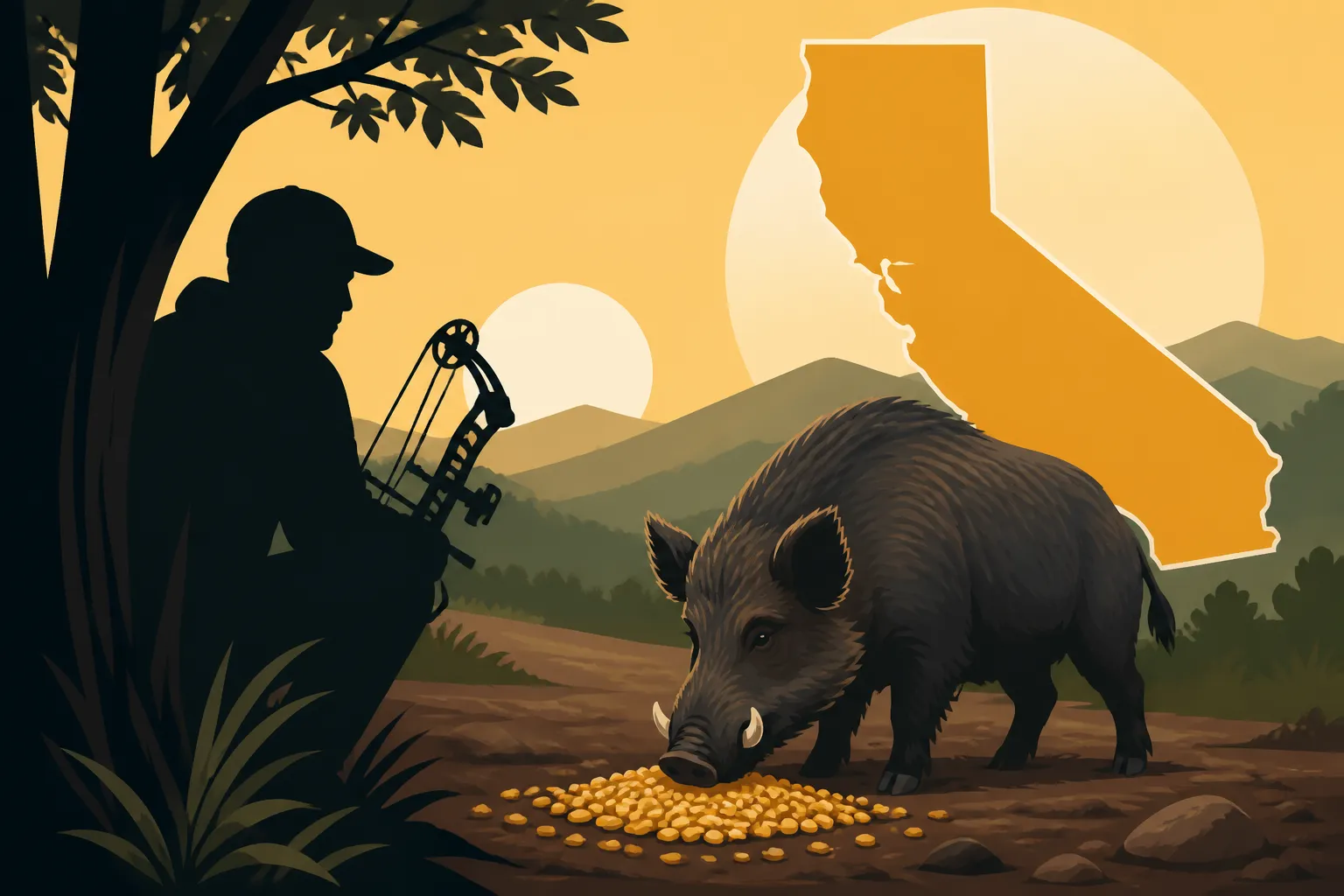
This is the big exception. Landowners (or those with explicit written permission from the landowner) can legally use bait to attract and hunt wild pigs on their private property. This is largely due to the agricultural damage pigs cause. Landowners often view pigs as a nuisance that destroys crops, fencing, and irrigation systems. The ability to bait is a tool given to them to manage these populations more effectively. So, if you're Hunting Pigs on Central Coast Oak Ranges and have secured private land access, baiting can be a highly effective strategy. This is a common practice for ranch owners trying to protect their fields and for hunters who have secured access to these private parcels.
It's vital that if you are hunting private land and intend to bait, you have clear, written permission from the landowner that explicitly allows you to place bait and hunt over it. Do not assume.
What Constitutes "Attraction" Versus "Baiting" for Other Species
For comparison, let's briefly touch on other game animals. For deer, bear, and most upland birds and waterfowl, any intentional placement of food, salt, or minerals to attract them for the purpose of hunting is illegal. This includes things like:
- Mineral Blocks/Salt Licks: Definitely out for deer.
- Food Plots: While generally legal for deer if not specifically intended as bait at the moment of hunting (i.e., you plant a field, let deer feed naturally, and then hunt nearby), any artificial concentration of feed specifically to lure them to a stand would be considered illegal baiting.
- Scent Attractants: Most liquid or solid scent lures (e.g., doe urine) are generally permitted, as they don't involve a food source. However, even these can have limitations in certain areas or during specific seasons.
The reason for explaining this is to emphasize that the rules for wild pigs on private land are truly an exception. Don't extrapolate them to other species. You can't bait a deer with apples on your private land and claim it's the same as baiting pigs. It's not. This is where a resource like the GoHunt app can be invaluable, offering detailed state-by-state breakdowns of regulations, helping you keep track of what's allowed for which species, and even highlighting land ownership boundaries to prevent accidental trespass onto public land where baiting is prohibited.
Practical Considerations for Legal and Ethical Baiting
If you've secured private land access and have permission to bait, there are still best practices and ethical considerations to keep in mind to ensure a successful and responsible hunt.
Choosing the Right Bait Legally
When baiting for wild pigs on private land in California, consistency and palatability are key. There aren't specific restrictions on what constitutes legal bait for pigs, beyond common sense and avoiding anything that would be toxic or harmful to other wildlife.
Common and effective baits include:
- Whole Kernel Corn: This is probably the most popular choice. It's relatively inexpensive, pigs love it, and it's easy to distribute. It's also visually obvious to the landowner or game warden, demonstrating intentional baiting for pigs.
- Fermented Corn: Some hunters will soak corn in water for several days, allowing it to ferment. The sour smell can be even more attractive to pigs.
- Expired Produce: Many grocery stores will give away or sell expired fruits and vegetables cheaply. Pigs are omnivores and will readily eat these. Think overripe melons, discarded apples, etc.
- Sweet Feeds: Molasses-based feeds or sugar beet pulp can also be highly attractive.
The goal is to provide a consistent food source that pigs will seek out. Consider the time of year and natural food sources. If acorns are dropping, that might draw them away, so you'll need a compelling bait. When Hunting After a Poor Acorn Year, bait can become an even more powerful attractant.
Placement and Monitoring Strategies
Once you've chosen your bait, placement and monitoring are crucial.
- Location: Look for areas on the private property where pigs are already known to travel or frequent. Think about cover, water sources, and bedding areas. A funnel between two oak ridges or a creek bottom can be ideal spots. The GoHunt app, with its satellite imagery and private land overlays, can help identify these natural travel corridors and ideal bait station placements.
- Quantity: Start with a moderate amount, perhaps 20-50 pounds of corn, and observe how quickly it's consumed. You want to keep them coming back, not fill them up and send them on their way.
- Distribution: While some hunters use feeders, simply scattering the bait can work well, forcing the pigs to root around, which is a natural behavior.
- Cameras: Trail cameras are your best friend here. Legally, you can use Trail Cameras on California Public Land and certainly on private land to monitor your bait station. They'll tell you what time pigs are visiting, how many, and their size. This information is invaluable for planning your hunt. Check your cameras regularly to understand patterns.
- Consistency: Try to replenish your bait regularly, perhaps every few days, to establish a pattern. Pigs are creatures of habit, and if they know a food source is reliable, they'll often return.
- Safety Zone: Ensure your bait station is a safe distance from property lines, roads, and residences to avoid any issues with trespass or accidental shooting.
| Bait Type | Pros | Cons | Best Use Case |
|---|---|---|---|
| Whole Kernel Corn | Inexpensive, highly attractive, easy | Can attract other critters (deer, birds) | General baiting on private land |
| Fermented Corn | Strong smell, very attractive to pigs | Can be messy, takes time to prepare | High-lure situations, distant pigs |
| Expired Produce | Often free, pigs love variety | Can spoil quickly, harder to transport | Short-term baiting, supplementing corn |
| Sweet Feeds | High energy, strong attractant | More expensive, can get sticky/messy | Boosting attraction, colder weather |
Integrating Baiting with Other Hunting Methods
Baiting isn't a silver bullet; it's a tool that works best when integrated with other hunting strategies.
- Stand Hunting: This is the most common approach with bait. Once you've established a pattern through trail camera photos, you can set up a ground blind or treestand (with landowner permission) downwind of the bait site. You'll need to know Wind and Thermals in Steep Sierra Country if you're in hilly terrain to avoid being scented.
- Ambush: Even if you're not in a formal stand, bait can bring pigs into a predictable area, allowing you to set up an ambush along their travel route to and from the bait.
- Tracking: While pigs might visit bait at night, they'll often bed nearby during the day. Fresh tracks around the bait can give you clues for Tracking a Deer in Fresh Sierra Snow or dirt, leading you to their bedding areas for a spot-and-stalk opportunity.
- Pigs on the Move: Bait can also serve to hold pigs in an area, making it easier for hunters using dogs to locate them, though dog hunting often involves actively pursuing pigs rather than waiting at a fixed bait site.
Maximizing Your Success with Legal Baiting Methods
Successful wild pig hunting, even with legal baiting, requires more than just throwing out some corn. It demands scouting, patience, and a deep understanding of pig behavior.
Scouting for Prime Baiting Locations
Before you even think about putting out bait, spend time scouting the private property you have access to. What are the natural food sources? Where are the water holes? What kind of cover do they prefer? Look for signs like rooting, tracks, scat, and rubs on trees. The more you understand their natural movements and habitat use on that specific property, the better you can place your bait to intercept them.
Using tools like GoHunt mapping allows you to identify potential travel corridors, dense cover, and water sources on your private land, even before you set foot on it. You can overlay different satellite views to spot subtle changes in terrain that might act as funnels or bedding areas. This initial scouting will save you time and bait money. Remember, even with bait, the pigs won't appear magically if the location isn't naturally appealing to them. A good location will already have some pig activity; bait just concentrates it.
Safety and Ethical Considerations
Even though baiting pigs on private land is legal, ethical hunting practices remain paramount.
- Shot Placement: Always strive for a clean, ethical kill. Pigs are tough animals. Make sure you have a clear shot and are confident in your abilities. Know your firearm and practice with it.
- Recovery: Have a plan for Recovering a Deer From a Steep Canyon or a hog from thick brush. Pigs can travel a long way after a shot, especially if not hit well. Be prepared to blood trail, even after dark if necessary, to recover your animal.
- Respect for Other Wildlife: While the bait is for pigs, other animals will inevitably visit. Be aware of deer, bears, or other creatures that might be attracted. Never take a shot at a non-target species if it's illegal or you don't have a tag for it.
- Landowner Relations: Your conduct directly impacts your ability to hunt that private land in the future. Be respectful, clean up after yourself, and keep the landowner informed of your activities. Offer them some of the harvested meat as a thank you!
Reporting Your Harvest
Once you've successfully harvested a wild pig, don't forget the reporting requirement. You are legally required to Reporting a Pig Harvest Through ALDS (Automated License Data System) through the CDFW website or their mobile app. This is crucial for tracking population data and ensuring compliance. While there's no bag limit, the state still wants to know how many pigs are being taken. This data helps the CDFW understand California Wild Pig Population Estimate and the impact of hunting pressure, which can influence future management decisions. It's a small but important step in being a responsible hunter.
Disclaimer
The information provided in this guide is for informational purposes only and is not legal advice. Hunting regulations can change frequently. It is the hunter's sole responsibility to consult the most current California Department of Fish and Wildlife (CDFW) regulations and local ordinances before engaging in any hunting activities. Always verify all rules and laws pertaining to baiting and hunting in California.