Glassing a Burn Scar for a Feeding Bear
Finding a mature California black bear after a wildfire can feel like searching for a needle in a haystack, especially with vast landscapes changing so dramatically. Many hunters get overwhelmed by the sheer scale of a burn scar, unsure where to even begin looking for signs of life. This guide will walk you through the effective strategies for glassing these revitalized areas, helping you pinpoint feeding bears and increase your odds of success in California's challenging terrain.
Why Burn Scars Become Bear Magnets
Wildfires, while devastating in the short term, are a natural part of California's ecosystem and often create an explosion of new life that black bears simply can't resist. It’s not just about the immediate aftermath; it’s the long-term ecological succession that really draws them in. Many hunters mistakenly think a burn scar is just a barren wasteland, but that couldn't be further from the truth. These areas, particularly in their first few years post-fire, offer unique benefits that make them prime bear habitat.
The Immediate Aftermath: Scavenging Opportunities
Right after a fire, especially if it's still smoldering in places, bears aren't necessarily running in. However, once the immediate danger passes and the land cools, the landscape shifts dramatically. Bears, being omnivores, are opportunistic feeders, and the initial phase of a burn scar can provide surprising food sources. Often, the fire will expose roots, bulbs, and subterranean insects like grubs and ants that were previously inaccessible or hard to dig up through dense forest litter. The scorched earth also leaves behind carrion from smaller animals that couldn't escape the blaze, which, while not a primary food source for bears, can certainly be a temporary snack. This initial period is less about lush regrowth and more about what the fire has revealed or made easy to access on the forest floor.
The Burst of New Growth: A Buffet for Bears
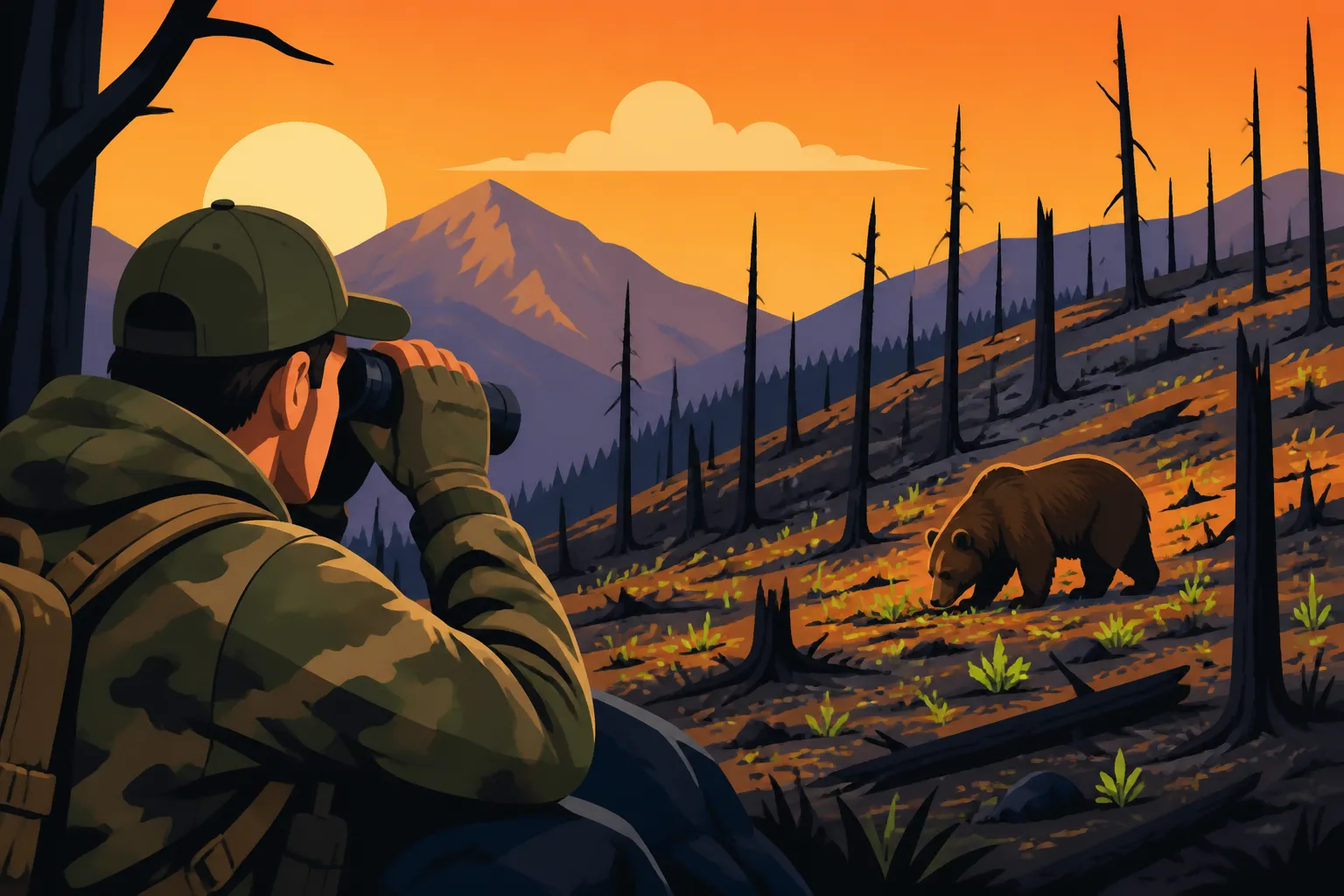
The real draw of a burn scar begins when the ecosystem starts to recover, usually within one to five years after the fire. This is when you'll see a surge of pioneering plant species that thrive in disturbed soil. Think about it: the canopy is often thinned or removed, allowing sunlight to drench the forest floor, and the ash enriches the soil with nutrients. This leads to an explosion of forbs, grasses, and, most importantly for bears, berry-producing shrubs. Species like huckleberry, manzanita, ceanothus, and various types of elderberries often flourish in these conditions. These berries provide a high-energy, high-carbohydrate food source that bears actively seek out, especially in late summer and early fall as they try to put on weight for winter. You might find a bear spending hours, even days, in a dense berry patch, practically grazing like livestock. This bounty of new growth is why a burn scar becomes an absolute magnet, providing a far richer, more easily accessible food source than many mature, shaded forests. This is where your glassing efforts will really pay off, as the bears will often be out in the open, feeding voraciously.
Cover and Travel Corridors in a Changed Landscape
While a burn scar might look open and exposed, the new growth also provides crucial cover for bears. As the smaller shrubs and understory plants regenerate, they create thickets and patches of dense vegetation that bears use for bedding, escape, and travel. A standing dead tree might offer a perfect scratching post, and the downed timber can create natural barriers or pathways. Bears are creatures of habit and efficiency; they'll use the easiest paths between feeding areas and bedding sites. Often, these paths might follow old game trails that are now more open due to the fire or new paths created to navigate the fallen logs. When you're glassing, look for these natural corridors that connect dense patches of new growth, particularly those on north-facing slopes which might offer cooler, shadier bedding in the summer heat. These areas also tend to hold moisture longer, which can mean more succulent forage. Remember, even in a burned area, bears still need to feel secure, and these regenerating thickets provide just that.
Essential Gear for Effective Burn Scar Glassing
Successfully glassing a burn scar for a feeding bear demands the right tools and a solid understanding of how to use them. It’s not just about having the most expensive equipment, but rather selecting gear that stands up to the rugged California landscape and enhances your ability to spot game in a challenging environment. Investing in quality optics, appropriate clothing, and reliable navigation can make or break your hunt.
High-Quality Optics: Binoculars, Spotting Scopes, and Tripods
When it comes to covering vast, open burn scars, your eyes are your most important tool, but they need help. You absolutely need high-quality binoculars and a spotting scope. For binoculars, something in the 10×42 or 12×50 range is ideal. These offer a good balance of magnification, light-gathering capability, and a wide field of view, which is essential for sweeping large areas. Brands like Maven, Vortex, or Kowa are popular choices among serious hunters for their clarity and durability. You'll spend hours behind these, so comfort and eye relief are also key.
For those long-distance looks or when you've spotted something you need to confirm, a spotting scope is indispensable. A 20-60x80mm or similar power scope will allow you to pick apart distant dark spots, confirming whether it's a bear, a burned stump, or a shadow. The problem with burn scars is everything is black and brown, making it incredibly difficult to differentiate. A good spotting scope, mounted on a sturdy carbon fiber tripod, will provide the stability needed for extended viewing and precise identification. Without a solid tripod, even the steadiest hands will suffer from image shake, making it impossible to see fine details. When you're spending hours scrutinizing distant hillsides, that stability is priceless. For more insights on choosing the right tools, check out our guide on Best Binoculars for Glassing a Burn Scar.
Mapping and Navigation Tools
Navigating a burn scar can be disorienting. Landmarks you once knew might be gone, and new game trails might appear. A reliable GPS unit or a mapping app on your smartphone is crucial. Apps like GoHunt are incredibly powerful, allowing you to download offline maps, mark waypoints for promising areas (like dense berry patches you scouted earlier), and track your movements. Being able to see property boundaries, identify potential access points, and understand the topography, especially the nuances of draws and ridges that bears might use, is vital. You can mark glassing points, bedding areas, and even potential recovery routes. These tools help you plan your approach, stay found, and efficiently cover ground without wasting precious hunting time. Knowing where you are relative to a distant hillside where you spotted a bear, and understanding the terrain between you and it, is fundamental to a successful stalk.
Clothing and Backpack Considerations
The terrain in a burn scar can be incredibly tough on clothing and gear. Expect charred logs, sharp stumps, and abrasive ash. Durable, layered clothing is paramount. You'll want sturdy pants that can withstand snags and tears, and layers that allow you to adapt to temperature swings. A morning in a high-elevation burn scar can start freezing, but by midday, the sun beating down on exposed, dark earth can make it surprisingly hot. A good layering system will include moisture-wicking base layers, an insulating mid-layer, and a durable, breathable outer shell. Don't forget a wide-brimmed hat and sunglasses to protect you from the intense sun.
Your backpack is also critical. For a full day of glassing and potential stalking, you'll need to carry your optics, water, food, first-aid kit, and enough space for deboned meat if you're successful. A pack in the 35-55 liter range with a comfortable frame and good suspension is usually sufficient for day hunts, or even a fast overnight trip. Brands like Mystery Ranch or Kifaru are known for their robust, comfortable packs that can handle heavy loads. Think about the added weight of your spotting scope and tripod, plus water – it adds up quickly. You'll want a pack that helps distribute that weight effectively across your hips and shoulders. For those looking at longer trips, consider checking out Best Pack for a Multi-Day Elk Hunt for more detailed advice on backpack selection, as many principles apply across different big game hunts.
Strategic Approach to Glassing Burn Scars
Effective glassing isn't just about pointing your binoculars at a hillside; it's a methodical process that maximizes your chances of spotting game in challenging environments. Burn scars present their own unique difficulties with their often-monochromatic landscape and lack of traditional cover. You need a system, patience, and an understanding of how bears use these areas to truly succeed.
Choosing the Right Glassing Point
The first step to successful glassing is finding the perfect vantage point. In a burn scar, this typically means finding a high point that offers a panoramic view of potential feeding and bedding areas. Look for prominent ridges, knobs, or even the edge of an unburned timber stand overlooking a large burned drainage. The ideal glassing point will allow you to see large swaths of recovering vegetation, especially slopes dotted with berry bushes or areas where new green growth is evident.
Consider the sun's position. You generally want the sun at your back or to the side, not directly in your eyes, especially during prime feeding times like early morning and late evening. Squinting into the sun won't reveal anything. Also, think about the wind and thermals. Bears have an incredible sense of smell, so staying downwind is paramount. In steep country, thermals often rise in the morning and fall in the evening. Position yourself so your scent isn't blowing directly into the areas you're glassing. A good glassing point isn't just about what you can see, but what won't see or smell you.
The Grid System and Breaking Down Terrain
Once you’re set up, resist the urge to haphazardly scan the entire landscape. This is a common mistake and leads to missed animals. Instead, employ a systematic grid searching method. Start with your binoculars, picking a distant point on one side of your viewing area, and slowly scan horizontally, moving your binoculars in a deliberate, overlapping sweep. Once you reach the other side, drop your gaze slightly and scan back in the opposite direction. Repeat this process, slowly working your way across the entire burn scar, from top to bottom.
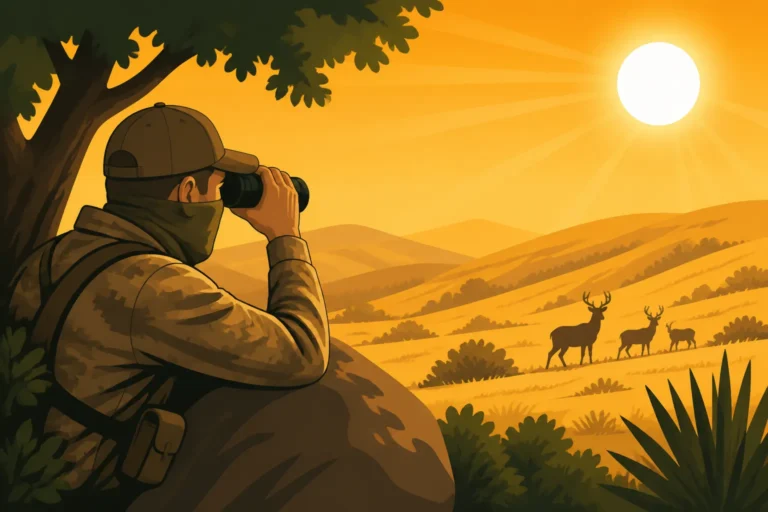
As you sweep, constantly break the terrain into smaller, manageable sections. Don't just look at the hillside; look through it. Focus on benches, draws, saddles, and the edges of any remaining patches of timber. These are natural travel corridors and bedding areas. When you see something suspicious—a dark shape, a patch of disturbed earth, or anything that just "doesn't look right"—switch to your spotting scope for a closer examination. Spend a disproportionate amount of time on areas with obvious food sources, like large berry patches or lush green pockets. Bears are often found where the food is most abundant. This detailed approach is similar to techniques used for Glassing Mule Deer in Open California Country, where patience and thoroughness are key.
Patience is a Virtue: Timing and Observation
Patience isn't just a virtue when hunting, it's a necessity, especially when glassing for bears in burn scars. You're not looking for movement as much as you're looking for something that doesn't belong. A bear feeding can spend long periods with its head down, obscured by brush, or simply moving very slowly. You might just catch a glimpse of an ear, a shoulder, or a black rump against the burned backdrop.
The best times to glass are typically the first two to three hours after sunrise and the last two to three hours before sunset. This is when bears are most active, feeding before bedding down for the hotter parts of the day or throughout the night. However, don't rule out midday glassing, especially if it's overcast or cool. Bears, particularly large boars, can be active at any time. Dedicate long stretches to each glassing point, often an hour or more, before moving to the next. Sometimes, a bear that wasn't visible an hour ago will step out from behind a burned snag or rise from a bed. Carry snacks, plenty of water, and a comfortable seat pad for those extended sits. The more time your eyes are on the hill, the higher your chances of spotting that elusive bear.
Safety and Ethical Hunting in Burn Scars
Hunting in California's burn scars comes with unique challenges and responsibilities. Beyond the physical demands, there are critical safety and ethical considerations that every hunter must understand and adhere to. This ensures not only your own well-being but also the health of the recovering ecosystem and the future of hunting.
Understanding Bear Behavior and Identification
Black bears, while generally shy, are powerful wild animals. It's crucial to understand their behavior, especially when dealing with a sow and cubs. When glassing, always carry a good pair of binoculars and a spotting scope to definitively identify your target. California regulations are very clear: it is illegal to take a bear that is nursing or accompanied by cubs. This means you need to be absolutely certain the bear you're targeting is alone and of legal size. A legal bear is generally an adult, but judging a legal bear from a sow with cubs can be tricky, especially at a distance in a mottled burn scar landscape. Look for the animal's size, shape, and gait. Sows with cubs will often be smaller and have a more defined "waist," while a large boar will appear more blocky and have a thick neck. Always err on the side of caution. If there's any doubt, pass on the shot. Our guide on Judging a Legal Bear From a Sow With Cubs offers more in-depth advice on this critical aspect of bear hunting.
Navigation and Environmental Awareness
Burn scars can be treacherous. The ground is often uneven, with hidden holes from burned-out root systems, unstable slopes, and slick ash. Downed trees create obstacles, and remaining standing snags can be unstable and fall without warning. Always be aware of your footing and surroundings. Bright orange or other high-visibility clothing is not required for bear hunting in California, but wearing some blaze orange can increase your visibility to other hunters, especially in areas where visual cover is limited by the fire. Ensure your mapping tools are fully charged and you have a backup. Cell service can be spotty or nonexistent in remote burn areas, so consider a satellite communication device for emergencies.
Furthermore, be mindful of the regenerating ecosystem. Stick to established trails or game paths to minimize impact on fragile new growth. Pack out everything you pack in, including spent shell casings, and avoid disturbing any sensitive restoration efforts. Respect the land and its ongoing recovery.
Non-Lead Ammunition and Reporting Requirements
California has a statewide lead-free ammunition requirement for all hunting. This means any bullet, slug, or shot you use must be non-lead. For bear hunting, this typically means solid copper bullets for rifles. Ensure your chosen ammunition is certified as non-lead before heading afield. The law is strictly enforced, and ignorance is no excuse. This regulation is in place to protect scavengers, particularly the California condor, from lead poisoning. So, before you head out to glass that burn scar, make sure your rifle is sighted in with compliant ammunition. You can learn more about California's Non-Lead Ammunition Requirement to ensure you're fully compliant.
Finally, California requires all harvested bears to be reported to the California Department of Fish and Wildlife (CDFW) within 24 hours of taking possession. You'll need to submit the tag and provide specific details about the harvest location and date. This data is critical for wildlife management and helps CDFW monitor the California's 1,700-Bear Statewide Quota and overall bear population. Many hunters find the GoHunt app helpful for quick reporting or for reviewing regulations on their phones, even if it’s just looking up the relevant section of the hunting regulations. Ethical hunting goes beyond the shot; it includes responsible reporting and adherence to all regulations.
| Glassing Strategy | Description | Key Benefit |
|---|---|---|
| High Vantage Point | Locate prominent ridges or knolls overlooking large burn areas. | Maximizes visual range and minimizes scent dispersion with proper wind assessment. |
| Grid Searching | Systematically scan the area in overlapping horizontal or vertical passes with binoculars, then pinpoint with a spotting scope. | Ensures thorough coverage and reduces missed animals. |
| Focus on Food Sources | Prioritize areas with lush new growth, especially berry patches, and edges of unburned timber. | Bears congregate where food is most abundant and accessible. |
| Utilize Thermals/Wind | Position yourself to keep your scent out of the area you are glassing. Thermals rise in morning, fall in evening. | Prevents spooking bears with your scent. |
| Patience & Observation | Dedicate long periods to each glassing point, looking for subtle movements or "things that don't belong." | Bears can be still for long periods; persistence pays off. |
| Break Down Terrain | Analyze benches, draws, and saddles within the burn scar—these are natural travel routes and bedding sites. | Helps predict bear movement and identify likely hiding spots. |
Disclaimer
The information provided in this article is for general guidance and informational purposes only. Hunting regulations, seasons, and requirements in California are subject to change. Always consult the official California Department of Fish and Wildlife (CDFW) regulations and resources before planning any hunting trip. It is your responsibility to know and follow all applicable laws and regulations.