Hunting Sierra Nevada High Country
Ah, the Sierra Nevada high country. Just the name conjures images of majestic peaks, endless granite, and the kind of solitude that truly tests a hunter's mettle. But let's be real, chasing deer up in those thin air elevations isn't for the faint of heart; it's physically grueling, mentally challenging, and often feels like you're hunting on another planet compared to the oak woodlands or foothills. If you've ever found yourself staring up at a seemingly impossible slope, wondering how on earth you'll ever find a buck, let alone get him out, then you know the frustrations. This guide is all about equipping you with the knowledge and strategies to not just survive, but truly thrive and find success hunting California's breathtaking Sierra Nevada high country.
Understanding the Sierra Nevada Deer Habitat
Hunting the high Sierra isn't just about climbing mountains; it's about understanding the unique ecosystem that shapes deer behavior. These animals are masters of their domain, utilizing every nook and cranny of the rugged landscape to their advantage. To consistently find success, you need to think like a high-country deer, understanding their movements, feeding habits, and bedding preferences in this challenging environment. It’s a completely different ballgame than hunting coastal blacktails, and your approach needs to reflect that.
The Rugged Terrain and Its Impact on Deer Movement
The Sierra Nevada is defined by its dramatic elevation changes, from dense timbered slopes to wide-open granite bowls and scree fields. Deer in this environment learn to navigate it with incredible efficiency. You'll often find them utilizing steep, north-facing slopes for bedding, particularly during hotter periods, as these areas offer shade and cooler temperatures. These steep, broken areas also provide excellent escape cover from predators and hunters alike, allowing them to melt away with surprising speed. Expect to encounter rock slides and avalanche chutes, which, while challenging to traverse, can act as natural travel corridors or feeding areas where specific vegetation might grow.
Furthermore, deep canyons and drainages dictate how deer move between feeding and bedding areas. Instead of following gentle ridgelines like deer might in less extreme terrain, high-country deer often traverse these steep-sided gulches, using the cover and thermal advantages they offer. Understanding these natural funnels and pinch points is crucial for setting up an ambush or predicting their travel routes. Often, what looks like an impenetrable wall of granite to us is a highway for a high-country buck.
Key Forage and Water Sources Above 7,000 Feet
Above 7,000 feet, the vegetation changes dramatically. You won't find lush alfalfa fields or expansive oak groves, so deer rely on different food sources. Look for alpine meadows, particularly those fed by melting snow or springs, which host a variety of palatable forbs and grasses. These green oases in a sea of rock and timber are often deer magnets, especially in the early morning and late evening. Specific plant species like mountain willow, bitterbrush, and various shrubs found above the timberline become critical browse for deer.
Water is another essential factor, especially during the warmer early seasons. While there might be plenty of snowmelt early on, by late August and September, permanent springs, tarns (small mountain lakes), and trickling creeks become vital. Deer will often bed surprisingly close to these water sources, making them prime spots for glassing or still-hunting. Pay close attention to areas where water collects, even small seeps on rock faces, as these can be lifelines for deer during dry spells.
Seasonal Deer Movement and Migration Patterns
Deer in the Sierra Nevada are highly migratory, moving between lower wintering grounds and higher summer ranges. Understanding these patterns is key to timing your hunt and locating animals. During the general season, which often falls in late summer or early fall, deer are typically found in their highest summer ranges, taking advantage of abundant forage and cooler temperatures. This means you'll be hunting steep, rugged country, often above 8,000 feet, or even pushing 10,000 feet in some areas.
As the season progresses and cold weather approaches, deer will begin their gradual migration back down to lower elevations. This migration is often triggered by early snowstorms or a significant drop in temperature, making certain migration corridors — often the same ones used for generations — excellent spots to intercept animals. However, for most of the high-country rifle and archery seasons, you're targeting resident deer or those that are still enjoying the high-elevation bounty before the deep snows push them out. Knowing when and where these movements occur can really increase your chances. For more on this, consider when Why California's Zones Open on Different Dates might impact your hunting strategy.
Essential Gear for High-Country Success
Venturing into the Sierra Nevada high country demands gear that is both lightweight and incredibly durable. Every ounce in your pack feels like a pound after a few miles and thousands of feet of elevation gain. This isn't a place for shortcuts or untested equipment. Your gear needs to be reliable, capable of withstanding unpredictable mountain weather, and ultimately, help you perform when it matters most. Investing in quality equipment isn't just about comfort; it's about safety and increasing your chances of success in this demanding environment.
Lightweight and Durable Backpacking Gear
Your backpack is arguably your most important piece of gear in the high country. You need a pack that can comfortably carry all your essentials for multiple days – shelter, food, water, extra layers, and most importantly, the ability to pack out an animal. Look for packs in the 4,000-6,000 cubic inch range, with a robust internal or external frame system designed for heavy loads. Brands like Mystery Ranch or Kifaru are popular for their ability to carry serious weight comfortably.
Beyond the pack, consider every item's weight. A lightweight tent or tarp shelter, a compact sleeping bag rated for unexpected cold snaps, and a reliable water filter or purification tablets are non-negotiable. Titanium cooking pots, dehydrated meals, and a small, efficient stove all contribute to shaving ounces. Remember, every item you bring needs to justify its weight and serve a critical purpose. When planning your trip, consider what constitutes the Best Pack for a Multi-Day Elk Hunt to give you an idea of the capacity and features you'll need, even if you're targeting deer.
Layering Strategies for Volatile Mountain Weather
The Sierra Nevada is infamous for its rapidly changing weather. You can start your morning in crisp, cold temperatures, hike into the high sun by midday, and be caught in a violent thunderstorm or snow flurry by afternoon. The key to staying comfortable and safe is a versatile layering system. Start with a moisture-wicking base layer (merino wool or synthetic) to pull sweat away from your skin. Next, a mid-layer like a fleece jacket provides insulation. For outer layers, a lightweight puffy jacket for warmth and a waterproof/windproof shell are absolute necessities.
Always pack a spare set of gloves and a warm hat, even in August. Your body loses a significant amount of heat through your head, and cold hands can quickly become a problem when operating gear. Don't underestimate the importance of good socks – merino wool socks will keep your feet warm even if they get wet and prevent blisters. Staying dry is paramount in the mountains; getting soaked and cold can quickly turn into a dangerous situation, especially if you're miles from your camp or vehicle.
Optics and Navigation Tools for Vast Landscapes
In the sprawling, open country of the Sierra, quality optics are not a luxury; they are a necessity. A good pair of 10x or 12x binoculars on a tripod will save you countless steps by allowing you to systematically glass vast expanses of terrain. For truly long-range spotting, a spotting scope (15-45x or 20-60x) is invaluable for identifying small details, judging antlers, and confirming whether that distant speck is a deer or just a rock. Make sure to choose the Best Rangefinder for Sierra Canyon Shots to accurately gauge distances in the broken terrain.
For navigation, a reliable GPS unit or a smartphone with robust mapping applications like onX Hunt is crucial. These tools allow you to pinpoint your location, mark waypoints, track your movements, and stay oriented in featureless granite bowls or dense timber. Always download offline maps before heading out, as cell service will be non-existent in much of the high country. Furthermore, always carry a physical map and compass, and know how to use them as a backup. Batteries die, and electronics fail; a traditional map and compass won't. Being able to access Using an App for California BLM Land Status can also be helpful for public land boundaries, although less prevalent in the high Sierra.
Scouting and Locating Deer in the Sierra High Country
Finding deer in the vastness of the Sierra Nevada is often compared to finding a needle in a haystack. It demands a combination of diligent pre-season scouting, intelligent map analysis, and keen observation skills once you're on the ground. You can't just wander aimlessly and expect to stumble upon animals; a strategic approach to scouting is what separates consistently successful hunters from those who spend their trips endlessly hiking. The sheer scale of the landscape can be overwhelming, but breaking it down into manageable segments makes the task less daunting.
Utilizing Aerial Imagery and Topo Maps Before Your Hunt
Long before you ever set foot on a trail, your hunt begins at home with maps and satellite imagery. Tools like GoHunt or onX Hunt allow you to virtually scout thousands of acres, identifying potential bedding areas (steep, north-facing timber or rocky benches), feeding grounds (alpine meadows, recent burn scars), and travel corridors (saddles, drainages, old game trails). Look for transition areas where different habitat types meet, or where cover provides security near open feeding. These "edges" are often where deer activity is concentrated. Pay close attention to water sources and potential vantage points for glassing.
By overlaying topographic maps with satellite imagery, you can identify the steepest, nastiest terrain that offers sanctuary for older bucks, as well as more gentle slopes that might hold does and fawns. Use the contour lines to visualize the terrain and plan your approach routes, understanding elevation gain and potential choke points. This pre-hunt preparation is invaluable; it helps you prioritize areas to check once you're actually in the mountains, saving you precious time and energy. Think of it as a blueprint for your hunting adventure, especially when considering Reading Aerial Photos for Sierra Deer.
Reading Sign in High-Elevation Terrain
Once you're on the ground, your job is to become a detective, interpreting the subtle clues deer leave behind. Fresh tracks in dusty trails, muddy creek banks, or patches of soft soil near springs are obvious indicators. Pay attention to the size and freshness of the tracks; larger, deeper tracks often indicate a bigger animal. Look for droppings, noting their freshness, and if they're in a concentrated area, it might indicate a bedding or feeding spot. High-country deer sign can be more spread out than in denser habitats, but it's there if you look carefully.
Furthermore, keep an eye out for rubs on small trees or shrubs, and deer beds, especially on benches or under protective cover. Rubs indicate bucks are in the area and asserting their presence, while beds tell you exactly where deer are choosing to rest. In rocky terrain, sign can be harder to spot, so you need to slow down and meticulously search likely areas. Don't forget to look up; deer often bed on high, rocky outcrops where they have a commanding view of the terrain below. When you're in an area where Hunting a National Forest Burn Scar is an option, the contrast can make sign even more obvious.
The Art of Glassing and Spotting from Afar
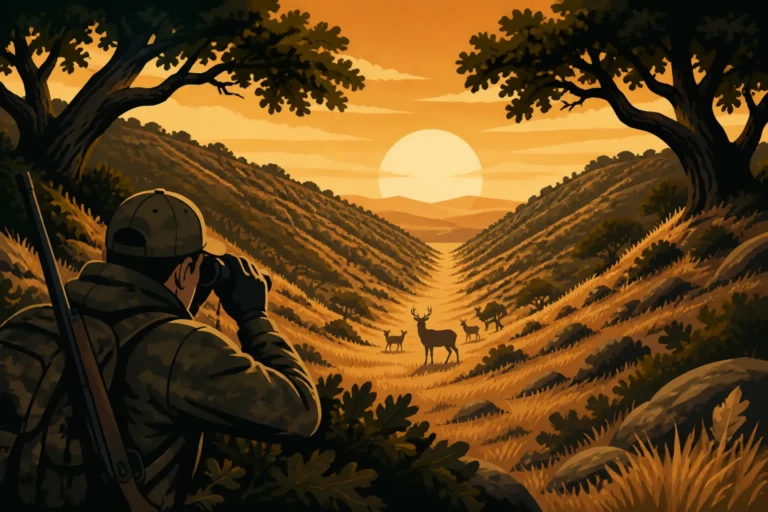
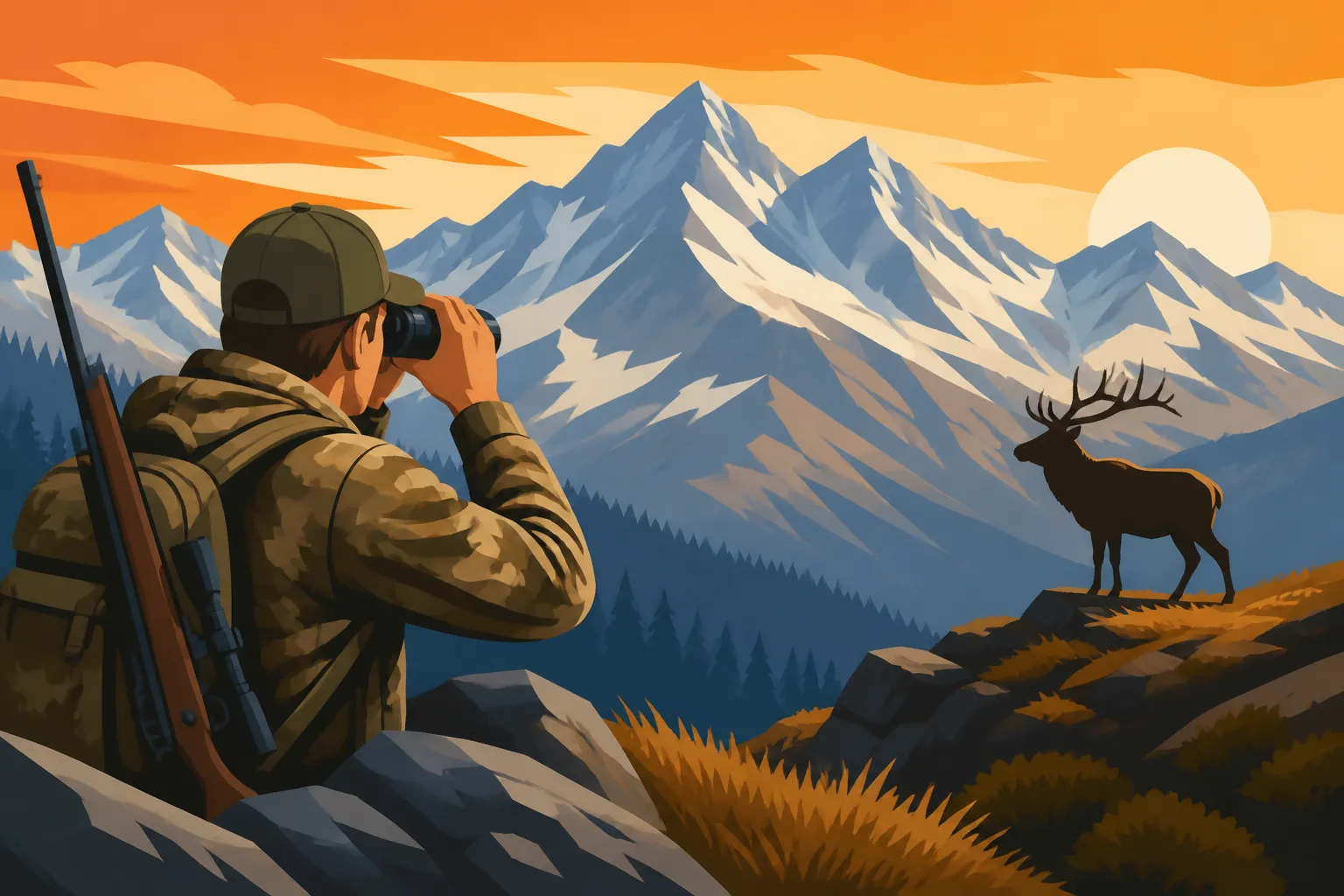
Glassing is the most effective hunting strategy in the vast, open bowls and slopes of the high Sierra. Find a good vantage point that allows you to see significant amounts of terrain, and then meticulously break down the landscape with your binoculars and spotting scope. Start by scanning the closest areas, then work your way out, focusing on shaded slopes, timber edges, rock slides, and patches of vegetation. Don't just glance; scrutinize every shadow, every odd shape, and every patch of color that seems out of place. Deer are masters of camouflage, and often only a flick of an ear or a horizontal line against a vertical background will give them away.
Dedicate long periods to glassing, often 30 minutes to an hour or more in a single spot. Patience is key. As the light changes throughout the day, different angles and shadows will reveal animals that were previously hidden. Pay particular attention during the first and last hours of daylight, when deer are most active. A sturdy tripod is essential for steady glassing, reducing fatigue and allowing for precise observation. Understanding Glassing Mule Deer in Open California Country will provide even more detail on this critical skill.
Hunting Strategies for Steep and Remote Backcountry
Hunting in the Sierra Nevada's high country is a unique blend of physical exertion, mental fortitude, and precise execution. The methods you employ need to be tailored to the demanding environment, focusing on stealth, patience, and making the most of every opportunity. Unlike hunting from a treestand, high-country hunting is a dynamic pursuit that often involves covering significant ground on foot, adapting to the terrain, and reacting quickly to fleeting chances.
The Spot-and-Stalk Method in Open Bowls and Timberline
The spot-and-stalk method is king in the high Sierra. Once you've successfully located a buck through glassing, the real challenge begins: closing the distance without being detected. This often involves navigating steep, broken ground, dealing with unpredictable Wind and Thermals in Steep Sierra Country, and using every piece of available cover. Plan your approach meticulously, using terrain features like ridges, draws, and rock formations to mask your movement. Always keep the wind in your favor, as a misplaced thermal can carry your scent directly to your quarry.
Move slowly and deliberately, taking one step at a time, constantly checking your position against the deer's. Pay attention to your foot placement to avoid dislodging rocks or breaking twigs. Be prepared for the stalk to take hours, sometimes requiring you to back out and restart if the conditions change. Once you're within shooting range, find a stable shooting position, control your breathing, and make the shot count. The goal is to get into a position where you have a clear, ethical shot while minimizing the chances of spooking the animal.
Still-Hunting Through Alpine Timber and Meadows
While spot-and-stalk dominates the open country, still-hunting becomes effective when you're moving through alpine timber pockets or slowly traversing larger meadows. Still-hunting is about moving at a snail's pace, pausing frequently (often for minutes at a time) to scan your surroundings, listen for sounds, and allow your eyes to pick out subtle movements or shapes. The goal is to blend into the environment and catch deer unaware as they move or feed. This method requires extreme patience and a keen awareness of your surroundings.
When still-hunting, focus on reading the terrain for natural funnels or pinch points where deer are likely to travel. Move into the wind whenever possible, and use the cover of trees and rocks to break up your outline. Pay attention to the ground for fresh tracks and sign, which can indicate recent deer activity. This is particularly effective in areas where the timber transitions into open country, as deer often use the security of the trees for bedding before moving out to feed. For a deeper dive into this technique, check out Still-Hunting California's Sierra Nevada Timber.
Recovering Game in Challenging Terrain
This is where the true grit of high-country hunting comes into play. Once you've harvested an animal, the work truly begins. The first step is to carefully mark the spot where the deer was standing when shot, and the last place you saw it. Take your time, look for blood, and follow the trail methodically. In steep, rocky terrain, blood trails can be sparse, so look for disturbed earth, broken branches, or even tufts of hair. If the trail goes cold, expand your search in concentric circles from the last known sign.
Recovering an animal from a steep canyon or a remote basin can be an immense physical undertaking. You'll likely need to quarter the animal to pack it out efficiently. A sturdy backpack frame, sharp knives, and game bags are indispensable. Plan your route carefully, looking for the path of least resistance, even if it adds a little distance. Remember, safety first: don't attempt to drag an animal down a dangerously steep slope alone. If you're fortunate enough to take a deer in this environment, be prepared for a long and arduous pack-out, especially when considering Packing Meat Out of a Steep Canyon.
Overcoming Common Challenges in the Sierra
The allure of the Sierra Nevada high country is undeniable, but so are its formidable challenges. From the physical demands of high altitude to the unpredictable forces of nature, hunters must be prepared for anything. Ignoring these realities can quickly turn an exciting adventure into a dangerous situation. A true high-country hunter understands these obstacles and takes proactive steps to mitigate risks, ensuring both a successful hunt and a safe return.
Navigating High-Altitude Sickness and Physical Demands
Hunting at elevations commonly above 8,000 feet, and sometimes pushing 10,000 feet, means dealing with thinner air and the potential for altitude sickness. Symptoms can range from mild headaches and nausea to severe, life-threatening conditions. Proper acclimatization is key: arrive a day or two early and spend time at a moderate elevation before heading to your higher hunting grounds. Stay well-hydrated, even more so than usual, and avoid excessive alcohol or caffeine.
The physical demands are immense. You'll be climbing steep grades, traversing uneven terrain, and potentially packing heavy loads for miles. Regular cardiovascular training, strength training (especially for your legs and core), and plenty of hiking with a loaded pack in the months leading up to your hunt are non-negotiable. Don't try to "get in shape" on the mountain; you need to arrive prepared. Wear the Best Boots for Steep Wet-Season Sierra Trails to ensure proper footing and support.
Dealing with Wildlife Encounters and Remote Safety
While deer are your primary quarry, you're sharing the Sierra with a host of other wildlife, including black bears and mountain lions. Black bears are common, and while typically shy, they can be a concern for your camp and food storage. Always use bear-resistant canisters or hang your food properly to prevent attracting them. Carrying bear spray is a good precaution in some areas. Mountain lions are more elusive, but awareness is key. If you encounter one, make yourself look large, make noise, and never run.
Beyond wildlife, remote safety is paramount. You'll often be miles from any human contact or immediate rescue. Always hunt with a buddy, or at the very least, leave a detailed itinerary with someone reliable. Carry a satellite communicator (like a Garmin inReach or Zoleo) for emergency communication. A comprehensive first-aid kit is essential, and you should know how to use its contents for common injuries. Remember, in the high country, you are your own first responder.
Weather Extremes and Emergency Preparedness
The Sierra Nevada weather can shift from calm sunshine to violent thunderstorms or even snowstorms in a matter of hours, regardless of the season. Always check multiple weather forecasts before your trip, but be prepared for them to be wrong. Pack for all four seasons, even if you're hunting in August. A quality waterproof and windproof outer shell, along with extra warm layers, is critical. Unexpected rain or snow can lead to hypothermia if you're not adequately dressed and protected.
Emergency preparedness extends beyond just clothing. Carry a fire starter, a small emergency shelter (like a bivy sack or space blanket), extra food, and ample water or water purification supplies. If you get caught in a sudden storm, seek shelter, stay put, and assess the situation. Don't try to push through dangerous conditions, especially if visibility is compromised. Knowing Camping Rules on California National Forest Land can also help ensure you set up camp safely and legally, especially in unexpected circumstances.
High-Country Gear Comparison
To give you a clearer idea of the differences in gear needs, here's a quick comparison between typical foothill hunting and the demands of the high Sierra.
| Gear Item | Foothill/Oak Woodland Hunting | Sierra Nevada High Country Hunting |
|---|---|---|
| Pack | Daypack (1500-2500 ci) for essentials, maybe a small frame | Backpacking pack (4000-6000+ ci) with heavy-duty frame for multi-day |
| Boots | Sturdy hiking boots, often lower cut, good for moderate terrain | High-cut, waterproof mountaineering or heavy-duty backpacking boots |
| Clothing | Lighter layers, focus on durability and breathability | Layering system (base, mid, puffy, waterproof shell), emphasis on warmth and wet weather protection |
| Optics | 8x-10x binoculars, maybe a rangefinder | 10x-12x binoculars (tripod mounted), spotting scope, rangefinder |
| Navigation | GPS/phone app, local maps | GPS/phone app (offline maps), physical topo map, compass, satellite communicator |
| Shelter | N/A (return to vehicle/camp each night) | Lightweight tent or tarp, sleeping bag rated for colder temps |
| Water | Water bottles, maybe a filter | Large capacity hydration, robust water filter/purifier |
| Food | Sandwiches, snacks, fresh items | Dehydrated meals, high-calorie, compact snacks for multi-day |
| Safety | Basic first-aid kit, whistle | Comprehensive first-aid kit, bear spray (optional), fire starter, emergency shelter |
Disclaimer
Hunting is an inherently dangerous activity. This guide provides general information and recommendations. Always consult the latest California Department of Fish and Wildlife (CDFW) regulations, carry appropriate safety gear, and ensure you have proper training and physical conditioning before venturing into the field. The author and publisher are not responsible for any accidents, injuries, or legal issues that may arise from following this advice. Hunt ethically, safely, and responsibly.